Blog Climate action on the road from Bonn to Belém
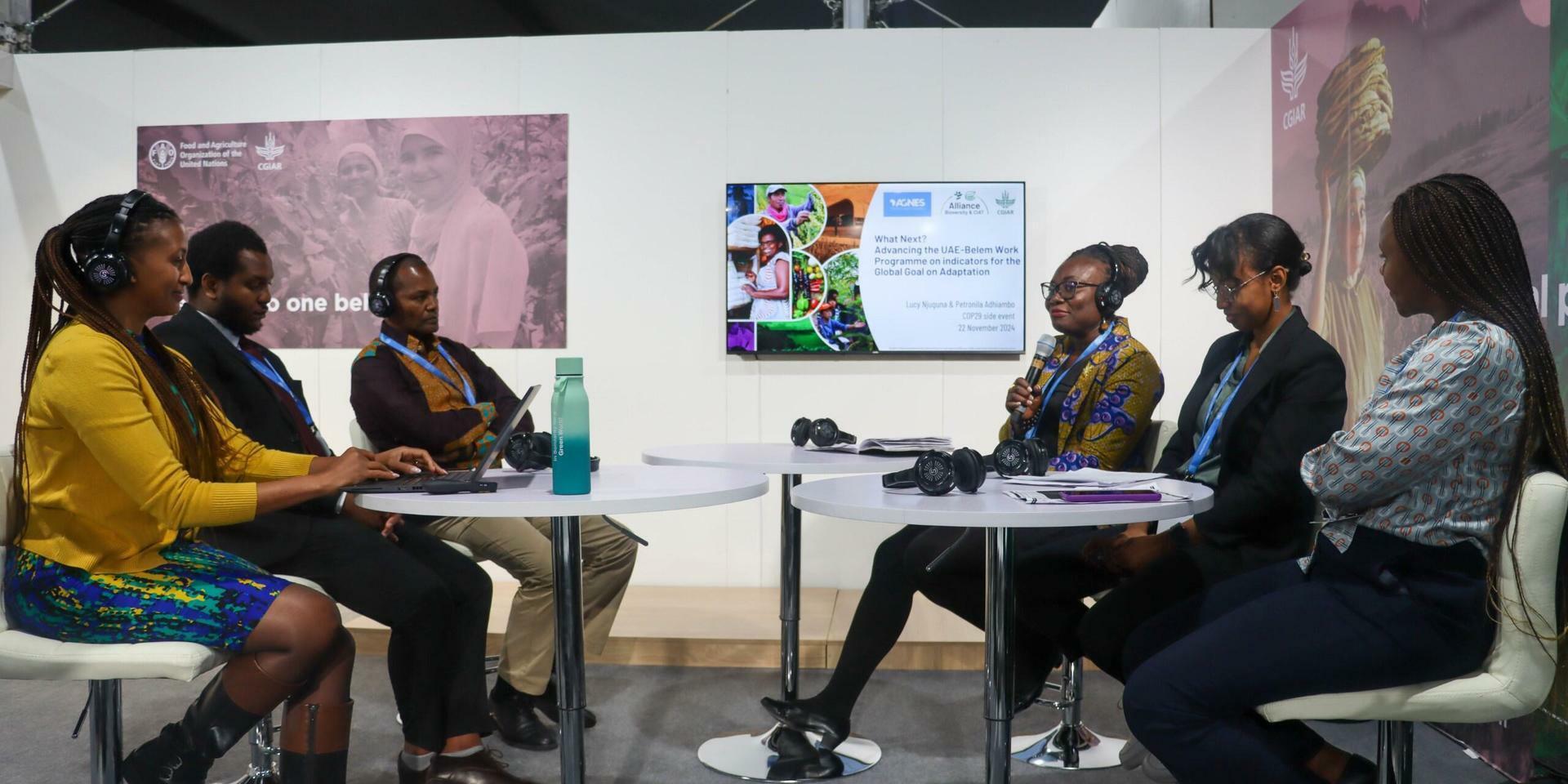

Join the Alliance of Bioversity and CIAT at the Bonn SB62 climate conference.
The United Nations mid-year climate talks take place annually in Bonn, Germany. The sessions of the UNFCCC Subsidiary Bodies, as they are known, serve as a crucial checkpoint for negotiators and other contributors to build momentum and make progress on the issues that will define the larger Conference of Parties, the UN COP climate summits, that take place later in the year.
The 62nd session of the UNFCCC Subsidiary Bodies (SB62) is a therefore a critical milestone in ensuring positive and compelling outcomes for the 30th Conference of the Parties (COP30) which will take place in Belém, Brazil from 10 to 21 November 2025.
The Alliance of Bioversity and CIAT (The Alliance) will be at SB62, and high on the agenda are several issues of urgent importance to agriculture and potential approaches (such as food systems) which have potential to serve as a solution to—not a driver of—the urgent challenge of climate change.

Most notably these issues include:
- Reviewing progress in developing indicators for the Global Goal on Adaptation.
- Ensuring the inclusion of views of party and non-party stakeholders on their expectations for the roadmap to achieve the overarching goal of 1.3 trillion USD a year for climate finance mobilization and its contribution to agriculture, food systems, and smallholder farmers.
- Non-market approaches to international carbon credit sharing.
The Global Goal on Adaptation
Established under the Paris Agreement in 2015, the Global Goal on Adaptation (GGA) marked a significant milestone in international climate policy. GGA helps elevate adaptation in the political discourse, provides a cornerstone for climate action across scales, and could catalyze investments into adaptation.
As outlined in Article 7.1 of the Paris Agreement, the GGA aims to:
“Strengthen resilience, enhance adaptive capacity, and reduce vulnerability to climate change, with a view to contributing to sustainable development and ensuring an adequate adaptation response in the context of the temperature goal.”
Despite this early commitment, progress in operationalizing the GGA has been slow. This due to challenges inherent in measuring adaptation, including the absence of a clear, universally accepted framework and methodologies for tracking adaptation outcomes and impacts.
To address these challenges, significant work has been undertaken in recent years to develop robust indicators and methodologies that can provide reliable, actionable evidence of adaptation progress.
This includes efforts under the Glasgow–Sharm el-Sheikh (GlaSS) which culminated in the adoption of the UAE Framework for Global Climate Resilience containing eleven targets for the GGA. The Framework also launched the the UAE-Belem work programme which aims to establish a clear and practical set of indicators for the GGA.
So far, the team of 78 technical experts nominated to support work on GGA indicators have managed to shortlist 490 indicators out of the initial list of 9,529. This marks significant progress, allowing negotiators to start engaging with the indicators and refine ideas for the final output to be adopted in Belem at COP 30.
Lucy Njuguna is a climate change adaptation and climate policy expert at The Alliance, and one of the GGA technical experts has worked intensively on indicators for food and agriculture. The technical experts have refined the initial 1,801 indicators tagged as relevant for food and agriculture to 66 indicators, which are structured into 13 headline indicators and 53 sub-indicators.The group’s approach was rooted in impact pathways, linking adaptation outcomes in crop, livestock, fisheries, and agroforestry to actions and enabling conditions such as finance, capacity building, and technology transfer.
To learn more about GGA and status of work
Join Lucy at SB62 on 16 June at 15:00 CET in the Bonn Room for a hybrid GGA Mandated Workshop
Reflecting on what it takes to develop and operationalize the GGA framework, Lucy said:
“National buy-in is crucial for implementing the UAE Framework for Global Climate Resilience and assessing progress in the GGA. Reusing existing frameworks and indicators is insufficient—we must develop tailored indicators to assess climate adaptation progress effectively. Organizations like the IPCC, universities and the CGIAR centers of excellence in climate research—such as The Alliance—can play a crucial role in strengthening the adaptation evidence base and addressing key knowledge gaps, such as assessing adaptation effectiveness and attributing impacts and outcomes.”

Lucy Njuguna
Postdoctoral FellowQuality finance for agriculture and smallholder farmers
COP29 adopted a new target for climate finance — known as the New Collective Quantified Goal on Climate Finance (NCQG)—of $300 billion per year by 2035, with an overarching goal of leveraging $1.3 trillion from all actors.
This target does not meet the estimated annual cost of transforming food systems for a climate-resilient future, nor does it meet the needs of developing countries who have said they need $1.3 trillion annually to meet the challenge of climate change.
The ‘Baku to Belém Roadmap to 1.3T’ has been launched under the guidance of the COP29 and COP30 country presidencies to provide a structured pathway for enhancing financial flows in a transparent, equitable, and effective manner.
2025 sees several events focused on climate finance: The fourth UN Food Systems Summit, Future Finance 4 Development, Africa's Food System Forum, UN General Assembly, as well as the 53rd Committe on Food Security. In many ways, all these roads lead to COP30 in Belém.
The Alliance of Bioversity-CIAT is supporting partners like The African Group of Negotiators Expert Support (AGNES) in informing negotiators representing developing countries including the Africa Group of Negotiators (AGN), at SB62, with the ambition of ultimately strengthening the ‘Baku to Belem Roadmap’. Our contributions include evidence on the best practices to finance climate change adaptation and mitigation, as well as highlighting successful initiatives which have supported the scale up of climate finance.
Join Pedro at SB62 on 23 June at 15:00 CET in the Berlin Room for ‘Strategies for enhancing investments and finance for NAP Implementation’

Pedro Anglaze Chilambe
Research Team leader, Climate FinancePedro Chilambe is a Project leader at The Alliance, specializing in climate finance. He says:
“What I want to see from SB62 and ultimately COP30 is a clearer global framework for climate finance, with more grant-based or grant equivalent finance for Small Island Developing States and Least Developed Countries. Furthermore, we must see more finance for smallholder farmers—that is easier to access—with better understanding of how climate action costs in agriculutral sectors across all developing countries, can also be reduced.”
Voluntary cooperation outside carbon markets Under Article 6 of the Paris Agreement, countries can voluntarily cooperate to meet their climate targets—either by transferring carbon credits or through broader collaboration beyond market-based transactions. Article 6.8 provides the framework for this latter type of cooperation, reflecting non-market approaches carried out in the context of sustainable development and poverty eradication. These approaches can support transformative action across agrifood systems by reducing emissions, enhancing resilience, and improving food security and livelihoods.
As of today, only one non-market approach (NMA) has been registered on the UNFCCC’s NMA Platform, which is dedicated to recognizing initiatives aligned with the criteria for implementing Article 6.8. This underscores the ongoing challenge of identifying mechanisms that qualify as NMAs—a concern also reflected in recent submissions from Parties and non-Party stakeholders ahead of discussions at SB62.
In its latest submission for SB62, the Alliance offered recommendations to enhance the platform’s functionality. This includes structured matchmaking to better connect country needs with available support for identifying and developing potential NMAs.
Eliza Villarino is a Research Specialist at The Alliance and a UNFCCC Technical Expert Reviewer. She said that:
“As a registered support provider for Article 6.8, CIAT is eager to contribute to the identification and development of non-market approaches. Strengthening the NMA Platform’s functionality is essential to fostering meaningful collaboration and improving access to tailored support.”
Join Eliza at SB62 on 16 June in the Bonn Room at 16:00 CET for ‘Agroecology as a Non-Market Approach: A Pathway for Climate Action and Sustainable Food Systems’

Maria Eliza Villarino
Research FellowFurther reading