Blog Senegal presents its CSAIP at COP29: A step towards resilient agriculture

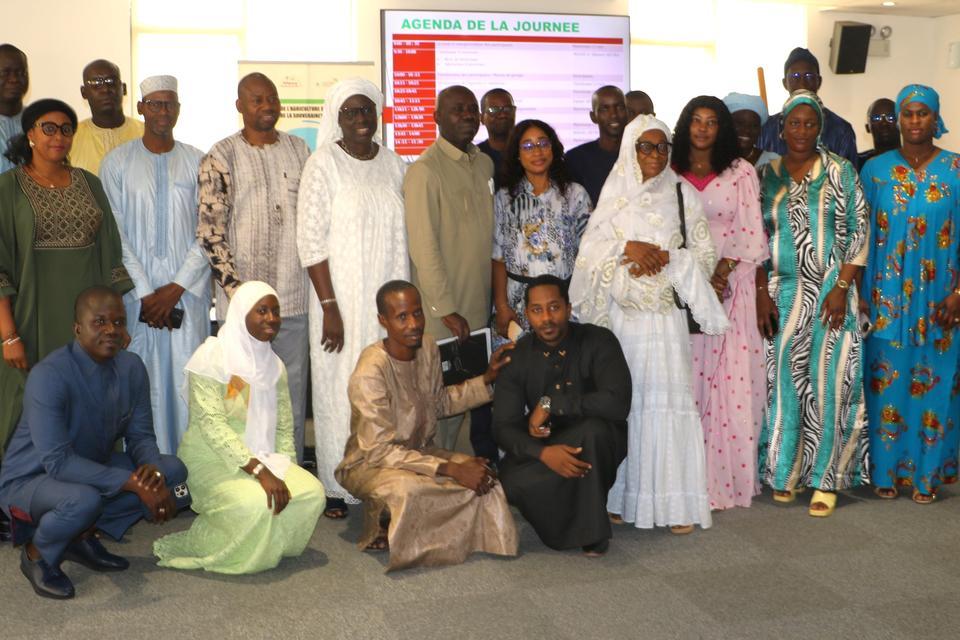
Senegal presented its Climate Smart Agriculture Investment Plan (CSAIP) at COP29, an ambitious initiative aimed at transforming its agriculture into a model of resilience and sustainability in the face of climate change, through a participatory approach and national and international partnerships.
By: Fatimata Kone (Alliance), Issa Ouedraogo (Alliance), Djibril Diagne (Ministry of Agriculture, Livestock and Food Sovereignty of Senegal)
The Climate Smart Agriculture Investment Plan (CSAIP) of Senegal represents an ambitious initiative to address the challenges of climate change. In the context of an agricultural sector highly vulnerable to climatic hazards such as droughts, floods, and soil degradation, the CSAIP seeks to transform agriculture into a benchmark of resilience and sustainability, setting the standard for adaptive and sustainable practices. According to Issa Ouedraogo, Ph.D. - Country Representative of the Alliance of Bioversity International and CIAT in Senegal - "The Alliance, through the Accelerating Impacts of CGIAR Climate Research for Africa (AICCRA) project, played a crucial role in developing the CSAIP. This plan is part of Senegal’s broader agricultural investment plan, and we are honored to contribute to this fundamental initiative."
The CSAIP is distinguished by a participatory approach, involving national partners such as the Ministry of Agriculture, Livestock and Food Sovereignty, the Ministry of Environment and Ecological Transition, the Ministry of Finance, and others. Unlike other countries, Senegal detailed the budget for each concept note, enabling the government to actively commit to the plan's implementation: "The Ministry of Finance’s involvement from the outset reflects Senegal’s determination to translate its promises into concrete actions," added Ouedraogo.
By aligning the CSAIP with the Nationally Determined Contributions (NDCs) and the National Development Strategy (NDS), Senegal reaffirms its commitment to international climate change efforts while addressing national priorities. The integration of climate-smart agricultural practices aims to enhance productivity, reduce greenhouse gas emissions, and strengthen farmers' resilience.
The CSAIP presented at COP29: International visibility
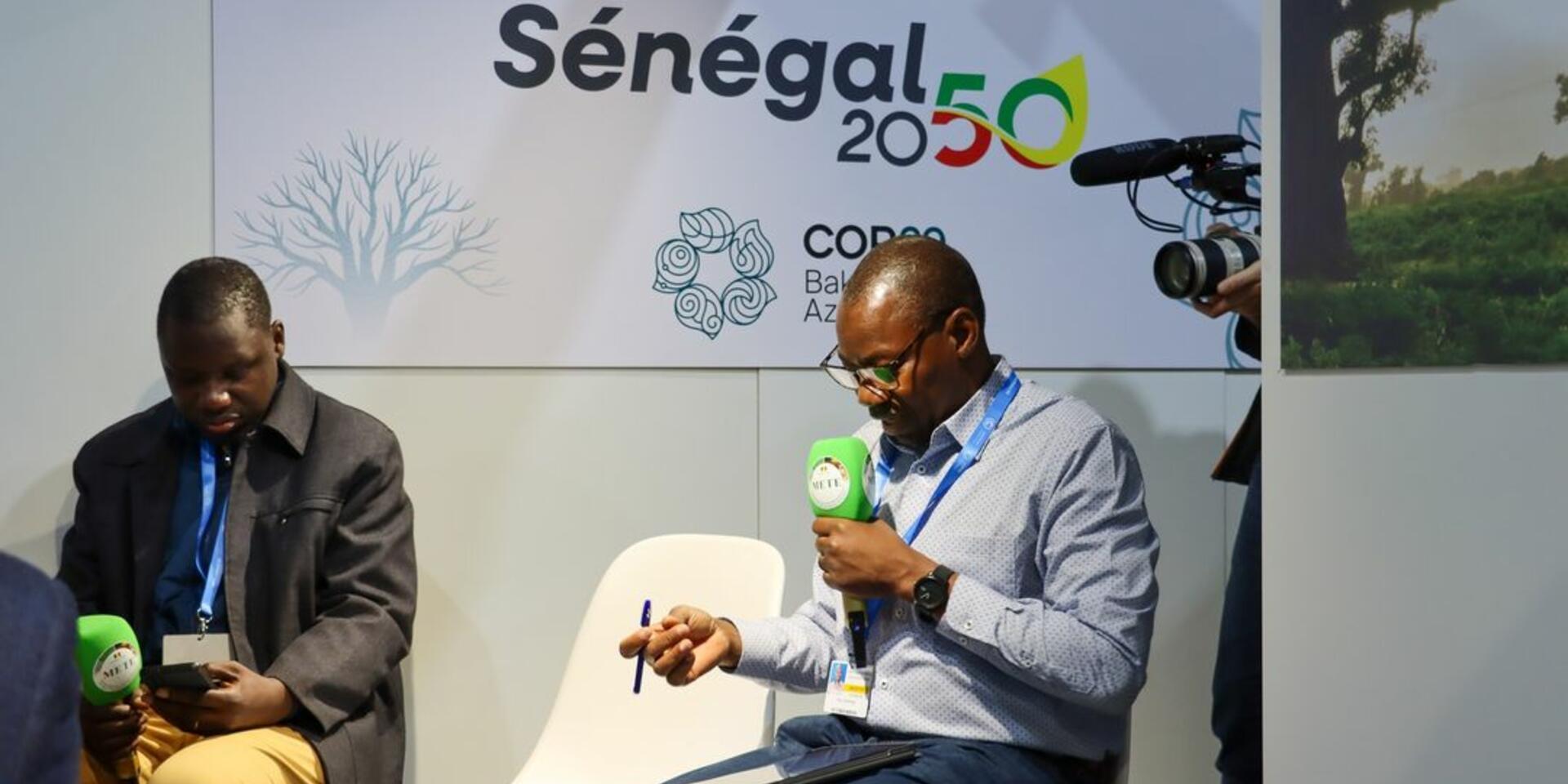
The Conference of the Parties to the United Nations' Framework Convention on Climate Change (COP29) in Baku provided a platform to showcase Senegal’s CSAIP on the international stage. This event highlighted the innovative initiative, allowing Senegal to share its experience with policymakers, technical experts, and development partners.
At the Senegal pavilion, representatives from various institutions - the Ministry of Agriculture, the Senegalese Institute of Agricultural Research (ISRA), the Ministry of Finance and the Alliance of Bioversity International and CIAT - presented the foundations of the CSAIP. The presentation emphasized the plan's alignment with NDCs and its consistency with the PSE.
Dr. Kanta Kumari Rigaud - representative of the World Bank - expressed satisfaction: "The World Bank is very pleased with the progress of the AICCRA project. The first two phases were successful, and we are excited to continue supporting Senegal in its efforts toward climate-resilient agriculture."
Discussions also highlighted the participatory process that shaped the CSAIP, involving stakeholders from public, private, and civil society sectors, thereby reinforcing the plan’s legitimacy and effectiveness.
By presenting the CSAIP at COP29, Senegal not only increased its international visibility but also created opportunities for collaboration. The success of the initial phases of the AICCRA project, funded by the World Bank, illustrates the commitment of Senegal and its partners in combating climate change.
Partnerships and financing: Ensuring CSAIP implementation
To ensure the CSAIP’s implementation, mobilizing financial resources and establishing strategic partnerships are essential. At COP29, these issues were central, revealing strategies to secure funding and the plan’s effectiveness.
The Ministry of Finance indicated that the necessary resources could be allocated in the national budget, provided the Ministry of Agriculture submits an official request. This stance demonstrates the government’s commitment to prioritizing climate-smart agriculture.
International partners such as the World Bank and the African Development Bank have expressed their intention to support the CSAIP. "We recognize the importance of innovative financing mechanisms to ensure the sustainability of investments," stated Kanta Kumari Rigaud, Ph.D. "The success of the initial phases of the AICCRA project motivates us to continue our support for Senegal." Dr. Laouali Garba, representing the African Development Bank, emphasized the importance of aligning the CSAIP with existing agricultural initiatives to maximize its impact and ensure resource efficiency. He highlighted that integration with ongoing projects would not only leverage existing infrastructure, knowledge, and partnerships but also promote synergies that enhance the overall effectiveness of the program. By aligning with established agricultural frameworks and initiatives, the CSAIP could avoid duplication of efforts, optimize financial and technical resources, and create a cohesive approach to achieving resilience and sustainability in the agricultural sector.
By combining national resources with international partnerships, Senegal is implementing a proactive strategy to ensure the CSAIP’s success. This integrated financing model could serve as an example for other countries looking to adapt their agriculture to climate change.
The future of Senegalese agriculture: Towards sustainability and resilience
By presenting its CSAIP at COP29, Senegal has taken a significant step toward sustainable and resilient agriculture. This plan reflects an ambitious vision, addressing both climate challenges and economic and social development goals.
The CSAIP incorporates innovative agricultural practices, such as the use of resilient seeds, sustainable natural resource management, and the adoption of technologies to improve productivity. It also aims to strengthen the resilience of rural communities, particularly women and youth, who are often the most affected by climate impacts.
Dr. Kanta Kumari Rigaud emphasized that "the success of the AICCRA project so far demonstrates that significant progress is possible. Senegal is on track to become a regional leader in agricultural resilience."
By placing the environment at the center of its priorities, the CSAIP contributes to reducing greenhouse gas emissions and preserving ecosystems. This integrated approach demonstrates Senegal’s ability to integrate economic growth, environmental sustainability and social justice.
In conclusion, the CSAIP serves as an inspiring model for developing countries facing similar climate challenges. Its potential success could transform Senegalese agriculture and provide valuable lessons on a global scale. By taking this path, Senegal asserts its role as a regional leader in climate resilience.
See Also