Research Articles Can cattle production grow without cooking the planet? Lessons from Latin America and the Caribbean

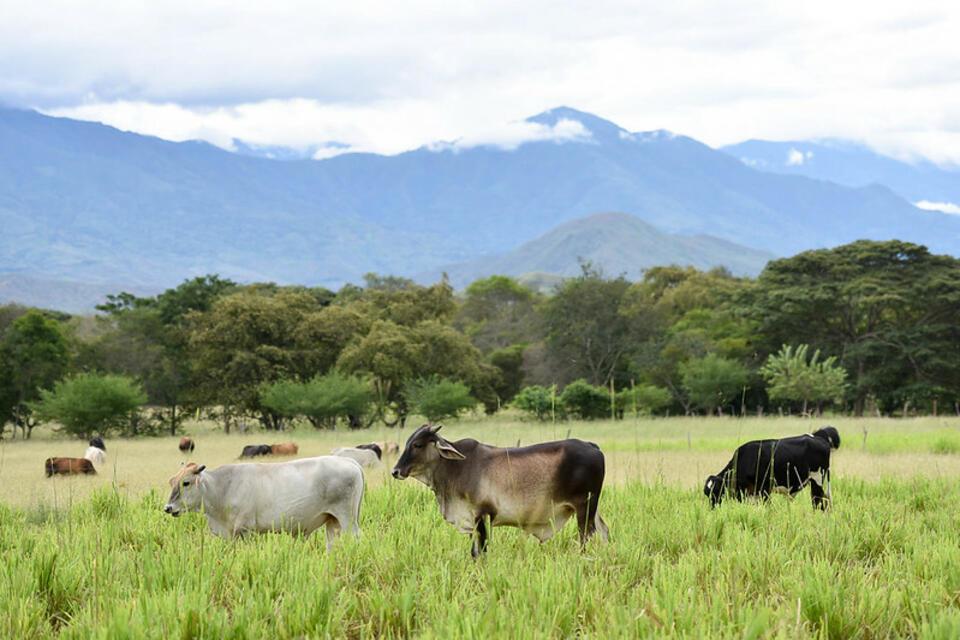
Cattle are central to food systems and rural livelihoods across Latin America and the Caribbean (LAC). The region supplies nearly half of global beef exports and is a major producer of milk. Yet, cattle production is also one of the largest drivers of greenhouse gas (GHG) emissions, deforestation, and energy use in agriculture. This raises a critical question for the region’s future: Can cattle production continue to grow without intensifying environmental damage?
A recent study focusing on LAC offers new insights into this dilemma by looking beyond land use and methane alone. Instead, it places energy intensity (how much energy is used per unit of agricultural output) at the center of the analysis. Using advanced econometric models and data from 12 LAC countries over nearly two decades, the study uncovers a clear causal chain linking cattle production, energy use, and emissions.
The cattle–energy–emissions triangle
Between 2000 and 2018, cattle production in LAC expanded rapidly. Beef and milk output grew by roughly 30–36%, responding to rising domestic consumption and global demand. Over the same period, cattle-related GHG emissions – mainly methane and nitrous oxide – also increased. At first glance, this seems to confirm a familiar narrative: more cattle means more emissions.
However, a closer look reveals an important counter-trend. Agricultural energy intensity declined across the region, suggesting that farmers and agrifood systems are producing more value with less energy input. This reflects gradual improvements in efficiency, technology and management, even as production scales up.
The study uses Vector Autoregressive (VAR) models to test how these variables interact over time. The results point to a unidirectional causal chain:
- Cattle production drives agricultural energy intensity
- Energy intensity drives cattle-related GHG emissions
- Cattle production also directly drives emissions
In other words, expanding cattle production increases energy use in agriculture, and higher energy use translates into higher emissions. Energy intensity acts as a key transmission channel between productivity and environmental impact.
Why energy intensity matters
Energy intensity is often overlooked in livestock debates, which tend to focus on methane from enteric fermentation or deforestation linked to pasture expansion. Yet energy use underpins nearly every aspect of modern cattle systems: feed production, fertilizers, irrigation, transport, refrigeration, and processing.
The study finds that energy intensity Granger-causes emissions, while emissions do not cause changes in energy intensity. This suggests that reducing energy intensity – through efficiency gains or cleaner energy – can play a meaningful role in mitigating emissions, even when production continues to grow.
Importantly, the relationship is dynamic rather than static. Short-term increases in cattle production tend to push emissions up. But over longer horizons, the models show that efficiency gains can partially offset environmental impacts, opening the door to what economists call 'relative decoupling'.
Signs of cautious optimism
Impulse-response analysis – a way of simulating shocks to the system – reveals a nuanced story. When cattle production increases suddenly, energy intensity and emissions rise at first. Over time, however, emissions begin to fall, suggesting that technological change and efficiency improvements eventually kick in.
Forecast simulations reinforce this picture. They project:
- continued growth in cattle production
- a gradual decline in agricultural energy intensity
- stabilization, or slight reduction, in cattle-related emissions.
These results do not imply that emissions will automatically fall as production grows. Rather, they show that efficiency gains create mitigation potential, but that potential can easily be overwhelmed if production expands without systemic change.
Country differences matter
Looking across individual countries reveals significant heterogeneity. Large cattle producers like Brazil, Argentina, Mexico, Colombia, and Uruguay dominate regional trends. They also show the clearest links between production scale, energy use, and emissions.
Some countries demonstrate what is possible with targeted policies and investments. Brazil’s Low Carbon Agriculture (ABC) Program, Colombia’s large-scale silvopastoral systems, and Uruguay’s climate-smart livestock initiatives have all achieved higher productivity with lower emissions intensity. These cases illustrate that the causal chain identified in the study is not immutable – it can be reshaped by policy, technology, and governance.
At the same time, many Central American and Caribbean countries face structural barriers: limited access to finance, weak extension systems, and fragmented institutions. In these contexts, energy efficiency gains remain uneven, and emissions reductions are harder to achieve.
Climate-smart cattle systems as a way forward
The study’s findings strongly support climate-smart agriculture as a guiding framework for the cattle sector. CSA emphasizes three goals: productivity, adaptation, and mitigation. Energy efficiency cuts across all three.
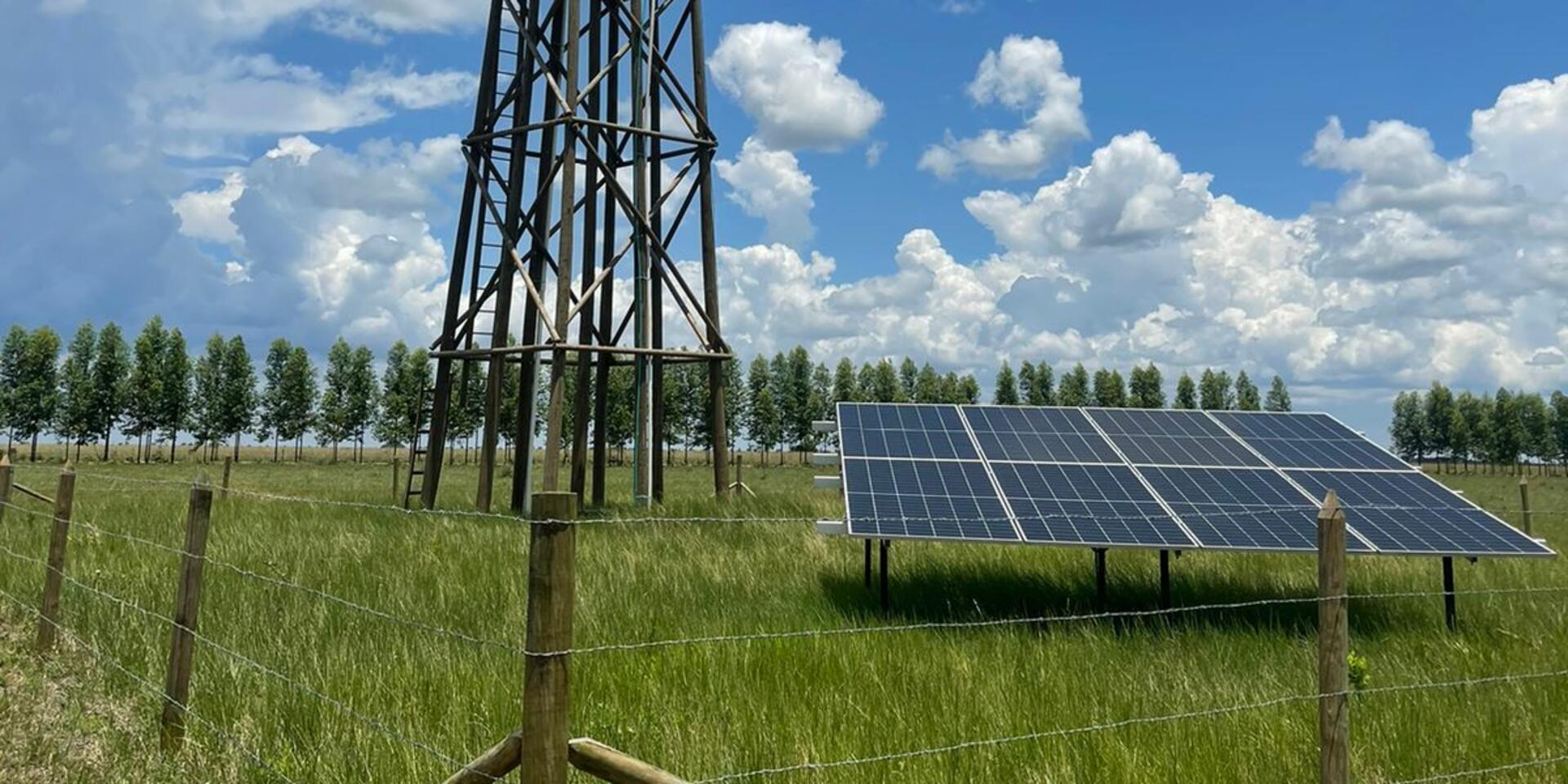
Practices such as improved forages, rotational grazing, crop–livestock integration, and silvopastoral systems reduce reliance on external energy inputs while boosting animal performance. Renewable energy technologies – solar pumps, biodigesters, and on-farm energy generation – can further lower fossil fuel dependence and emissions from manure.
Crucially, energy efficiency is not just about technology. It is also about systems transformation: better management, better incentives, and better coordination across value chains.
Policy implications: efficiency is necessary, but not sufficient
One of the study’s most important messages is also its most sobering. While declining energy intensity helps, it is unlikely to fully offset the environmental pressures of continued cattle expansion. Efficiency gains can slow emissions growth, but without broader changes, total emissions may remain high.
This has clear policy implications:
- Energy transitions in agriculture must accelerate, not just continue incrementally
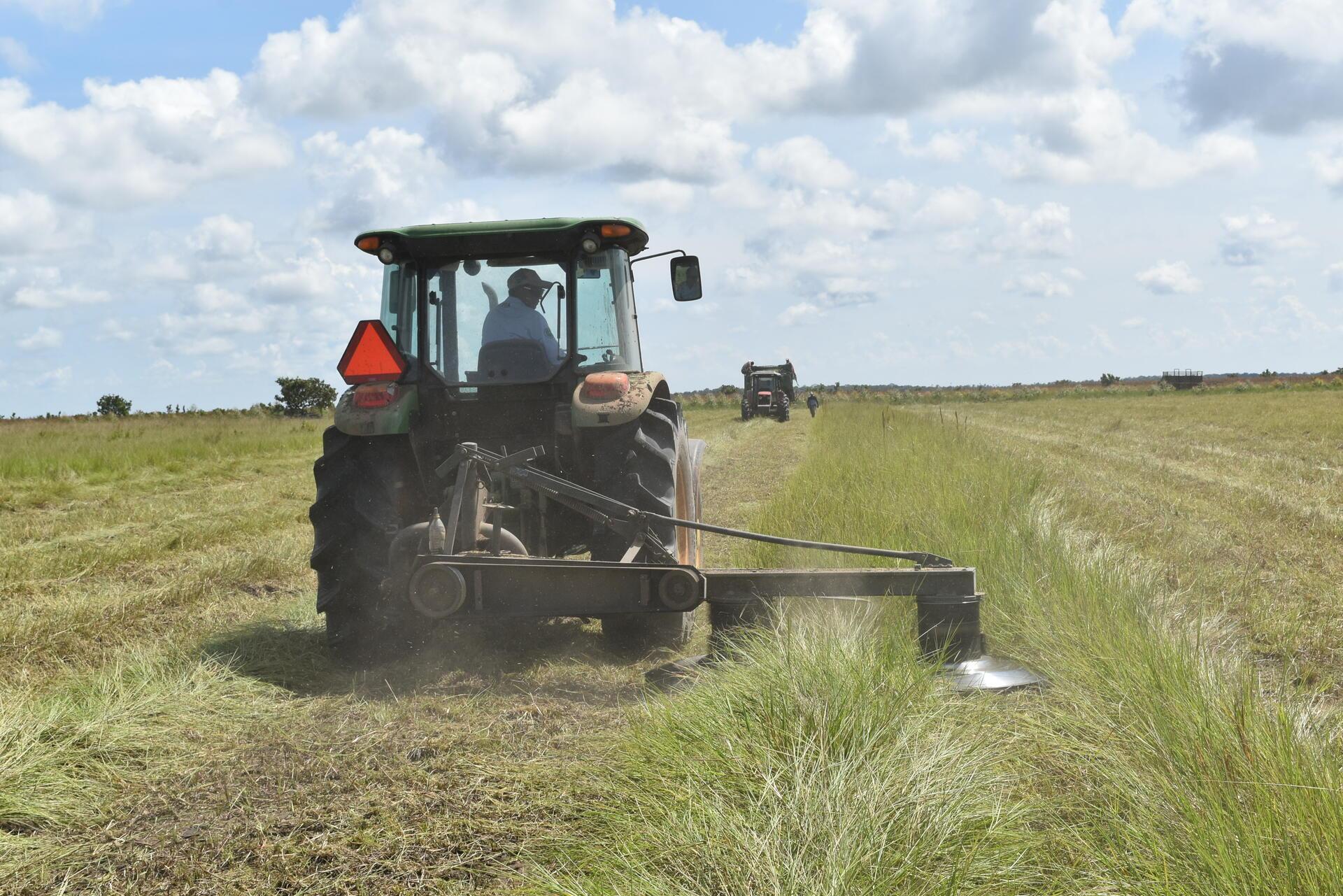
- Productivity growth must come from intensification, not expansion, especially into forests
- Financial, technical, and institutional support is essential for scaling climate-smart practices, particularly among smallholders
- Governance and incentives matter, including payments for ecosystem services, green credit, and sustainability-linked subsidies.
Energy policy and agricultural policy can no longer operate in silos. The cattle sector sits at their intersection.
Beyond Latin America
Although the study focuses on LAC, its insights resonate globally. Many regions face the same challenge: rising demand for animal-sourced foods, pressure to reduce emissions, and the need to improve energy efficiency in agriculture.
By explicitly linking cattle production, energy intensity, and emissions, this research provides a transferable framework for understanding – and managing – the sustainability of livestock systems worldwide.
The bottom line
Cattle production in LAC is neither doomed to be environmentally destructive nor guaranteed to become sustainable on its own. The path it takes depends on choices made now.
Energy efficiency emerges as a powerful lever – but not a silver bullet. To truly decouple cattle productivity from environmental harm, efficiency gains must be combined with clean energy, climate-smart practices, and strong institutions.
The message is clear: the future of cattle in LAC is not just about cows – it is about energy, systems, and policy working together.
Acknowledgements: This work was carried out as part of the CGIAR Science Program on Sustainable Animal and Aquatic Foods (SAAF), Multifunctional Landscapes (MFL), and Climate Action (CA), as well as the CGIAR Initiative on Sustainable Animal Productivity (SAPLING). We thank all donors who globally support our work through their contributions to the CGIAR System. The views expressed in this document may not be taken as the official views of these organizations. We extend special thanks to the Bezos Earth Fund for funding the project “Using genetic diversity to capture carbon through deep root systems in tropical soils,” and to the Gates Foundation and the Bezos Earth Fund for supporting the “Low-Methane Forages” project.