Research Articles When does cattle farming go green? Understanding the 'Environmental Kuznets Curve'

Cattle farming is often in the spotlight of environmental debates: it’s a major source of greenhouse gases, and a driver of deforestation. Yet cattle are also a livelihood for millions of pastoralists, and the backbone of rural economies in many developing countries. This brings up a crucial question: as countries develop and their cattle industries grow, will their environmental impact eventually start to decline? Does cattle farming follow an 'Environmental Kuznets Curve', where pollution rises, peaks, and then falls as income increases? A recent study, published in the renowned journal Nature Scientific Reports, examined this question across Latin America, Africa, and Southeast Asia. The findings provide an eye-opening reality check and a call to action.
The Environmental Kuznets Curve is a theory that suggests the environment initially suffers when an economy grows, but after a certain level of prosperity, further growth leads to environmental improvement. Think of it like an inverted “U” curve: in the early stages, more growth means more pollution, but beyond a turning point (the peak of the “U”), richer economies start investing in cleaner technologies and stricter policies, causing pollution to eventually decrease. At the peak of the curve, a shift toward less-polluting industries and better services occurs, which helps halt environmental degradation. After that inflection point, higher incomes typically come with greater demand for a clean environment and more resources for green investments. In short, beyond a certain stage of development, people can grow the economy and green the environment at the same time – at least in theory.
The Environmental Kuznets Curve doesn’t automatically appear everywhere; the turning point depends on factors like technology, public awareness, and government policies. In the context of cattle farming, the Environmental Kuznets Curve hypothesis suggests a hopeful scenario: after enough growth, farmers and governments could adopt greener practices – such as better manure management, silvo-pastoral systems, or methane-reducing innovations – leading to lower emissions per unit of output.
The big question is whether this inverted-U pattern actually shows up in the real world of cattle production, or if environmental impacts just keep rising.
Cattle farming and environmental challenges in developing regions
Before diving into the study’s findings, it helps to understand why cattle farming is so crucial – and so challenging – in these regions. According to the United Nations Food and Agriculture Organization (FAO), livestock provides income for roughly 60% of rural families in developing countries, and contributes approximately 12% of those countries’ greenhouse gas emissions. In simpler terms, cows are both breadwinners and big emitters. This dual importance means that any environmental policy has to balance people’s livelihoods with the planet’s health.
Each region has distinctive characteristics. Latin America has huge cattle industries and has suffered extensive deforestation, though it is now starting to adopt more sustainable practices. Africa has smaller-scale cattle farming limited by land and harsh climate, though improved drought-tolerant forages offer hope to boost productivity without expanding herds. Southeast Asia’s cattle sector is relatively small, but growing; improved feeding systems are beginning to show productivity benefits. Despite their differences, all three regions face the same challenge: how to grow cattle farming economies while protecting the environment.
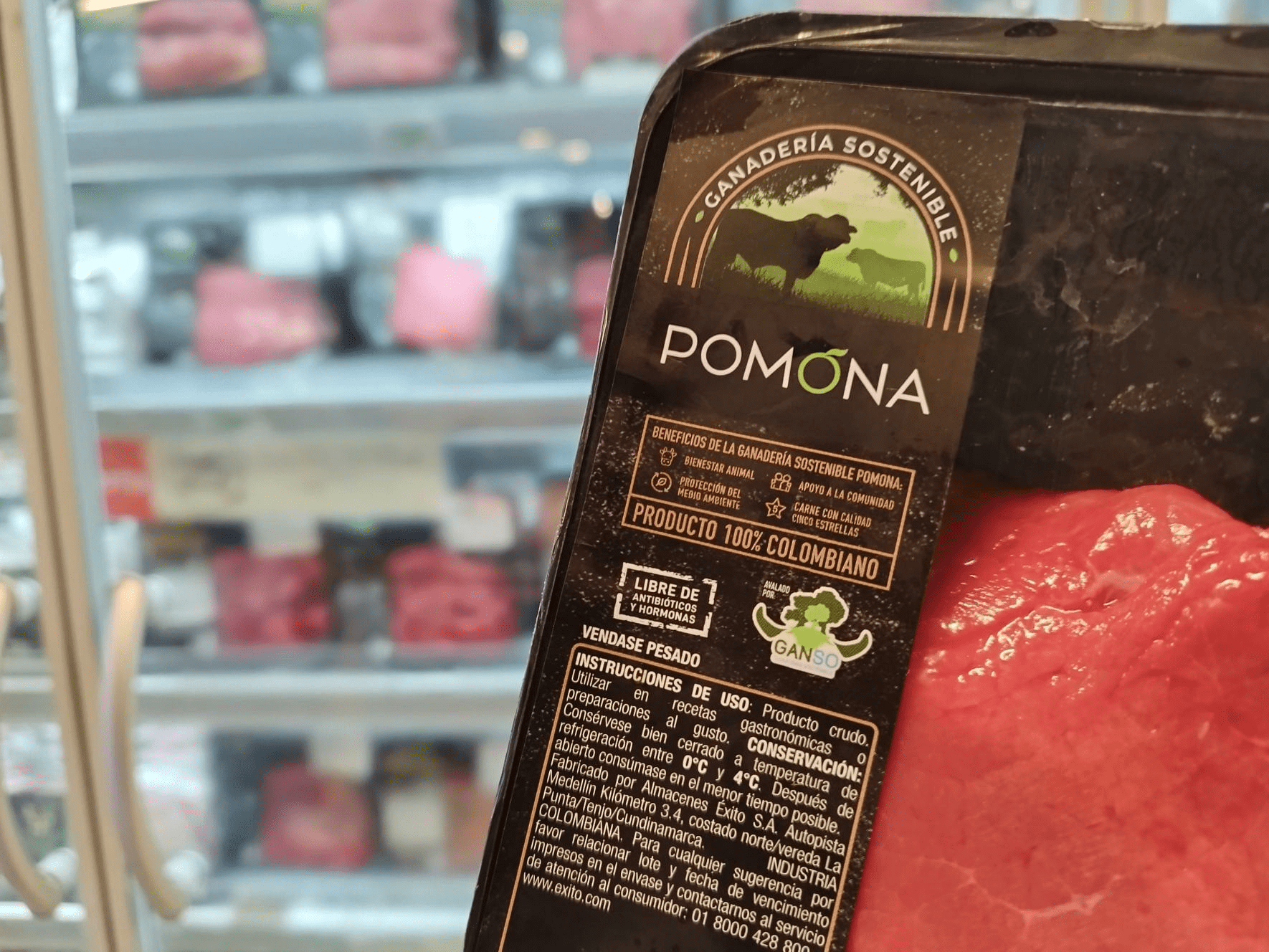
Initiatives such as the GANSO endorsement and deforestation monitoring in meat supply networks in Colombia allows for evaluating and monitoring sustainable practices, conserving ecosystem and measuring the environmental impact of livestock farms in terms of greenhouse gas emissions. Credit: GANSO
The study: Testing the Environmental Kuznets Curve for cattle (2000–2020)
The study examined data from 2000 to 2020 across dozens of cattle-producing countries in Latin America, Africa, and Southeast Asia. It compared growth in the cattle sector (using the gross production value of beef and dairy cattle) with environmental impact, measured by sector-specific CO2-equivalent emissions and the ecological footprint of cattle farming. Using statistical models, the researchers tested whether the relationship follows an inverted U-shape as the Environmental Kuznets Curve theory predicts. They also included variables like governance quality, energy efficiency, urbanization, and development funding in the analysis to see how such institutional and socio-cultural factors affect the cattle-environment link.
Key findings: More cattle, more emissions, no turning point (yet)
Across all three regions, the study found that more cattle production currently means more emissions – with almost a one-to-one increase in pollution as output rises. The countries with the biggest cattle sectors (Brazil, Argentina, Ethiopia, etc.) are indeed the ones with the highest cattle-related greenhouse gas emissions, and this pattern held steady from 2000 to 2020. Crucially, no region has yet reached the Environmental Kuznets Curve’s inflection point where emissions would start to decline. In practice, Latin America, Africa and Southeast Asia are all still on the “uphill” side of the curve – increases in cattle output are coupled with increases in environmental degradation. Even the most advanced cattle economy (Brazil) hadn’t hit the turning threshold by 2020: it was the closest, but still tens of billions of dollars in output away from the estimated inflection point. In short, the anticipated downturn in emissions has not materialized in these regions so far, underscoring that growth alone hasn’t led to greener outcomes.
Why hasn’t the curve turned? The role of governance and technology
The reason no downturn has occurred yet is that the structural changes which drive the Environmental Kuznets Curve’s downward phase are not widespread. Emissions only drop after the peak if cleaner technology, efficient practices and strong policies take hold. The study’s findings support this: countries with better governance and institutions tend to have lower emissions for the same level of cattle output. In other words, deliberate efforts – like investing in energy efficiency, adopting cleaner production methods, and enforcing environmental regulations – can accelerate the turning point rather than waiting for it to arrive on its own. A striking example is how funding is used: the study noted that international aid for general environmental protection correlates with reduced cattle-sector emissions, whereas aid directed to traditional agriculture (without sustainability conditions) correlates with higher emissions. This shows that how growth happens matters greatly. Without proactive improvements in practices and policies, economic growth in cattle farming will continue to fuel environmental harm, pushing the 'greener' phase of the curve further away.
Regional insights: Latin America, Africa and Southeast Asia
While the overall pattern is similar, each region has unique challenges. Latin America hosts some of the world’s largest cattle economies and has seen extensive deforestation as a result. Recently, however, many countries are pushing for more sustainable cattle ranching practices to curb environmental damage. Across Africa, cattle are vital for livelihoods, but production is often limited by land constraints and extreme climate conditions. Improved, climate-adapted forages are seen as a crucial opportunity to increase cattle productivity without further land degradation. Cattle farming in Southeast Asia is relatively smaller scale, since other livestock dominate. Even so, the economic value of cattle is rising, and new systems (like better forage and feeding methods) are showing productivity benefits, indicating these countries could grow their cattle sectors in a more sustainable way.
Policy implications: Bending the curve
To shift cattle farming onto a sustainable path, economic growth alone will not be enough. Countries need deliberate action through smarter farming practices, stronger governance, and financial incentives that reward sustainability. The following policy directions outline how to accelerate this transition.
- Adopt climate-smart farming practices: Promote technologies and practices that cut emissions per animal. This includes better feed (to reduce methane from digestion), improved manure management (to capture or minimize methane), and integrating trees or shrubs into pastures (which can absorb carbon and improve soils). These practices let farmers produce meat or milk with a smaller environmental footprint.
- Strengthen governance and policies: Governments should enforce environmental regulations (for example, anti-deforestation laws and limits on methane emissions) and provide incentives for sustainable farming. It’s also important to integrate the livestock sector into national climate action plans. Good governance – transparency, accountability, and long-term planning – creates an environment where sustainable innovations can thrive.
- Align financial support with sustainability: Redirect subsidies, development aid, and investments toward environmentally friendly practices. Funding for cattle farming should come with green conditions such as requiring recipients to use climate-friendly technologies and practices. International climate finance and carbon credit programs can reward farmers and communities for lowering emissions; for instance, by paying for each ton of greenhouse gas they avoid or each hectare of degraded land they restore. Supporting farmers in this transition, through education, technical assistance, and access to credit for new technologies, is crucial so that sustainability doesn’t come at the cost of their livelihoods.
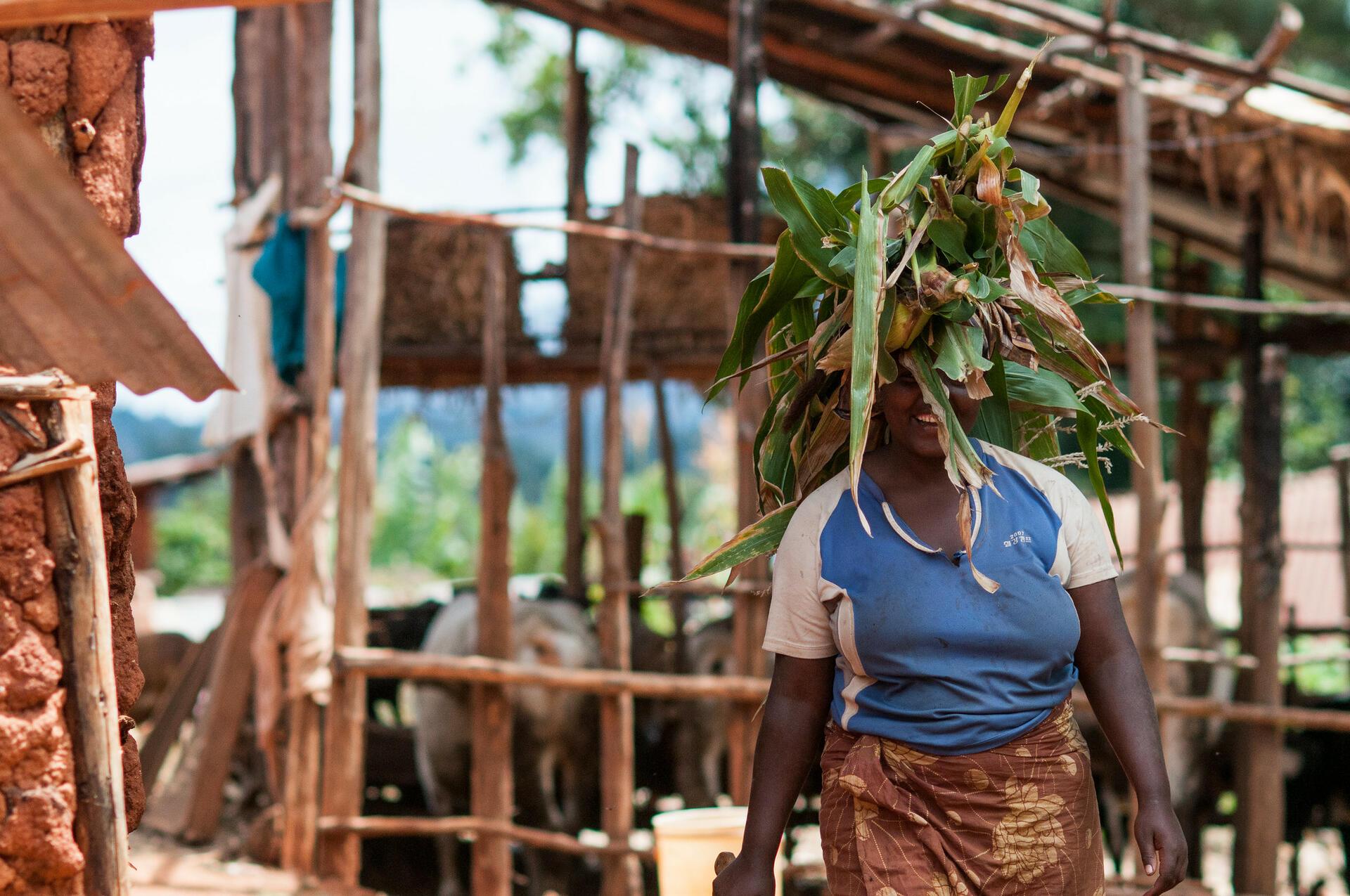
Livestock farmers in the district of Lushoto, in the Tanga region of Tanzania, are finding ways of boosting their production and lowering their environmental impact by planting improved forages. Credits: Georgina Smith/CIAT
A call to action
This study shows that for cattle farming in Latin America, Africa and Southeast Asia, sustainability won’t arrive automatically with economic growth. Unlike the hopeful vision of the Environmental Kuznets Curve, none of these regions have yet seen emissions peak and decline – at least not without deliberate intervention. However, the future is not written in stone. By taking proactive steps now in technology, policy, and farming practice, we can shorten the time to that turning point when cattle production no longer means environmental degradation. The study’s authors stress that continued institutional and socio-cultural efforts will accelerate the moment when growing the cattle sector stops harming the environment. In essence, we have to bend the curve ourselves through smart choices and strong governance. If we do so, cattle farming can indeed head toward greener pastures – nourishing populations while also caring for our planet.
Further reading