Research Articles Trees, cows and climate: How Colombia’s silvopastoral systems are redefining sustainable cattle ranching

A recent review synthesizes this growing body of evidence, assessing not only the environmental and economic benefits of silvopastoral systems (SPS) in Colombia, but also the financial, policy, and market conditions needed to scale them. Drawing on more than 180 studies, the article positions SPS as a viable pathway toward a more sustainable, inclusive, and climate-resilient cattle sector in the tropics. So why haven’t these systems gone to scale? And what can Colombia’s experience teach the rest of the tropics about building sustainable cattle systems that work for farmers, investors, and the climate?
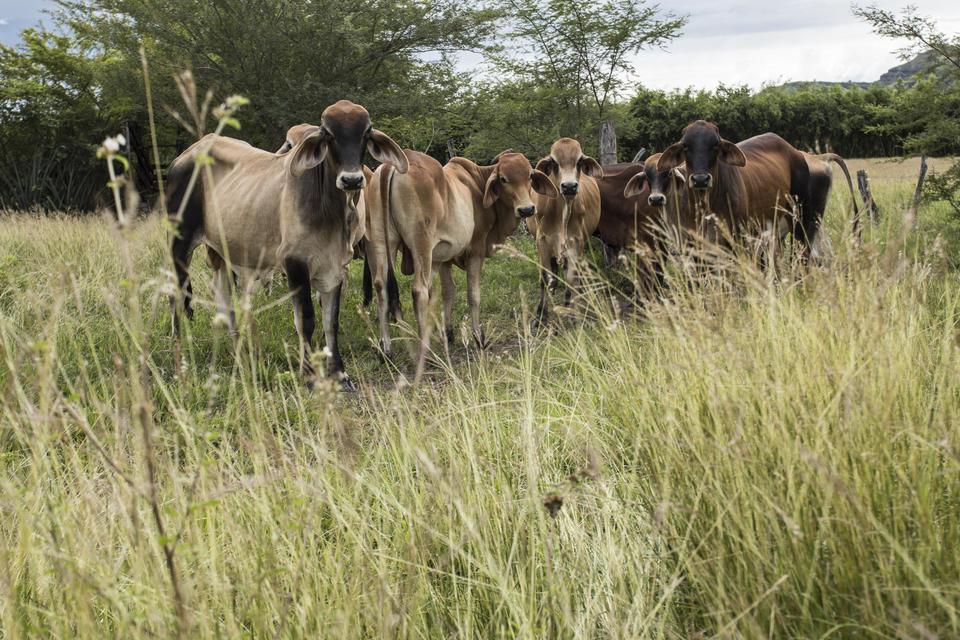
Cattle ranching sits at the heart of Colombia’s rural economy. More than half a million households depend on it for their livelihoods, and beef and dairy together contribute nearly a quarter of the country’s agricultural GDP. Yet this same sector has long been at the center of some of Colombia’s most pressing environmental challenges. Extensive grazing has driven deforestation, degraded soils, and increased greenhouse gas emissions, while leaving many producers vulnerable to droughts, heat stress, and volatile markets.
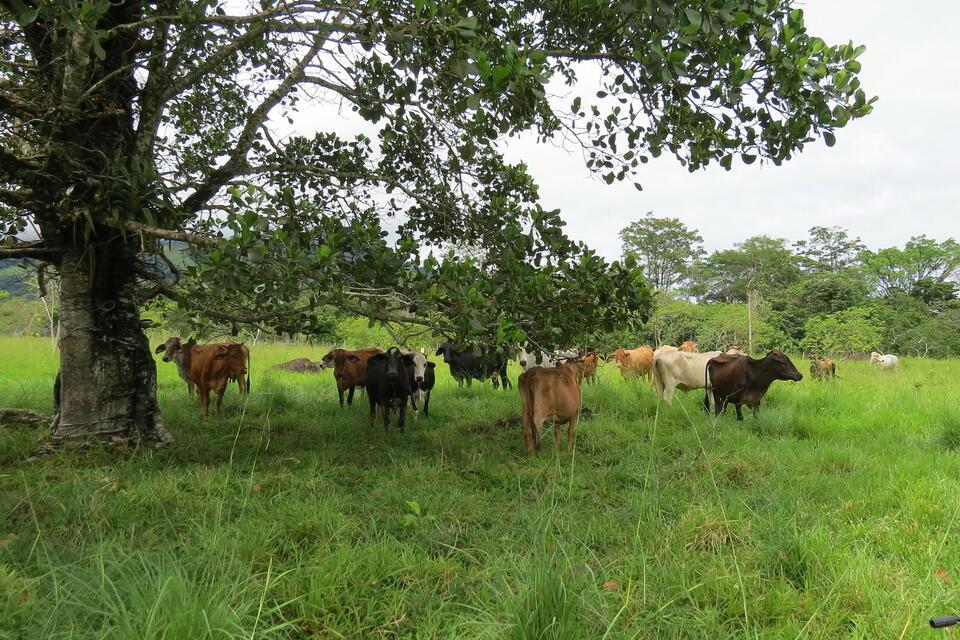
Against this backdrop, a quiet transformation has been unfolding across Colombia’s pasturelands. Instead of endless grass monocultures, some ranchers are bringing trees back into their farms – strategically, deliberately, and productively. These systems, known as silvopastoral systems, integrate trees, shrubs, forages, and livestock into a single, multifunctional production system. Over the past two decades, research and pilot projects have shown that SPS can increase productivity, restore ecosystems, and improve rural livelihoods. But despite strong evidence, adoption remains stubbornly low.
From environmental problem to climate-smart solution
Traditional cattle ranching in Colombia is characterized by low stocking rates – on average less than one animal per hectare – and high land demand. Pasture expansion has historically accounted for around 60% of national deforestation, while overgrazing has degraded roughly two-thirds of existing pastureland. Climate change has compounded these pressures, with heat waves and droughts reducing forage availability and cutting into milk and meat production.
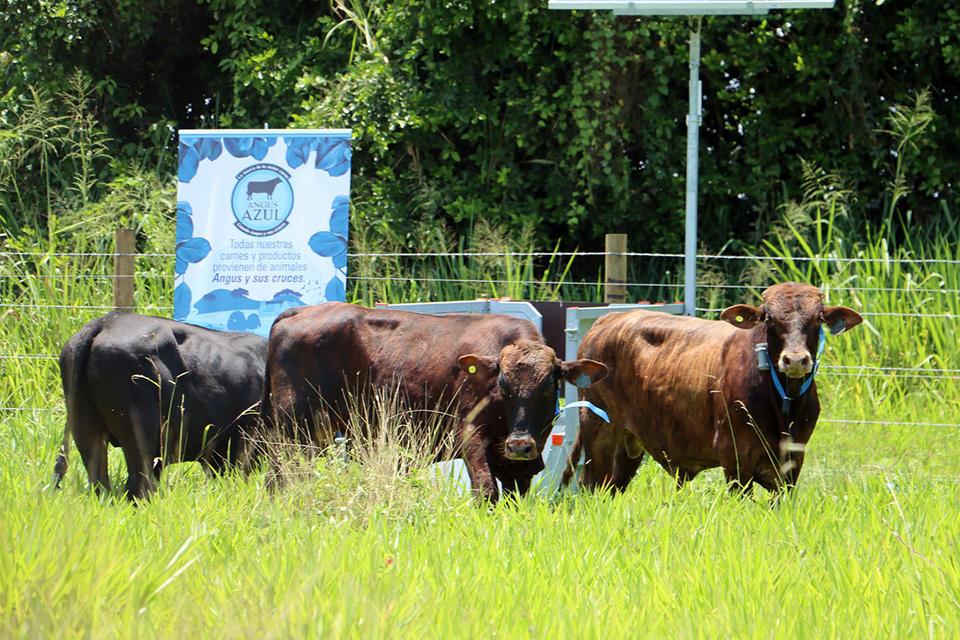
Silvopastoral systems offer a fundamentally different model. By combining improved grasses with forage shrubs and trees, they replace single-layer pastures with diversified vegetation structures. This diversity delivers multiple benefits at once. Trees provide shade that reduces heat stress for animals, improve soil fertility through litter and nitrogen fixation, and create microclimates that help pastures remain productive during dry periods. Shrubs supply high-protein fodder that improves feed quality and reduces reliance on expensive concentrates.
In practical terms, silvopastoral systems make it possible to produce more on less land, offering a credible pathway to break the historic cycle linking cattle expansion to deforestation.
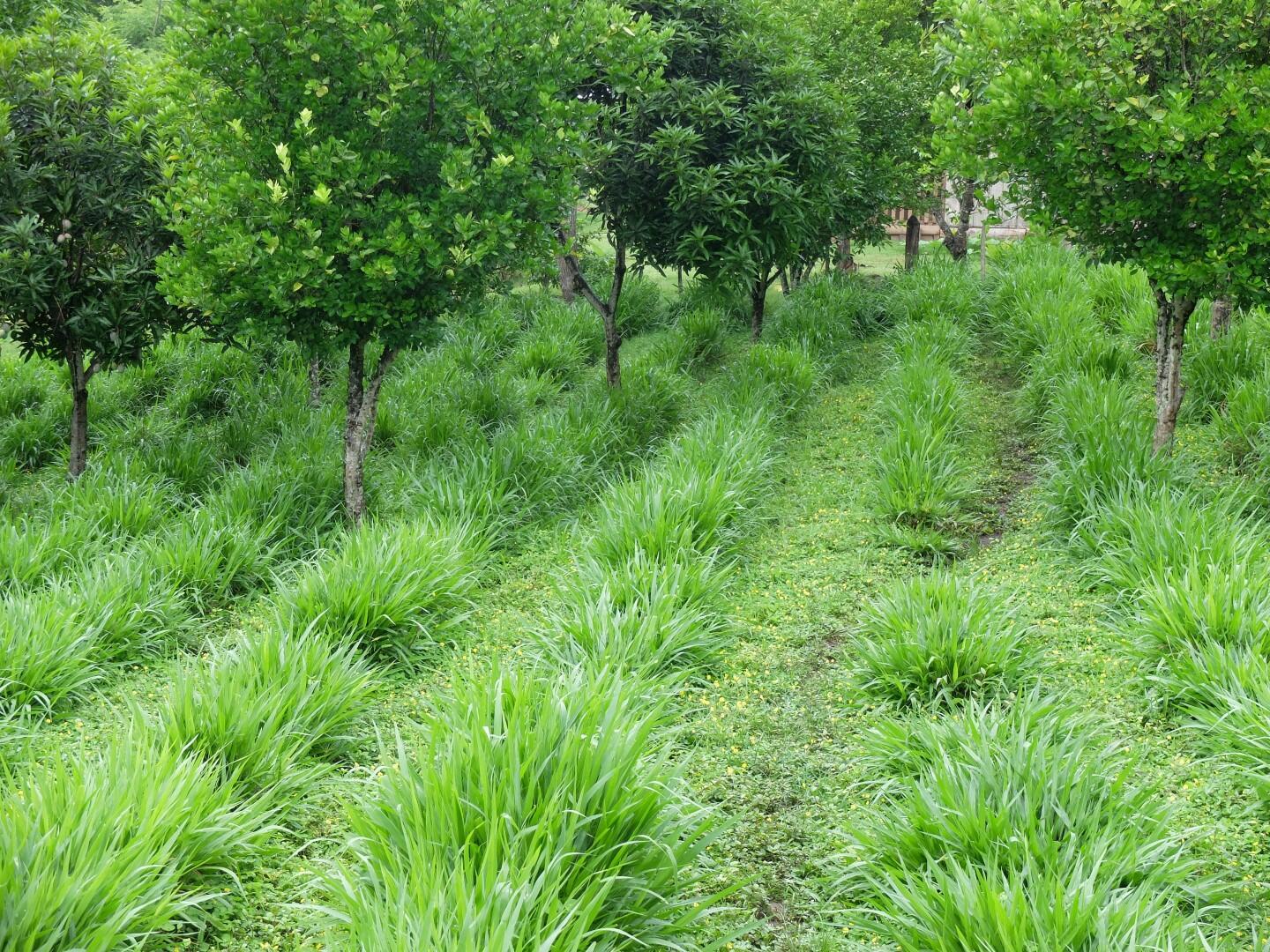
Silvopastoral system with improved grasses, forage shrubs and trees. Credits: CIAT
The productivity and profitability case
One of the strongest arguments for SPS is economic. Contrary to the perception that “green” systems are less productive, evidence from Colombia consistently shows the opposite.
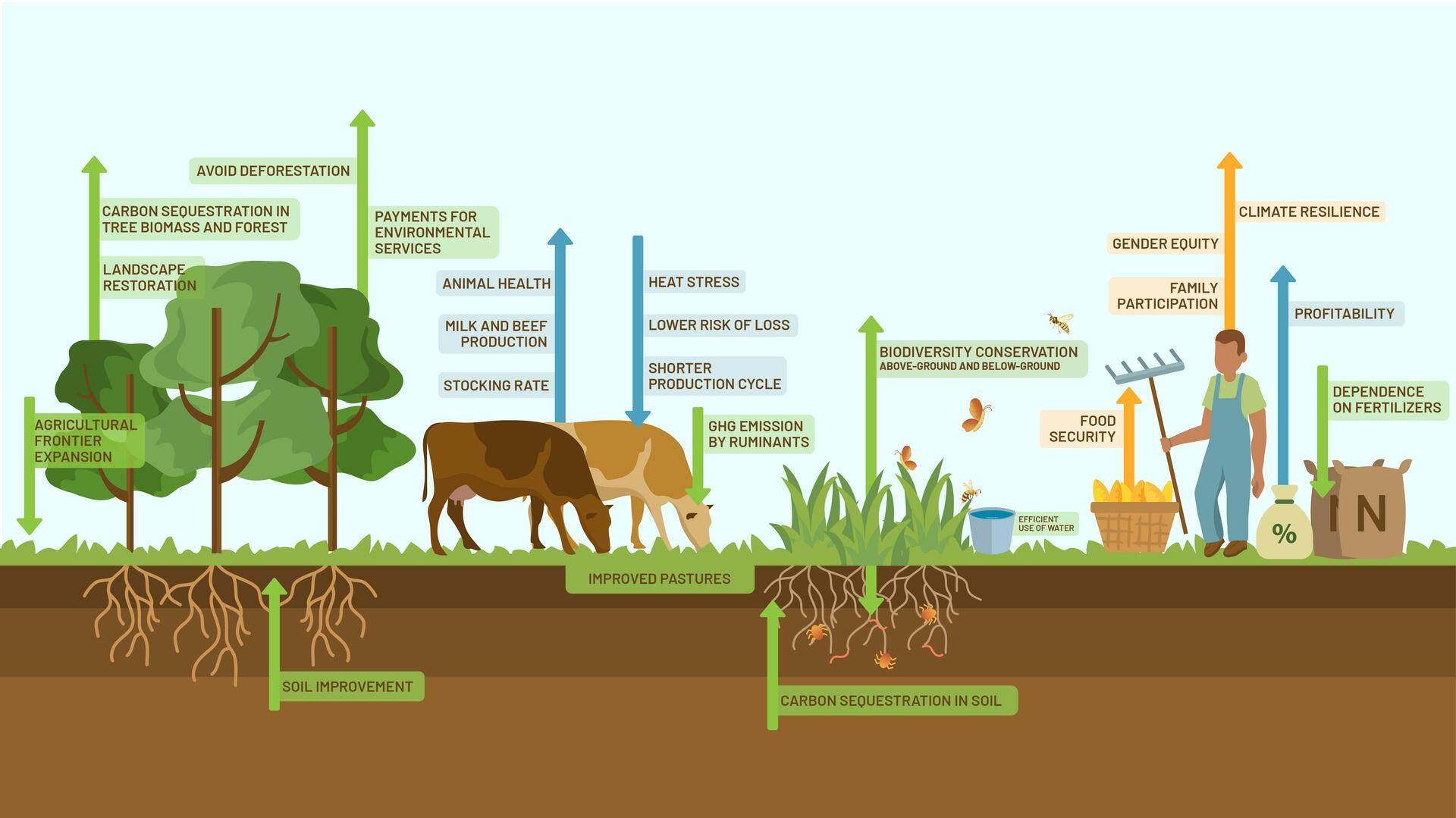
Well-managed silvopastoral farms often achieve higher milk yields per cow, faster weight gain in beef systems, and significantly higher output per hectare. In some regions, milk production has doubled after the adoption of SPS, while beef fattening cycles have shortened by several months. These gains are driven by better nutrition, reduced heat stress, and more stable forage supply throughout the year.
From a financial perspective, these productivity gains translate into attractive returns. Case studies report internal rates of return above 20%, higher net present values than conventional systems, and shorter payback periods – often four to five years after establishment. Silvopastoral systems also diversify income streams. Beyond milk and meat, farmers can generate revenue from timber, fruit, fodder seed, honey, and, increasingly, carbon-related payments.
Equally important is risk reduction. SPS farms are less exposed to droughts and feed price volatility, making incomes more stable over time. For small and medium producers, this resilience can be as valuable as higher average profits.
Environmental gains that go beyond carbon
While carbon sequestration often dominates discussions of climate-smart agriculture, the environmental benefits of silvopastoral systems extend much further.
Trees integrated into pastures turn grazing lands into carbon sinks, capturing carbon both above and below ground. At the same time, higher-quality forage reduces methane emissions per unit of milk or meat produced, improving the overall emissions profile of cattle systems. In some contexts, silvopastoral systems can bring ranching close to carbon neutrality.
But silvopastoral systems are not just about climate mitigation. They play a crucial role in landscape restoration. Improved ground cover reduces erosion, enhances water infiltration, and rebuilds soil organic matter. In biodiversity terms, silvopastoral farms host far more birds, insects, and plant species than conventional pastures. Living fences, scattered trees, and fodder banks create corridors that reconnect fragmented habitats, even in heavily farmed landscapes.
In Colombia, large-scale pilot programs have documented significant increases in bird species richness and the return of wildlife to cattle-dominated regions – clear evidence that production and conservation do not have to be mutually exclusive.
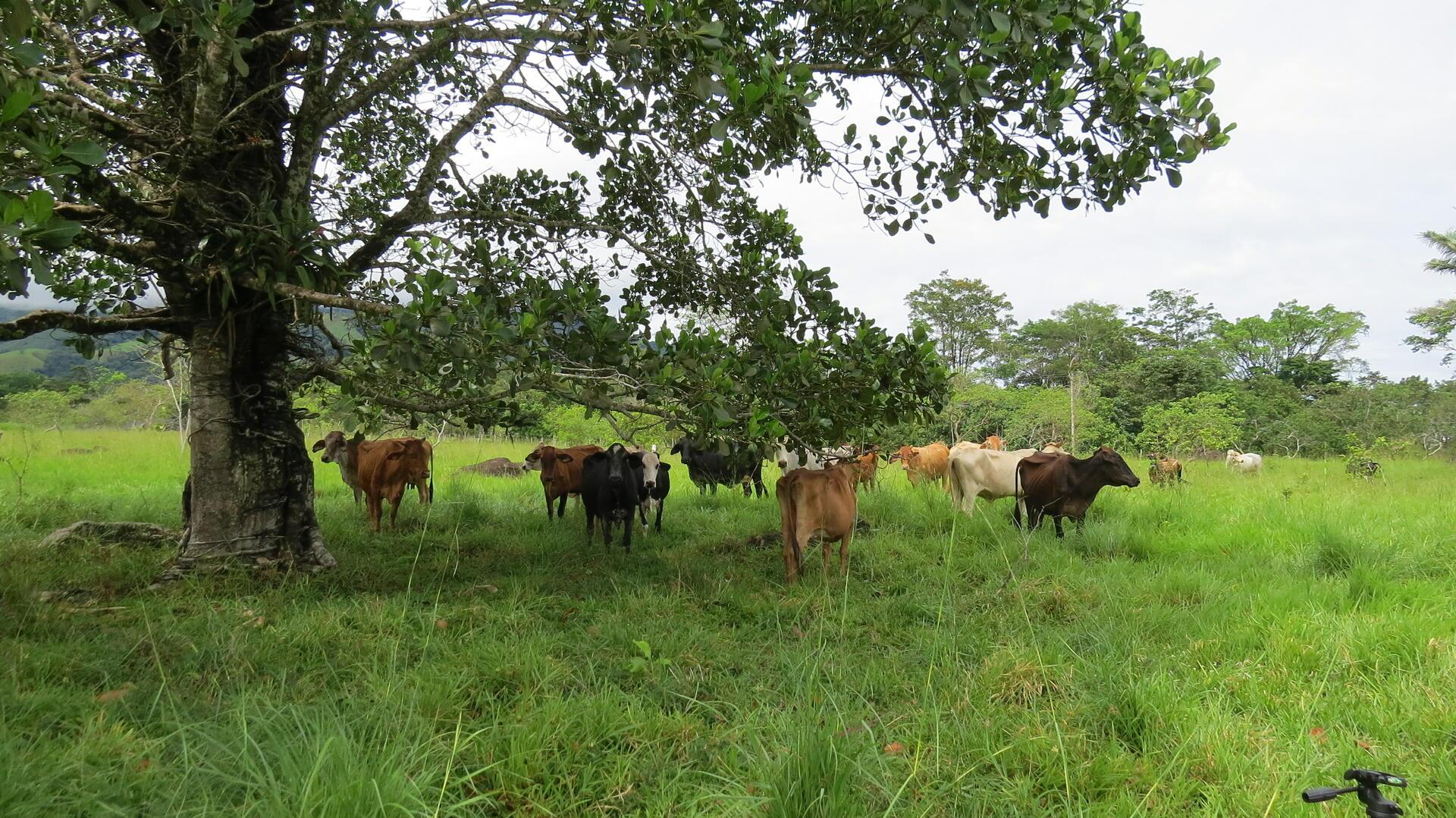
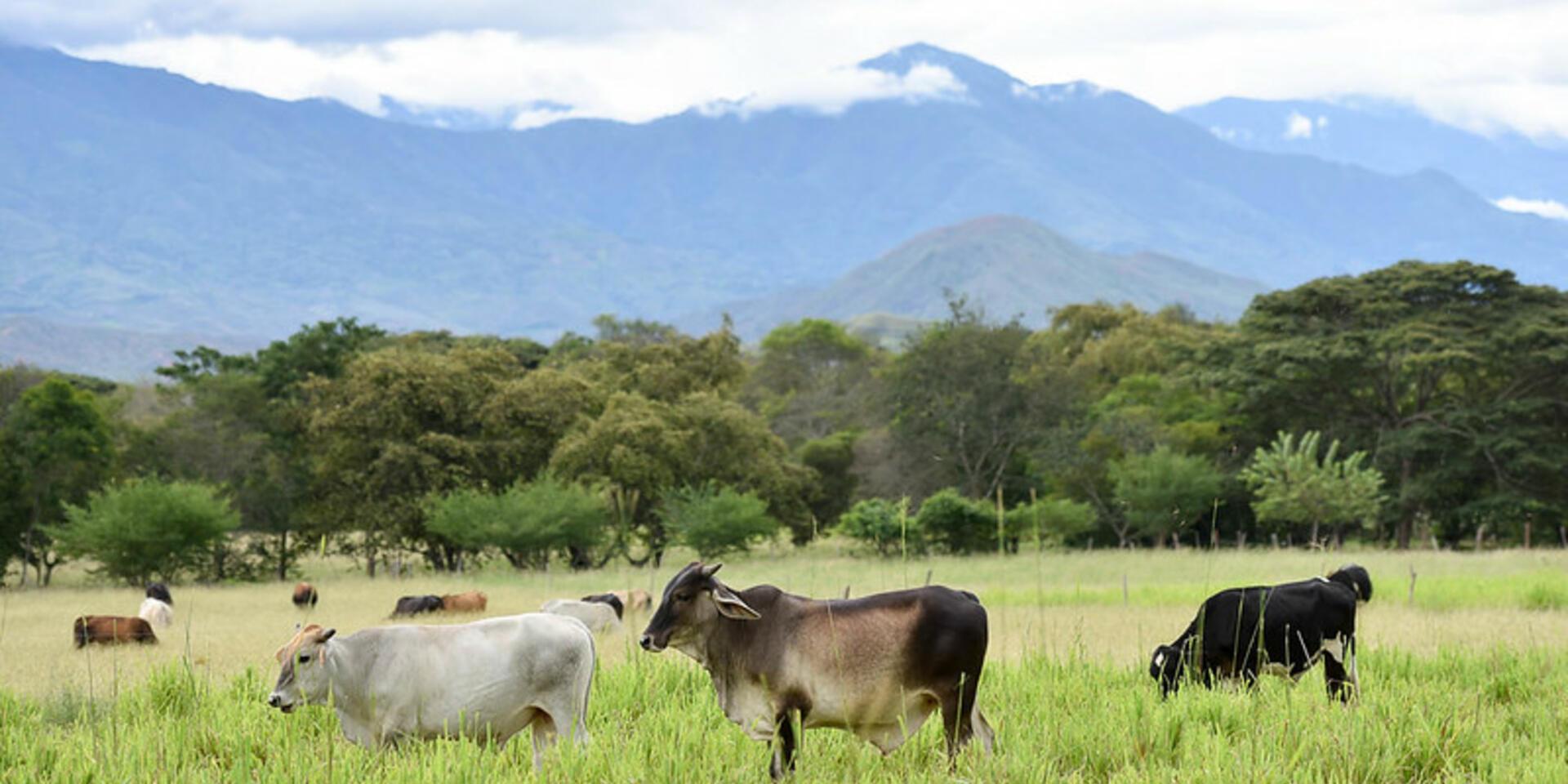
Silvopastoral livestock system in Colombia's Caquetá Department. Credit: A. Yedra / CIAT
Social benefits and inclusive development
Silvopastoral systems also deliver important social outcomes. By intensifying production sustainably, they allow families to increase income without expanding land use, reducing pressure on forests and land conflicts. They create skilled employment in activities such as tree management, rotational grazing, and nursery production.
Notably, silvopastoral systems have proven particularly relevant in post-conflict and vulnerable regions. Programs supporting displaced families to adopt silvopastoral practices have strengthened food security, rebuilt livelihoods, and reinforced ties between people and land. Women, who play key roles in dairy production and farm management, often benefit from the diversification and value-added opportunities associated with silvopastoral systems, especially when access to training and credit is improved.
Taken together, these outcomes align silvopastoral systems with multiple Sustainable Development Goals, including poverty reduction, food security, decent work, and climate action.
If the case is so strong, why aren’t silvopastoral systems everywhere?
Despite decades of research and hundreds of pilot projects, fewer than 1% of Colombian cattle producers have deliberatly adopted silvopastoral systems. This gap between potential and reality highlights a critical lesson: evidence alone does not drive adoption.
The barriers to scaling SPS are structural and interconnected.
First, upfront investment costs remain a major hurdle. Establishing trees, shrubs, and fencing requires more capital than reseeding conventional pastures, and returns are not immediate. Many producers lack access to tailored credit, while traditional lenders often perceive silvopastoral systems as risky.
Second, silvopastoral systems are management-intensive. Designing and maintaining tree–forage–livestock interactions requires knowledge that is not widely available through public extension services, which remain underfunded and fragmented in many regions.
Third, institutional and land tenure challenges persist. Insecure land rights discourage long-term investment, particularly in areas affected by conflict and informality. Without clear tenure, farmers struggle to access finance or commit to systems with multi-year payback periods.
Finally, market incentives are still weak. While demand for deforestation-free and low-carbon beef and dairy is growing, price premiums and certification schemes remain limited and uneven. Without clear signals from value chains, many farmers hesitate to transition once subsidies or project support end.
Financing the transition: from pilots to scale
Overcoming these barriers requires rethinking how sustainable cattle systems are financed and supported.
Promising approaches are already emerging. Blended finance models combine public or philanthropic funds with private capital to reduce risk and crowd in investment. Grants can cover early-stage costs such as technical assistance and establishment, while concessional loans and guarantees make credit more accessible to producers.
Carbon markets and payments for ecosystem services offer additional revenue streams, even if modest on their own. When combined with productivity gains, these payments can significantly improve the business case for adoption.
Corporate engagement is another powerful lever. Food companies seeking to meet climate and deforestation commitments can support silvopastoral system adoption through long-term offtake agreements, sustainability-linked loans, or technical assistance programs embedded in their supply chains.
Crucially, financing must be paired with strong institutional partnerships, linking farmers with research organizations, NGOs, banks, and government agencies. Successful scaling depends as much on coordination and capacity building as on capital.
Lessons for Colombia – and beyond
Colombia’s experience with silvopastoral systems offers a clear message for the tropics: sustainable cattle ranching is not a technical challenge, but a systemic one. SPS can deliver productivity, profitability, and environmental restoration at the same time, but only when adoption, policy, markets, and finance move in sync.
For policymakers, this means aligning climate goals, agricultural subsidies, credit rules, and land tenure reforms around sustainable intensification. For investors, it means looking beyond short-term returns and designing instruments that reflect the long-term value of resilient landscapes. For value-chains, it means rewarding producers who invest in sustainability with stable demand and fair prices.
If these pieces come together, SPS can move from isolated success stories to a new norm, transforming cattle ranching from a driver of deforestation into a cornerstone of climate-smart development.
Colombia has already shown that trees and cows can thrive together. The challenge now is to scale that vision, across landscapes and across the tropics.
Acknowledgements: This work was carried out as part of the CGIAR Science Programs on Sustainable Animal & Aquatic Foods (SAAF), Multifunctional Landscapes, and Climate Action. We thank all donors who globally support our work through their contributions to the CGIAR System. The views expressed in this document may not be taken as the official views of these organizations.