Blog Towards agroecological school plates: Connecting producers with reliable markets

School feeding programmes are a significant market opportunity for agroecological produce, while at the same time enhancing access to diverse and nutritious foods among learners. Connecting schools with nearby small-scale farmers is an opportunity to create reliable and predictable markets for locally grown food and empower the communities that produce it, thus improving their livelihoods.
Produce such as beans, leafy vegetables, carrots and fruits offer practical starting points. With clear purchasing arrangements, producers can conveniently plan planting, harvesting and deliveries in alignment to schools’ needs.
This potential has been revealed by findings from a recent survey by the Alliance of Bioversity International and CIAT (The Alliance), in 25 schools across Kiambu and Kajiado counties. According to the findings, feeding programmes are well established, with most schools reporting that they fed all learners across the education levels, including pre-primary, junior primary and senior primary. Rice served with beans or green grams and vegetables such as cabbages, kales and spinach, was reported by 60 per cent of schools, while 24 per cent served githeri (a mixture of maize and beans) and 20 per cent served ugali (maize meal) with vegetables (cabbages, kales, spinach) or pulses (beans, green grams and lentils). The gaps in fruit provision and vegetable diversity present an opportunity for local agroecological producers to supply a wider range of these nutritious foods.
Understanding how schools select suppliers
Accessing these markets requires farmers to understand how schools select their suppliers. Survey respondents identified quality and freshness, affordability, reliable supply, nutritional value and hygiene as key considerations when sourcing the foods consumed in schools. Therefore, producers need to coordinate production and deliveries to meet schools’ requirements consistently.
Financing also shapes what schools can buy and who receives a meal. Of the 25 schools surveyed, 15 had fully funded programmes supported by government or partners, six had partially funded programmes, and four relied entirely on parents through school fees. Respondents highlighted a concern in parent-funded programmes: Where a parent is unable to pay, a child misses a meal. Improving menus should therefore go hand in hand with affordability and continuity of funding.
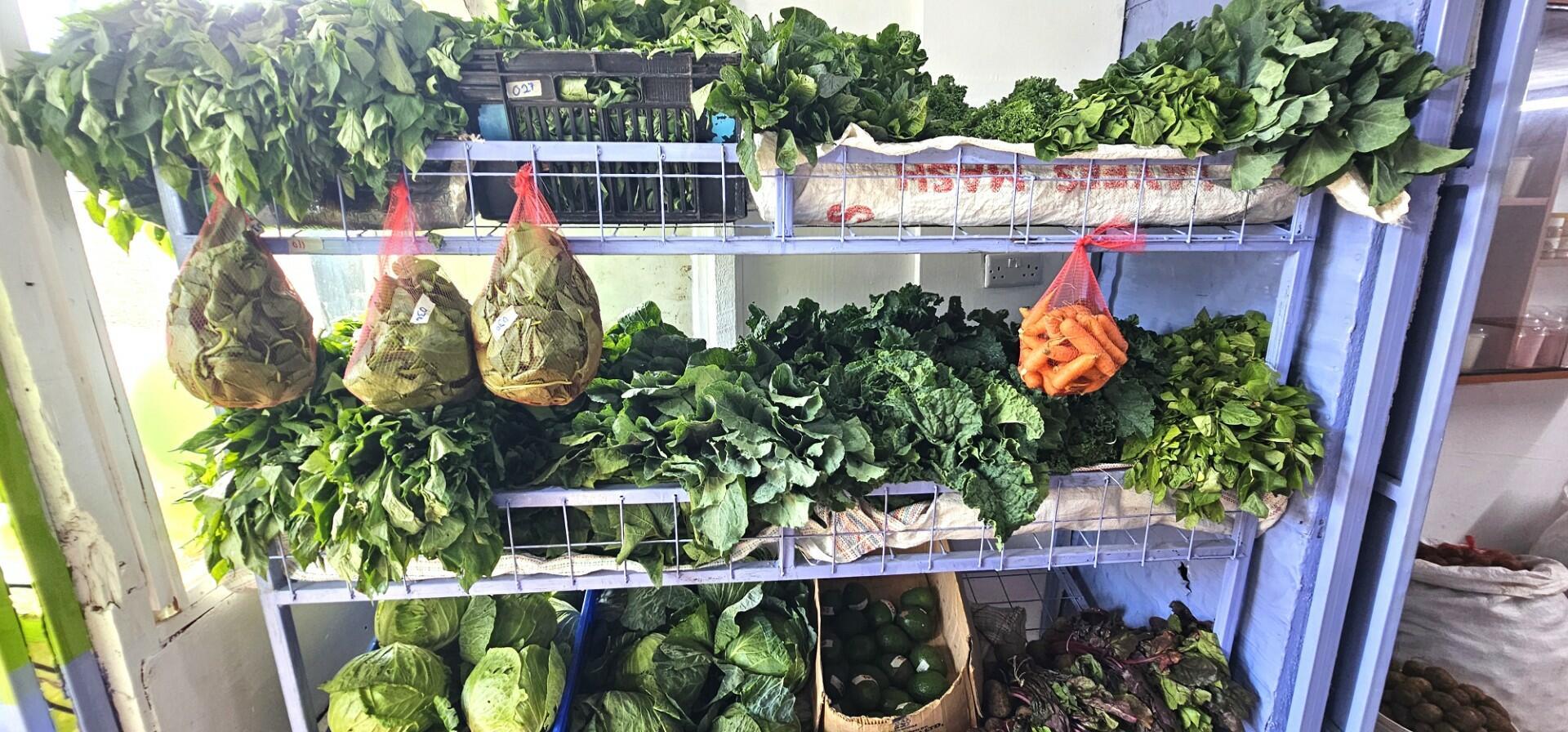
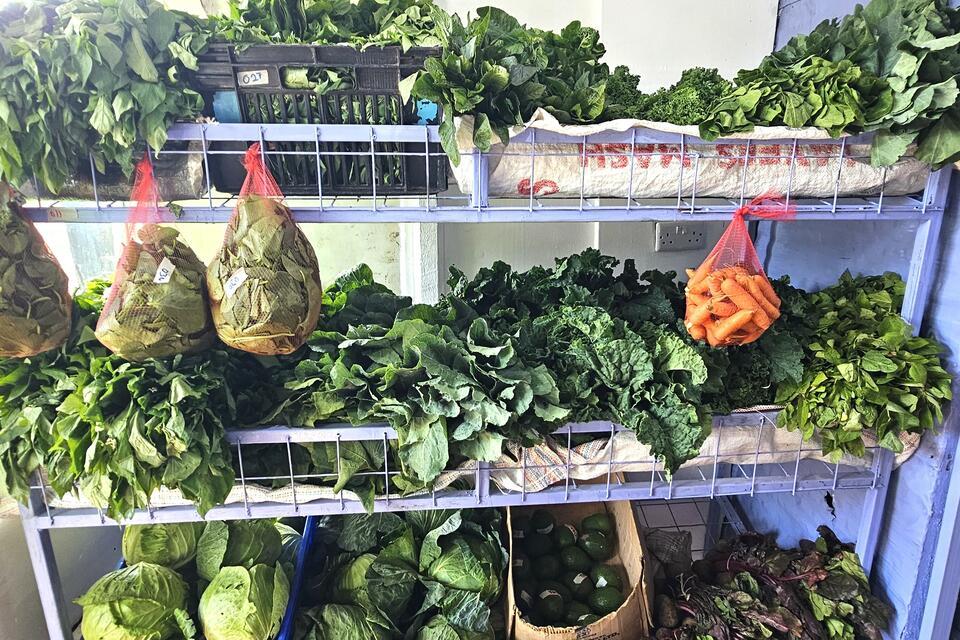
Agroecological produce displayed at the Ki-Smart Organic Farmers Market at Mboroti, Ndeiya, Kiambu County.
Market linkage for nutritious agroecological commodities
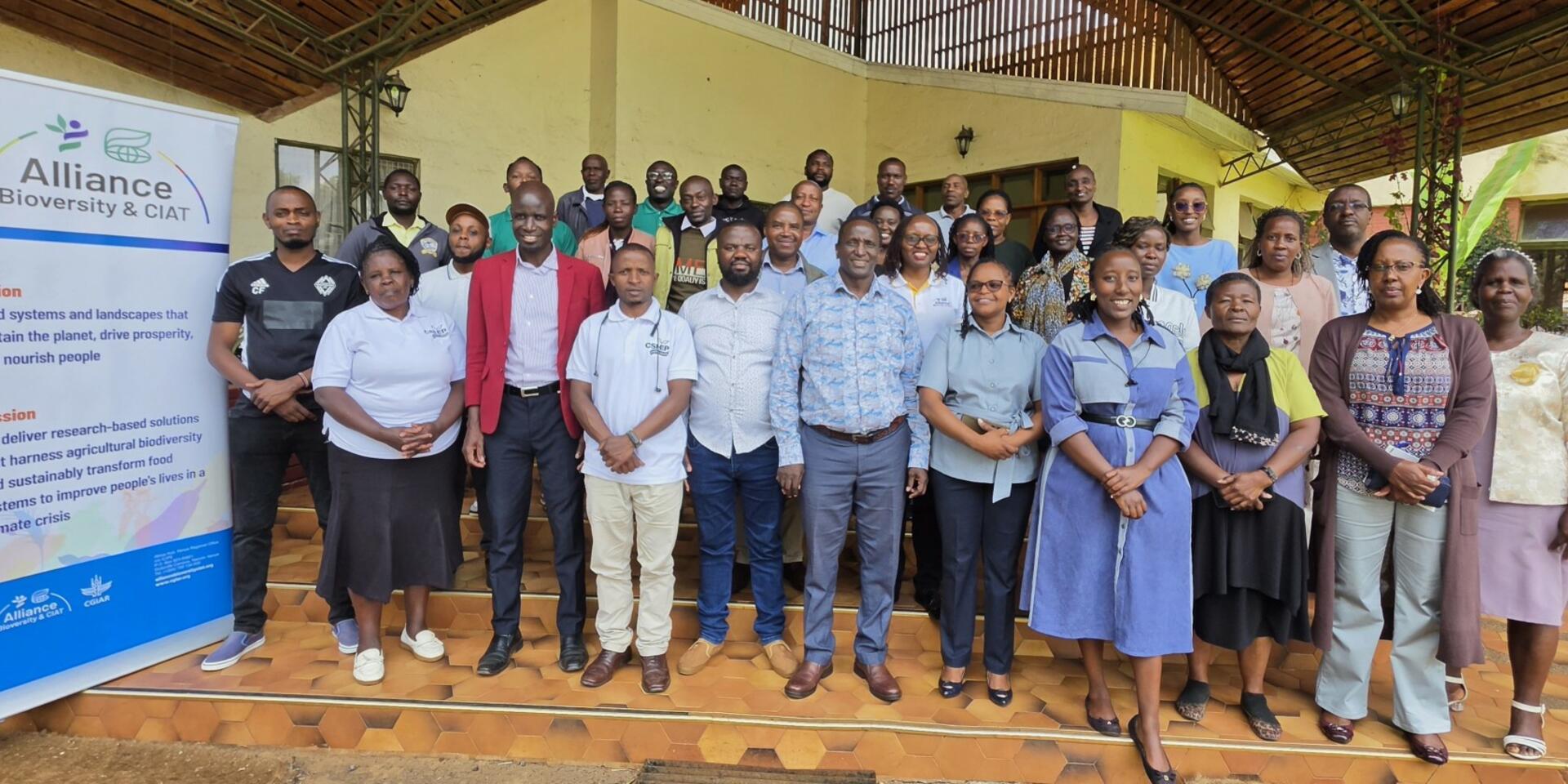
These opportunities and practical requirements informed deliberations during the Market Linkage for Nutritious Agroecological Commodities Workshop, held recently in Kiambu County. Under the CGIAR Multifunctional Landscapes Science Program, the workshop brought together the Alliance, the Community Sustainable Agriculture Healthy Environmental Programme (CSHEP), education stakeholders from Kiambu and Kajiado, Participatory Guarantee System (PGS) certified agroecological producers, and vendors from City Park Market.
“Kenya's school meals programmes, including the long-standing Home Grown School Meals model to county initiatives such as Nairobi's Dishi na County programme, already reach approximately 2.7 million learners, while the Government has committed to expand the initiative to reach 10 million learners by 2030,” – John Mwangi, Ministry of Education, Kiambu County
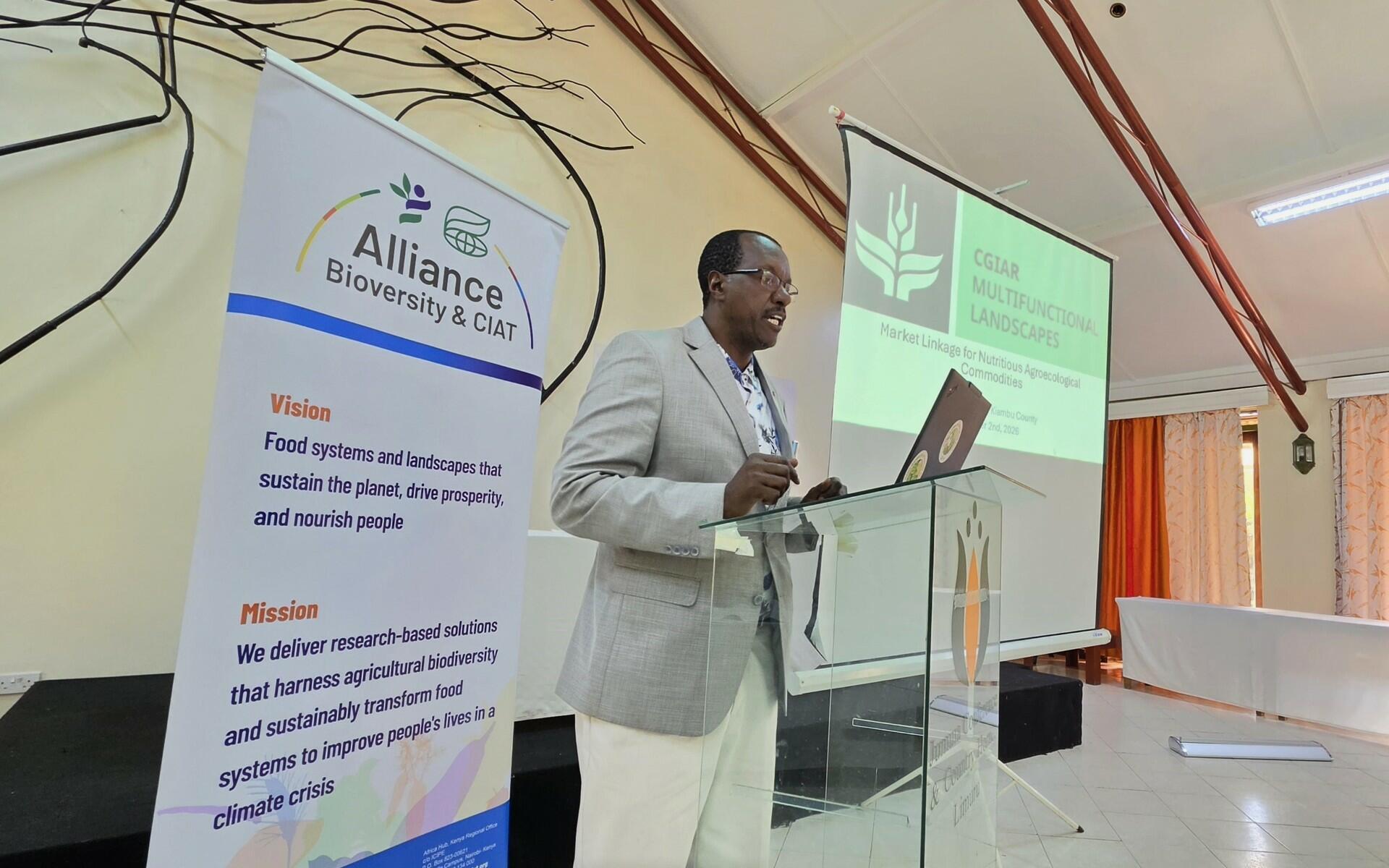
John Mwangi from the Ministry of Education, Kiambu County addresses participants during the workshop.
Beyond schools, deliberations revolved around growing agroecological foods that potentially meet the rising consumer demands. Growing interest in safe and healthier diets is creating opportunities for agroecologically produced foods. However, demand has yet to translate into strong and dependable markets for farmers. Findings presented indicated that awareness of agroecology stood at 31 per cent in Kajiado and 9 per cent in Nairobi, even though more than 83 per cent of surveyed consumers expressed a preference for food produced without synthetic inputs. This gap points to the need for clearer consumer information, credible certification, traceability and innovations to better supply and market agroecological commodities and help buyers identify and trust agroecological products.
Farmers in Kiambu and Kajiado already employ agroecological practices, including composting, agroforestry, mulching, crop rotation and integrated pest management. Intercropping, for instance, was reported among 92 per cent of surveyed farmers in Kiambu and 78 per cent in Kajiado. However, farmers largely sell individually, with limited aggregation. At the market, weak product differentiation and few dedicated market spaces for agroecological commodities remain some of the major bottlenecks to efficient supply and demand. PGS can help build buyer confidence, while collective marketing can improve farmers’ ability to supply consistent quantities and reduce postharvest losses.
A wealth of agroecological opportunities
Affordability is central to expanding consumption. Higher-income consumers may be willing to pay a premium, particularly for certified organic foods sold in supermarkets and niche urban markets. On the other hand, mainstream markets that serve a bigger proportion of the urban population often offer little or no price differentiation. Expanding sales therefore requires reliable availability, competitive pricing and clear information about production practices. Opportunities extend beyond food to organic fertilisers, biopesticides and other biological inputs, alongside herbs and spices such as rosemary, ginger, turmeric and basil. School gardens and composting could further complement food procurement arrangements by linking meals with learning, food waste management and nutrient recycling.
“Consumer interest alone will not build a dependable market for agroecological foods. Farmers need reliable buyers, and buyers need affordable products, consistent supply and credible information about how food is produced,”- Dr. Rosina Wanyama, Scientist, The Alliance.
Aggregation and visibility are vital
Demand alone, however, does not guarantee a dependable market. Producers often sell individually, with limited aggregation, weak product differentiation and few dedicated market spaces for agroecological products. This can make it difficult to supply the quantities, quality and consistency required by traders and institutions.
“Many farmers still sell individually, making it difficult to aggregate produce and supply buyers consistently. Agroecological foods also have limited visibility in the markets, with little product differentiation and few dedicated selling spaces. Strengthening farmer groups and collective marketing can help farmers reach more buyers, reduce post-harvest losses and secure more reliable markets,” - Kevin Omondi, Senior Research Associate, The Alliance.
Farmer groups, cooperatives and PGS arrangements can strengthen coordination and build trust between producers and buyers. Collective planning could help producers pool harvests, coordinate deliveries and respond to buyers’ needs. Market vendors can also connect farmers with urban consumers and provide feedback on demand.
“At CSHEP, we support farmers through organic and agroecological training, field follow-up, and the formation and training of PGS groups. We also connect them with available markets and support the establishment of farmers’ markets, including CSHEP-affiliated markets such as Kismart, Nooya and Inogof PGS,” - Esther Kagai, CEO CSHEP, Kenya.
Turning these opportunities into regular purchases requires practical support: schools need to understand the potential of agroecological foods; buyers need effective ways to connect with local producers; and farmers need the capacity to supply diverse products in the quantities, quality and prices required by different markets. Sustained partnerships among farmers, vendors, schools and supporting organisations can help make agroecological production more economically rewarding while improving learners’s access to nutritious meals.
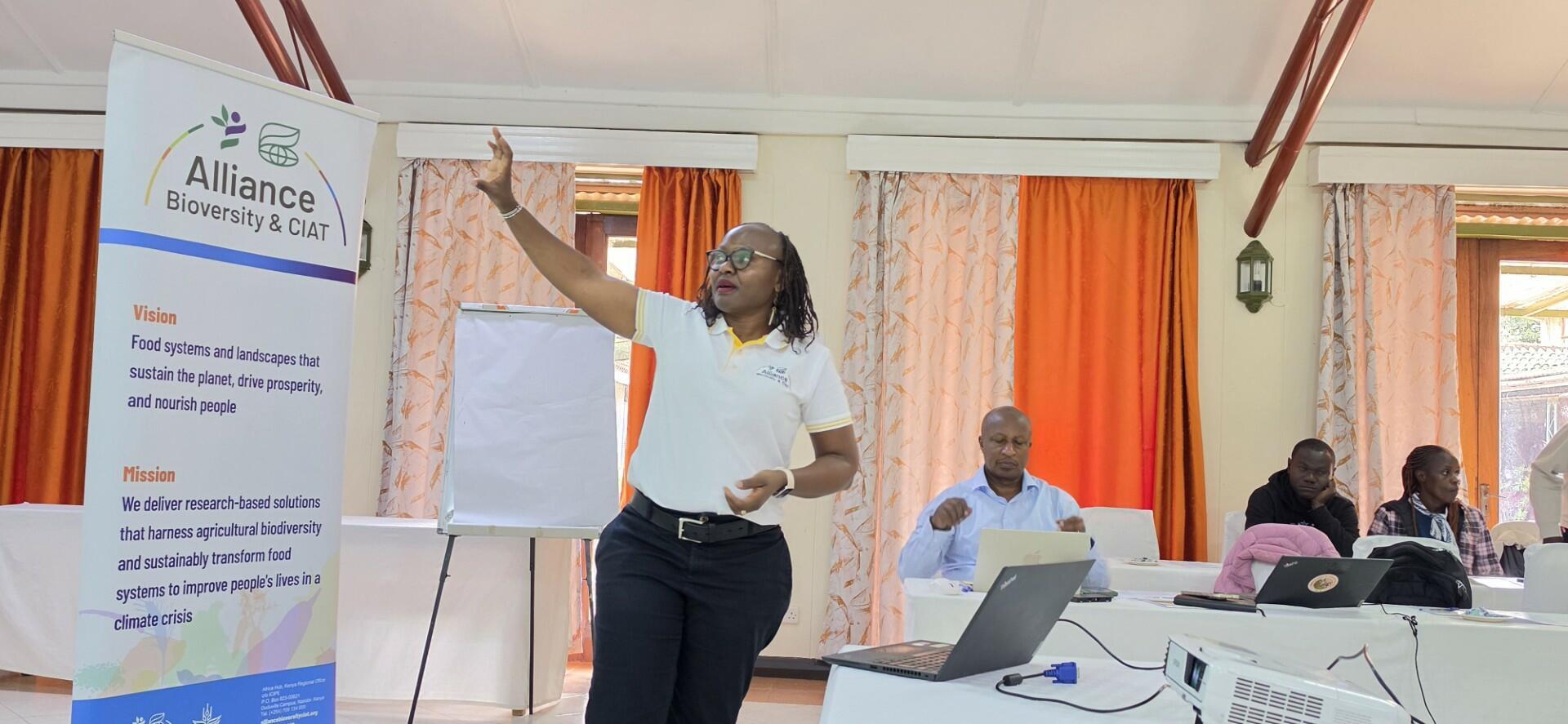
Dr Christine Chege makes a presentation during the Market Linkage for Nutritious Agroecological Commodities Workshop, held recently in Kiambu County.
The Alliance team

Christine Chege
Agri-Nutrition and Food Systems Scientist
Rosina Wanyama
Scientist - Food Environment and Consumer Behavior