Blog Why accelerating climate change mitigation is critical for food and nutrition security
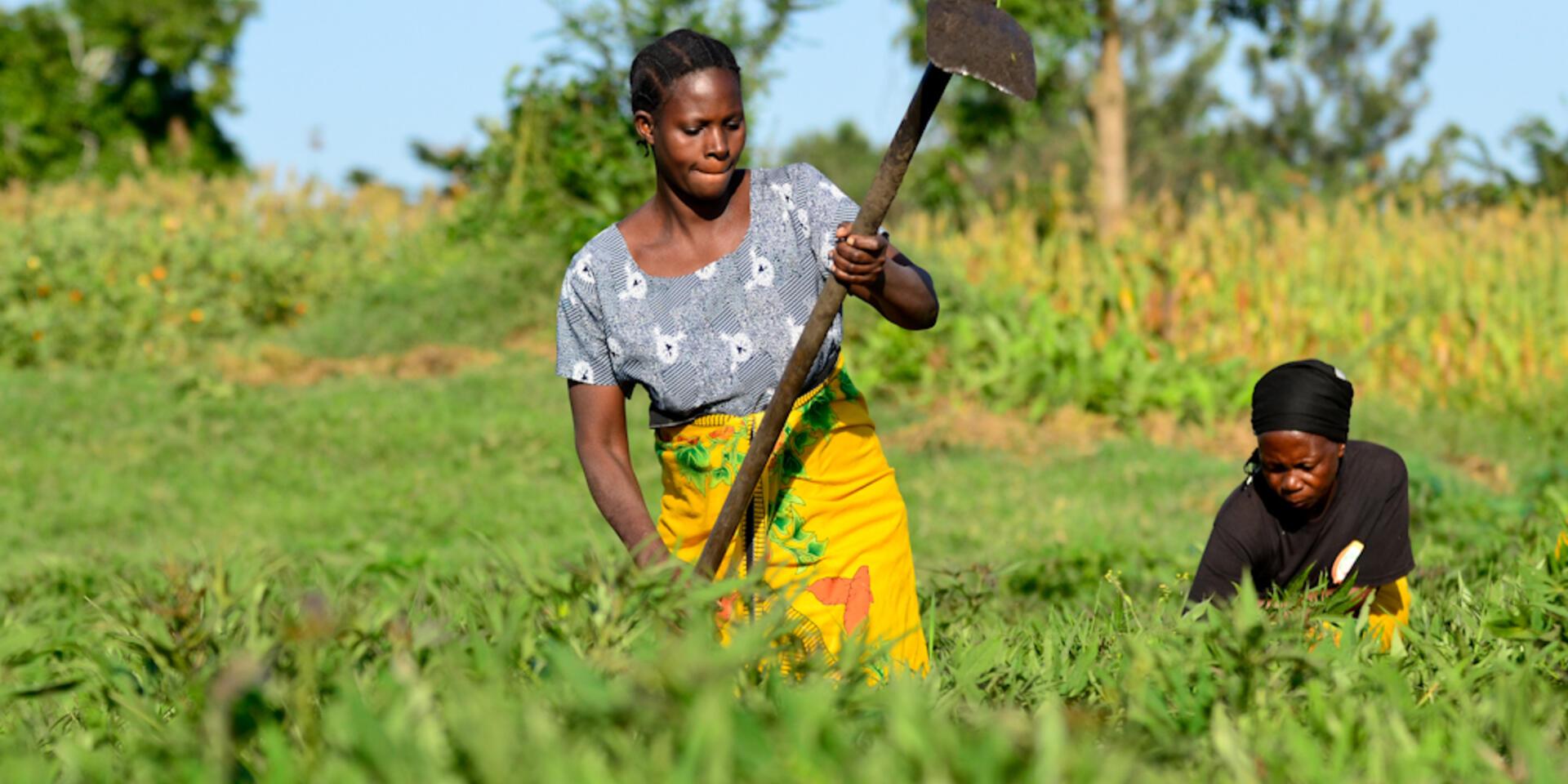

As climate change accelerates, developing countries face a critical crossroads: how to grow sustainably while contributing to global mitigation efforts. Integrating food and nutrition security into climate strategies is no longer optional, it’s essential.
As developing countries follow their vision for development, they face a dilemma that may threaten their growth. While nations race to meet global climate targets and embrace the goals that promise to keep the planet within livable boundaries, they also face a challenge: How can they pursue sustainable growth, without disproportionately shouldering the burdens of climate change? How can poorer nations grow to achieve the standard of living enjoyed by wealthier countries, while at the same time, mitigating climate change?
Much of the climate debate has centered around the idea that developed countries, the historical culprits of high emissions, must focus on mitigation, while developing nations need to adapt to a changing climate. But a shift is underway, to recognize that developing nations are not only adapting – they are also contributing to climate change mitigation. They are not passive actors who merely respond to the damage inflicted by the industrialized world. Instead, they are tackling the dual challenge of reducing emissions and continuing to grow and develop.
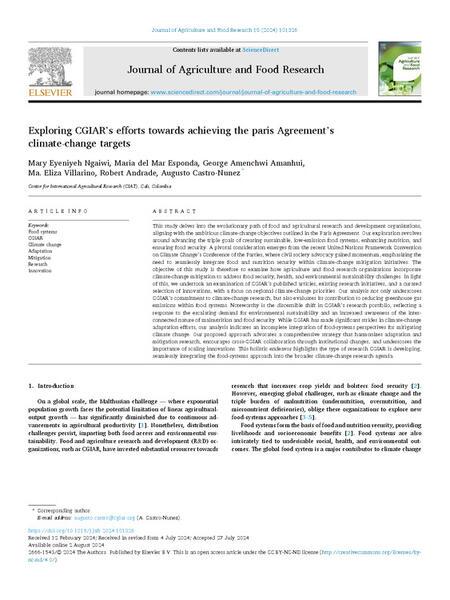
This shift has already been understood. Countries have agreed on a new framework under the United Nations Framework Convention on Climate Change’s Conference (UNFCCC) of the Parties that considers common –but differentiated– responsibilities to address the impacts of climate change. Agriculture and food organizations and research centers, like CGIAR, are beginning to engage with this new framework, with opportunities to more fully integrate climate change mitigation alongside efforts to deliver food and nutrition security —as a recent paper published in the Journal of Agriculture and Food Research underscores.
Advancing the triple goals of creating sustainable, low-emission food systems, ensuring food security, and enhancing nutrition depends to an extent on seamlessly integrating food and nutrition security within climate-change mitigation initiatives. A comprehensive strategy is required, and the CGIAR and other research organizations must continue to recalibrate climate-change research agendas towards low-emission models to deliver on these interconnected goals.
Rethinking a historical dichotomy
While the CGIAR has made significant strides in research focusing on adaptation for the agricultural sector, there is an observable gap in integrating low emissions food systems’ perspectives. But it is now redirecting its research endeavors to fully incorporate nutrition and food security considerations into climate-change impact mitigation strategies. A more balanced approach between adaptation and mitigation is in its nascent stages.
The roots of this debate can be traced back to the 1997 Kyoto Protocol, which set different expectations for developed and developing nations. Rich countries or Annex 1 countries were tasked with reducing emissions (mitigation), while poorer or Non-Annex 1 countries were expected to adapt to the changes already happening. These definitions set distinct expectations: wealthy countries would focus on emission reductions, while poorer nations would adapt.
Today, this division is outdated. It presents a binary view of climate action.
Although the Paris Agreement changed the game — underscoring a common but differentiated responsibility to cap global warming at 1.5°C— the split mindset emphasizing adaptation for poor nations, mitigation for rich, still lingers.
Developing countries, particularly those in the Global South, aspire to grow. They aim to achieve development levels similar to the West, but this aspiration may come with an increase in greenhouse gas emissions. Countries like Colombia, Bolivia, Peru and others rich in natural resources are facing the challenges of balancing emission reduction with sustainable development.
But the narrative that poor countries must either adapt or grow is misleading. This mindset—where rich nations emit while poor countries "adapt"—limits the true potential of a collaborative, global approach, particularly in countries still addressing food security concerns A rigid focus on climate change without addressing these interlinked challenges is short-sighted.
Agricultural research organizations need to move beyond viewing mitigation and adaptation as a dichotomy. A holistic approach is necessary to ensure that growth and climate action go together. In meeting the 17 Sustainable Development Goals (SDGs), which include economic growth, eradicating poverty, and addressing climate change, addressing other pressing issues like malnutrition, conflict, or biodiversity loss is an implicit requirement.
From peace to climate action: the case of Colombia
Consider Colombia, where climate action has been integrated into broader peace efforts since the early 2010s. The government prioritized reducing emissions while addressing long-standing internal conflicts. This dual approach highlights the potential to address multiple objectives simultaneously, despite challenges like limited funding and resource constraints.
In regions affected by conflict, like Colombia, the primary need was creating conditions for peace. But once this foundation was established, climate goals could be integrated into peacebuilding. This experience underscores the importance of aligning climate action with broader socio-economic goals, especially in resource-rich countries that depend on industries like oil and mining.
As demand grows for renewable energy, pressure on natural resources that could lead to conflict must be anticipated. Countries like Colombia, Kenya, China, and Vietnam show that existing financial mechanisms can support both sustainable development and climate action. By transforming these instruments, they can deliver on climate goals while addressing pressing development priorities.
Two sides of the same coin: a holistic solution
Our global climate action agenda must move beyond outdated divides. Integrated frameworks—the UNFCCC, the Paris Agreement, and the SDGs—already exist. Agriculture and food international organizations and research centers must embrace these frameworks in ways that meet local needs and align with the principle of common but differentiated responsibilities.
Achieving food security, reducing emissions, and advancing sustainable growth are interconnected goals that must be addressed together. The evolution of CGIAR’s integrated approach signifies new commitment to tackling these pressing global challenges together. We must embrace this opportunity, and scale successful efforts that provide tangible, science-based evidence demonstrating the critical need to integrate a food systems approach into the overarching climate-change research agenda.
For that, we must break down artificial barriers. And understand that the future lies in dealing with climate action and sustainable development as two sides of the same coin.
Scientist

Augusto Castro-Nunez
Senior Scientist Low-Emissions Food SystemsFurther reading