Blog Connecting the dots: Rethinking farming systems to deliver multiple services
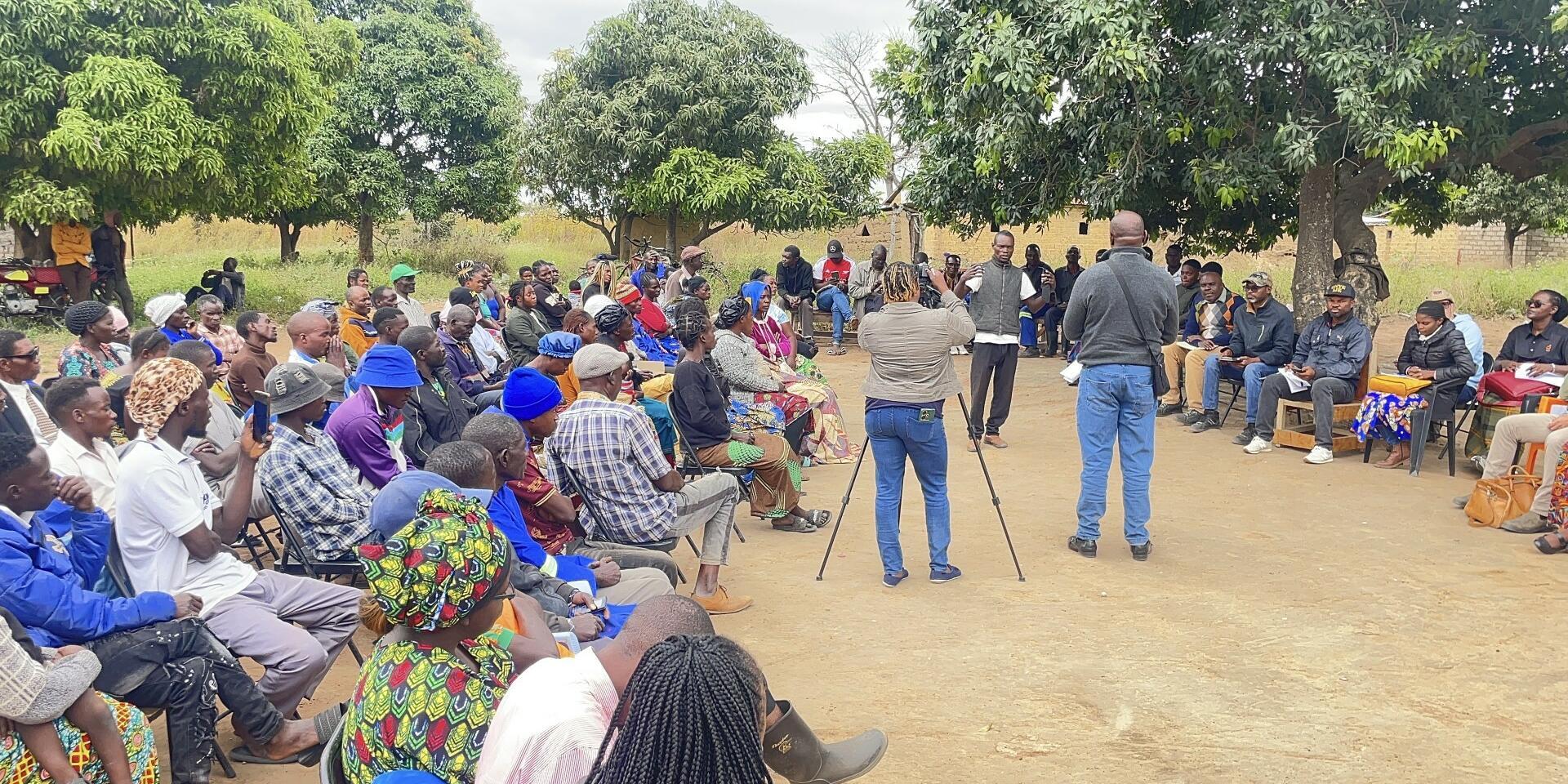

During a recent planning meeting for the Alliance’s Latin America and the Caribbean (LAC) team, I shared a reflection from a field visit to Zambia’s Copperbelt region, which sits on the border region between northern Zambia and the southeastern Democratic Republic of Congo.
There, under the shade of a tree and in the middle of a candid exchange with community leaders, I heard something that stayed with me:
“You can give us all the alternatives to deforestation-free livelihoods, but as long as people in cities keep needing charcoal, someone here will cut down trees to supply it.”
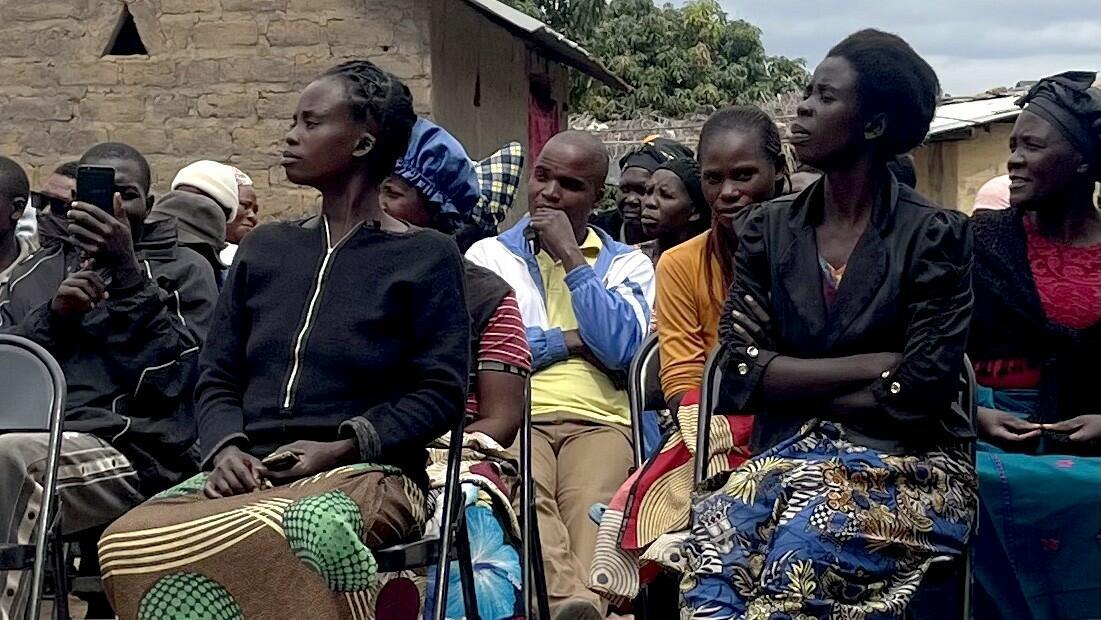
Photo: Community members during a participatory dialogue. © CIAT
This powerful insight sparked a wider conversation among Alliance colleagues from across the LAC region and multiple research areas: climate action, impact assessment, crops, and multifunctional landscapes. Together, we asked: how can farming system innovations become more than local solutions—how can they scale to address challenges at the landscape and food systems levels?
Out of that conversation, a shared realization emerged: farming-level innovations alone aren’t enough—we need to connect the dots.
Reframing innovation
In our work across LAC, we have seen how practices like agroforestry, silvopastoral systems, soil restoration, or improved crop varieties offer promising solutions to reduce deforestation, improve yields, and enhance nutrition and food security. But we’ve also learned that no single innovation works in isolation. These practices are part of broader systems—shaped by social, environmental, and economic forces.
That’s why, as a team, we built a conceptual framework that places these innovations within a larger structure of food systems thinking. At its center are the technologies themselves, applied at farm and landscape levels. The next layer considers key sustainability and equity dimensions: environment, gender, nutrition, climate, and poverty. And surrounding it all is the enabling environment—the policies, market incentives, consumption patterns, and trade systems that operate at domestic and international scales.
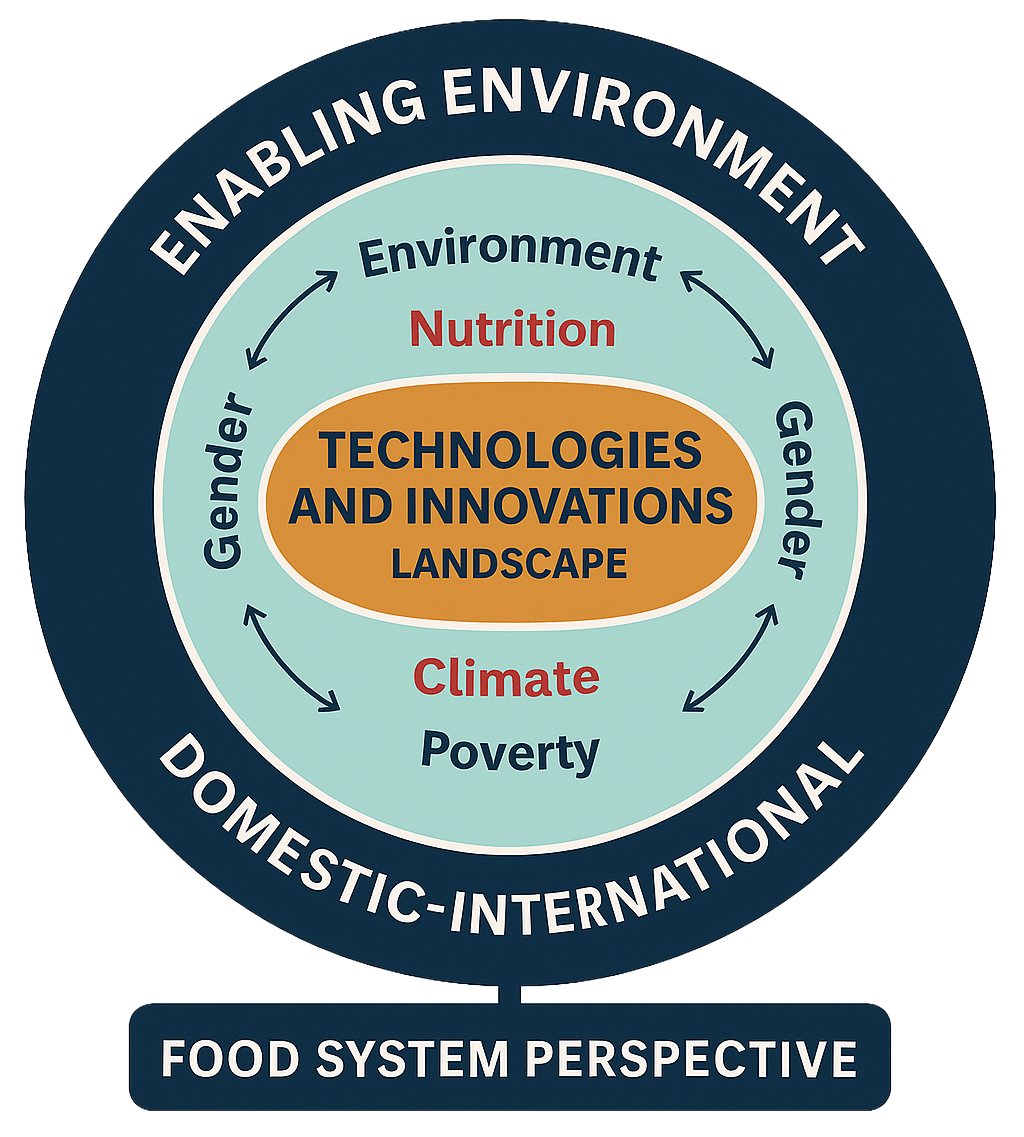
Figure: A science-based framework co-developed by Alliance colleagues from LAC, including Erick Rhan, Mirjam Pullman, Jacobo Arango, Deissy Martinez, Byron Reyes, Jenny Wiegel, Mayesse Da Silva, Ciniro Costa, Simone Staiger, and Augusto Castro.
A case from Zambia
The Zambia reflection was timely. The community leader’s comment on charcoal demand highlighted the complexity of forest degradation in the Miombo woodlands (a dry deciduous forest spanning 1.9 million km2 across Central and Southern Africa). Even if alternative livelihoods are available, the demand for charcoal in urban areas remains a powerful driver. A food systems approach offers ways to intervene upstream—for instance, by promoting fast-cooking bean varieties that reduce the need for charcoal, and aligning these with deforestation-free production systems and urban nutrition campaigns. It’s not just about giving communities options—it’s about reducing the demand that fuels deforestation in the first place.
Implications for Latin America and the Caribbean
In LAC, food demand is expected to rise sharply in the coming decades. As a net food-exporting region, LAC will face increasing pressure to expand agricultural production. Without careful planning, this could undermine the natural resource base that supports food systems—forests, water, soils—and endanger both biodiversity and food and nutrition security across the region.
There’s also a social dimension. As production systems are geared toward export and urban markets, rural and indigenous communities may become increasingly marginalized. If farmers remain underpaid and unsupported, the push for productivity could deepen existing inequalities.
This is why integrating food systems thinking is critical. It helps us design interventions that consider trade-offs, build on local realities, and ensure that benefits are shared equitably.
From Conversations to Action: A path towards sustainable farming and zero deforestation
What began as a conversation under a tree in Zambia and deepened through a planning session with Alliance colleagues across Latin America and the Caribbean, has evolved into a shared vision: landscape-level innovations are essential—but not sufficient. We must align them with the systems that drive change.
This is especially true in our efforts to scale sustainable farming systems and achieve zero deforestation targets. If we treat these goals as isolated technical problems, we risk creating short-term gains that are undone by the very policies, markets, and consumption patterns we fail to engage.
By embedding food systems thinking into our work, the Alliance is supporting partners in LAC to:
- Design sustainable intensification pathways that are climate-resilient and biodiversity-friendly;
- Promote deforestation-free value chains that also deliver on nutrition and equity;
- Engage with national and international policies to shape demand for food that is good for both people and the planet.
This is how we turn insights into systems change.
We invite others—across CGIAR, governments, donors, and the private sector—to join this dialogue. Let’s build a future where sustainable farming supports food security and livelihoods, without costing us our forests.