From the Field Ugandan farmers learn from community seed banks in Western Kenya

A learning exchange in Kenya inspired Ugandan farmers: by integrating a community seed bank, diversified farming, value addition activities and cultural pride, communities can build a sustainable future by cherishing their neglected and underutilized crops.
Farmers from Uganda’s Masindi and Hoima community seed banks safeguard indigenous seeds for both survival and heritage. To strengthen their activities and learn from success in action, they recently traveled across the border on a learning exchange visit to Kisumu, Kenya. They were hosted by their peers from the Kabudi-Agoro, Lower Nyando, and Vihiga community seed banks as part of the final workshop of the neglected and underutilized species (NUS) project, supported by the Ministry of Agriculture, Nature and Food Quality of the Kingdom of the Netherlands and the Benefit Sharing Fund of the International Treaty on Plant Genetic Resources for Food and Agriculture, in partnership with the Seed Savers Network.
Day 1: A warm welcome and integrated enterprise
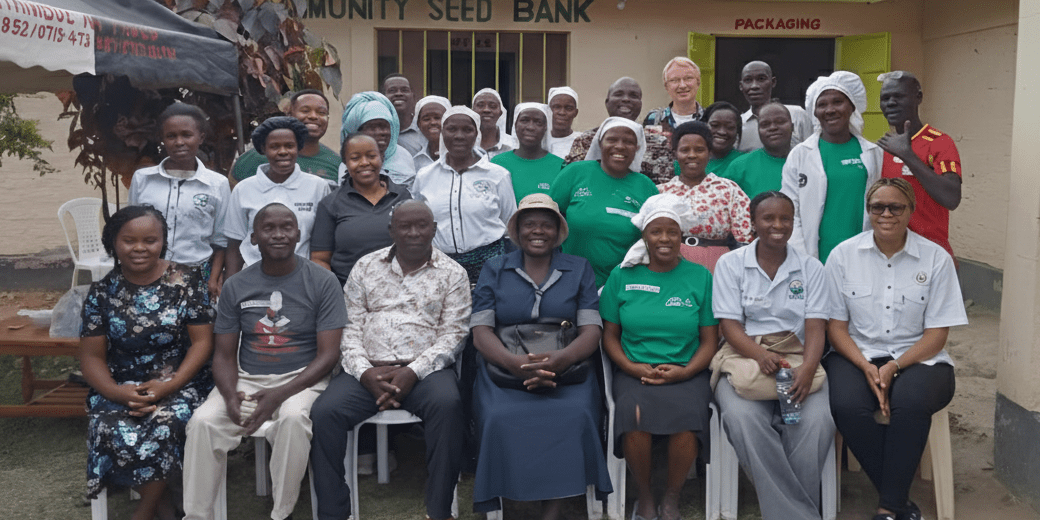
A group photo of Ugandan and Kenyan farmers during the exchange visit at the Kabudi-Agoro Community Seed Bank. Photo credit: Bioversity International and CIAT /L.Aluso
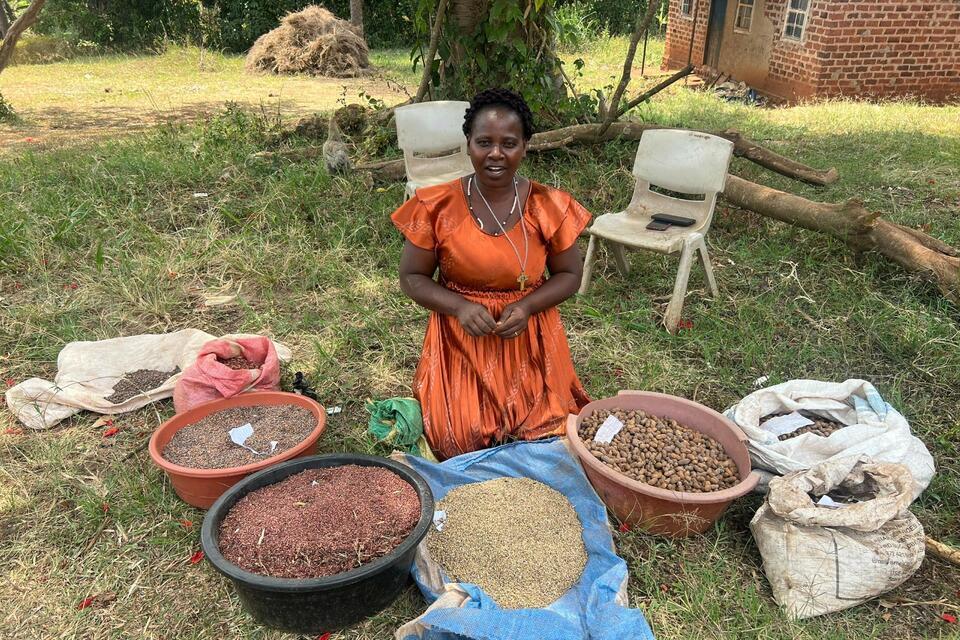
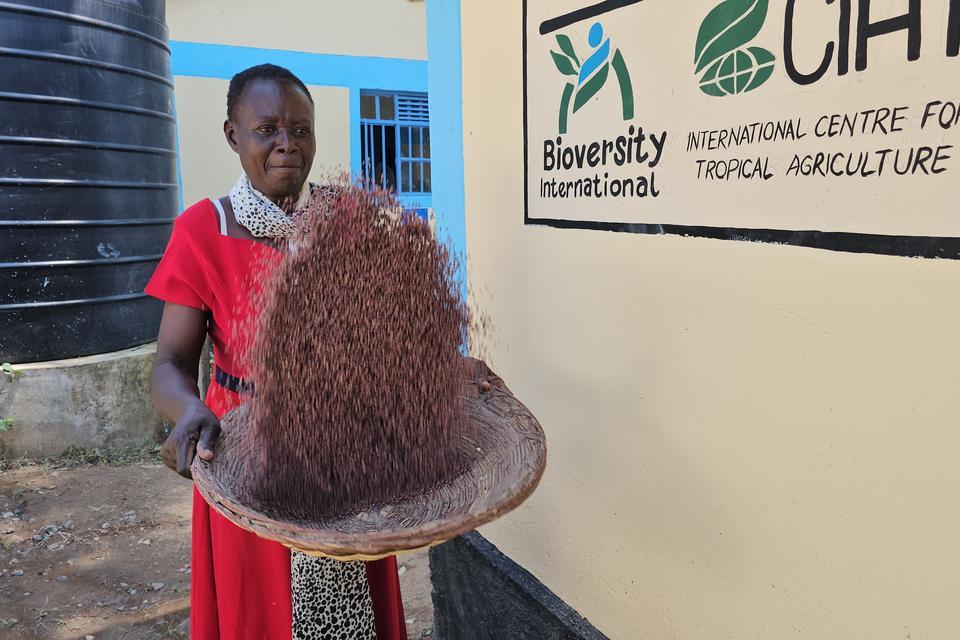
The day commenced with a visit to the Kabudi-Agoro Community Seed Bank where the team received a warm welcome of traditional song and dance performed by the women community seed bank farmers. The Kabudi Agoro farmers showcased their impressive crop diversity. In addition to conserving indigenous crops, they are now experts of value addition, producing a renowned composite flour called "UJI POWER" for porridge and baking cakes from sorghum and finger millet. The taste of their hot and sweet porridge both for babies and adults was a delicious proof of concept.
Also inspiring was the Kabudi-Agoro aggregated farm, a holistic farming ecosystem with a variety of collectively managed productive and regenerative activities underway (and planned) to sustain the community. The aggregated farm integrates agriculture, poultry, black soldier fly production, goats, cows, fishponds, and a piggery.
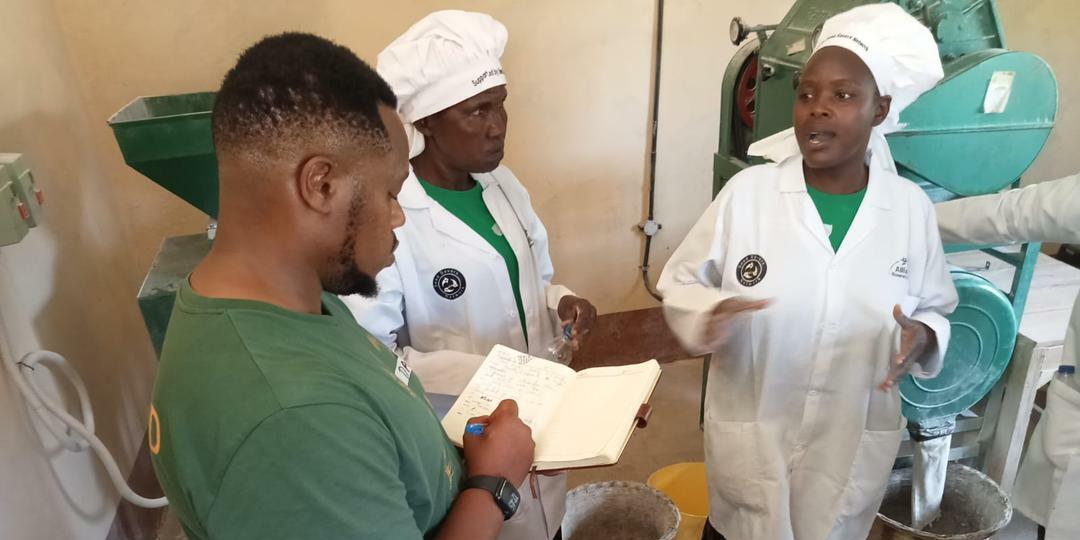
Evalyne Okoth (A farmer from Kabudi-Agoro Community Seed Bank) leads a live demonstration of the milling machine that turned seeds into composite flour. Photo credit: Bioversity International/R. Vernooy
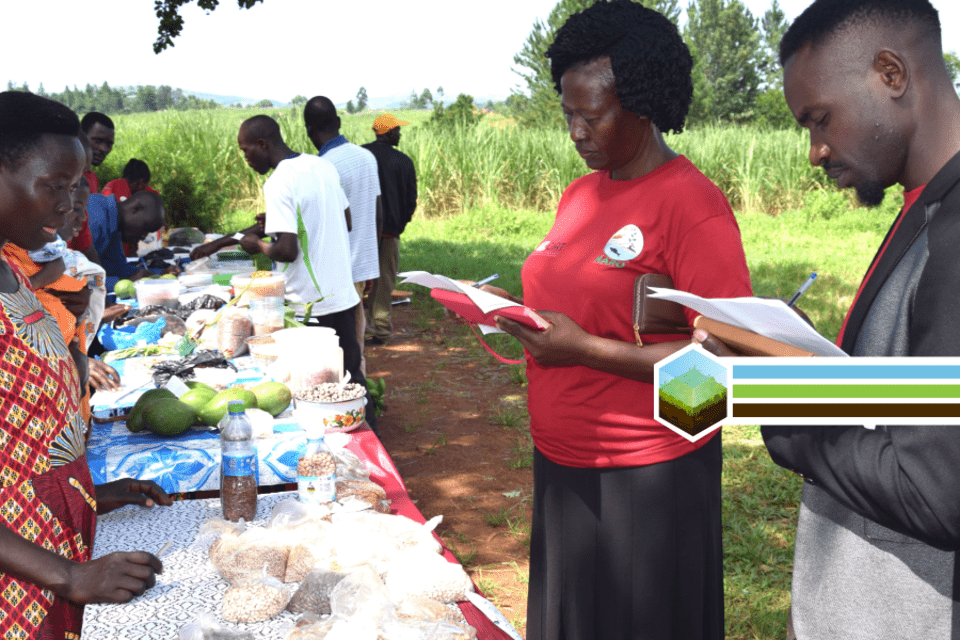
More insights were gained during the afternoon visit to the Nyando Community Seed Bank. After a warm reception, community seed bank members have a practical demonstration of value-addition machinery, including pre-milling, fine milling, and vegetable drying. Nyando farmers also manage a an aggregated farm where they use traditional and modern knowledge to improve their livelihoods and combat climate related challenges.
Day 2: Precious crops, policy, and conservation
The team visited the Vihiga Nutrition Community Seed Bank. Here, the farmers exhibited some of their precious traditional leafy vegetables, such as crotalaria and other crops that they conserve, dry and sell to nearby schools and institutions, including Maseno University. Not only do they conserve indigenous crops, but they have also been trained in value addition, producing several composite flours for porridge and baking cakes, based on amaranth, millet and sorghum, and other crops. With the support of Alliance of Bioversity International and CIAT and the Seed Savers Network of Kenya, farmers’ commitment extended far beyond their fields. They contributed to the process that saw the Vihiga county government launch its agroecological policy, setting a national standard for sustainable agroecological practices. The policy aims at creating a sustainable and climate smart strategies to food production. In the afternoon, a visit to the Lyanaginga Nature Positive Demonstration Farm illustrated this agroecological policy in action. The farm is a hive of sustainable activity: incubating worms fed on crop peels such as banana and potato peels, producing organic fertilizer, and maintaining demonstration plots for crops like spider plant, crotalaria and others.
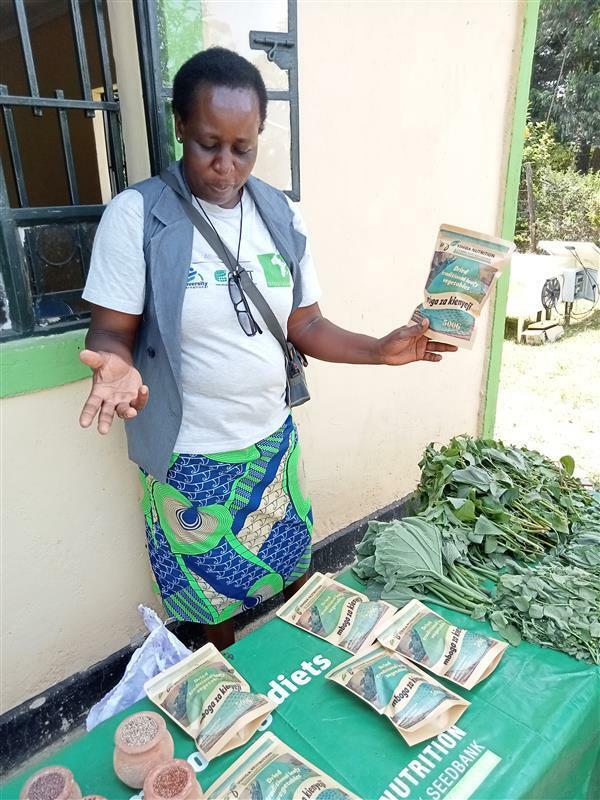
Dried African leafy vegetables produced by the Vihiga community seed bank. Photo credit: Bioversity International/R.Vernooy.
Day 3: Synthesizing knowledge for the future
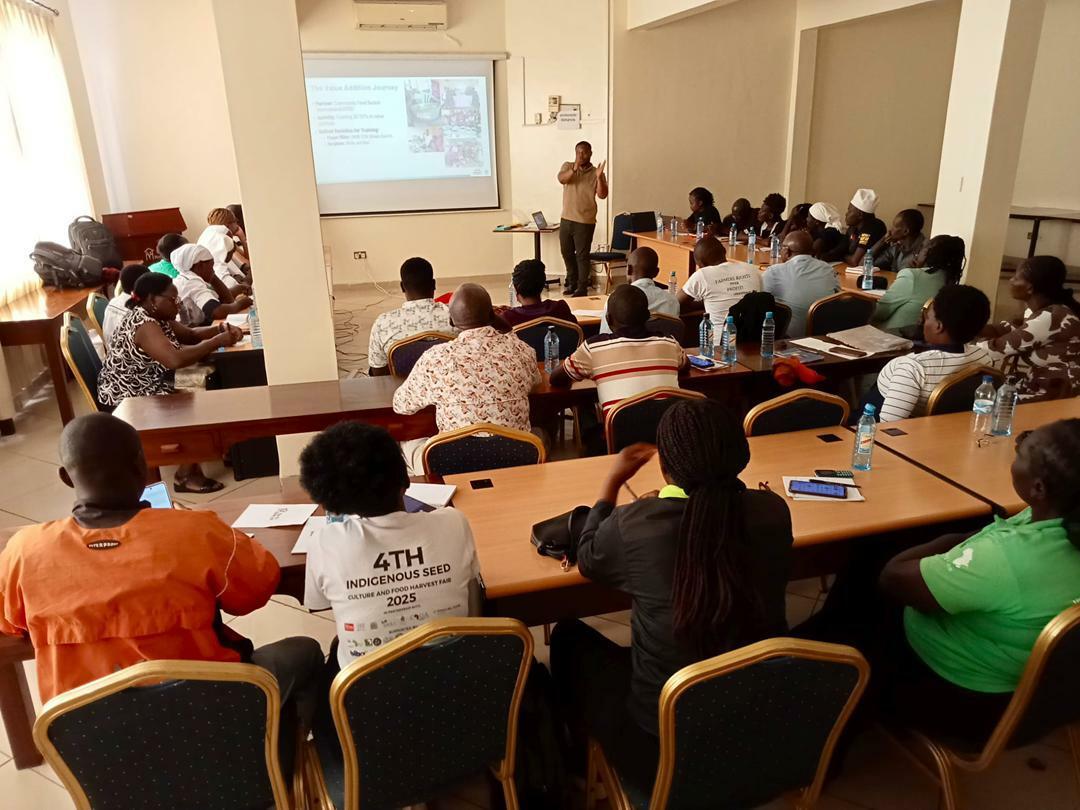
Participants of the NUS project final workshop at Vic Hotels main hall. Photo credit: Bioversity International/R. Vernooy
The final day of the workshop brought together farmers from the Uganda delegation, the three Kenyan community seed banks and NUS project coordinators from Ghana, Uganda, Zimbabwe and Zambia. With the facilitation of Ronnie Vernooy, the Alliance project leader, teams presented achievements, challenges, and policy recommendations. For the Ugandan farmers, this was a moment to contextualize everything they had seen and heard on the study tour within the broader goals of seed sovereignty and food security. Uganda farmers expressed that the exchange visit was a resounding success:
“Kenyan farmers are a bit ahead in terms of community seed banking and value addition, and it is good farmers from other countries learn from them.”
The seeds of knowledge planted during this visit will be applied back in the fields of Hoima and Masindi districts. This exchange visit has proved the Ugandan farmers that with useful tools, some training, and an integrated approach, community seed banks can be true motors of conservation, value addition, and sustainable livelihoods.
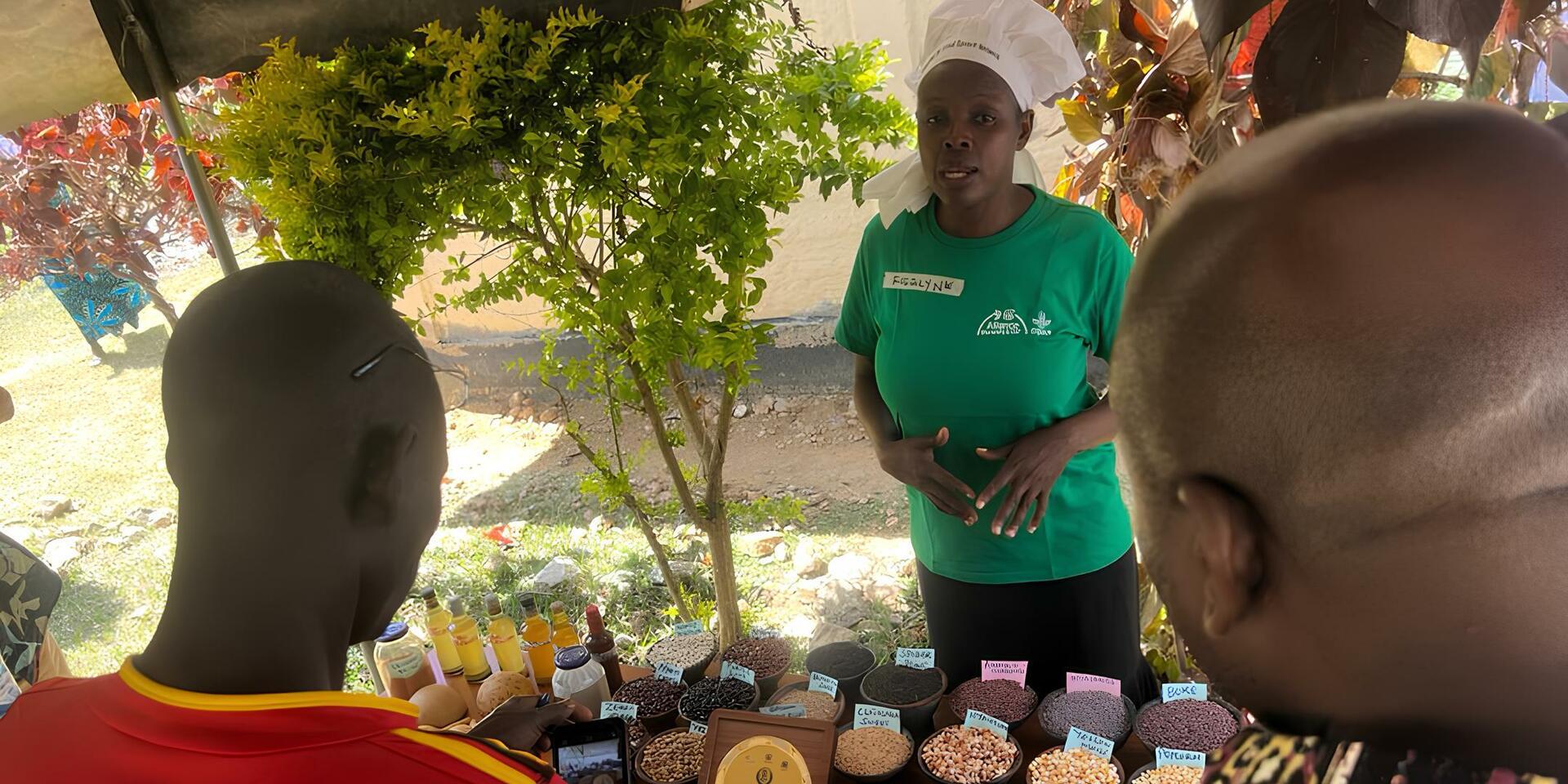
Cover Image: Farmers from Kabudi-Agoro Community Seed Bank displayed diversity of beans, finger millet, sorghum, maize and traditional leafy vegetables during the visit. Photo credit: Bioversity International/D.Mubiru