From the Field Building resilience: A new era for community seed banks in western Uganda
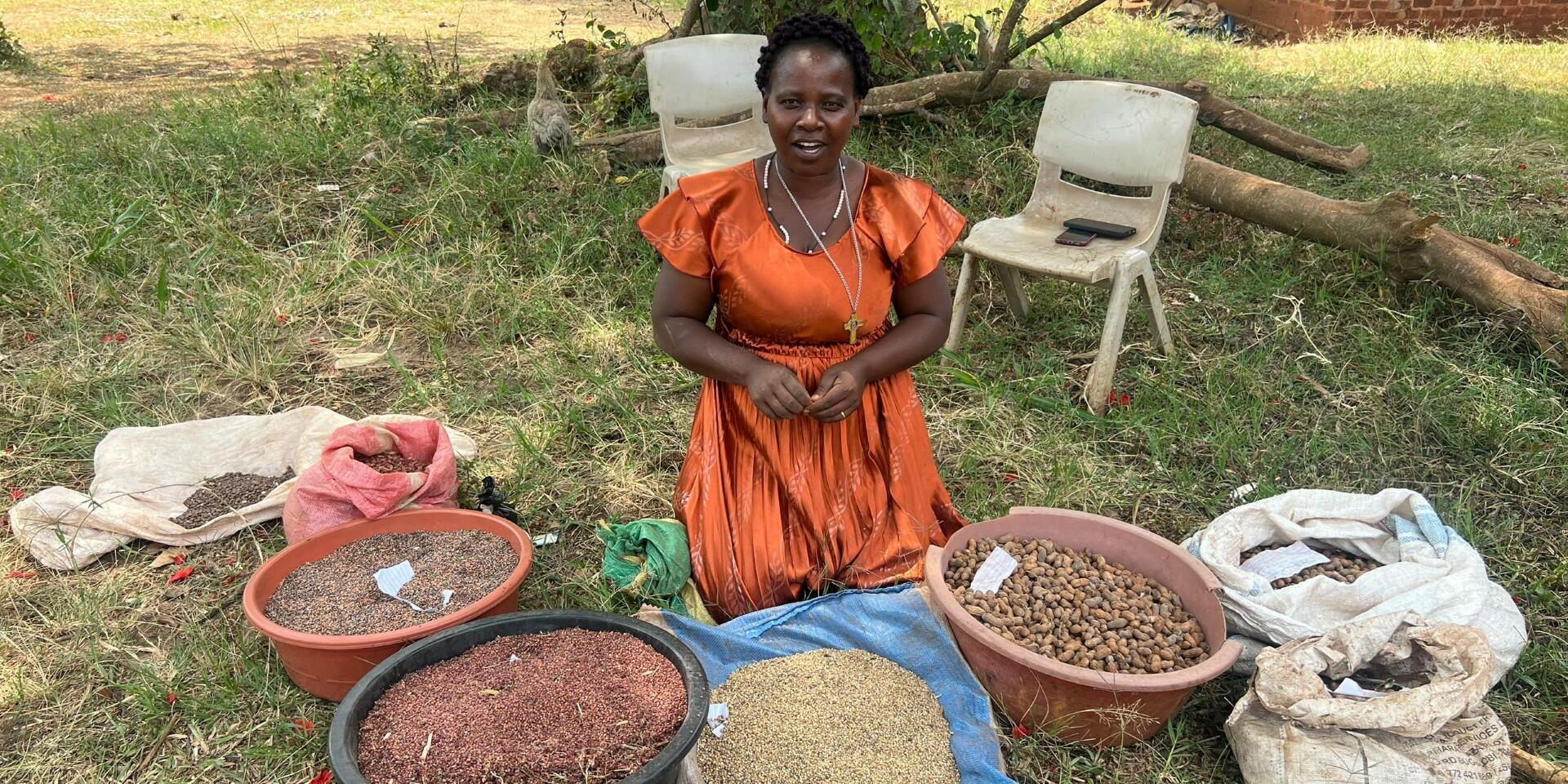

In western Uganda, community seed banks are key for maintaining agricultural diversity and climate resilience. A new training initiative is now empowering these farmers with the production and business skills to transform their seed banks into sustainable and income-generating enterprises.
For years, the number of community seed banks has proliferated in Uganda, maintaining collections of indigenous crops that are well adapted to the local environments. This strategic conservation is important for enhancing climate resilience, protecting cultural heritage, and building a foundation for enduring community self-reliance.
To support these local institutions, thrive as sustainable businesses and build capacity and skills about seed systems and community seed banking, the Alliance of Bioversity International and CIAT organized a training workshop on “Seed Production, Seed Saving, Marketing, and Business Development Strategies.” The workshop was held at the Bulindi Zonal Research Development Institute station in Hoima, Uganda, in August 2025, supported by the Ministry of Agriculture, Nature and Food Quality of the Kingdom of the Netherlands and the Benefit Sharing Fund of the International Treaty on Plant Genetic Resources for Food and Agriculture. A total of 30 participants attended the workshop (16 women and 14 men) from two community seed banks in Uganda (Hoima and Masindi). Staff from our national partners in Uganda, Participatory Ecological Land Use Management (PELUM) and the Uganda National Agricultural Research Organization (NARO), facilitated the training.
The foundation: Why farmer-managed seed systems matter
The training began by pointing out a critical issue in Uganda’s seed sector. It was noted that while Uganda’s farmer-managed seed systems supply a staggering 85% of the nation's seeds, it receives less funding and policy attention compared to the formal system, also known as the commercial system. This sector provides only 15%. It focuses on few crops (for example, maize), is profitable for large companies, and easier for governments to regulate and tax, but has no interest in crop diversity. Smallholder farmers are the real custodians of genetic diversity in the country.
The community-managed seed security model (CMSS) was promoted during the workshop. CMSS is a farmer-led approach that prioritizes community ownership, gender equity, and the inclusion of indigenous varieties that are now getting lost due to numerous threats such as climate change and lack of government support. CMSS aims to contribute to the implementation of farmers’ rights and achieve seed sovereignty, which empowers them to conserve, use, share, and sell their own seeds to improve their livelihoods.
A broad curriculum
Over five days, the training moved from theoretical knowledge to hands-on practical skills.
Day 1 & 2: The Seed Business
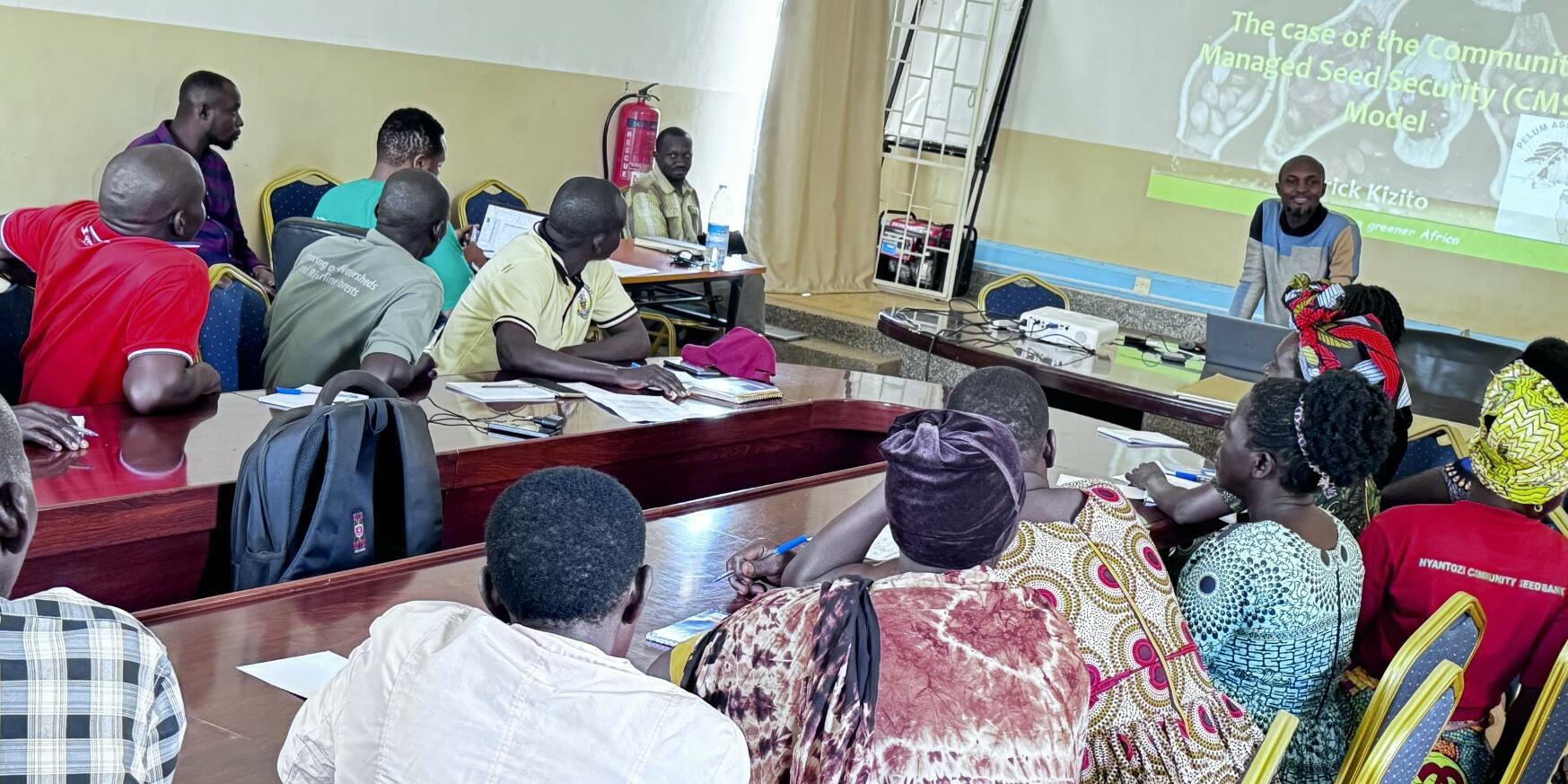
Participants of the workshop at BUZARDI. Photo credit: Alliance of Bioversity International & CIAT/D. Mubiru
Participants were taken through the economics of seed production. Farmers were guided through a cost-benefit analysis, using maize production as a vivid example. Farmers were facilitated to view seed production as a business that is essential for generating sustainable income that improves livelihood. They also learned crucial skills in negotiation, marketing, branding, and prototyping packaging of their products. An important lesson was the importance of conducting market trials to gather customer feedback and adapt accordingly.
Day 3: The science of quality
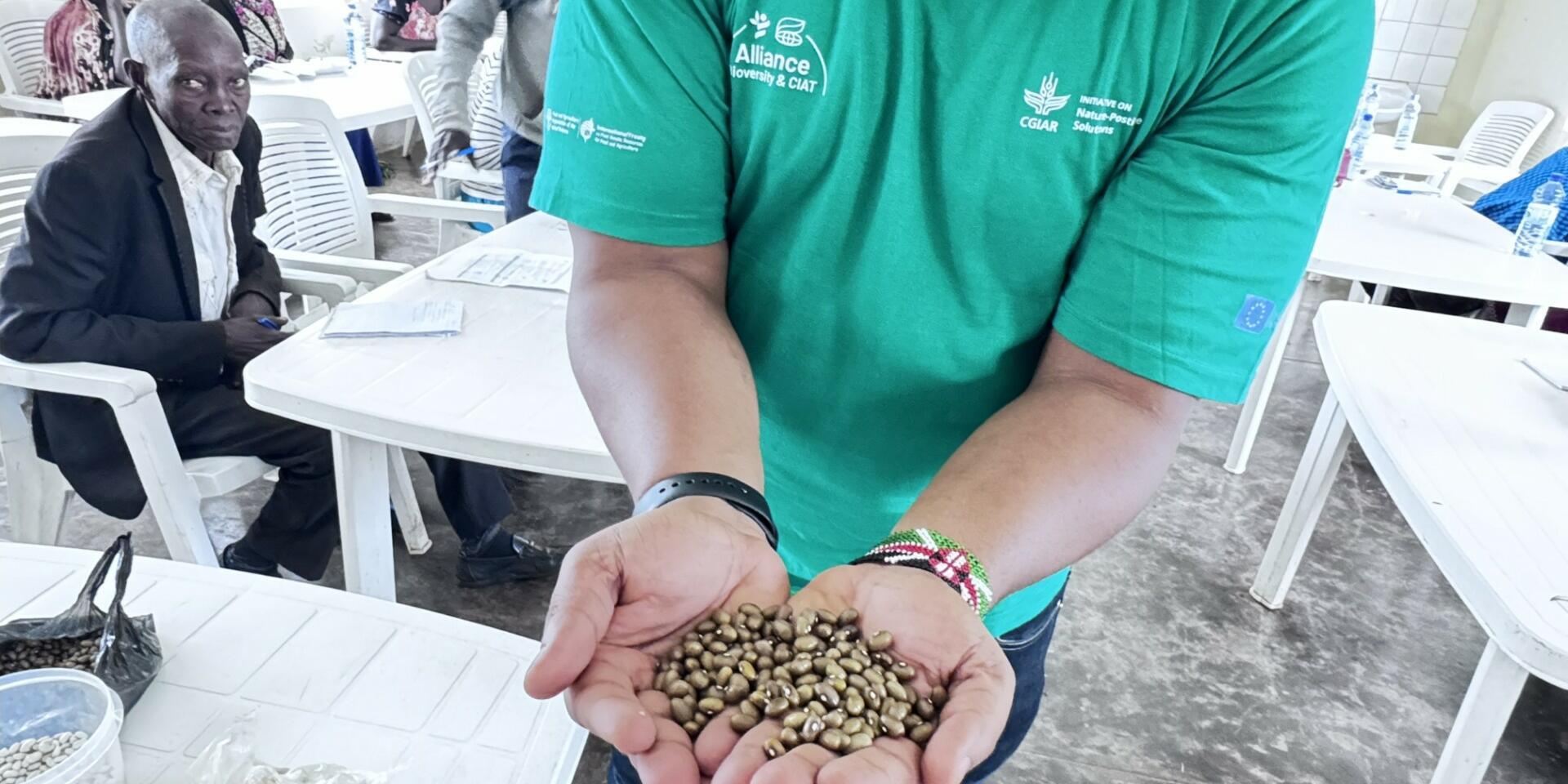
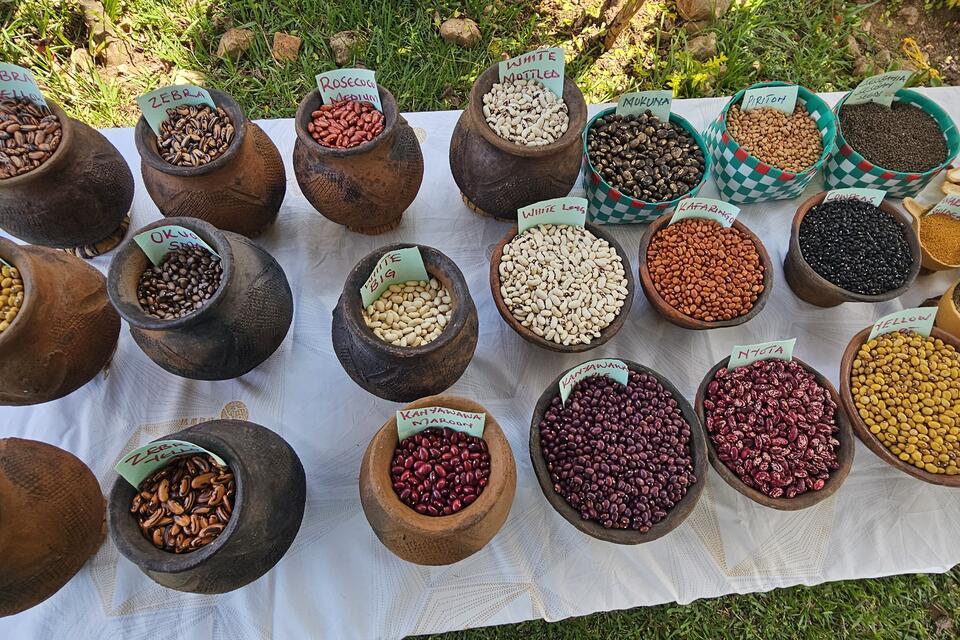
A handful of traditional bean variety. Photo credit: Participatory Ecological Land Use Management/ S. Nabwire
Seed is a reproducible resource that is the most important input for agricultural production and the foundation of a farmer's livelihood and food security. Seed links conservation, cultivation, production, consumption, and trade to the commercialization of agriculture.
Quality control is the basis of a community seed bank’s reputation. An engaging session of differentiating seeds from grains was held, as selling grain for seed can destroy a farmer’s trust and ruin an entire planting season. Emphasis on the properties of quality seed include maintaining genetic purity, high germination rates, and being disease-free. Quality control mechanisms can reinforce that a positive change in seed quality can boost the crops' yielding potential more than any other input.
Farmers were also equipped with best practices for pre- and post-harvest handling. Covering everything from proper drying in shaded areas to storage in airtight containers using traditional botanicals like neem leaves, farmers learned how to maintain seed viability from harvest to the next planting season.
Day 4: Multiplication and enterprise
On day 4, the focus shifted to scaling up, and farmers were provided with detailed agronomic practices for seed multiplication, from selecting fertile land that is characterized by the presence of elephant grass to proper spacing and timely planting. The lesson was clear: seed multiplication requires stricter protocols than just growing crops for food.
This was then supplemented with technical skills for the enterprise, introducing seed revolving schemes where farmers repay loans with a portion of their harvest to guarantee a continuous cycle of high-quality seed within the community and how a community seed bank can become a successful business by generating income through selling seeds, membership fees, and developing local value chains.
A clear path forward: Action planning
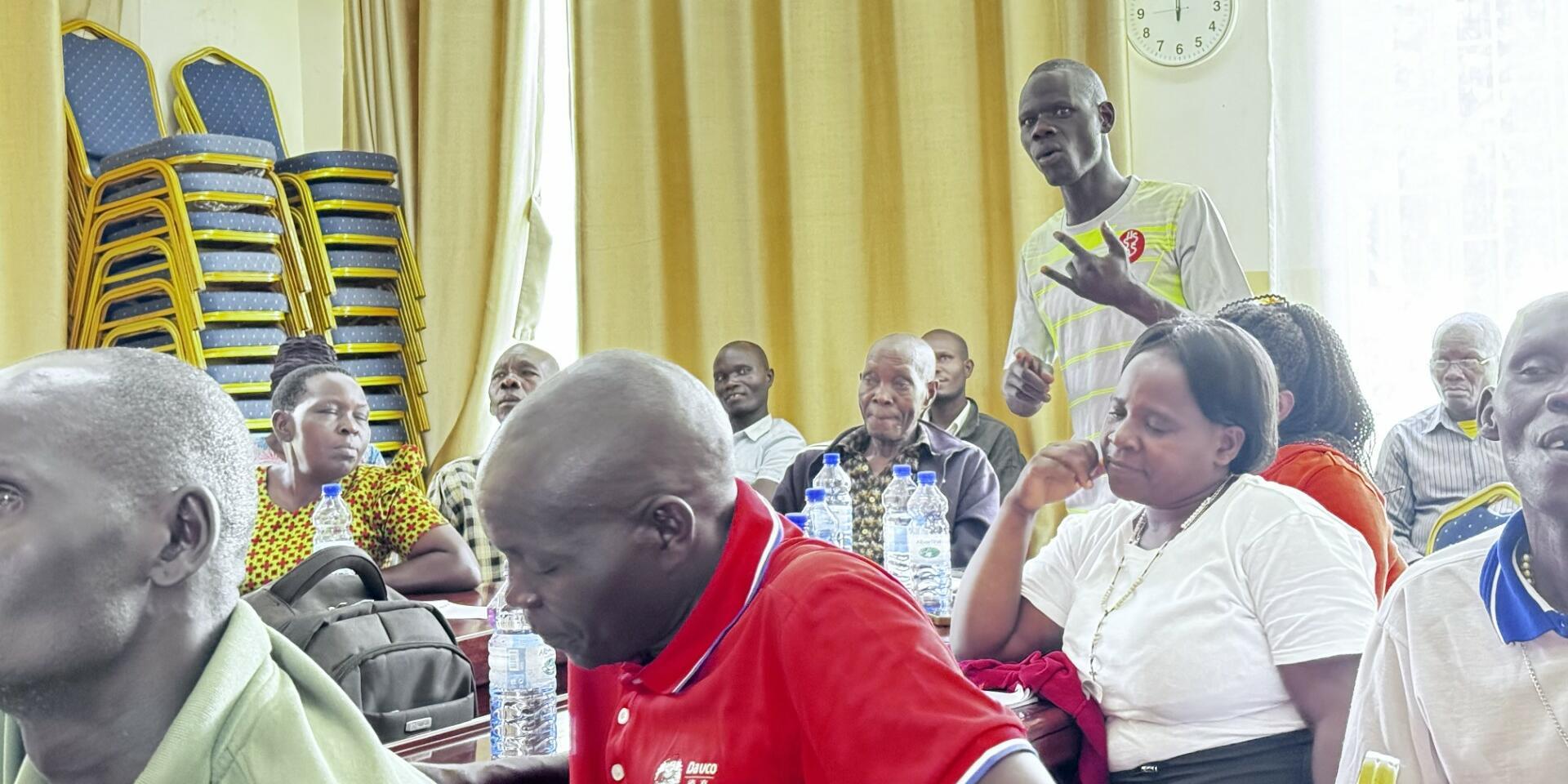
A farmer (Anziku Peter) from Nyantonzi Community Seed Bank sharing experience on seed issues Photo credit: Alliance of Bioversity International & CIAT/D. Mubiru
The training concluded with a session in which nine farmer groups from Hoima and Masindi were tasked to establish specific action plans. These groups explained how they planned to put the knowledge they have acquired through the training into action, from training other farmers and redesigning their community seed bank activities with specific roles such as quality control management to initiating focused seed multiplication and marketing efforts.
Sowing the seeds of the future
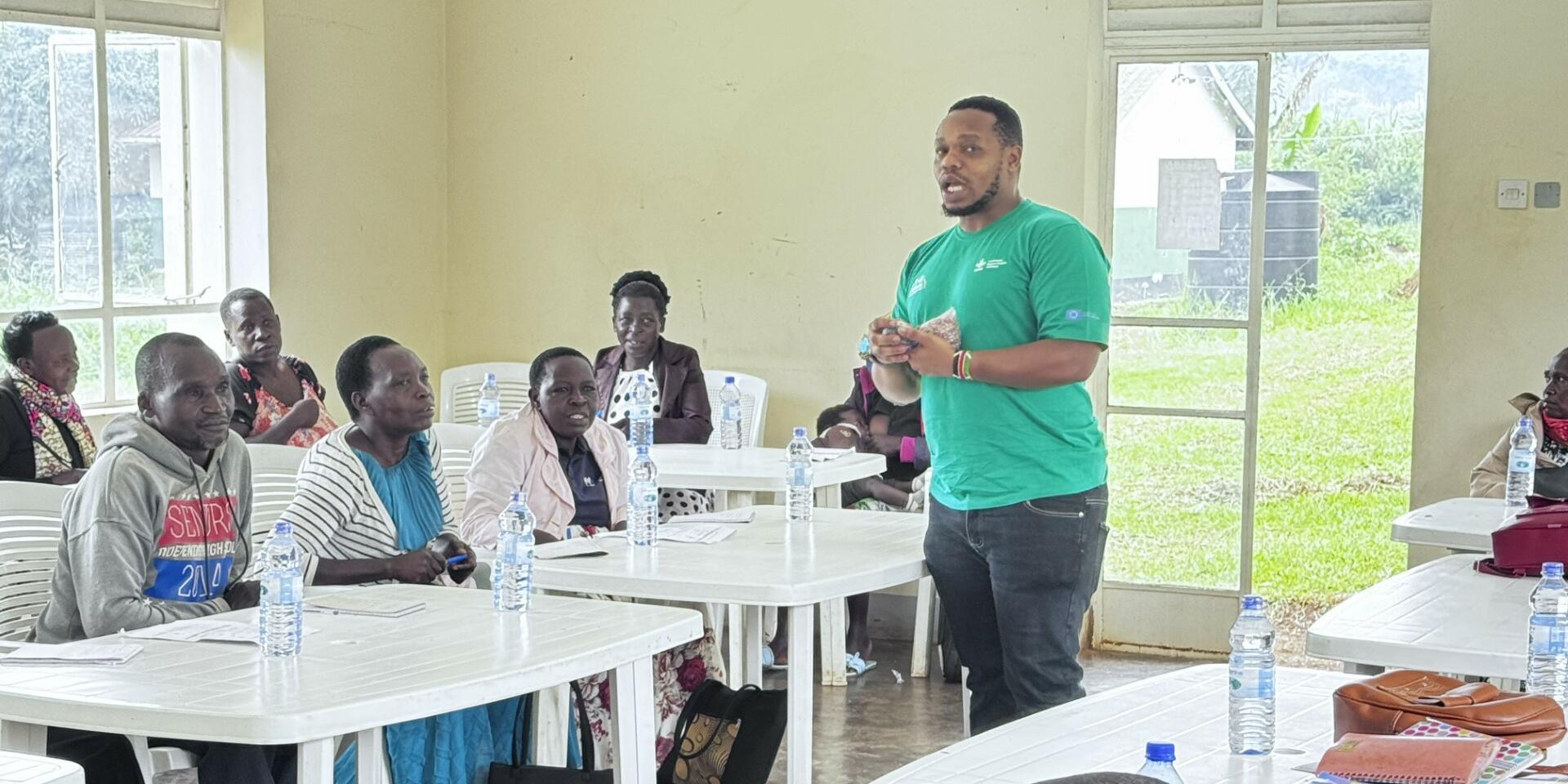
Daudi Mubiru (green t-shirt) from the Alliance of Bioversity International and CIAT addressing the participants during the training. Photo credit: Participatory Ecological Land Use Management / S. Nabwire
The workshop was very educative and more than just a training; it was promoting the resilience and sovereignty of local communities in Western Uganda. By integrating the traditional knowledge of seed management with modern business and agricultural ideas or practices, the farmers of Hoima and Masindi are now better equipped than ever. They are not just saving and sharing seeds; they are nurturing a future in which communities have ownership over their seeds, thus promoting food security and economic opportunities and passing knowledge to the future younger generations.
Keep exploring