From the Field The Tosign (Thymus)-tree trade-off: Eucalyptus and Cupressus tree plantations threaten the ecological and economic value of Thymus schimperi in the Ethiopian Highlands

When walking in the open grasslands of Ethiopia’s highlands, you may feel the scent of Tosign rising from the ground underfoot. Thymus schimperi (Lamiaceae) is a low-growing, aromatic perennial herb endemic to the Ethiopian highlands, found between 2,000 and 3,500 m above sea level on open montane grasslands and rocky, well-drained slopes (Friis et al., 2010).
It forms dense, mat-like stands of small, paired, fragrant leaves and seasonal purple flowers favoured by pollinators. Tosign is well known to Ethiopian households as a flavouring agent, a traditional medicine, and bee forage (Lulekal et al., 2013); underfoot, it holds thin mountain soils in place and shapes the plant communities around it (Friis et al., 2010). Yet in many places Tosign is disappearing as Eucalyptus globulus and Cupressus lusitanica plantations spread across the highlands, altering the light, water, and soil conditions the herb depends on (Belachew and Minale, 2025; Fikadu, 2022). This blog shares what we found when we looked closely at what happens to Tosign where these plantations take hold, and what, practically, can be done about it.
Tosign in its natural home
Thymus schimperi favours open, sunny habitats such as montane grasslands and rocky, well-drained slopes, spreading into low, dense mats of tiny fragrant leaves and, in season, small purple flowers. During our fieldwork, the contrast between open sites and plantation sites was impossible to miss; away from Eucalyptus and Cupressus, Tosign grows thick and green, sharing the ground comfortably with native grasses and herbs. Under the trees, as the next sections show, it is a very different story.
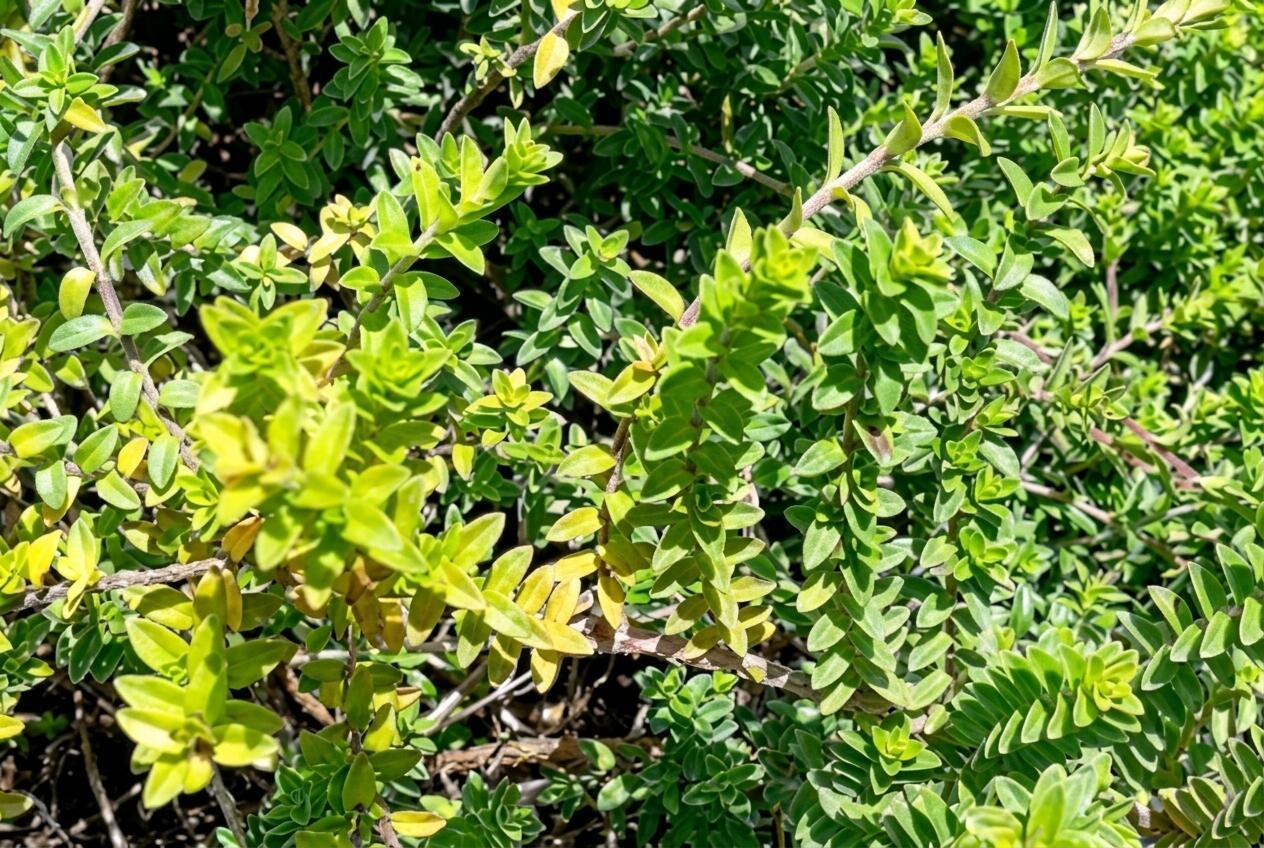
Fresh shoots of open-grown Tosign, with small, paired, fragrant leaves at Kundi, North Shewa
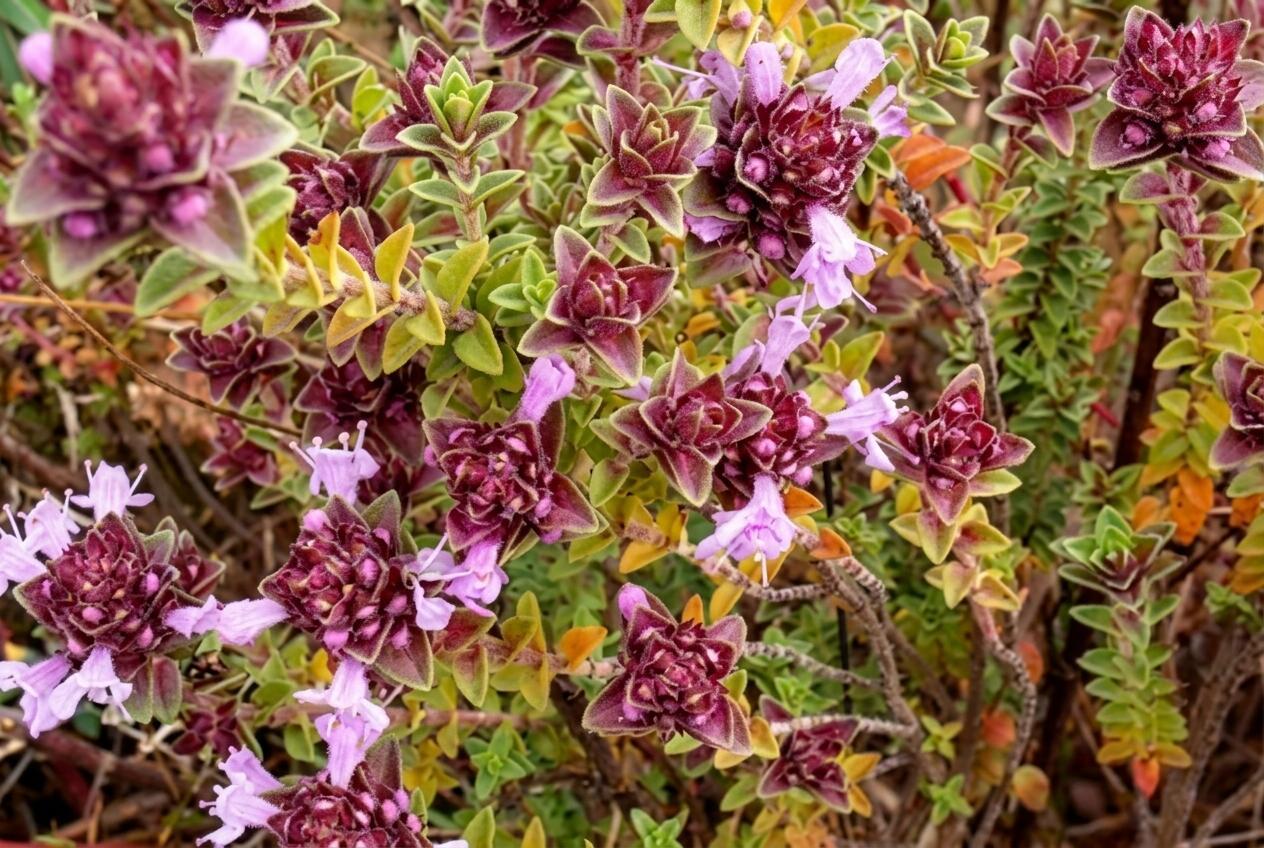
Its purple flowers, a favourite bee forage, at Kundi, North Shewa. Photo Credit: Abiyou Tilahun.
Why Tosign matters
Tosign may be a small herb, but it is ecologically a foundation species. Its nectar-rich flowers feed bees, butterflies, and other pollinators, which in turn help many other plants reproduce and sustain landscape productivity. Beekeepers value it highly, since the bees that visit Tosign produce high-quality honey that meaningfully contributes to household incomes (Abebe and Hagos, 1991). Its low, dense mats also act like a living blanket, protecting rocky mountain soils from wind and rain and helping them retain moisture.
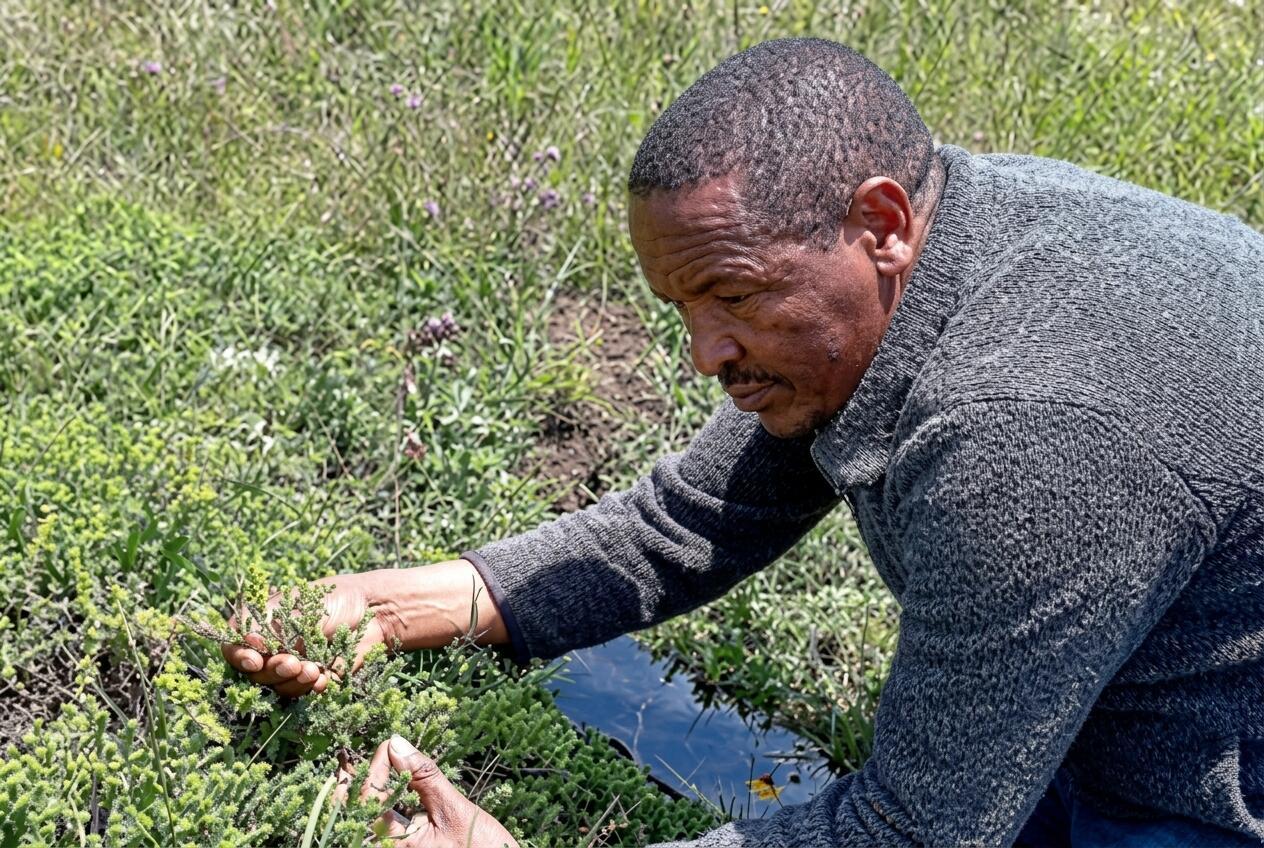
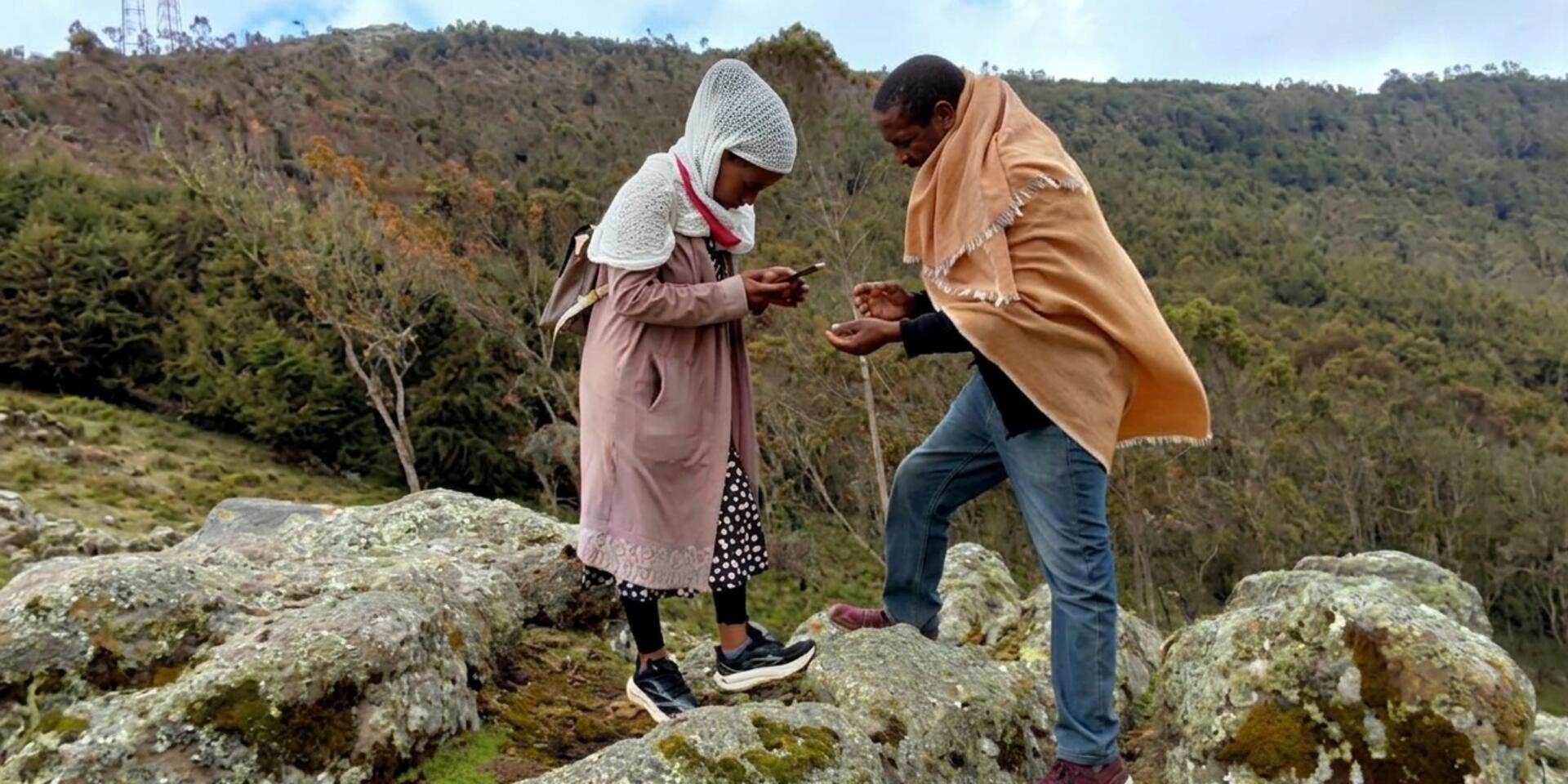
Checking a healthy, open-grown Tosign population in the field at Dendi Mumucha, West Shewa: counting flowering shoots. Photo Credit: Bogale Nigir
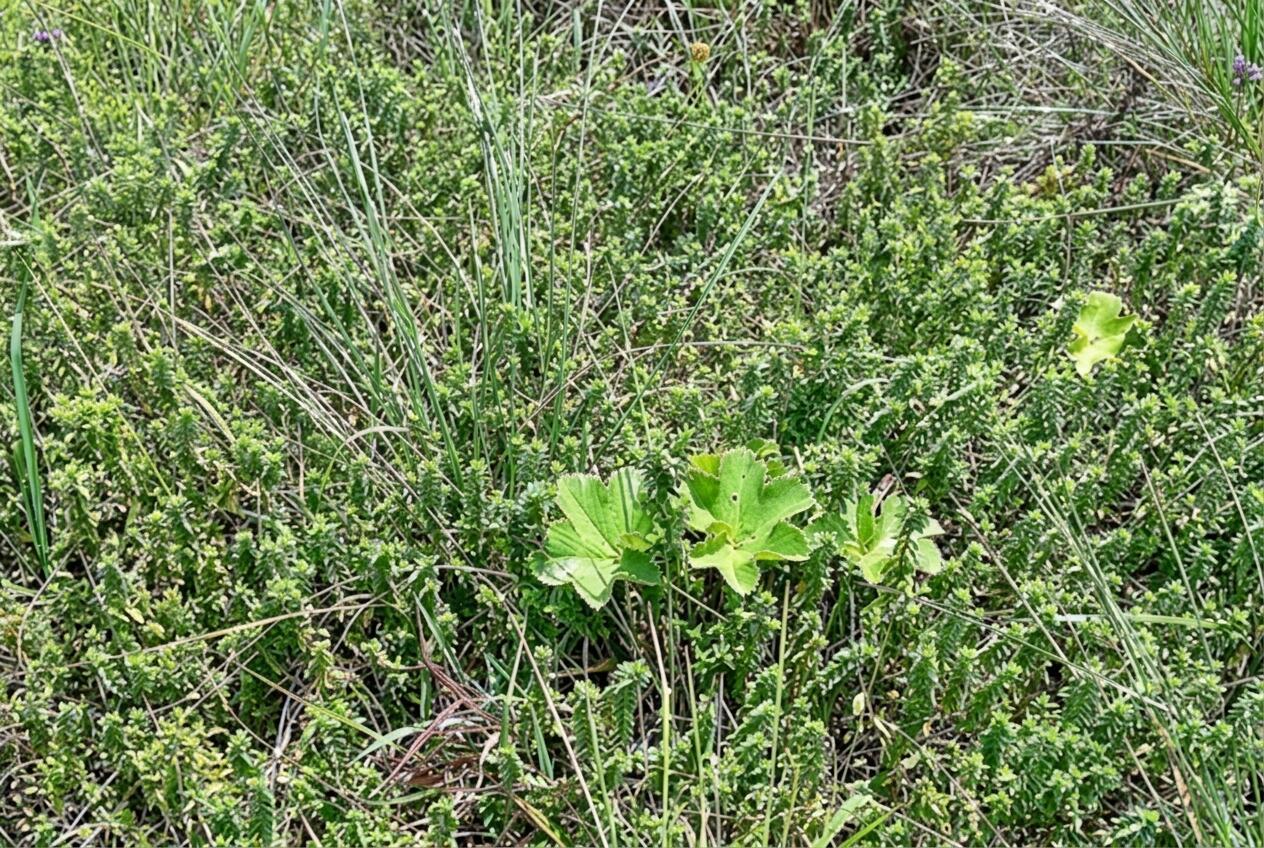
Assessing mat density and cover. Photo Credit: Bogale Nigir
The Eucalyptus and Cupressus paradox
None of this makes Eucalyptus and Cupressus simple villains. They grow fast, yield plenty of wood, and tolerate degraded land, which is exactly why so many farmers and land managers choose to plant them (Endalew, 2024). Families depend on them for fuelwood and building poles. The trouble starts when they are planted too densely: close-packed stands transform the ecosystem beneath them, and low, sun-loving plants like Tosign are among the first to suffer.
What happens to Tosign under dense plantations (Belachew and Minale, 2025; Fikadu, 2022)
- Too much shade: Tosign needs sunlight, and under a dense canopy, very little reaches the ground. Growth slows, biomass and essential oil production drop, and many plants eventually die out (Neumann and DeMalach, 2024).
- Thirsty neighbours: Eucalyptus and Cupressus roots run deep and wide, drawing heavily on soil water and even lowering the water table, leaving shallow-rooted herbs with little to drink (Scott and Prinsloo, 2008; Bayle, 2019).
- Chemical interference: Eucalyptus leaches allelochemicals into the topsoil, while Cupressus releases phytotoxic compounds and organic acids; both suppress the germination, regrowth, and growth of surrounding plants (Nega and Gudeta, 2019; Fikadu, 2022; Lemessa et al., 2022).
- A blanket of leaves: Fallen Eucalyptus and Cupressus leaves are rich in tannins and break down slowly. Over time, they acidify the soil, lock up phosphorus, and form a thick layer that keeps seeds from reaching bare ground; short-rotation plantations also draw heavily on the soil’s nutrient reserves (Aweto and Moleele, 2005; Demessie et al., 2012; Kobina, 2016; Dessie and Erkossa, 2011).
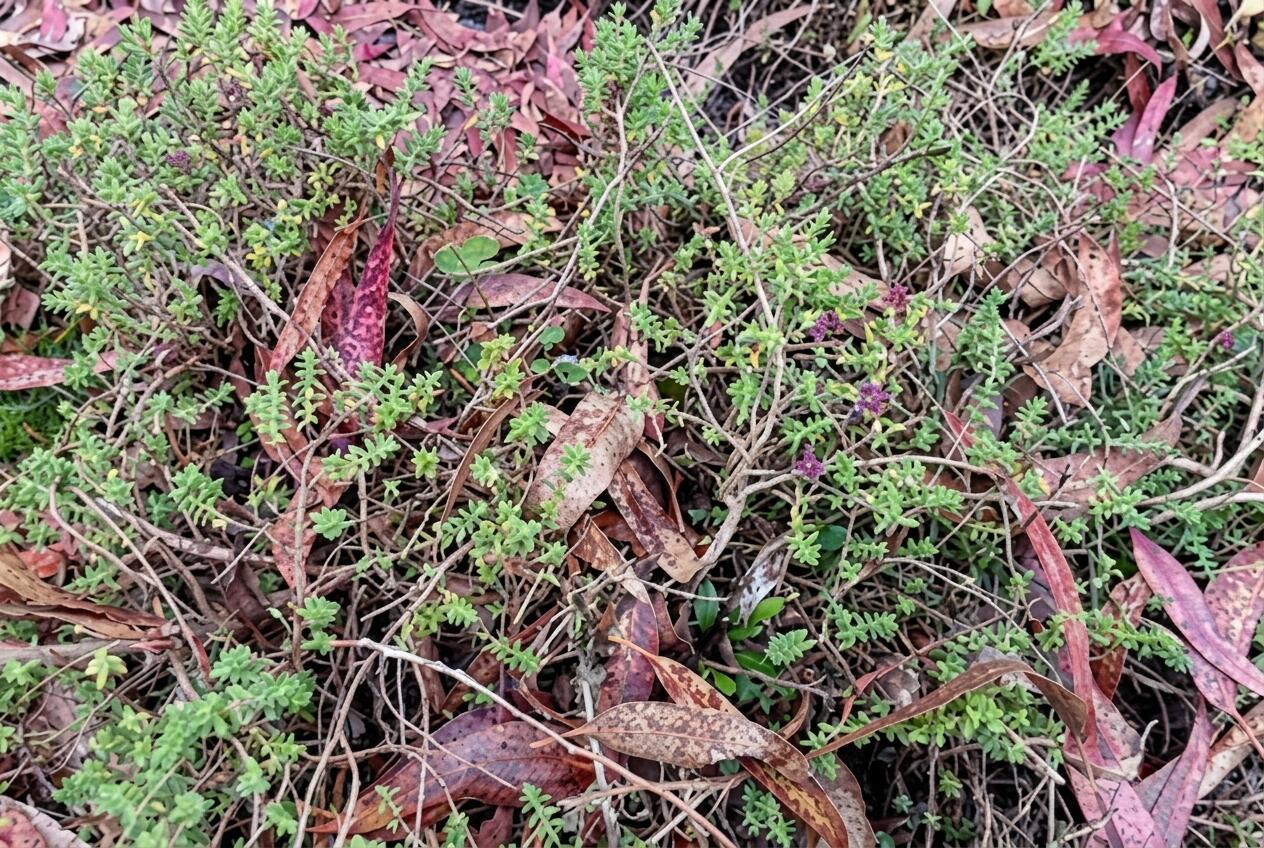
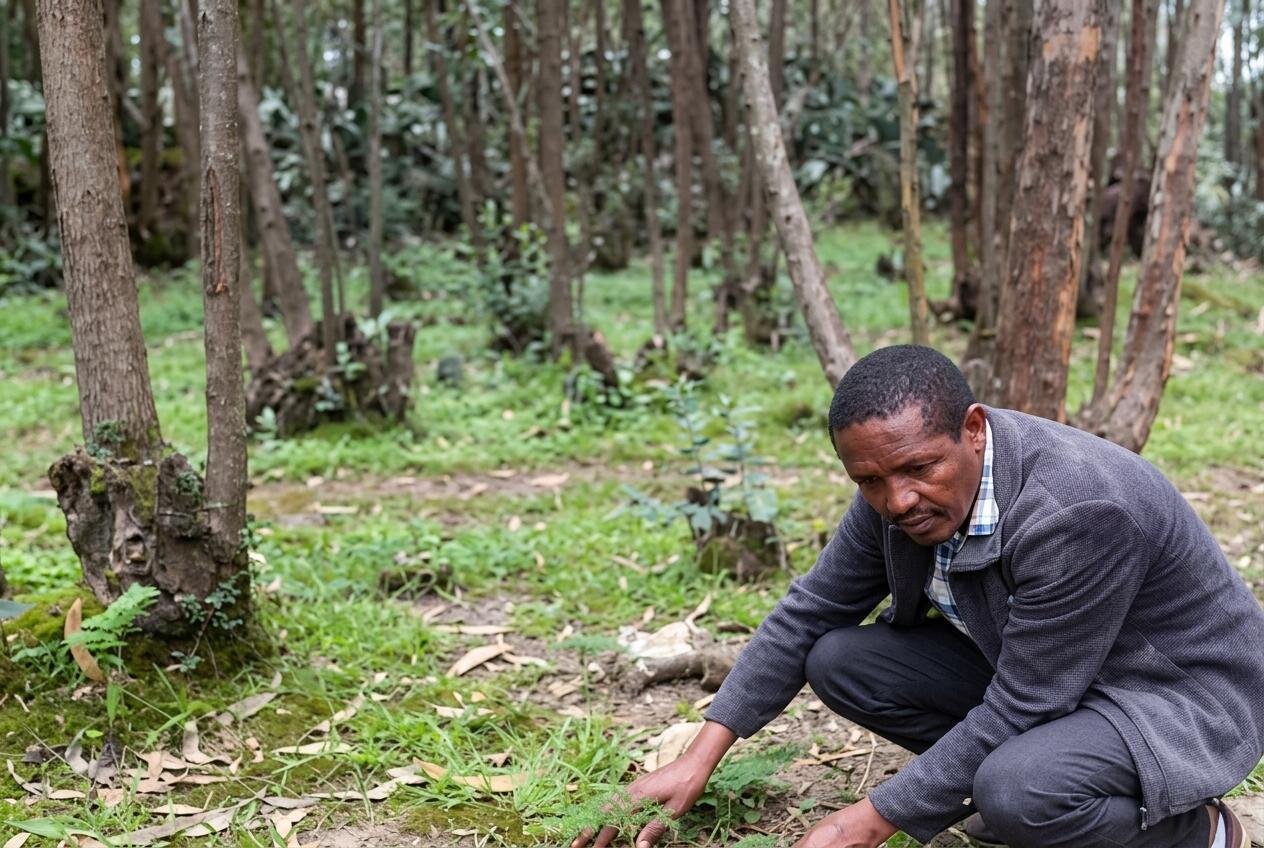
Under the plantation, eucalyptus leaves pile up over Tosign, shutting out light and keeping seeds from the soil. The plants left behind are weak and sparse at Kundi, North Shewa. Photo Credit: Abiyou Tilahun.
A chain of effects
The decline of Tosign can trigger a cascade of ecological and socioeconomic effects. As its population shrinks, pollinators lose a key forage source, and honey yields decline; reduced plant diversity and vegetation cover leave more soil exposed to rainfall and runoff, increasing erosion risk (Lemessa et al., 2022). These ecological changes translate directly into livelihood and cultural losses, since local communities rely on Tosign for food, traditional medicine, income, and cultural practice (Lulekal et al., 2013). A single plant’s decline can therefore ripple outward: fewer floral resources, weaker pollinator support, lower honey potential, diminished diversity and soil protection, and reduced access to a culturally important resource.
Reversing the current conditions
Conserving Tosign is therefore not just about protecting one plant species, but about safeguarding the ecological functions, livelihoods, and cultural knowledge tied to it. We are not calling for Eucalyptus and Cupressus to be cleared everywhere; rather, hotspot sites for this highly valued herb need careful consideration within GLI and other planting campaigns. At already-planted sites, bringing stand density down to a level where native plants can recover, while retaining the benefits trees provide, is a realistic goal (Neumann and DeMalach, 2024). Practical steps include:
- Thin, don’t clear-fell: Remove some trees from the densest stands so that light reaches the ground and litterfall and competition for water are reduced (Bayle, 2019).
- Protect Tosign refuges: Leave existing Tosign patches, open grassland, and rocky ridges unplanted so local plants can survive and spread.
- Manage the litter: Rake away excess leaves but leave enough cover to protect the soil; occasional light raking can also help wake dormant seeds.
- Give new plantations more space: Wider row spacing leaves sunny strips where light-loving herbs can grow.
- Keep watching: Set up permanent monitoring plots to track Tosign cover, flowering, regeneration, soil moisture, and canopy cover before and after management, to learn what actually works (Neumann and DeMalach, 2024).
- Most importantly, involve local communities in plant species selection and land-use decisions at these unique ecological sites: conservation is strongest when communities are recognized not only as beneficiaries but as custodians of the species and the knowledge around it.
Lesson
The story of Tosign under Eucalyptus and Cupressus is, at its core, a story about trade-offs in land-use decisions. Any single-species planting reshapes the light, water, chemistry, and soil conditions on which other species depend, and ground-layer specialists like Tosign are usually the first to feel it. The broader lesson for restoration and afforestation programmes elsewhere is that keystone, site-specific ecology and planting density matter as much as species choice: the same tree that supports rural livelihoods can quietly erode the biodiversity, pollination services, and soil protection those livelihoods also depend on, if not purposefully managed.
Conclusion
Tosign is a small herb with outsized benefits. It feeds pollinators, holds topsoil in place, shapes highland plant communities, and serves Ethiopian kitchens as spice, beverage, and traditional medicine. Protecting it means sustaining floral resources for pollinators, honey production and livelihoods, access to spice and medicine, plant diversity and vegetation cover, and culturally important resources for future generations. Dense Eucalyptus globulus and Cupressus lusitanica plantations threaten this valued herb through shade, competition for water and nutrients, chemical interference, and smothering litter. Protecting Tosign hotspot landscapes from dense tree plantations, restoring Tosign where dense stands already exist, and carefully matching species to sites in future planning are all part of the same solution.
Acknowledgements
We are grateful to the Department for Environment, Food and Rural Affairs (DEFRA), United Kingdom, and its Global Centre on Biodiversity for Climate (GCBC) programme, which funded this work under the project “Deploying Diversity for Resilience and Livelihoods”.
References
- Abebe, D. & Hagos, E. (1991). Plants as a primary source of drugs in the traditional health practices of Ethiopia. In: Engels, J.M.M., Hawkes, J.G. & Worede, M. (eds.), Plant Genetic Resources of Ethiopia: 101–113. Cambridge: Cambridge University Press.
- Aweto, A.O. & Moleele, N.M. (2005). Impact of Eucalyptus camaldulensis plantation on an alluvial soil in south eastern Botswana. International Journal of Environmental Studies, 62(2): 163– 170.
- Bayle, G.K. (2019). Ecological, social impacts of eucalyptus tree plantation on the environment. Journal of Biodiversity Conservation and Bioresource Management, 5(1): 93–104.
- Belachew, K.G. & Minale, W.K. (2025). Socioeconomic and environmental impacts of Eucalyptus plantations in Ethiopia: An evaluation of benefits, challenges, and sustainable practices. The Scientific World Journal, 2025, Article 1780293.
- Demessie, A., Singh, B.R., Lal, R. & Strand, L.T. (2012). Leaf litter fall and litter decomposition under Eucalyptus and coniferous plantations in Gambo District, southern Ethiopia. Acta Agriculturae Scandinavica, Section B – Soil & Plant Science, 62(5): 467–476
- Dessie, G. & Erkossa, T. (2011). Eucalyptus in East Africa: Socio-economic and environmental issues. Planted Forests and Trees Working Paper 46/E. Rome, Italy: Food and Agriculture Organization of the United Nations (FAO).
- Endalew, G. (2024). The Role of Eucalyptus globulus Plantation in Promoting Natural Regeneration of Native Floristic Species: A Case Study at Entoto Hillsides in Addis Ababa, Ethiopia. MSc thesis. Addis Ababa: Addis Ababa University.
- Fikadu, T. (2022). The effects of tree species on herbaceous vegetation composition, distribution and diversity in Eastern Oromia, Ethiopia. Journal of Biodiversity & Endangered Species, 10(11), Article 457.
- Friis, I., Demissew, S. & van Breugel, P. (2010). Atlas of the Potential Vegetation of Ethiopia. Biologiske Skrifter 58. Copenhagen: Royal Danish Academy of Sciences and Letters.
- Kobina, A. (2016). Effects of Eucalyptus Plantation on Soil Physico-Chemical Properties in Thiririka Sub-Catchment, Kiambu County, Kenya. MSc thesis. Kenya: Kenyatta University.
- Lemessa, D., Mewded, B., Legesse, A., Atinfau, H., Alemu, S., Maryo, M. & Tilahun, H. (2022). Do Eucalyptus plantation forests support biodiversity conservation? Forest Ecology and Management, 523, Article 120492.
- Lulekal, E., Asfaw, Z., Kelbessa, E. & Van Damme, P. (2013). Ethnomedicinal study of plants used for human ailments in Ankober District, North Shewa Zone, Amhara Region, Ethiopia. Journal of Ethnobiology and Ethnomedicine, 9, Article 63.
- Nega, F. & Gudeta, T.B. (2019). Allelopathic effect of Eucalyptus globulus Labill. on seed germination and seedling growth of highland teff (Eragrostis tef (Zuccagni) Trotter) and barley (Hordeum vulgare L.). Journal of Experimental Agriculture International, 30(4), pp. 1–12.
- Neumann, J. & DeMalach, N. (2024, May 28). Ecological impact of eucalyptus trees: Balancing benefits and risks.
- Scott, D.F. & Prinsloo, F.W. (2008). Longer-term effects of pine and eucalypt plantations on streamflow. Water Resources Research, 44(7).
Keep exploring