From the Field From restoration to nutrition: Exploring edible plant diversity in Ethiopia’s Green Legacy Initiative sites

Biodiversity is fundamental to food security, nutrition, resilient livelihoods, and healthy ecosystems. A recent assessment of selected Green Legacy Initiative (GLI) sites in Ethiopia revealed a rich diversity of edible plant species, including vegetables, fruits, roots and tubers, spices and stimulants.
The study documented both wild and cultivated edible plants, including species planted by communities and those that naturally regenerated following GLI restoration interventions. This diversity is important because biodiversity for food and agriculture supports food security, nutrition, livelihoods, and ecosystem services (FAO, 2022; FAO, 2019). While the assessment identified an impressive range of edible plant species, it also revealed that a handful of species dominate in frequency and abundance, whereas many others are confined to specific sites.
Mapping edible plant diversity across GLI sites
The assessment covered 92 GLI sites across Addis Ababa city and the Oromia and Central Ethiopia regions. In total, 57 edible plant species were documented, demonstrating the considerable potential of restoration landscapes to household food and nutrition security (Binalfew, 2025).
The recorded species represented diverse food groups. Vegetables included kale, amaranth, tomato, African eggplant, cape gooseberry, and pepper. Other edible plants included roots and tubers such as cassava, enset, ginger, potato, taro, and yam; spices and stimulants such as basil, rosemary, tena adam, khat, coffee, gesho, and sugarcane; while maize was the dominant cultivated cereal crop recorded (Binalfew, 2025).
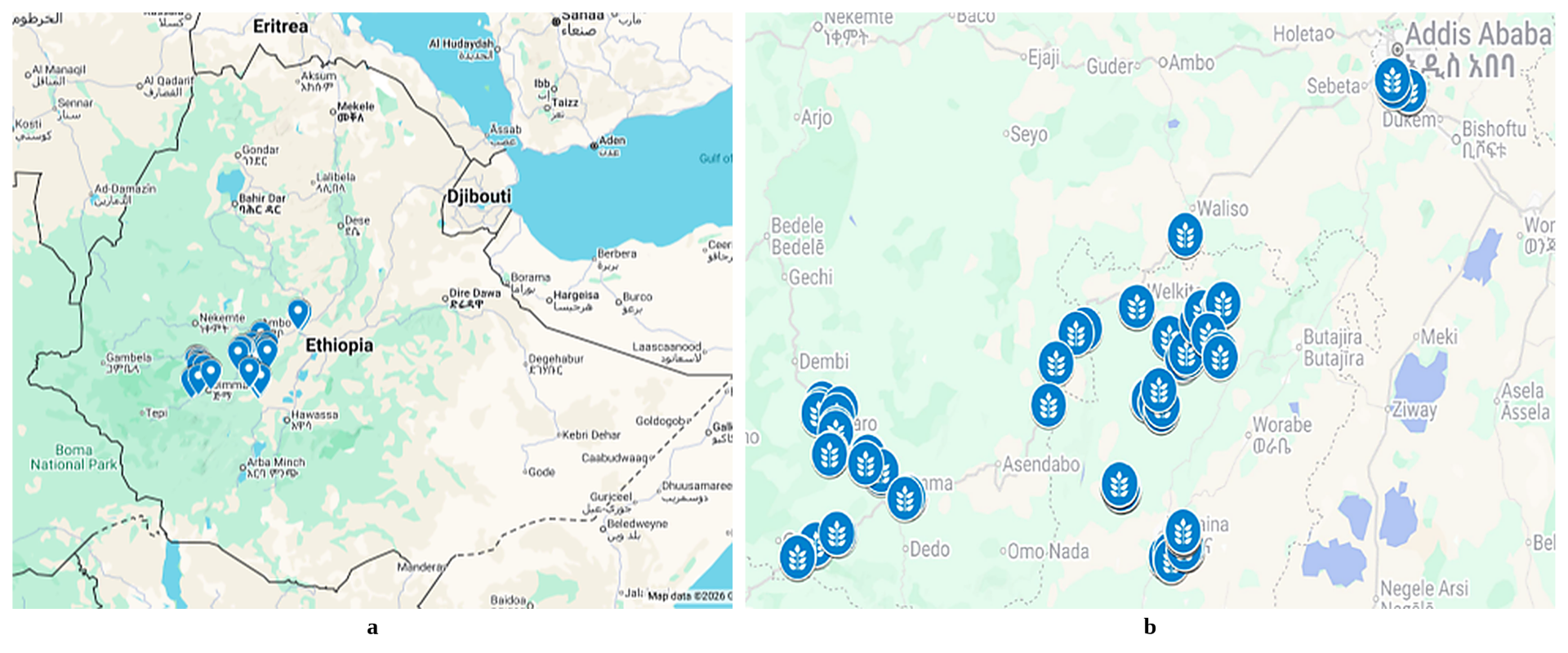
Map of GLI sites surveyed for edible plant diversity, showing regional distribution and site density.
A rich blend of wild and cultivated fruits
One of the notable findings was the diversity of fruit species documented across the assed sites. Wild fruits such as Carissa spinarum (agam), Opuntia ficus-indica (beles), Euclea racemosa (dedeho), Syzygium guineense (dokma), Rubus apetalus (enjory), Capparis tomentosa (gumero), and Ficus sur (shola). In addition to these indigenous species, several cultivated and introduced fruit crops were recorded, including apple, avocado, banana, guava, mango, papaya, and pomegranate (Binalfew, 2025).
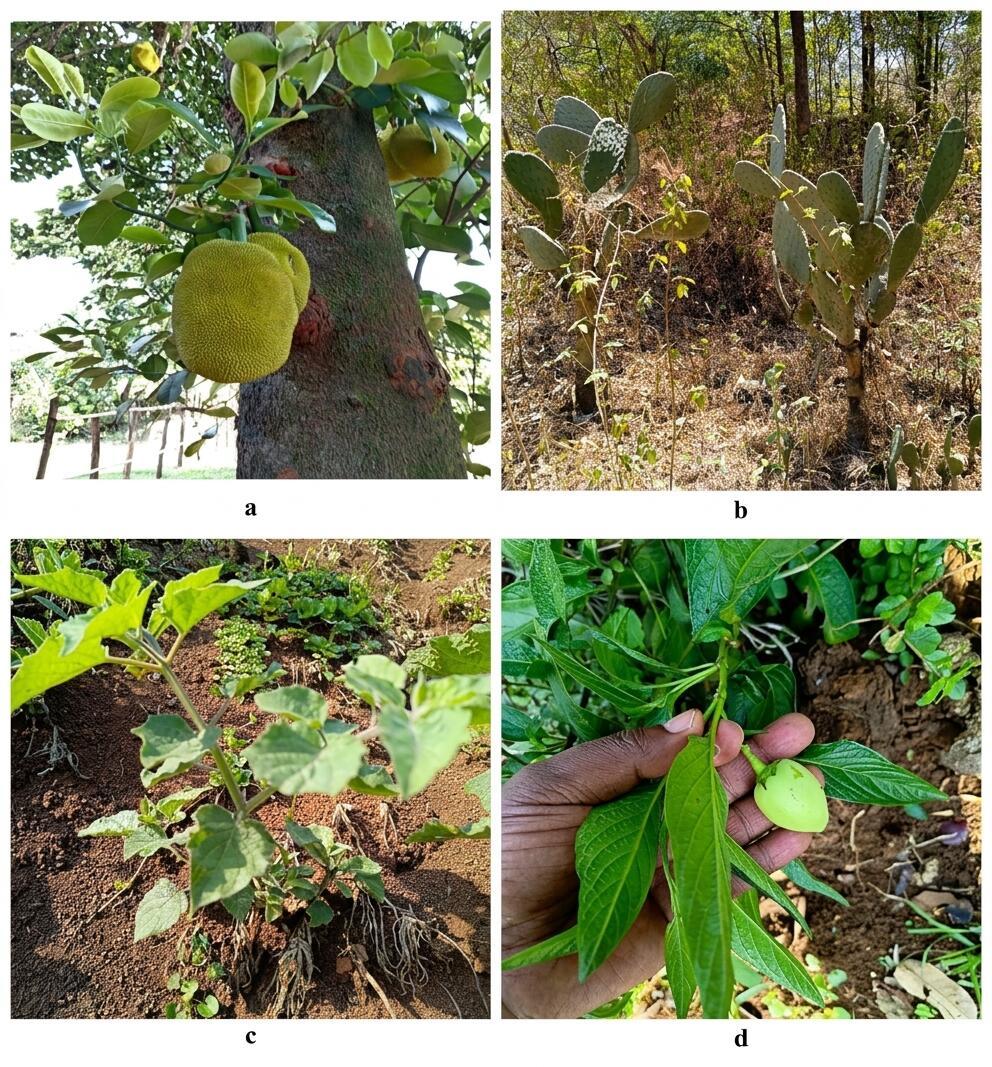
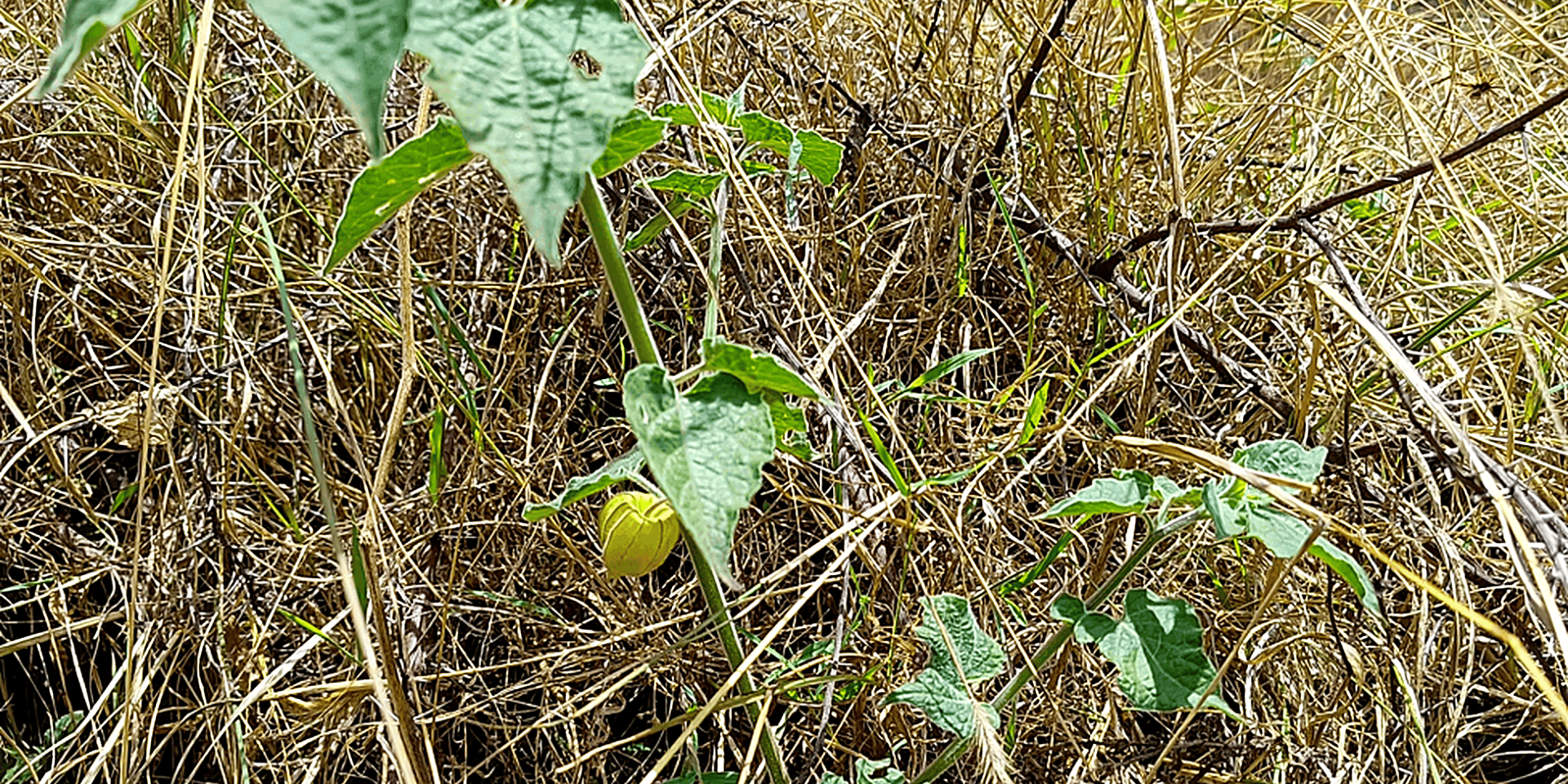
Representative edible plants identified across GLI sites: (a) Jackfruit, (b) Cactus (Beles), (c) Cape Gooseberry, and (d) African Eggplant. These examples illustrate the diversity of both indigenous and introduced edible species found across restoration (Binalfew, 2025)
How land use influences edible plant diversity?
The assessment examined edible plant species across five land use categories: Sole GLI, Natural Forest, Homestead, GLI Integrated with Natural Forest, and agroforestry. Wild fruits were the most common category in low-intervention land-use types, particularly Sole GLI (42), Natural Forest (19), and GLI Integrated with Natural Forest (34). This pattern reflects the dominance of naturally occurring edible plant species in less intensively managed environments. By contrast, homesteads and agroforestry contained a much higher proportion of cultivated fruits and vegetables. The finding aligns with evidence showing that managed and biodiverse landscapes play an important role in supporting food production and livelihoods (FAO, 2022; FAO, 2019; Binalfew, 2025).
Among all land use types, homesteads exhibited the greatest edible plant diversity. Cultivated fruits (59) were the most frequently recorded groups, followed by roots and tubers (27), vegetables (26), wild fruits (24), spices (15), and cereals (4). This pattern suggests that homestead systems are intensively managed to maximize food production and nutritional benefits. Agroforestry also showed a strong presence of cultivated fruits (21) and stimulants, although they contained fewer wild species than natural or restoration-oriented land-use types (Binalfew, 2025).
It can be inferred that edible plant diversity is strongly influenced by land-use practices and levels of human management. Wild fruits tend to dominate in natural and restoration settings, while cultivated fruits and vegetables become more prominent in intensively managed landscapes.
Looking beyond presence: Frequency and abundance
To better understand edible plant diversity, the study examined both frequency and abundance.
- Frequency indicates how widely a species is distributed across assessment sites.
- Abundance measures the number of individuals recorded where a species occurs.
Together, these indicators help distinguish species that are both widespread and numerous from those with more localized distributions (Binalfew, 2025). The frequency analysis showed that coffee, enset, dokma, dedeho, and agam were among the most observed species across GLI sites. Coffee was recorded 35 times across the assessed sites, while enset appeared 18 times. In contrast, blueberry, African eggplant, amaranth, ginger, and summer squash were each recorded only once, indicating a much more limited spatial distribution.
It is important to note that frequency alone should not be interpreted as evidence of ecological resilience, cultural importance, or economic value. Rather, it simply reflects how broadly a species was distributed within the sampled sites.
The abundance of data provided additional insights. Coffee and enset were particularly prominent, with coffee reaching 1,584 recorded individuals and enset exceeding 1,000 individuals. Kale (469 individuals) and khat (668 individuals) also displayed relatively high abundance despite their more moderate distribution across sites. Conversely, species such as African eggplant, passion fruit, enkoy, and blueberry were recorded at comparatively low abundance levels.
Why do these findings matter?
Understanding edible plant diversity goes far beyond simply compiling species lists. Biodiversity for food and agriculture can contribute significantly to food security, improved nutrition, sustainable livelihoods, and resilience when properly conserved and utilized (FAO, 2022).
The diversity documented across GLI sites provides a valuable foundation for identifying edible plant species that can support:
- Nutrition-sensitive agriculture
- Access to food during food shortage periods
- Local livelihood opportunities
- Conservation of locally important plant species
However, the promotion of edible plants within restoration areas must be carefully guided by local site conditions, restoration goals, species suitability, and sustainability considerations. Although the Green Legacy Initiative is primarily focused on landscape restoration, many restoration benefits can eventually translate into improved livelihoods. Ethiopia's GLI framework explicitly recognizes food and nutrition security as one of its broader objectives (Ministry of Agriculture, 2026). Recent research also highlights the potential of integrated restoration approaches that simultaneously generate ecological, social, and economic benefits (Mengistu et al., 2026).
Where ecosystem restoration objectives permit, the integration of suitable edible plant species can complement restoration efforts by enhancing food availability, improving nutrition, and creating livelihood opportunities without compromising environmental goals.
Moving forward: Linking restoration and nutrition
The assessment highlights an important opportunity to strengthen both food security and ecosystem restoration outcomes. Conserving underutilized and endangered wild edible plant species should remain a priority, while communities can also be encouraged to integrate suitable fast-growing vegetables and fruit species into appropriate GLI sites.
Such an approach can increase land productivity, diversify household diets, support local incomes, and enhance climate resilience. More importantly, it demonstrates that landscape restoration can contribute not only to ecological recovery but also to improved human well-being. As Ethiopia continues to expand its restoration efforts, promoting diverse edible plant species within suitable Green Legacy landscapes offers a practical pathway toward food systems that are nutritious, resilient, environmentally sustainable, and beneficial for both people and nature.
Acknowledgment
We gratefully acknowledge the UK Department of Environment, Food Rural Affairs (DEFRA) for providing financial support for this work. We also sincerely thank the communities in the research area for their contribution to the study and for sharing their indigenous knowledge during assessment and identification of the wild edible plants.
References
- Binalfew, T. (2025). Edible plant divesity assessment report. Field Assessment Report, World Vegetable Center, Addis Ababa.
- FAO. (2019). The State of the World’s Biodiversity for Food and Agriculture. Food and Agriculture Organization of the United Nations, Commission on Genetic Resources for Food and Agriculture. Rome: FAO.
- FAO. (2022). Framework for Action on Biodiversity for Food and Agriculture. Food and Agriculture Organization of the United Nations, Commission on Genetic Resources for Food and Agriculture. Rome: FAO.
- Mengistu, D. K., Terefe, H., Lakew, B. F., Tilahun, A., & Hailemariam, B. N. (2026). Ethiopia’s green legacy initiative enhances carbon stock and carbon dioxide sequestration across diverse landscapes. Scientific Reports, 16, 30.
- Ministry of Agriculture. (2026). Green Legacy. Retrieved September 22, 2026