Blog Soroti, Uganda: WAWE project kicks off to turn waste into wealth

Nestled in eastern Uganda, approximately 290 kilometres northeast of Kampala, Soroti City is one of the country's fastest-growing urban centres. As the commercial and administrative hub of the Teso sub-region, the city continues to attract people and businesses, driven by expanding economic opportunities and rapid urbanization.
Yet, like many growing African cities, Soroti faces a pressing challenge: managing the increasing volumes of waste generated by its expanding population and bustling economic activities.
At the heart of the city lies Soroti Main Market, a vibrant centre of trade that serves thousands of residents and traders every day. While the market plays a critical role in food distribution, employment, and economic growth, it is also a major source of organic waste. Large quantities of vegetable remains, fruit peels, banana and tuber waste, spoiled produce, and other biodegradable materials are discarded daily, often ending up in open dumps and landfills.
When organic waste decomposes in landfills, it releases methane, a potent greenhouse gas that contributes significantly to climate change and its effects. The practice poses public health risks, affects market sanitation, lowers business attractiveness, and results in the loss of valuable resources that could otherwise be recovered and reused.
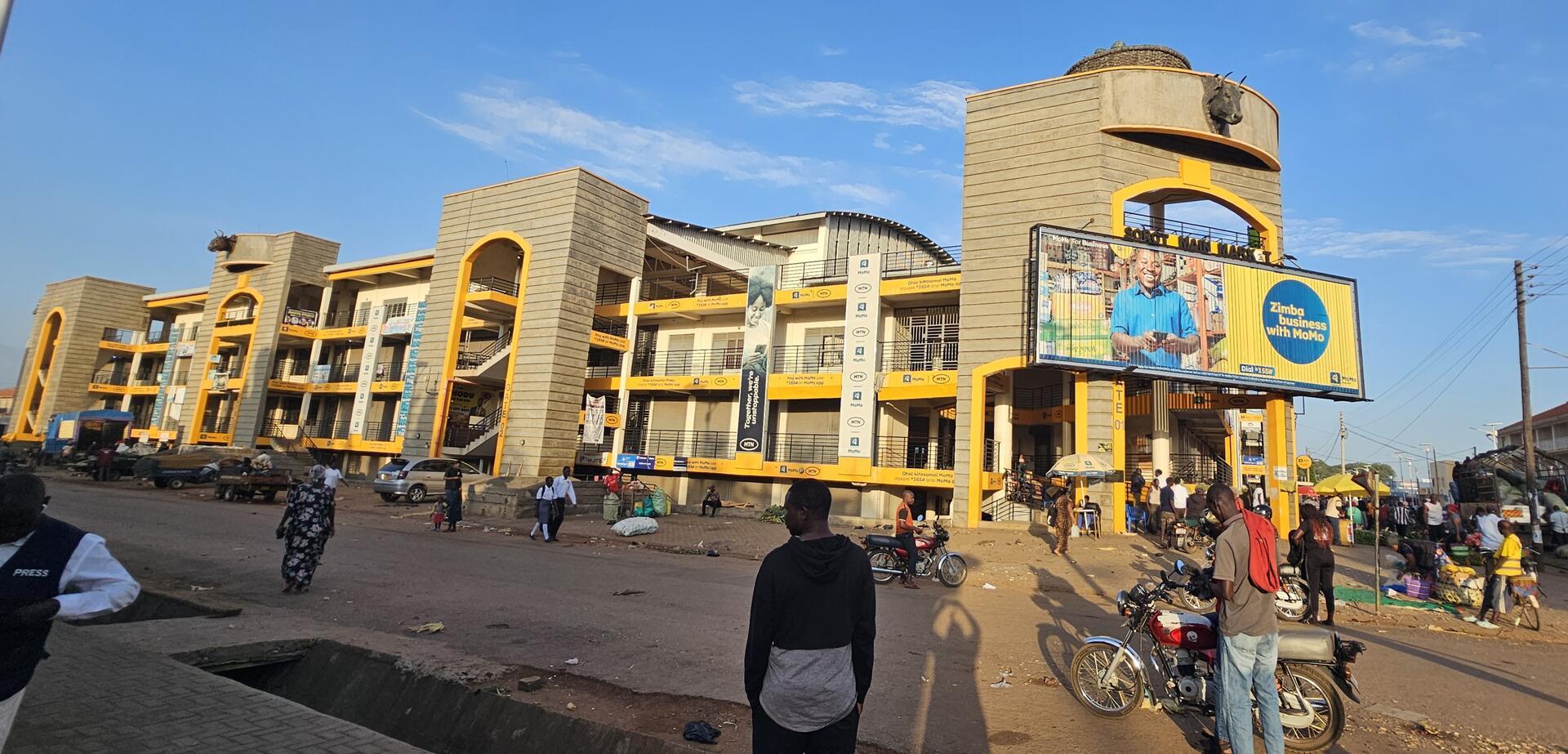
A view of Soroti city main market. Photo Credit: Rachel Kibui
What if this waste could become a valuable resource instead of an environmental burden?
This question lies at the centre of the Waste to Wealth: Using Innovative Gender-Responsive Business Models to Turn Organic Market Waste into Organic Fertiliser and Animal Feeds (WAWE) Project, whose implementation in Uganda officially kicked off in Soroti through a multi-stakeholder engagement meeting bringing together representatives from government, academia, research institutions, development organizations, private sector, and the media.
Funded by the Climate and Clean Air Coalition, the project seeks to transform biodegradable market waste into organic fertiliser and sustainable animal feed while addressing climate change, improving food systems resilience, enhancing soil health, and creating livelihood opportunities.
In Kenya, the project is being implemented in Kiambu and Nairobi City County. It brings together a strong consortium of partners including county and city governments, universities - Pwani University in Kenya, Busitema University in Uganda, and Hochschule Rhein-Waal University in Germany, as well as private-sector actors operating across the two countries.
Addressing a growing waste challenge
Urban markets across East Africa generate significant volumes of organic waste, yet recycling rates remain low. Much of the waste is disposed of in landfills where it contributes to the production of Short-Lived Climate Pollutants (SLCPs), particularly methane.
Poor waste management also creates health risks for traders and consumers, affects business operations, and reduces market attractiveness. Additionally, the diverse nature of organic waste presents technical challenges for handling, processing, and producing quality bioproducts.
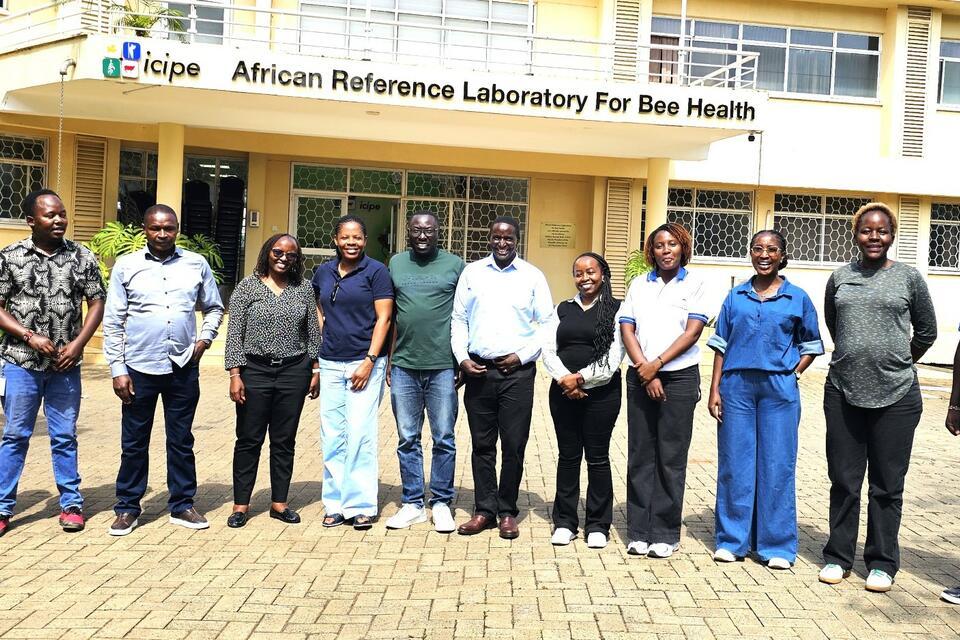
The Soroti stakeholder meeting marked a major milestone towards implementing the project in Uganda. Participants included representatives from The Alliance of Bioversity International and CIAT, Busitema University, the Government of Uganda, Soroti City Council, Nairobi City County, development partners, researchers, and media practitioners.
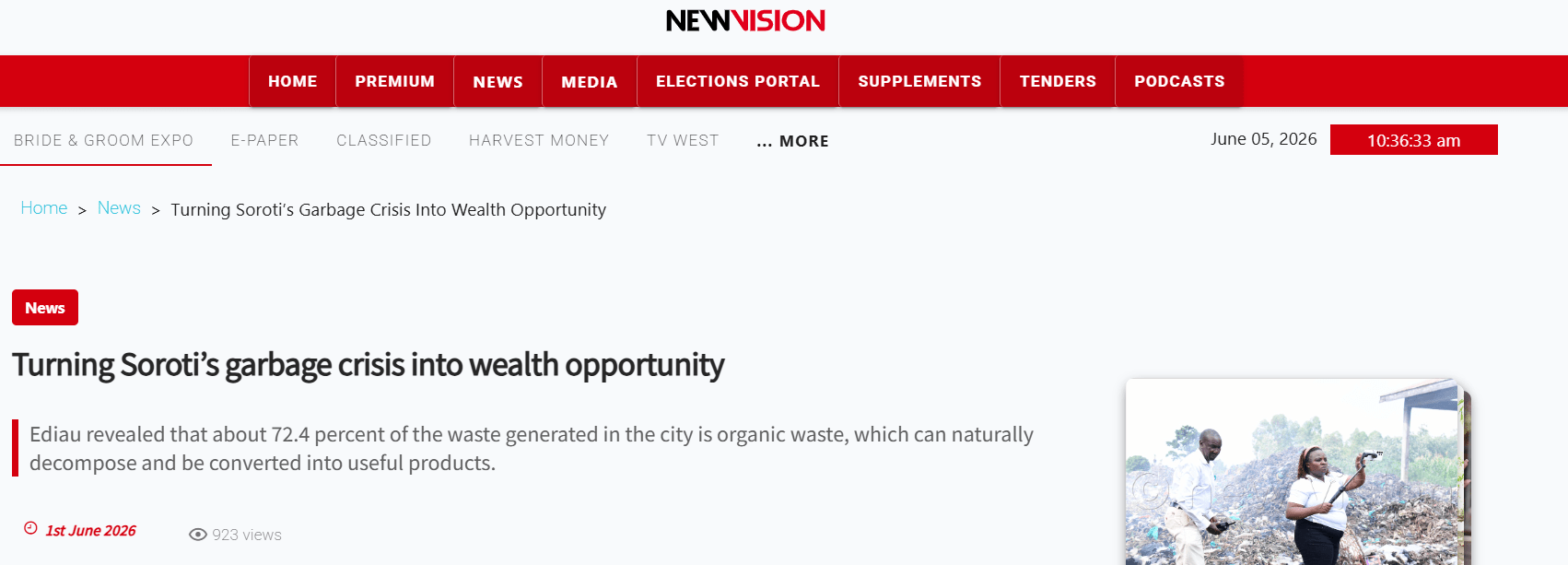
“Over time, Soroti City has grappled with serious waste management challenges. The city generates about 165 tonnes of waste daily, of which approximately 72.4 percent is organic. This presents a significant opportunity to turn waste into valuable resources through innovative and circular economy approaches.” – Francis Edau, Environment Office, Soroti City
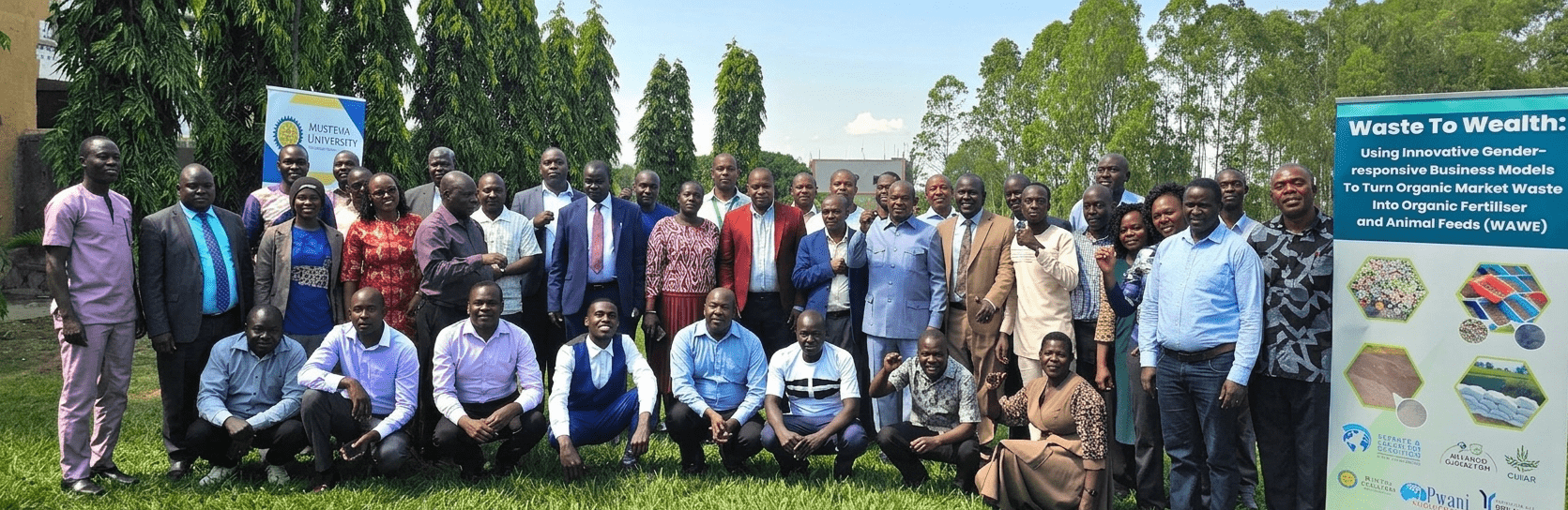
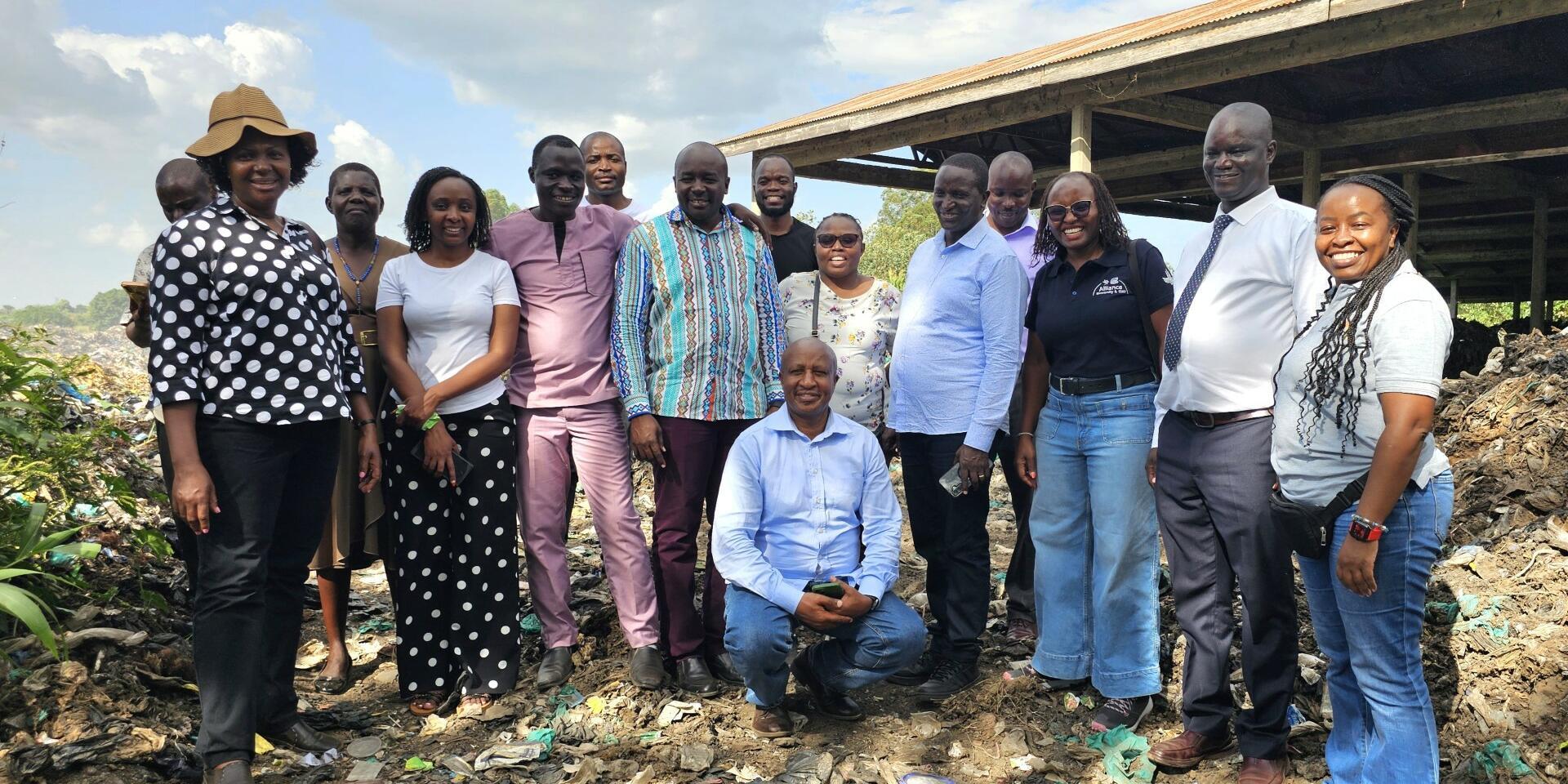
A group picture of stakeholders from Kenya and Uganda during the WAWE project kick-off meeting at Soroti, Uganda. Photo Credit: Rachel Kibui
Transforming waste through BSF technology
At the core of the WAWE Project is an innovative circular economy model that uses Black Soldier Fly (BSF) technology to convert organic waste into valuable products.
Under this approach, organic waste collected from markets is first sorted to separate biodegradable materials from plastics and other non-organic waste. The organic waste is then transported to recycling facilities where BSF larvae consume and break down the material.
The process produces two valuable outputs: Frass, a nutrient-rich by-product that is processed into organic fertiliser to improve soil health and crop productivity. The second is the larvae themselves, which are processed into high-protein animal feed suitable for poultry, fish, and livestock production.
By converting waste into marketable products, the technology reduces the volume of waste sent to landfills, lowers greenhouse gas emissions, and creates business opportunities across the waste management value chain.
“At our Arapai Campus in Soroti City alone, we have about 2,500 young people, and we see tremendous potential in empowering them with the skills and mindset needed to turn waste into wealth. Through the WAWE Project, we are helping youth recognize that waste can be transformed into valuable products and sustainable business opportunities. This is particularly important for Soroti, where less than 30% of the waste generated is collected, leaving enormous untapped potential to address environmental challenges while creating jobs and livelihoods.” – Prof James Egonyu, Busitema University
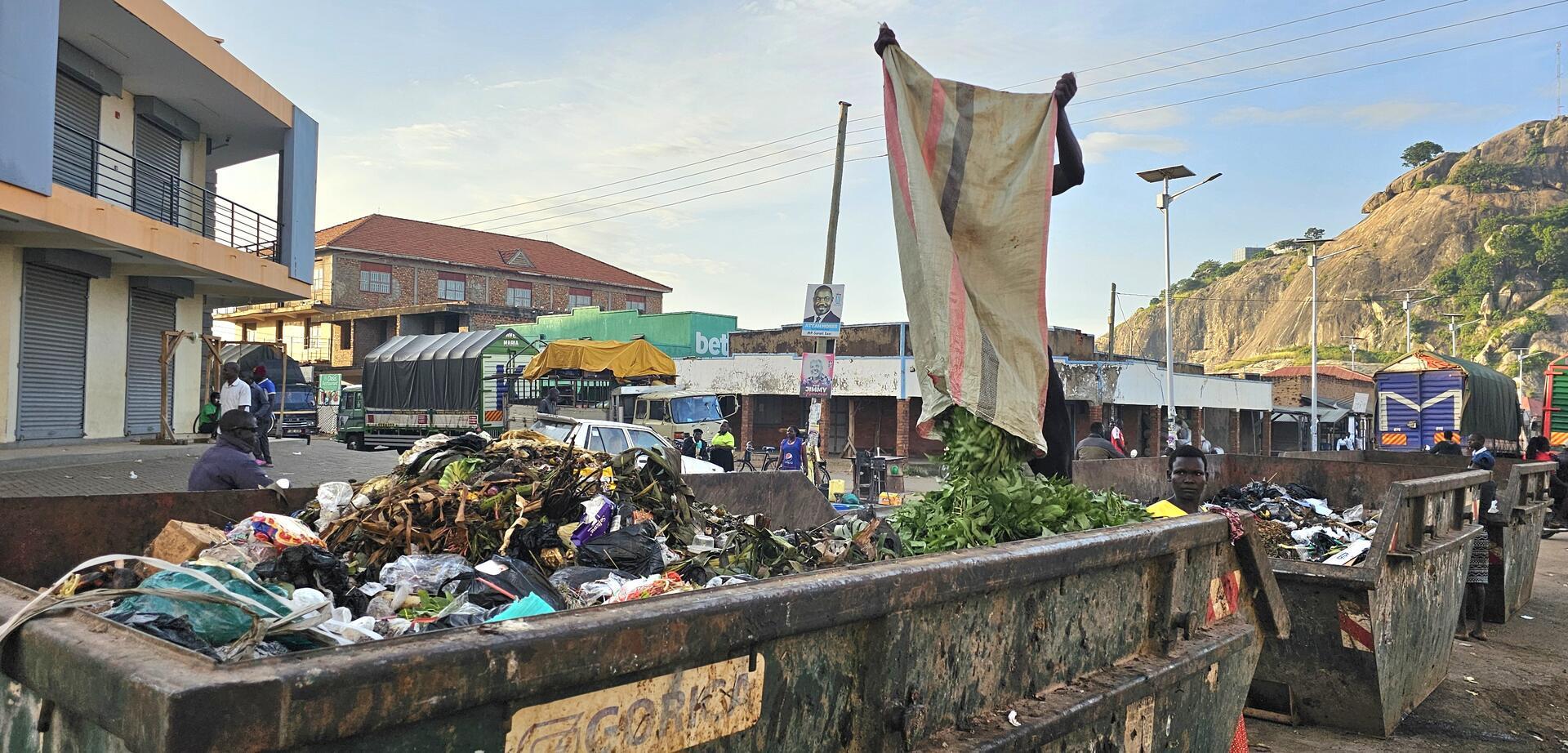
Soroti market generates tonnes of organic waste which can be turned to wealth. Photo Credit: Rachel Kibui
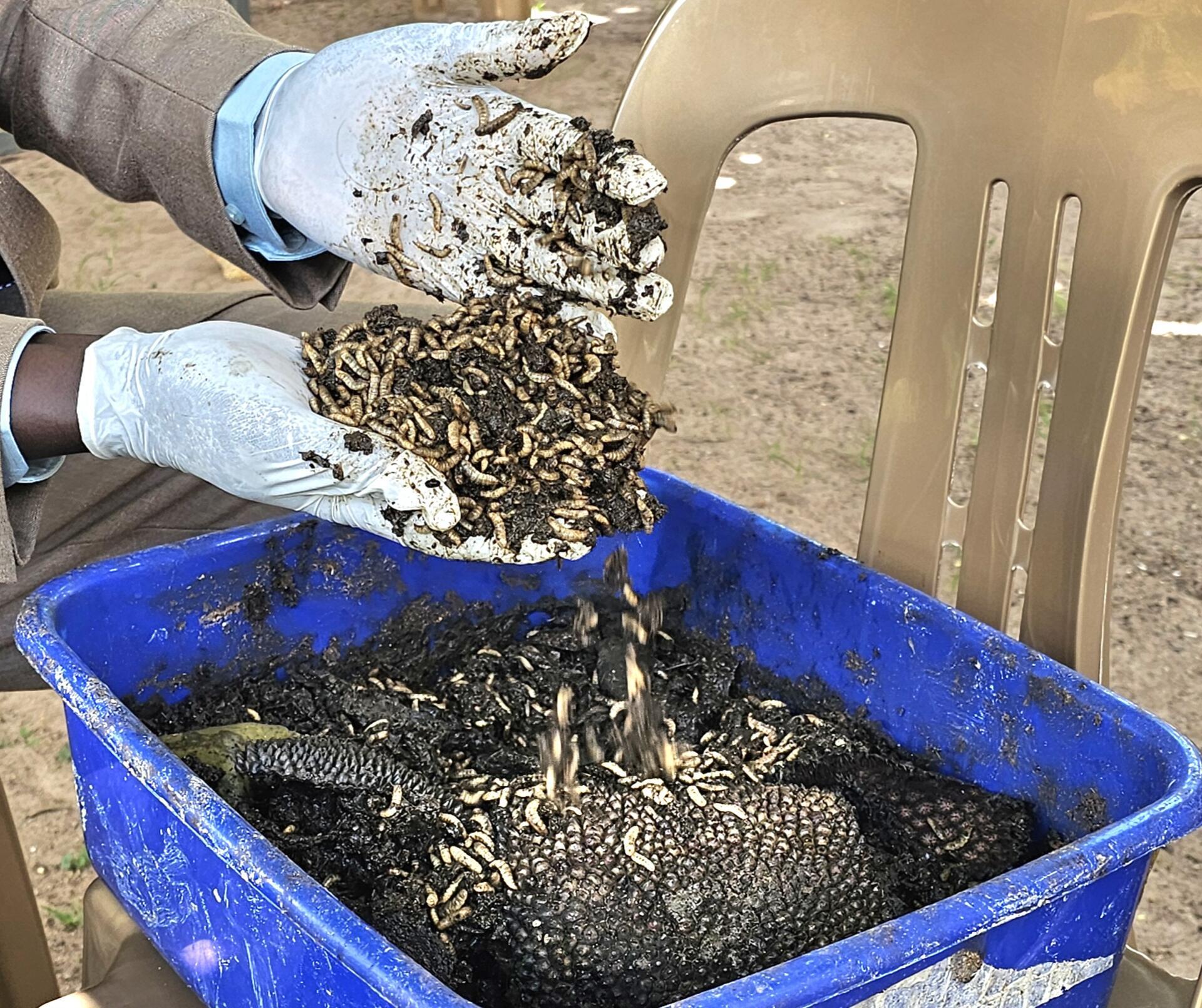
A close-up picture of BSF larvae. Photo Credit: Rachel Kibui
Empowering women and youth
A key feature of the WAWE Project is its strong focus on gender-responsive and inclusive business models. Women make up a large proportion of market traders and play a significant role in generating and managing organic waste. However, they are often excluded from ownership and decision-making opportunities when waste management enterprises become commercially viable. The project seeks to change this by ensuring women actively participate in waste collection, recycling enterprises, and value-added businesses emerging from the initiative.
Young people will also play a central role by contributing innovative technologies, digital solutions, and entrepreneurial approaches that can improve waste tracking, monitoring, and resource recovery systems.
“Women and youth are at the heart of the WAWE Project because they are not only the most affected by waste management challenges but also the greatest drivers of innovation and change. By equipping them with skills, resources, and opportunities, we are transforming waste into wealth, creating sustainable livelihoods, and building more resilient and inclusive communities for the future.” – Dr. Christine Chege, Senior Scientist and Project Lead, The Alliance of Bioversity International and CIAT
Supporting farmers and sustainable food systems
Beyond waste recycling, the project will work closely with farmers to demonstrate the value of organic fertilizers produced from recycled waste. Through field demonstrations and trials, farmers will gain practical experience using the fertilizers and comparing their performance with conventional alternatives.
The initiative aims to strengthen soil health, reduce dependence on synthetic inputs, and support more sustainable and resilient agricultural systems.
“The WAWE Project aligns perfectly with Busitema University's Competency-Based Curriculum by providing students with practical, hands-on learning opportunities. It presents a valuable opportunity for our students to apply their knowledge towards solving real-world challenges, gain industry-relevant skills, and develop innovative solutions in waste management and the circular economy. While Soroti city and our Arapai Campus are the starting points, the vision is to scale the WAWE agenda across all Busitema University campuses to extend its impact on learning and community development.” – Prof. Paul Waako, VC Busitema University
A collaborative pathway to Climate Action
By bringing together local governments, universities, researchers, development organizations, farmers, women, youth, and private-sector actors, the WAWE Project demonstrates the power of partnership in addressing complex urban challenges.
For Soroti City, Nairobi City County and Kiambu what has long been viewed as a waste management problem could soon become a driver of economic opportunity, environmental sustainability, and food systems transformation.
As the project takes root, it offers a powerful example of how innovation, collaboration, and inclusive business models can turn waste into wealth while contributing to climate action and sustainable development.