Blog Mark of social inclusion: Brewing dignity into Kenya’s coffee trade

Since its introduction to Kenya in 1893, coffee has remained one of the country’s most significant agricultural exports. Today, it is grown across 33 counties, largely by smallholder farmers who account for about 70 percent of production, supporting an estimated 1.5 million households directly and indirectly.
For decades, however, coffee has primarily been viewed through a narrow commercial lens-a commodity measured in kilograms, delivered to cooperative societies, subjected to deductions, and eventually paid out. In this system, the human stories behind the beans have often remained invisible.
From caregiving to collective agency
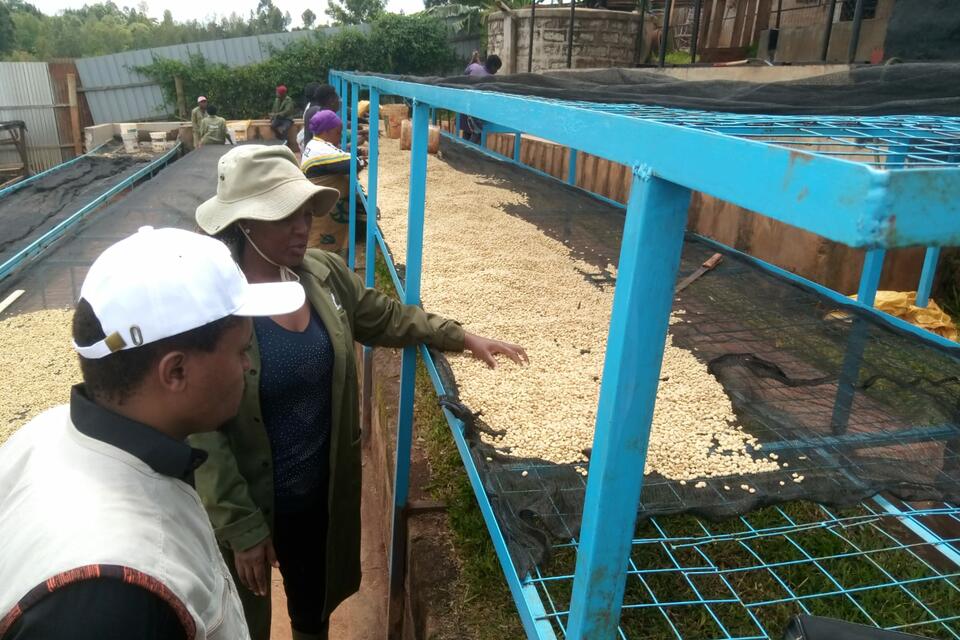
In Mathira, Central Kenya, that narrative is beginning to shift. A group of farmers who double up as caregivers of children living with Cerebral Palsy are reimagining their place in the coffee value chain. Rather than relying solely on cooperative structures, they are exploring pathways to collectively market their coffee and pursue direct export opportunities.
At the center of this transformation is the Cerebral Palsy Warriors Family (CP-Warriors), a Community-Based Organization founded in 2021. The group brings together 66 caregivers, 43 of whom are women, united by shared lived experiences and a desire to build more resilient livelihoods.
“We once approached someone for help to buy diapers for our children,” recalls founder Esther Kariuki.
Instead of offering direct aid, the individual challenged them to think differently-to leverage the one asset many already had: coffee.
For these caregivers, farming is not just an economic activity. It exists alongside the full-time responsibility of caring for children with complex needs. The burden is not only physical and financial, but also social.
“When my son was born with cerebral palsy, some family members blamed me… others said it was witchcraft. Society called it a curse,” says chairperson Nichodemous Muchangi. “Through this group, I learned that I am not alone and that no one is to blame.”
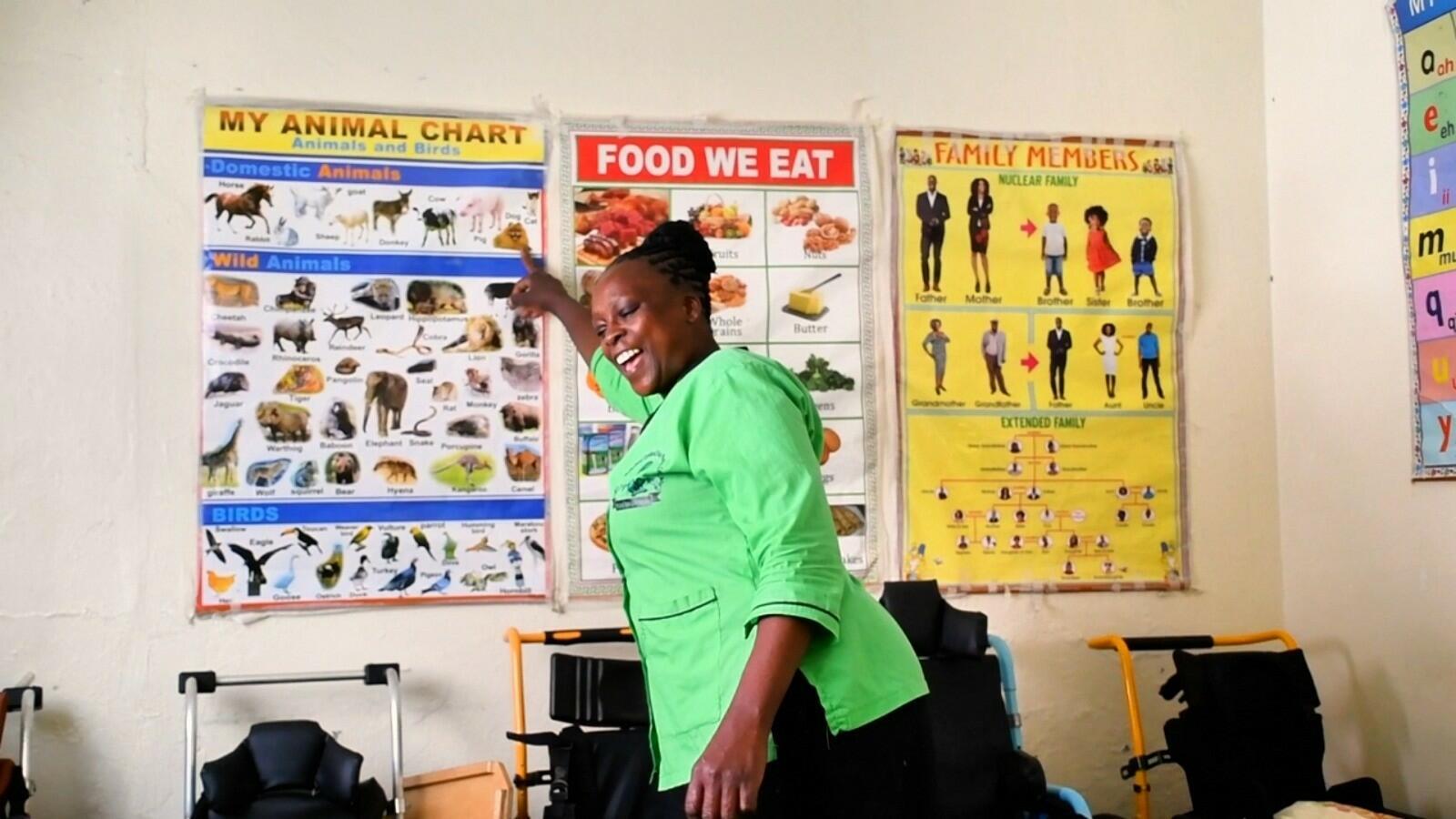
A teacher teaches children at the Cerebral Palsy Warriors Family Center in Mathira, Nyeri.
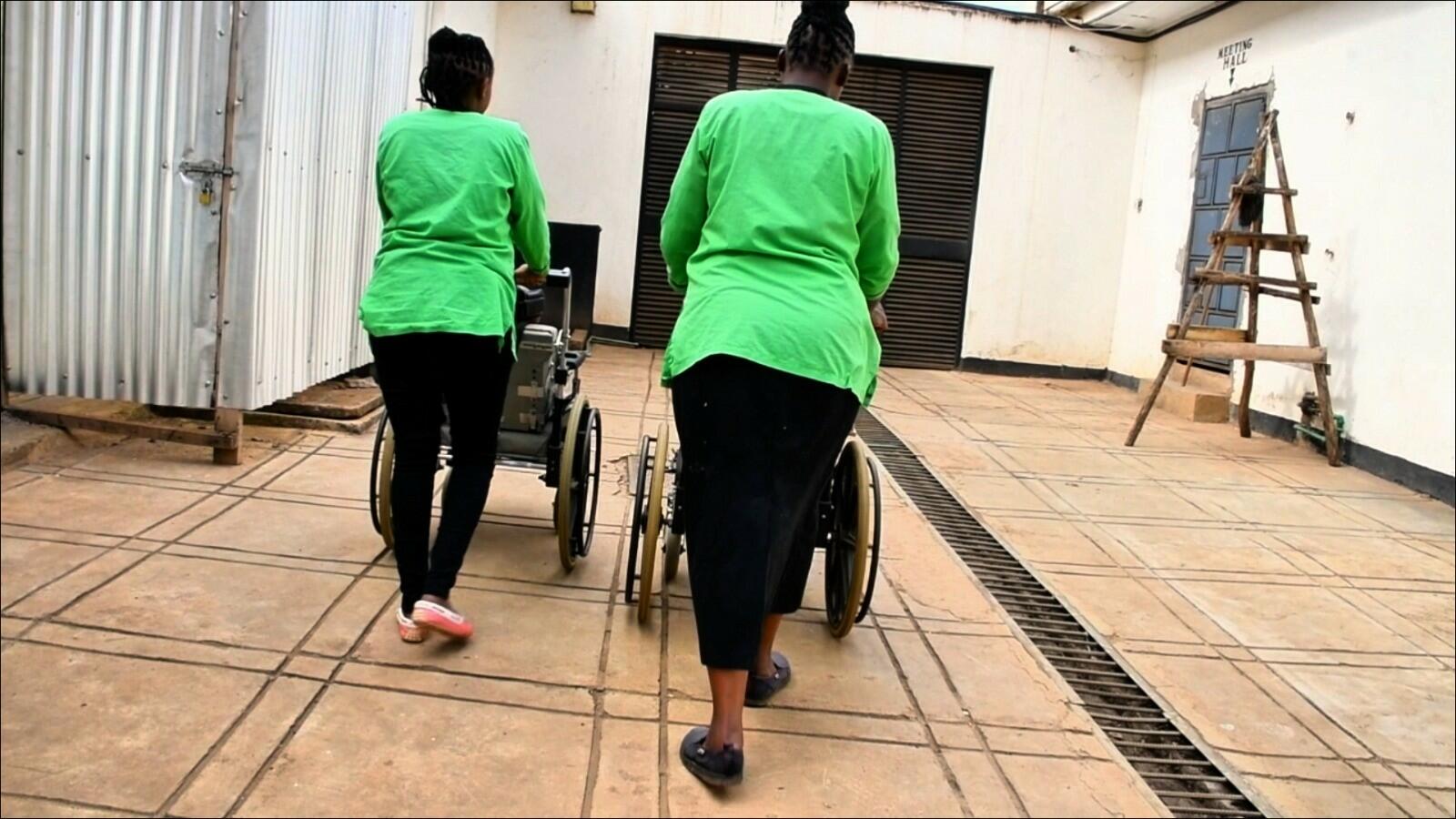
Workers wheel children at the Cerebral Palsy Warriors Family Center in Mathira, Nyeri.
The hidden cost of care
For many members, daily life is a delicate balance.
Agnes Wanjiku starts her day caring for her 14-year-old son before tending to her coffee farm nearby, constantly moving between both roles. The costs, which include diapers, medication, therapy, and transport, are relentless.
Godfrey Wanjohi, a father of two children with cerebral palsy, describes the reality starkly:
“Taking care of one child with cerebral palsy is like caring for four children at once… and they never outgrow parental care.”
Like many smallholder farmers, he had nearly abandoned coffee due to low and unpredictable returns. A new opportunity however, is restoring hope not just economically, but socially.
Introducing “Impact-PWD”: A market signal for inclusion
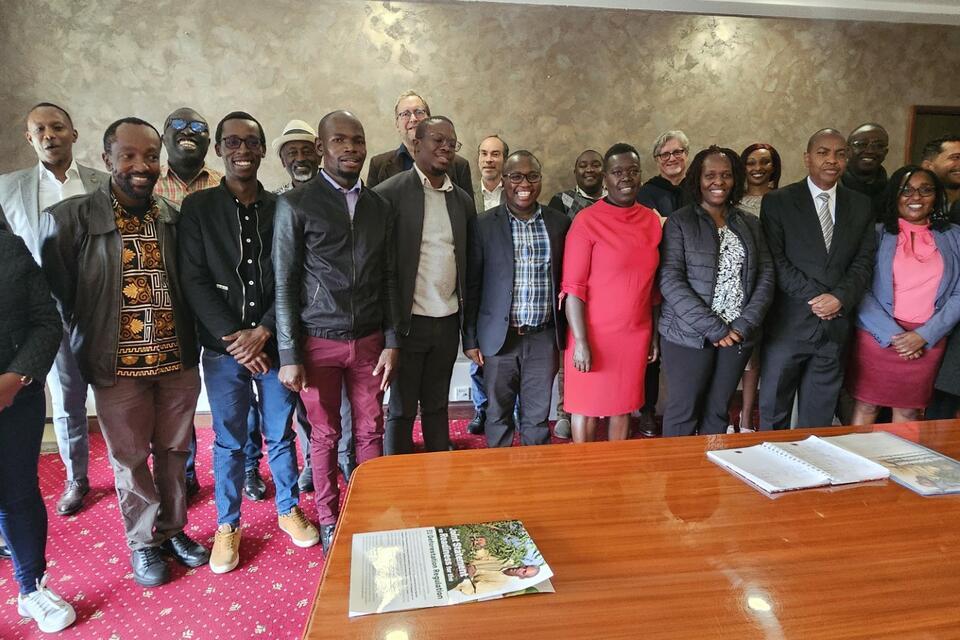
Through support from the Alliance of Bioversity International and CIAT under the GIZ-funded DIASCA project, and in collaboration with the Kenya Coffee Platform, the Nairobi Coffee Exchange, New Kenya Planters Cooperative Union, the Co-operative Bank of Kenya, and the Government of Kenya, CP-Warriors are piloting an innovative model of social inclusion.
At the heart of this initiative is a simple but powerful idea of embedding a marketing mark. Branded as “Impact-PWD”, this short code is envisioned to be attached to coffee lots produced by families caring for persons living with disabilities (PLWDs). It appears within official auction catalogues at the Nairobi Coffee Exchange, signaling to buyers that the coffee carries a verified social impact.
“This introduces a short code ‘Impact PWD’ attached to coffee lots produced by the CP-Warriors initiative. It is not just about the cash; it is also about inclusion,” explains Brian King, Senior Manager, Technology Integration at the Alliance. When traders receive samples or review catalogues, they can immediately identify these lots, not as charity products though, but as differentiated offerings with embedded social value. “When the coffee goes to auction, that code tells a story,” King adds.
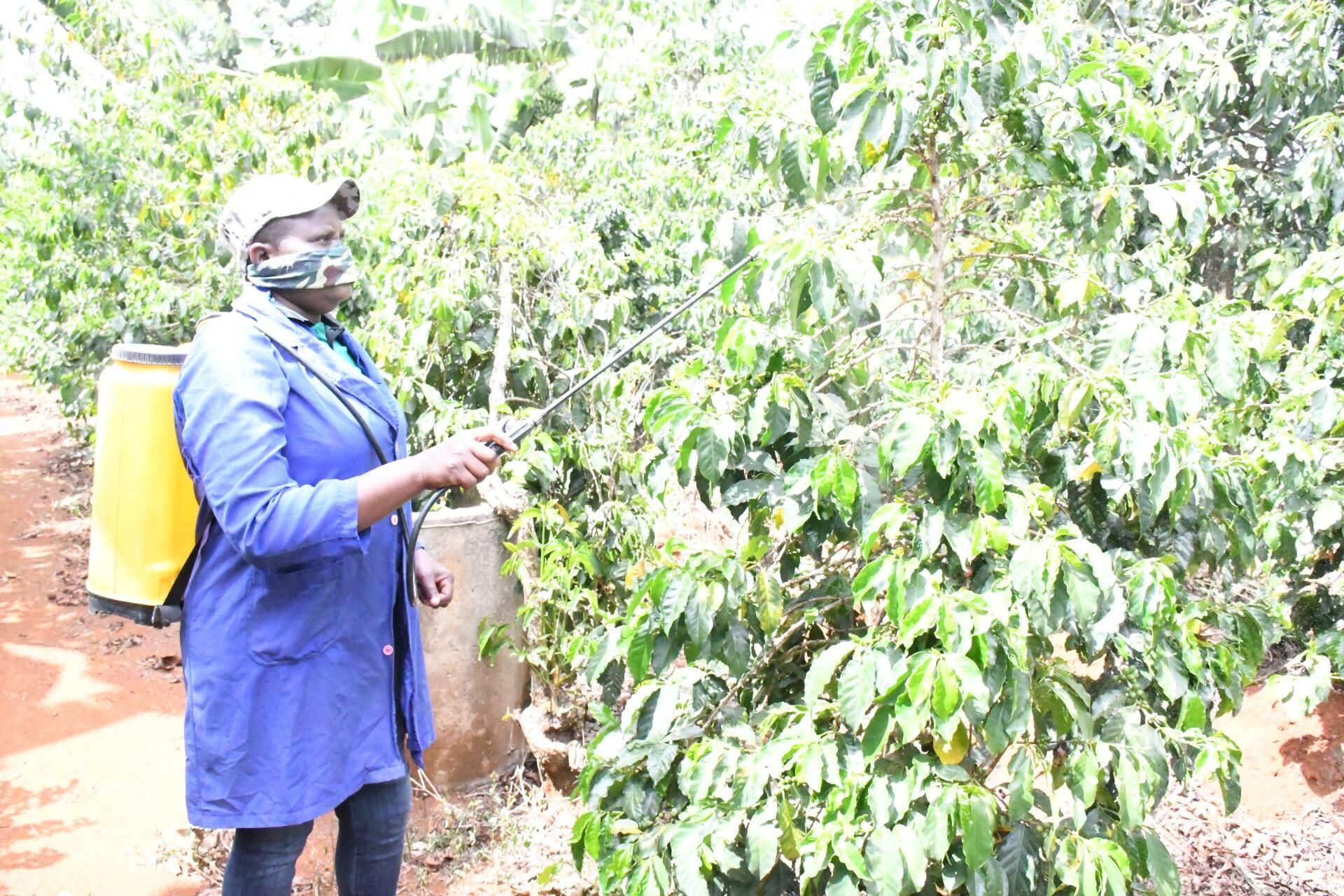
Agnes Wanjiku, whose 14-year-old son lives with cerebral palsy, spraying her coffee crop in Mathira, Nyeri.
Embedding inclusion into market systems
By integrating the “Impact-PWD” mark into official systems at the Nairobi Coffee Exchange, the initiative ensures credibility, traceability, and visibility. Buyers will not just be purchasing coffee; they will be enhancing social inclusion.
“We are not just a trading platform. We manage settlements, quality systems, and the integrity of the trading process. If we want inclusion to work, it must be embedded within the official system,” says Lisper Ndungu, Managing Director, Nairobi Coffee Exchange.
This integration creates a new layer of market communication, where value is not only defined by cup quality, but also by social impact.
Beyond coffee: A scalable model
The long-term ambition extends far beyond a single group or mark.
“If we can prove it works, we can replicate the Impact-PWD today, Impact-Women tomorrow, Impact-Youth,” notes King. “So long as the mark is backed by credible information.”
For the Nairobi Coffee Exchange, this opens up new possibilities for how markets can evolve to reflect broader societal values. Inclusion, in this context, becomes not an external intervention, but a built-in feature of the trading system.
It also opens up an important policy opportunity that could have inclusion formally embedded into trading rules, documentation systems, and regulatory frameworks, ensuring that market structures reflect and support diverse participation across the value chain.
Explore social inclusion in the coffee sector in the media (The East African Standard)
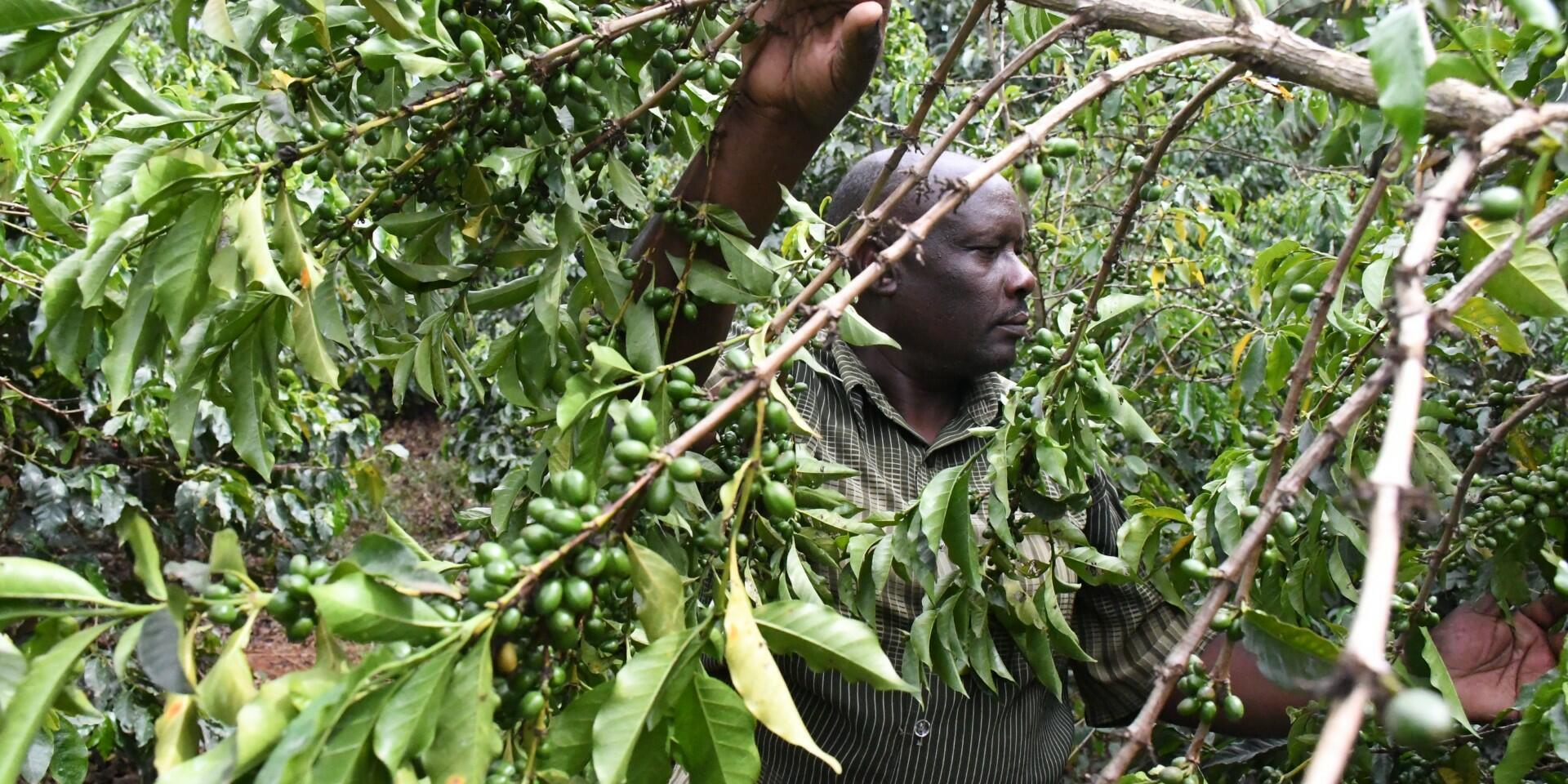
Cover Photo: Godfrey Wanjohi, a parent to two children with Cerebral Palsy at his coffee farm in Mathira, Nyeri County.