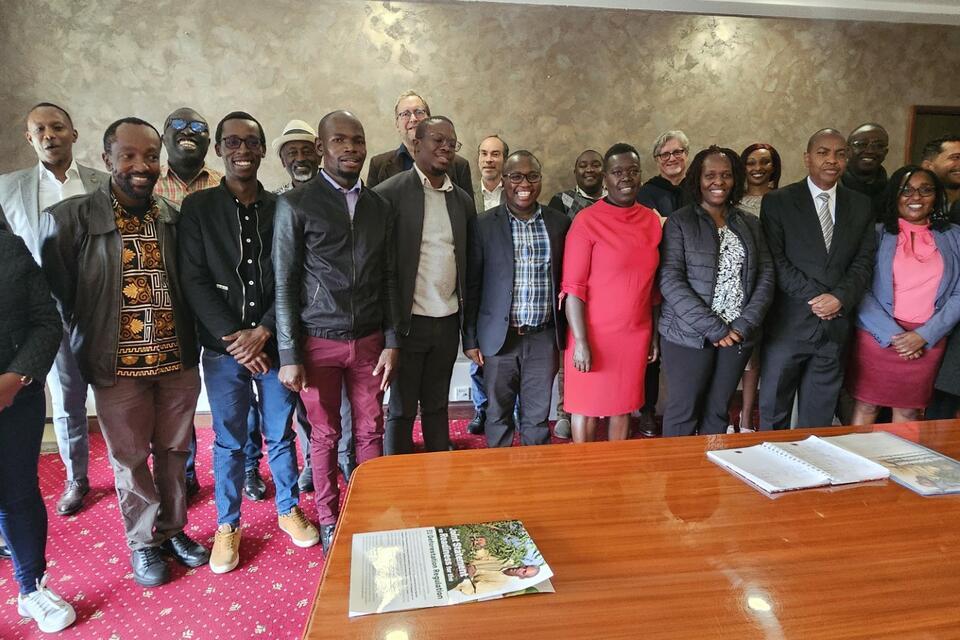
From the Field Empowering caregivers through coffee: The story of cerebral palsy warriors CBO in Nyeri County, Kenya

In Nyeri County, Kenya, a group of caregivers of children with cerebral palsy is turning coffee farming into empowerment. Through the Cerebral Palsy Warriors CBO, they’re creating livelihoods, promoting inclusion, and building sustainable, traceable coffee value chains.
The background
The Cerebral Palsy Warriors (CP-Warriors) is a community-based organization (CBO) located in Nyeri County, Kenya. It consists mainly of caregivers, predominantly mothers, who provide daily care for children living with cerebral palsy (CP). The group, which currently has 15–20 members, was founded in 2021 by Ms. Esther Kariuki as a support network to bring together parents and caregivers of children with CP to share experiences, learn from one another, and find solutions to the challenges of caregiving.
According to Esther Kariuki,
“Taking care of a child living with CP is a 24-hour job since they cannot do anything for themselves. Family and society also discriminate against children with CP. In fact, some of our members are women who were divorced and abandoned for giving birth to a child with CP. For our own safety and the safety and wellbeing of our children, we had to come together and support each other. Personally, I got into depression from how my family, friends and society treated me and my child. They said my child and I are outcasts and bad omens.”
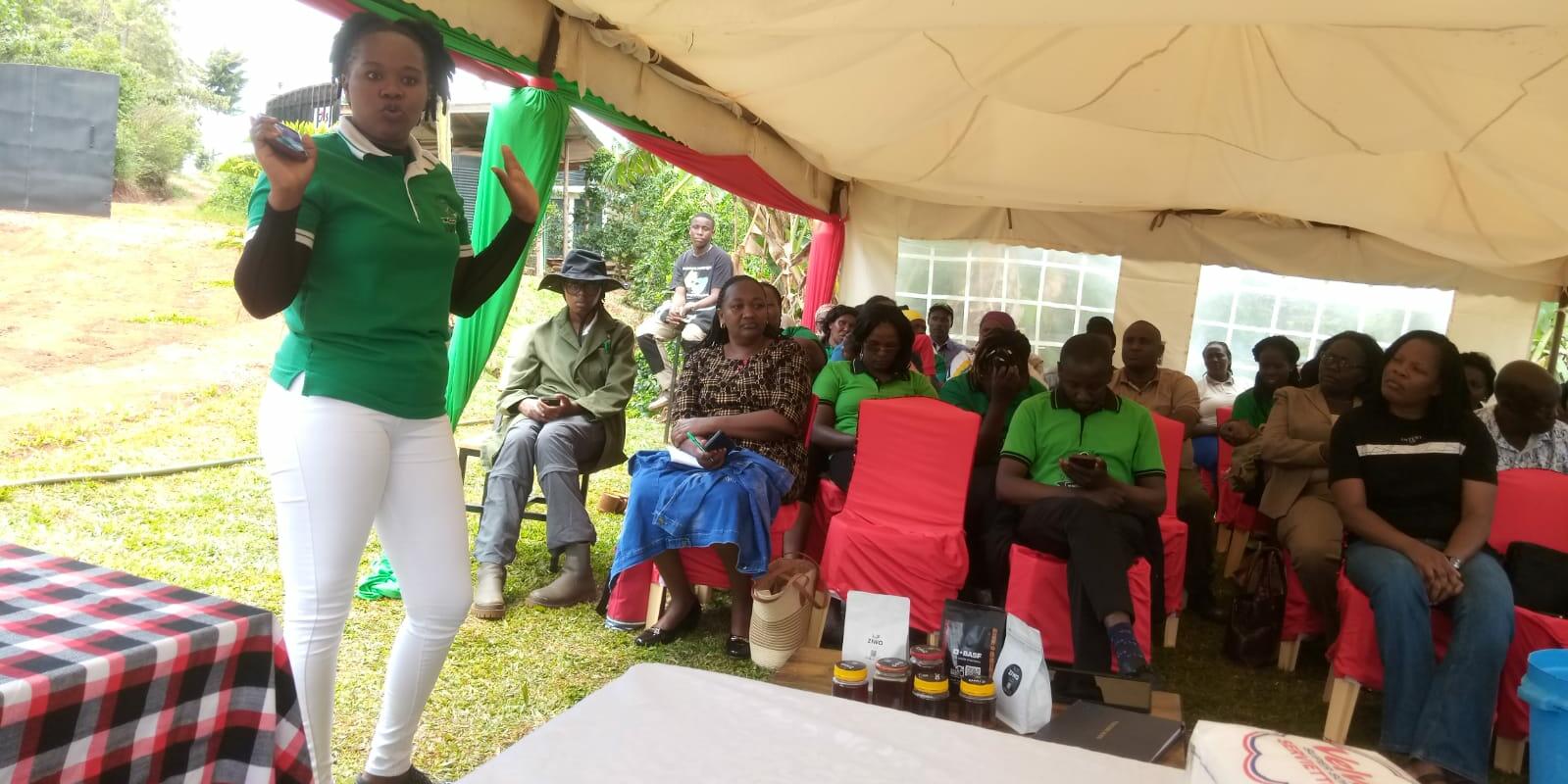
Ms Esther Kariuki addressing CP-Warriors during the visit by the Alliance team. Photo credit: Kevin Onyango / Alliance Bioversity International and CIAT
From support to socio-economic empowerment
Although the CP-Warriors began primarily as a psychosocial support group, it has since evolved into a socio-economic initiative.Driven by the financial challenges associated with caregiving, members have developed income-generating activities to support both their families and the needs of their children.
One of the group’s main initiatives is a day-care center that operates Monday to Friday. The facility provides a safe and nurturing environment where children with CP can receive care, basic education, meals, and physiotherapy. The day-care is collectively managed by group members who rotate responsibilities. This shared approach allows caregivers time to engage in economic activities that would otherwise be impossible due to the high demands of caregiving.
Venturing into coffee production
In addition to running the day-care, the CP-Warriors have ventured into small-scale coffee production. Each member cultivates coffee, which is then aggregated, milled, and sold collectively. The group collaborates with ZIWA Farm, a coffee estate equipped with a wet mill, to process, dry, and store their coffee. Sales are conducted at the Nairobi Coffee Exchange through the New Kenya Planters Cooperative Union. This collaboration ensures that the group’s coffee is processed cost-effectively and meets the quality standards required for both local and export markets.
Esther Nyambura, the Director of ZIWA Farm, shared,
“I have a child with similar challenges and I know how difficult it is to raise such children. The CP-warriors are very committed to changing their story from one of destitution to success. They view their children as blessings who deserve love and care. Our partnership with them has empowered this community and changed lives. Together we will work to produce and supply premium coffee to the world.”
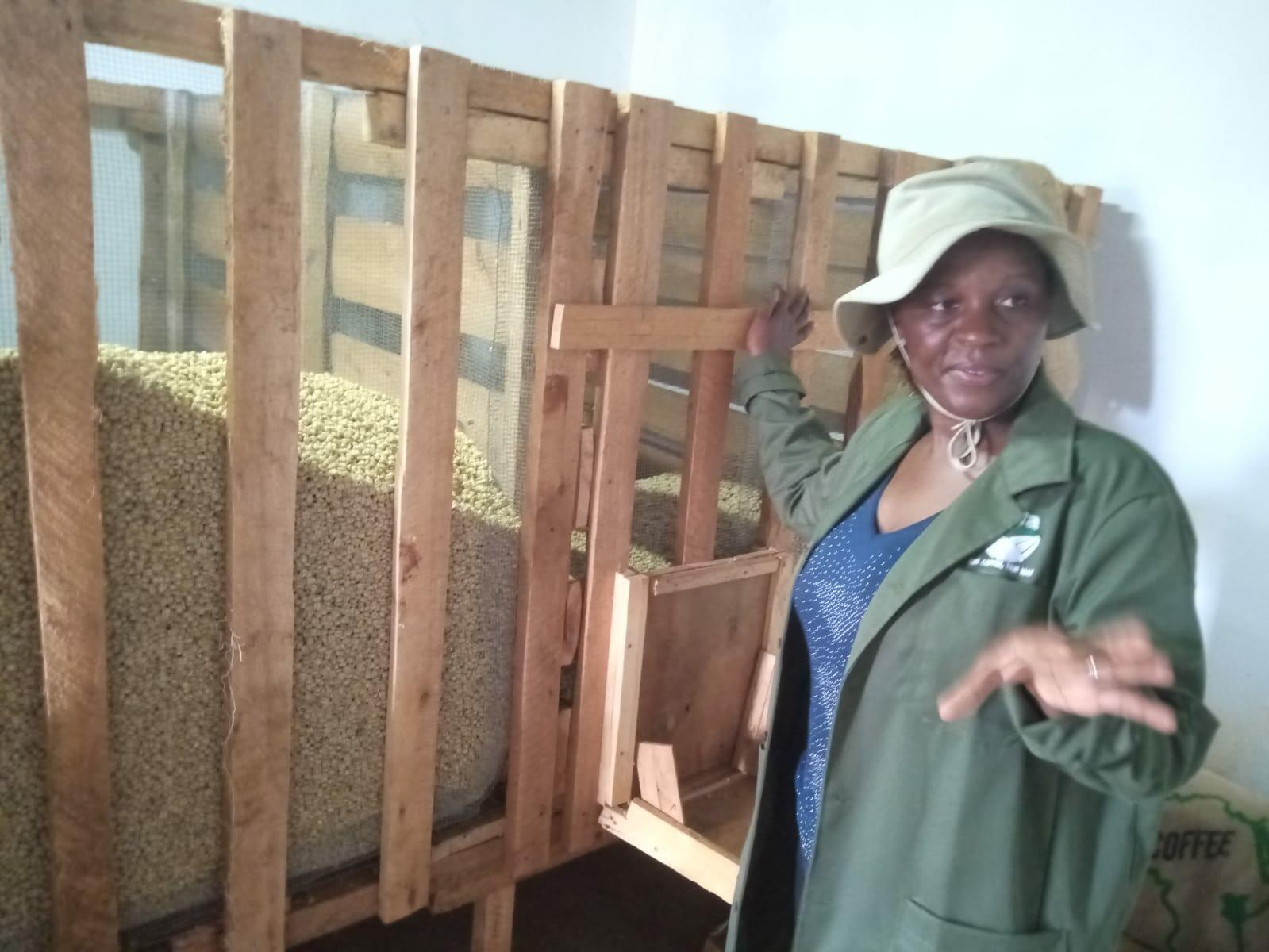
Madam Esther Nyambura explaining coffee storage processes. Photo credit: Kevin Onyango / Alliance Bioversity International and CIAT
Navigating emerging market regulations
The European Union (EU) remains a key destination for Kenyan coffee, purchasing approximately 80 percent of the country’s production. However, evolving EU policies, particularly the European Union Regulation on Deforestation-free Products (EUDR) coming into effect in January 2026, present both challenges and opportunities. The EUDR requires that all coffee imported into the EU be traceable and demonstrably free from deforestation. This policy change underscores the need for reliable and transparent traceability systems across the entire coffee value chain.
In response, the Alliance of Bioversity International and CIAT, through the GIZ-funded DIASCA project, in collaboration with the Kenya Coffee Platform (KCP), the Nairobi Coffee Exchange (NCE), NKPCU, the Cooperative Bank of Kenya, and the Government of Kenya, is working to strengthen digital public infrastructure for coffee traceability and accountability. These efforts aim to ensure Kenya’s continued access to global coffee markets while promoting compliance with sustainability standards.
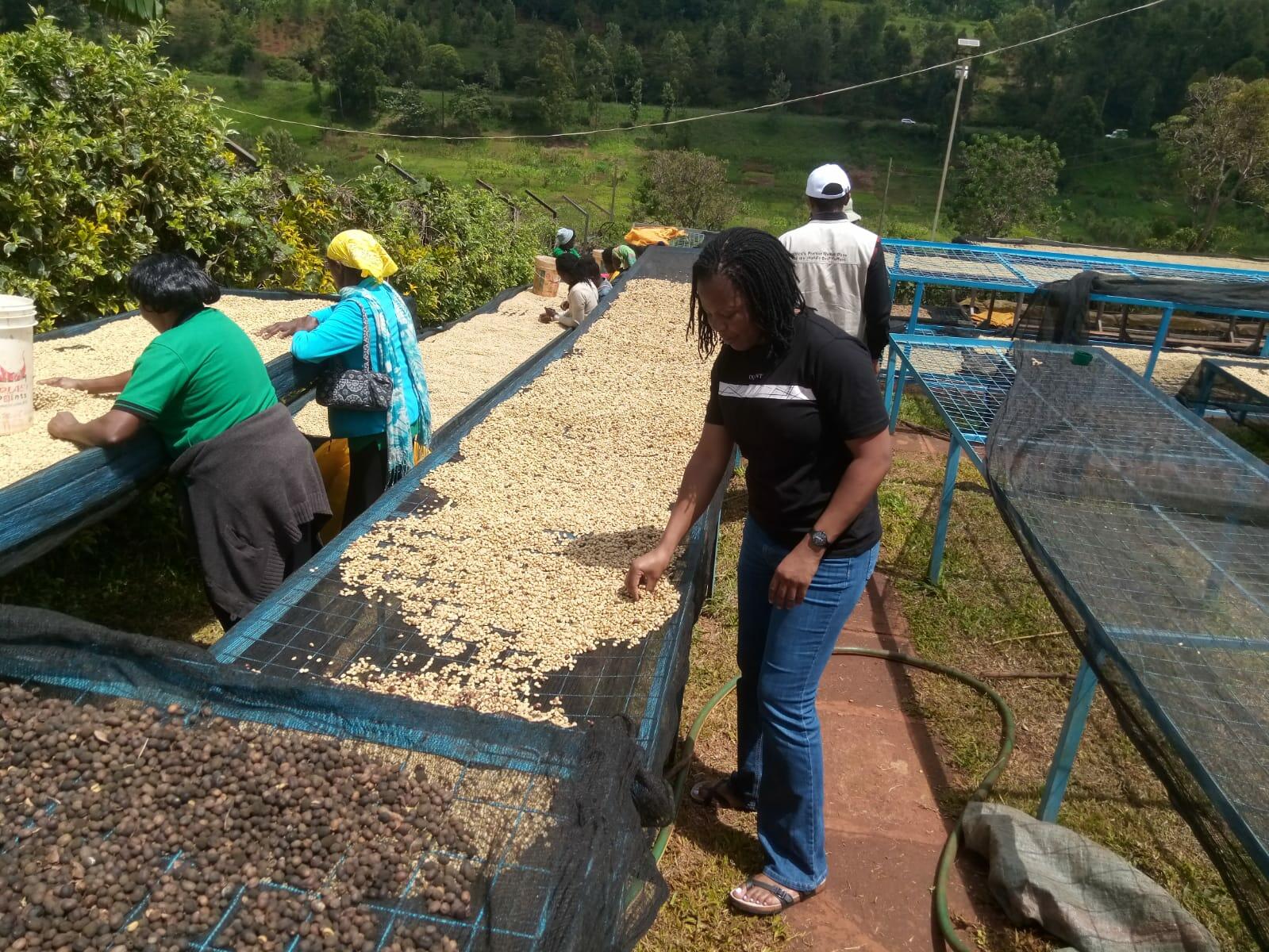
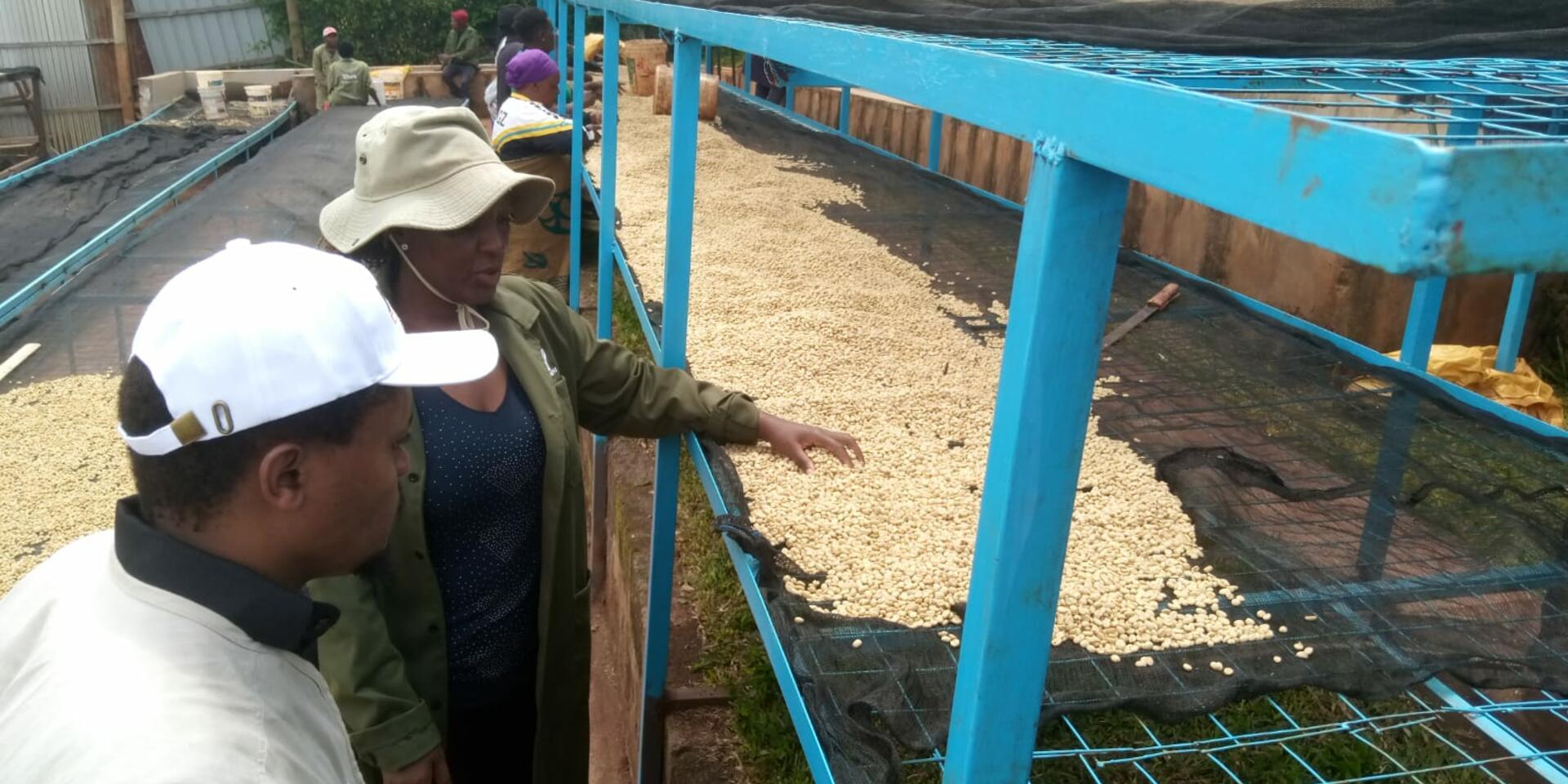
CP-Warriors sorting and drying coffee as Dr Rosina Wanyama, Alliance Bioversity CIAT staff, inspects the coffee grains. Photo credit: Kevin Onyango / Alliance Bioversity International and CIAT
Looking ahead
The CP-Warriors are well positioned to benefit from these emerging opportunities. KCP, NCE, NKPCU, and the Alliance plan to continue collaborating with the group to help them achieve EUDR compliance. Moreover, the group aims to brand and market its coffee as being produced by persons living with disabilities (PWDs), potentially adding social value and distinctiveness to their products in both domestic and international markets.
Through collective action, innovation, and strategic partnerships, the CP-Warriors are transforming from a small caregiver support group into an inclusive economic actor within Kenya’s coffee sector. Their journey illustrates how empowerment, social inclusion, and sustainable agriculture can intersect to create resilient livelihoods and promote dignity for marginalized groups.