Blog Meet Benin’s nutrition ambassador: Sam Bodjrenou


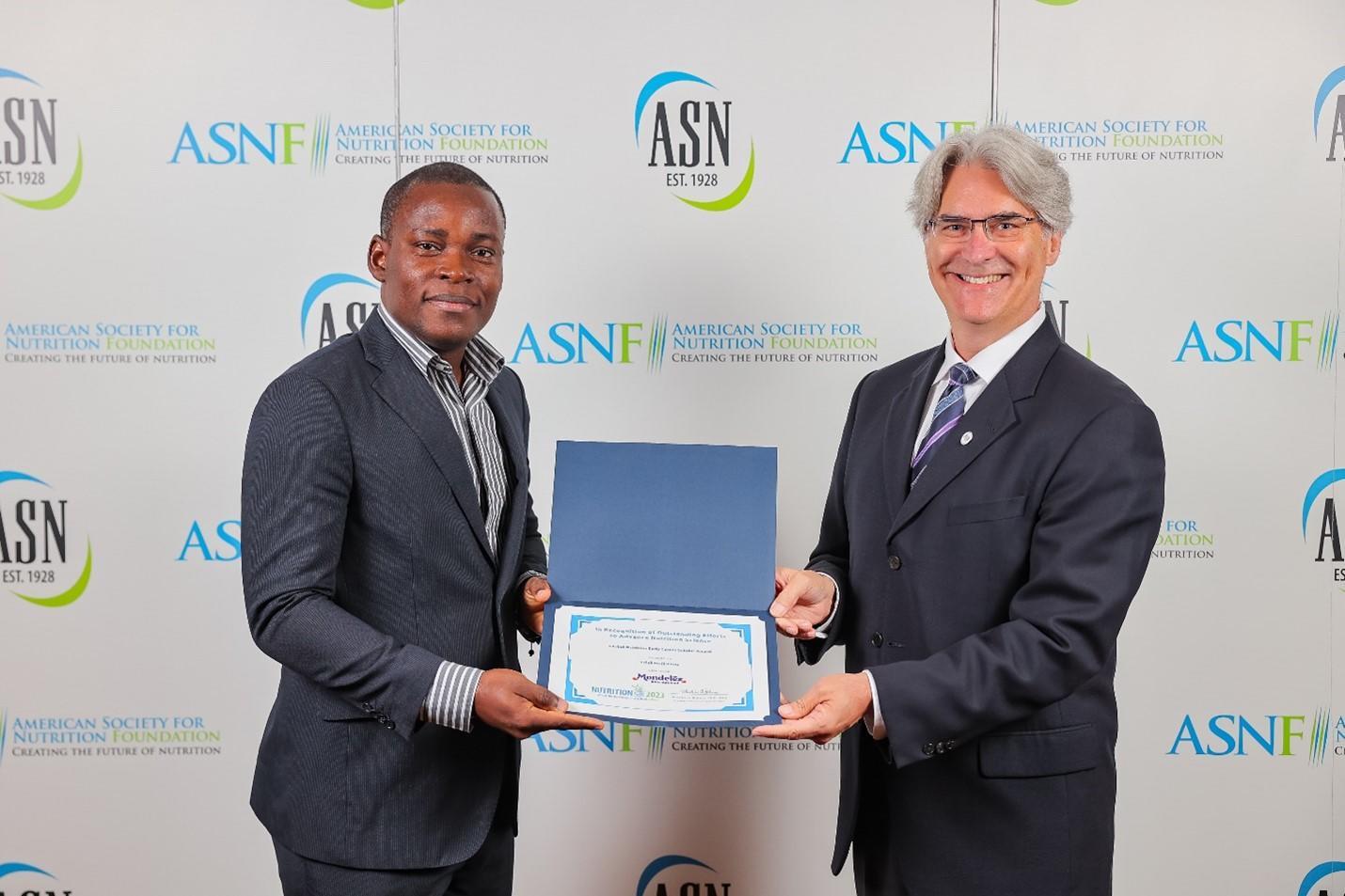
Communities in the sub-Sahara African country of Benin face widespread malnutrition. But Benin-born scientist Dr. Fifali Sam Bodjrenou believes that a better understanding of the country’s food environment can turn this around. His work was recently recognized by the American Society for Nutrition's 2023 Early Career Award for Outstanding Efforts to Advance Nutrition Science.

Sam Bodjrenou
Postdoctoral Fellow, Country Representative for Benin"Malnutrition is the real problem in my country, Benin. We have a lot to do to help the population of Benin improve their quality of life,” says Sam Bodjrenou.
According to the latest Demographic Health Survey in Benin (2021), the stunting rate among children under five is about 36.5%. This means that for every 3 children in Benin, at least one is suffering from chronic malnutrition; the prevalence of anemia among children under five was 72% in 2017, and 58% among women.
“The problem is not that we don't have food,” Sam explains. “But, we have high levels of post-harvest losses, we don't have adequate storage and preservation facilities, and we also have a problem related to knowledge about the nutritional value of our local food resources. Part of our work in the Alliance is to help people increase their knowledge about feeding practices and how conserve the quality of the local food including the neglected and underutilized species we have.”
Sam’s lifelong desire to help his neighbors led him to an early interest in health sciences, but an agricultural engineering scholarship determined his academic path. In his fifth year of university, however, he returned to the path he felt most committed to: health. Sam went on to obtain his PhD in human nutrition and food sciences in 2021, working on the efficacy of nutrition education materials to improve knowledge, attitude and practices among nutrition in rural poor and food-insecure areas.
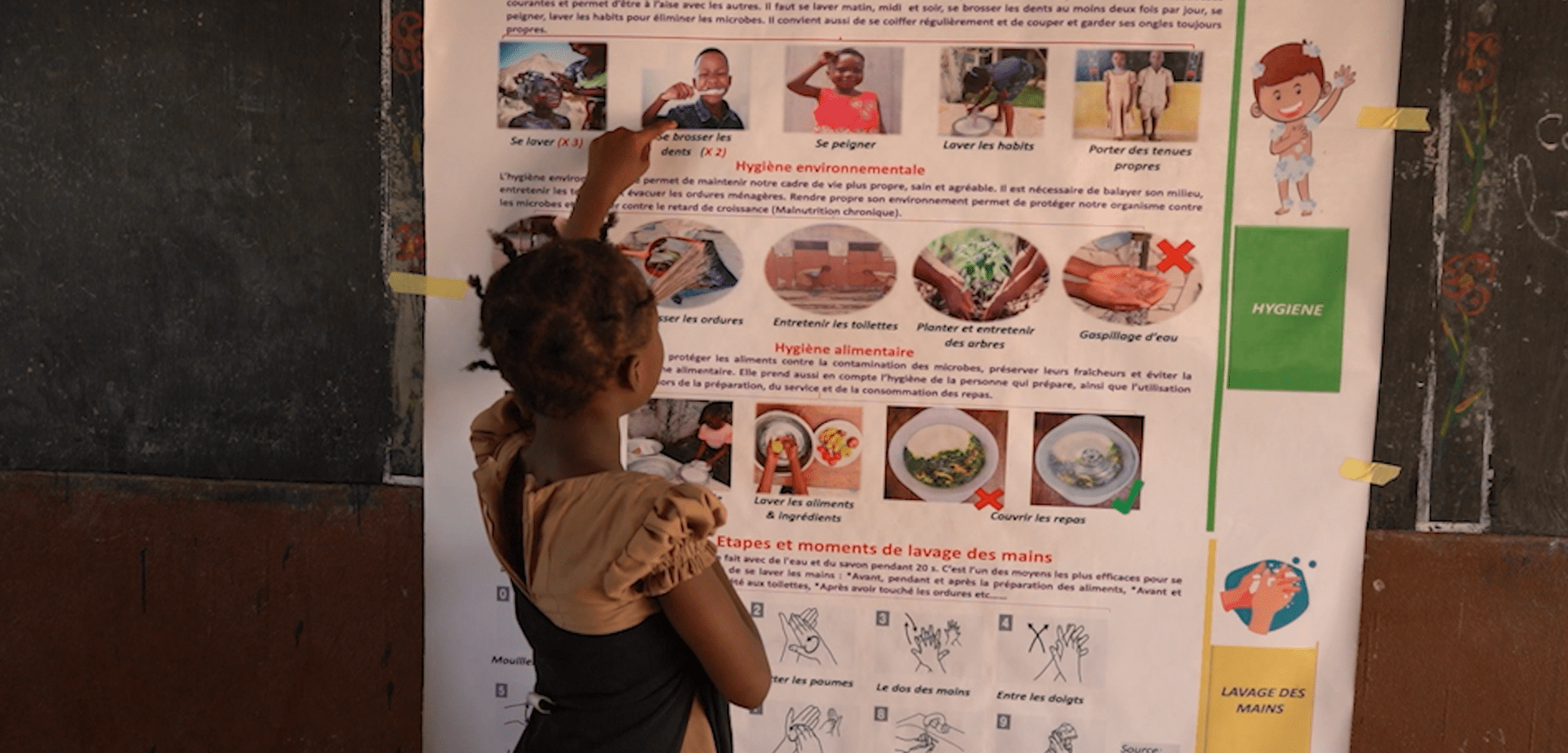
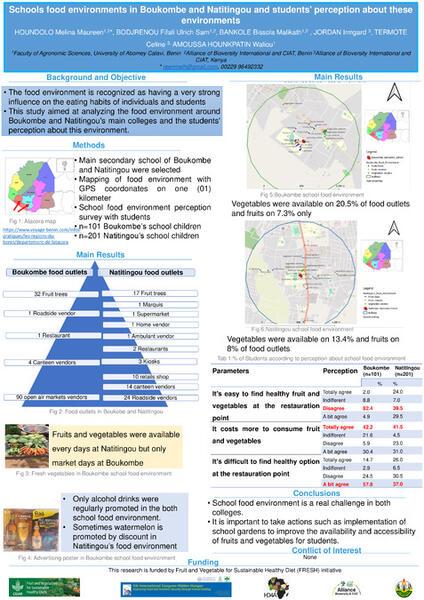
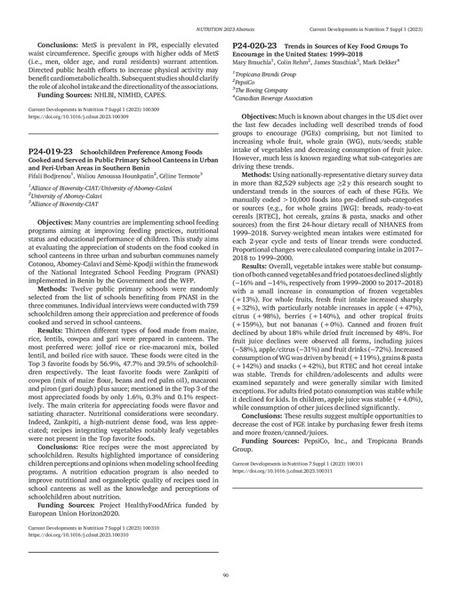
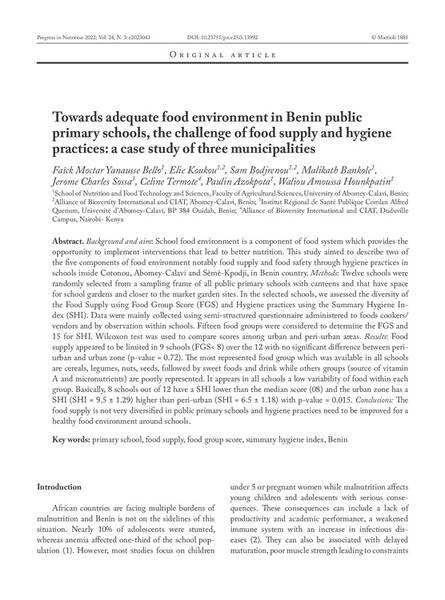
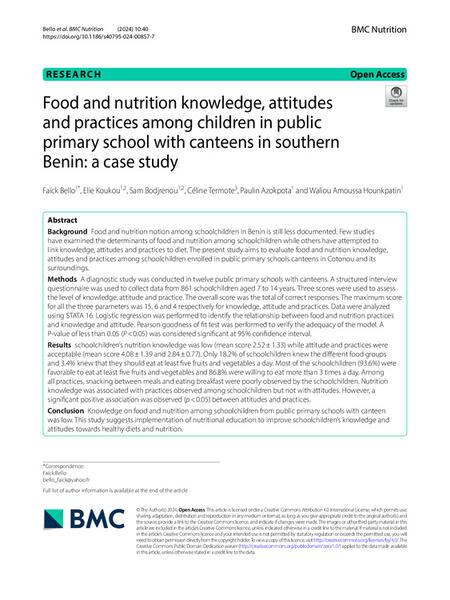
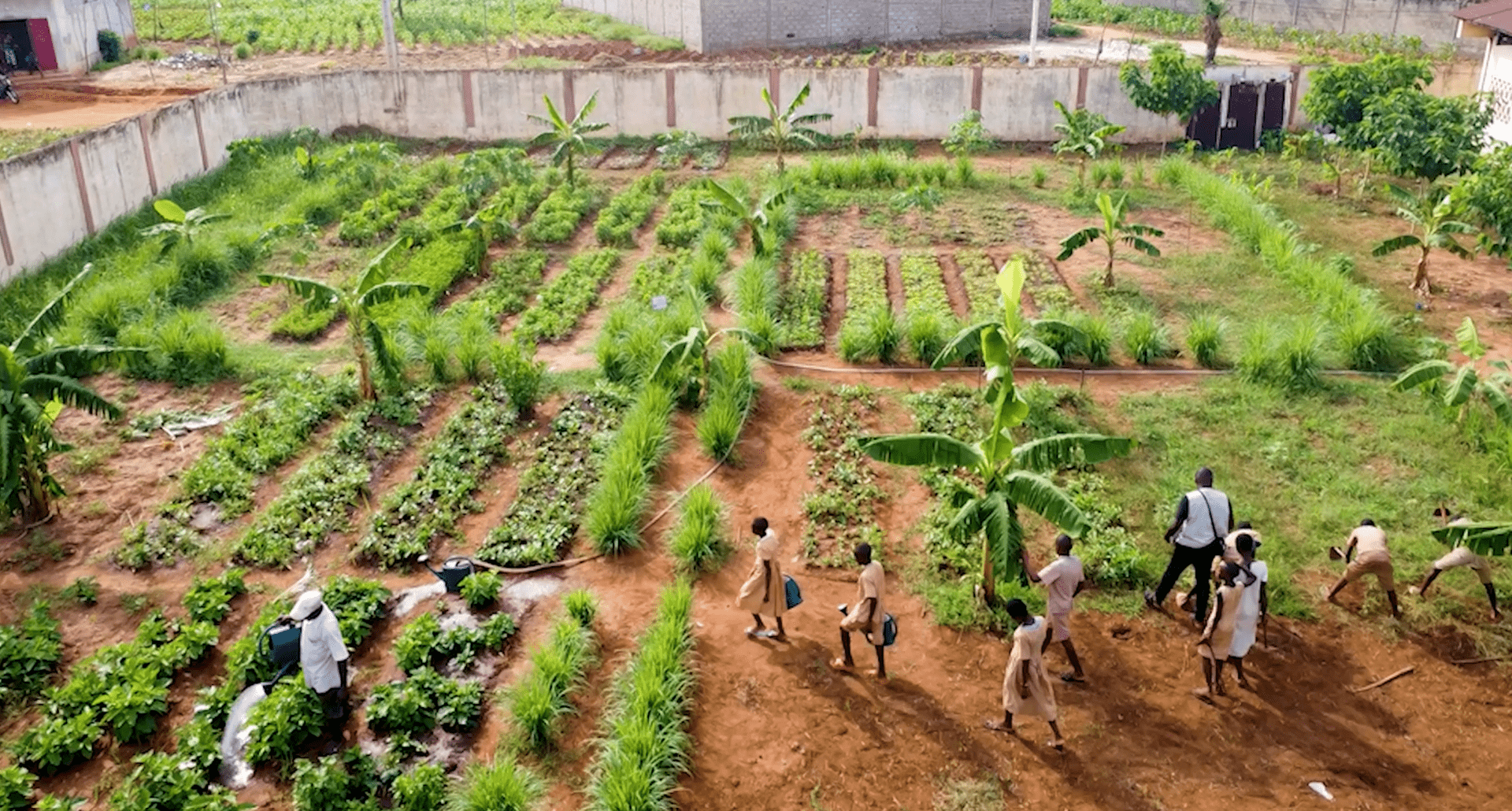
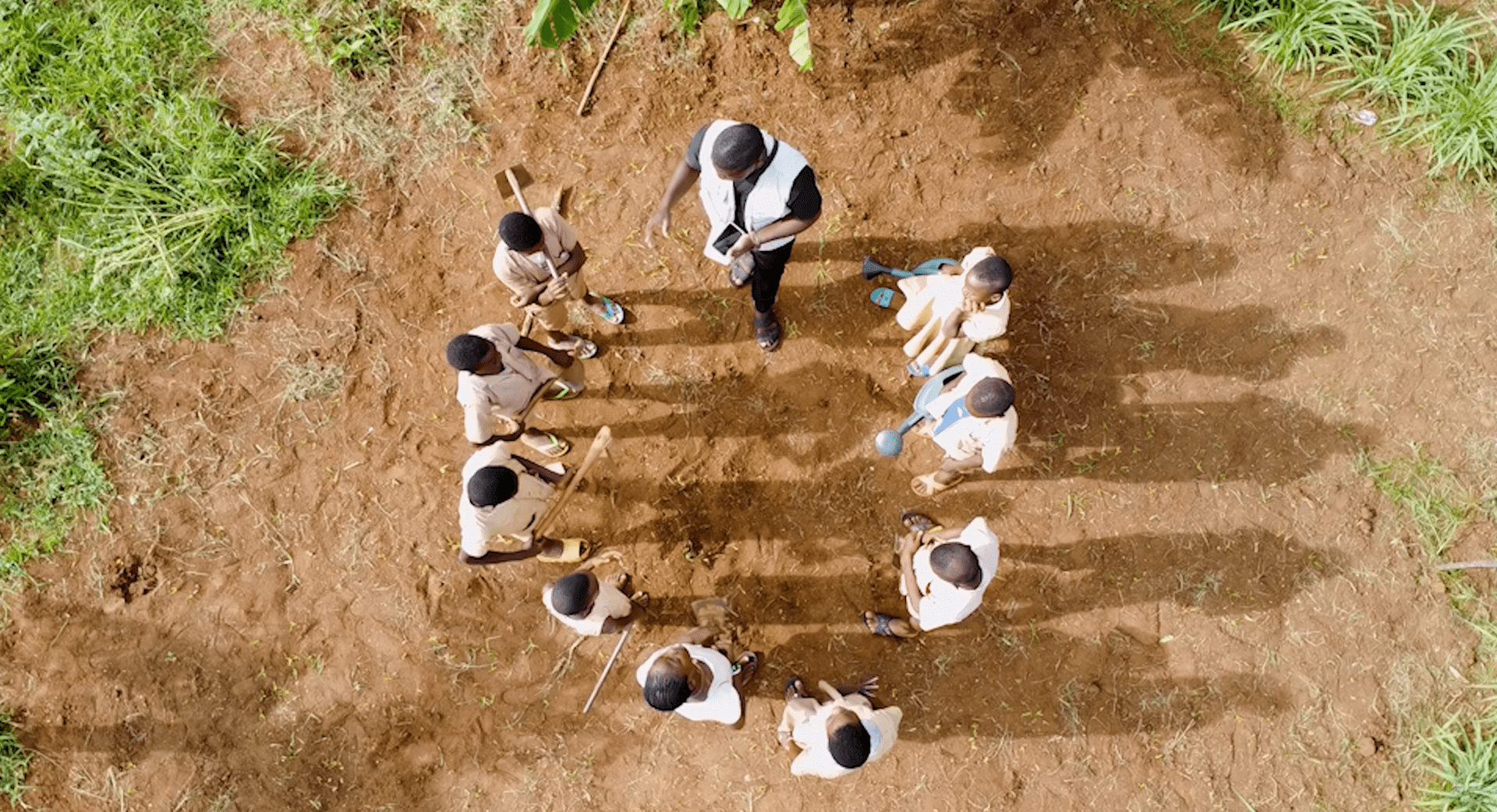
Sam's work that earned him the Global Nutrition Early Career Scholar Award from the American Society for Nutrition, was the study School children preference among foods cooked and served in public primary school canteens in urban and peri-urban areas in Southern Benin. The government of Benin is doing its best to establish good school feeding programs. They currently cover more than 80% of primary schools. “The idea is to ensure that every elementary school child has at least one good quality meal a day,” explains Sam. “Our contribution is to help ensure that this meal is of good nutritional quality, so we are first assessing the quality of the current school feeding environment and preparing nutrition education materials for children, for parents, for teachers and for cooks. The other aspect is to help schools establish their own gardens so that they can directly grow their own fruits and vegetables and then use them to prepare the children's meals.”
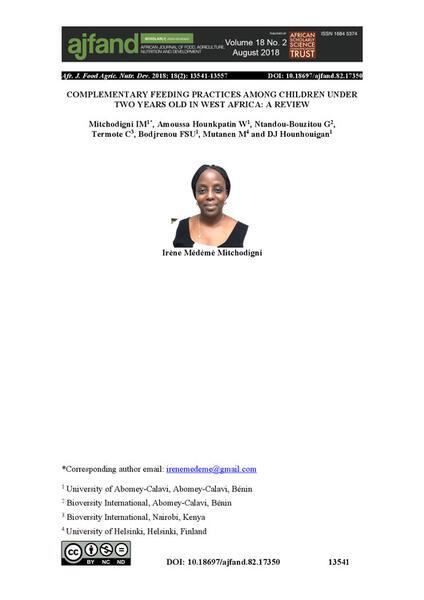
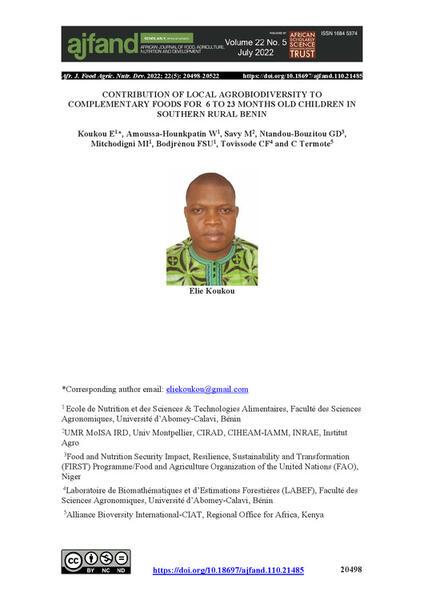
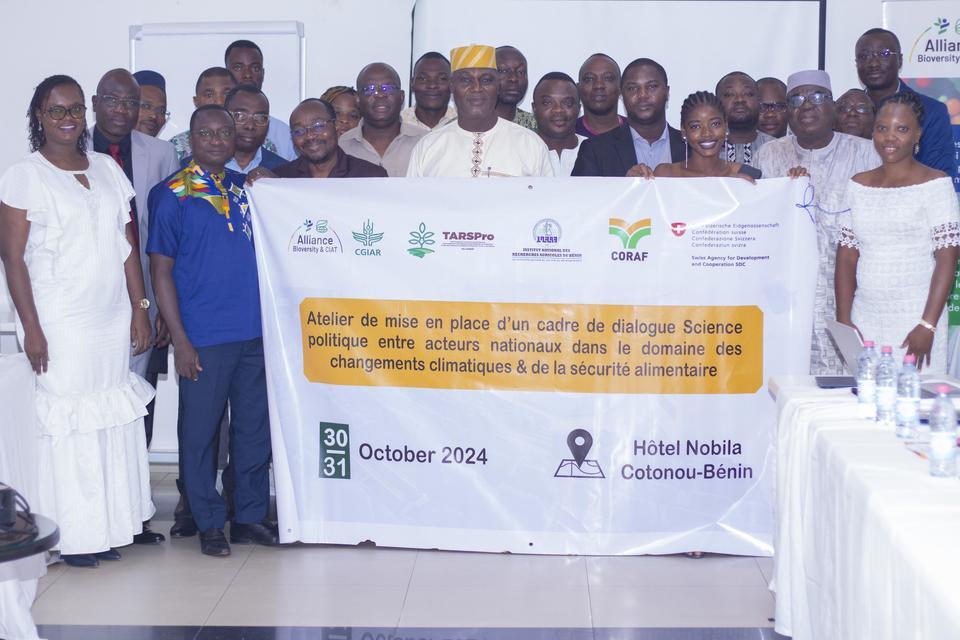
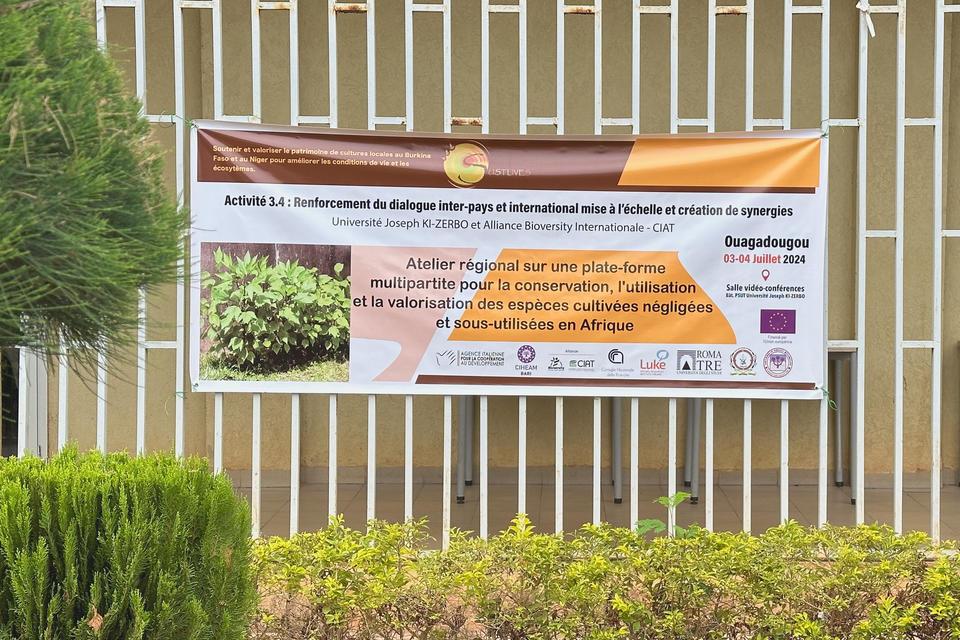
Currently, Sam is participating in HealthyFoodAfrica, Healthy Diets for Africa and The CGIAR Research Initiative on Fruit and Vegetables for Sustainable Healthy Diets (FRESH). He is also supporting SUSTLIVES and BOLDER projects targeting the valorization of neglected and underutilized species in sub-Saharan Africa. He coordinates the Food Environment and Consumer Behavior Team in West Africa, and his team consists of 3 post-doctoral consultants, 3 PhD students, 10 post-master consultants, and many master's students.
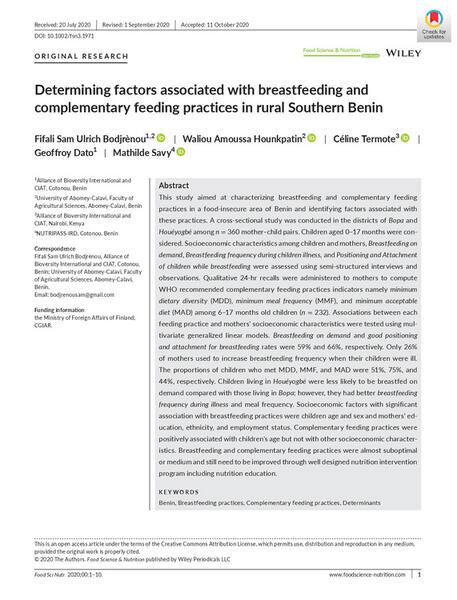
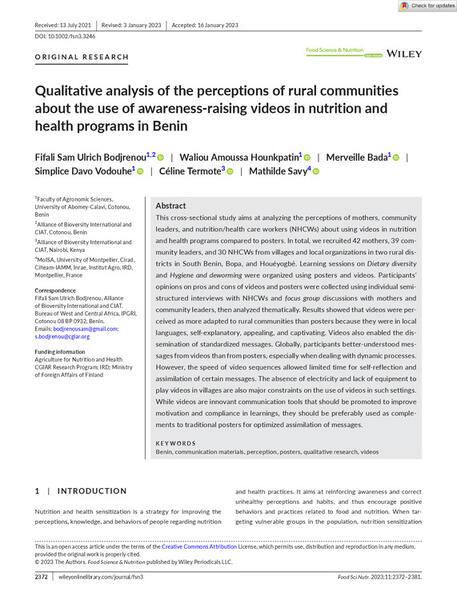
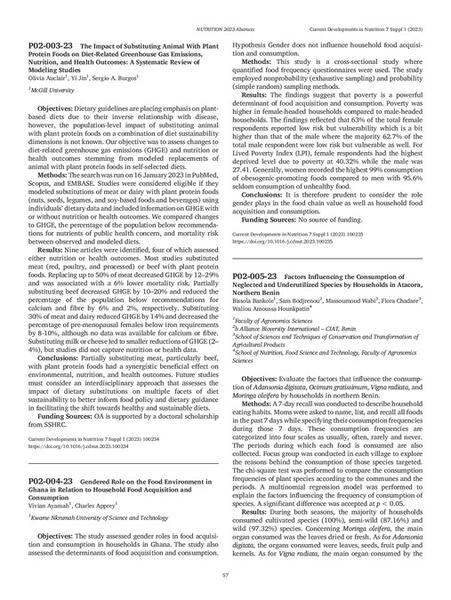
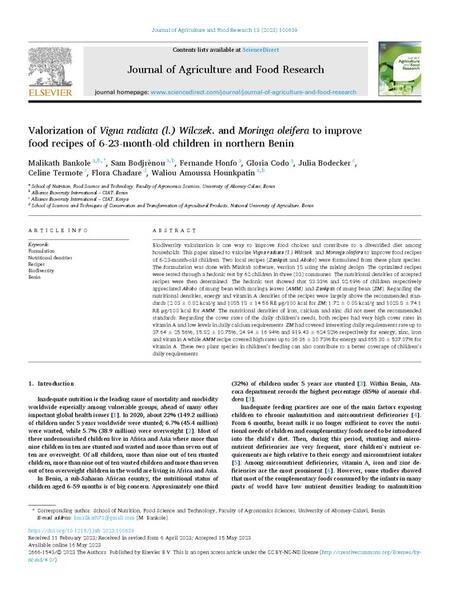
Recent publications include: