Press and News New CGIAR flagship report translates insights into impact for food systems in crisis
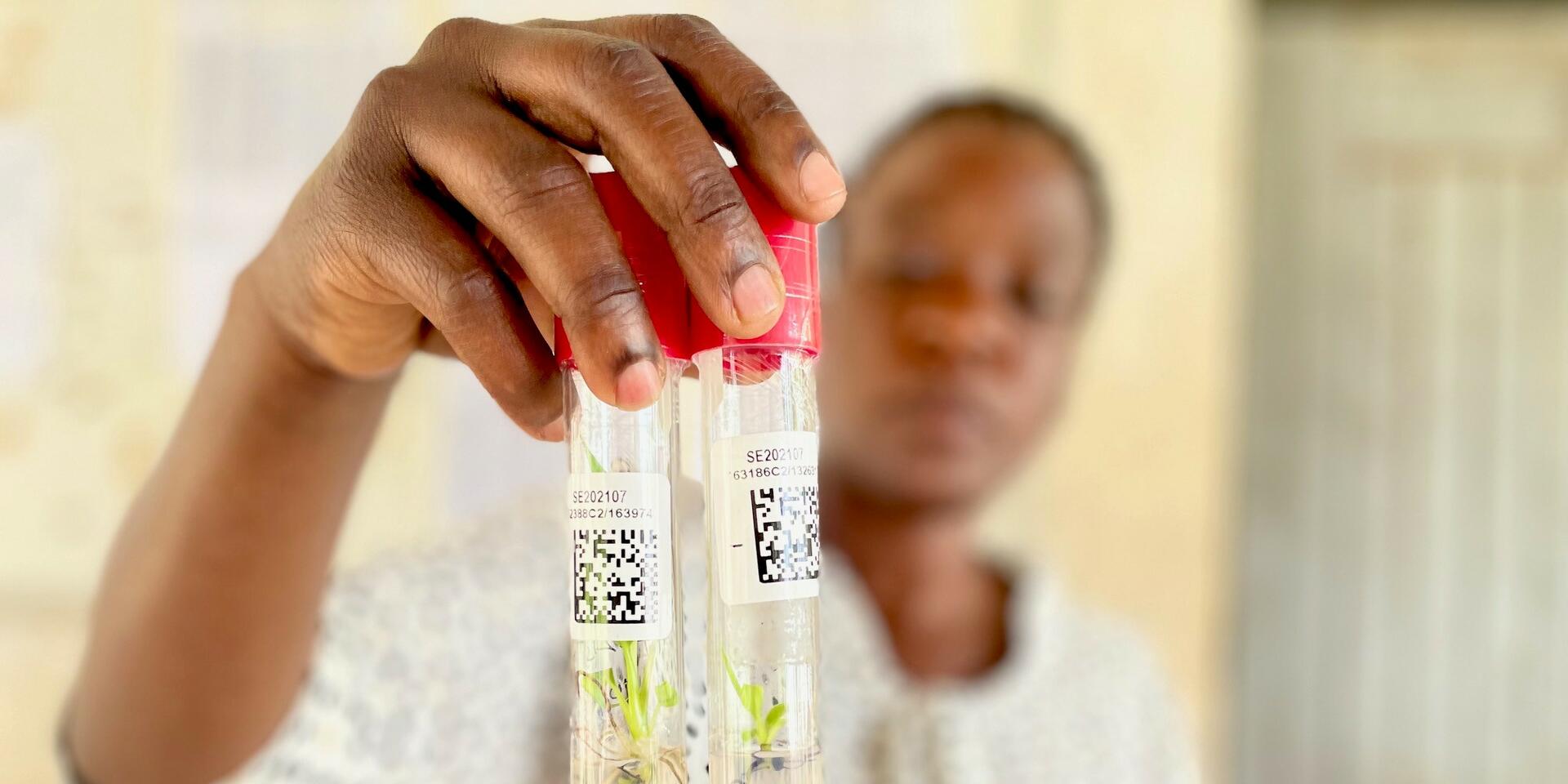

CGIAR scientists launched the flagship report 'Insight to Impact: A Decision-Maker’s Guide to Navigating Food System Science at CGIAR Science Week in Nairobi, Kenya'. With input from more than 70 decision-makers from governments, regional organizations and the private sector, the report identifies seven key needs — from more pragmatic and clearer science communication to stronger alignment with national strategies.
Nairobi, Kenya, 14 April 2025 – With food systems under strain from climate change, conflict, biodiversity loss and hunger, CGIAR launched the flagship report, Insight to Impact: A Decision-Maker’s Guide to Navigating Food System Science at CGIAR Science Week in Nairobi, Kenya.
The report highlights data and innovations from decades of research. It presents science as practical, ready-to-use guidance for decision-makers and investors working to build more resilient, sustainable food systems, particularly in low- and middle-income countries.
“Policy is influenceable, but what I hear from many decision-makers is that they are often missing the right data, the information needed for policy, along with clarity and pragmatism,” said Ismahane Elouafi, Executive Managing Director of CGIAR, in opening remarks at the launch event. “This is very clear in the report, so the next steps will be to engage deeply with policymakers so we can really turn insights into impact.”

Ismahane Elouafi
CGIAR Executive Managing DirectorActionable science for real-world choices
From helping farmers adapt to climate change to expanding access to nutritious food and sustainable livelihoods, the report answers 20 urgent questions frequently posed by policymakers. It also includes 20 practical solutions, each backed by science and tested in real-world conditions.
Featured case studies include:
- Improved crops and livestock breeds deliver triple wins—nutrition, income, and climate resilience. EnviroCow helps farmers in sub-Saharan Africa reduce feed costs and emissions while boosting earnings, while zinc-rich wheat in Pakistan now reaches over 13 million people annually, raising zinc intake by 21% and addressing widespread deficiencies among women and children.
- Precision fertilizer advice in Ethiopia, where farmers increased crop yields by up to 29% and incomes by up to USD 270/ha by using landscape-specific guidance tailored to slope, soil health, and climate. The initiative now spans 23 districts and continues to scale.
- Smart rice water management in Vietnam, which trained over 33,000 farmers in climate-smart techniques that reduce methane emissions and water use without lowering yields. The alternate wetting and drying technique has now been integrated into Vietnam’s national climate policy.
Case studies include implementation resources such as expert contacts, how-to guides, impact studies, and tools to support scaling.

Wanjiru Kamau-Rutenberg
Managing Director, Africa, and Trustee, Bioversity International USA“This year’s theme [for Science Week], “Transforming Food, Land and Water Systems in a Climate Crisis,” was not just a rallying call, but a reminder of the urgent need to re-think on how the world is fed, especially at a time when the globe is grappling with the escalating challenges of climate change, food insecurity, shifting geopolitical landscapes and resource constraints amid rising populations,” said Wanjiru Kamau-Rutenberg, the Managing Director for Africa of The Alliance of Bioversity International and CIAT.
Global challenges, local solutions
CGIAR is the world’s largest global agricultural innovation network. With 10,000 staff in 80-plus countries, across 3,000 partnerships, CGIAR is uniquely positioned to support implementing innovations and using data and evidence to transform food, land, and water systems. This inaugural flagship report was spurred through support from the German Federal Ministry for Economic Cooperation and Development (BMZ) with Deutsche Gesellschaft für Internationale Zusammenarbeit (GIZ).
More than 70 decision-makers from governments, regional organizations, and the private sector contributed to the report, identifying seven key needs—from a request for more pragmatic and clear science communication to stronger alignment with national strategies.
The report is tailored to decision-makers across sectors—including in agriculture, climate, finance, and health—and emphasizes interdisciplinary, country-relevant responses.
To support its science-to-policy efforts, CGIAR also launched its Insight to Impact Policy Champions Network: a group of partners and policy influencers who will work to ensure the scientific insights shape action on the ground.
“The future of farming is here,” said Lusike Wasilwa of the Kenya Agricultural and Livestock Research Organisation (KALRO), a partner and leader in the agricultural innovation space. “We have to work and partner together to ensure we are reaching the smallholders and that we're developing data to inform policy.”
From science to action
The launch event, hosted at the United Nations Campus in Nairobi, brought together leaders from Africa, Asia, Latin America, and the global scientific community. Speakers emphasized the importance of partnerships, long-term investment, and putting evidence into formats that meet the needs of those shaping food systems policy.
“We have ongoing challenges all around the world with the triple conundrum of poverty, inequality, and unemployment, so our ability to use the best science, technology, and innovation to inform decision-making at all levels is absolutely paramount,” said Dhesigen Naidoo of CGIAR’s Integrated Partnership Board.
Naidoo also called on those using or involved with the report to be the “ambassadorial community… the people that organize for it to take fire in a very real way. And we have to be sincere to the notion of co-creating the solutions.”
Looking ahead, CGIAR plans to tailor offshoot products to local needs. And future editions of the report series will tackle emerging challenges and prepare decision-makers for specific global and regional processes, continuing to build bridges between science and decision-making.
Media contact: CGIAR Press: [email protected]
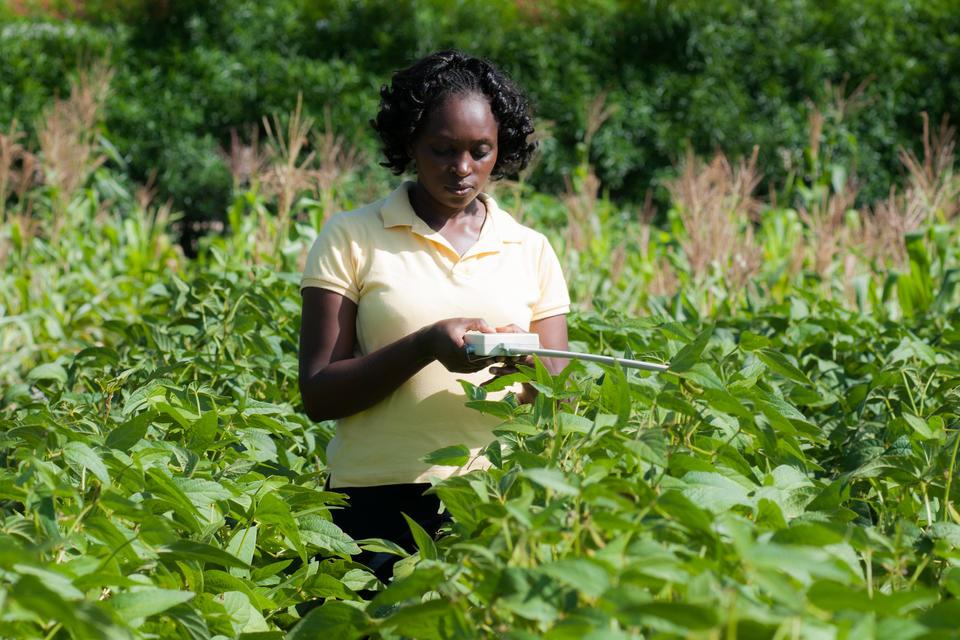
Cover photo: Scientist at CGIAR partner plant breeding facility in Uganda – Credit: Adam Hunt/CGIAR