Blog From evidence to county action: Making agricultural research work for counties
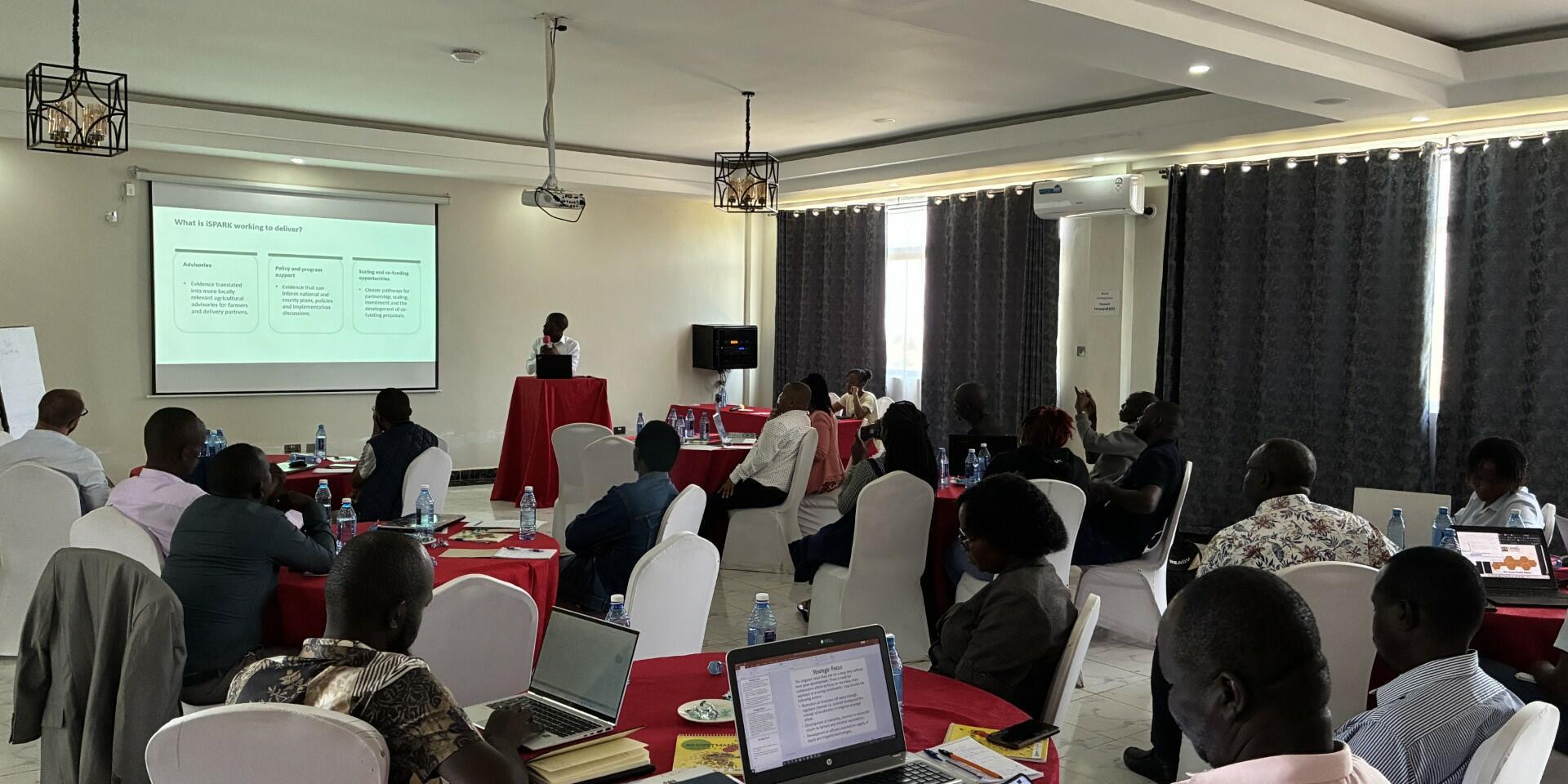

At a policy dialogue in Kisumu, national and county governments, researchers and partners explored how evidence on soil management and climate-smart irrigation can inform county policies, plans and investments in Kenya.
Kenya has considerable research and policy experience to draw on when it comes to managing soils, improving irrigation and helping agriculture respond to a changing climate. The challenge is connecting that knowledge to the systems and decisions that shape what happens in different counties, where national priorities have to meet local needs, institutional arrangements and the realities of implementation.
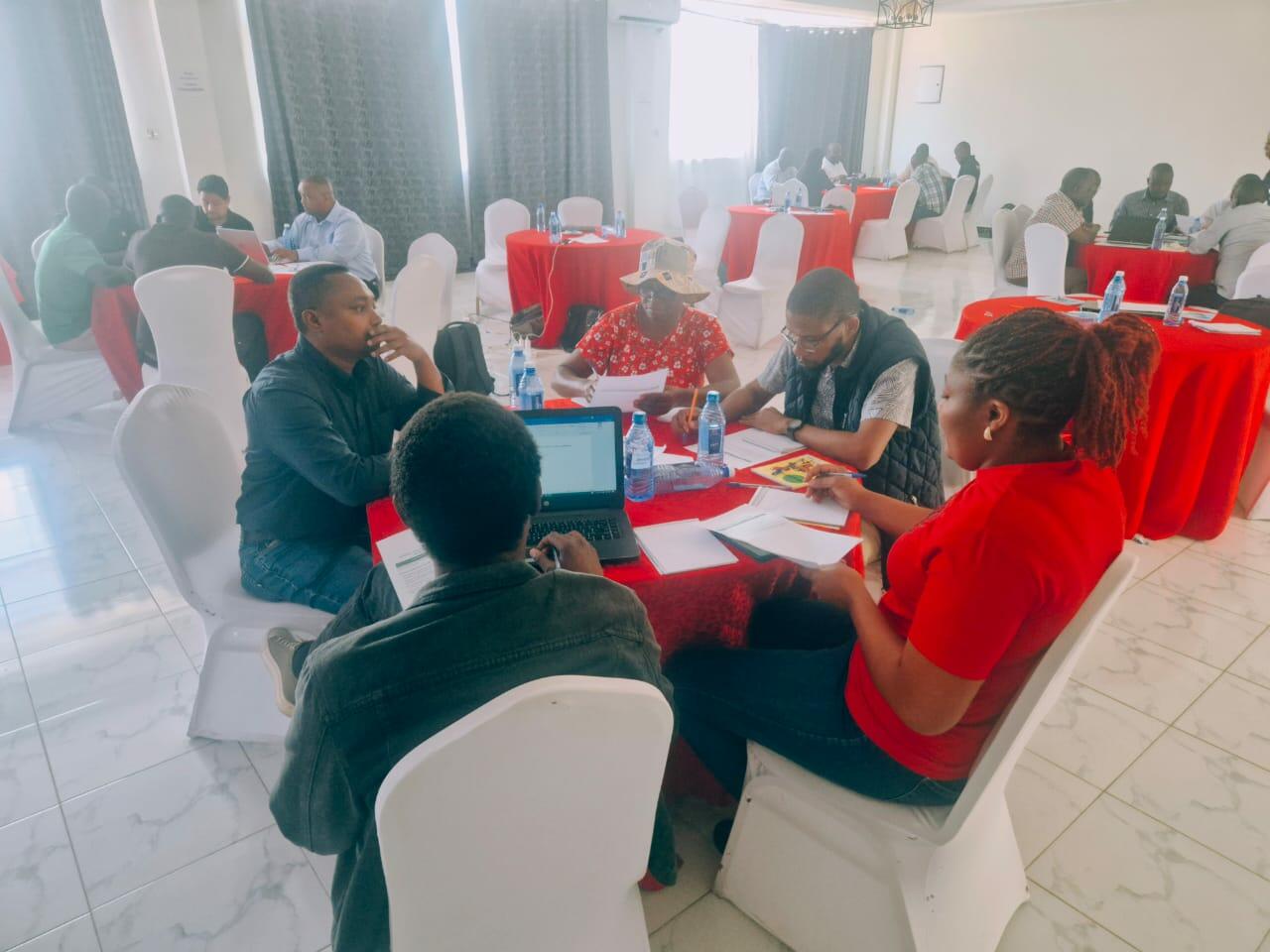
For agricultural research to make a difference, it eventually has to find its way into a decision: what a county chooses to invest in, what an extension officer recommends, or what a farmer decides to do on the ground. That connection is rarely automatic, which is why a two-day Policy Dialogue on Sustainable Soil Nutrient Management and Climate-Smart Irrigation, convened through the Innovation in Sustainability, Policy, Adaptation, and Resilience (iSPARK) project at Fairways Hotel in Kisumu earlier in the month, bringing together national and county government representatives, researchers, technical institutions, academia and development partners to look at how emerging evidence could inform the policies, plans and investments that guide agricultural action.
From national policy to county priorities
The challenge of making national policy work in different county contexts came into focus during discussions around Kenya's Agricultural Soil Management Policy (ASMP). Dorcas Jalang’o, a Research Team Leader at the Alliance, provided an overview of the dialogue and set the context for the discussions. The meeting was then officially opened by Eng. Angelica Weboko, Senior Superintending Engineer at the Ministry of Agriculture and Livestock, who presented the policy's priority areas, prompting discussion around what it would take for national priorities to become part of county planning and implementation.
Counties already have their own agricultural programmes, planning cycles, budgets and technical structures, so effective domestication requires more than transferring national policy language into county documents. It means working through existing systems, bringing relevant institutions together, strengthening technical capacity and ensuring that the evidence informing implementation is relevant to local conditions.
Irrigation provided another example of how that connection needs to work and Maurice Opondo, Director of Irrigation Schemes, representing the National Irrigation Authority and the Ministry of Water and Sanitation, presented the National Irrigation Policy (NIP) and the National Irrigation Sector Investment Plan (NISIP), which provides the framework for guiding irrigation investments. NISIP recognizes that irrigation opportunities and constraints differ across counties and gives them scope to prioritize approaches that respond to their circumstances, including:
- Accelerating farmer-led irrigation
- Improving public irrigation schemes
- Enabling corporate agribusiness investment
- Revitalizing irrigation in arid and semi-arid lands
- Expanding community based schemes and
- Developing alternative water resources such as water recycling and stormwater harvesting.
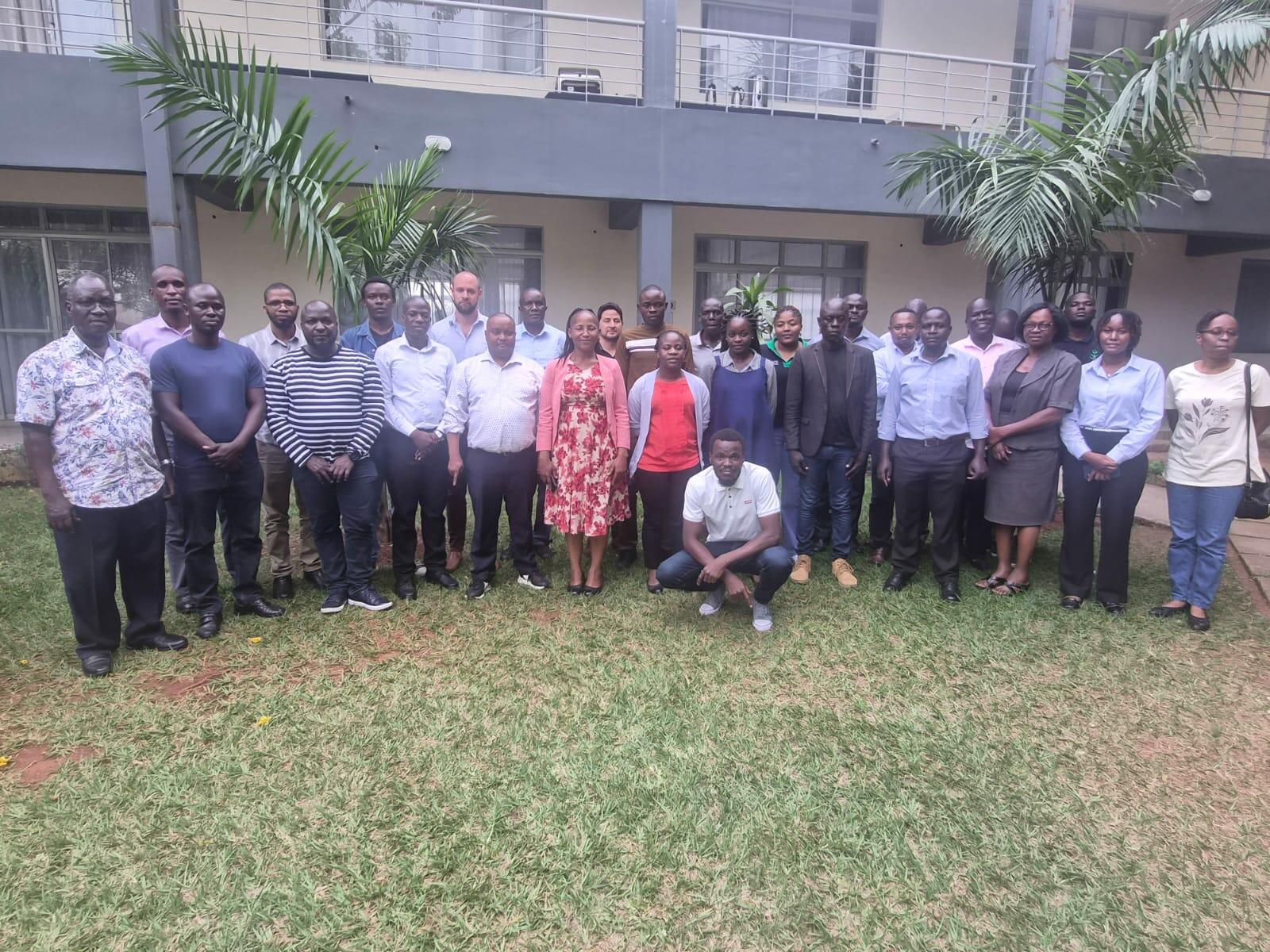
For Vihiga County, farmer led irrigation may be particularly relevant given its agricultural context, while another county may place greater emphasis on community based irrigation, water resource development or rehabilitation of existing schemes. Participants therefore considered how counties could identify the NISIP priorities that best respond to their own circumstances and integrate them into existing plans and programmes, rather than creating parallel systems.
The discussion also drew attention to progress already being made within counties and to areas where stronger institutional coordination, evidence and advisory support could help move irrigation priorities from policy into implementation.
When research meets the realities of implementation
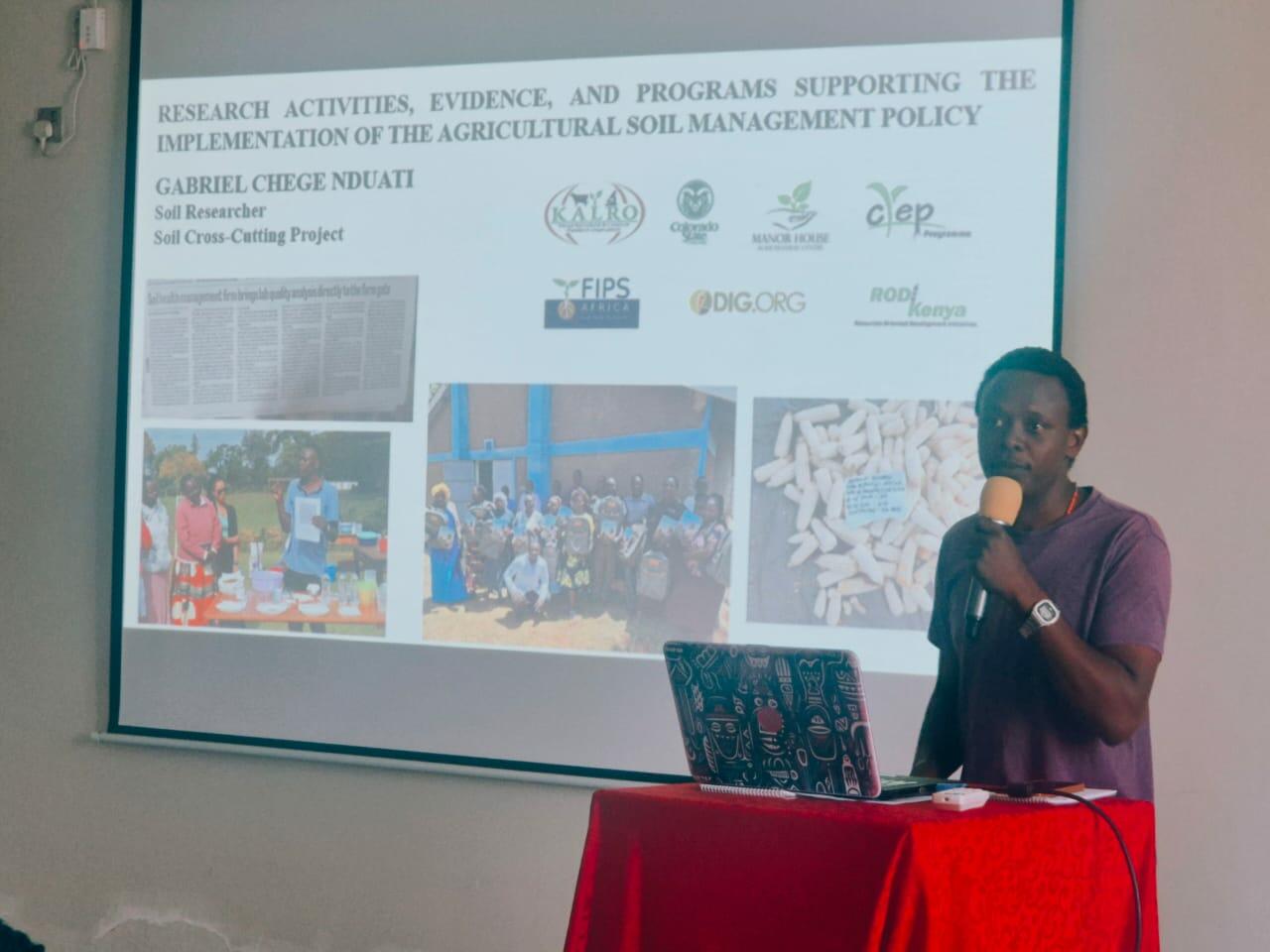
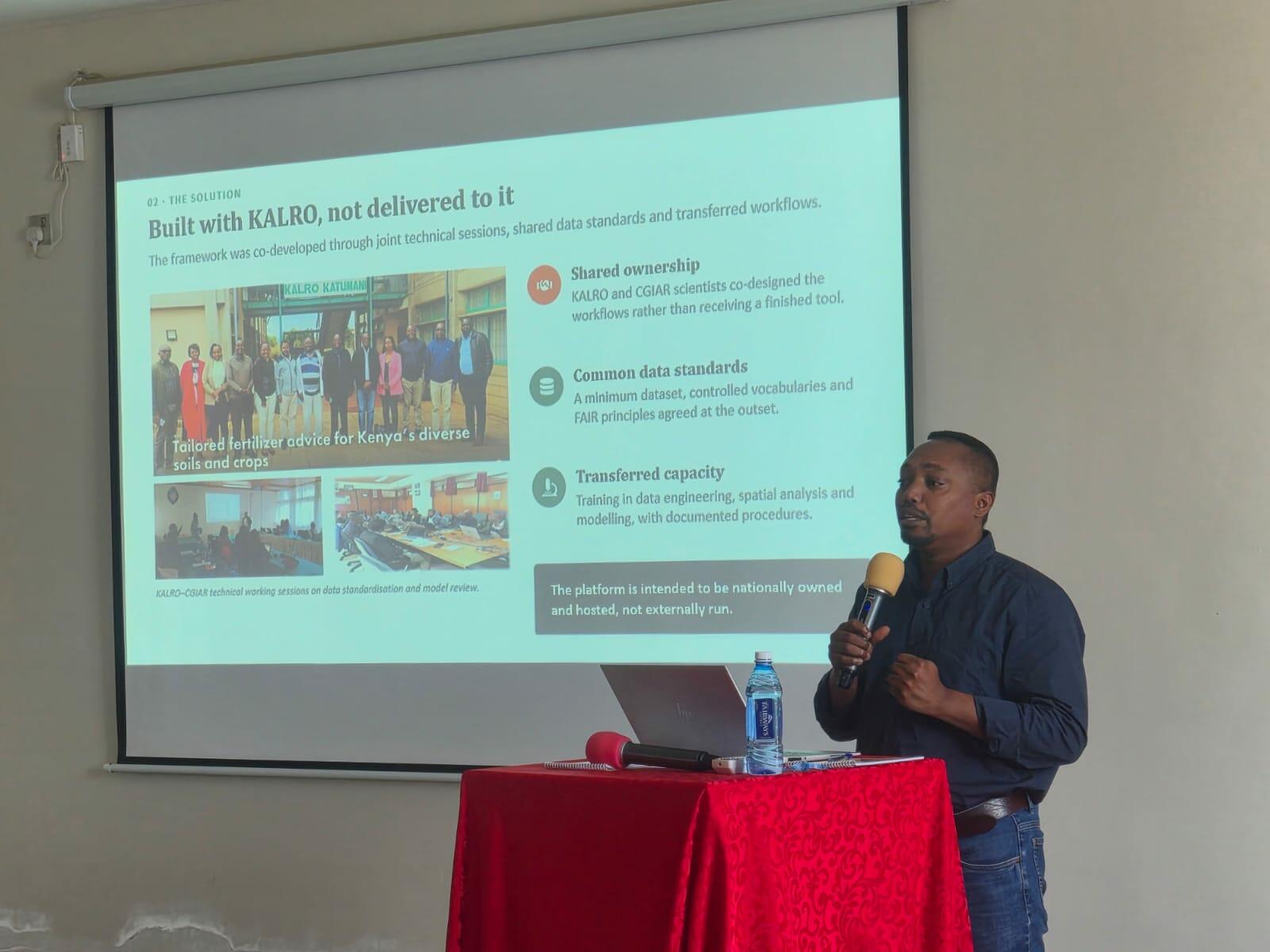
These policy discussions provided the context for looking at the research and tools being developed to support better agricultural decisions. Gabriel Chege, a soil analyst from KALRO Kakamega, presented work on soil improvement, including efforts to make soil testing more cost efficient and translate soil information into practical agroadvisories. Dr. Degefie Tibebe, Data Scientist for Agronomy and Climate Services at the Alliance, presented the AgWise model, which is being developed to support site-specific and season-smart fertilizer recommendations in Kenya through collaboration involving KALRO, IITA, GIZ and the iSPARK team.
The value of bringing these interventions into a policy dialogue was in the scrutiny they received from the people who could eventually use them. County and national stakeholders examined the evidence and metrics behind the soil improvement intervention, identified information that could strengthen it and considered what would make the resulting recommendations useful to farmers, extension providers and government institutions.
Oscar Bautista-Cespedes, Data Scientist at IITA, led the review of the soil improvement intervention, while private-sector participants, including CropNuts, brought perspectives on what would make the recommendations practical beyond the research setting. Their feedback highlighted the importance of developing solutions that institutions and farmers can understand and adopt, and will contribute to the continued development of the intervention and an emerging policy brief on fertilizer and soil improvement.
The same co-development process was applied to climate-smart irrigation where Dr. Chris Mwungu, Agricultural Economist at the Alliance, presented the Targeted Climate-Smart Irrigation Advisory, which brings together climate, agricultural and irrigation information to support irrigation decision making. Government irrigation experts, county technical officers and representatives from the Kenya Meteorological Department reviewed the evidence and metrics informing the intervention and considered how the information could be translated into relevant and timely agro-advisories.
Valentine Musavi from Kenya Met in Kisumu contributed insights on agro-advisory solutions and the importance of connecting climate information with practical information that farmers and extension providers can use. Participants also identified areas where additional evidence could strengthen the advisory and considered how it could connect with existing irrigation planning and implementation processes.
The discussions brought the interventions closer to the conditions in which they will ultimately have to operate, with feedback from technical experts, government and potential users helping to refine both the evidence and the way it can be applied.
Counties at the centre of the conversation
Representatives from Kisumu, Siaya, Busia and Vihiga counties helped ground the dialogue in the realities of implementation, drawing on their existing programmes, institutional arrangements and experience to identify practical pathways for advancing ASMP domestication, aligning with the National Irrigation Policy and connecting emerging evidence and advisory approaches with county priorities.
Their involvement was particularly important because these interventions are still being developed. County representatives could identify where a tool or recommendation could fit within existing programmes, where additional information was needed and where an approach might need to be adapted to a particular setting. They also identified opportunities for continued engagement and practical entry points within existing and upcoming county and national processes.
This is central to the iSPARK approach: rather than waiting until research is complete to ask where it might be used, the project is creating space for the institutions expected to apply the evidence to help shape it along the way.
From dialogue to action
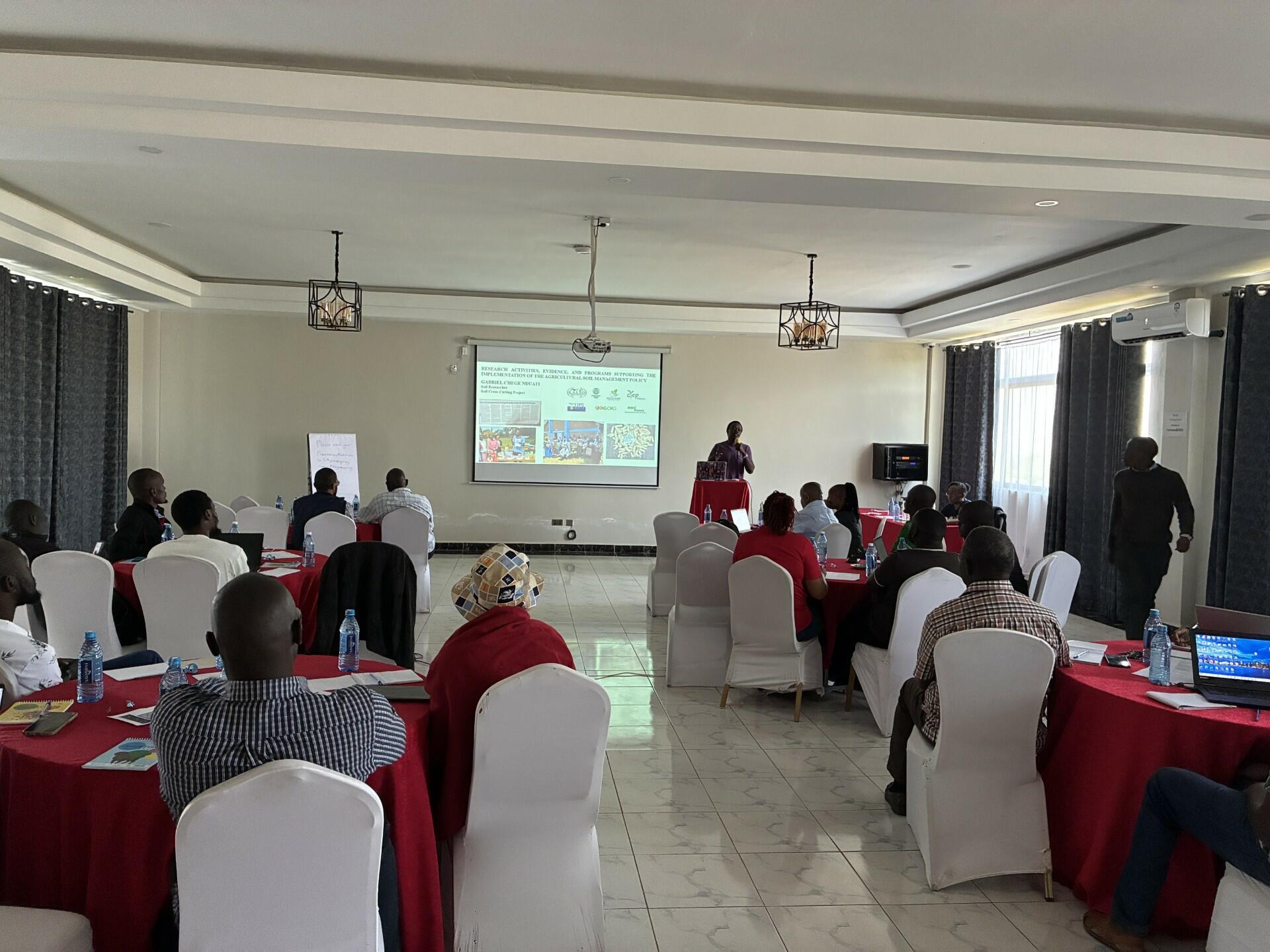
Across the two days, participants moved from identifying opportunities to considering how those opportunities could be taken forward, including the relevant county and national focal points, institutional entry points and practical follow-up actions that could support implementation in the coming months.
The dialogue generated substantive inputs for two emerging policy briefs, one focused on irrigation and the other on fertilizer and soil improvement. Participants will continue to contribute to their review and refinement as the drafts develop, helping ensure that the recommendations reflect government priorities, county realities and the experience of technical and development partners.
In their closing remarks, Eng. Jeanmarie Morata and Maurice Opondo highlighted the opportunity to build on the relationships developed through iSPARK and strengthen collaboration between government, counties, researchers and development partners around the co-development and implementation of soil improvement and irrigation policies, plans, programmes and technical tools.
Kenya already has much of the knowledge needed to improve soil management, irrigation and climate resilience. For iSPARK, that means continuing to build those connections while the evidence and interventions are still taking shape, so that research is not only technically sound, but relevant to the people and systems expected to use it.
The team

Brian Mayanja
Research Specialist
Degefie Tibebe
Research Specialist
Chris Miyinzi Mwungu
Postdoctoral Fellow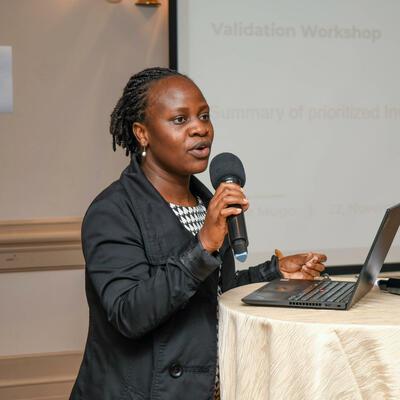
Dorcas Jalang'o Anyango
Research Team Leader
Sabrina Rose
Science and Implementation Officer