Blog Tailored fertilizer advice for Kenya’s diverse soils and crops

Kenyan researchers and CGIAR scientists are using data and digital tools to tailor fertilizer advice for smallholder farmers, aiming to improve yields, soil health, and climate resilience across Kenya’s diverse farming systems.
Smallholder farmers remain the backbone of Kenya’s food security, but their productivity is stifled by one-size-fits-all fertilizer guidelines that fail to reflect the country’s diverse soils, weather patterns, and farming systems. The result has been low returns, inefficient input use, and declining soil health.
A new collaboration between the Kenya Agricultural and Livestock Research Organization (KALRO) and CGIAR scientists is aiming to change that. By combining decades of agronomic trials with open-access soil data, historical climate records, and seasonal forecasts, the partnership is developing machine learning models that can deliver site-specific fertilizer recommendations to farmers.
From Blanket Prescriptions to Tailored Solutions
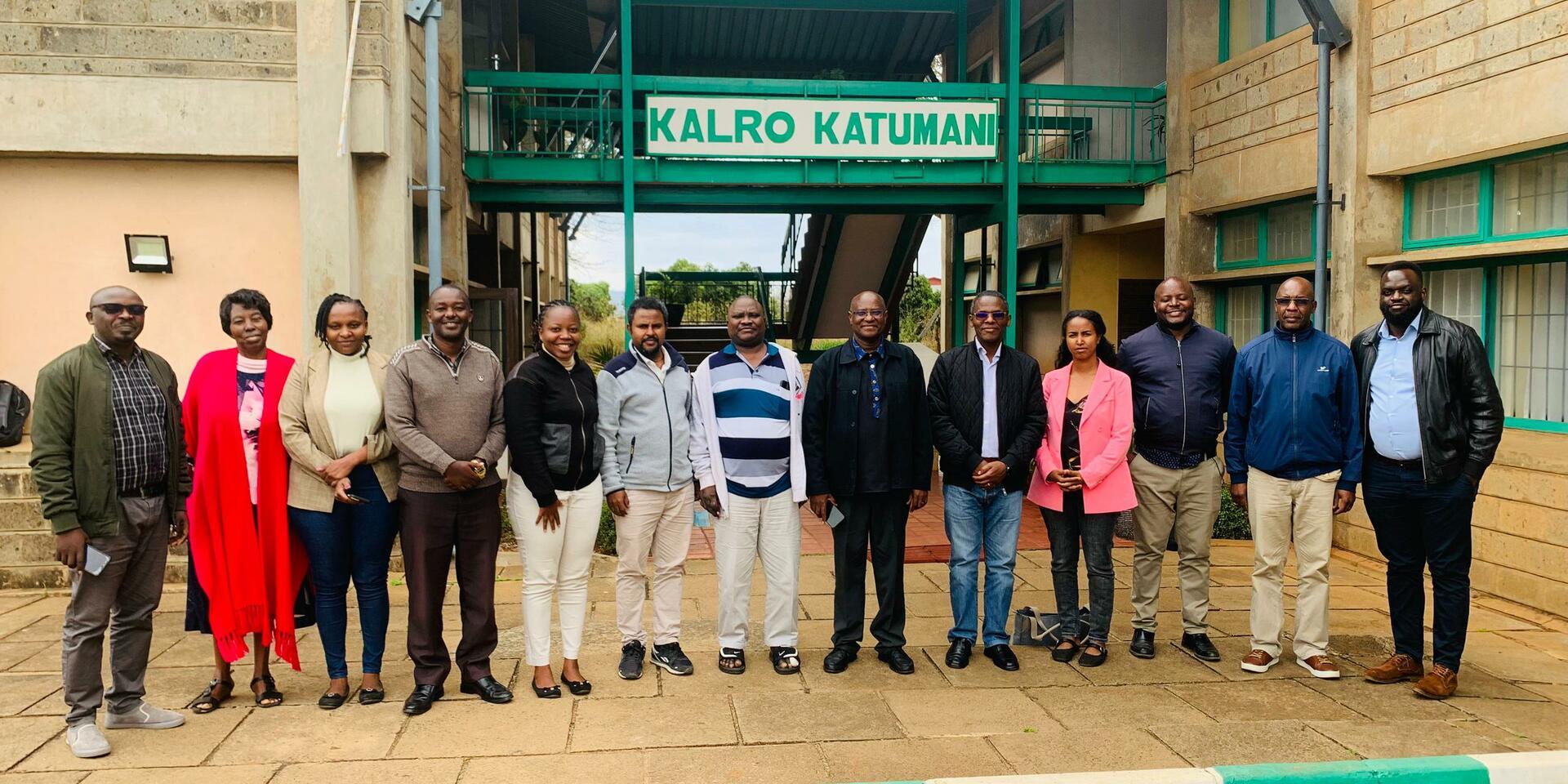
The urgency of smarter nutrient management was highlighted at the 2024 Africa Fertilizer and Soil Health (AFSH) Summit. Responding to this call, experts from KALRO, the Alliance of Bioversity International and CIAT, and IITA gathered in a workshop at the KALRO Katumani Research Centre to design a roadmap for targeted fertilizer use.
“Kenya doesn’t just need more fertilizer—it needs smarter fertilizer use tailored to specific crops, soils, and climate conditions,” said Dr. David Kamau, Chief Scientist and Director of Environment & Natural Resource Management at KALRO.
Building on Data, Science, and Technology
At the heart of the initiative is a massive knowledge base: more than 150,000 data points from fertilizer response studies across Kenya’s varied agro-ecological zones. The workshop at Katumani focused on four key priorities:
1. Harnessing trial data: Mining legacy research from across the country.
2. Standardizing data management: Organizing geo-referenced soil, climate, and agronomic variables.
3. Integrating digital tools: Applying CGIAR’s AgWise model alongside KALRO’s weather datasets to simulate nutrient needs and manage climate risks.
4. Reaching farmers directly: Delivering insights via KALRO’s Selector Platform, mobile apps, and SMS-based services.
“This integrated approach means fertilizer advice adapts to the farmer’s field—not the other way around,” noted Dr. David Golicha, KALRO Deputy Director of Natural Resource Management.
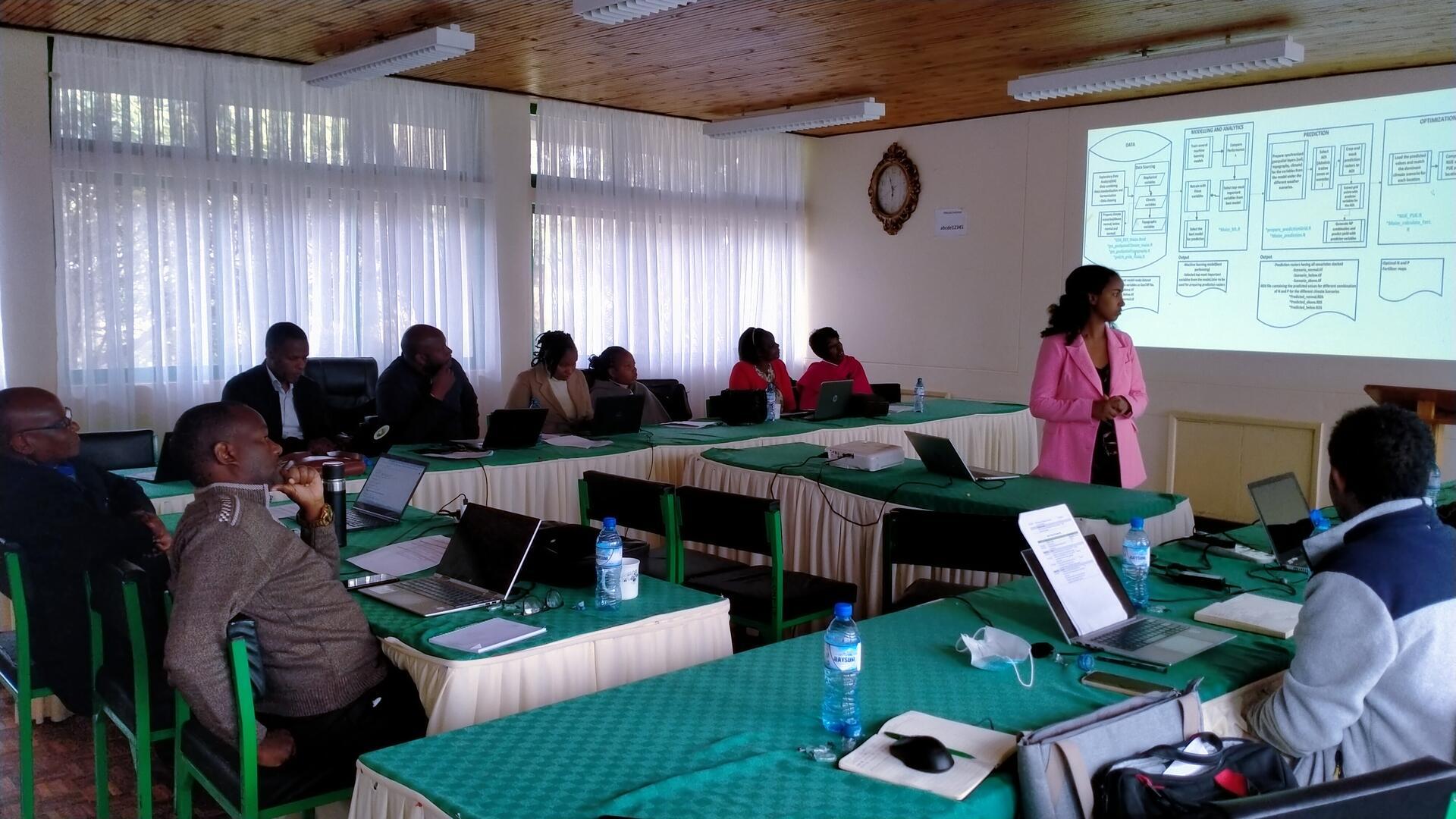
Feben Assefa presenting the workflow of AgWise model to workshop participants. Source: Michael Kinyua/CIAT.
“This integrated approach means fertilizer advice adapts to the farmer’s field—not the other way around,” noted Dr. David Golicha, KALRO Deputy Director of Natural Resource Management.
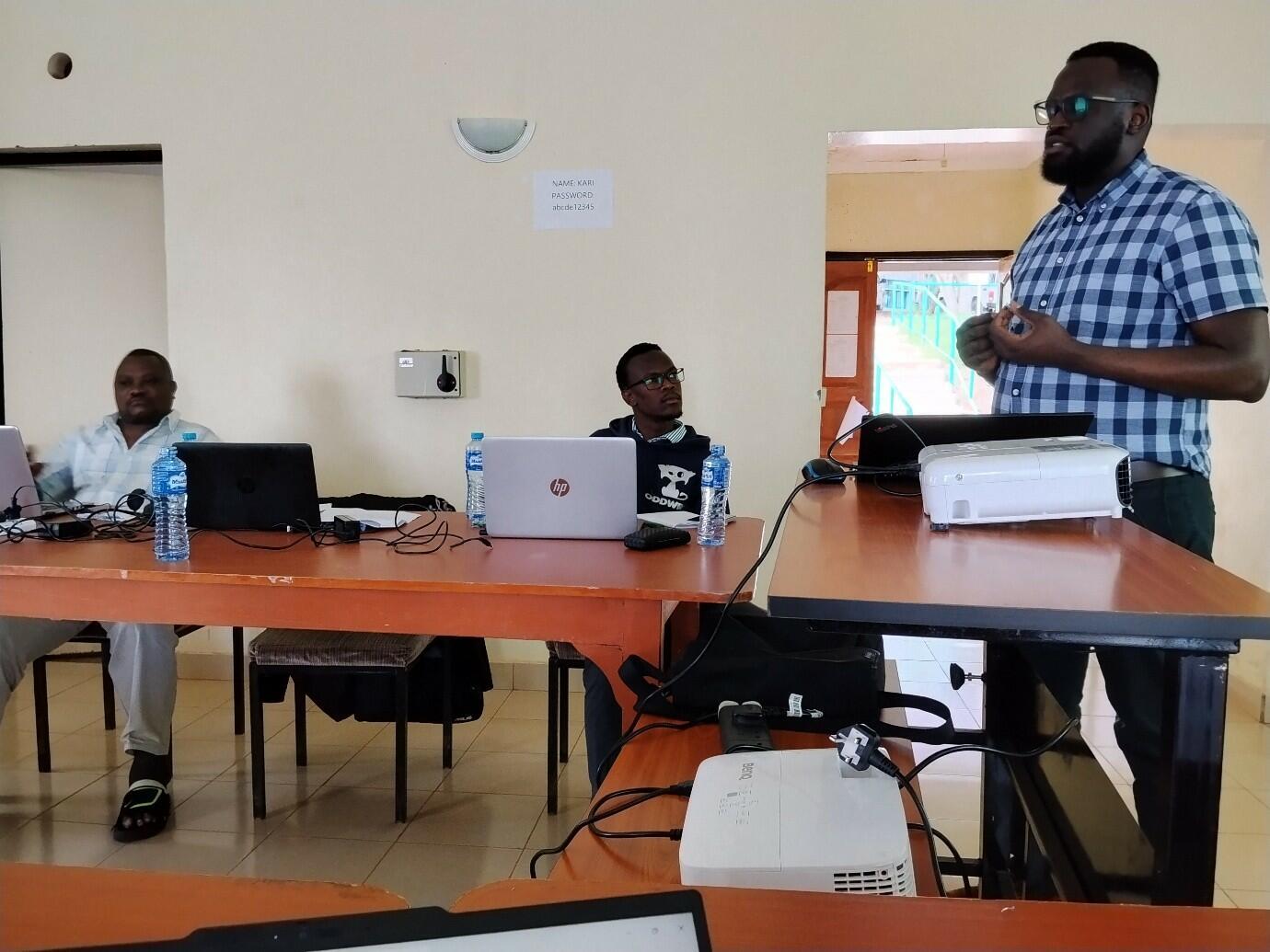
Siyabusa Mkuhlani presenting options for fertilizer recommendation delivery to farmers. Photo credit: Michael Kinyua/CIAT
Farmers at the center
For farmers, the benefits will be immediate and practical: getting the right type of fertilizer, in the right amount, at the right time. That translates into higher yields, improved soil fertility, and better returns on every shilling invested.
“We shall build feedback loop with farmers, letting their local knowledge and real on-farm experiences continually shape and refine our digital models”, said Siyabusa Mukhlani, Data Scientist from IITA.
Roadmap for Change
The Katumani meeting produced a clear action plan:
- Develop, validate, and pilot site-specific recommendations.
- Scale rapidly through digital platforms, supported by farmer registries.
- Leverage long-term field trials and digital soil maps for crop modelling.
Why It Matters
Experts say the initiative could transform Kenya’s food production and resilience.
“This is not just about fertilizer—it’s about unlocking Kenya’s agricultural potential and building a more productive, sustainable, and resilient food system,” said Dr. Job Kihara, Principal Scientist and Soil Health Specialist at the Alliance of Bioversity-CIAT.
If successful, the project could boost smallholder incomes, enhance soil health, and create scalable digital solutions with potential to benefit farmers across Africa.