Blog Why food systems should be financed as critical infrastructure

If food systems resilience is recognised as a building block of macroeconomic stability and security, the financing will follow.
When transit through the Strait of Hormuz plummeted by over 90% within days, the damage went far beyond shipping. What began as a geopolitical shock now risks cascading through food systems.
The simultaneous occurrence of shocks is becoming more frequent and severe. Over the last two decades the world has lurched from crisis to crisis, with global food price shocks in 2007-8 and 2010-11, the Covid-19 pandemic, conflicts in Ukraine and the Middle East, and recurrent climate shocks. The latest, the third strong El Niño in little more than a decade, is putting harvests at risk across much of Africa, Asia and Latin America. Different triggers, all undermining food systems resilience.
Countries must invest in resilient food systems
In emerging and developing economies, where food absorbs 30–45% of household expenditure, price shocks pass quickly into household budgets and public finances.
Food system resilience is a question of macroeconomic stability and security.
Investing in food system resilience and sustainability can reduce the impact of shocks, and the tools to make food systems more resilient and regenerative already exist: stress-tolerant crop varieties, climate information that helps farmers decide when to plant, practices that maintain and build soil health, more biodiverse production systems, and public procurement that, alongside wider policy incentives and support, gives smallholder farmers a dependable market for healthy, sustainable food. As climate extremes become more frequent and geopolitical fragmentation threatens traditional trading relationships, strengthening these buffers will become increasingly important.
Yet current incentives and financing models do little to enable widespread adoption of practices that enhance resilience.
Countries have begun to recognise how central resilient food systems are, albeit haltingly. The UN Food Systems Summit process mobilized national action plans across over 120 countries. At COP28, nearly 160 countries signed the Emirates Declaration on sustainable agriculture and resilient food systems. But since COP28, financing has not followed this growing recognition of the importance of food systems. They remain a parallel conversation, running alongside the core agenda of macroeconomic stability and growth. The political economy of resource allocation has barely shifted.
Why food systems finance falls short
While national governments provide the bulk of public financing for food systems, much of it is environmentally and socially harmful. International climate finance, which could help countries redirect public spending towards regenerative food systems, is woefully inadequate. Most of it comes as debt, often on non-concessional terms, including to many countries already in or near debt distress, deepening the vulnerability it is meant to ease. Little of this finance, less than 1%, reaches the smallholder farmers who grow a third of the world's food and act as custodians of its crop diversity.
The international financing architecture was designed for large borrowers with credit ratings and a proven track record. Food is produced by millions of mainly smallholders working in very diverse agroecological and market conditions, leaving the sector fragmented in ways other sectors are not.
Many farmers lack formal land title to use as collateral. Returns often take years to appear, and many, such as healthier soils and stable food prices, are public goods. Critical infrastructure needs a commitment to long-term financing and a public anchor, while accepting that the risk has to be shared.
Countries are negotiating IFAD-14, the next replenishment of the UN's fund for agriculture and rural development, which also co-leads a network of 130+ public development banks. An agreement that delivers more finance, on concessional multi-year terms, reaching cooperatives and farmer organisations as well as governments, would set a high bar for the rest of the development finance system, where far more money sits.

Sharing risk and unlocking private finance
That shift in architecture is also what unlocks private capital. Blended finance tools exist in agrifood systems and are growing, but they have not systematically redirected financial flows at the scale the transformation requires. Private capital won’t move into fragmented, long-term investment landscapes unaided. It follows reliable returns, which redirected public support can help create, bringing in pension funds and other long-term investors. Concessional public finance, deployed through replenishments to reduce risk and attract responsible private investment, is what changes that calculus.
We need to reframe food systems finance as a long-term investment, linked directly to climate, diets, nature and economic stability, and funded accordingly. The underlying argument needs to be so thoroughly shared across a genuinely heterogeneous coalition that it stops being only about food and becomes an argument about how societies manage risk. If food systems are recognised as critical infrastructure and financed accordingly, countries can begin to strengthen the livelihoods and resilience of the people who depend on them, even in times of shocks and crises..
James Stapleton is senior advisor for advocacy at the Alliance of Bioversity International and CIAT, where he works to increase access to financing for food systems transformation. He also represents CGIAR as a board member of the FAST Partnership, a multi-stakeholder initiative that mobilizes climate finance for agrifood systems transformation.
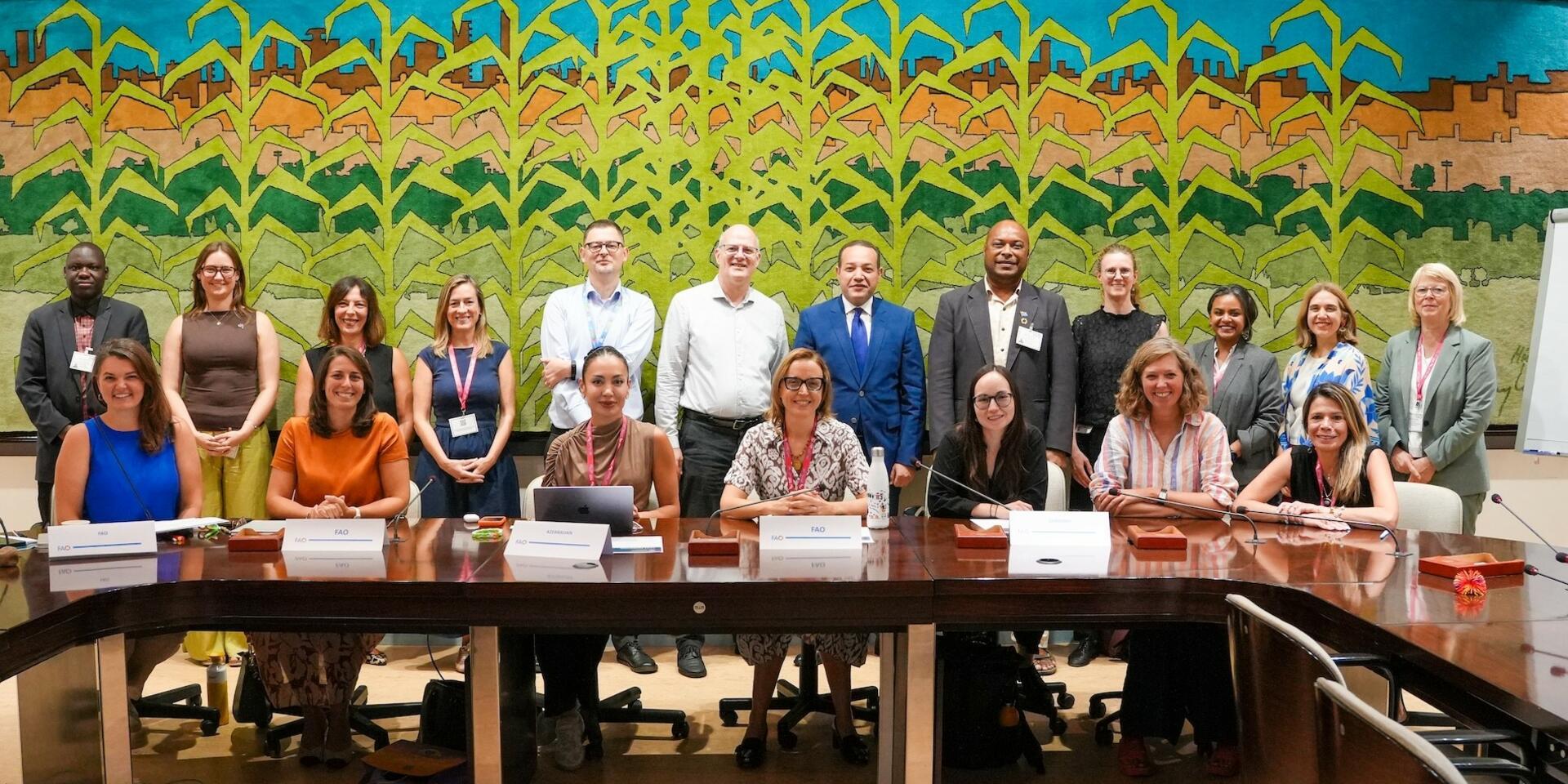
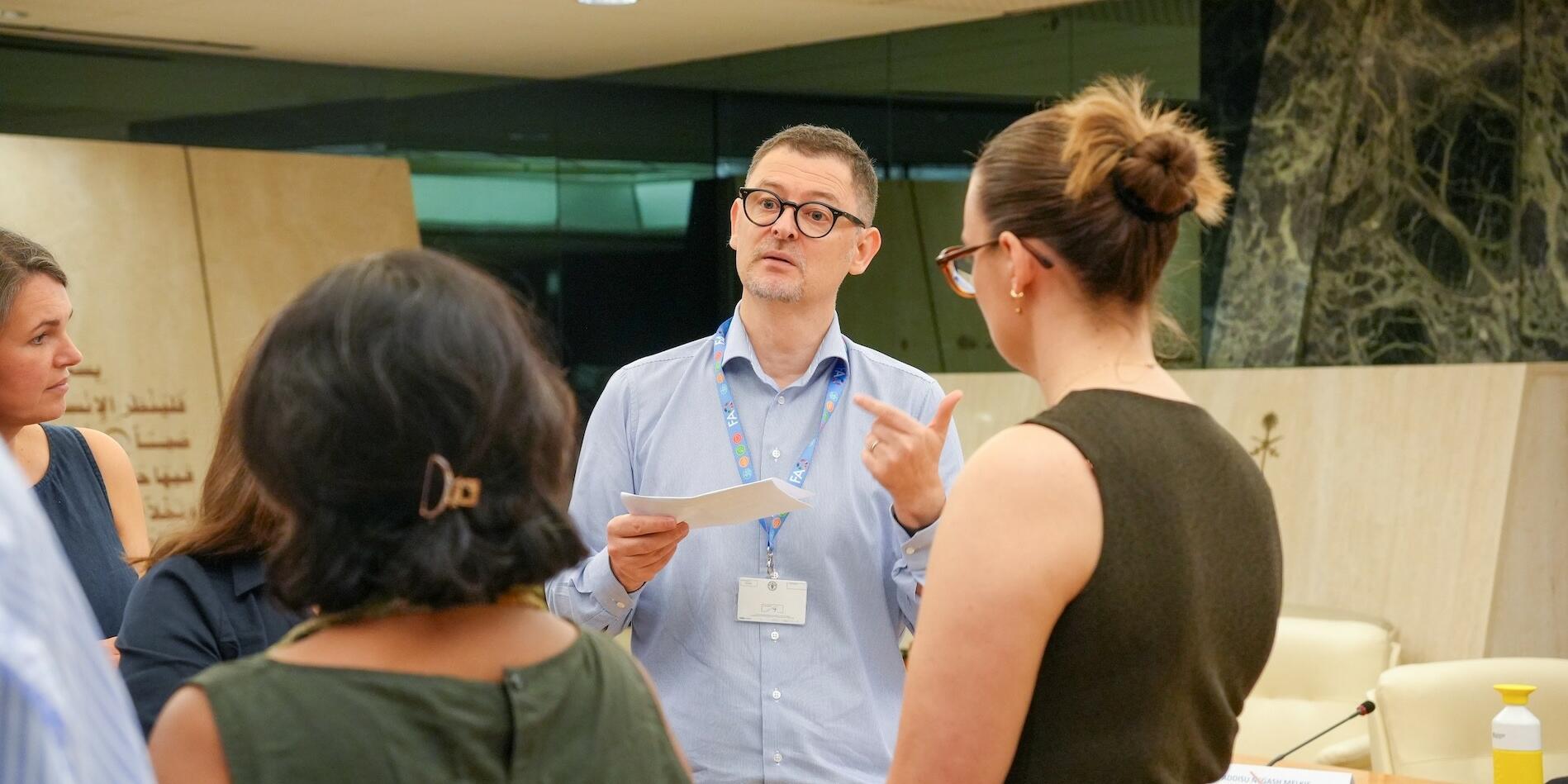
Photos: Meeting of The Food and Agriculture for Sustainable Transformation (FAST) Partnership at FAO Headquarters in Rome, Italy, September 2026, where James Stapleton facilitated a workshop on high-level messaging for climate finance and Pedro Chilambe supported a workshop on building investable projects.