Blog Drought and deluge: How El Niño could strike Africa on multiple fronts
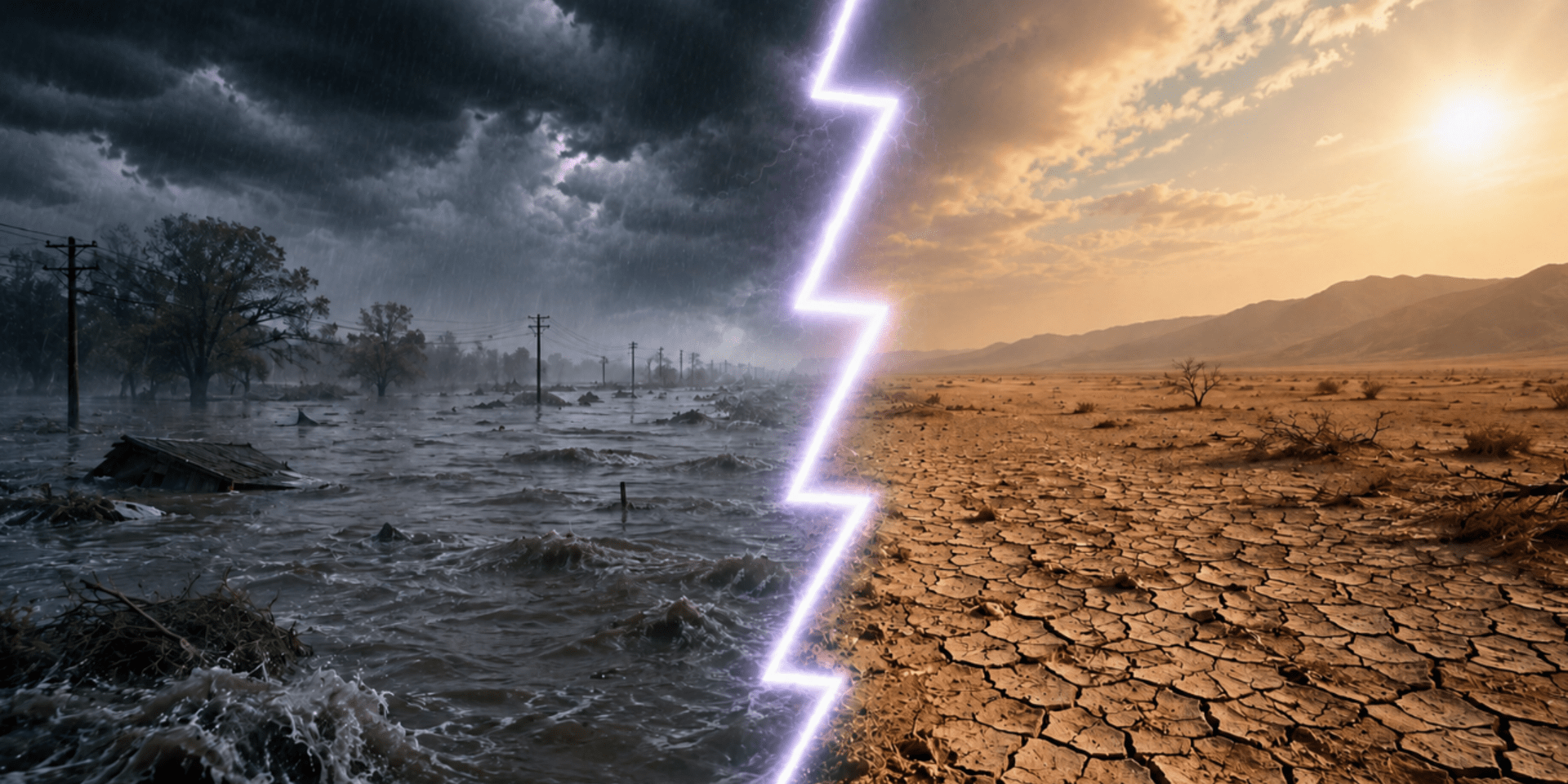

African farmers are bracing themselves for opposing climate extremes as scientists predict a super El Niño season: drying out crops in the South, drowning the East, and making rain unpredictable in the Sahel. In this blog, we explore the potential consequences for food and agriculture, and how farmers can adapt.
One climate phenomenon, three African realities
In July 2023, the World Meteorological Organization confirmed the arrival of an El Niño that would become one of the most powerful ever recorded: an abnormal warming of the equatorial Pacific that, through an interplay of currents and winds, reshapes rainfall thousands of kilometers away.
Yet two often-confused notions need to be distinguished. El Niño belongs to climate variability, a natural cycle that returns every two to seven years and then withdraws. Climate change, by contrast, is human-caused, a long-term trend (30 years), and therefore lasting. The two are not opposed: they overlap. By raising the planet’s baseline temperature, warming makes each El Niño episode hotter, and therefore potentially more extreme, which is what justifies, this year, the label of a “super” El Niño.
Its effects reach far beyond the fields. They hit electricity production, when dams run short of water, and public health, when the shortage of drinking water opens the door to epidemics.
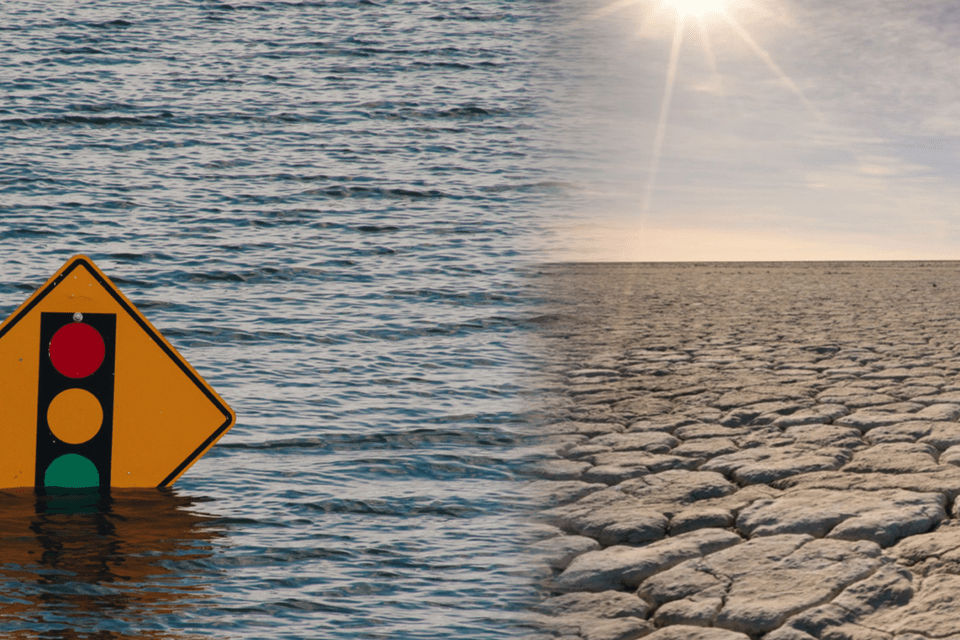
But their most baffling feature is the lack of uniformity. On a single continent, and sometimes at the same time, El Niño can produce diametrically opposed signals: it dries out southern Africa, swells the rivers of East Africa, and throws the Sahel’s seasons into disorder. It is this dipole, drought on one side, deluge on the other, unpredictability in between, that makes the continent so hard to prepare for as a single whole. For food systems that depend heavily on rainy seasons and are barely insured, the question becomes singular: how can millions of smallholders be protected when the threat does not wear the same face everywhere? The three theatres that follow, Zambia, Kenya and the Sahel, each answer in their own way.
In the South, the rain vanishes, and the maize with it
Southern Africa experienced its driest February in a century, receiving only about a fifth of its usual rainfall. Seven countries, Botswana, Lesotho, Madagascar, Malawi, Namibia, Zambia and Zimbabwe, declared a state of national disaster. But it was in Zambia that the shock was sharpest: in the south of the country, farmers received less than a third of normal rainfall, barely 250 millimetres across the entire season. Nearly 5.8 million people, a third of the population, fell into food insecurity, and the drought hit agriculture in 84 of the country’s 116 districts.
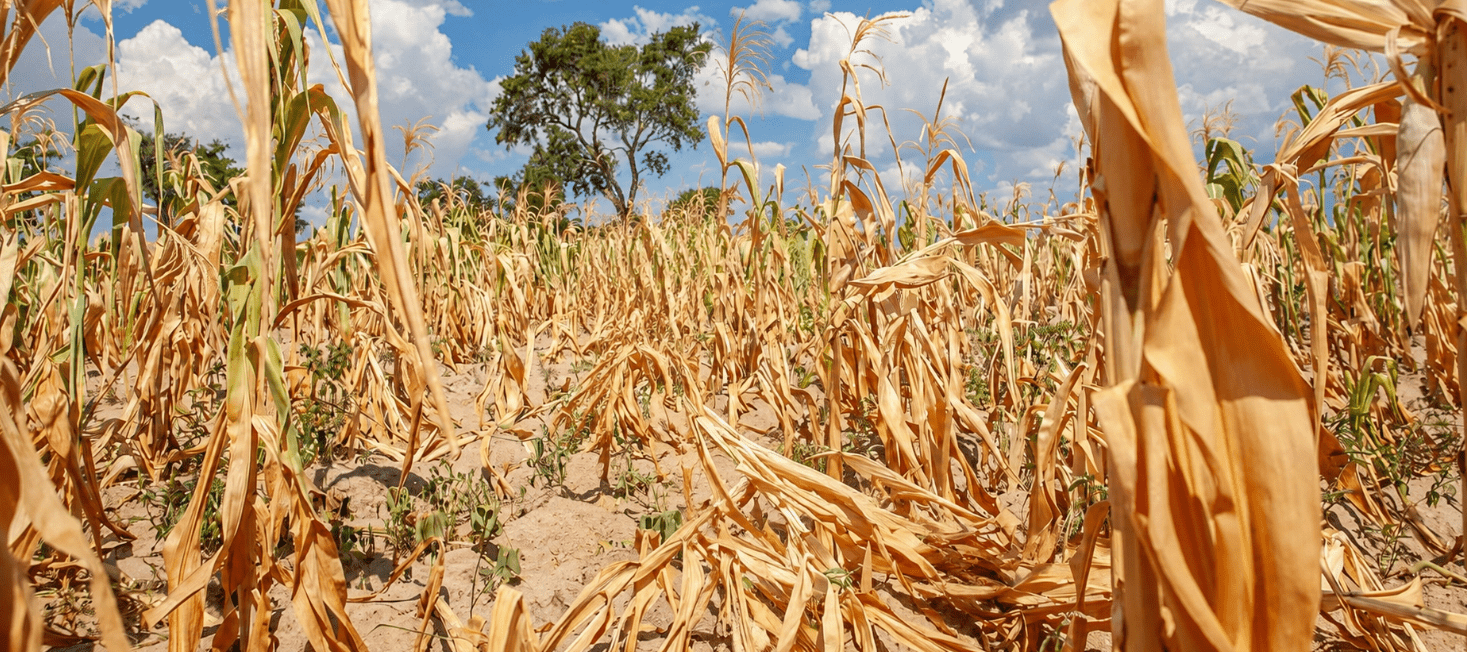
One crop is at the heart of this drama: maize. A staple of the entire region, it is also the plant most consistently struck by El Niño, which combines against it both water shortage and excess heat. When the harvest fails, the consequences cascade: families first sell whatever they have left, often their livestock, dumped at a fraction of its value, then cut the number and quality of their meals. For lack of drinking water, the drought even worsened cholera outbreaks, grafting a health crisis onto the food crisis.
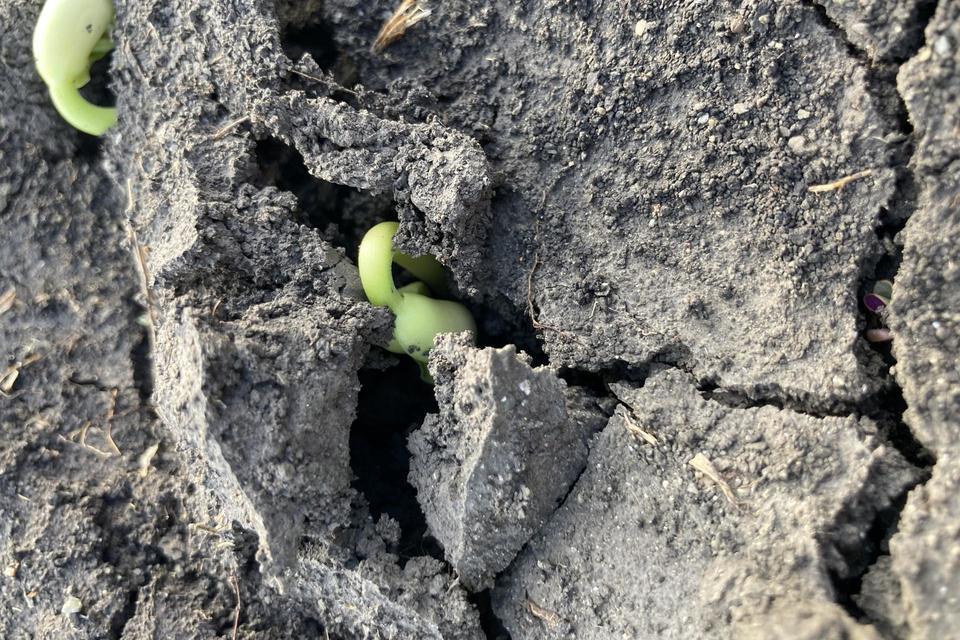
Yet not everything burned in the sun. Where maize gave way, a legume held firm: the bean, particularly its drought-tolerant and iron-biofortified varieties. Despite a disastrous season, Zambian bean production reached more than 88,000 tonnes in 2023, against 49,000 two years earlier. The demonstration is clear: an agricultural diversification approach that includes a resilient crop, well disseminated, can cushion the shock when the main cereal falters, and, along the way, support the nutrition of the most exposed households.
"The real value of climate information is not that it tells farmers what the weather will be. It is that it helps them decide what to do before the weather arrives. During the 2023–2024 El Niño, farmers using climate advisory services turned weather forecasts into action—adjusting planting dates, choosing more resilient varieties, and reducing the risk of crop failure. When climate information reaches the last mile in time, it becomes one of the most powerful tools for building resilience." Evan Girvetz, Climate Action Principal Scientist
In the East, the same maize drowns
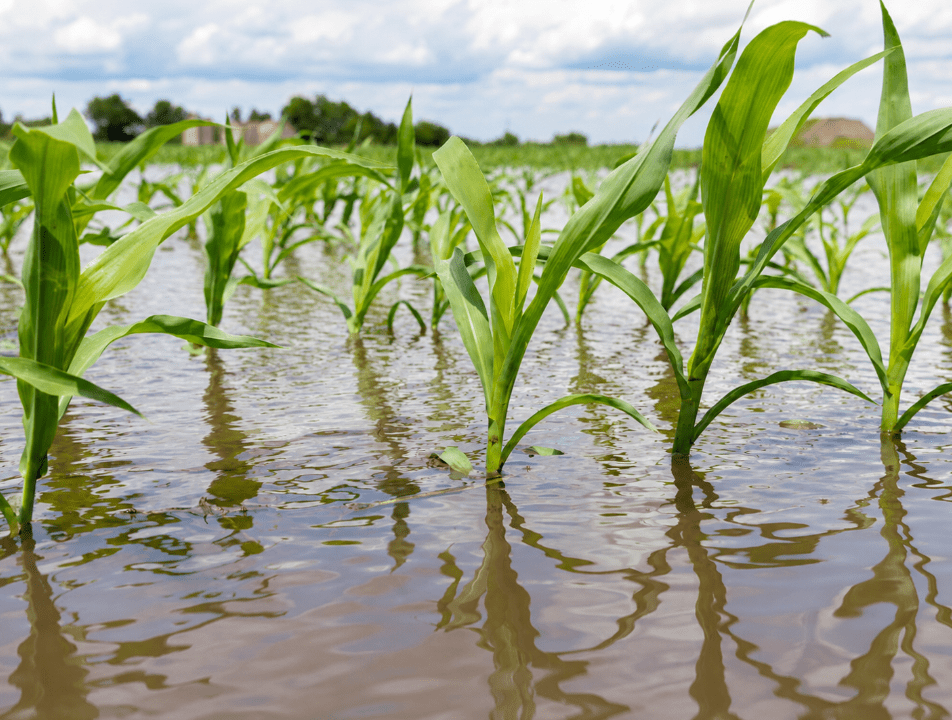
To understand El Niño in Africa, it is enough to follow a single crop from one region to the next. The maize dying of thirst in Zambia is, in the east, drowning. Between March and May 2024, torrential rains poured down on Kenya: nearly 291 people lost their lives there, more than 278,000 were displaced, and the water swept away more than 11,000 head of livestock while damaging nearly 47,600 acres of crops. In Mai Mahiu, a single landslide was enough, in one night, to claim dozens of victims.
The cruelest part is not the flood alone, but its sequencing with the drought that preceded it. Floods that follow dry years push rural households deeper into precarity and poverty: soil hardened by months without rain no longer absorbs water, which runs off and carries away everything in its path. Families, already stripped of capital by the previous season, no longer have “any cushion” to absorb the second blow. This is the trap of alternating extremes, where each shock destroys the ability to recover from the next.
Faced with so brutal a risk, the challenge is no longer just to produce, but to protect the farmer’s income. That is the whole promise of the index insurance being tested in the country, calibrated precisely for maize. Its principle differs from conventional insurance: the payout triggers automatically as soon as an objective index, for example rainfall measured over an area, crosses a predefined threshold, without needing to assess damage plot by plot. The payment therefore arrives quickly, when the family needs it most, and at lower administrative cost. The main challenge remains: adoption, still held back by producers’ lack of trust and information.
The most dangerous climate is the unpredictable one
Moving up towards the Sahel, the cereal changes, and with it the whole farming calendar. Maize gives way to millet, sorghum, groundnut and cowpea, crops paced by a monsoon that has become capricious. Here, El Niño shows up neither as outright drought nor as deluge, but as unpredictability. The rains arrive late and push back sowing; they break off and force replanting; then a violent storm drowns the young seedlings in one afternoon. For the farmer, the problem is not so much that it rains too much or too little, but that he no longer knows when, and therefore can no longer plan.
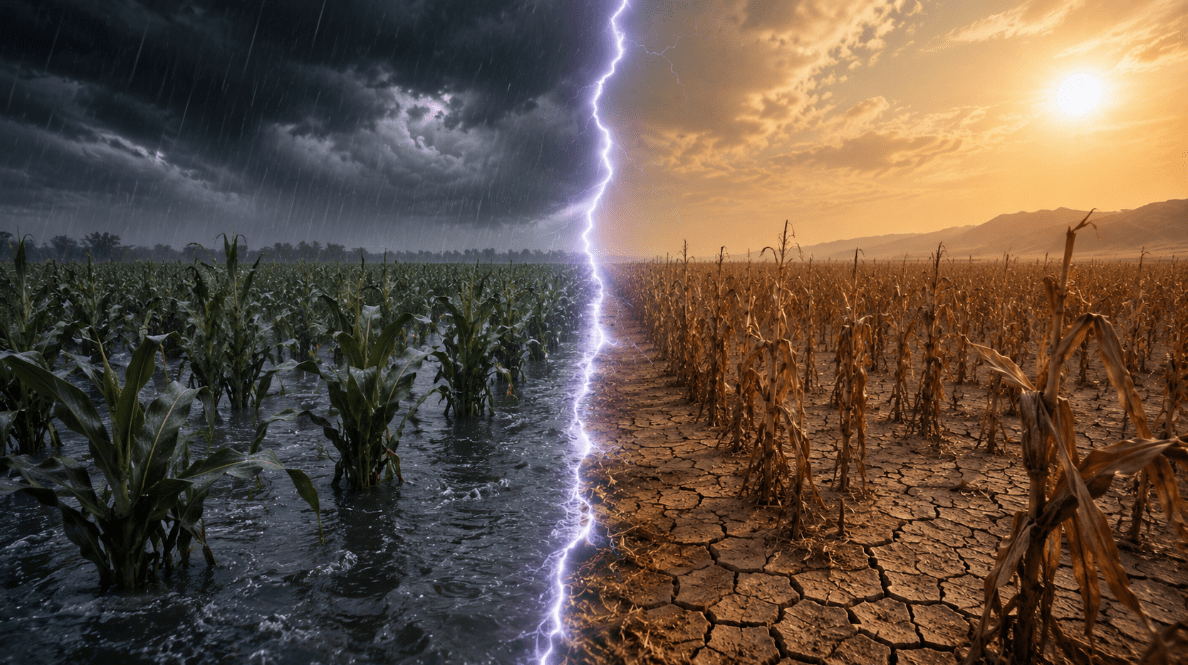
In the Sahel, El Niño episodes have often historically been associated with reduced rainfall, longer dry spells and rising temperatures. However, recent scientific knowledge shows that the relationship between ENSO and Sahel rains is neither constant nor systematic. El Niño’s impact depends heavily on the state of the other ocean basins, notably the tropical Atlantic, the Mediterranean and the Indian Ocean. The Alliance’s methodology for anticipating Sahelian crises is a reminder: the risk there is rarely purely climatic. It mixes with the risk of conflict, in the competition for water and land, which requires anticipating not an isolated hazard, but a combination of threats.
Another speculation then links the Sahelian field to the rest of the world: rice. Widely imported into West Africa, where it has become a staple of urban diets, it saw its world price climb by about a third in March 2024, under the combined effect of El Niño-related deficits and export restrictions decided by certain producing countries. The mechanism is relentless: a production shock on the other side of the planet ripples all the way to the Dakar market. From the millet field of Kaffrine to the plate of rice in a household in the capital, it is the same crisis that circulates, proof that resilience is won not only in the field, but also in the markets.
“When drought and flood threaten the same territory, the question is no longer only what to sow, but when to sow it without losing everything, and this question becomes vital where conflicts over land, water and pasture are added on. This is precisely where ten-day agro-climatic advisories change the game: by telling the producer the least risky date for a successful sowing, they spare him those repeated replantings that cost so much to families who already have nothing left to lose.” Robert Zougmoré / AICCRA Director
From climate intelligence to climate action
If the impacts differ from one region to another, the response begins everywhere with the same thing: reliable climate information, delivered on time and tailored to each plot. This is the conviction that guides the Alliance’s work on the continent, from digital agro-climatic forecasting applications to advice delivered by voice in the villages.
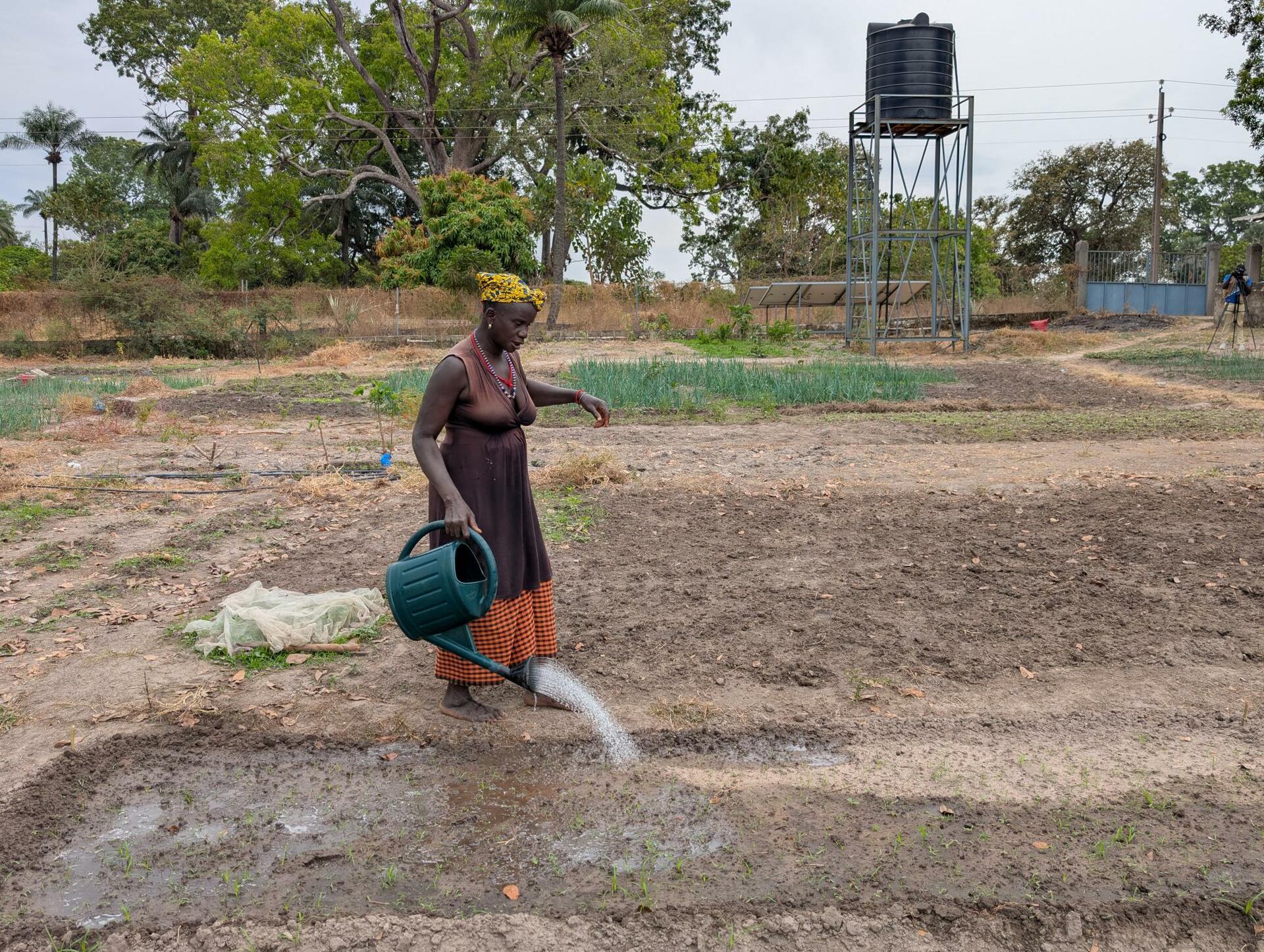
In Zambia, in preparation for the 2024/2025 season, the Alliance trained 103 lead farmers in the digital E-PICSA approach, alongside the University of Reading, COMACO and the national meteorological service. The objective is clear: to translate a seasonal forecast into concrete decisions, when to sow, which variety to choose, when to wait, then spread this knowledge from farmer to farmer, all the way to the last mile, where research results should truly make an impact on the farmer’s field.
Beyond climate services, the response is built in ever-finer layers. To resilient seed are added index insurance and the Food System Labs, those living laboratories where producers, traders and local authorities co-design solutions from the bottom up, as close as possible to urban and rural realities. Further upstream still, the Alliance is exploring human-AI collaboration to analyse agricultural policies and accelerate variety selection, without ever removing the farmer from the centre of decision-making.
This multi-storey architecture sketches a graduated adaptation, where each region mobilises the tool best suited to its risk: the tolerant variety in Zambia, insurance and living labs in Kenya, multi-risk anticipation in the Sahel. These are not three isolated responses, but the levels of a single strategy, from the seed sown in a field to the algorithm serving public policy.
Resilience is built before the crisis
El Niño is no stranger to Africa. But recent history sends a clear warning: the worst of the hunger does not arrive during the phenomenon, it persists well after. When the rains return and the cameras leave, the granaries stay empty, because a lost harvest can only be made up in the following season. In Zimbabwe, even as the drought had loosened its grip, 57% of the rural population still had to face food insecurity between January and March 2025. This lag is one of the least visible traps of the crisis: media attention recedes before hunger peaks.
That is why information alone is not enough. The farmer must also have the means to act on what he knows. When a reliable forecast is paired with rapid financing, the picture changes. The latest season saw the largest activation of anticipatory action ever carried out in southern Africa, reaching more than 1.2 million people and disbursing 14 million dollars before the drought even struck, money paid out to prevent the crisis rather than to repair it, a logic that costs less and protects more.
Index insurance, safety nets and anticipatory action thus form the financial link that was missing from the chain: they extend climate advice with the means to apply it sustainably. Linking data to decision, then decision to financing, notably through public-private partnerships for the use of business models, is, concretely, where Africa’s ability to armour its food chain against the next super El Niño is decided. None of these levers is enough on its own; it is their combination, carried by governments, researchers and communities, that will make the difference. The Alliance and its partners are working on it, from the field to the market.