Blog Factcheck: Can a world at conflict still feed itself?

Scientists say yes. But the food system has to change.
Geopolitical conflicts are disrupting lives, economies, and access to food. Most recently, supply chain interruptions threaten to cut off millions of farmers’ access fertilizers, and consumers’ immediate and long-term access to food. In fragile contexts, these disruptions compound with climate risks to exacerbate root causes of tensions and conflict.
From food markets to soil health, crop diversity to community-driven practices, the Alliance research aims to safeguard nutrition and diet practices in countries at risk of famine and low food supply, and leverage food and land science for stability in fragile and conflict affected settings. We asked our scientists to respond to questions about 2026’s biggest risks- and opportunities- for our food security.
The Risks
VOLATILE MARKETS ARE LEADING TO HUNGRY CONSUMERS
1. Should we expect food prices to continually increase this year?
Food prices are likely to be volatile throughout 2026, though they will not necessarily rise. Global food commodity prices rose in March 2026 for the second month in a row largely because higher energy prices linked to the Near East conflict increased costs across food, fertilizer and logistics systems. Supply chain disruptions, feed grain prices, fertilizer costs, fuel, and extreme weather are the dominant drivers.
Looking further ahead, input prices will be mostly reflected in next year's production cycle, so we should expect higher prices in 2027.
2. Which foods will become most expensive in the coming months?
Staple grains such as wheat, maize, and rice, as well as legumes, are most vulnerable due to export restrictions and input costs. Animal sourced foods (milk, eggs, meat, especially poultry and pork) are likely to become more expensive because they depend on feed, energy, and animal health inputs, whereas beef relies less on fertilizer. Fresh foods are vulnerable due to logistics costs, while vegetable oils and sugar will be affected by demand for biofuel.
3. Who will be most affected?
Anybody who spends a larger share of their income on food and inputs will be hit hardest: low-income households, urban poor, rural food buyers, and smallholder farmers including women. Even a small increase in food prices or cooking fuel prices can force immediate trade-offs between food, rent, school costs, healthcare, etc. Vulnerable communities in already fragile contexts, such as displaced people and refugees, will experience scarcer food availability at a much less affordable rate.
4. Which countries will be most affected?
Fragility is increasing significantly across the Global South. Most critically, the 2026 Global Report on Food Crises has just identified ten countries that account for two-thirds of people facing high levels of acute hunger: Afghanistan, Bangladesh, the Democratic Republic of the Congo, Myanmar, Nigeria, Pakistan, South Sudan, Sudan, Syria and Yemen. In addition to Syria and Gaza, disruption to the food system will be catastrophic in these countries.
5. Should we be concerned about increased malnutrition in addition to hunger?
Absolutely. The risk is not only that people will eat less, but that they will eat worse. When food prices rise, households often protect calories first and diet quality second. The 2025 State of Food Security and Nutrition in the World report makes this point clearly: high food prices can push families toward cheaper, low-nutrient ultra-processed foods, meanwhile fruits, vegetables, and high-quality proteins remain relatively expensive and are less accessible.
UNICEF notes that children in severe food poverty often rely on starchy staples and rarely consume nutrient-dense foods such as eggs, flesh foods, pulses, nuts or seeds.
Alliance research also shows that malnutrition when combined with increased climate variability can drive conflict and tensions, rendering malnutrition not only a humanitarian outcome, but also one of the root causes of further instability in fragile contexts. Focusing on Nigeria, our analysis shows that temperature anomalies are significantly associated with increased child wasting, and that malnutrition is significantly associated with an increased number of violent conflict in the nearbyareas, which creates a vicious circle of instability, vulnerability, food insecurity, malnutrition and conflict.
Farmers are struggling to grow crops using conventional methods
1. What will be the primary constraints that will determine food production in upcoming agricultural seasons?
Climate variability still poses the most significant systemic challenge for farmers; however, the most immediate constraints arise from conflict-induced disruptions. Rising energy prices and limited access to fertilizers will strongly influence planting decisions and yields. Disrupted supply chains for seeds and other agrochemicals will further constrain production.
For example, in West Africa, many countries depend heavily on imported fertilizers, the production and transport of which are closely tied to global energy markets. Rising energy prices due to the current geopolitical crisis will lead to higher costs for fertilizers, transportation, irrigation, and mechanization. This will create a cascade effect in which farmers, especially smallholders, will be unable to afford adequate inputs. In response, they could reduce fertilizer application rates or shrink the area of cultivated land. The result is likely to be lower yields and reduced overall agricultural output.
2. Which crops will be harder to grow?
The impacts of these constraints will not be uniform across crops. Input-intensive staples such as maize, soybean, rice, and wheat are particularly vulnerable. Irrigated crops may also face higher costs due to energy and water constraints. Reduced fodder availability will indirectly lower livestock productivity and increase feed prices. Other staple grains such as teff and barley that are important to food systems in the Global South remain tightly constrained by chronic limitations in fertilizer access, and would have decreased yields.
In contrast, resilient crops including millet, sorghum, and legumes are better adapted to low-input conditions and climatic variability and would therefore be less affected.
3. Which countries depend the most on fertilizer and what will this mean for their ability to produce food?
Countries with high-input agriculture such as India, China, Brazil, and parts of Europe are highly dependent on fertilizers to sustain yields.
In Africa, countries with more intensive agricultural systems or significant cash crop sectors, such as Nigeria, Ghana, and Côte d’Ivoire, are particularly exposed to fertilizer price volatility. On the other hand, Sahelian countries like Niger and Burkina Faso, although using lower amounts of fertilizer, are highly sensitive to price increases due to limited purchasing power.
Supply disruptions or price spikes can reduce application rates and lower crop productivity. For farmers, this means reduced margins and lowered incomes.
4. What’s an alternative to fossil fuel derived fertilizer?
There is no single substitute that can replace synthetic fertilizer immediately. The realistic pathway is a mix of green ammonia, manure, compost, crop residues, legumes, biofertilizers, precision fertilizer use, and improved nitrogen-use efficiency. Integrated Soil Fertility Management, widely promoted by CGIAR and partners, combines organic and inorganic inputs to optimize efficiency and sustainability.
In Africa, efforts to achieve self-sufficiency in agricultural inputs, especially fertilizer, have been gaining momentum. These solutions can scale up but require investment in infrastructure, knowledge transfer, and supportive policies to match the efficiency and reach of conventional fertilizers.
Research consistently shows that agroecological approaches, such as farm diversification and tree-integrated systems, outperform conventional systems in climate resilience, nutrient cycling, and soil health. Examples range from Peruvian cocoa farmers using bokashi and bio-oil amendments to restore soil organic matter to Vietnamese rice-fish coculture systems optimizing nutrient cycling while curbing pests.
5. Is it really true we need to produce more food?
We don’t need more food, we need better food. In absolute terms global production is already sufficient in many cases, but better distribution, reduced food loss and waste, and improved dietary diversity are critical. The focus should be on producing more nutritious food sustainably, while ensuring equitable access for all populations.
The bottom line: The main risk for our food systems in 2026 is not just food availability, but also resilience, diet quality, and nutrition security.
The Opportunities
Immediate steps can be taken to insulate farmers and consumers
1. What policy or investment responses are needed to mitigate immediate impacts, but also prevent a deeper food crisis?
We need responses that do two things at the same time: protect people from immediate food and nutrition shocks, and invest in food systems that reduce future risks to instability.
Short term
- Leverage international systems to stabilize essential flows while immediately scaling the production of local alternatives within national distribution networks.
- Prioritize the allocation of emergency funds to give farmers time-bound access to seeds, fertilizers, fuel, water, credit and transport, especially in places where disrupted supply chains or insecurity are affecting planting decisions.
- Households need targeted cash or food transfers, nutrition support for children and pregnant and lactating women, and measures that keep nutritious foods affordable. Invest in targeted social protection, school meals, food vouchers, and temporary support for low-income households.
Medium term
- It’s important to note that poorly designed subsidies or food assistance can unintentionally deepen inequalities, fuel grievances, or reinforce exclusion.
- Repurpose agricultural input subsidies that currently target synthetic fertilizer and fuel toward green inputs, bio-fertilizers, and renewable energy sources.
- Reduce structural barriers to farmers’ adoption of agroecology, regenerative agriculture, and nature-positive approaches such as tenure insecurity.
- Use school meals, hospitals, public canteens, and social programs to create stable demand for nutritious foods while supporting local producers and traders.
Long term
- investment should focus on the foundations of resilient and peace-responsive food systems: local seed systems, soil health, water management, storage, rural roads, local processing, climate services, market information systems, renewable energy, social protection and anticipatory action. These investments reduce dependency on single suppliers, long supply chains and emergency imports, while creating local jobs, stabilizing livelihoods and strengthening trust between communities, markets and institutions.
- Formally integrate agroecology and regenerative practices into national agricultural research and extension systems (NARES). This includes incentivizing private investment and developing scientific knowledge to build a sovereign and resilient food future.
- Adopt an evaluation framework that assesses and integrates the social and environmental benefits of agroecology, regenerative agriculture, and nature-positive approaches to better align private decisions and public policy rationale to the long-term societal goals of food security, resilience, and sustainability.
In short, the priority is not only to “respond to food crises”, but to invest in food systems as peace infrastructure.
2. What effective approaches are already happening around the world?
- Anticipatory action is one strong example. Rather than waiting for a crisis to peak, governments and partners use climate, food security and conflict-risk information to act earlier, before households sell assets, reduce meals, withdraw children from school, or migrate under distress. This protects lives and livelihoods while reducing the social and economic pressures that can fuel instability.
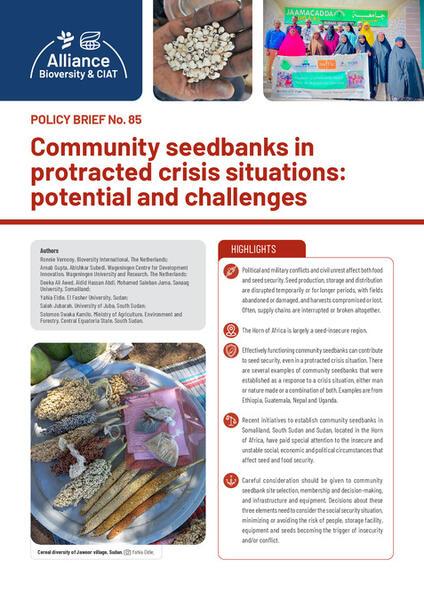
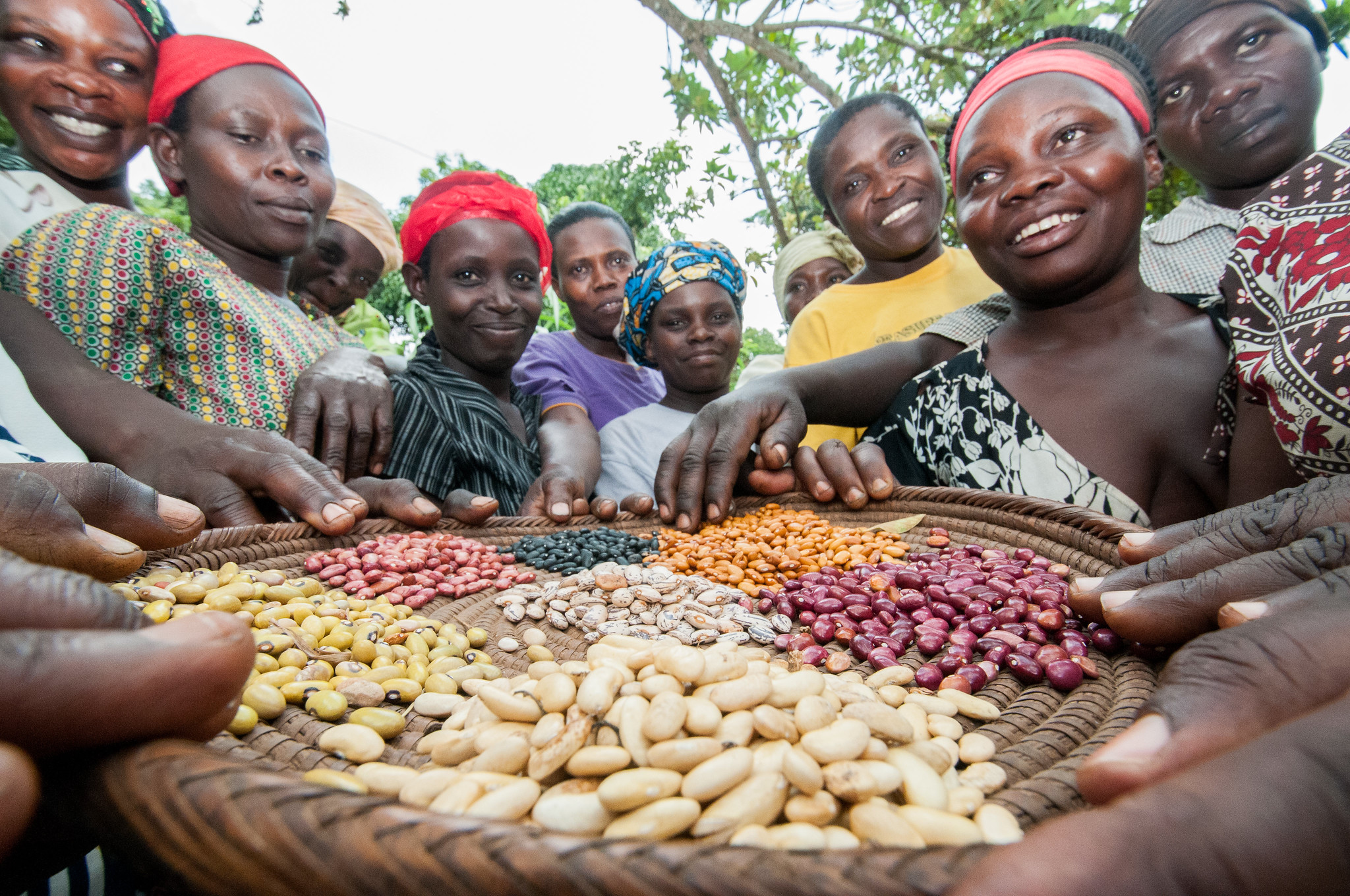
- Community seed banks help farmers access locally adapted seeds, protect crop diversity, and recover faster after climate or conflict shocks. In fragile settings, they also create spaces for cooperation, collective resource management and local problem-solving, especially when they are designed inclusively and conflict-sensitively.
- Climate-Smart Villages are another model that the Alliance has developed in and for fragile and conflict-affected settings. They combine climate-smart agriculture, local adaptation planning, conflict-sensitive targeting, inclusive governance and peace co-benefits. In practice, this means supporting communities to identify climate risks, test locally appropriate solutions, manage land and water resources more fairly, and ensure that women, youth, displaced people and marginalized groups benefit from innovation.
- Other effective approaches include local procurement for school feeding and humanitarian assistance, support to territorial markets, farmer-led seed systems, digital early warning systems, and integrated packages that combine food assistance, nutrition, water, livelihoods and social protection.
Food systems transformation is more important now than ever before
1. Should we be changing what we grow?
Yes, shifting toward diversified, climate-resilient systems is critical. This means growing more agrobiodiversity: millets, pulses, fruits, vegetables, nuts, seeds, roots and tubers, indigenous varieties, and other neglected and underutilized species adapted to local production systems. It also means adopting agroecological and agroforestry practices that enhance soil health, reduce input dependence, and improve dietary diversity.
Livestock, particularly cattle systems, should shift toward more diversified and integrated production models, including improved forages, grass-legume mixtures, silvopastoral systems, and stronger crop-livestock integration. These approaches can increase productivity and feed efficiency while reducing dependence on external inputs such as synthetic fertilizers and purchased feed. At the same time, they lower environmental impacts, spread risk, and strengthen resilience to climate and market shocks.
2. Is it true that going local (shifting towards country or community self-sufficiency) would increase countries’ food security?
Going local is part of the answer, but it is not the whole answer. If “local” means full self-sufficiency or closing borders, it can actually increase risk. No country or community can protect itself from all shocks alone. Drought, conflict, crop failure or market disruption can make complete self-sufficiency dangerous.
But if “local” means strengthening local and regional capacity, then yes, it is essential. Countries and communities need stronger local production, local procurement, territorial markets, community storage, local processing, regional trade and diversified import sources. This reduces exposure to distant supply shocks while keeping more value in local economies.
The goal should be diversified interdependence: enough trade to buffer local shocks, but enough local and regional capacity to avoid overdependence on distant supply chains, fossil fuel intensive inputs, and a small number of dominant corporate actors.
3. If we stopped trying to preserve the current food system and instead designed for 2050, what would we build differently starting today?
We would build around resilience, nutrition, equity, ecological limits and peace. We would design food systems to operate in a world of more frequent shocks. Rather than relying on single supply chains, we would invest in local storage and processing, and employ early warning systems to trigger early action.
We would prioritize nutrition over yield alone, invest in diverse and climate-resilient crops, localize value chains, and digitize supply systems for transparency. Policies would reward sustainability, minimize exploitation of natural resources, reduce waste, and support farmers as stewards of ecosystems, not just producers. We would ensure that women, youth, displaced people and marginalized communities are part of decision-making.
A 2050-ready food system would be one that can feed people, protect nature, sustain livelihoods and reduce the risks that turn climate and food shocks into conflict.
Our Experts
The answers in this article collect the perspectives of these scientists working at the intersection of food security, health, and resilience. They were lightly edited for length and clarity, and do not necessarily reflect the views of all the Alliance or all the contributors.

Jonathan Mockshell
Scientist and Project Leader
Grazia Pacillo
Senior Scientist and Co-lead of CGIAR FOCUS Climate Security
Wuletawu Abera
Senior Scientist, Country Representative for Ghana
Stefan Burkart
Senior Scientist
Jai Rana
Senior Scientist and Country Representative for India
Brice Even
Research Team leader