Blog ‘We walk farther each day’: The human cost of pastoralist drought and resource strain

If drought was forecast, why did the crisis still unfold? Tracking 2025-2026 conditions across pastoral borderlands, digital early warning systems reveal how climate shocks outpaced response.
For pastoralists in southern Ethiopia, the difference between resilience and crisis can be measured in centimetres of water and fractions of a ton of grass. A single year has turned familiar grazing lands into a patchwork of dust and desperation, where every remaining waterhole tells a story of loss. Between January 2025 and January 2026, both water and pasture slipped away with unsettling speed.
Across Ethiopia’s lowlands, particularly in the Borana zone and parts of the Somali region, drought tightened its grip not through spectacle, but through accumulation. A below-normal Meher rainy season failed to recharge surface water. Pastures that typically recover after seasonal rains did not. By the start of 2026, the land had crossed threshold pastoralists know well: when wells dry faster than expected and grass no longer returns, mobility becomes desperation rather than strategy.
This drought has also been shaped by broader climate drivers. Seasonal rainfall variability linked to La Niña conditions and shifts in the Indian Ocean Dipole has reinforced below-normal rainfall patterns across southern Ethiopia and northern Kenya, deepening drought risk in already climate-fragile pastoral systems.
What distinguishes this drought from many before it is how clearly its progression can now be traced.
A year that rewrote the map
The Alliance of Bioversity International and CIAT worked jointly with Ethiopia’s Ministry of Agriculture and the Ethiopian Institute of Agricultural Research to develop one of the country’s most detailed digital rangeland early warning systems to track drought as it unfolds. The platform combines satellite imagery, field surveys, and ground verification to monitor the functionality of water points and the amount of pasture available for grazing, updating conditions in near real time.
The system classifies waterpoints using a color-coded early warning threshold: GREEN (high capacity), YELLOW (moderate decline), GOLD (critical stress), and GREY (completely dry). This allows decision-makers to quickly interpret risk levels and prioritize response actions.
When scientists used the system to compare conditions in January 2025 and January 2026 across Ethiopia’s lowlands, the shift was stark: in Borana, the share of completely dry water points doubled within a year, rising from just over a third to nearly three-quarters, while pasture conditions that had largely supported medium productivity slipped into low or very low biomass. In practical terms, grass that once yielded up to two tons per hectare fell below half a ton across most of the region which is a collapse that helps explain why drought here is no longer discussed in abstractions but recorded in scarce water and thinned-out grazing lands.
The deterioration was particularly severe in drought hotspot districts such as Moyale, Dillo, and parts of Yabelo, where grazing reserves that once buffered dry seasons are now exhausted far earlier than expected.
By January 2026, nearly three-quarters of monitored waterpoints in Borana (74%) had fallen into GREY status, completely dry, up from just 37% a year earlier. Waterpoints that had previously held more than 80% of their capacity, classified as GREEN, had disappeared entirely; in January 2025, nearly one in five waterpoints still fell into this category. A modest rise in GOLD waterpoints (from 7% - 15%) reflected sites deteriorating from YELLOW to GOLD before drying completely, underscoring the accelerating stress on the region’s water resources.
The Somali Region experienced an even more dramatic collapse. By January 2026, every monitored waterpoint was GREY, holding no water at all. Wells and ponds that had long sustained communities through dry spells were exhausted, leaving pastoralists with only the barest traces of moisture and forcing survival to be counted in fractions of a ton of grass.
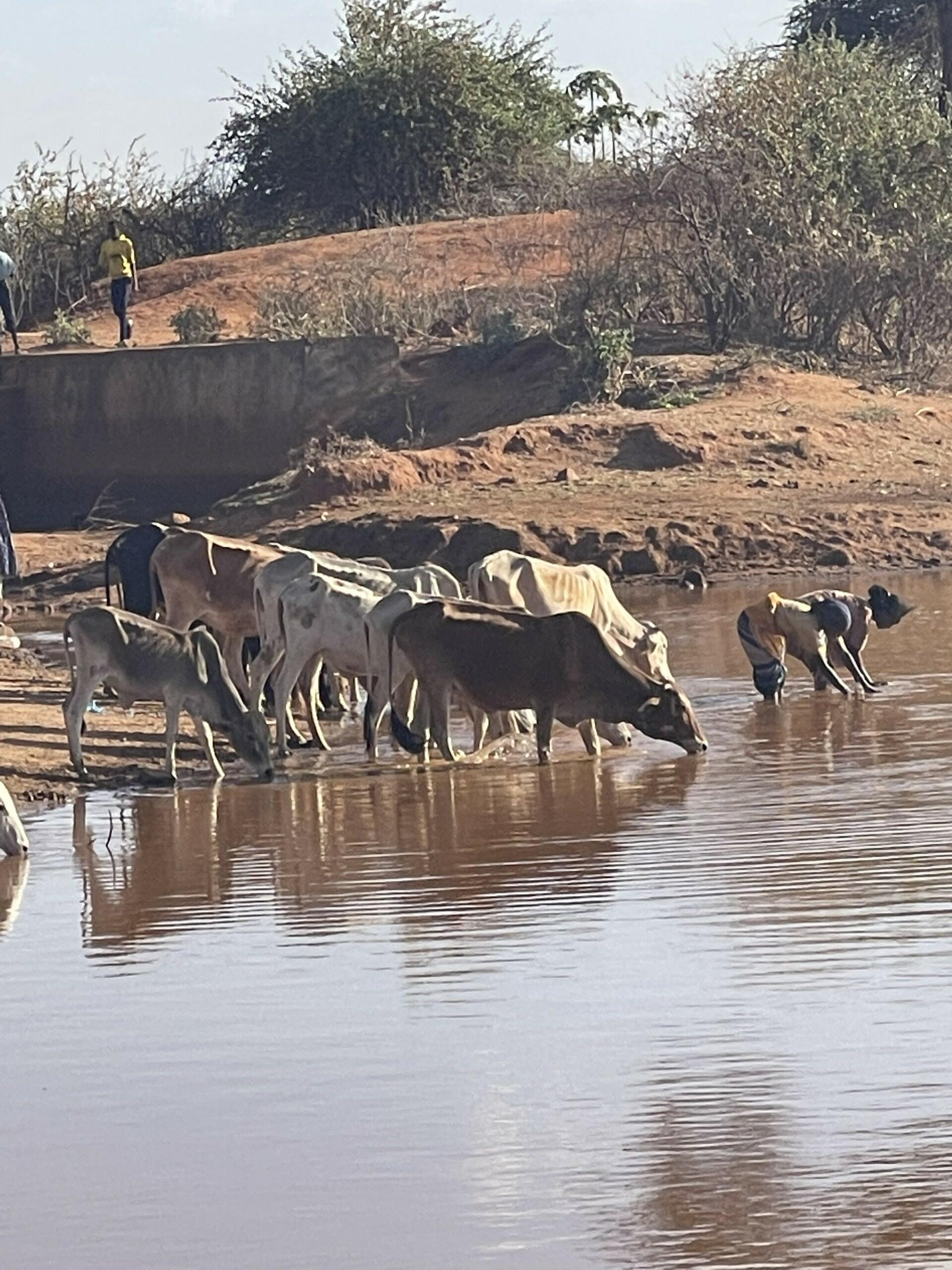
Dry-season stress: limited water forces humans and animals to compete for the same source.
Dry lands, strained herds: How early alerts foretold the collapse
Pasture biomass data from the rangeland monitoring system reveal a stark deterioration across Ethiopia’s lowlands. In January 2025, much of Borana maintained medium pasture conditions, with 1-2 tons of biomass per hectare, which is enough to sustain herds through seasonal grazing cycles. By January 2026, these areas had shifted to low (0.5-1 t/ha) or very low (<0.5 t/ha) conditions. Across the lowlands, over 85% of regions now register very low pasture, up from around 70% the previous year.
In practical terms, most of the landscape now produces less than half a ton of forage per hectare. Livestock must travel farther to find feed, expending precious energy while eating less. The consequences are immediate: body conditions deteriorate, milk production drops, reproductive performance falters, and animals lose market value, pushing households toward distress sales that erode long-term wealth. For pastoral families, these numbers translate directly into the daily struggle to keep herds alive, maintain nutrition, and secure livelihoods in a landscape where even the smallest patch of pasture can determine survival.
As livestock weakens, the effects ripple human health. Reduced milk availability is often the primary source of nutrition for children in pastoral households, raising risks of malnutrition.
Families increasingly rely on unsafe water sources, increasing exposure to waterborne diseases, while women and girls often travel longer distances to fetch water, heightening protection risks and reducing time for school and household stability.
The drought did not arrive unannounced. Seasonal outlooks issued by the Greater Horn of Africa Climate Outlook Forum in January 2025 warned of a high likelihood of below-normal rainfall across southern and southeastern Ethiopia. Those forecasts covered precisely the pastoral zones now showing the most severe deterioration. The failure of subsequent Belg and Meher rains aligned closely with those early warnings. What the digital early warning system adds is precision: where conditions are deteriorating fastest, which thresholds have already been crossed, and how rapidly waterpoints and pastures are collapsing. By January 2026, updated climate outlooks pointed to continued rainfall variability, offering little reassurance for areas already depleted. Even where short-term improvements may occur, localized drought risk remains high.
What is striking is not only the accuracy of early warnings, but the speed of collapse. In a single year, conditions shifted from manageable stress to widespread system failure, therefore, illustrating that in climate-exposed pastoral regions, the window for effective action is shrinking.
Ripples through pastoral life
As waterpoints fail and pastures thin, the effects cascade through pastoral life. Households concentrate around the few remaining water sources, intensifying pressure on already degraded land. Grazing routes extend. Livestock mobility increases, often beyond sustainable limits.
Many households are already adopting extreme coping strategies: splitting herds and sending animals farther away, migrating across woreda boundaries, and selling productive female animals: an irreversible decision that undermines future herd recovery.
Scarcity sharpens competition. In regions where water and pasture have long been flashpoints for conflict, the convergence of herds around shrinking resources raises the risk of disputes between communities. Food security deteriorates alongside livestock health. Milk, central to pastoral diets and income, becomes scarce. Household nutrition suffers, with women and children bearing the brunt of declining access to animal-source foods. What emerges is a compound crisis: environmental stress triggering economic vulnerability, social tension, and long-term livelihood erosion.
The pressure is not contained within Ethiopia alone. Pastoral mobility increasingly extends toward northern Kenya, and Somali where cross-border resource competition and livestock movement can amplify regional tensions. In this way, drought becomes not only a humanitarian emergency but a shared cross-border security and stability concern.
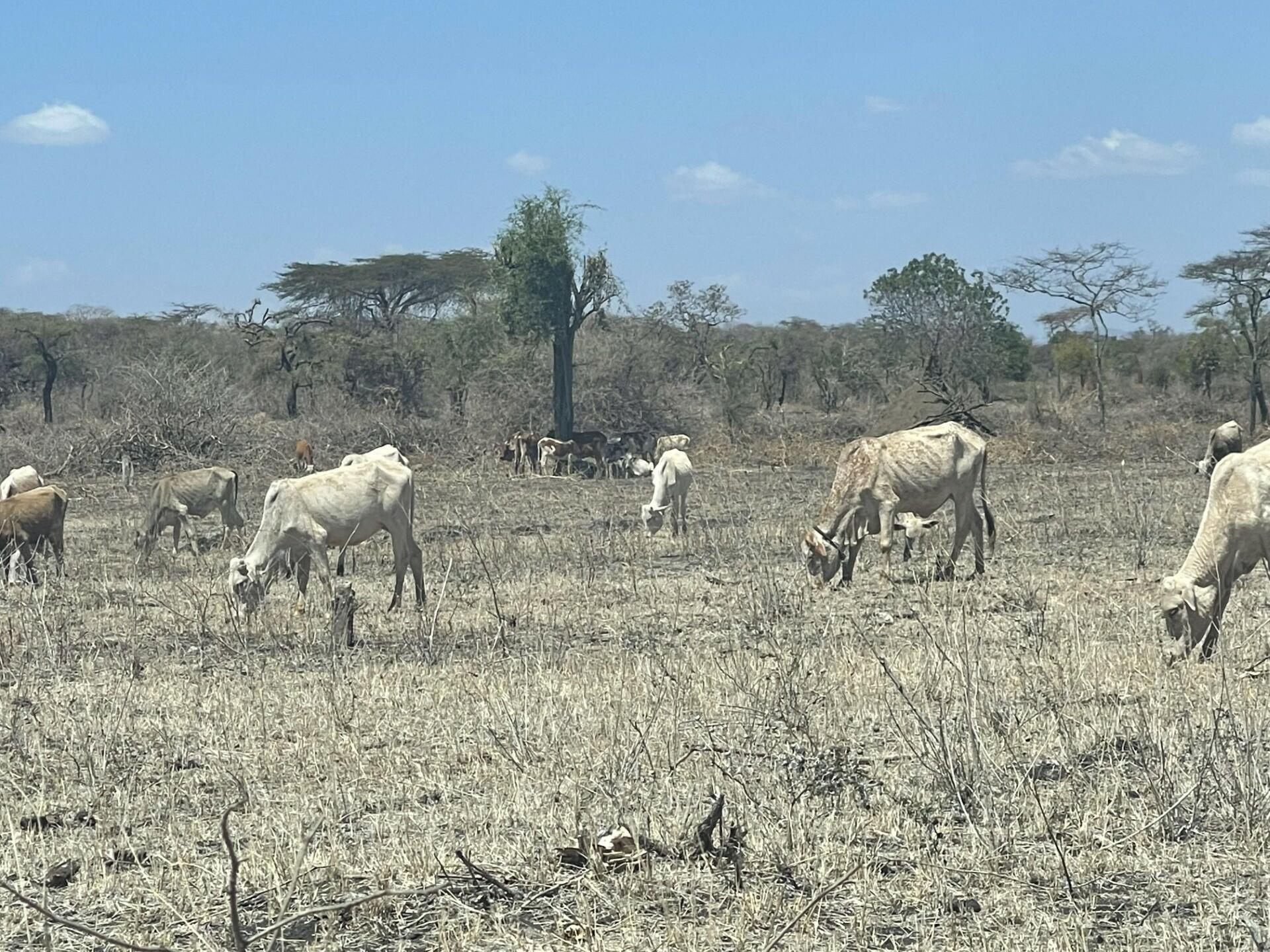
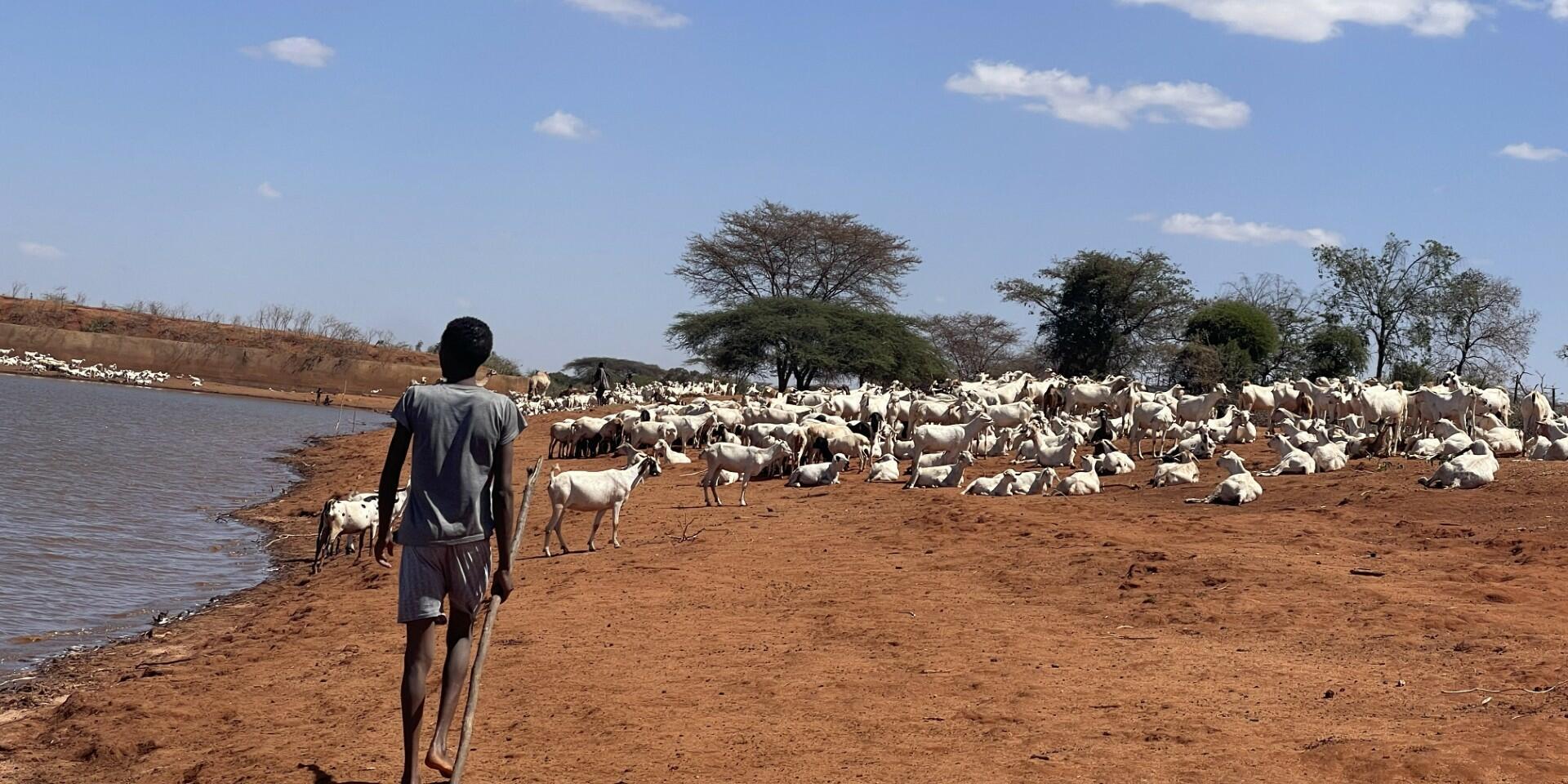
Dry season in the rangelands is a clear signal of climate pressure on pastoral systems.
Data into action
The past year offers a clear lesson. Early warning systems can detect deterioration with remarkable clarity, but data alone do not prevent crisis.
The rangeland monitoring system flagged worsening conditions well before waterpoints collapsed entirely. It quantified pasture decline. It aligned closely with climate forecasts. The remaining challenge is translating those signals into timely action.
Emergency interventions are urgently needed in the hardest-hit areas: water trucking, rehabilitation of critical waterpoints, targeted fodder provision, and food assistance for vulnerable households. These measures can slow livestock losses and stabilize livelihoods in the short term. But the data also point toward longer-term priorities. Integrating early warning outputs into district and regional planning could enable anticipatory action, rather than reaction. Training local authorities and pastoral representatives to interpret monitoring data would strengthen decision-making on the ground. Threshold-based triggers, such as the proportion of dry waterpoints or pasture biomass falling below critical levels, could prompt intervention before collapse becomes inevitable.
To close the gap between data and action, institutions must clearly define responsibility and response mechanisms. Regional governments, the National Disaster Risk Management Commission (NDRMC), the Ministry of Agriculture, humanitarian partners, and donors must institutionalize early warning thresholds as formal triggers for anticipatory financing and rapid response. Without this, even the most advanced monitoring system risks becoming a record of crisis rather than a tool for prevention.
The contrast between January 2025 and January 2026 shows how quickly resilience can erode in climate-exposed systems. In Ethiopia’s lowlands, a single year of failed rains, compounded by delayed response, was enough to push vast areas into crisis. Technology now exists to see these changes as they unfold. The evidence is clear. What remains uncertain is whether action will arrive at the speed of data demand.
Because in Borana and Somali regions today, drought is no longer only measured in rainfall totals or satellite maps. It is measured in children drinking tea without milk, in herds collapsing before reaching markets, and in footsteps that grow longer each day as water disappears from the land.
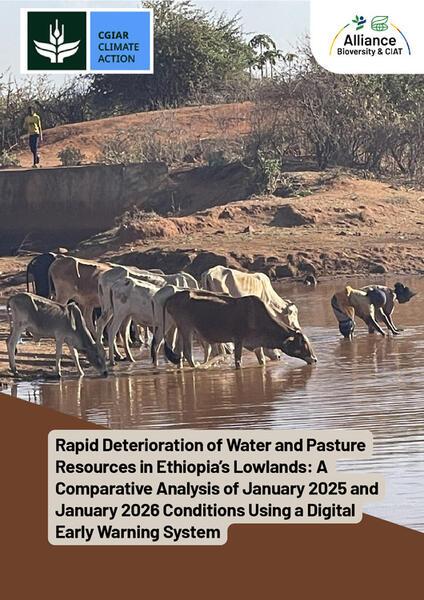
Cover Image: Livestock watering concentration at a critical dry-season water source, reflecting water scarcity and high demand.
Keep exploring