Blog From evidence to action: Opening doors for women farmers

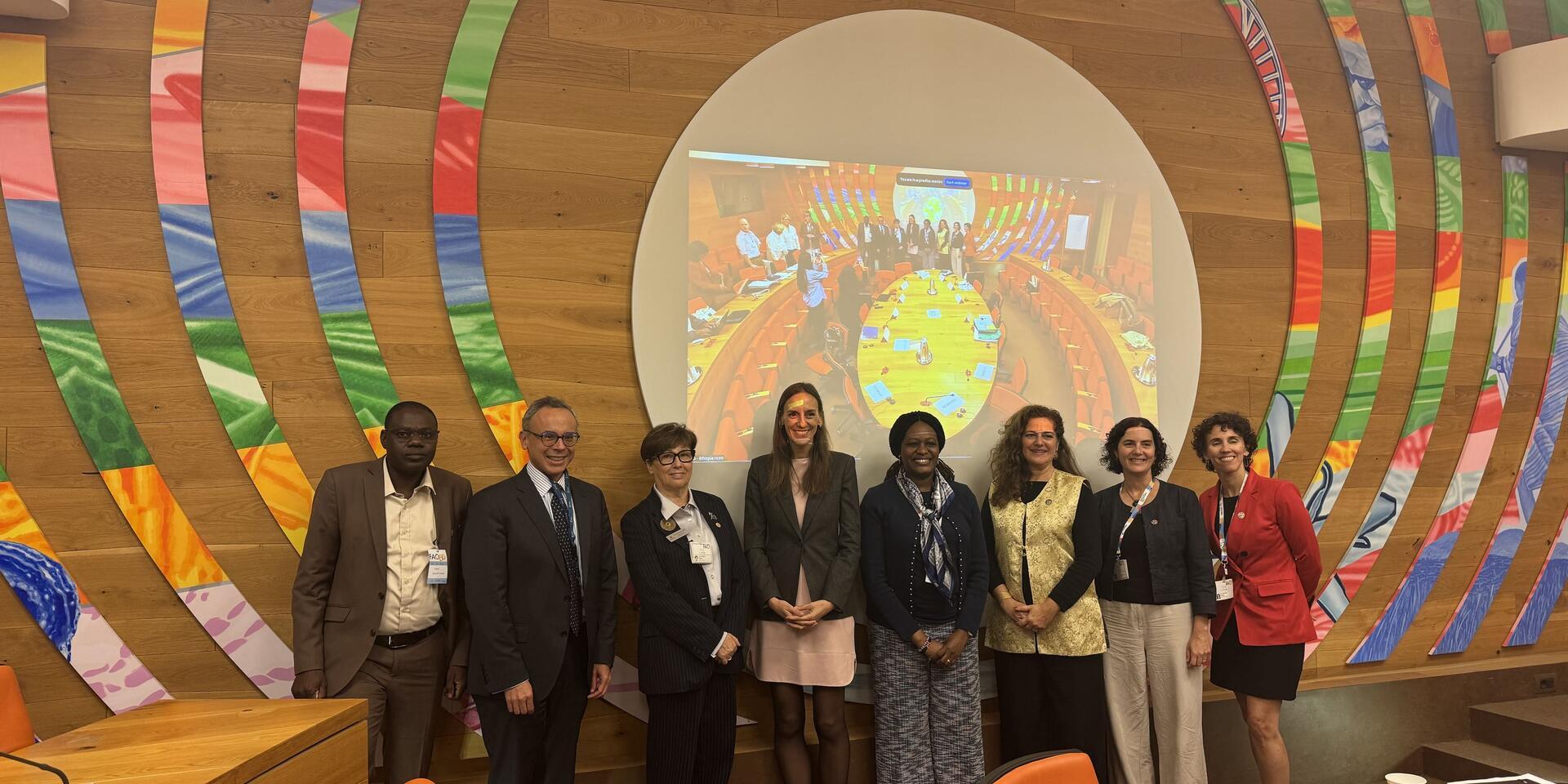

Two events at FAO on the same day, one question underneath both. We know a lot about the barriers women face in agrifood systems. So why does change towards gender equality still move so slowly; and how can we accelerate it?
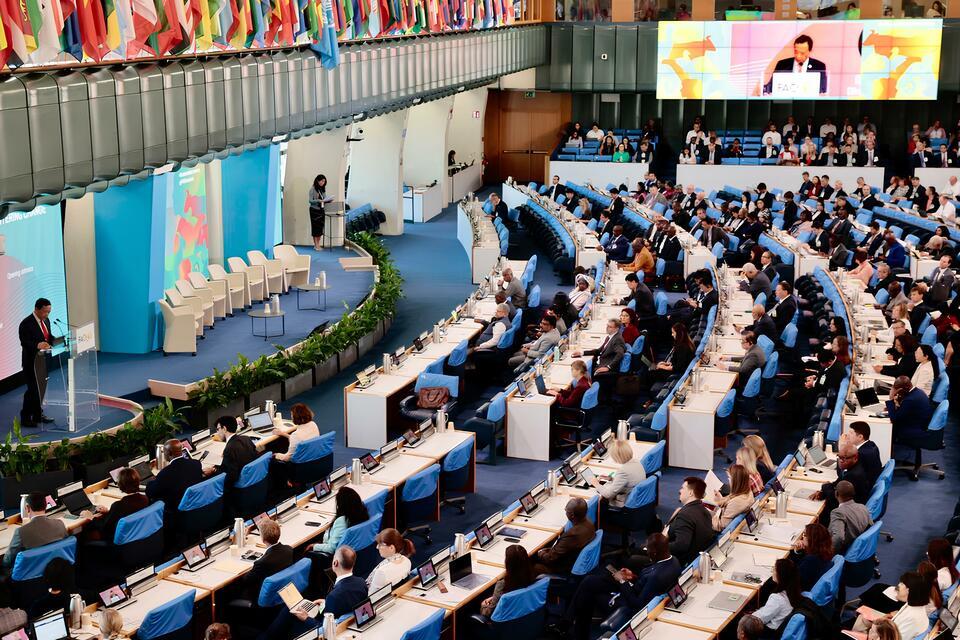
2026 is the International Year of the Woman Farmer, and the conversations at two side-events at the 54th plenary session of the UN Committee on World Food Security (CFS54) showed that questions about gender equality in agrifood systems are shifting from describing the problem to building the answers. The CGIAR GENDER Accelerator and the Alliance of Bioversity International and CIAT took part in both events.
Looking at 2050, with some good news
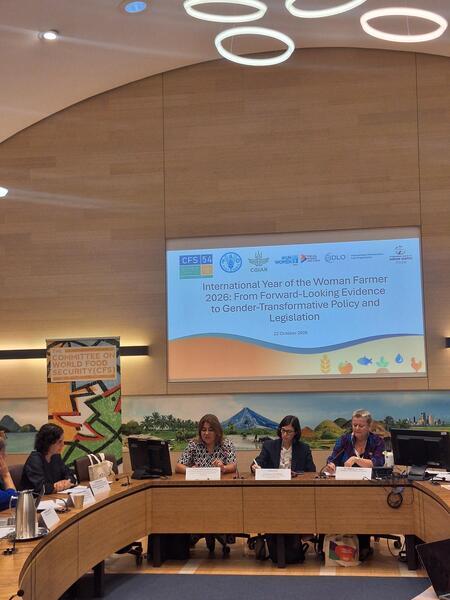
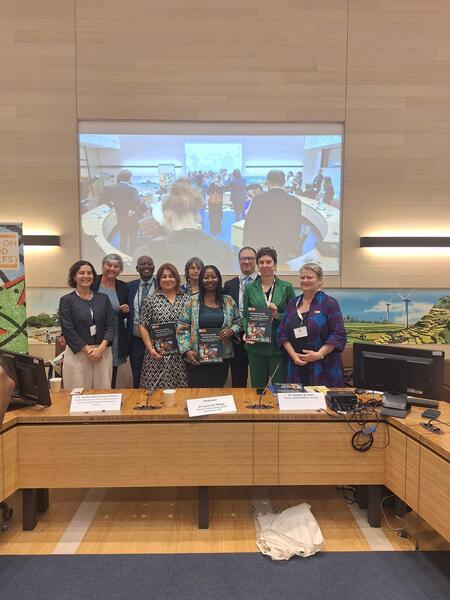
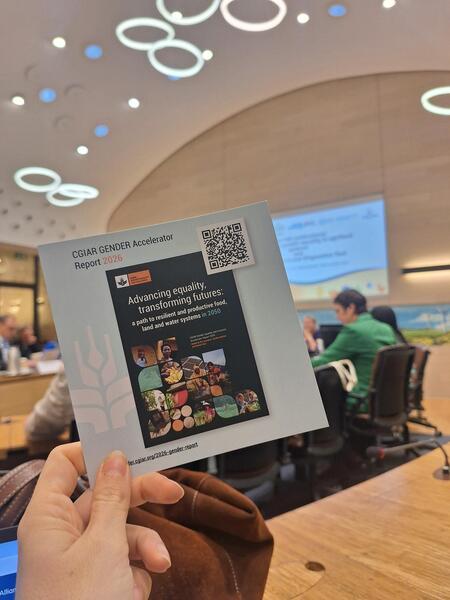
The first side-event, on “International year of the woman farmer: from forward looking evidence to gender-transformative policy and legislation”, brought together parliamentarians, researchers, development partnersand women farmers. It was also the launch of a new report, “Advancing equality, transforming futures: a path to resilient and productive food, land and water systems in 2050”, by the CGIAR GENDER Accelerator.
Nicoline de Haan, Director of the GENDER Accelerator, opened with a simple question: what kind of agrifood systems are we building for the future? She underscored that CGIAR has provided years of analysis and evidence, and the time has come to focus on solutions.
Els Lecoutere, one of the co-editors of the report, walked the room through projections to 2050. Three trends could push towards greater gender equality: 1) more women are projected to work in agrifood systems by 2050; 2) the gender pay gap is expected to shrink; 3) more women and young people will move into off farm agrifood system jobs. The catch is that none of this happens on its own. Digital gender gaps could widen, and progress towards safe, decent and fairly paid work may remain slow and uneven. Realising the potential to achieve equality depends on proven solutions, dedicated funding and enabling policies.
The report points to three ways forward:
- Build on what we know about trends, opportunities and risks. That means fostering decent jobs for women, digital tools women can trust, shape and use, and a fair chance for everyone to respond to climate change and conflict.
- Tackle constraints together. No single fix will do, so regulatory reform, norm change and technologies tailored to real needs have to be designed hand-in-hand and with the people they serve.
- Go to the root. Power imbalances sit underpin inequality. Lifting these imbalances in needed to enable women, youth and socially excluded groups to contribute, lead and thrive.
From a report to a toolbox
Marlène Elias, Gender and Social Inclusion Lead at the Alliance, took the "no single solution" message and made it practical. She shared several tools from the CGIAR family that can be used by parliamentarians to gather and assess evidence that can support priority setting and monitoring of investments towards gender equality in agrifood systems.
The first is Climate-agriculture-gender inequality hotspot mapping, a methodology used to gather spatial data to show where high levels of women’s participation in agrifood systems overlap with acute gender inequalities and climate hazards. By identifying where climate hazards converge with large concentrations of women participating in agrifood systems and significant structural gender inequalities, we can identify where climate change impacts are likely to hit women the hardest, and where investment could matter most. For an investor or a ministry, that is the difference between guessing and knowing where to start.
The second is the Women’s Empowerment Metric for National Statistical Systems (WEMNS), a streamlined tool for measuring empowerment through nationally representative and multi-topic surveys The metric will facilitate data collection on women’s empowerment and allow researchers and policymakers to more easily monitor and compare progress towards SDG5: ‘Achieving gender equality and empowering all women and girls’.
At the center of gender equality in agrifood systems: the land question
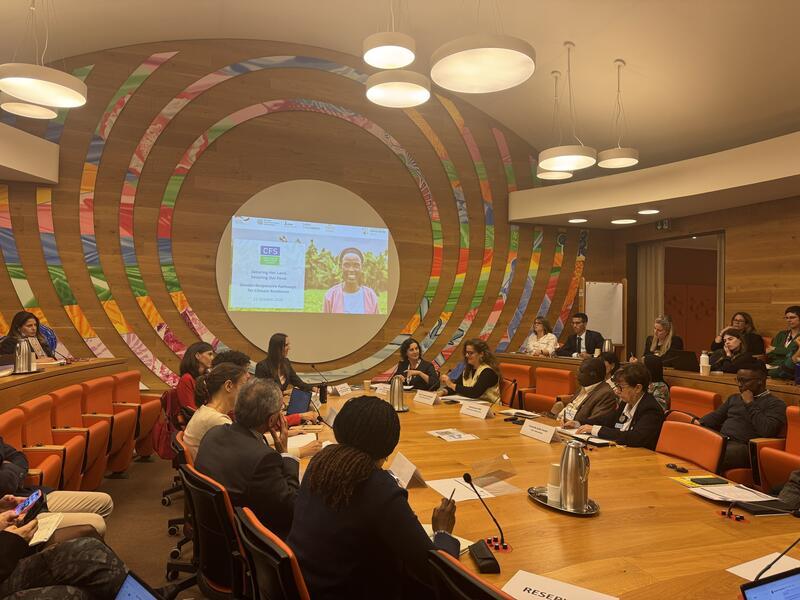
The second event, Securing her land, securing our food: gender-responsive pathways for climate resilience, brought new evidence from IFAD' and its Gender Transformative Mechanism in Climate Adaptation, together with partners including the Gates Foundation, the German Federal Ministry for Economic Cooperation and Development (BMZ) and Zonta International. The focus was on the central role of women’s land and resources rights for climate resilience.
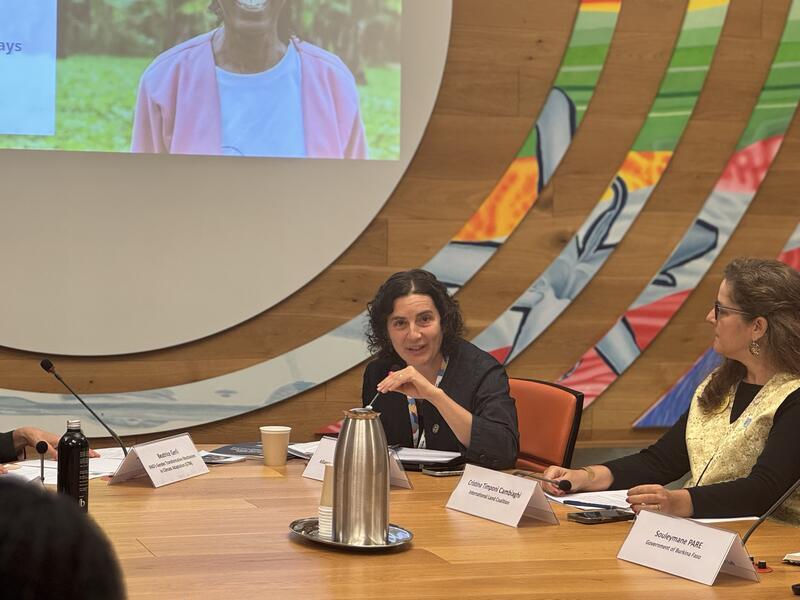
As a panelist at the event, Marlène Elias explained that there is a persistent gap between women’s land rights in policy and in practice, as norms critically shape women’s capacities to claim, exercise, and benefit from rights to which they are entitled before the law.
She explained this gap with a simple case: a woman may not be able to claim inheritance rights to land even through those are recognized in the law because family pressures and social norms stand in the way. A good law is necessary, and it is not enough.
Her message was clear: legal and normative change have to move together. Laws need to be in place. Women also need support to build their individual and collective awareness and knowledge of the law, and confidence and capacities to claim their rights. Local land authorities, governance institutions and customary justice systems, where local decisions are made in practice, need to be part of the shift to normalize fair practices inside these institutions.
Speakers at the event also made an investment case: when women have secure access to land, resources and decisions, climate adaptation investments perform better and carry less risk.
What this means for agrifood system research and policies
As the two side-events showed, evidence earns its place when it changes a decision, whether that is a ministry choosing where to invest, a parliament drafting a land law, or a local council changing how it handles a woman’s claim.
Three key messages stand out from the evidence and perspectives shared to inform future action:
-
Combine measures and approaches. Legal reform, norms-change interventions, support to women’s individual and collective agency, and access to resources each address different interconnected barriers to gender equality; and must be addressed together for transformative, lasting change.
-
Work on norms as seriously as on laws. Rights on paper only count when people can claim, exercise and benefit from them.
-
Ensure that women in all their diversity are in the room and able to influence policies that affect their lives; and measure whether that is really happening.
The International Year of the Woman Farmer will come to a close, but the issues raised this week will remain central to our work. Evidence on what works to strengthen gender equality is available. Turning it into policy, investment and change in communities will depend on governments, investors, and local partners and civil society, and their coordinated action. CGIAR and the Alliance of Bioversity International and CIAT continue to support and advance this effort.
Further reading