Blog In Djimassar, Fatou Diatta shows that the land can still inspire young people

In Djimassar, in Senegal’s Sédhiou region, Fatou Diatta’s story begins in a micro-garden, between rows of carrots and peppers watered by hand. At twenty-eight, a mother of two, she belongs to a generation of rural youth searching for their place between tradition and modernity. Agriculture, long seen as exhausting and unrewarding, has become for her a space of empowerment and leadership. Through the AVENIR project, implemented by MEDA with scientific support from the Alliance of Bioversity International and CIAT and funded by Global Affairs Canada, Fatou discovered new farming practices, strengthened her skills, and transformed her plot into a local model. Her journey tells more than an individual success story. It reflects a changing perspective on youth, land, and the future of food systems in Senegal.
Staying and believing in the land when everything pushes you to leave
In Djimassar, many young people look toward the city. Fields evoke hard labor, uncertainty, and irregular income. For young women, the barriers are even greater. Family responsibilities add to agricultural workloads, and economic opportunities seem limited. Fatou Diatta knows this reality well. She lives it every day, balancing childcare with her micro-garden.
Yet she did not give up. She chose to stay and redefine her relationship with the land. “I was selected as a young leader by the AVENIR project,” she says, with a mix of pride and modesty. This recognition marked a turning point. She felt acknowledged, heard, and trusted with responsibility. The status changed how she saw herself and how her village perceived her.
Before joining the project, her garden produced inconsistently. Yields varied depending on rainfall, soil quality, and pest pressure. Techniques were passed down through generations, often without adapting to new climate challenges. Fatou observed, tested, and adjusted. She tried to understand why some crops performed better than others.
When the training sessions began, she fully committed. She did not want to be a passive participant. She asked questions, took notes, and practiced what she learned. “Seeing the results, all the young people in my village are now interested in being trained by the project,” she explains. Her engagement sparked collective momentum. Other youth saw the changes in her field and realized that agriculture could be reimagined.
Fatou embodies a new image of rural youth: informed, innovative, and experimental. She shows that staying in the village can be a strategic choice rooted in meaning and dignity. Her journey helps restore agriculture’s central place in the local imagination.
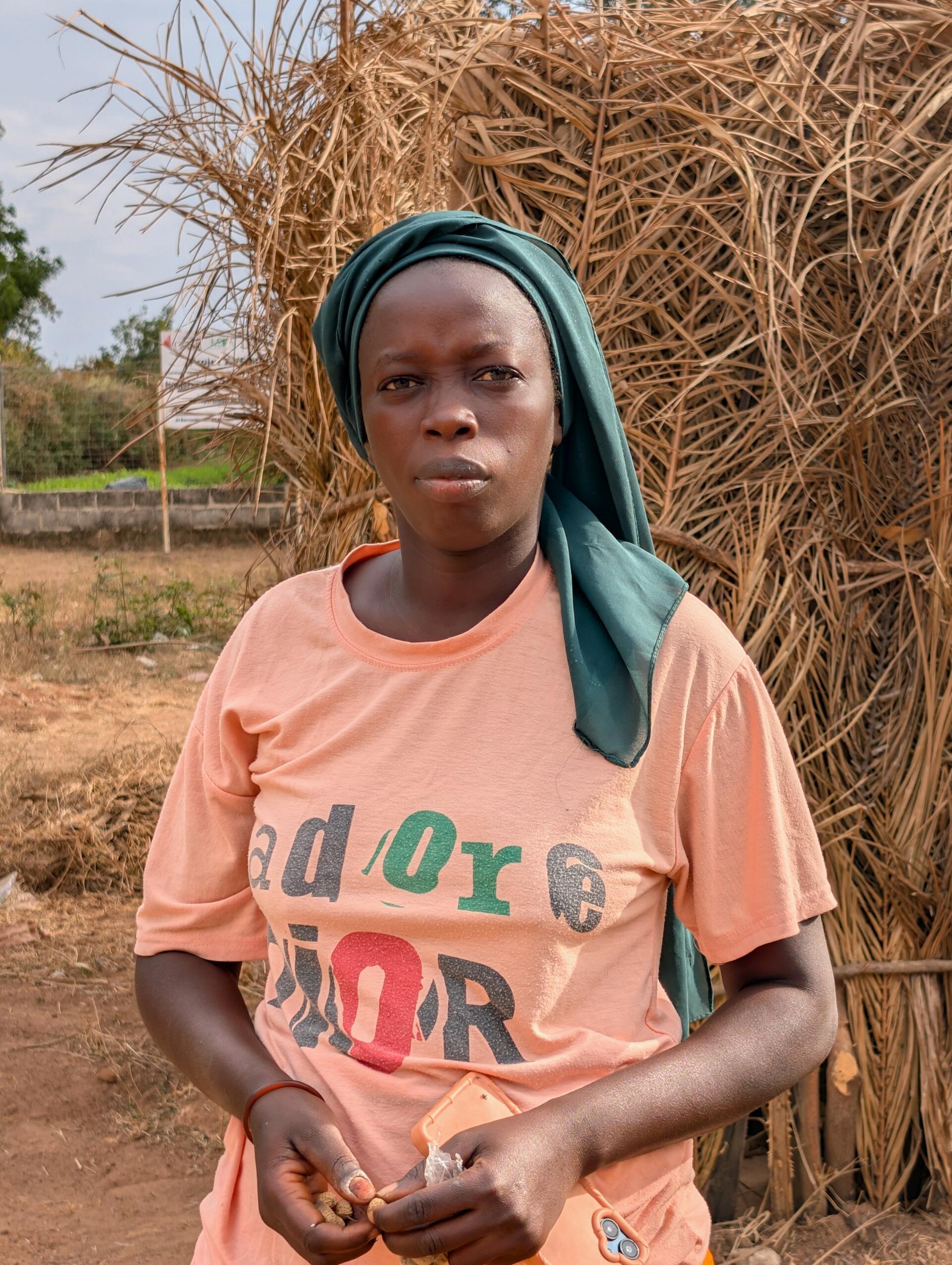
Photo credit: Fatimata Kone
Restoring the soil to rebuild the future with AVENIR
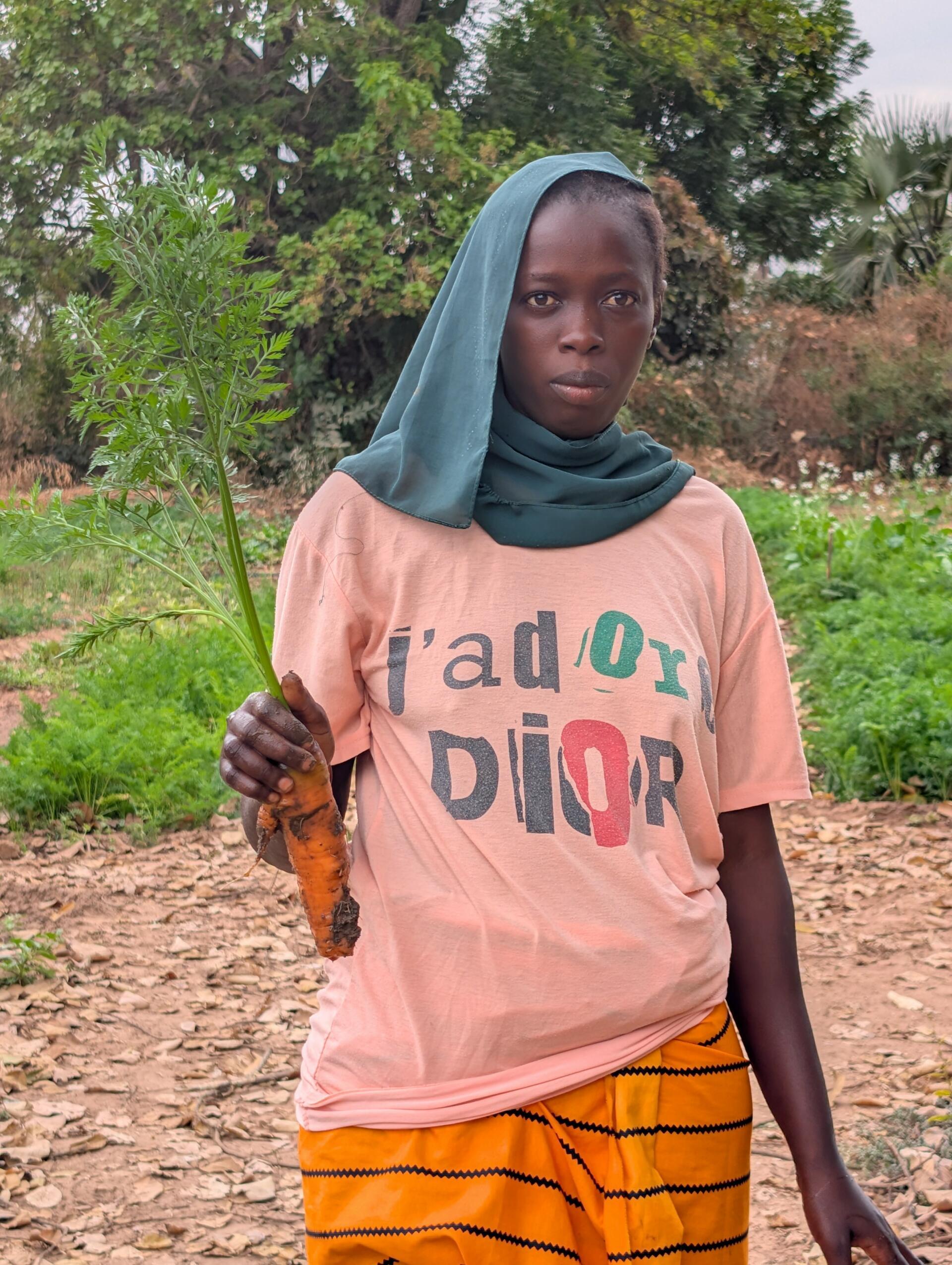
Photo credit: Fatimata Kone
The real transformation in Fatou’s life began with the soil. In Djimassar, as in many rural areas, land had lost much of its fertility. Organic matter was declining, yields were stagnating, and dependence on chemical inputs was weakening farms. The AVENIR project addressed the problem at its root by promoting integrated soil fertility management.
With scientific support from the Alliance of Bioversity International and CIAT, training focused on composting, mulching, crop rotation, and the use of biofertilizers and biopesticides. Fatou discovered an approach to agriculture centered on soil health and sustainability. “I learned composting, soil fertilization, mulching, and how to make plant-based pesticides,” she explains.
These techniques deeply reshaped her practices. She realized that fertility is not only about how much fertilizer is applied, but about the soil’s ability to retain water, nourish plants, and remain alive. Mulching protects against excessive evaporation. Compost improves structure and organic richness. Biopesticides reduce pest damage while preserving the environment.
“The project taught us to farm organically,” Fatou insists. This choice improved the quality of her produce and reassured customers. Fencing around the plots and better irrigation systems also made daily work easier, saving time and reducing losses.
Season after season, she observed tangible results. Crops grew stronger. Yields increased. Harvests became more stable. Fatou understood that soil health creates a virtuous chain linking productivity, income, nutrition, and resilience. She became an informal ambassador for these practices in her village, explaining, demonstrating, and sharing her experience. Knowledge spread, along with a new way of thinking about farming.
The giant carrot, a symbol of rediscovered know-how
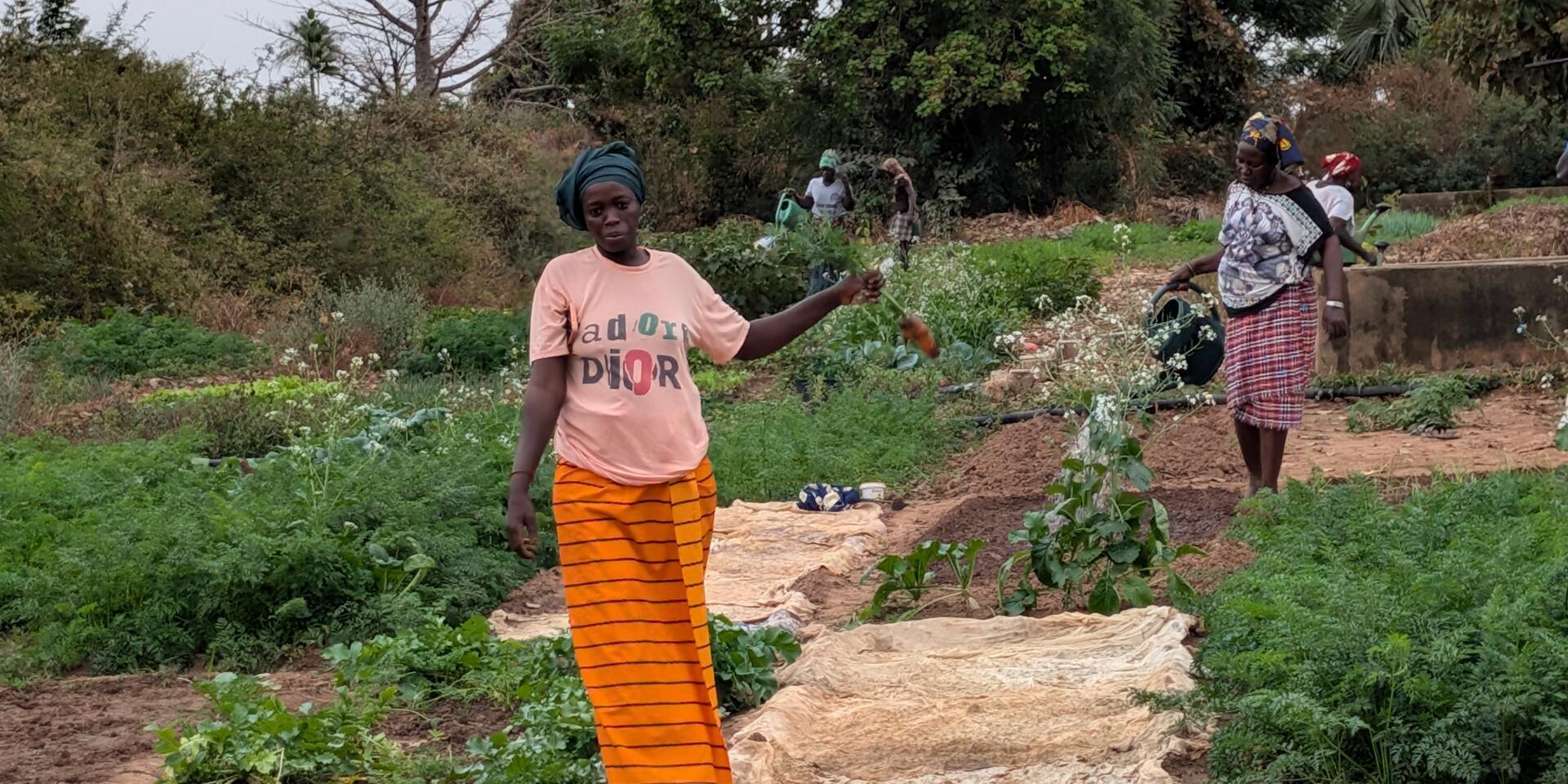
In her field, Fatou bends down and gently pulls a carrot from the soil. The root emerges slowly, thick and glossy. She holds it up with a wide smile. “I’ve noticed that my carrots are doing much better,” she says, pointing to the impressive size.
That carrot has become a symbol. It represents accumulated effort, completed trainings, and carefully repeated gestures. Thanks to composting and mulching, the soil is richer and retains moisture. Roots develop fully. Vegetables grow larger and better.
Fatou explains that her carrots have become so big she sometimes adapts her sales strategy. Instead of selling by weight, she sells them individually. Customers prefer buying one at a time because of their size. This seemingly small detail reflects both technical mastery and market awareness.
Selling her first harvests boosted her confidence. “We sold our first harvest, and now we’re on the second,” she says with satisfaction. Income supports household food needs, school expenses, and savings. The garden has become a source of economic stability.
Beyond income, Fatou has noticed another change: her family’s diet has improved. Vegetables grown at home enrich daily meals. She now links production directly to nutrition. Her farm is part of a broader vision of family well-being.
Each carrot pulled from the ground tells a story of perseverance. It proves that transforming agricultural practices can lead to visible, rewarding outcomes. It strengthens Fatou’s credibility among other young people in the village.
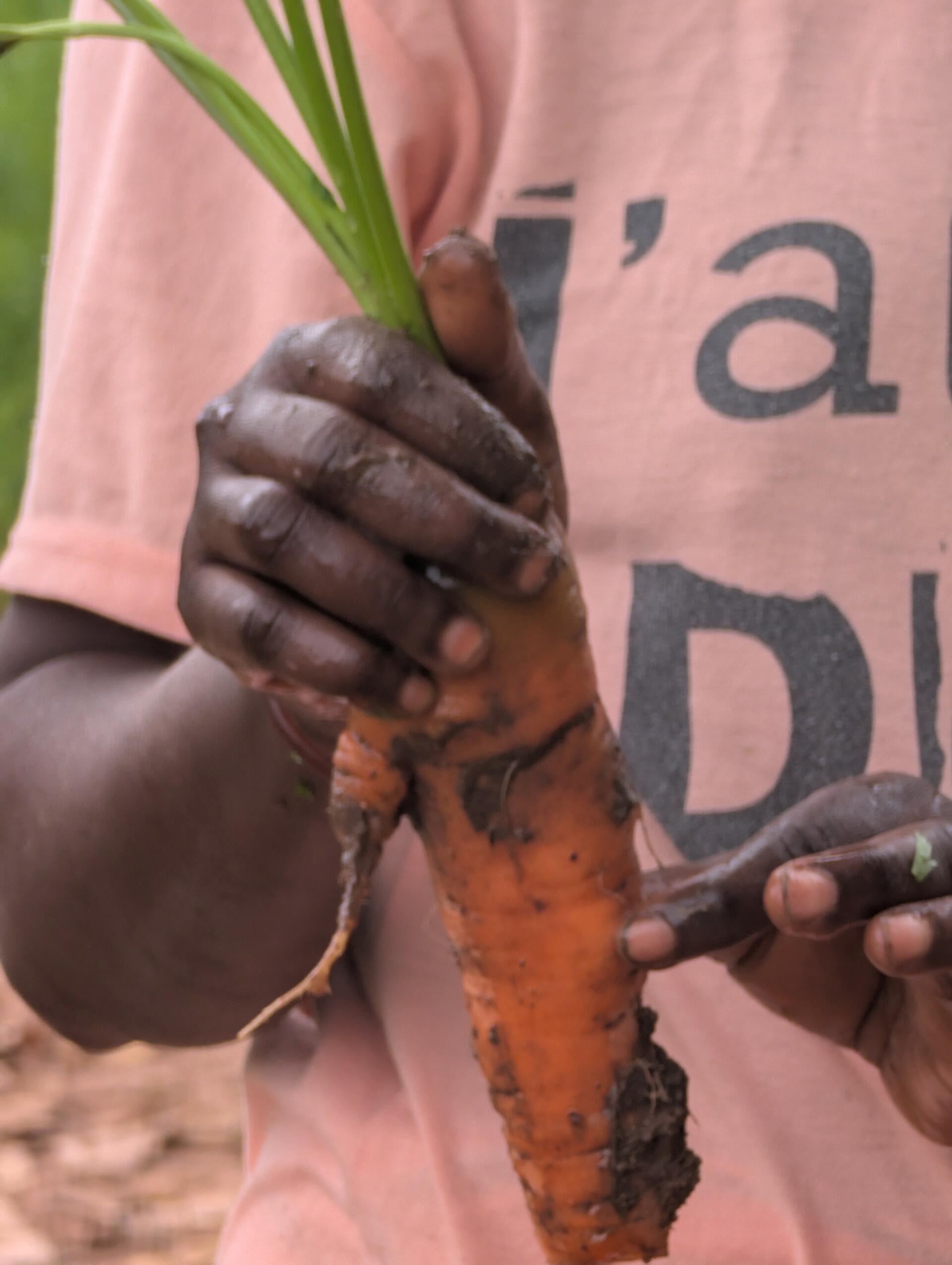
Photo credit: Fatimata Kone
A leader paving the way for rural youth
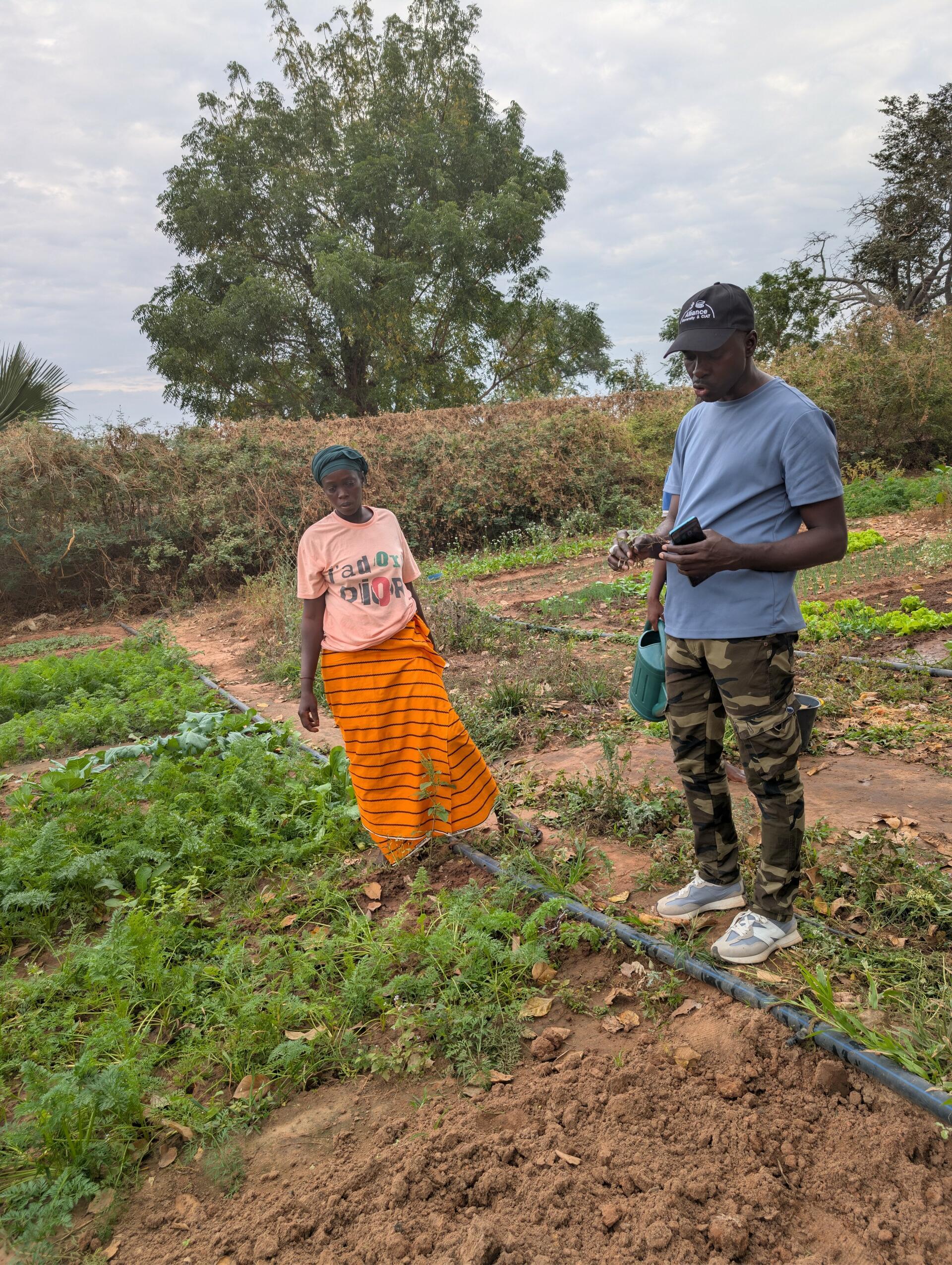
Photo credit: Fatimata Kone
Today, Fatou Diatta is recognized as a role model in Djimassar. Her status as a young leader extends beyond the project. She advises other youth, shares techniques, and encourages sustainable practices.
Her leadership is grounded in example. She shows that agriculture can be profitable, organized, and respected. She demonstrates that understanding soils, managing water, and reading markets can transform how farming is perceived.
Fatou is already looking ahead. She speaks about processing, value addition, and diversification. She wants to deepen her skills to strengthen her economic independence. She envisions a model where village youth organize, innovate, and create small agricultural enterprises.
Her story carries collective meaning. It helps curb rural exodus by offering a credible alternative. It shows that investing in youth and soil health delivers lasting impact. It contributes to building a new agricultural narrative rooted in resilience and dignity.
In Djimassar, Fatou continues to cultivate. Her fields grow greener, her carrots larger, her voice stronger. Through her, a generation learns that land can be a lever for empowerment. Her journey illustrates the power of commitment grounded in knowledge, perseverance, and confidence in the future.