Blog Mainstreaming climate information services and climate-smart agriculture in African higher education systems
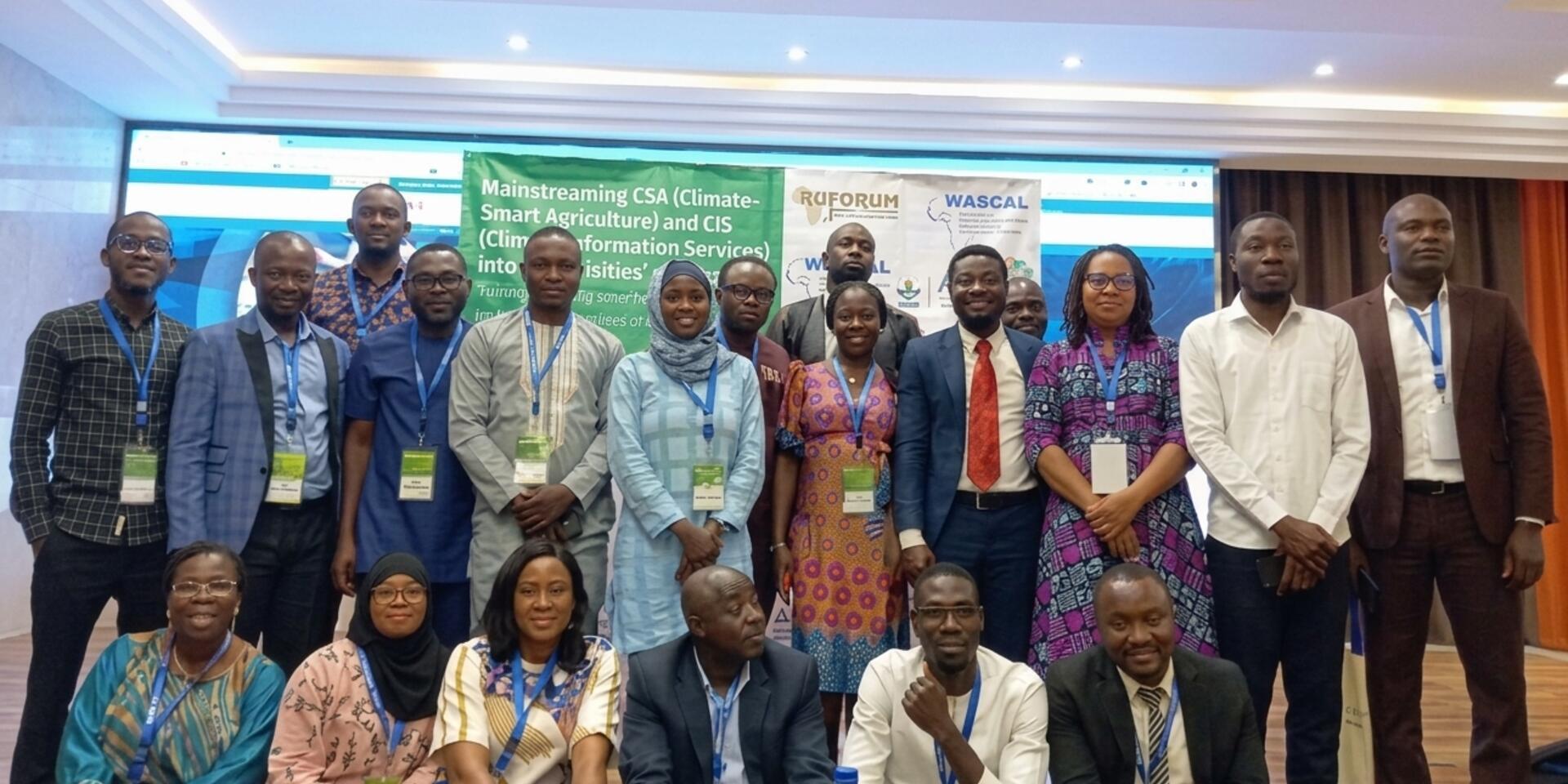

Over 1,500 university lecturers and staff including 30 percent women from 37 African countries benefited from capacity development training on new modules on climate services and climate-smart agriculture, to ensure the next generation can scale initiatives that make African agriculture more resilient to climate change.
And a new Master’s degree specialization has been created at the Felix Houphouet Boigny University in Cote d’Ivoire with a view to use the new modules to generate next expertise to transform African agriculture and food systems.
Capacity building in climate information services (CIS) and climate-smart agriculture (CSA) will provide research and evidence-based solutions to ensure food security and build resilience of farming systems in the face of climate change in the region.
By integrating climate-smart agricultural practices into curricula, supporting climate information services research, and training the next generation of professionals in agriculture, higher education systems in Africa can play a transformative role in addressing the issue of climate change in Africa.
With a focus on CSA technologies and CIS, the Accelerating Impacts of CGIAR Climate Research for Africa (AICCRA) project is making the science and cutting-edge practices, technologies and tools developed by CGIAR - the world’s largest publicly funded research network for food security - available throughout Africa, especially in regions extremely vulnerable to climate change.
Adoption of these technologies will enhance the resilience of ecosystems to climate change and improve food security on the continent.
To achieve this objective, the project includes an important capacity development component for the benefit of six countries in Africa and works with the African Regional Universities Forum for Capacity Building in Agriculture (RUFORUM) and the West African Science Service Centre on Climate Change and Adapted Land Use (WASCAL), who are regional partners.
AICCRA collaborates with RUFORUM and WASCAL to develop curricula and training materials that will make accessible to other Sub-Saharan African countries, the knowledge on CSA and climate agro- advisory services generated in the six intervention countries.
Identifying and filling gaps in university curricula
WASCAL and RUFORUM conducted national and institutional gap assessment in capacity building for the development of curricula or training programmes in CIS and CSA.
This assessment involved meetings that included 11 countries, including, in addition to AICCRA’s six focus countries, such as Benin, Burundi, the Democratic Republic of Congo, Kenya, Uganda, and Zimbabwe.
National consultations were conducted to identify and prioritize the training needs on CSA and CIS. The outcomes of the consultations were consolidated, and a continental priority training was drawn and validated during a meeting designed to build consensus.