Blog Building the case for climate finance: Lessons from the AGNES Africa capacity-building programme
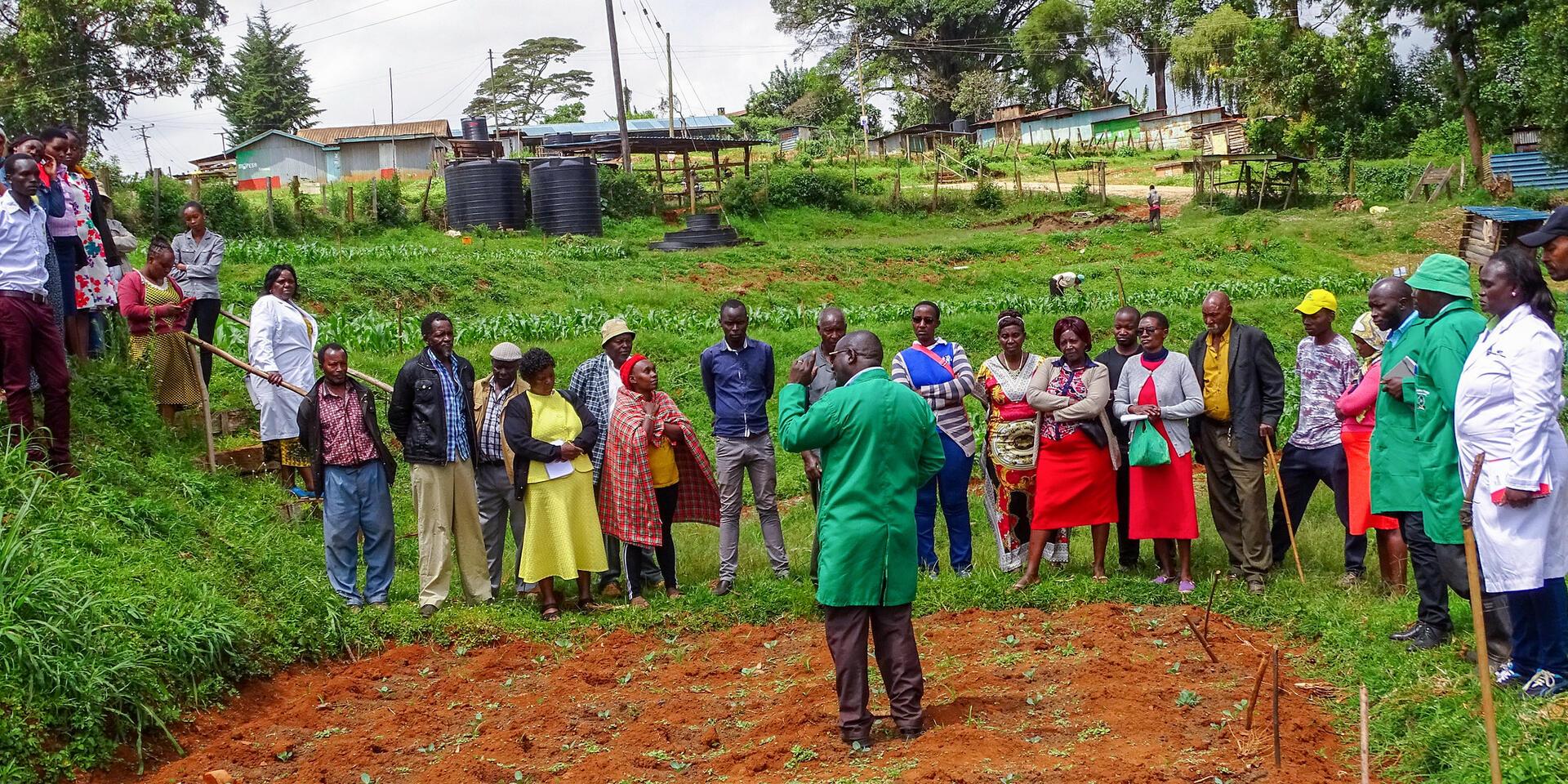

In February 2026, AGNES Africa trained 30 practitioners across Africa to build strong climate finance proposals by improving climate rationale skills, addressing low funding access caused by limited technical capacity.
Africa is at the sharp end of the climate crisis. Droughts, floods, rising seas, and shifting rainfall patterns are already reshaping livelihoods, food systems, and infrastructure across the continent. Yet despite facing some of the world's most severe and compounding climate risks, Africa receives a fraction of the global climate finance that is urgently needed to respond.
3–4% : Share of global climate finance that reaches Africa despite the continent bearing some of the highest climate vulnerability in the world.
Changing this requires more than political will and funding pledges. It requires African institutions to develop the technical capacity to design compelling, evidence-based climate proposals that can compete for and unlock the resources available through funds such as the Green Climate Fund (GCF) and the Adaptation Fund.
This is exactly what Unit 3 of the AGNES Africa Climate Finance and Innovative Business Models capacity-building programme set out to address. Facilitated in February 2026, this session brought together 30 participants from across Africa representing government, the private sector, civil society, and academia to build one of the most foundational and often overlooked skills in climate finance: developing a strong climate rationale.
Why the climate rationale matters
Before a project can access climate finance, it must first answer a deceptively simple question: why does this project need climate finance, and not just development finance?
The answer lies in the climate rationale, the section of a proposal that defines the climate problem, demonstrates vulnerability using credible data, and directly links the proposed intervention to climate risks and national priorities.
A weak or vague rationale is one of the most common reasons climate proposals are rejected or underfunded. A strong one, grounded in evidence, can make the difference between a project that attracts investment and one that does not.
Unit 3 was designed to give participants the knowledge and practical tools to build that rationale with confidence.
What participants learned
The session covered four interconnected components that together form the backbone of a bankable climate rationale:
- Identifying climate problems and vulnerabilities, understanding what climate hazards affect a given context, and who and what is most at risk.
- Using climate data and evidence from the Adaptation Atlas to justify interventions moving beyond anecdote and intuition to ground proposals in observed trends, projections, and spatial data.
- Developing a compelling climate rationale aligned with national priorities and climate policies ensuring proposals speak the language of NDCs, NAPs, and sectoral strategies.
- Linking climate impacts to project design and the theory of change and connecting the climate problem to the proposed solution in a logical, transparent, and credible way.
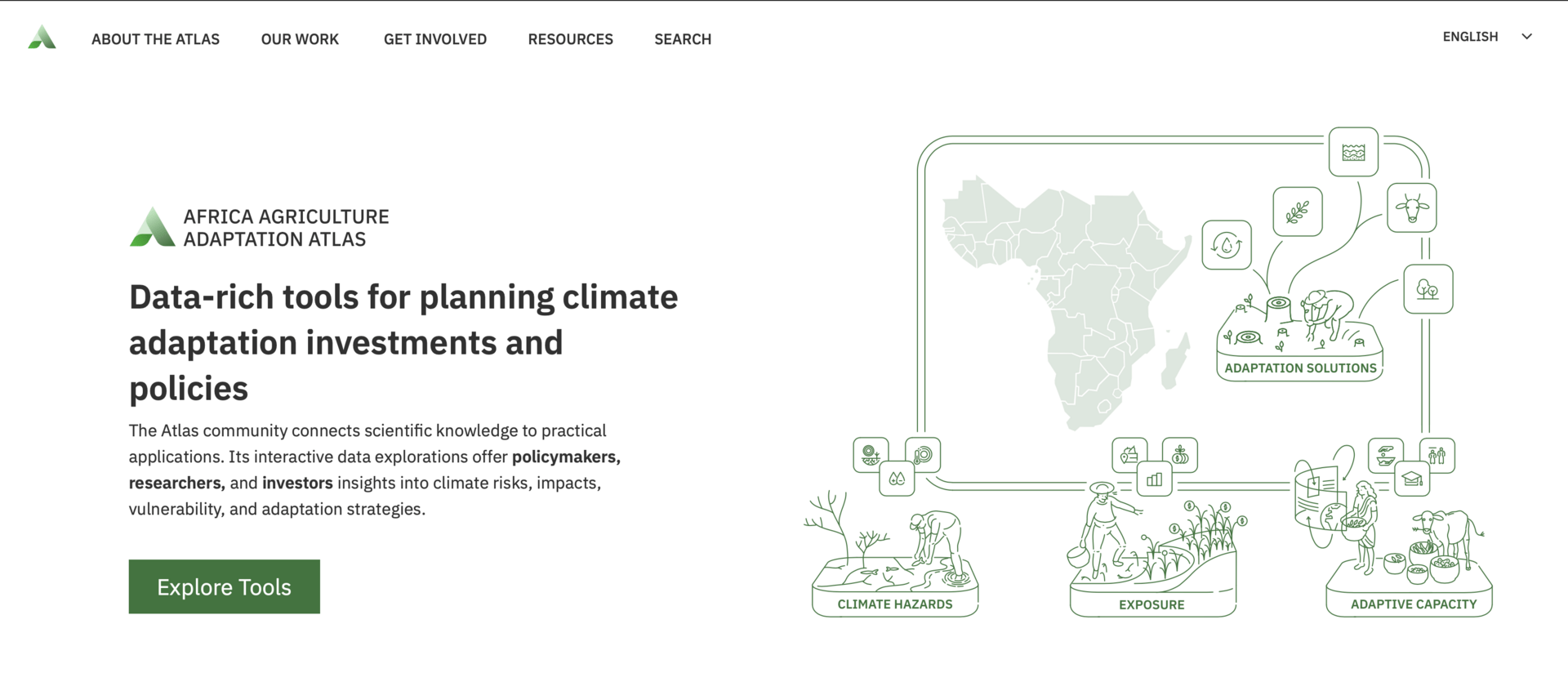
A key feature of the session was hands-on engagement with the Adaptation Atlas a tool that enables users to visualise climate risks, explore vulnerability data, and generate country-specific summaries. Participants explored how to integrate the Atlas into their proposal development workflows. Among those who rated it, 56% found it easy to use, and feedback pointed to its visual risk maps and country-level data as particularly valuable.
"I found the visual maps and country-level data very useful. It was easy to understand climate risks and vulnerabilities in different regions, and the way information is organised makes it practical when linking climate issues to real projects."
Suggestions for further development included the integration of more localised, district-level data; additional real-world case studies demonstrating how the Atlas has informed funded proposals; and stronger connections to national environmental datasets.
Measuring the impact: Confidence before and after
To understand the session's effect, participants were asked to rate their confidence in developing a climate rationale both before and after the training. The results were striking.
Participants entered the session with low to moderate confidence (not confident, slightly confident, or moderately confident) in developing a climate rationale.
Participants left the session feeling confident or very confident – a significant shift achieved in a single, focused training unit.
Participants actively improved their confidence level during the session, with zero participants ending at 'not confident at all'.
These numbers reflect more than a satisfying evaluation outcome. They point to something more important: that the gap between where African climate practitioners are and where they need to be to access climate finance is bridgeable with the right training, tools, and support.
A Diverse cohort, a common challenge
The 16 participants who completed the unit assessment represented a rich cross-section of the climate finance landscape:
NGOs and civil society organisations
Government and the public sector
Private sector
Research and academia
44% of participants identified as youth (under 35 years), reflecting the programme's commitment to building the next generation of African climate leaders. Participants came from multiple countries and sectors, spanning proposal writing, programme design, policy development, and academic research.
Despite their different backgrounds, participants shared a common challenge: translating climate evidence into proposals that are credible, compelling, and competitive in the international climate finance landscape. Unit 3 directly addressed this challenge.
From training to action: What participants plan to do next
Perhaps the most powerful evidence of impact came not from the confidence ratings, but from participants' own accounts of how they plan to apply what they learned. Their responses reflect the breadth and ambition of the cohort:
"I will orient my colleagues in the office about the course, and how to use the Atlas to access climate information and data to inform effective climate proposal rationale development."
"I am hoping to develop a good proposal for climate change adaptation for the blue economy sector of the state I live in in Nigeria."
"As Climate Change Focal Point at the Ministry of Agriculture, I will use spatial risk layers to identify climate hotspots affecting rainfed systems and support evidence-based prioritization of adaptation measures within sector strategies."
"I plan to use the framework of the Adaptation Atlas by using its zones and strategies as a diagnostic lens to evaluate current or upcoming projects, ensuring that interventions address climate resilience at multiple scales."
Across the cohort, the most common intended applications were proposal writing for major climate funds (38%) and programme design (38%), followed by policy development (19%) and academic teaching and research (6%). These are exactly the domains where a stronger climate rationale can have the greatest effect enabling more African institutions to access the finance that their contexts demand and their communities deserve.
The bigger picture: Why this work matters
Africa's 3–4% share of global climate finance is not simply a funding gap; it is a systemic barrier rooted in unequal access to technical knowledge, institutional capacity, and the networks that enable participation in global climate finance processes.
Capacity-building programmes like this one designed to equip African practitioners with the skills to develop rigorous, evidence-based climate proposals are a critical part of addressing that barrier. When a government focal point in the Ministry of Agriculture can use spatial risk data to develop climate-smart sector strategies, that is climate finance readiness. When a young researcher in Nigeria develops a GCF-ready proposal for blue economy adaptation, that is Africa shaping its own climate future. When an NGO officer integrates climate atlas data into government capacity building at the district level, that is systemic change, multiplied.
Unit 3 of the AGNES Africa programme was one session within a broader journey. But the confidence gains, the practical skills, and the concrete commitments that emerged from it are a reminder that the distance between Africa's current share of climate finance and the share it deserves can be closed one well-designed proposal at a time.
About the Programme
The AGNES Africa Climate Finance and Innovative Business Models programme is a regional capacity-building initiative aimed at empowering African leaders, policymakers, researchers, and practitioners to access and mobilize climate finance. Unit 3 focused on developing a strong climate rationale a critical component in designing bankable projects that address climate risks while delivering sustainable development outcomes.
The programme is supported by the CGIAR Climate Action Science Program, which aims to drive science, innovation, and collaboration to transform food, land, and water systems toward a climate-resilient, net-zero, and equitable future.
The team

Majambo Gamoyo
Postdoctoral Fellow
Peter Steward
Climate Adaptation and Data Synthesis Scientist