Blog We don't talk about Bruno: How a pushcart is changing crop breeding
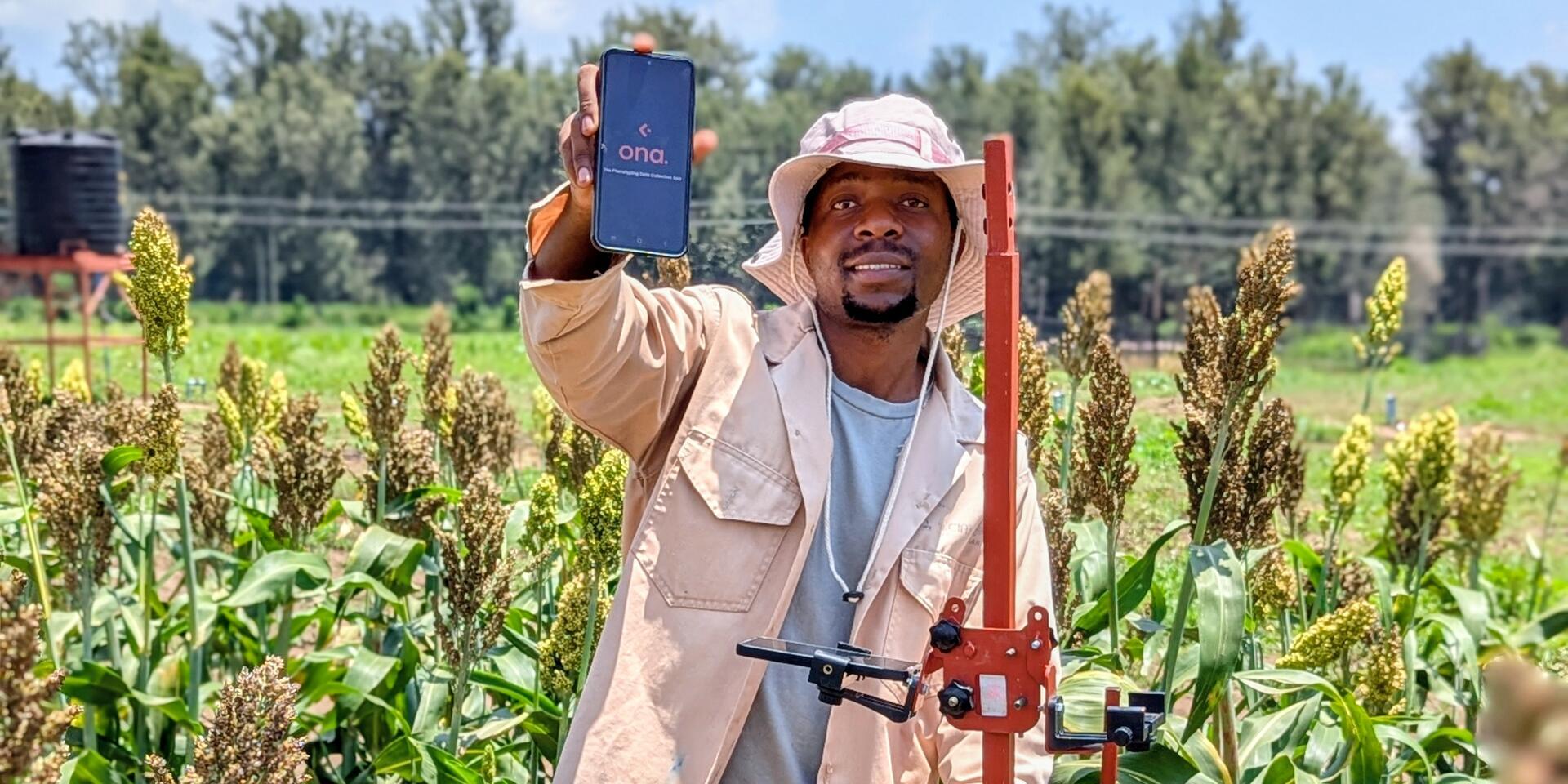

At the Alliance, researchers are using a low-cost smartphone pushcart called Bruno to collect faster, more consistent crop data, helping breeding programmes across Africa improve how they identify crop varieties.
…but that's because, for the past four years, the field results have been speaking for themselves
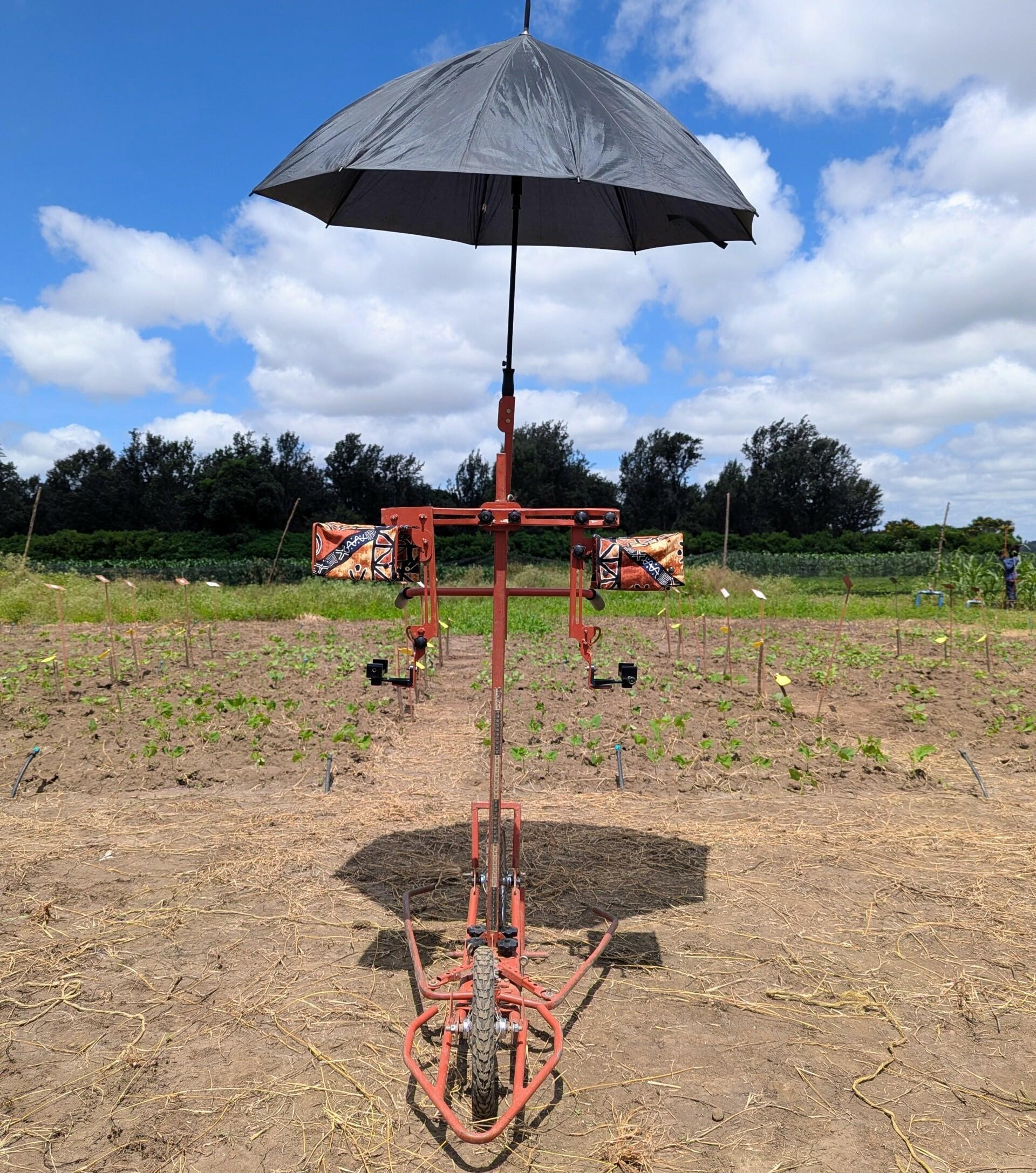
It has no engine, no satellite dish, no blinking sensors promising the future of agriculture. What is has is character and built-for-purpose. Bruno is a steel pushcart fitted with a smartphone, designed to be pushed by hand across crop fields. Yet it is helping solve one of crop breeding's least visible constraints: collecting reliable field data breeders need to decide which plants become tomorrow's crop varieties.
The name began as an inside joke.
In 2022, researchers at the Alliance working under the ARTEMIS project encountered an unusual constraint. Their collaborator at the time, Mineral, a Google X spin-off, wanted crop images collected using smartphones held by hand. But the handheld method was too labor-intensive to scale: six people needed an entire day to cover just 30 field plots. So came Bruno, a pushcart that unlocked efficiency, quality and scale. Officially, the pushcart the team was building did “not exist”. Around the same time, Disney's Encanto had become impossible to ignore, set in Colombia (where much of the Alliance's breeding and phenotyping work has long been rooted) the film gave the team an irresistible (inside) joke: like Bruno in Encanto, the pushcart was indispensable, even if Mineral (or the larger team) was not ready to talk about it. The team quietly nicknamed the prototype Bruno, and before long the name had become shorthand for the ‘person’ that consistently produced the best data.
The joke lasted until colleagues at Google asked to meet Bruno, while expecting another engineer or field technician; they were instead introduced to the pushcart itself, and by then, the name had already stuck.
Four years later, after twelve design iterations and more than 800,000 images collected by breeding programmes across East and West Africa, Bruno has become one part of a phenotyping system designed around a simple idea: collecting high-quality field data should not require expensive infrastructure, specialist operators or equipment that only a handful of research institutions can afford buy, maintain and repair.
The slowest part of feeding the world
Crop breeding is often associated with genetics, laboratories and sophisticated science, but its progress depends just as heavily on what happens outdoors. Breeders cross thousands of parent combinations before growing successive generations in field trials, returning season after season to identify which plants flower earliest, tolerate drought, resist disease or produce the highest yields. These are some of the observations that determine which plants move forward.
For all the advances in genomics and AI, one part of that process has changed remarkably little. Someone still has to walk through fields and record observations of different plant traits/characteristics.
Across breeding programmes, technicians spend days moving through plots with clipboards, measuring tapes and tablets, recording thousands of observations by hand. It is physically demanding work, and, despite careful protocols, measurements inevitably vary between observers. AI-enabled phenotyping provides a solution: field technicians capture images of plants, and computer vision (CV) models extract measurements of traits. However, handheld image capture also poses the same constraint; it is physically demanding and images can vary between technicians. A taller technician collects images of crops differently from a shorter colleague, while changing light and field conditions introduce further variation. Automated phenotyping platforms can reduce those inconsistencies, but they remain beyond the reach of many public breeding programmes and national agricultural research systems responsible for developing improved crop varieties. The barriers extend beyond purchase price to specialist operators, proprietary components, calibration requirements, and dependence on external technical support.
Rather than building a cheaper version of existing high-end platforms, the ARTEMIS team asked a different question: “what would a phenotyping system designed around the realities of field research with limited resources actually look like?” The answer was a tool that could be built from locally available materials, easy to assemble and repair, operated by one person and can mount smartphones running ONA, the AI-powered phenotyping platform developed alongside it.
Bruno captures the images; ONA extracts the measurements
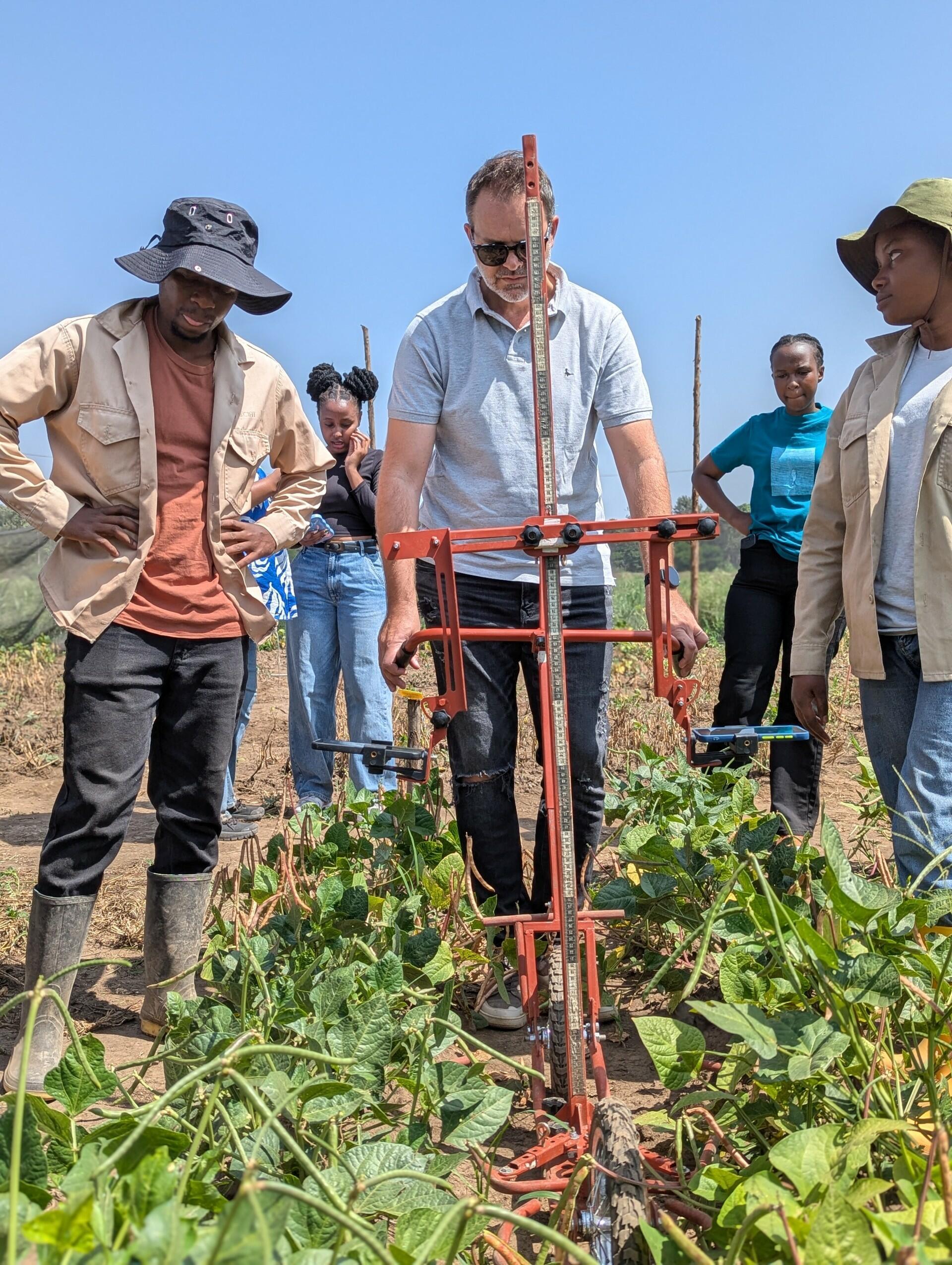
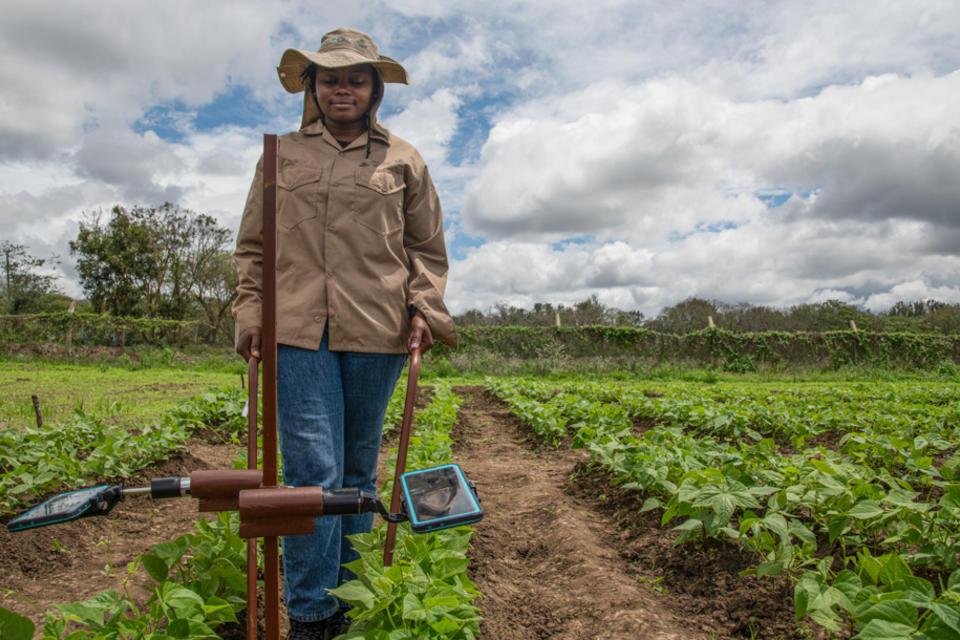
As the cart ‘Bruno’ moves through field plots, smartphones mounted on adjustable arms collect images of plants in every plot consistently through Ona, completing a standard plot in under thirty seconds, around four times faster than some conventional manual collection methods. ONA then analyses those images using computer vision (CV), measuring plant traits consistently, this is an area of active development as the team works to make models more robust across different sites, devices and lighting conditions. Together, the two systems reduce one of field phenotyping's persistent sources of uncertainty: observer variation.
Field trials between 2023 and 2025 with researchers from the Alliance and NARO in Tanzania and Uganda demonstrated correlations of approximately 0.89 to 0.99 with manual ground-truth measurements for plant stand count trait in beans. High correlation values have also been recorded for traits including flowering, plant stand, pod counts and panicle imaging in beans cowpea and sorghum, showing that faster data collection need not come at the expense of scientific accuracy.
Designed by the field for the field
The first prototype, completed in early 2023, quickly exposed almost every weakness a field tool could. The frame bent under load, tires loosened during fieldwork, thumb screws bruised operators' fingers and the side arms intended to guide crops instead caught and snapped stems. Every failure became a design requirement for the next version. Improving Bruno meant balancing competing demands; making the cart lighter sometimes reduced its stability, narrowing the frame required new camera mounts, while designing side arms capable of parting bean plants (or plants with dense canopies) without damaging plants took multiple iterations before the balance was right. This coupled with the desire for a crop agnostic Bruno meant several tests across different crops and environments collecting extensive user feedback from teams that defined the iterations. Successive refinements eventually reduced its weight from a peak of 23 kilograms to around 11 kilograms while improving both stability and ease of use.
Those improvements reflected contributions from field technicians, agronomists, engineers, machine learning specialists and product designers, each solving a different part of the same problem: protecting crops during collection, standardizing the images used by the computer-vision pipeline, and making the cart comfortable enough to use throughout a full data-collection cycle. Designing for scale was equally important, with every component selected so it could be manufactured, repaired and replaced using locally available materials and resources.
The details reveal that process. A built-in tape measure ensured image consistency across plots at a defined height. A rectangular central pole prevented mounted smartphones from rotating during movement between plots. Curved side arms replaced earlier designs after technicians reported damage in dense crop stands. A stackable horizontal phone-mount attachment can be shortened or extended depending on plant row spacing and image-capture protocol. Each adjustment addressed a practical problem identified through continuous feedback from users in the field, rather than one imagined in a workshop.
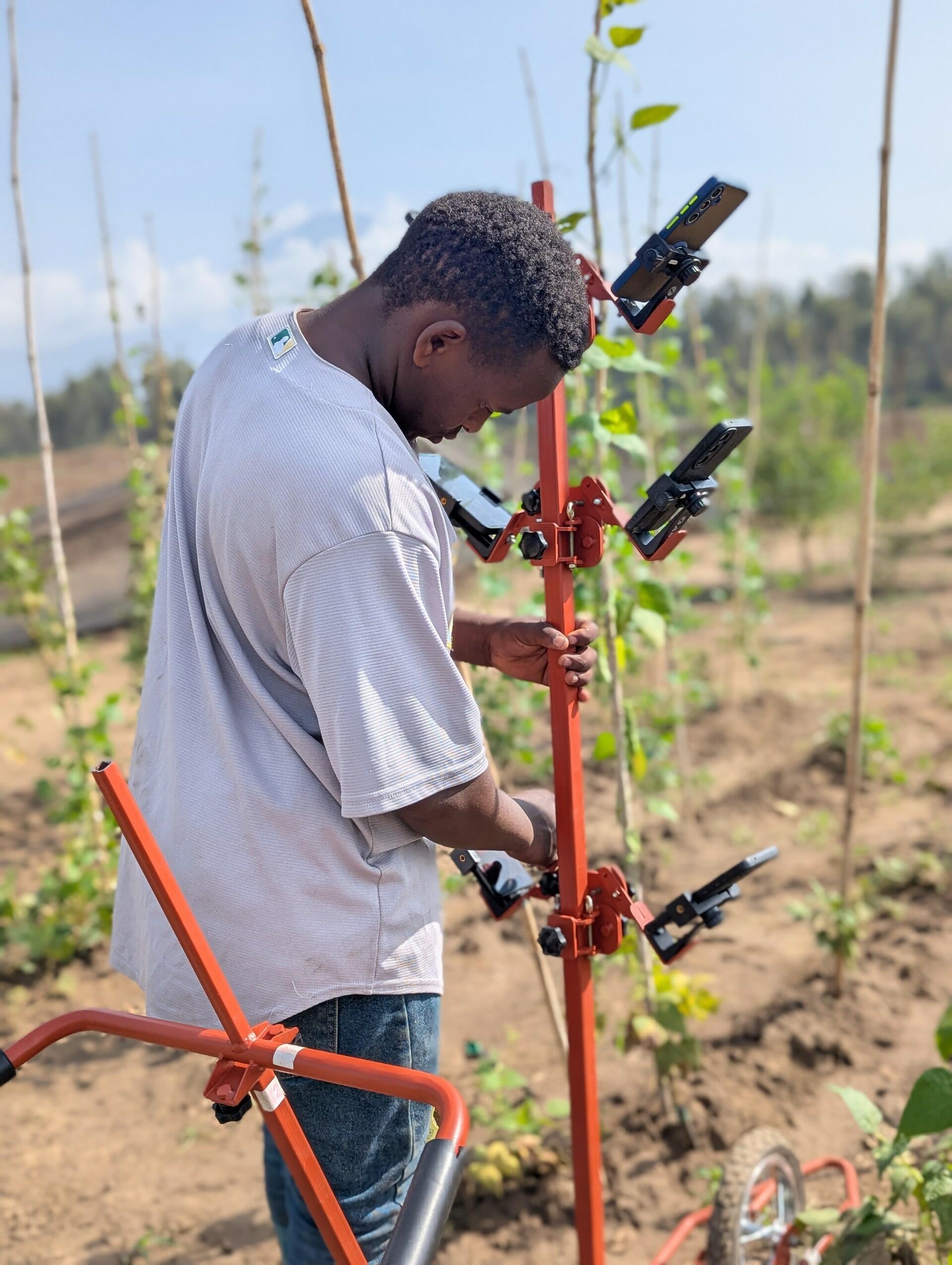
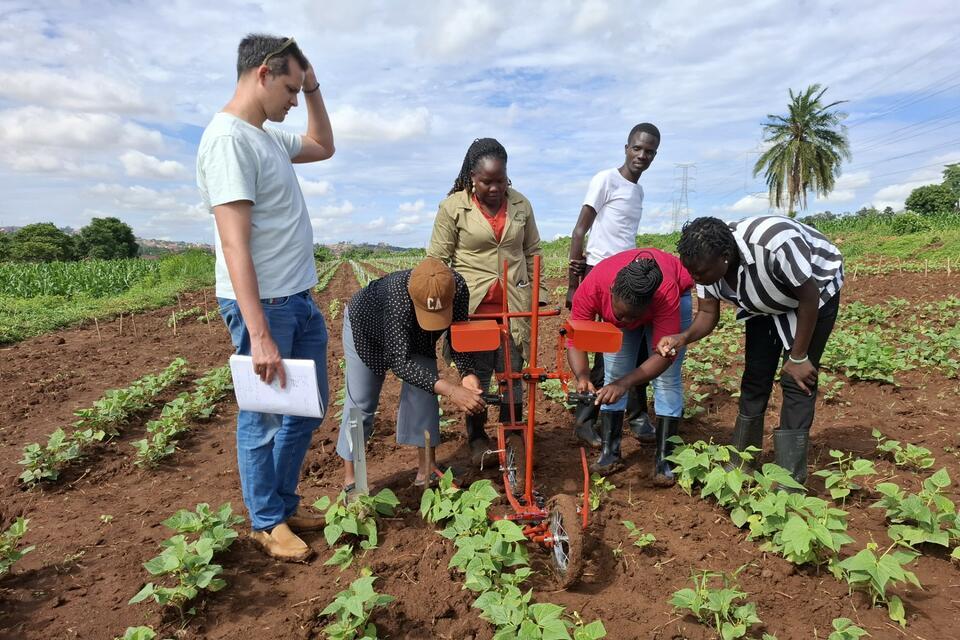
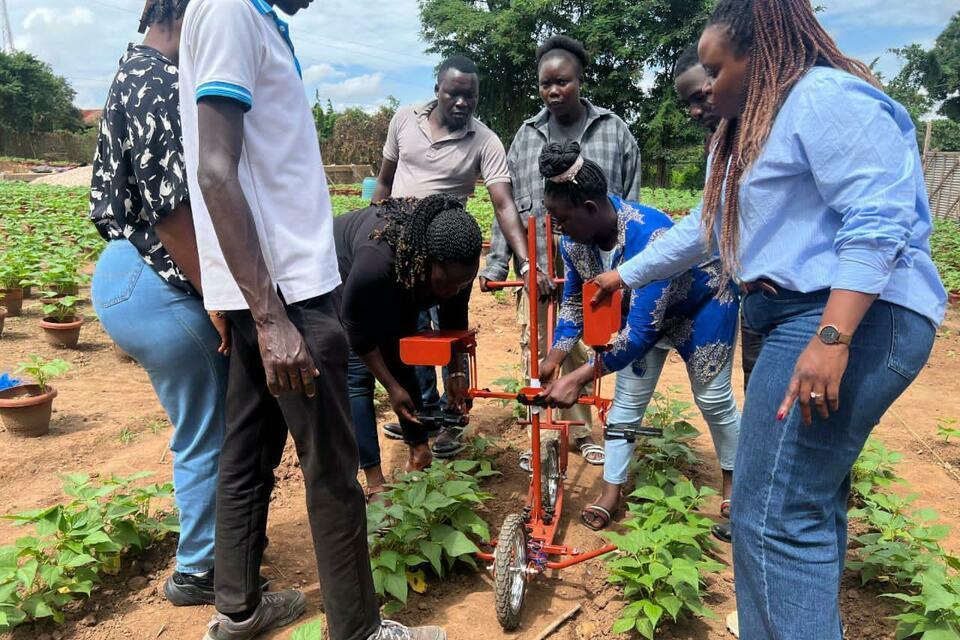
The same philosophy shaped how Bruno would be scaled. Instead of relying on a central manufacturer or external technical support, the ARTEMIS team developed digital assembly manuals, standard operating procedures and training materials that allow partners to build, maintain and deploy the system independently. A breeding programme in Ethiopia or Senegal can access Bruno, assemble the cart and train new users without relying on specialist technicians travelling from elsewhere.
“We asked ourselves what a tool developed with the users in mind would look like; one that ensures efficiency and quality in data collection but is also easy to use and troubleshoot without sophisticated equipment. We wanted something that could be built in Nairobi, Kampala or Dakar and repaired anywhere and operated everywhere by anyone. This was the only way to achieve scale. Four years ago we were debating whether this was even possible. Now, the question is how fast a programme can acquire Bruno into their fields.” Beverly Liavoga, Scientist at the Alliance of Bioversity International & CIAT.
Better data, better breeding
Bruno costs around USD 300 to build and can be assembled in approximately 2hrs maximum. That affordability matters because much of the world's crop improvement research is carried out by public research organisations rather than institutions with access to sophisticated phenotyping infrastructure and access to finance. Designing for local manufacture means the technology can be built where breeding happens at a friendly accessibility and maintenance cost instead of depending on specialized suppliers and without compromising on data quality.
More timely, standardized, and reliable data allows breeders to evaluate more plants, make stronger selection decisions and identify promising varieties with greater confidence. While a decade of breeding may not be shortened to a few seasons, Bruno removes one of the slowest and most labour intensive steps giving researchers more time to focus on developing crops that can withstand drought and diseases, improve harvests and strengthen food security through more reliable, timely and accurate data collection processes.
Bruno and ONA are now part of Tatu, the Alliance's growing portfolio of AI-powered tools designed to support crop improvement across the Global South. Together they demonstrate that digital agriculture is not always about building increasingly complex technologies. Sometimes the most meaningful advances come from understanding how research happens in the field and designing tools that fit those realities.
Keep exploring
Artificial intelligence meets agriculture
Smartphones can survey crops and listen to farmers. This is AI designed for the hands of breeders, extension workers, and farmers.