Carbon Crediting for Adaptation (CCA)
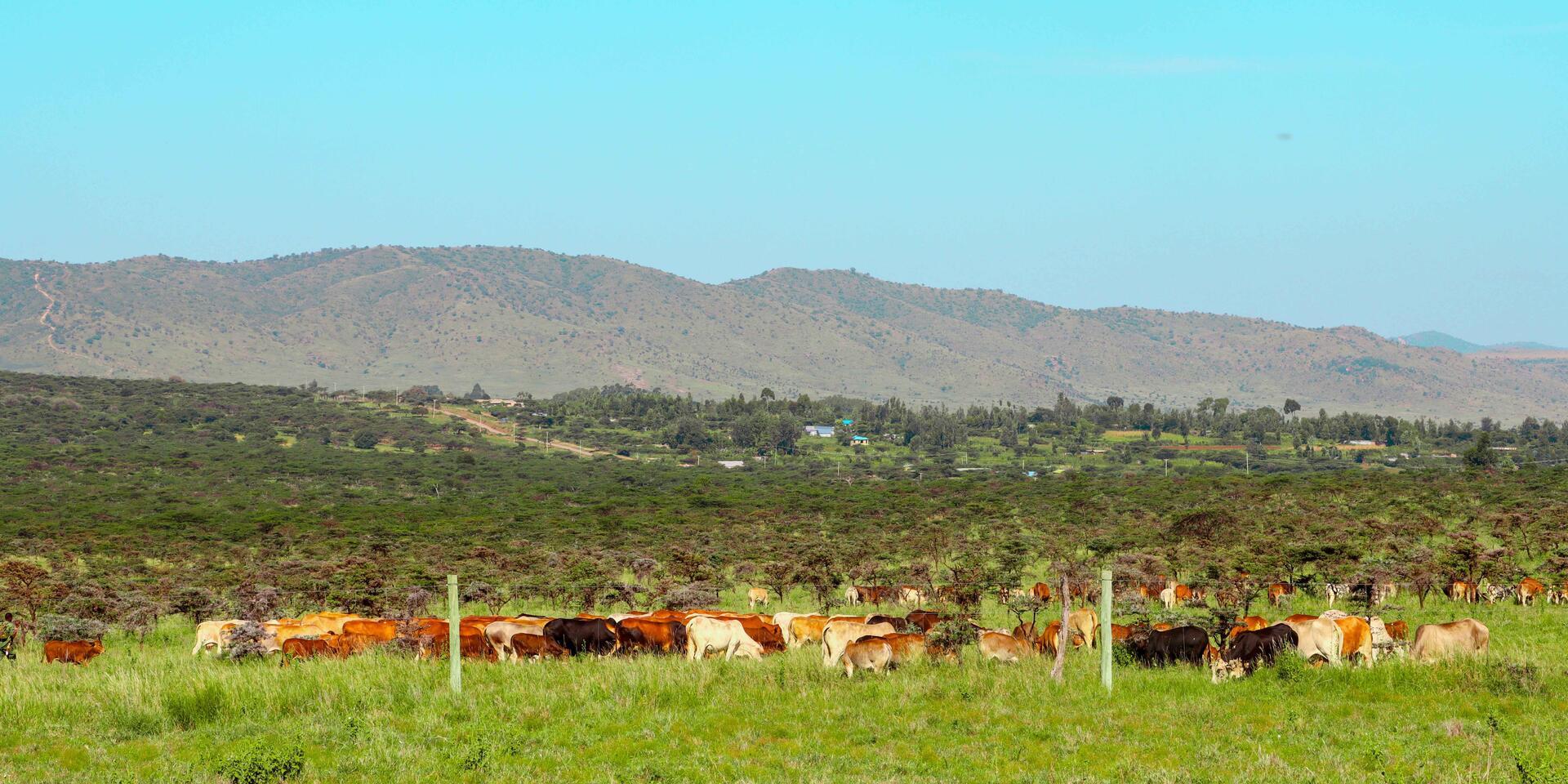
The Carbon Crediting for Adaptation project evaluates the scope and scale of opportunities in Sub-Saharan Africa to leverage carbon finance to drive adaptation outcomes for small-scale producers. We use spatially explicit evidence to determine which climate change mitigation practices are most likely to improve yields and carbon market revenues amid climate hazards.
Project Name (full): Country Profiles to Support Agricultural Adaptation via Carbon Finance
Start and end year: July 2026 - January 2028
Region and Countries: Kenya, Ethiopia, Nigeria, Sub-Saharan Africa
Funders: Gates Foundation
Partners: The Nature Conservancy
Brief description
The cost of adapting African agriculture to climate change is estimated at $15 billion annually, yet adaptation finance flows to the sector remain a fraction of this need, and the cost of no action is estimated to be more than twelve times higher, or $201 billion/year (Global Center on Adaptation, 2021).
Carbon markets can help finance adaptation. Preliminary analysis by BCG (2024) estimates that carbon-creditable agricultural practices in Sub-Saharan Africa could deliver approximately US$6 billion in annual adaptation benefits. However, national decision-makers, multilateral development banks (MDBs), bilateral donors, philanthropies, and private sector investment, all of which play a critical role in shaping and financing large-scale public and private sector agricultural investments, often lack the evidence needed to make informed investment decisions.
In collaboration with The Nature Conservancy, the project aims to generate country profiles on the potential scale and scope of implementing agricultural practices that generate carbon credits with adaptation co-benefits (CCA) in three Sub-Saharan African (SSA) countries. Results will inform national policymakers, multilateral development banks (MDBs), bilateral donors, philanthropy, and private sector investment decisions. The project’s ultimate beneficiaries are smallholder farmers in Nigeria, Kenya, and Ethiopia who are vulnerable to climate change.
In each country, the project will assess promising agricultural carbon practices, tailored to country-specific conditions, for their potential productivity and adaptation impacts, net economic benefits, and scalability. Additional analysis for Sub-Saharan Africa will show regional adaptation impacts.
Key activities
Identify decision-makers’ evidence needs and prioritize CCA practices
This activity identifies policymakers’ and investors’ evidence needs on which CCA practices to scale, where to prioritize investments, and what enabling conditions best support scaling, including equitable participation and benefits for women and marginalized farmers. We target policymakers in Nigeria, Kenya, and Ethiopia, and investors ranging from bilateral donors, philanthropies, and the private sector to the African Development Bank, World Bank, DFFIs, and Green Climate Fund for their potential role in high-impact scaling of CCA practices and targeting of smallholder farmers.
Assess productivity and adaptation technical potentials
Building on the decision framing and practice prioritization established in Activity 1, and using the mitigation technical potential data for Sub-Saharan Africa from TNC, Alliance’s technical potential analysis will produce spatially explicit evidence on the production and climate change adaptation benefits for Sub-Saharan Africa. The analysis follows a four-step sequential framework at 5 arcminute (~10 km) resolution, with each step building on the previous one.
Assess and spatialize net economic benefit
We will determine the net economic benefit (NEB) of selected practices and dominant crops for SSA by 2030, first in a rapid assessment for priority practices and then with a complete analysis for all promising practices at the continental SSA level.
Project leaders

Lini Wollenberg
Project Lead, Climate Action
Evan Girvetz
Principal Scientist and Team LeaderProject members

Aniruddha Ghosh
Senior Scientist
Peter Steward
Climate Adaptation and Data Synthesis Scientist
Benson Kenduiywo
Research Specialist
Brayden Youngberg
Research Specialist
Namita Joshi
Research Specialist
Sintayehu Workeneh Dejene
Research Management Coordinator
Chun Song
Spatial Econometrician
Pedro Anglaze Chilambe
Research Team leader, Climate Finance
Dorcas Jalang'o Anyango
Research Team Leader
Lidya Tesfaye
Research Officer
Millicent Omala
Climate Finance Policy Expert