Impact story When agriculture begins to change: AVENIR results in Senegal
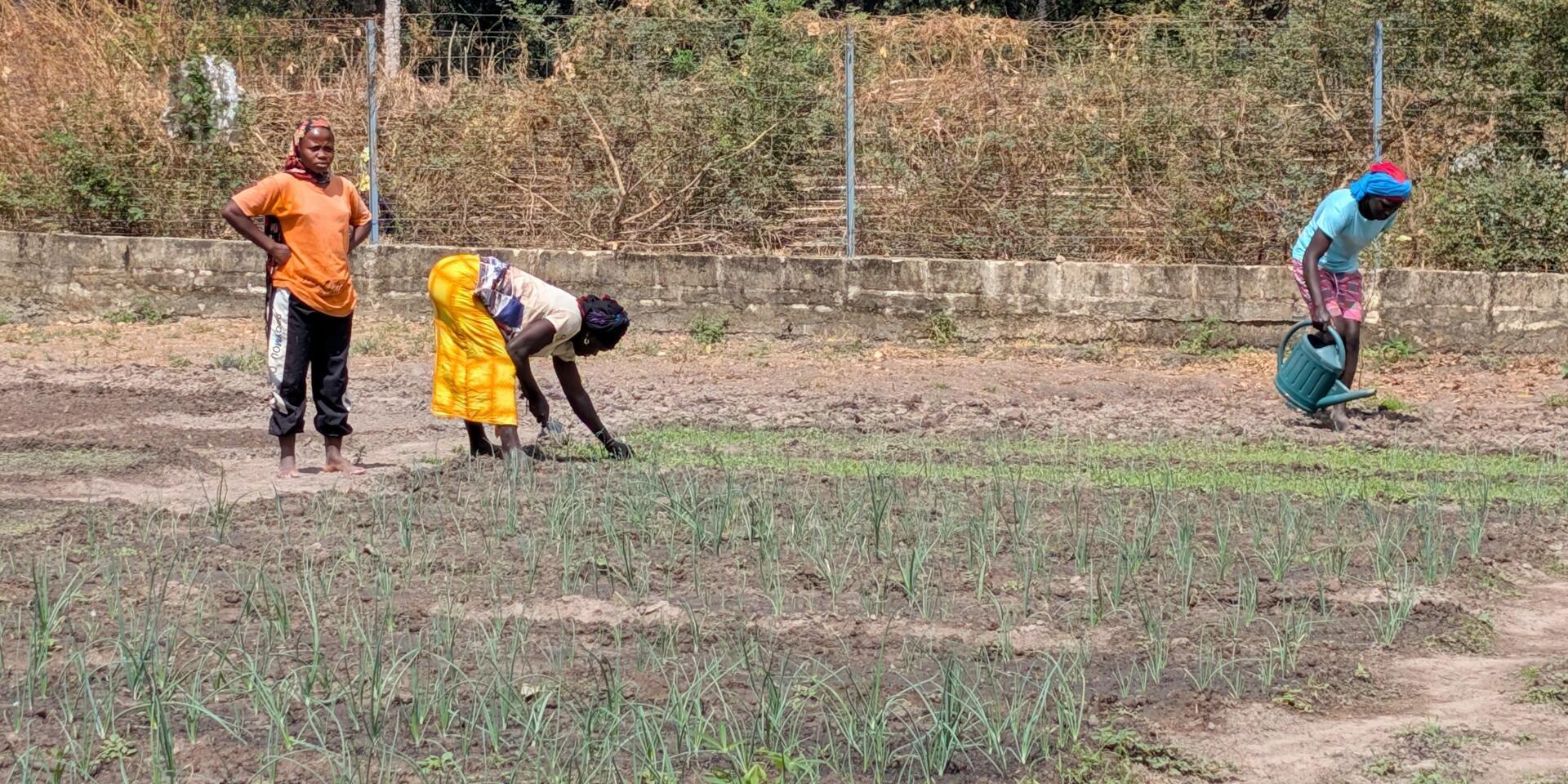

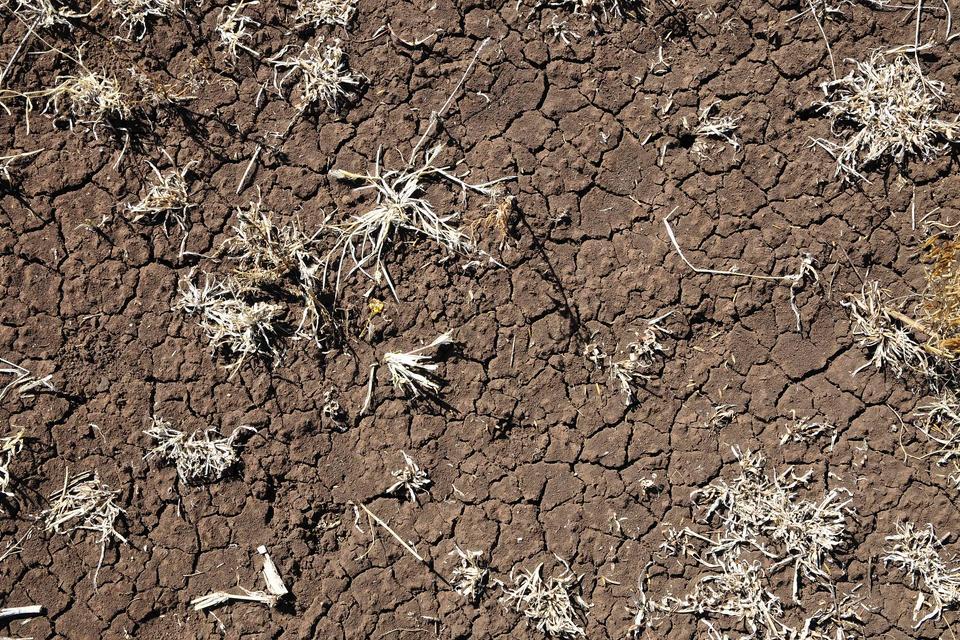
At sunrise in a market garden in Goudomp, Ndeye carefully waters her vegetable beds. Just a few years ago, the cracked soil produced very little. Today, rows of tomatoes and okra leaves tell a different story. Like thousands of farmers across the regions of Sedhiou and Tambacounda, Ndeye is among the beneficiaries of the AVENIR project. Implemented by MEDA with scientific support from the Alliance of Alliance of Bioversity International and CIAT and funded by Global Affairs Canada, the project shows how climate-smart agriculture can help transform local food systems.
Restoring soils to bring farmland back to life
Across Senegal, soil degradation remains one of the major constraints to smallholder agriculture. Declining organic matter, erratic rainfall, and erosion have gradually weakened soil fertility, reducing yields and threatening farmers’ livelihoods.
According to the FAO, nearly 65 percent of agricultural land in Africa is affected by land degradation. In Senegal, restoring soil health is therefore a critical pathway toward improving resilience and productivity.
This is where the AVENIR project has focused much of its work. In the regions of Sedhiou and Tambacounda, more than 8,800 farmers have been trained in integrated soil fertility management and climate-smart agriculture practices. These include composting, crop rotation, intercropping, and the use of organic inputs.
In Djimassar, in Senegal’s Sedhiou region, farmer Mamoudou Diatta says these practices have completely transformed the way he cultivates his land.
“Before, I cultivated the land the way my parents did. The soil was becoming poorer every year. With compost and crop rotation, I have seen my fields become productive again.”
In several demonstration plots, vegetable crops such as tomato, okra, and cabbage have shown noticeable productivity gains. Yet the impact goes beyond yield increases. Farmers say they have learned to better understand their soils and adapt their practices accordingly.
Scientific support from the Alliance of Bioversity International and CIAT has helped tailor these innovations to local agroecological conditions. As Dr Issa Ouedraogo explains:
“Our role is to bridge research and field realities. When knowledge is co-created with communities, it becomes a real lever for sustainable transformation.”
These innovations are now translating into tangible changes on farms. Farmers are improving soil fertility while reducing dependence on costly chemical inputs, helping build more sustainable and resilient agricultural systems.
Water management: securing agricultural production
In Sedhiou and Tambacounda, access to water remains a decisive factor for agricultural production. Irregular rainfall and prolonged dry spells make farming particularly vulnerable.
According to the World Bank, agriculture accounts for about 70 percent of global freshwater withdrawals. Improving irrigation efficiency is therefore a crucial priority for rural farming communities.
Through the AVENIR project, more than 3,500 farmers have been trained in integrated water resource management. Training sessions focused on efficient irrigation practices, watershed conservation, and techniques to optimize water use.
For Mariam Mandiang, a farmer in Senegal’s Sedhiou region, gaining access to water has been one of the most transformative changes brought by the project.
“Before the project, farming was extremely difficult because the water was more than 30 meters underground. With the support we received, we finally gained access to water. Now we feel confident that we can continue even after the project ends.”
In several villages, small water harvesting basins have also been established to support market gardens. These infrastructures help extend production seasons and reduce dependence on rainfall.
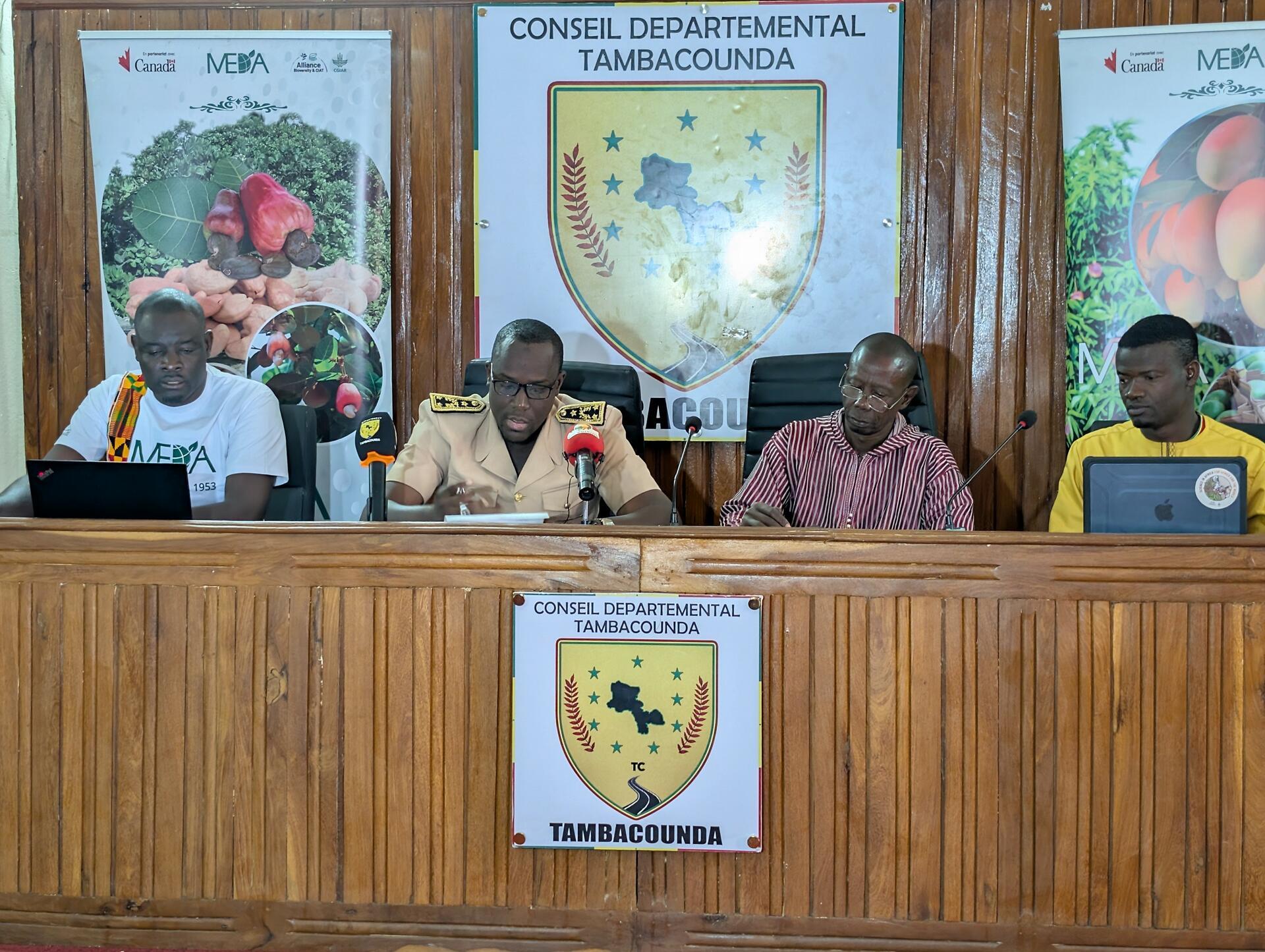
For local authorities, these innovations represent an important opportunity for regional agricultural development.
Prefect Alioune Badara Mbengue emphasizes the importance of turning results into action:
“What we validate today must not remain in reports. These results should guide local action and directly benefit communities.”
By improving water management, the project is helping farmers secure production and strengthen household livelihoods.
Climate services are transforming farming decisions
One of the most visible changes in the communities relates to the use of climate information services. As agricultural seasons become increasingly unpredictable, farmers need reliable weather data to guide their decisions.
According to the World Meteorological Organization, climate services can increase agricultural productivity by 10 to 30 percent when effectively used.
Within the AVENIR project, more than 11,800 farmers have received localized climate information, while over 16,500 beneficiaries have accessed agro-advisory services combining climate forecasts with practical farming recommendations.
These services are delivered through multiple channels, including SMS alerts, community radio, and digital platforms.
For Mamadou, a young farmer in Goudiry, climate information has transformed his approach to farming.
“Before, we planted according to habit. Now we check the forecasts. It helps us avoid losing seeds when the rains come late.”
Today, more than 70 percent of farmers report adjusting their farming decisions based on climate forecasts, including planting dates, crop varieties, and input management.
These changes illustrate how climate information is becoming an essential risk management tool for smallholder farmers.
From farms to food: linking agriculture and nutrition
In many rural areas of Africa, producing more food does not automatically translate into better nutrition. Malnutrition remains a persistent challenge.
According to UNICEF, nearly one in four children in sub-Saharan Africa suffers from stunting.
To address this challenge, the AVENIR project integrated an agri-nutrition component, linking agricultural production with dietary diversity.
Across the intervention areas, about 9,800 farmers have received training in nutrition-sensitive agriculture, and more than 16,500 households have benefited from nutrition advisory services.
Home gardens play a key role in this transformation.
In Tambacounda, Aissatou, a mother of three, explains how the project has changed her family’s diet.
“Before, we mainly ate rice. Now, with the garden, we have vegetables almost all year round.”
The results show clear improvements in household dietary diversity, particularly among women and children.
For Governor BA Ousmane, these results highlight the importance of investing in local capacities.
“A project only has meaning if it leaves lasting capacities behind. Communities now have the tools to continue these dynamics over time.”
The AVENIR project demonstrates that combining climate-smart agriculture, natural resource management, and nutrition can significantly strengthen the resilience of local food systems.