Blog A systems approach to scaling innovations in the agrifood system
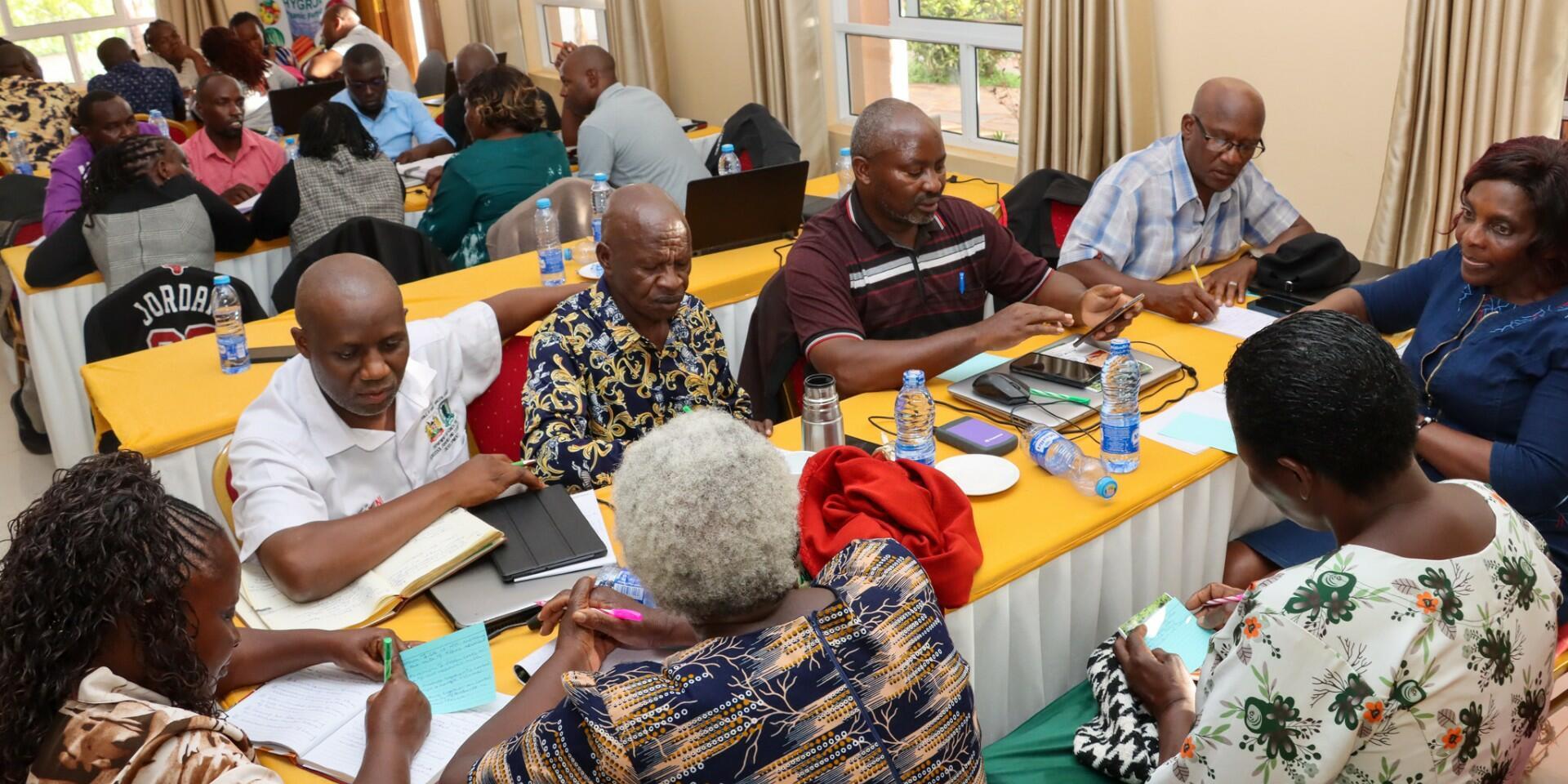
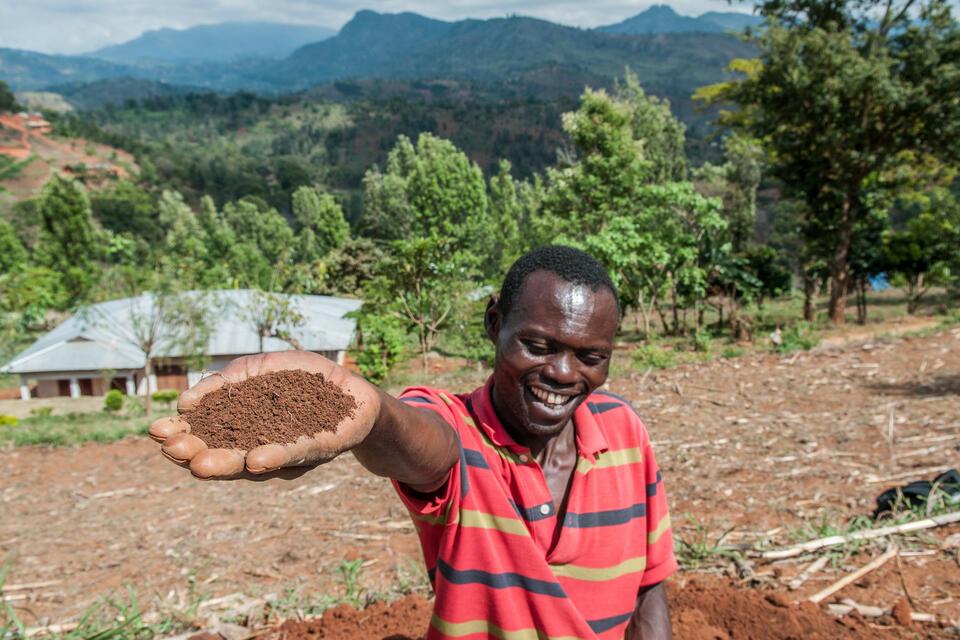
A recent three-day workshop in Tawa (Makueni County, Kenya) convened researchers, extension agents, private-sector representatives, NGOs, and farmers to tackle a critical barrier in Kenyan agriculture: scaling innovation. This workshop focused on moving beyond successful pilots to develop strategies for achieving widespread, lasting impact for resilient and productive smallholder systems across Kenya.
Agrifood systems today face unprecedented challenges from climate variability and resource degradation to growing food demand and market volatility. Smallholder farmers struggle to access inputs such as seed, fertilizer, machinery, finance, or advisory services, and profitable farm enterprises. While innovative solutions are emerging across the globe, their potential often remains untapped because scaling is not just about replication; it’s about adaptation, integration, and sustainability.
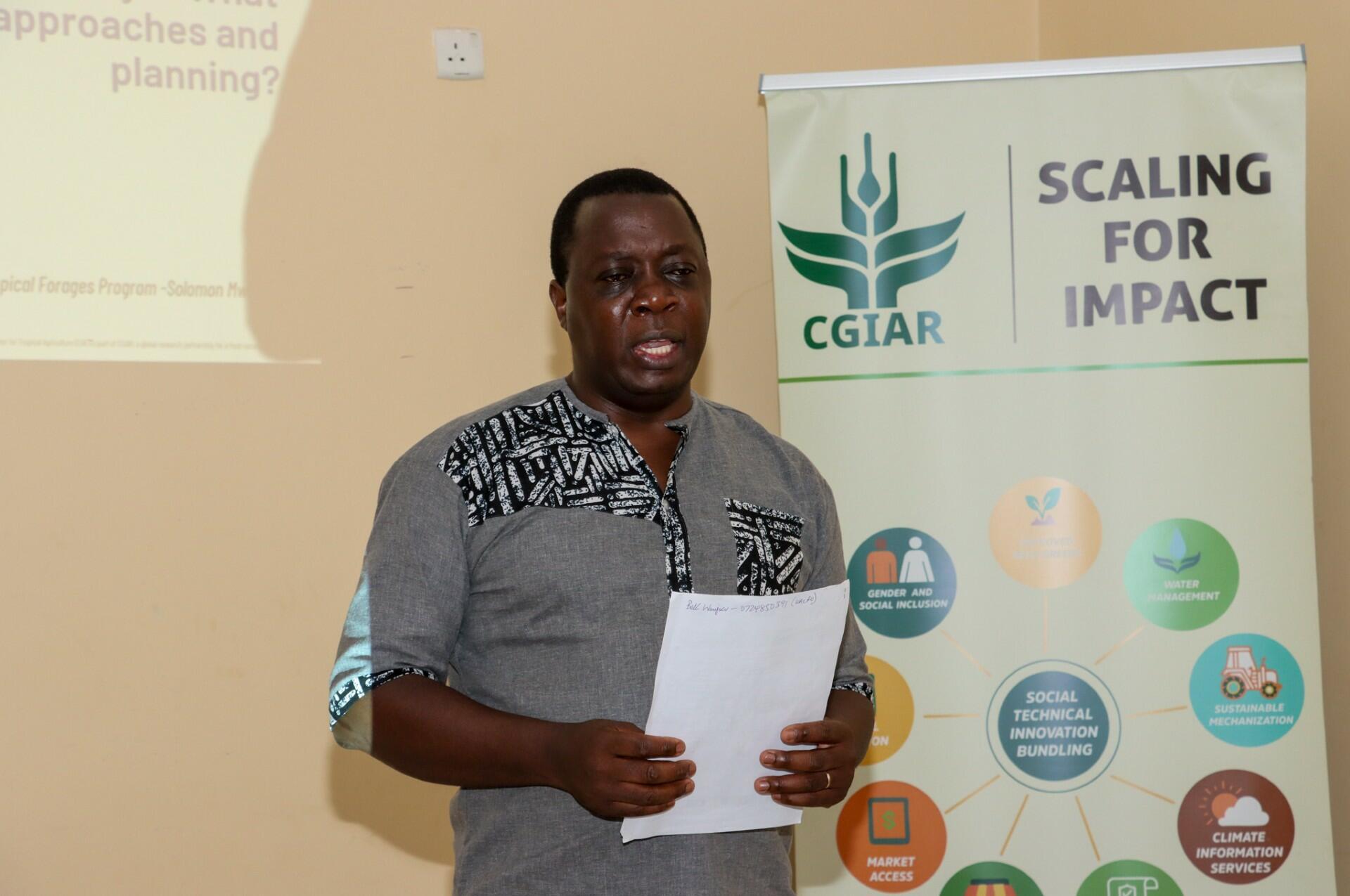
Boaz Waswa
To achieve better impact and resilience, we must move beyond isolated success stories and embrace approaches that consider local contexts, strengthen value chains, and empower farmers and stakeholders. Effective scaling ensures that innovations deliver long-term benefits, reduce risks, and build systems capable of thriving under uncertainty, noted Boaz Waswa of the Alliance of Bioversity International and CIAT.
The Scaling for Impact Science Program at the Alliance of Bioversity International and CIAT - in collaboration with the CGIAR Sustainable Farming, Multifunctional Landscapes (MFL), Climate Action, and Gender Equality and Inclusion Science Programs - convened a pivotal learning workshop on lessons on scaling sustainable practices for resilient agrifood systems, an event that took place at Tawa in Makueni County.
The three-day workshop brought together a dynamic mix of researchers, extension agents, the private sector, non-governmental entities, and farmers who shared experiences on how to move beyond successful pilot projects to achieve widespread, lasting impact for resilient and productive smallholder systems in Kenya.
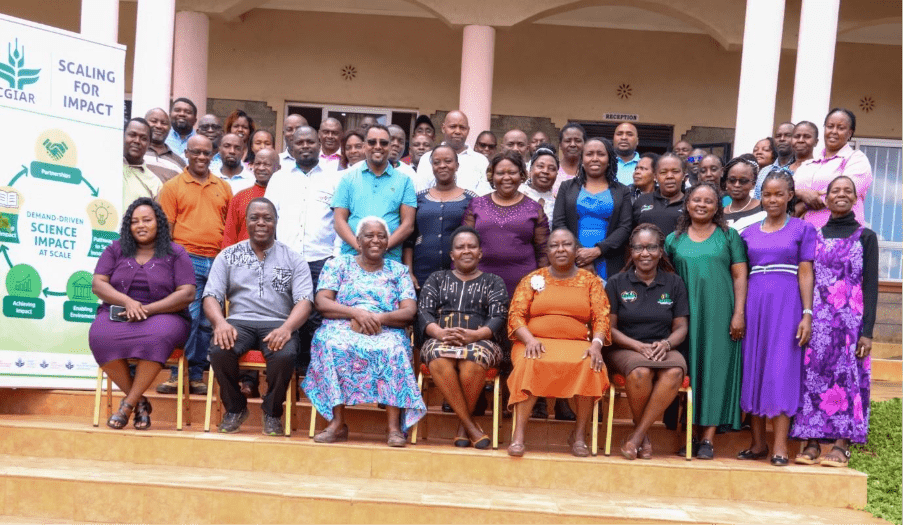
Group photo
Setting the scene, Mary Muteti, Makueni County Director of Agriculture, noted the importance of adopting sustainable farming practices that can help farmers guarantee production of diverse and nutritious foods in a changing climate. She observed that Makueni County recently launched the Agroecology Policy to drive this goal. For sustainable impact to happen, scaling approaches should integrate the 4Rs:
- Risk reduction through building community and household assets and adopting CSA and regenerative agriculture practices, including crop diversification,
- Risk transfer through accessing crop/livestock or weather index insurance,
- Risk-taking through using profitable agricultural practices, such as improved seed and fertilizer, and
- Risk reserves by establishing saving groups, such as Village Savings and Loans Associations (VSLA), to improve financial inclusion.
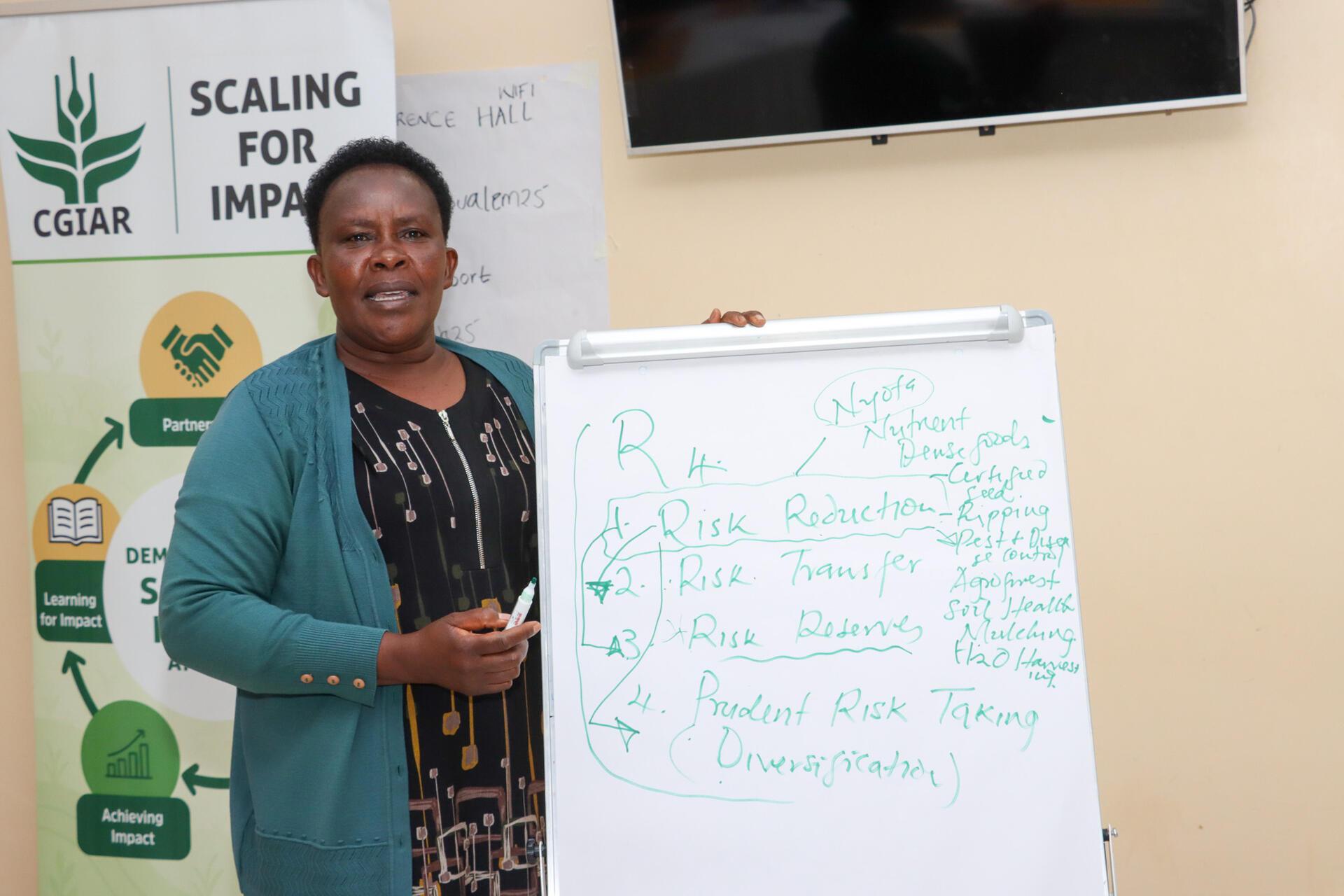
Makueni County Director of Agriculture - Ms. Mary Muteti
Farmers leading the way
Through exchange dialogues, the farmers from Makueni, Embu, and Nakuru detailed a transformative journey toward greater climate resilience, productivity, and income through their adoption of crop diversification, regenerative agriculture, climate-smart agriculture (CSA), and climate information services (CIS). Farmers gave accounts of implementing specific technical innovations such as minimal tillage, crop rotation, intercropping, and the use of certified seeds, including drought-tolerant varieties like Nyota beans, sorghum, and pigeon peas, planting pits and basins, water harvesting, forage production, mechanization, and use of seasonal weather advisories accessed via the Kenya Agricultural and Livestock Research Organisation (KALRO) KAOP app, which have significantly bolstered their yields and resilience to climate change. The collective impact has been profound: communities are now more enlightened, livelihoods are improved, and income flows have increased, leading to greater food security and a notable decrease in gender-related disparities. A significant shift has occurred as some small-scale farmers have transitioned to commercial enterprises, while the knowledge and technologies have created positive spillover effects, with non-member farmers adopting these practices through peer-to-peer learning. teams have been instrumental in this success.
“To date, our group has successfully influenced over 800 non-member farmers. This network is expanding organically and consistently, driven not by promotion but by the compelling evidence of our significantly improved harvests." Grace Maingi, Ukama Ustawi farmer –Makueni.
Bundling approaches for impact
The workshop benefitted from partner experiences using different scaling approaches to deliver technologies to the farmers: research experimentation, on-farm technology demonstrations, farmer learning field days and exhibitions, financial inclusion, gender and social inclusion, public and private sector-led extension, use of digital tools, among others.
Partners under the Ukama Ustawi Initiative on Diversification in East and Southern Africa, led by the Alliance in collaboration with KALRO and Africa Conservation Tillage Network (ACTN), deployed the use of 'the Mother Baby Approach': a participatory experimentation and learning approach to promote diversification in maize farming systems in Embu, Nakuru, and Makueni. This approach enhanced farmer-to-farmer learning, leading to faster uptake of diverse CSA practices.
The mother-baby approach gave us an opportunity to practically try out the preferred technologies on our own farms after learning with the researchers. My maize productivity has stabilized over the seasons and increased from 2 bags to 10 bags using the furrows, mulching, and other good agricultural practices, noted Agnes Ndia, a farmer from Embu County.
The AICCRA Kenya model emphasized scaling evidence-supported sustainable agriculture innovations developed by CGIAR and building the capacity of stakeholders. Through this model, AICCRA supported universities such as Chuka, Laikipia, Murang’a, and Taita Taveta to co-develop climate-smart curricula and built the capacity of partners in CSA and CIS.
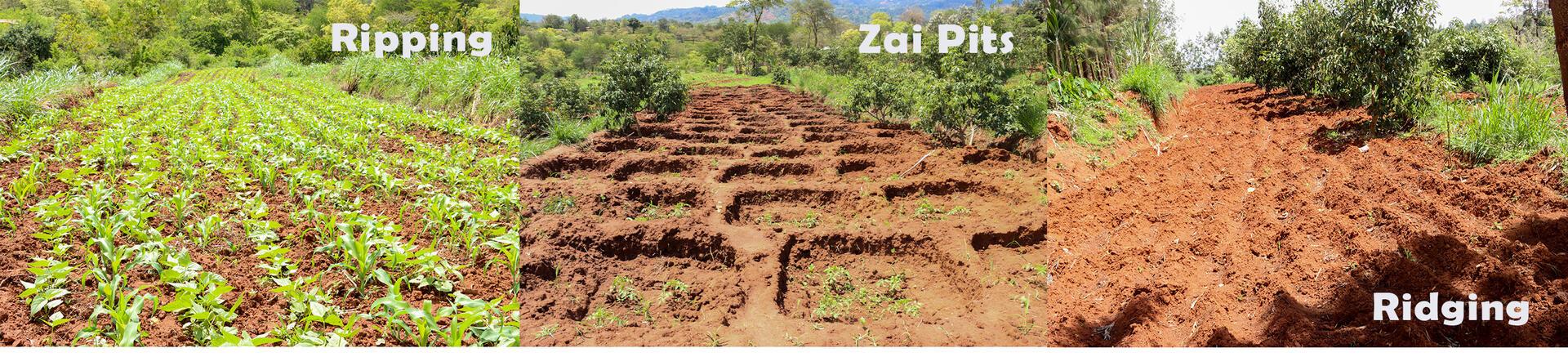
Different CSA farming practices.
Through this approach, Alliance-AICCRA, working with Makindu Sub-County Agricultural Extension team, built the capacity of over 300 Kimatwa Women SACCO members who are adopting CSA practices, among them crop diversification, planting pits, basins, mulching, use of manure, crop diversification and use of improved drought-tolerant seed varieties.
Private sector plays a major role in technology uptake. This was evident from the cases on mango commercialization by Goshen Limited, as well as the circularity and use of organic fertilizers by Organic Fields Limited. Adopting a demand and market-led approach was noted as critical for innovation uptake. This was evident in the Bean Corridor Approach, a model deployed by KALRO and PABRA. David Karanja the Bean Program Lead at KALRO elaborated how the use of this model has helped to inform breeding of market demanded bean varieties, improved formal seed production working with public and private seed producers, spurred production due to ready market for beans, stimulated processing and value addition of bean-based products mainly by women and youth entrepreneurs. Further, working with county governments has enabled policy support and mainstreaming use of high-iron beans in school feeding programs.
The Alliance Tropical Forages team demonstrated how research has generated diverse forages adapted to diverse agroecologies and how, by working with the private sector, such as Advanta, Advantage Crops Limited, CRESCO Seeds, and farmer cooperatives is turning grass to cash and benefiting thousands of smallholder dairy and beef farmers in Kenya.
Other development partners, such as Cereal Growers Association, ACTN, and World Renew, demonstrated scaling regenerative agriculture through on-farm demonstration, working with lead farmers, organized groups, and linking with county governments. Through these approaches, champion farmers, Village Based Agents (VBAs), and Farmer Service Centers (FSCs) have been established to bring extension services closer to the farmers. This approach addresses the challenge of the wide extension to farmer ratio, currently at 1:1000 nationally.
Fadhili Trust demonstrated how by integrating Village Savings and Loan Associations (VSLAs) enabled farmers to finance technologies like drip irrigation, drought-tolerant seeds, zai pits, terraces, and water-harvesting structures. This financial inclusion model accelerates adoption while fostering community learning, digital, and gender inclusion.
Tapping into technology
In a technologically advanced world, the use of digital solutions is crucial in delivering agricultural innovations to millions of farmers across the country. KALRO has developed various digital extension tools e.g., KAOP, which provides climate agro-advisories and Crop Selector, among others, that if well used can bring the gap of extension and knowledge dissemination.
With a shortage of extension service providers, farmers face challenges accessing services from extension agents. Extension Africa demonstrated how using a data-driven agritech platform, farmers can be connected to extension agents, get farm advisories, and be linked to verified agricultural experts in real time. The tool can also be used to get real-time data and analytics to track the impact of extension services. This tool has been deployed in Nigeria and has onboarded over 6000 extension agents and reached over 800,000 farmers.
Learning from a model farmer champion
The workshop culminated with a field visit to Zima Farm, where the participants had a practical experience to learn from Zipporah Nzioka, an entrepreneurial farmer also serving as the Farmer Service Center (FSC). The farm demonstrated diverse enterprises such as avocado, beans, tomato, and vegetable production and integrated practices such as runoff water harvesting and conservation, mulching, use of traps for pest control, zai pits, ripping, agroforestry, intercropping, and mixed farming. As an FSC Zipporah aggregates demand and helps farmers access inputs, supports produce aggregation for markets, and serves as a certified plant doctor and trainer. Youthful and progressive farmer champions such as Zipporah stand out as models that can influence the scaling of innovations to transform the agricultural sector in Kenya.
Visiting and seeing what Zipporah is doing has motivated me to look at farming in a different way. Noted one impressed participant.
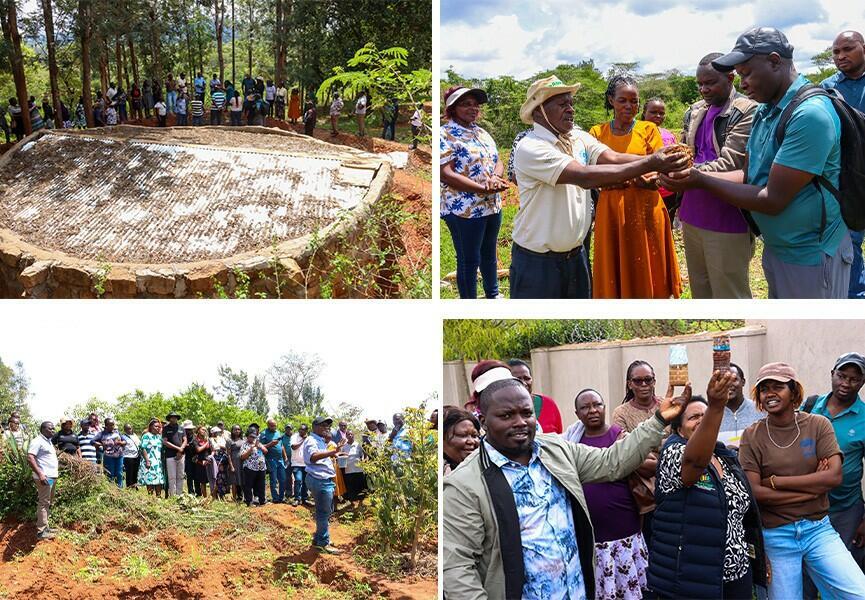
Field visit to Zima Farm
Conclusion
The workshop presented a space to pause, reflect, and learn from one another on how to scale innovations. The participants called for strengthening agricultural resilience and scaling sustainable practices through context-specific solutions tailored to local agroecological conditions and farmer realities. Farmers were encouraged to adopt diversification strategies both in crops and income sources as a means of risk aversion and economic stability.
Bundling approaches was encouraged to deliver complementary interventions together for maximum impact and efficiency, as innovations are normally spread out as selected innovation packages of core and complementary innovations.
Digital technologies in extension, such as mobile platforms, interactive media, and data-driven advisory tools, was advocated for to enhance outreach and improve farmer decision making.
It was also advocated for to accelerate the scaling of climate smart and sustainable agricultural practices.
The future of food security and resilience depends on how effectively we scale what works. Scaling innovations in agri-food systems is not a linear process it requires deliberate strategies, inclusive partnerships, and continuous learning. By prioritizing context-specific approaches, strengthening institutional capacities, and leveraging evidence-based practices, we can transform promising ideas into widespread solutions that deliver real impact.
There is a need to commit to approaches that not only reach more farmers but also build systems that are sustainable, equitable, and adaptable to change. The time to act is now because scaling right is scaling for impact.