From the Field Scenarios for change: Digital technologies and the future of food, land, and water systems

Bringing together diverse voices to anticipate challenges, identify opportunities, and strengthen CGIAR’s digital transformation agenda for the decade ahead.
The Global South is at the forefront of the digital transformation reshaping food, land and water systems. Emerging technologies such as artificial intelligence, machine learning, big data analytics, remote sensing, and inclusive digital platforms are being harnessed to enhance resilience, equity, and sustainability for smallholder farmers and vulnerable communities. These innovations promise to redefine how we farm, trade, consume, and sustain vital resources. Yet, with these opportunities come profound uncertainties. What new risks might arise? Whose needs will be prioritized? And how can digital futures be harnessed for more just, resilient, and inclusive food systems?
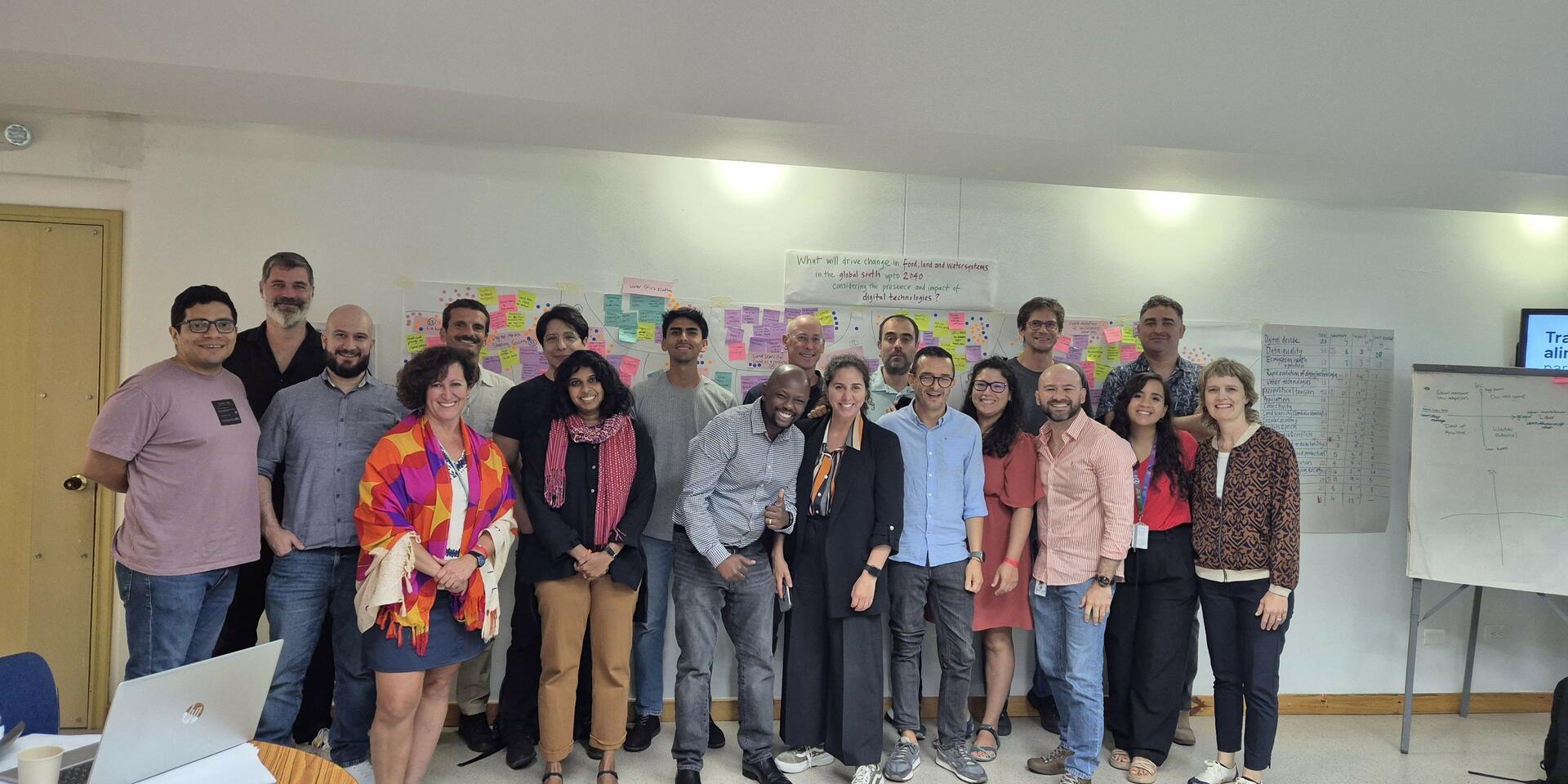
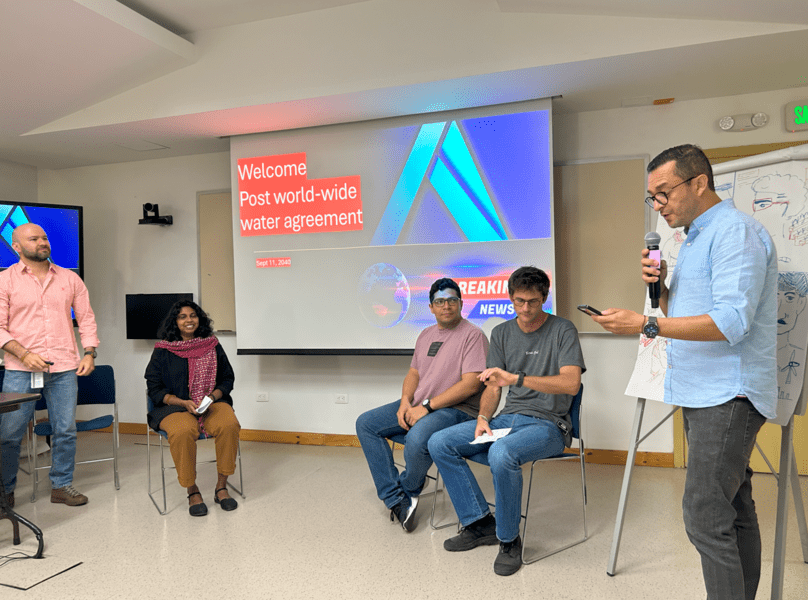
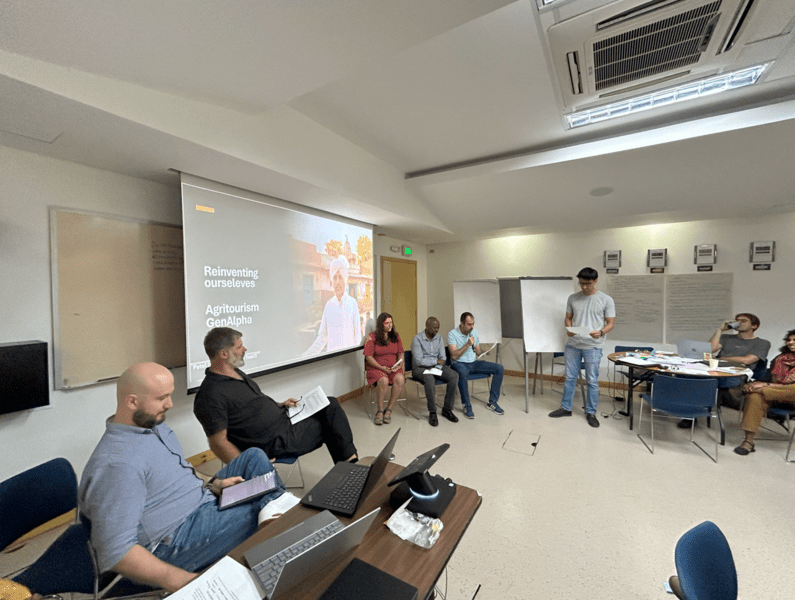
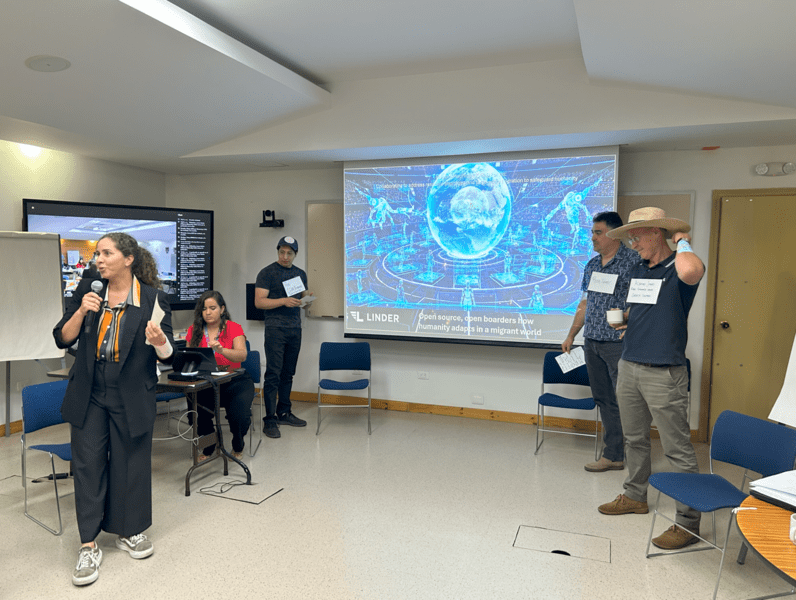
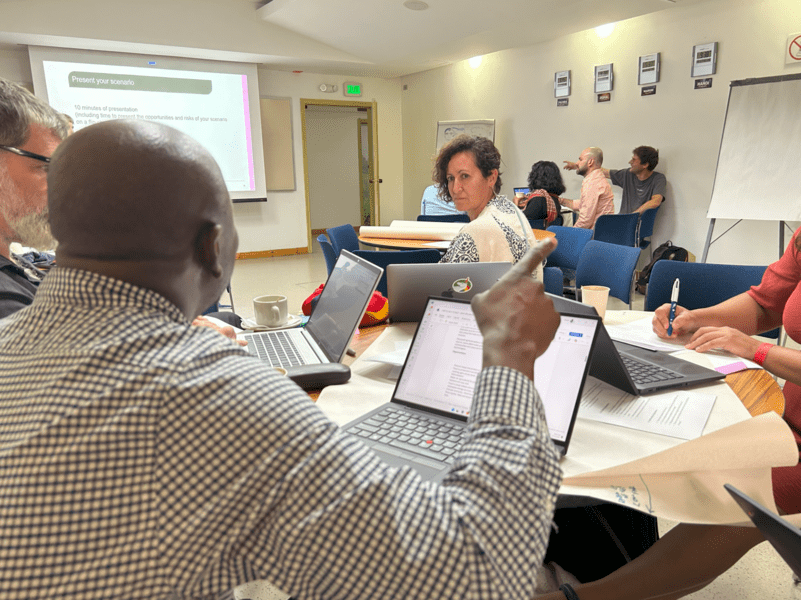
These questions framed the scenarios workshop: The future of food, land and water systems in the face of digital technologies in the Global South, held from September 9–11, 2025 at the Palmira campus of the Alliance of Bioversity International and CIAT. Organized with the International Water Management Institute (IWMI) as part of CGIAR’s Digital Futures initiative, the workshop convened researchers and designers from four CGIAR centers and four different science programs and across disciplines and geographies to co-create scenarios of what the next decade could hold.
Why scenarios, why now?
In a world of rapid change, scenarios provide a structured yet creative way to navigate uncertainty. They do not attempt to predict a single future but instead map multiple plausible directions that drivers of change might take.
As one participant reflected:
“You get very diverse perspectives of where the future could go, but it also pushes our boundaries our imagination of what the future could be in a positive way.”
By examining diverse possibilities, scenarios help organizations like CGIAR anticipate risks, identify opportunities, and make more resilient strategic choices. They also provide a shared language for engaging with complexity, inspiring dialogue, and challenging assumptions.
A human-centered futures process
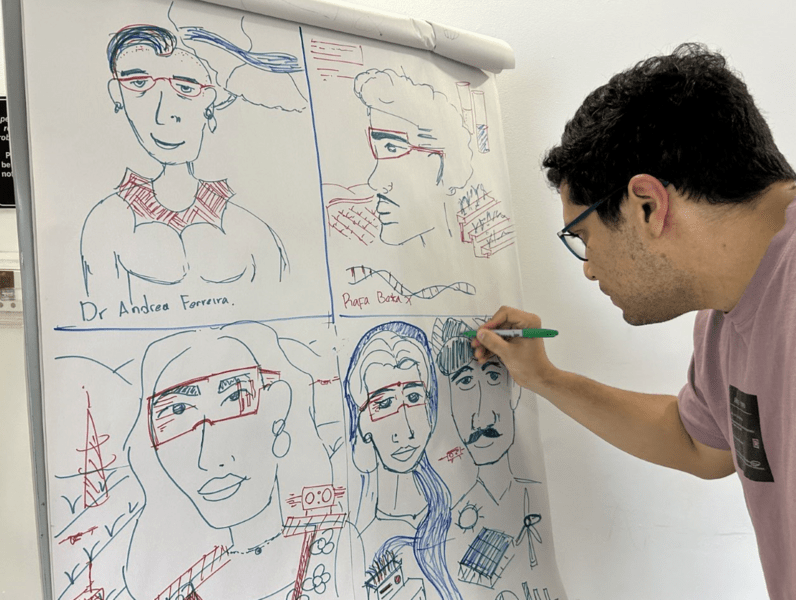
Unlike traditional foresight exercises about future trends in digital technologies that focus primarily on technologies itself and how they might evolve, this workshop placed people at the heart of its approach. Using design thinking and speculative futures methods, participants built contextual scenarios that explored what food land and water systems could look like in futures where currently emerging digital technologies have been fully adopted, and especially: how key users would live in those worlds: A smallholder farmer navigating digital tools and climate uncertainty, a policymaker facing choices about AI regulation and water management, a CGIAR researcher designing new innovations in a world of migration and scarcity.
This approach fostered empathy and grounded the futures exploration in lived realities. As one facilitator explained: “We wanted to understand: what does the life of a farmer look like in these future worlds, and what challenges and opportunities does their community face? What decisions are policymakers making? And what role do CGIAR researchers play? This helped us look beyond systems and technical issues and focus on people’s lives.”
Diverse perspectives, shared learning
The workshop brought together teams from four CGIAR centers, four science programs, and around 11 nationalities, spanning backgrounds in water, ecology, economics, sociology, IT, nutrition, design, UX, media, communications, and social sciences. This diversity enriched the co-creation process and broadened the scenarios to reflect a wide range of global and local dynamics
An inspired keynote from the Director of Future of Food at the Bezos Earth Fund set the stage, encouraging participants to think boldly about disruption and possibility. Over three days, participants engaged in:
Day 1: Sharing signals of change, prioritizing critical drivers, and framing key uncertainties
Day 2: Collaborative scenario building, narrative development, and persona design
Day 3: Presentation of scenarios, discussion of implications, and recommendations for CGIAR research, strategic decision-making, innovations and investments
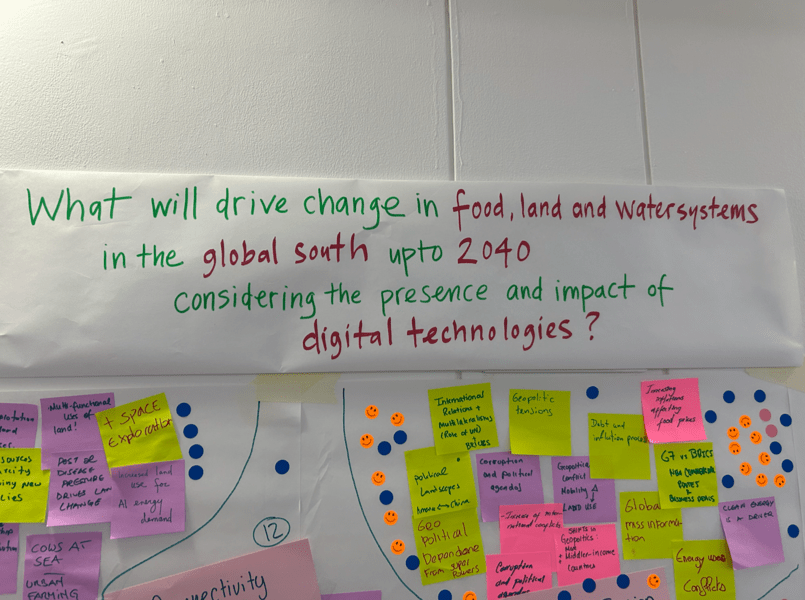
The richness of perspectives sparked exploration of themes such as:
- Geopolitical tensions and their impact on food trade and cooperation
- Water scarcity and digital innovations in water management
- Labor shortages in agriculture and automation through robotics and AI
- Mass migration and its implications for rural and urban systems
- Extreme events and emergencies, and how CGIAR’s 15 centers can work together to accelerate impact when crises strike.
Building strategic foresight for CGIAR
For CGIAR, this workshop was not only a learning exercise, it was also a step toward shaping a collective vision for digital transformation. The outcomes will:
- Guide strategic decision-making across CGIAR centers on the role of AI and digital tools in research, innovation, and delivery
- Inform the CGIAR Digital Transformation Accelerator, helping to set its agenda for the coming years
- Define a long-term view of AI in CGIAR’s work, including how it supports services to partners and stakeholders.
As one participant stressed:
“We are the researchers looking at the future of our food, water, and land systems. The question is: how can we, as 15 CGIAR centers, work together to accelerate impact when these futures, or extreme events, become reality, and provide solutions for humanity?”
The road ahead
The workshop closed with the presentation of scenarios and personas, alongside discussion of socio-economic, political, and environmental implications. Recommendations highlighted the need to:
- Invest in inclusive digital innovation, ensuring women, youth, and marginalized groups are not left behind
- Have CGIAR act as a broker and facilitator for collaborative, decentralized management
- Anticipate and study ethical risks associated with digital tools and algorithm-supported innovations, including issues of bias, transparency, and accountability.
- Strengthen cross-sectoral collaboration to address systemic challenges like water scarcity and climate change, and energy transitions
- Engage with emerging stakeholders, including tech companies investing in data centers and the energy sector driving digital infrastructure, since they are increasingly shaping the landscape of food, land and water systems
- Build adaptive research agendas that can respond flexibly to uncertainty and rapidly evolving contexts
- Continue fostering futures and foresight capacity across CGIAR and its partners, applying a human-centered lens that anchors digital technologies in the lived realities of farmers, policymakers, communities, extension agents, and researchers in Latin America and beyond.
Ultimately, Palmira’s workshop was more than an exercise in imagination—it was a step toward strategic action. By envisioning diverse futures, CGIAR and partners are better positioned to shape digital transformation in ways that are equitable, sustainable, and centered on people.
In the words of one facilitator: “Scenarios help us capture uncertainty in clear, thought-provoking ways. But more importantly, they remind us that the future is not something we wait for—it’s something we build together.”