Blog Millet: From ancient grain to staple crop for future food systems

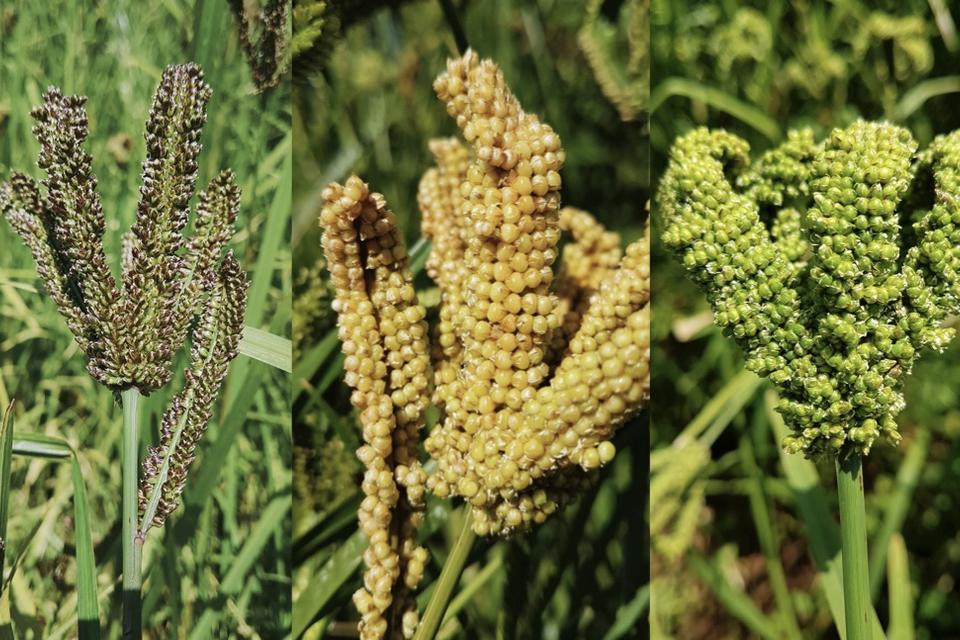
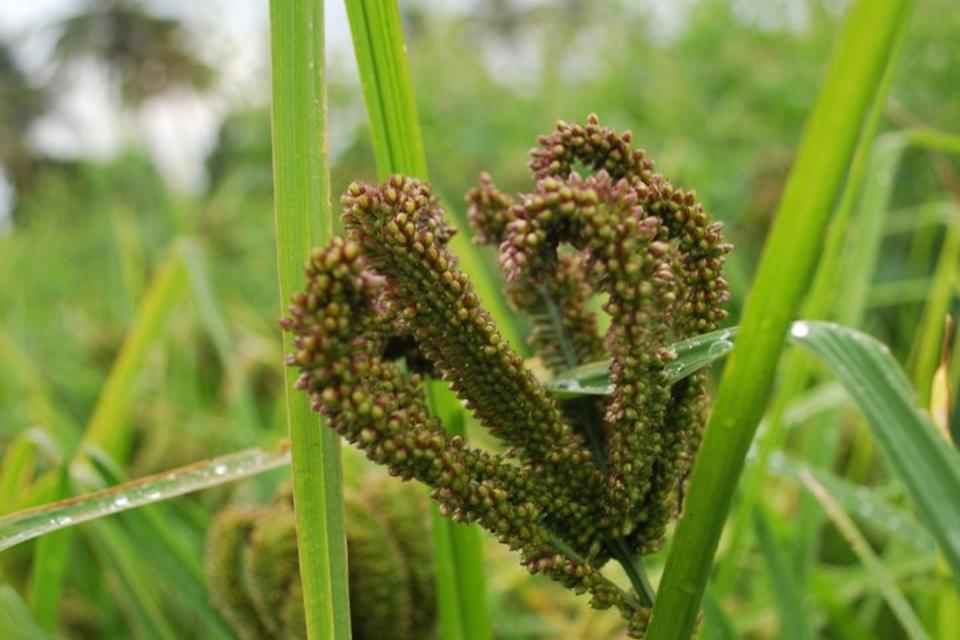
Millets are one of the world’s oldest grains, with evidence of their cultivation more than 7,000 years ago. There are more than 10 varieties, the most common being sorghum, finger millet, foxtail millet and pearl millet. Millets have been of special cultural importance in India, China, and Nigeria, used in traditional dishes and even in drinks (such as the Indian ‘ragi malt’).
While millets were amongst the world’s first cultivated crops, production and consumption decreased during the 20th century, especially since the Green Revolution (1960s-1980s), when high-yielding grains such as wheat and rice began to dominate food systems. However, growing awareness of millets’ nutritional benefits and potentially low environmental impacts have increased interest in these grains across the world (reflected by the United Nations’ ‘International Year of Millets’ in 2023), leading to an increase in production and consumption. So, how can millets accelerate global climate change action and food security?
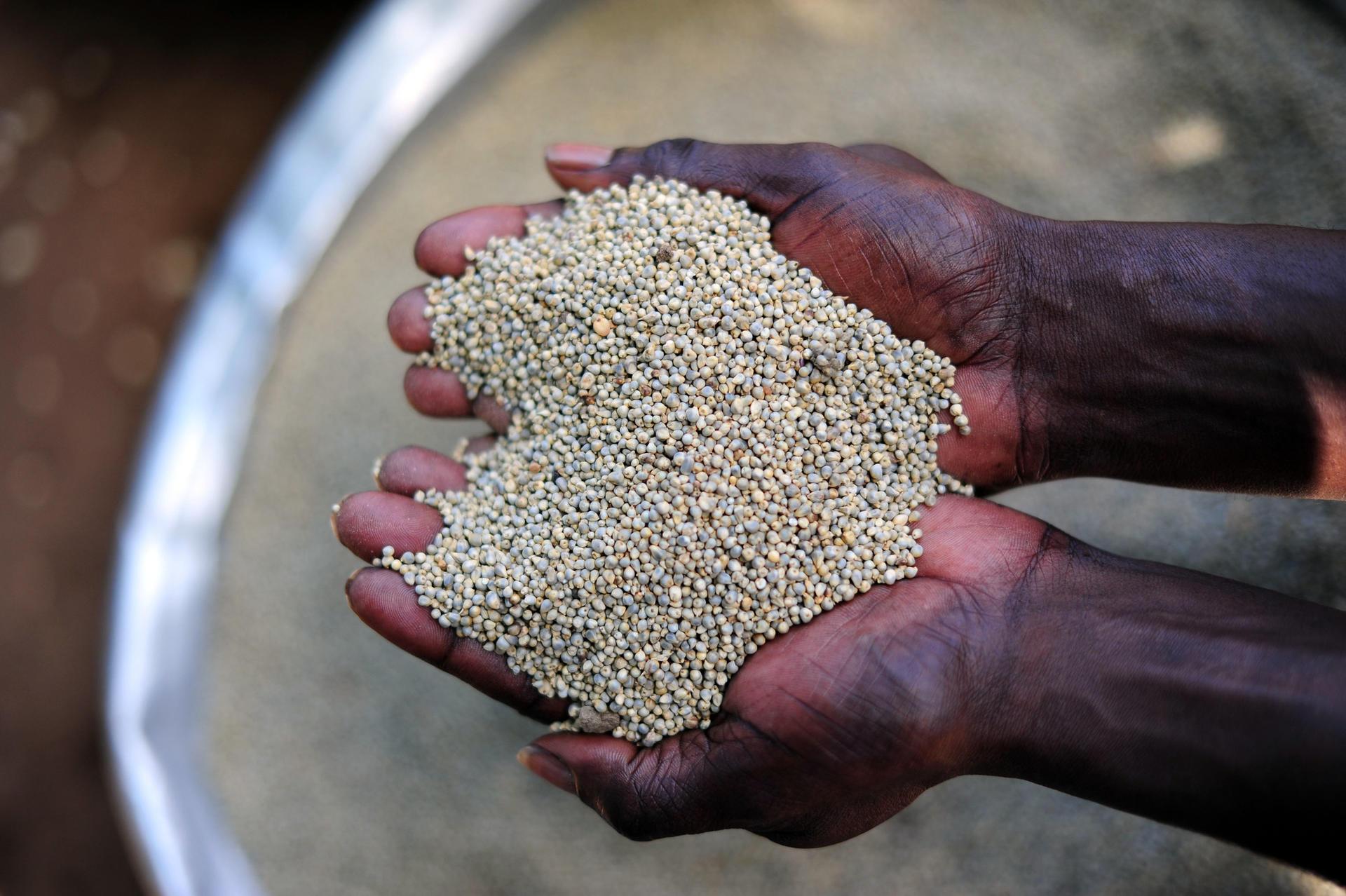
Millet at Sawla market in Northern Ghana. Credit: CIAT/NeilPalmer
Millets and low-impact farming
In the face of accelerating climate change and environmental degradation, millets offer two important environmental benefits: low water requirements and contribution to soil restoration. A 2023 study by the Food and Agriculture Organization of the United Nations found that millets require significantly less irrigation than rice and wheat, contributing to water saving in agriculture. Specifically, according to the CGIAR center ICRISAT (International Crops Research Institute for the Semi-Arid Tropics), millet cultivation requires 79 liters of irrigated water per kg compared to 596 and 729 liters per kg of rice and wheat, respectively. With agriculture using an estimated 70% of freshwater withdrawals, and water insecurity on the rise, upscaling the production of millet can make valuable environmental contributions. This low water requirement also makes millets a reliable cash crop for farmers in arid regions, and offers an alternative for farmers in temperate climates whose usual crops are affected by climate change-induced heat and drought.
Second, soil degradation is a growing challenge for agriculture, and millets could also contribute to addressing this. Alliance trials of millet production in Colombia found that millets thrived even in degraded soils, making these grains ideal to regenerate degraded soils using agroecological practices such as crop rotation (alternating the crops grown on a piece of land, thus increasing the variety of soil nutrients) and mixed farming (integrating crops with trees and even livestock). By integrating millets into existing production systems, farmers could provide depleted soil with new nutrients without excessive inputs, contributing to efforts to reverse soil degradation.
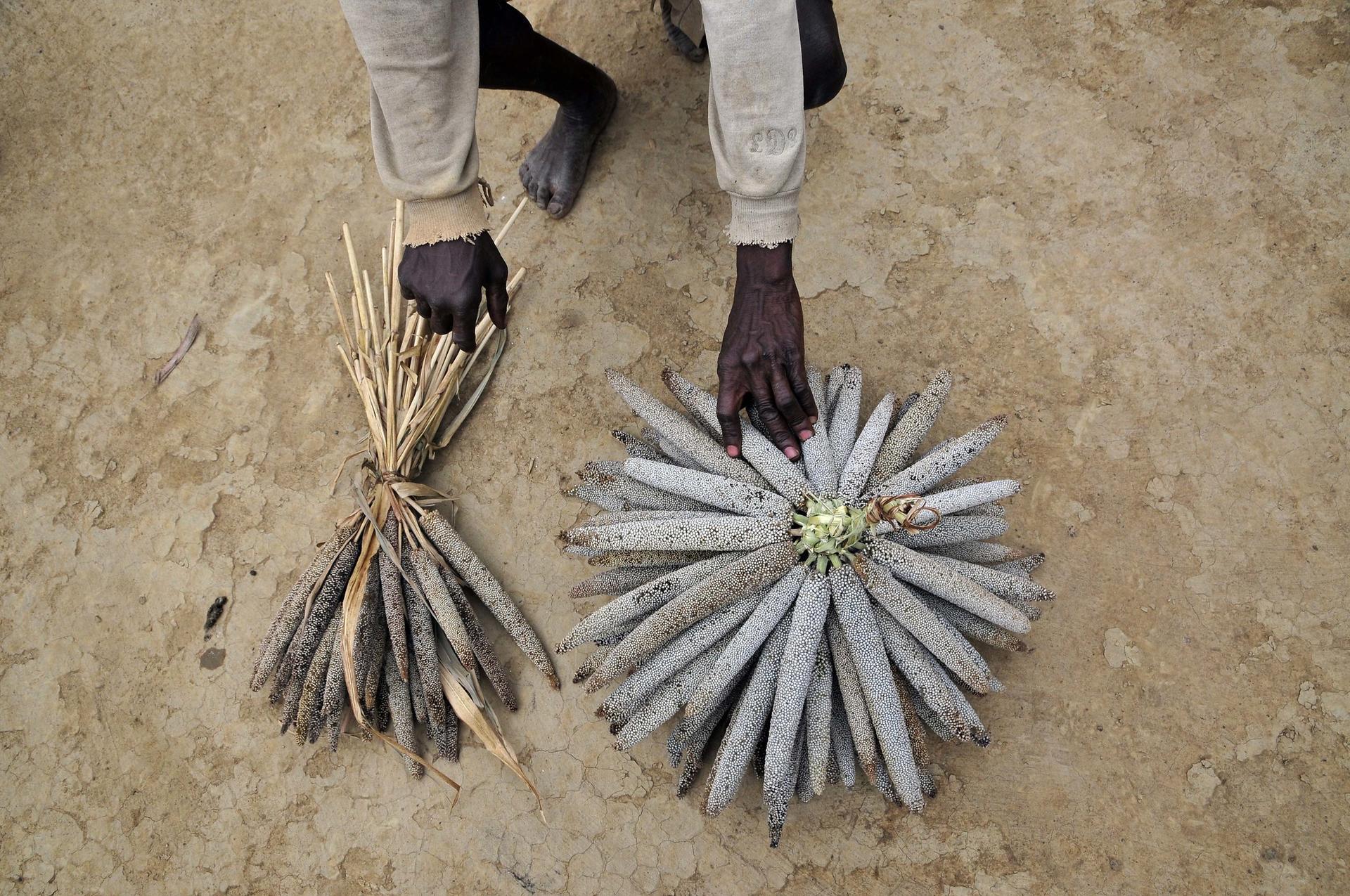
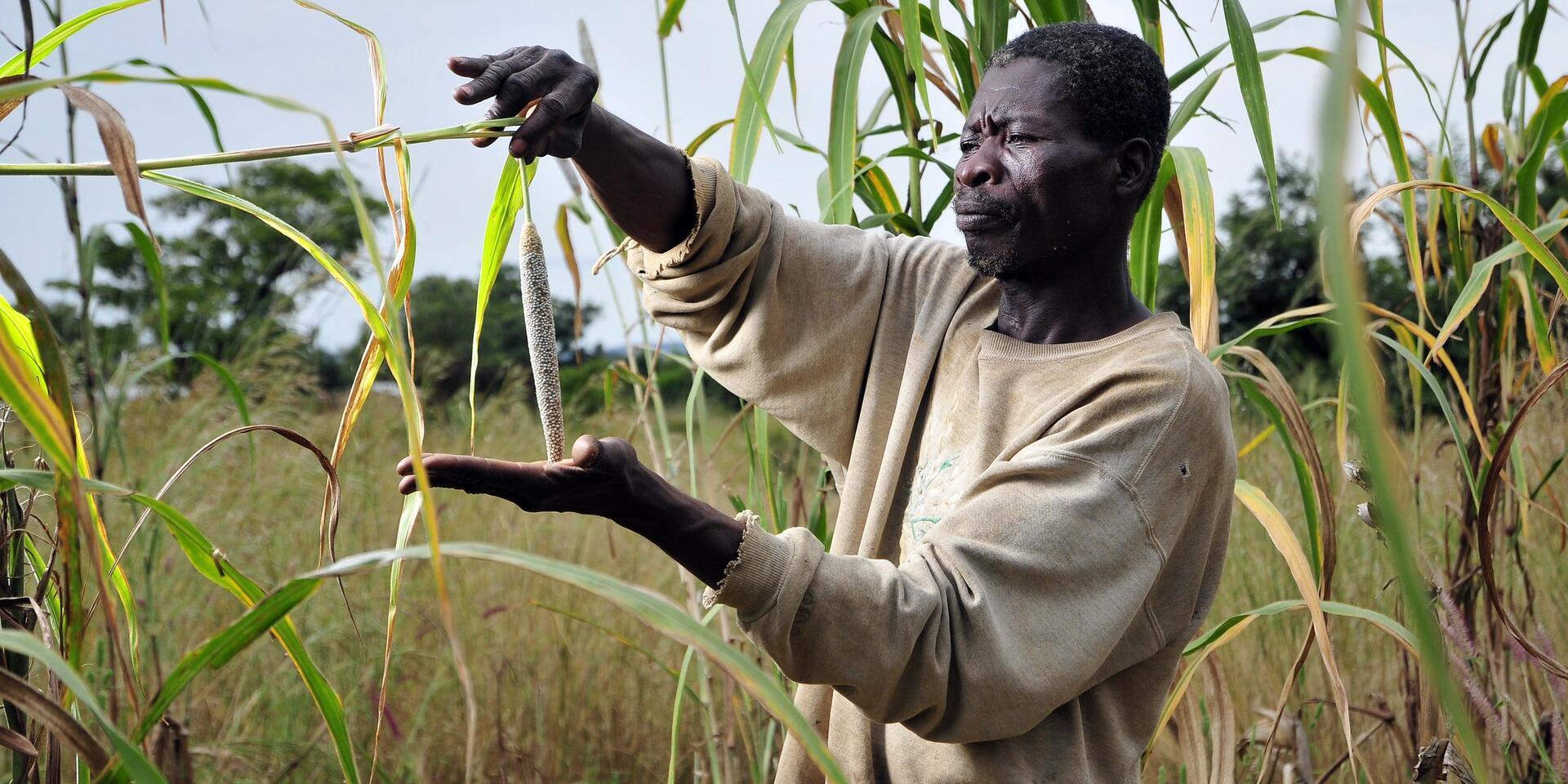
A farmer inspects his millet harvest in Northern Ghana. Credit: CIAT/NeilPalmer
Millets for Food Security and Nutrition
Millets are rich in both macro and micronutrients. According to a study by the Indian Institute of Millets Research (IIMR), millets are higher in protein than most other grains, and have high levels of fiber, B-complex vitamins and vitamin E; millets also contain relatively high quantities of minerals such as iron, magnesium, and phosphorus. The IIMR study on the ‘Nutritional and Health Benefits of Millets’ also found that “the consumption of millets reduces risk of heart disease, protects from diabetes, and improves digestive function”. These findings are supported by a 2021 study that concludes that “millets have competitive nutrients equal to, or in some instances more than, conventional cereals such as maize, wheat and rice”.
Mainstreaming millets in current food systems
As interest in millets grows amongst various environmentalists, nutritionists and consumers, the United Nations declared 2023 ‘the International Year of Millets’, launching a year of awareness-raising events, campaigns, competitions and more, led by various organizations working at the cross-section of farming, environment and nutrition. Reflecting on the impact of this year, Dr. Jacqueline d’Arros Hughes – Director General of ICRISAT – concluded that "the International Year of Millets had a profound impact on the worldwide understanding and appreciation of millets, and has sparked meaningful collaborations and innovations to harness the full potential of these remarkable grains." She highlighted that, having increased global awareness of the benefits of millets, international organizations and governments must now focus on developing enabling policies for farmers and food processors, supporting innovation in millet value chains and facilitating market access.
In a step towards mainstreaming these grains, in 2024 the Government of India incorporated millets into its ‘Public Distribution System’, which provides fully subsidized food grain to over 60% of the country’s population. While the quantity of millet remains lower than other grains, the policy includes plans to decentralize procurement of millet to increase this proportion in the future.
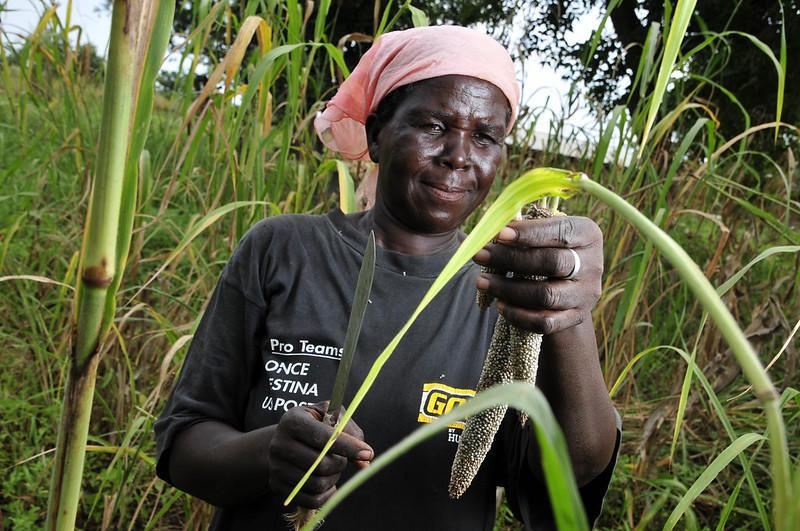
Farmer harvests millet in Ghana, where it thrives despite rising temperatures. Credit: CIAT/NeilPalmer
Conclusions:
Studies carried out across the world have shown that increasing the production and consumption of millets holds great potential to reduce the impacts of arable farming, regenerate soils, and enrich diets, building more resilient food systems that address multiple global priorities. Although there has been a notable increase in interest and production of these grains, ongoing research by the Alliance has observed that while millets are gaining in popularity, many producers lack access to the most appropriate varieties for their land, as well as necessary post-harvest processing technology that would make their products ready for market. To put research findings into action, the Alliance is collaborating with UNEP, the Global Environment Facility, local government entities, universities and civil society organizations to increase access to resources and strengthen millet value chains to harness the full potential of these grains.
Q&A: How can I cook millets?
Q&A: How can I cook millets?
1. How do I cook millet, and what are some popular millet recipes?
Popular recipes include millet salads, cakes, stews, porridge, pilaf, upma, and more. Discover some here! These versatile dishes show millet's adaptability and nutritional benefits.
2. Can I use millet as a substitute for other grains, and how do I enhance its flavor?
Yes, millet can easily replace rice, wheat and other common grains due to its mild flavor and enjoyable fluffy texture. To enhance its flavor, consider toasting the millet before cooking, using broth instead of water, and adding herbs and spices during the cooking process. These techniques bring out millet's natural nutty flavor and add depth to your dishes.
3. How do I store cooked millet, and can it be used in baking and soups?
Cooked millets can be stored in an airtight container in the refrigerator for 4-5 days, or frozen for up to 3 months. Millet flour is a great option for baking bread, muffins, and cookies, while whole millets can be added to soups and stews for extra texture and nutrients.