Blog From project support to institutional ownership of climate services

The ECREA project is transforming how climate services operate in East Africa by shifting the system from isolated, technical forecasting to a coordinated public service model where meteorological agencies and agricultural institutions jointly produce and deliver climate information that farmers can understand, trust, and use to improve their seasonal decisions.
Across East Africa, climate services are becoming increasingly central to agricultural decision-making. Yet for many years, climate information systems and agricultural advisory services operated largely in parallel. Meteorological agencies generated forecasts, while agricultural extension systems focused on crop management advice. Without strong coordination between these institutions, climate information often remained disconnected from the decisions farmers needed to make in their fields.
As climate variability increases across the region, strengthening the institutional systems that connect climate science with agricultural advisory services has become essential.
The Enhancing Climate Change Resilience in East Africa (ECREA) project addresses this challenge by strengthening collaboration between meteorological services, agricultural research institutions, extension systems, and local governments across Uganda, Kenya, Tanzania, and Rwanda.
Implemented by the Alliance of Bioversity International and CIAT, it works closely with National Agricultural Research Systems (NARS), National Meteorological and Hydrological Services (NMHS), and regional partners such as the IGAD Climate Prediction and Applications Centre (ICPAC). These partnerships bring together institutions responsible for generating, interpreting, and disseminating climate information within national agricultural advisory systems.
Rather than introducing parallel project structures, it focused on strengthening existing institutional systems so that climate information can move more effectively from forecasting agencies to agricultural research institutions, extension services, and ultimately to farmers.
In Uganda, collaboration between the Department of Meteorological Services and the National Agricultural Research Organisation (NARO) illustrates how these partnerships are strengthening climate service delivery.
Dr. Isaac Mugume, Assistant Commissioner for Weather Forecasting Services in the Department of Meteorological Services under Uganda’s Ministry of Water and Environment, explains how the collaboration has strengthened the relevance of climate information for agriculture.
“Our mandate is to provide climate information services for different sectors, including agriculture, which is the backbone of our country. Through the ECREA project, we have strengthened co-production of climate information with agricultural partners, allowing us to generate tailored climate information services for specific farming areas.”
Before the project began, meteorological agencies faced significant challenges in communicating climate information in ways farmers could understand and trust. Climate forecasts were often perceived as technical and difficult to interpret, limiting their use in agricultural decision-making.
Through co-production processes and joint engagement between meteorological services, agricultural researchers, extension officers, and communication partners, the project helped bridge this gap by improving how climate information is interpreted and communicated to farming communities.
According to Dr. Mugume, this shift has led to a noticeable change in how farmers engage with climate services.
“We now receive phone calls and messages from farmers when a forecast is delayed even by a day or two. Communities are demanding climate information because they see its value.”
This growing demand reflects a deeper institutional transformation. Climate information is increasingly viewed not simply as an advisory product but as an essential public service that supports agricultural planning and climate risk management.
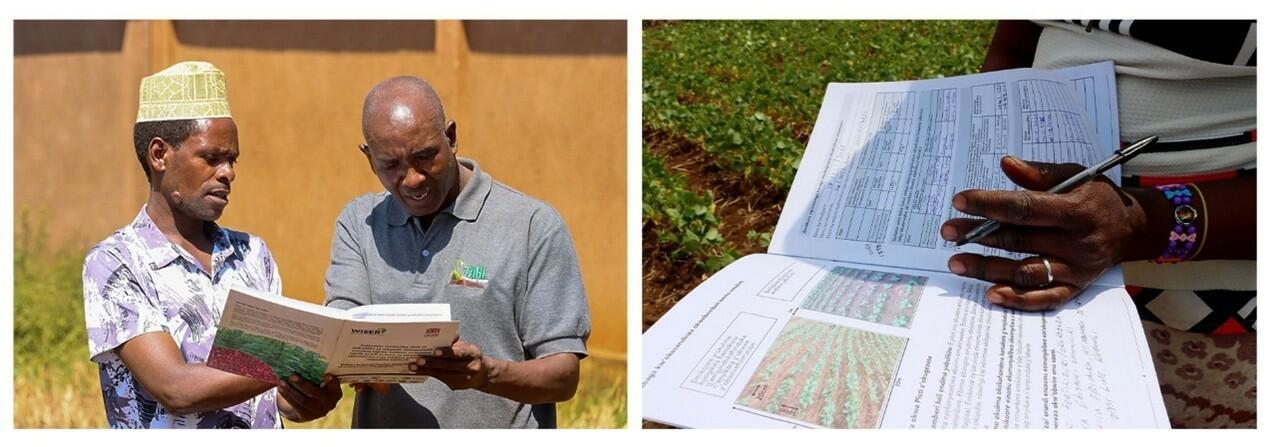
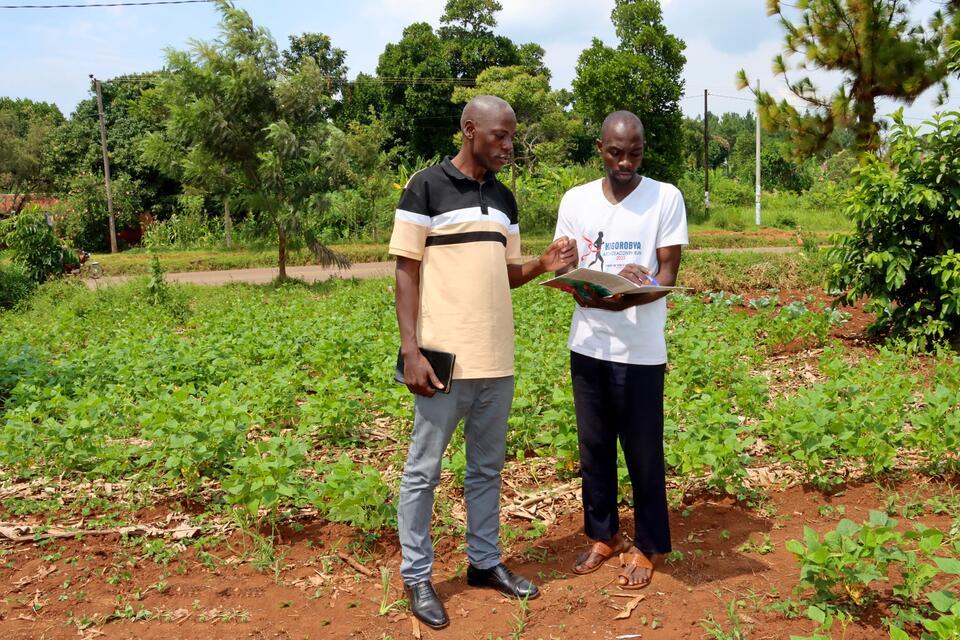
TARI’s Utoni Nkokelo reviewing a farmer’s records, during a field visit to support climate-informed decision making
Collaboration between meteorological agencies and national agricultural research systems has also strengthened the practical application of climate information within farming systems. George William, a research assistant with the National Agricultural Research Organization working in Uganda’s bean production hubs, explains how this partnership has improved agricultural advisory services.
“Before the project, farmers had limited access to information that could guide decisions, such as when to plant or harvest. Through collaboration between NARO and the Department of Meteorological Services, farmers now receive forecasts that help them plan agricultural activities throughout the season.”George William Chiwan, Research Assistant with the National Agricultural Research Organization
Seasonal forecasts, along with shorter-term outlooks such as six-hour and ten-day forecasts, now help farmers make more informed decisions about planting dates, crop management practices, and harvesting schedules. Researchers are also using climate information to guide recommendations on crop varieties suited to expected seasonal conditions. Similar collaboration between meteorological agencies and agricultural research institutions is also emerging elsewhere in the region. Mpoki Mathew Shimwela, Centre Director at the Tanzania Agricultural Research Institute (TARI) in Maruku, Bukoba, highlights the importance of this partnership:
“Through the ECREA project, researchers have gained valuable knowledge on how to interpret and use weather information for agriculture. The collaboration between TARI and the Tanzania Meteorological Authority has strengthened our ability to translate climate forecasts into practical recommendations that support farmers’ decisions.”
Institutional coordination has also improved the channels through which climate information reaches farming communities. Extension agents, farmer organizations, media partners, and digital communication platforms now play an important role in interpreting forecasts and communicating them in local languages that farmers can easily understand.
Similar institutional collaborations supported through the project are strengthening climate service delivery in Kenya, Rwanda, and Tanzania. Across the region, meteorological agencies, agricultural research institutions, and extension systems are working more closely to ensure that climate forecasts are translated into actionable agricultural guidance.
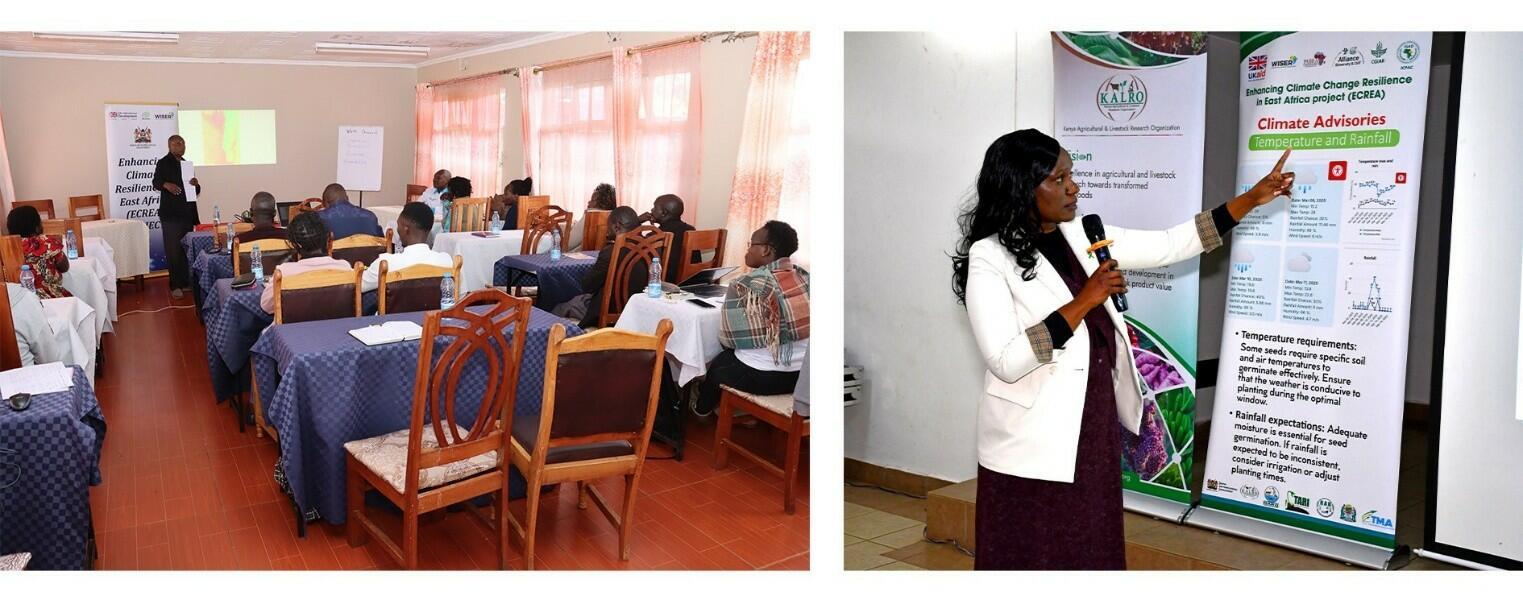
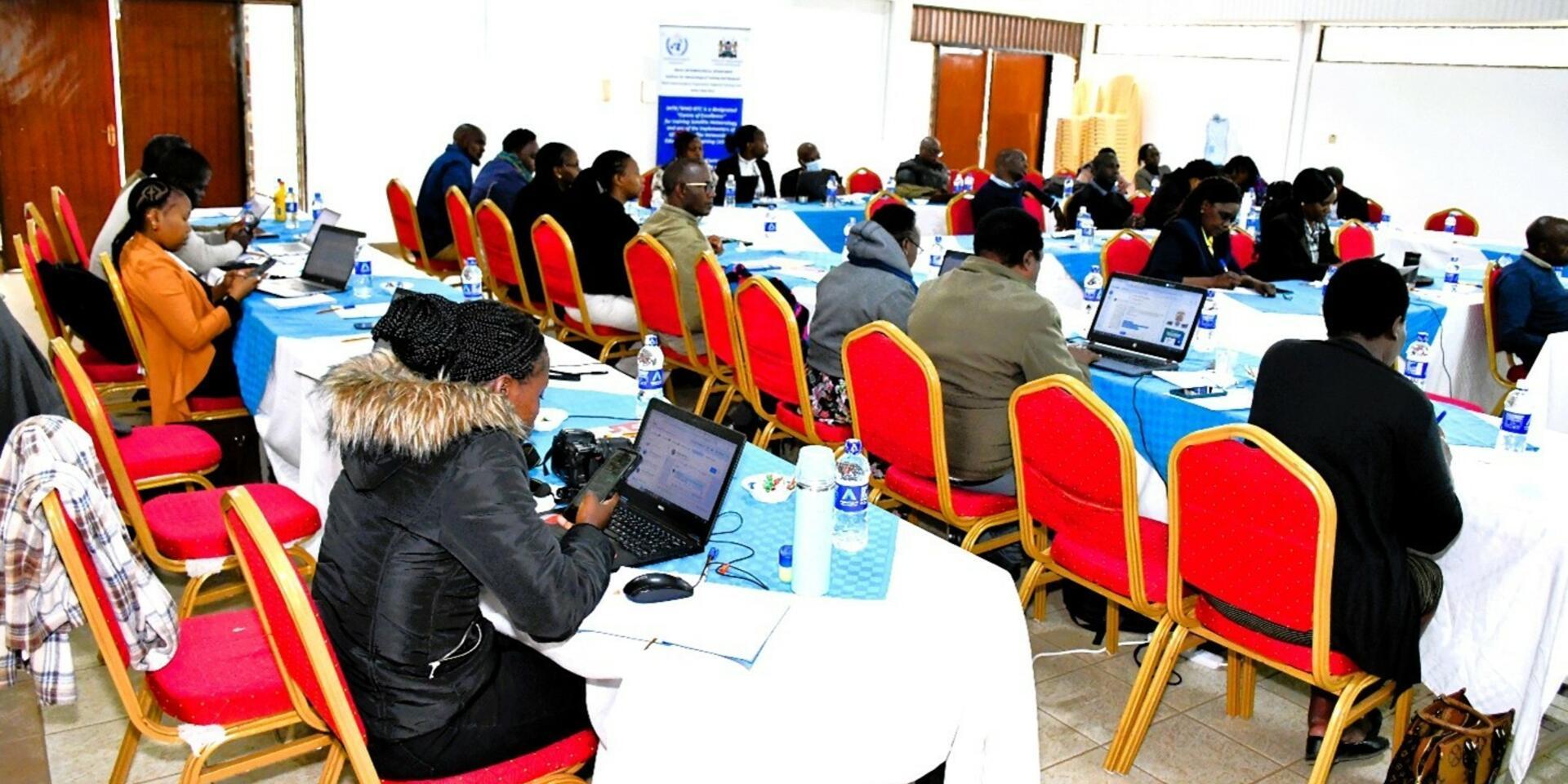
Strengthening media capacity through strategic collaboration improves the quality and reach of climate information.
Despite this progress, some gaps remain in ensuring inclusive access to climate information. Certain groups, including people with disabilities and farmers with limited access to communication technologies, may still face barriers in receiving climate advisories.
Recognizing these challenges, the ECREA project has encouraged partner institutions to strengthen Gender Equality and Social Inclusion (GESI) considerations in climate service delivery. Communication partners are increasingly adopting inclusive dissemination approaches, including local language broadcasts, voice-based messaging, and community engagement platforms that help ensure broader access to climate information.
Through the ECREA project, part of the WISER program supported by the UK International Development, through the Met Office investments in institutional collaboration, technical capacity, and communication systems have helped shift climate service delivery from fragmented communication toward coordinated public service systems.
The transformation from forecast to field has begun. The challenge ahead is to ensure that climate services remain inclusive, responsive, and fully embedded within national agricultural and meteorological systems so that farmers across East Africa can continue to access the information they need to manage climate risks and strengthen agricultural resilience.
The team

Desire Kagabo
Project Leader
Livingstone Byandaga
Research Specialist
Mvuyibwami Patrick
Senior Research Associate