Blog How non-market-based approaches can support efforts to halt and reverse deforestation and forest degradation by 2030
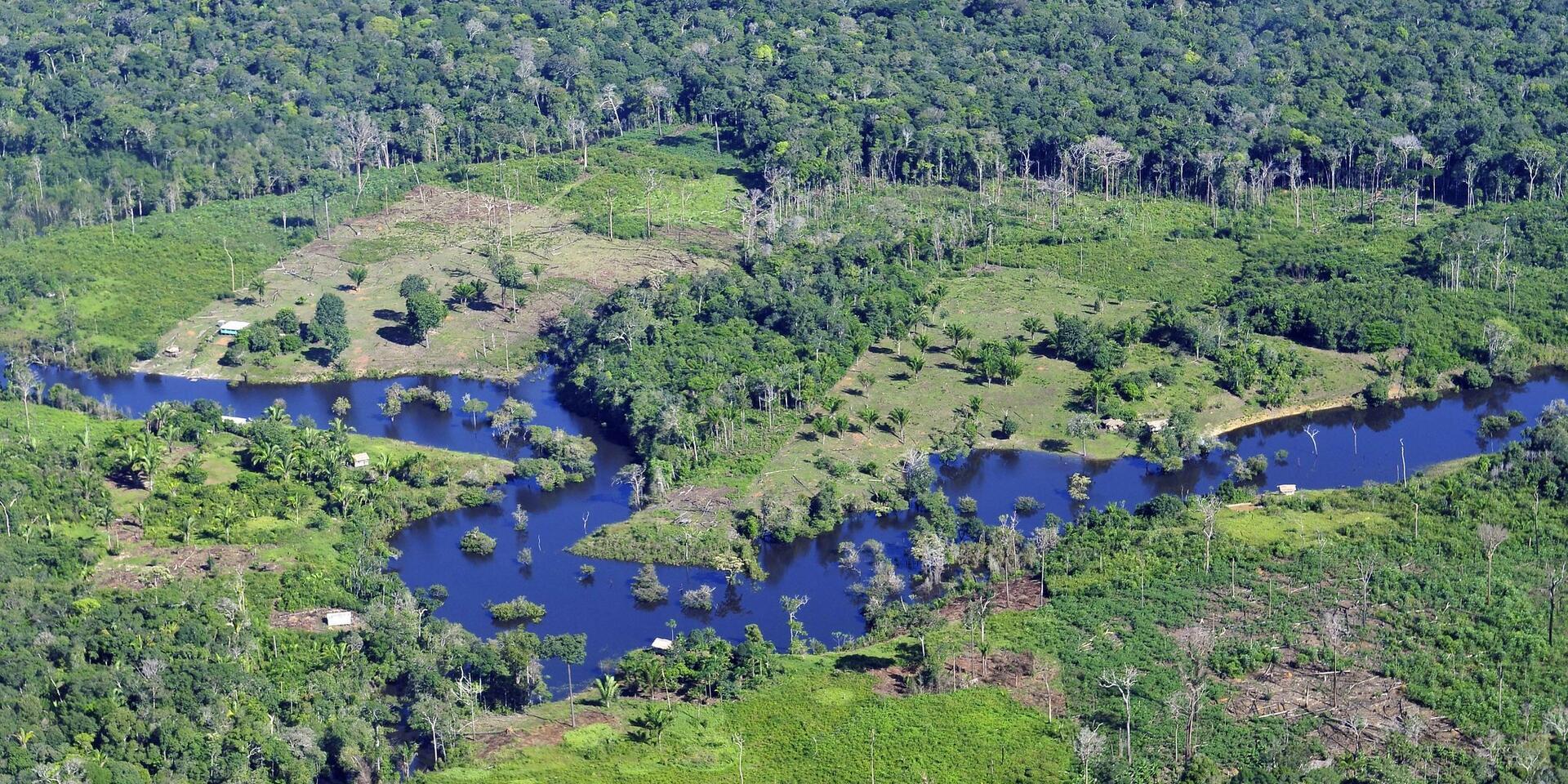

The global objective of halting and reversing deforestation and forest degradation by 2030 is a critical pillar of international climate and biodiversity policy and priority action linked with achieving sustainable food systems and food security.
At COP 16 (2010) in Cancun, Parties collectively decided to slow, halt and reverse forest cover and carbon loss. Target 15.2 of the Sustainable Development Goals (SDGs) aimed to promote the implementation of sustainable management of all types of forests, halt deforestation, restore degraded forests by 2020 and substantially increase afforestation and reforestation globally. In Montreal, the Parties during CBD COP 15 while agreeing to the Kunming Montreal Global Biodiversity Framework, pledged to halt and reverse biodiversity loss by 2030.
In 2014, the New York Declaration on Forests made a commitment to end the loss and degradation of natural forests by 2030 and reduce deforestation and degradation well before 2030. The Glasgow Leaders’ Declaration on Forests and Land Use endorsed by more than 140 countries during COP26 in Glasgow (2021), committed to work collectively to halt and reverse forest loss and land degradation by 2030 while delivering sustainable development and promoting an inclusive rural transformation.
At COP 28 in 2023, the first Global Stocktake (GST) under the Paris Climate Agreement emphasized the importance of ‘enhanced efforts towards halting and reversing deforestation and forest degradation by 2030, while ensuring social and environmental safeguards, in line with the Kunming-Montreal Global Biodiversity Framework’.
Current trends in deforestation and forest degradation
Despite these goals and targets, current trends indicate that countries are currently off track to reduce, halt and reverse deforestation and forest degradation. Deforestation in 2023 reached 6.37 million hectares, putting the world 45% off track from the needed trajectory to halt deforestation by the end of the decade. Forest degradation rates were 20% off track in tropical moist forests, while 62.6 million hectares of forests worldwide fell from a higher to a lower ecological integrity class. Global deforestation increased by 4% in 2022 compared to 2021. This loss of some 6.6 million hectares of forest means that the world was 21% off track to eliminate deforestation by 2030. Efforts to protect primary tropical forests are 33% off track, with 4.1 million hectares lost in 2022. Globally, the world needed to reduce deforestation by 27.8% to be on track in 2023.
The 2024 Forest Declaration Assessment (FDA) highlights that surging demand for minerals, driven by the need for clean energy technologies, continued reliance on coal and other fossil fuels compounds the pressure on forests as mining operations expand. Agriculture, including cattle ranching, soy, palm oil production, and agricultural expansion are the leading drivers of forest loss across the tropics.
Road expansion, fires, and commercial logging also destroy and degrade these forests.
Despite the potential for forest protections arising from investments in Indigenous Peoples and local communities (IP&LCs) land tenure, such investment continues to be minimal. Previous analyses have shown that IPs and LCs receive a mere fraction of the finance needed to secure their rights and govern their territories.
The majority of major companies in forest-risk commodity supply chains assessed by Forest 500 have no clear, comprehensive or ambitious policy to eliminate deforestation from their supply chains. Latest Forest 500 data shows that 60% of the assessed financial institutions do not have a deforestation policy. The 150 financial institutions assessed by Forest 500 provide US$8.9 trillion to the 500 companies with the greatest exposure to deforestation risk through nine commodity supply chains. Among the financial institutions without a public deforestation policy, 71% have also not published a human rights policy for the issues associated with deforestation in commodity supply chains.
Why non-market approach?
Global commitments and policy frameworks provide a benchmark and political push to address deforestation and forest degradation. While political commitments present both risks and opportunities for global forest goals, policy frameworks face challenges in addressing the impacts. Political transitions in key forest-rich countries or political shifts in the EU and the United States could have global repercussions. These transitions offer moments to reassess and strengthen commitments to forest conservation. For global forest protection to remain resilient, it is essential that policies supporting forest health are insulated from such political shifts.
A non-market approach (NMA) can address the non-financial and non-carbon aspects such as underlying drivers of forest loss and root causes of deforestation and can include a wide range of actions that can support the resilient and conservation practices of the IP&LCs. Rather than being transactional in nature, NMAs are systemic. NMAs are designed to address the multifaceted challenges that drive forest loss, challenges that often lie outside the scope of purely financial or transactional solutions. They are a crucial and effective approaches that address the deep-seated political, social and economic drivers of deforestation that have undermined the success of other mechanisms.
Addressing drivers of deforestation: NMAs under the Paris Agreement
Article 6.8 of the Paris Agreement deals with voluntary cooperation among Parties to enhance climate action and ambition and explicitly provides for non-market approaches (NMAs). Article 6.8 promotes integrated, holisti, and balanced non-market approaches to assist Parties in implementing their nationally determined contributions (NDCs), enhance mitigation and adaptation ambition, strengthen public and private sector participation, and support sustainable development and poverty eradication.
The most effective forest policies, as shown by evidence, are those that address the underlying causes of deforestation such as lack of tenurial rights, weak governance and perverse incentives, which are precisely the issues that NMAs are designed to tackle.
Without strong governance, legal recognition of rights, and the elimination of policies that create harmful incentives — all of which are NMAs — any financial mechanism is vulnerable to critical failures such as leakage, corruption and social inequity. Therefore, by creating this necessary enabling environment, NMAs become a foundational layer of a viable forest conservation strategy.
Rights, governance and equity: Addressing structural failures
The recognition and legal securing of IP&LCs rights to their traditional lands and resources is arguably the most impactful and equitable form of NMA. Evidence demonstrates that where these rights are recognized and protected, there is "substantially less deforestation, higher levels of biodiversity and less conflict" than in other areas.
Indigenous Peoples’ lands account for 37% of all remaining natural lands across the Earth, although they represent just 5% of the global population. At least 22% of the total carbon stored in tropical and subtropical forests lies in collectively managed lands, a third of which is found in areas where Indigenous Peoples and local communities lack legal recognition. It is vital to protect the large stores of carbon in terrestrial ecosystems. In the context of global efforts to protect the world’s remaining forests, securing collective tenure rights represents one of the most cost effective, sustainable and equitable strategies to protect and restore vital ecosystem functions, conserve biodiversity, and reduce deforestation and forest degradation.
Securing community land and resource rights is key to eliminating poverty, strengthening food security, reducing inequality and conflict, advancing gender equality, and conserving the forests and ecosystems that support life on Earth”
One of the most significant aspects of NMAs is that they address permanence. Carbon stored in a forest is vulnerable to natural reversals, such as fires, floods, disease, or subsequent changes in land use. Rights-based NMAs, provide a durable and resilient form of permanence because conservation is embedded in the community's own autonomous governance systems and traditional practices. The long-term protection of the forest is not dependent on a financial incentive that could fluctuate or cease but on a cultural and legal framework that is self-sustaining and resilient to external shocks. This provides a structural permanence to forest protection.
Eliminating and redirecting perverse incentives
Beyond the recognition of rights, NMAs also involve comprehensive policy and regulatory reforms such as eliminating "perverse incentives" that inadvertently lead to forest and biodiversity loss. The Convention on Biological Diversity (CBD) has recognized that reforming harmful subsidies is a "pre-condition for any policies and mechanisms" aimed at reducing deforestation. The Kunming-Montreal Global Biodiversity Framework (KMGBF) addresses perverse incentives through Target 18 which refers to identification by 2025, and elimination, phasing out or reforming incentives, including ‘subsidies, harmful for biodiversity, while substantially and progressively reducing them by at least US$500 billion per year by 2030, starting with the most harmful incentives, and scale up positive incentives for the conservation and sustainable use of biodiversity.’
Estimates of global explicit public subsidies to sectors directly driving deforestation and forest degradation ranged from $1.4 trillion to $3.3 trillion for 2023. Agriculture ($610 billion–$939 billion) and fossil fuels ($577 billion–$1,390 billion) are the sectors receiving more subsidies. Road and irrigation infrastructure ($311 billion–$938 billion), forestry ($64 billion–$175 billion) and fisheries ($48 billion–$61 billion) are also heavily subsidized.
Repurposing and reforming these harmful subsidies could be significant NMAs leading to a paradigm shift and transformative changes in addressing deforestation, biodiversity loss and climate change. Under Article 6.8, the UNFCCC has established an NMA platform to facilitate the sharing and scaling of NMAs, where both Party and non-Party stakeholders can register NMAs involving comprehensive initiatives to halt and reduce deforestation as key contributions to their climate goals and NDCs.
A holistic, equitable, and effective path to achieving the 2030 forest goals must place NMAs at its very core.
The most impactful strategies will not be those that simply provide a financial incentive, or merely raise funds to protect forests, but rather those that enable systemic and transformative change through empowering communities, reforming governance, and eliminating the perverse incentives that make deforestation so profitable. By focusing on governance, finance, capacity-building, sustainable livelihoods and policy reform, NMAs can directly support the 2030 goal of halting and reversing forest loss, while ensuring equity and sustainable development.