Blog Farmers speak, NDIZI listens: how AI is helping put farmers first in crop breeding

What if crop breeding started by listening better? In Tanzania, AI powered tools are helping researchers capture farmers’ insights at scale, turning everyday observations into data that can shape the next generation of crop varieties.
Over a growing season, farmers notice far more than a survey can easily record: how a crop responds to erratic rainfall, how it cooks, stores, sells, or performs under local conditions. These observations shape whether a variety is adopted or abandoned, yet much of this knowledge has historically been difficult to capture systematically at scale.
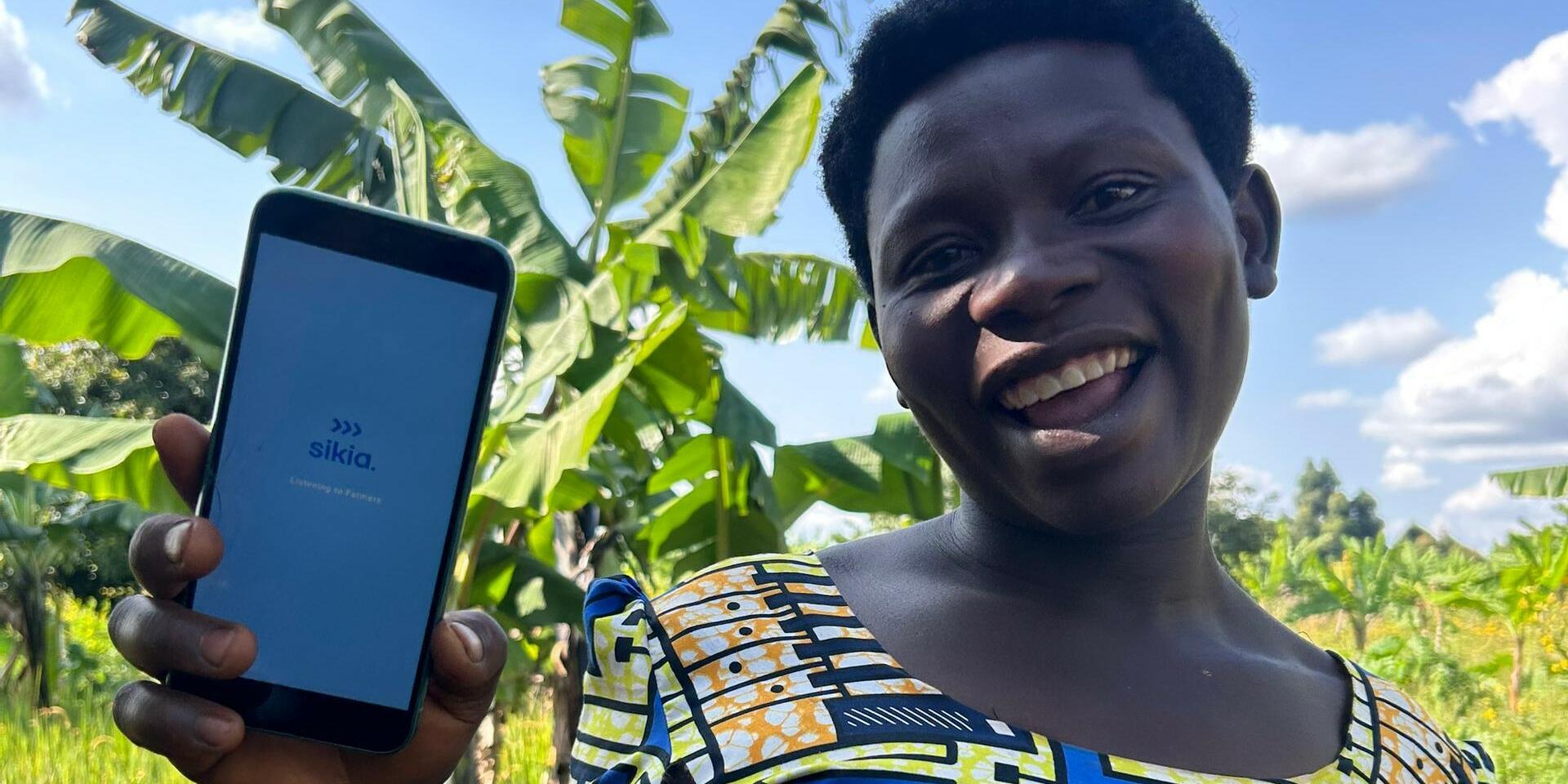
That challenge inspired the NDIZI project (NLP to Develop and Innovate Zero-shot Intelligence), an initiative led by the Alliance of Bioversity International and CIAT that explores how artificial intelligence can help agricultural systems better listen to farmers. What began as a research project has since evolved into Sikia, an AI-enabled interviewing platform already integrated with ClimMob and being used for farmer feedback elicitation and market intelligence gathering.
The real bottleneck in farmer intelligence
Traditional qualitative interviewing has always faced a difficult tradeoff between depth and scale. Rich interviews require trained socio-economists, extensive travel, manual transcription and translation, and lengthy analysis. As a result, collecting detailed farmer insight across large populations has often been slow, expensive, and difficult to scale.
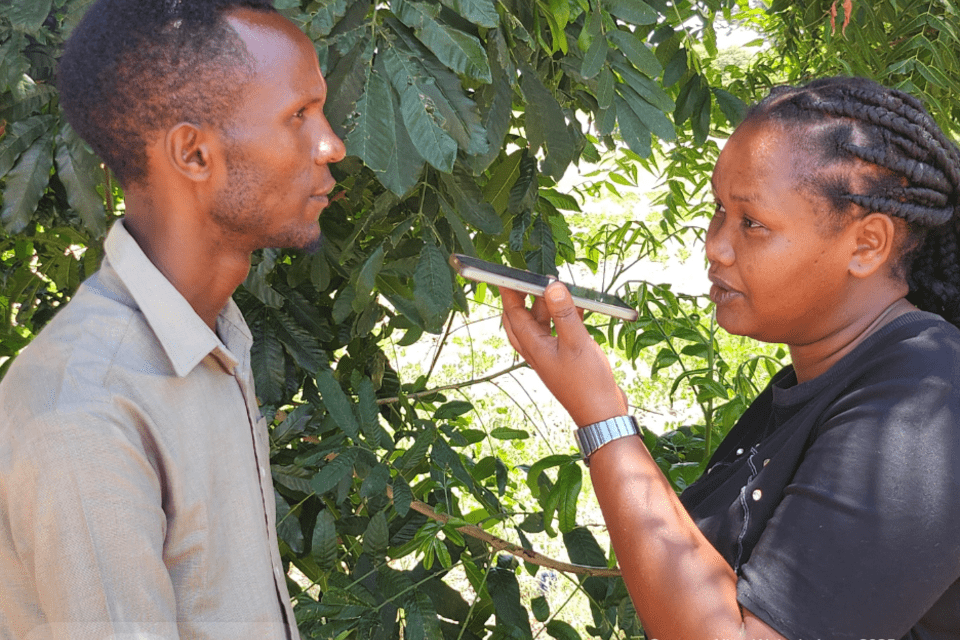
NDIZI tested whether advances in speech recognition and large language models could help overcome this challenge. Across four regions of Tanzania, 900 smallholder farmers participated in on-farm tricot variety trials where enumerators used smartphones to record farmers’ reflections throughout the crop cycle.
The project generated nearly 100,000 words of spoken feedback. In conventional survey systems, processing this amount of open ended data would be highly labor-intensive. Through AI-assisted transcription and analysis, however, researchers were able to rapidly organize and interpret farmer conversations, uncovering insights that standard surveys often miss.
One major challenge involved language itself. Swahili remains a low-resource language in many AI systems, meaning speech recognition models often struggle with accuracy in real-world conditions. Researchers fine tuned OpenAI’s Whisper model using more than 5,000 field recordings collected during the project, substantially improving transcription quality while helping establish one of the largest agricultural speech datasets of its kind in Swahili.
As Stephen Mutuvi, lead of the NDIZI project, explained:
For too long, digital tools have bypassed local languages, leaving valuable insights, contextual nuances, and the factors driving farmers' decisions "lost in translation"
What farmers say when you let them speak
When farmers are invited to speak freely rather than respond within fixed survey categories, the information changes dramatically. Farmers do not simply describe whether a crop performs well or poorly; they explain how varieties behave under stress, how they fit into household food systems, and how they perform in local markets.
Researchers identified a much broader range of farmer priorities than those typically captured in breeding frameworks, including cooking quality, nutritional value, digestibility, soil compatibility, and storage performance, alongside detailed field observations such as uneven germination, perforated leaves, shriveled grains, and branching patterns.
Some findings revealed how deeply household realities shape adoption decisions. Flatulence, for example, emerged repeatedly in interviews as an important consideration, particularly among women responsible for household food preparation.
Digital data collection makes disaggregation of data easy- for example important gender differences in crop evaluation were identified. Men more frequently emphasized production-oriented traits such as drought tolerance and disease resistance, while women focused more on cooking quality, digestibility, taste, and household use. Despite speaking fewer words on average, women expressed a similar diversity of crop traits and observations.
From NDIZI research to the Sikia product
What began as a research initiative has now evolved into a real-world product. Over the past year, the NDIZI pipeline has been operationalized through Sikia, a new AI-enabled interviewing platform developed under the broader Tatu product suite.
The significance of Sikia lies not only in its ability to transcribe and analyze interviews using AI, but in how it fundamentally changes the scale and logistics of farmer engagement itself. Using AI-assisted prompting, the application dynamically guides interviewers through conversations, reducing the need for highly specialized field researchers and allowing interviews to happen simultaneously across multiple locations.
In recent deployments, unemployed youth from local communities were trained and paid through Mpesa to conduct interviews within their own areas. This reduced travel costs, increased trust between interviewers and respondents, and enabled much larger volumes of interviews to take place simultaneously than would normally be possible through centralized research teams.
Because interviews are digitally captured, transcribed, and analyzed through integrated AI systems, researchers can rapidly process large volumes of qualitative information while preserving the richness of open conversation. Sikia is already being adapted for market intelligence gathering under the Gates Foundation-supported Crop Concept initiative, demonstrating how agricultural AI research can move rapidly from experimentation into operational deployment.
Beyond NDIZI: introducing Tatu
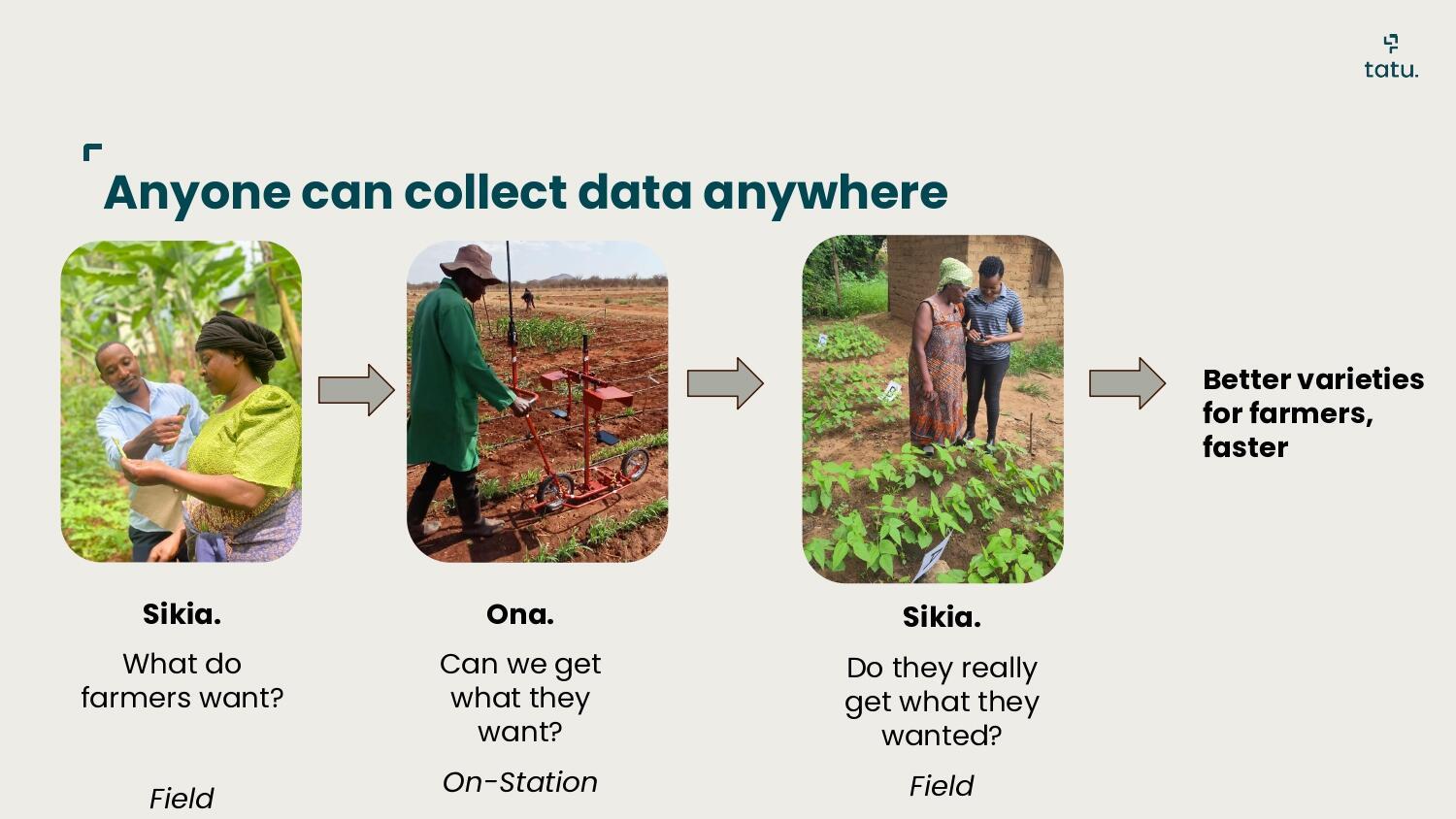
Sikia is the second product developed under Tatu, a new AI-driven product suite focused on helping agricultural systems better understand both farmers and crops through multimodal intelligence.
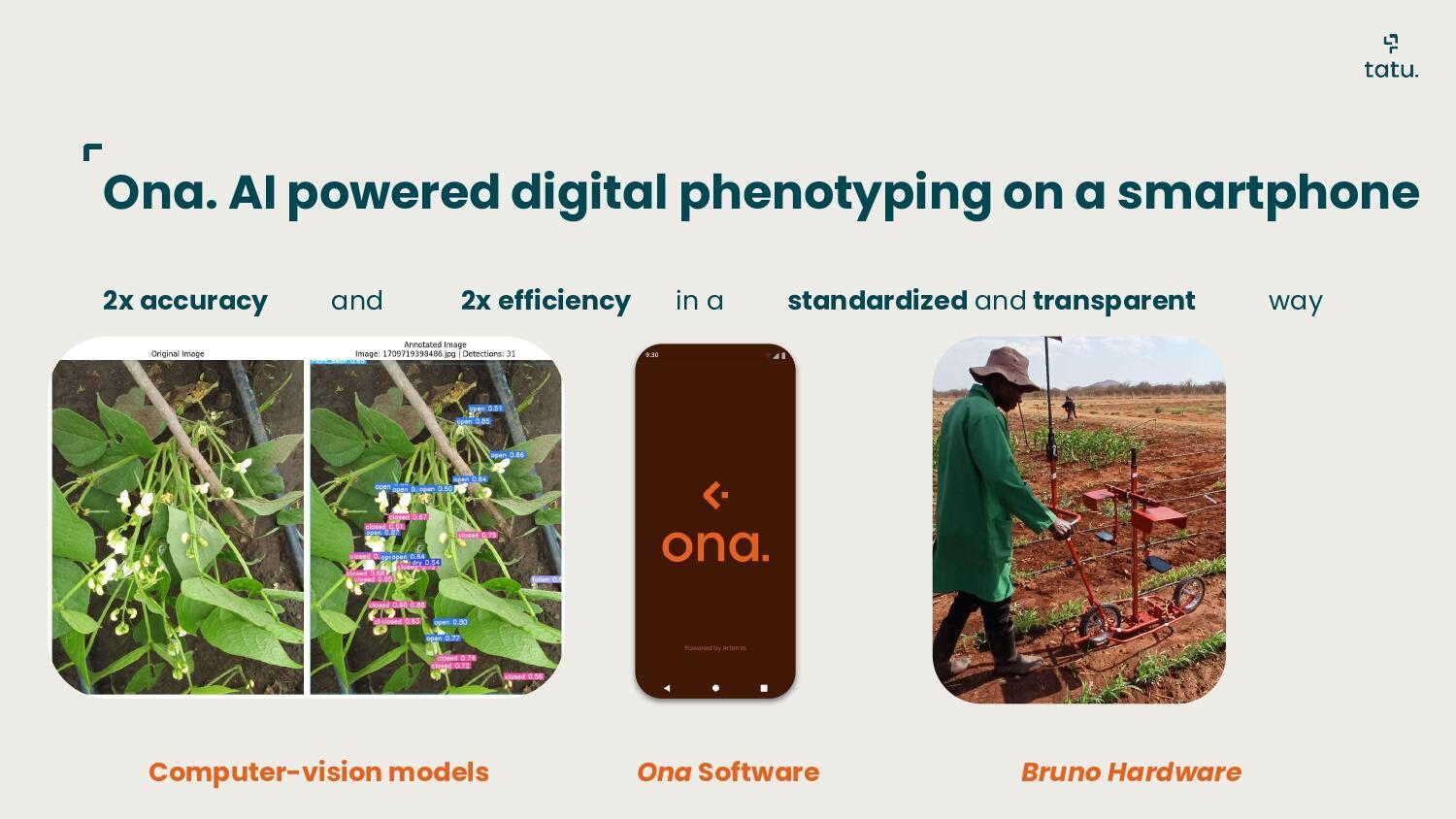
Within this ecosystem, Sikia functions as the listening layer, capturing farmer perspectives through AI-assisted interviewing, while Ona, developed through the ARTEMIS project, serves as the visual layer, using computer vision to analyze crop performance directly from field imagery. Together, these tools help connect farmer feedback, market intelligence, and crop evaluation into a more continuous learning system for breeding programs.
As Ellena Girma noted:
“Collaboration across crops, teams, and regions is essential. As computer scientists, we rely on breeders and field experts to help us understand how plants behave under different conditions. That’s how we make AI models that are truly useful for agriculture.”
Listening as infrastructure
At its core, the NDIZI story is no longer only about whether AI can process interviews more efficiently. It is about whether agricultural systems can finally build the infrastructure required to continuously listen to farmers at scale.
Through Sikia and the broader Tatu ecosystem, that possibility is already beginning to take shape. Developed through collaboration across Lever 5 teams, including 1000Farms and Mr Bot, and strengthened through support from Alliance leadership and the Gates Foundation, Sikia reflects a growing vision for AI in agriculture: not replacing farmer knowledge, but building systems capable of hearing it more clearly, more continuously, and at far greater scale than before.