Blog Linking science and global partnerships to shape future agriculture

The 8th Global Forum of Leaders for Agricultural Science and Technology (GLAST 2026) took place in Sanya, Hainan, China, from 1 to 4 November 2026. Under the theme “Shaping Future Agriculture with Science and Innovation,” the forum brought together agricultural research institutions, universities, international organizations and agri-food companies from dozens of countries to discuss scientific innovation and international cooperation.
Co-hosted by CAAS, FAO, CGIAR, IAEA and the People’s Government of Hainan Province, the forum focused on three themes: a vision for future agriculture, scientific and technological innovation, and global partnerships.
A shared message emerged from the discussions: addressing climate change, resource constraints and food security requires advances in science and technology. Equally important is strengthening cooperation and ensuring that research translates into practical solutions for farmers and agricultural communities.
Juan Lucas Restrepo, Director General of the Alliance of Bioversity International and CIAT, contributed a video presentation on food and land systems transformation, bringing the Alliance's integrated research perspective across agriculture, biodiversity, climate and nutrition to the forum.
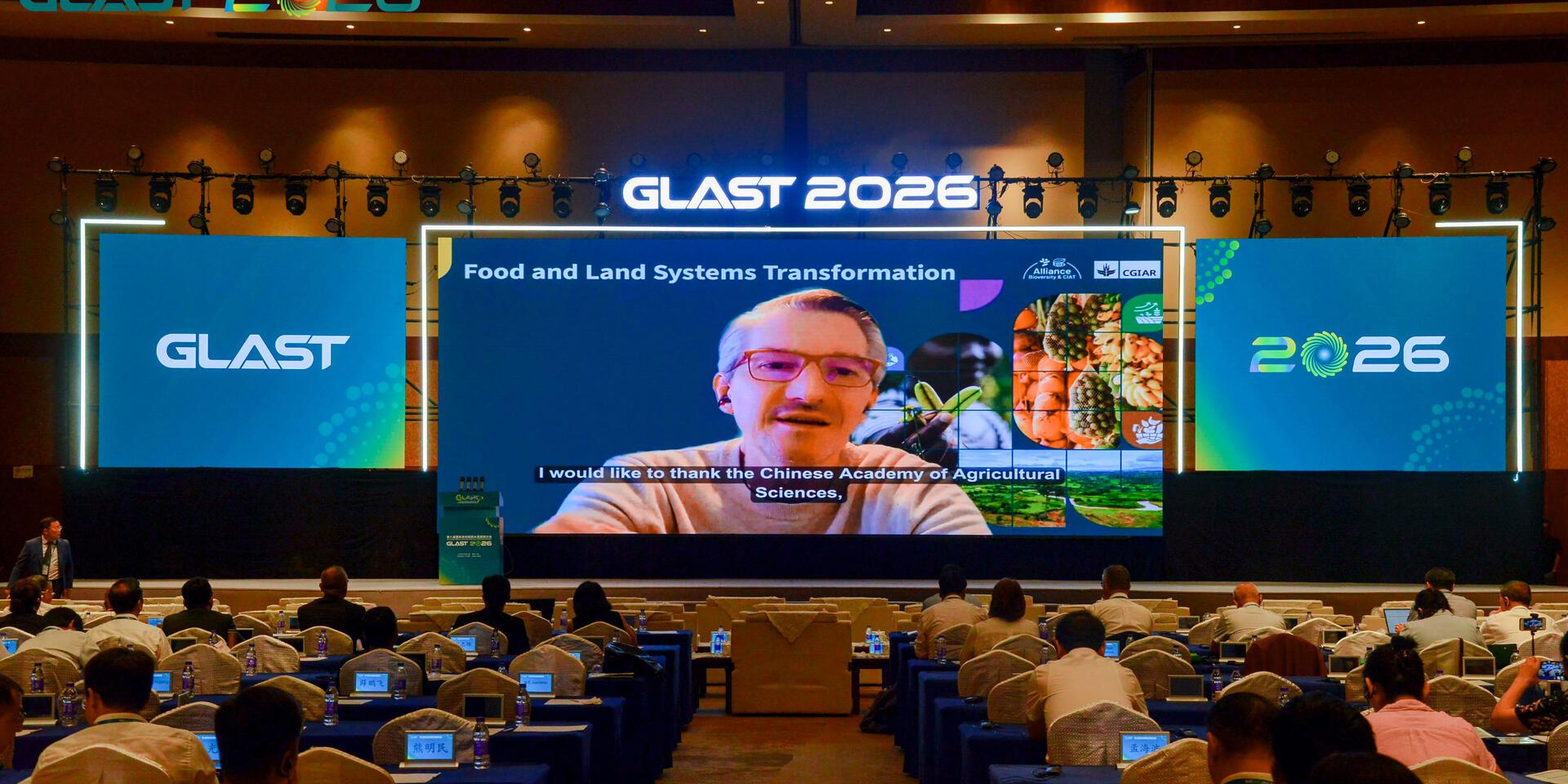
Following the presentation, Stephanie Speck, the Alliance's Global Director for Strategic Partnerships, Engagement and Communications, highlighted the importance of sustained investment and collaboration among researchers, governments, businesses and farmers to turn scientific discoveries into locally relevant technologies.
She outlined three priorities for advancing future agriculture:
- Combining genomics and artificial intelligence to unlock the potential of agrobiodiversity and opportunity crops;
- Strengthening research on low-emission livestock systems and soil biodiversity;
- Advancing South–South science partnerships aligned with partner countries' priorities.
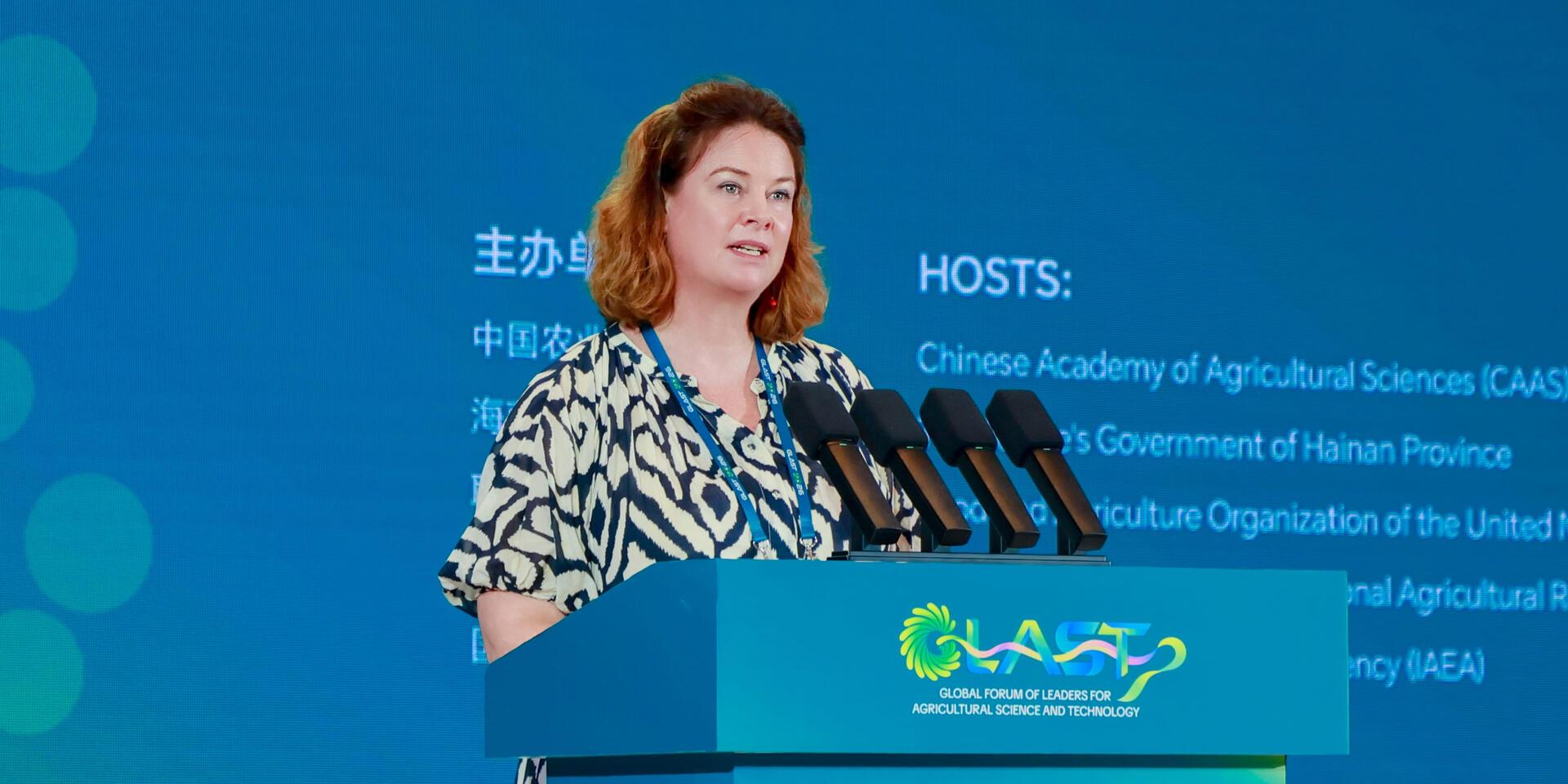
Stephanie also emphasized the role of research institutions in fostering international collaboration, enabling researchers to exchange data and crop genetic resources and jointly develop technologies tailored to local agricultural needs. Such partnerships can help farmers adapt to climate change while improving agricultural productivity and sustainability.
Working with partners in China and around the world, the Alliance connects agrobiodiversity, scientific innovation and field practice to advance food and land systems that nourish people, protect the planet and improve livelihoods.
Alongside the main forum, the Alliance joined forces with Chinese research partners to convene a dedicated side event exploring how digital technologies can support agrobiodiversity conservation and sustainable agriculture.
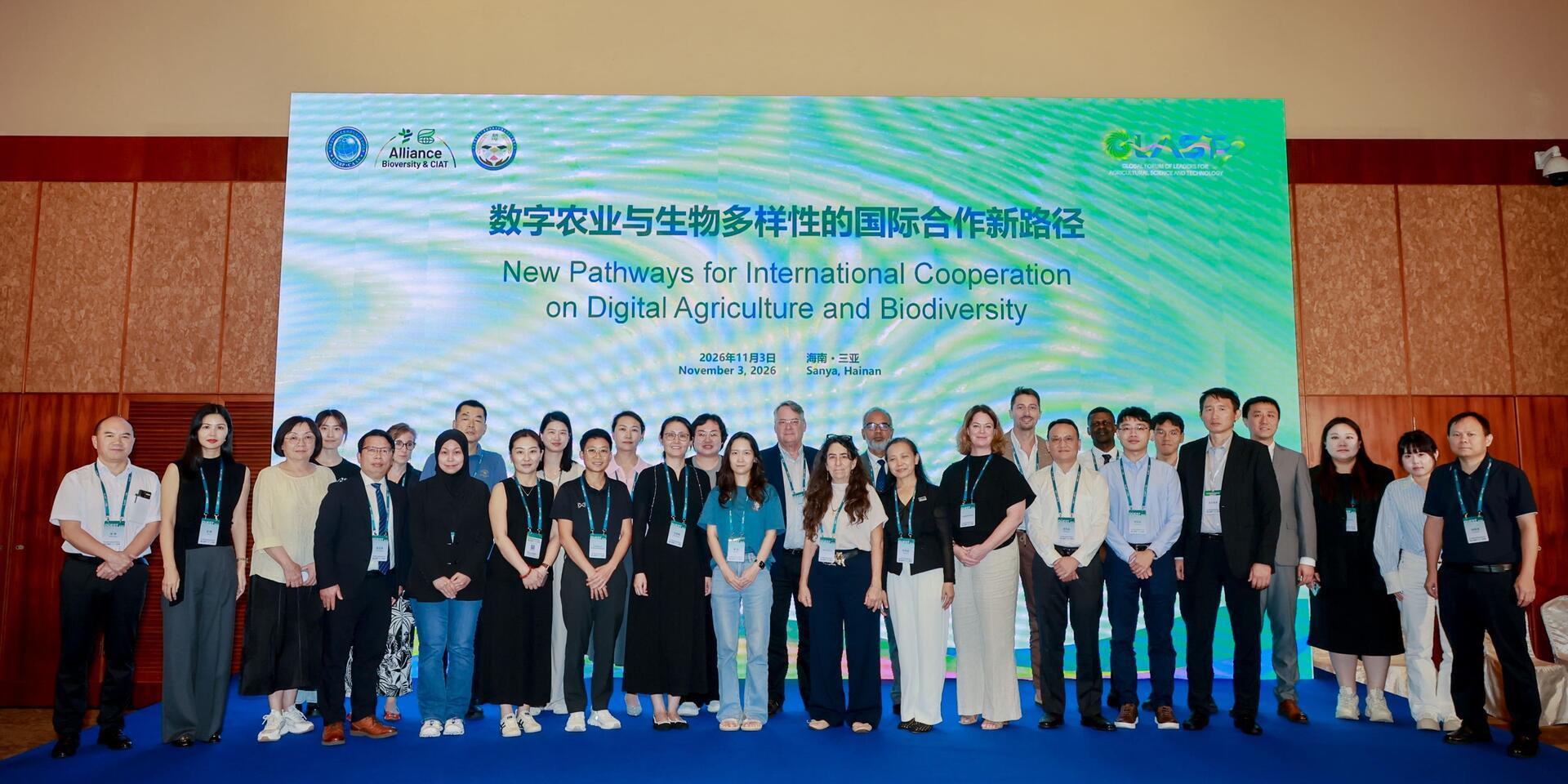
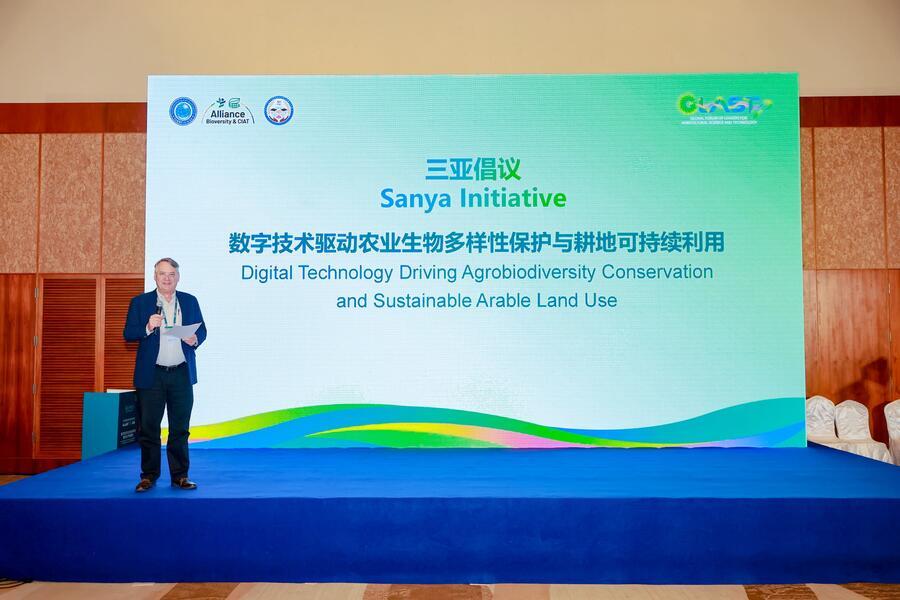
On 3 November 2026, the GLAST 2026 side event, “New Pathways for International Cooperation on Digital Agriculture and Biodiversity,” took place in Sanya. It was co-hosted by the Alliance of Bioversity International and CIAT, the Institute of Agricultural Resources and Regional Planning (IARRP) of CAAS, and the State Key Laboratory of Efficient Utilization of Arable Land in China.
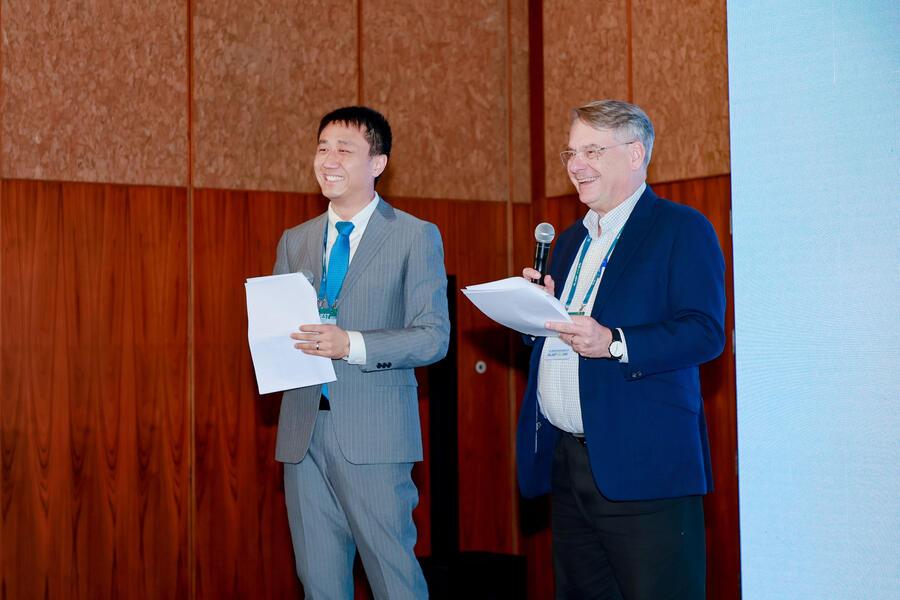
In her welcome remarks, Stephanie Speck stressed that digital agriculture and biodiversity conservation should advance together. Technologies such as remote sensing, sensors, DNA sequencing and artificial intelligence can help researchers better understand diversity in crops, fields and soils.
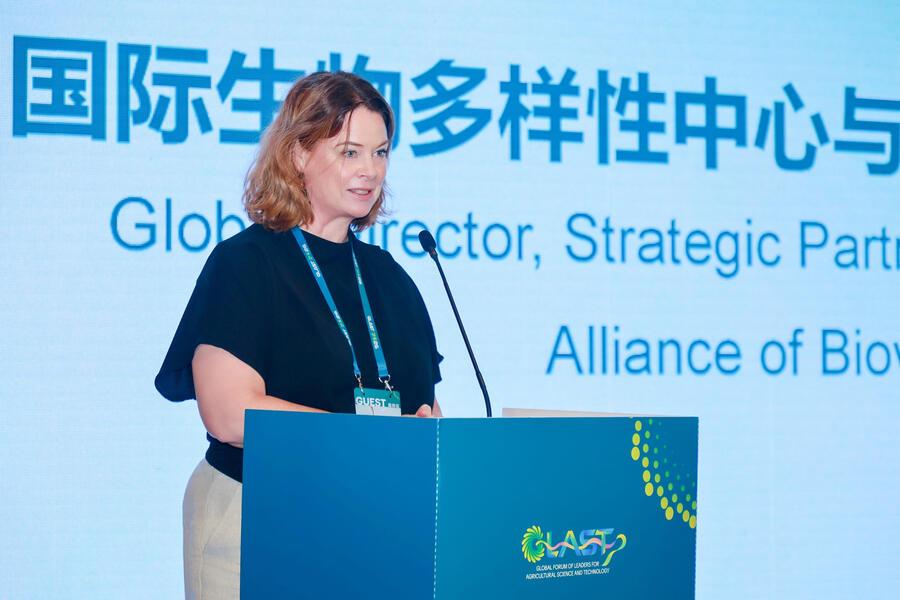
When applied effectively, these tools can also support soil health, local crop varieties and diversified farming systems, ensuring that technological progress benefits both agricultural production and biodiversity conservation.
She also highlighted the Alliance's longstanding collaboration with IARRP and identified opportunities for further joint research on soil health, microbial technologies and biodiversity monitoring. Linking China's observation platforms with the Alliance's global research networks could strengthen knowledge exchange and support the application of research findings across regions.
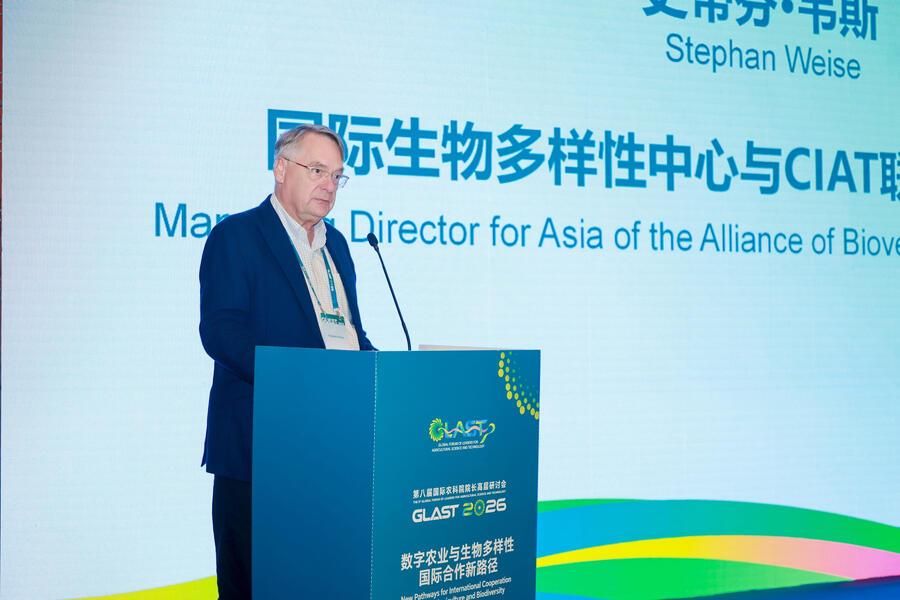
Stephan Weise, the Alliance's Managing Director for Asia, co-chaired the event with Ai Chao, Deputy Director General of IARRP, CAAS. Stephan also moderated the keynote session and launched the Sanya Initiative during the closing session.
The programme showcased approaches and tools for connecting digital innovation with biodiversity research, including the DATAR agrobiodiversity platform, geospatial monitoring, crop and soil diversity, and the links between agrobiodiversity and precision nutrition.
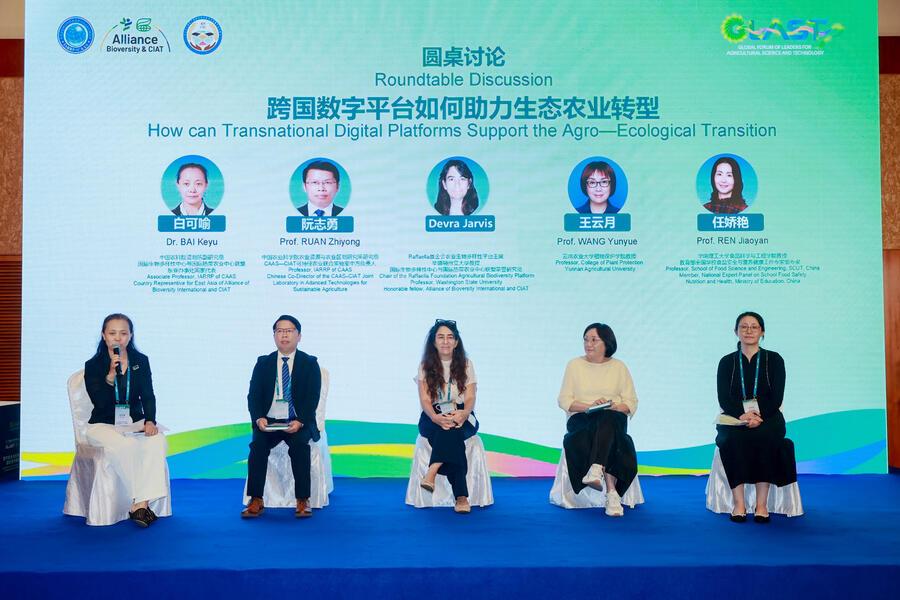
Two roundtable discussions examined how cross-border digital platforms can support agroecological transformation and how policy commitments can be translated into concrete action. Bai Keyu, the Alliance's Country Representative for China and an Associate Professor at IARRP, chaired the first roundtable, which focused on transnational monitoring, payments for ecosystem services and South–South cooperation.
A key outcome of the event was the Sanya Initiative, which calls for stronger international cooperation in three areas: digitally supported agrobiodiversity surveys and monitoring; accessible decision-support tools for smallholder farmers; and digital traceability approaches that create market incentives for biodiversity-friendly agriculture.
The side event provided a platform for the Alliance and its Chinese partners to identify practical opportunities for joint research, digital innovation and knowledge exchange. By connecting technological advances with biodiversity conservation and local agricultural priorities, these efforts can help build stronger international partnerships and accelerate the transition towards more sustainable and resilient food systems
The team

Juan Lucas Restrepo
Director General, and Trustee, Bioversity International UK/USA
Stephanie Speck
Global Director, Strategic Partnerships, Engagement & Communications and Trustee, Bioversity International UK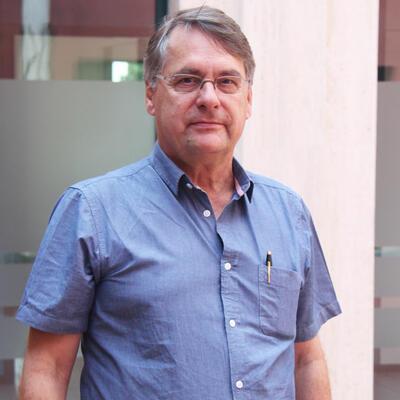
Stephan Weise
Managing Director, Asia