Press and News Gender and social inclusion matter for agrobiodiversity

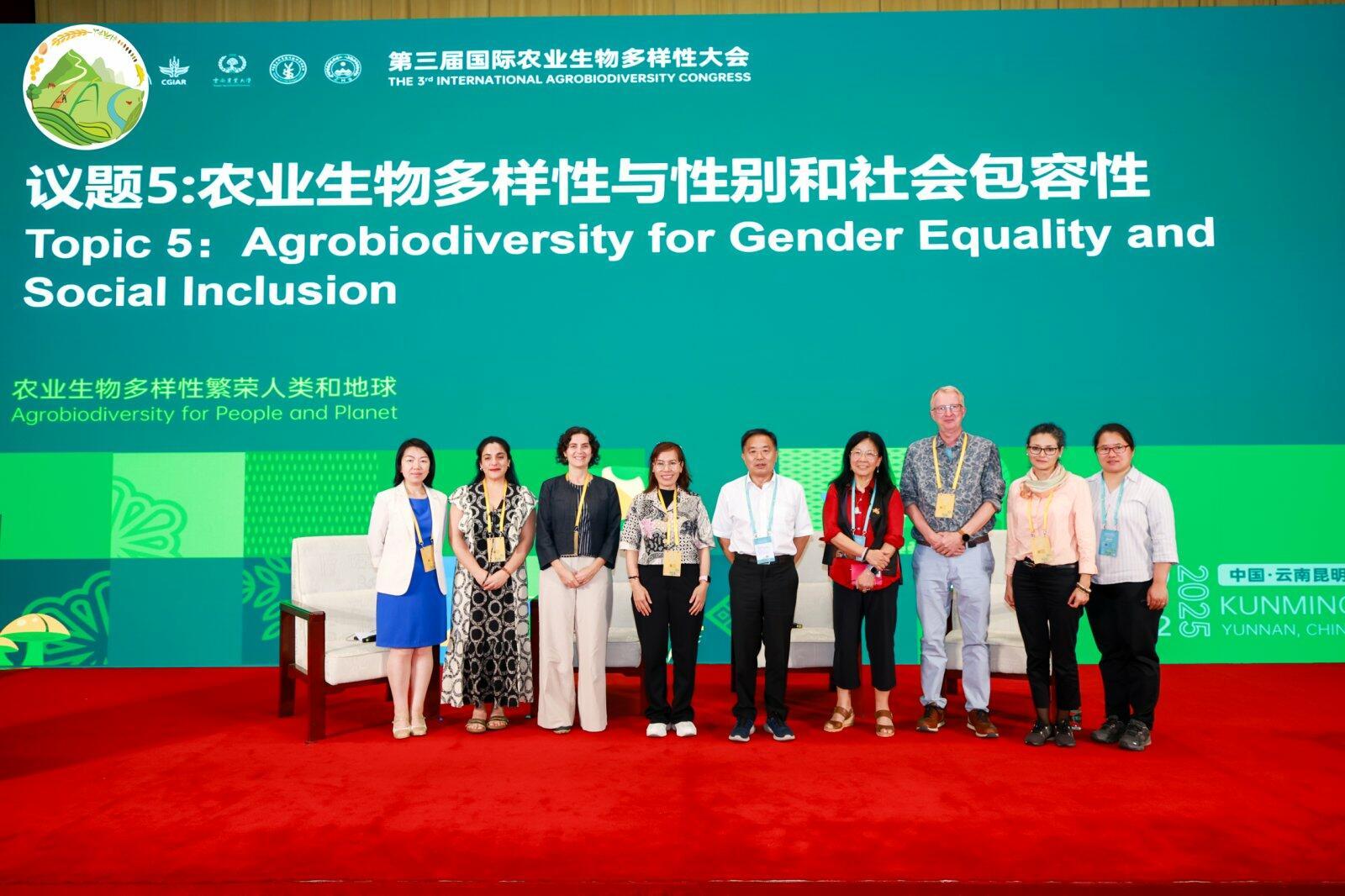
On May 21, 2025, a global group of actors from academia, policymaking and civil society delivered a compelling session on 'Agrobiodiversity for Gender and Social Inclusion' at the 3rd International Agrobiodiversity Congress in Kunming, China. Far from a side conversation, this session made the case that gender and social equity are core to the future of agrobiodiversity.
When people think about agrobiodiversity, they often imagine seed banks, crop trials, or ecosystem services. But behind every saved seed and managed landscape are people–often Indigenous Peoples, smallholder farmers, and the women who are part of local communities, whose knowledge, labor, and leadership sustain this agricultural diversity.
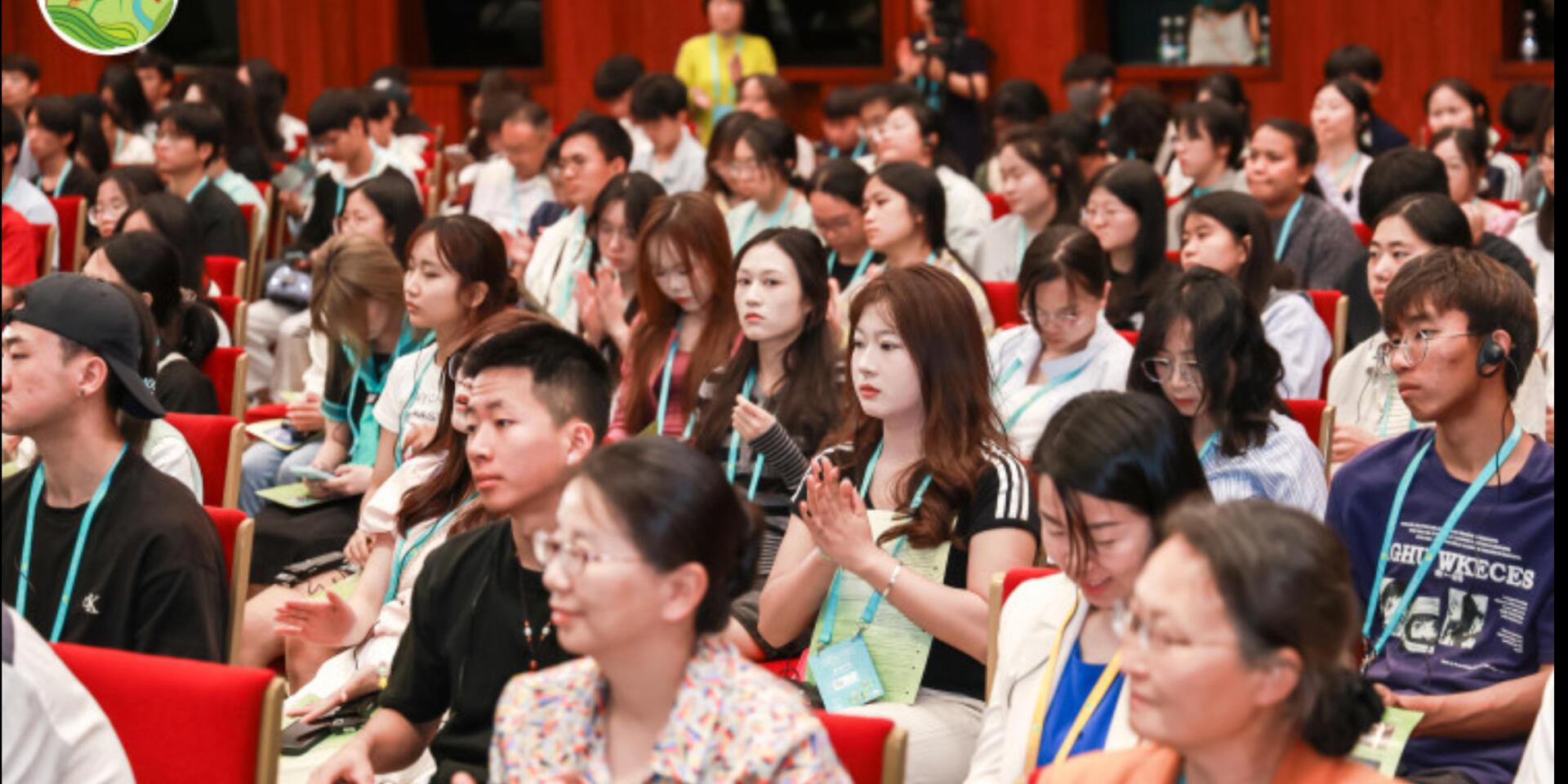
On May 21, 2025, Dr Marlène Elias (Alliance of Bioversity International and CIAT) and Ms Amelia Arreguín Prado (Women’s Caucus of the Convention on Biological Diversity) moderated a compelling session titled 'Agrobiodiversity for Gender and Social Inclusion' at the 3rd International Agrobiodiversity Congress in Kunming, China. Far from a side conversation, this session - which was opened by Dr Rui Shui (Southwest Forestry University) and Ms Gu Fan (Representative of the Bulang people from Pu’er) - made the case that gender and social equity are core to the future of agrobiodiversity. The room was packed with participants, including many university students, whose questions pointed to a rising generation seeking change.
Making the invisible visible
Throughout the session, a clear theme emerged: the people who do the most to conserve and sustain agrobiodiversity are often the least recognized. Women and Indigenous Peoples – farmers, fishers, herders, gatherers, and guardians of traditional knowledge – play crucial roles in managing agrobiodiversity, from seed systems to maintaining wild and cultivated species, and adapting food systems to local environments. Yet, their contributions often remain invisible across scales, from household and community levels to agricultural research and national policy systems, as highlighted by Dr Madhura Swaminathan (Indian Statistical Institute).
Much of this invisibility stems from the way labor and knowledge are defined and valued. Unpaid environmental care work–such as seed saving, soil stewardship, or passing on traditional agroecological knowledge–is often undervalued and poorly captured in national data or formal research. Gender norms that attribute this work to women also contribute to its devaluation in the private spaces of the home and in public spaces of community and state-recognized institutions.
This invisibility is linked to structural inequalities, including, notably, in land tenure. In many regions, women’s access to land is mediated by male relatives, civil status, or governed by customary laws that prioritize men’s rights. Because land ownership is often a precondition for being recognized as a ‘farmer’ in official data, women are systematically excluded from agricultural programs, financial systems, and decision-making bodies. As Ms Esther Muiru (Landesa) indicated, this exclusion isn't only unjust; it undermines the effectiveness of agrobiodiversity conservation itself.
Agrobiodiversity as biocultural heritage
Dr Georgina Catacora-Vargas (AGRUCO - University Mayor de San Simón) and Dr Yiching Song (UNEP-IEMP & Farmers' Seed Network in China) reframed agrobiodiversity not merely as a biological asset, but as biocultural process–a vibrant system that connects biodiversity with culture, history, knowledge, and identity through locally-adapted livelihood strategies. In the context of multiple disadvantages, Dr. Catacora-Vargas stressed the role of agroecology in building the socioecological resilience of women through agrobiodiverse farming systems. Ms Desfari Christiani (FoMMA) illustrated the reciprocity and interdependence between humans and other living species. She, and others, pointed to the intricate interconnections from the field to the farm, to ecosystems, markets, kitchens, and plates that embody agrobiodiversity, and within which agrobiodiversity circulates and is sustained.
Gender dynamics are deeply embedded in this living system. As presented by Gratia E. Dkhar (TIP/NESFAS), women from Indigenous Peoples and local communities are not only laborers in agrobiodiverse systems; they are knowledge holders and skilled managers when it comes to seed selection and storage, crop cultivation and animal rearing, food preparation, medicine and healing, and ecosystems and landscape dynamics. This knowledge is often passed from mother to daughter, or grandmother to grandchild, forming an intergenerational thread that sustains community resilience.
But this transmission is increasingly under threat. Rural transformation, land dispossession, climate change, unsustainable production systems, and youth outmigration, among others, are disrupting the flow of traditional knowledge and sustainable agrobiodiversity management. ‘Formal’ education systems and policy frameworks often fail to value or integrate Indigenous and women’s knowledge, practices and innovations that conserve and sustainably use agrobiodiversity.
Community innovation and partnerships
Partnerships and collaborative initiatives across scales were explored for their potential to support the sustainable and equitable use, management, and conservation of agrobiodiversity. Dr Zhang Yanyan (UNEP-IEMP) and Dr Qingwen Yang (Chinese Academy of Agricultural Sciences) presented community seed banks (CSBs) as promising examples that contribute not only as repositories of genetic material, but as social institutions that can support collective action, community dialogue, and policy engagement.
In many places, CSBs have become spaces where women’s voices are elevated, where decisions are made collaboratively, and where young people find connection to their roots. Dr Ronnie Vernooy (Alliance of Bioversity International and CIAT) showed that, where they have been established in partnership with universities or colleges, CSBs have become sites of knowledge exchange between farmers, students, and professors, reconnecting generations and blending traditional and scientific knowledge systems.
Speakers highlighted the power of equitable partnerships between farmers and researchers for conserving agrobiodiversity. They stressed that such partnerships should be rooted in respect and trust, and driven by the needs and aspirations of farmers themselves, not just the priorities of outside experts. In such partnerships, researchers should ‘deliver something’ to farmers, not just extract knowledge or data. When co-creation replaces top-down approaches, both science and society benefit.
A call for action
The session didn’t stop at local innovation; it pushed for systemic change. A message was that inclusive policymaking is crucial to support gender-equal and socially responsive agrobiodiversity management. From this perspective, Mr Olivier Rukundo (Secretariat of the CBD) stressed that policies related to agrobiodiversity and biodiversity in general must be designed and implemented with the active participation of Indigenous Peoples and local communities, including women. That means involving diverse actors fully and actively from the beginning of the policymaking process, setting and agreeing on clear rules of engagement, and ensuring accountability for implementation.
The session closed with a collective call to action. For researchers: interrogate your assumptions and commit to long-term, inclusive engagement with communities, and women in particular. For organizations (government, academia and research, civil society organizations, and more) working on agrobiodiversity: integrate gender and social perspectives into your core strategies. Not as add-ons, but as drivers of social innovation, justice, and sustainability. For all of us working in agrobiodiversity: recognize that agrobiodiversity is part of a living system shaped by relationships, power, and history. Let us value and reconnect with our own agrobiodiversity heritage and the gendered knowledge that has long sustained it.
This session was organized by the Alliance of Bioversity International and CIAT, the Women’s Caucus of the CBD, and Southwest Forestry University. Funding was generously provided by the Alliance of Bioversity International and CIAT, the Chinese Academy of Agricultural Sciences, the CGIAR Gender Equality and Inclusion Accelerator, and the CGIAR Trust Fund Donors.
The Alliance Team
Marlène Elias
Director, Gender and Inclusion