From the Field No innovation scales alone: Lessons from Scaling Week in Latin America and the Caribbean 2026

How can innovations and solutions expand their impact and contribute to more resilient food systems in Latin America and the Caribbean? Over three days, the second edition of Scaling Week brought together experiences from science, practice, public policy, and territories to reflect on an answer: responsible scaling requires evidence, context-adapted strategies, a clear understanding of demand, and actors capable of making it happen collectively.
Latin America and the Caribbean faces challenges such as climate change, natural resource degradation, food insecurity, and territorial inequalities. Although the region has innovations with the potential to contribute to more resilient, sustainable, and inclusive agrifood systems, many remain at the pilot stage or fail to achieve the expected impact. The challenge is not only to generate solutions, but to scale them responsibly and sustain their impact according to the conditions of each context.
With this challenge as a starting point, from 19 to 21 August 2026, the second edition of Scaling Week in Latin America and the Caribbean was held as a virtual space for exchange, learning, and collective knowledge-building to strengthen capacities and connect actors and experiences around the responsible scaling of innovations and solutions that contribute to strengthening the resilience of the region’s food systems.
Over three days, the agenda moved from what we know about scaling, to how to put it into practice, and finally to what makes sense to scale and with whom, addressing Scaling Science, Scaling Practice, and Demand Analysis and Networks for Scaling.
More than a Week: Strengthening a Regional Community for Responsible Scaling
Scaling Week is part of the activities of the Regional Scaling Hub for Latin America and the Caribbean, promoted within the framework of the CGIAR Scaling for Impact science program. The Hub seeks to connect organizations, networks, and actors by promoting knowledge and experience exchange, capacity strengthening, and co-creation around responsible scaling.
Through Scaling Week, the aim is to strengthen this regional responsible scaling community and build connections that continue beyond the event, promoting opportunities for collaboration and strengthening the collective capacity to scale innovations and solutions that contribute to more resilient, sustainable, and inclusive agrifood systems.
Participants identified concrete opportunities to move in this direction: connecting with funders and end users, promoting public-private partnerships and South-South cooperation, creating consortia and communities of practice, strengthening capacities, and building regional networks.
Day 1 | Scaling Science: Scaling Is More Than Reaching More People
The first day addressed Scaling Science and the evidence on how to responsibly expand the impact of innovations. The session was led by Juan Sebastián Rivas, a Climate Action Research Associate at the Alliance of Bioversity International and CIAT, and contextualized by Dr. Deissy Martínez-Barón, the Alliance’s Regional Climate Action Lead for Latin America and the Caribbean and involved in CGIAR Scaling for Impact. Her intervention highlighted the need to consider context, actors, potential effects, and the conditions required to sustain scaling outcomes.
Dr. Katharina J. F. Schiller, a CIMMYT scientist, presented the Responsible Scaling Tree, a framework showing that scaling goes beyond expanding an innovation: it also involves generating learning and change, embedding it in institutions and policies, and anticipating and responding to its potential effects.
Carlos Eduardo Navarro-Racines, a researcher at the Alliance of Bioversity International and CIAT, presented the experience of Local Technical Agroclimatic Committees and Human-Centered Design, showing that producing technically sound climate information does not guarantee its use: it must respond to farmers’ needs and be adapted to their contexts and decisions.
Ediner Fuentes-Campos, Deputy Director of Scientific Research and Technological Development at SENACYT Panama, addressed the integration of scaling impact into science, technology, and innovation policies and the importance of strengthening institutional capacities to support innovations beyond their initial funding.
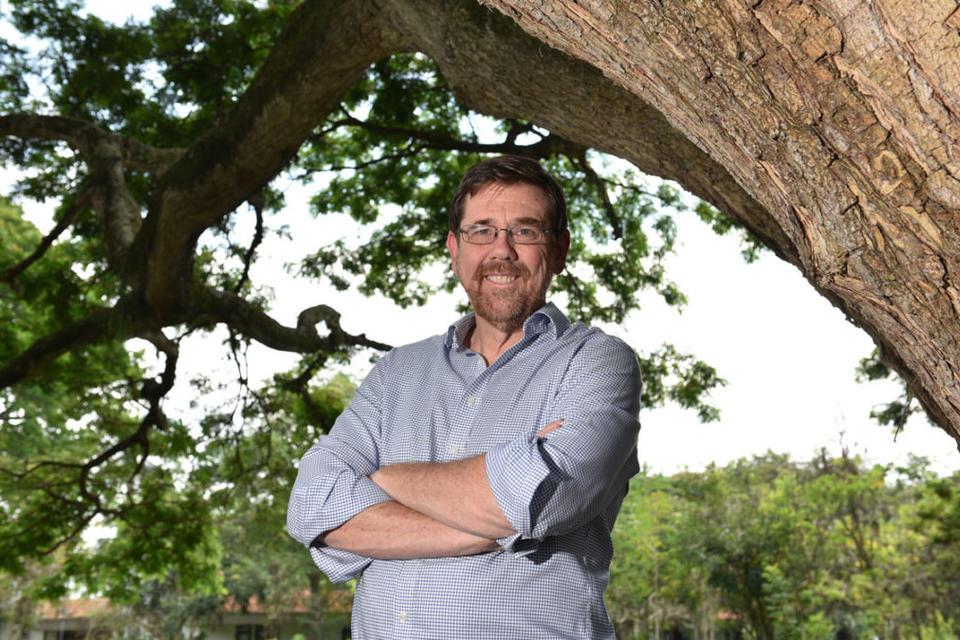
The day concluded with a panel moderated by Deissy Martínez-Barón, with Katharina Schiller, Carlos Navarro-Racines, and Ediner Fuentes-Campos, discussing what science has taught us about scaling innovations to strengthen the resilience of agrifood systems.
What did we learn from Day 1? Responsibly scaling innovations and solutions goes beyond expanding their reach: it requires understanding for whom they work, under what conditions, what effects they may generate, and what capacities and institutions are needed to sustain their impact.
Day 2 | Scaling Practice: Different Pathways for Putting Scaling into Action
The second day focused on Scaling Practice and how to translate principles and evidence into concrete actions. Andrea Castellanos, a Research Specialist at the Alliance of Bioversity International and CIAT and a researcher with CGIAR Scaling for Impact, introduced the session by highlighting the challenge of ensuring that solutions work at scale and respond to specific contexts.
From Chile, Dr. Magdalena Jensen and Karen Muñoz Beltrán, from the University of Concepción, presented their analysis of Short Food Supply Chains and Family Farming in the Biobío Region. The experience showed that scaling can also mean strengthening existing dynamics and addressing bottlenecks that limit their reach.
José Ángel Cruz Pereira and Fabiola Dubón Archila, from Catholic Relief Services’ (CRS) Water and Soil for Agriculture 2 (ASA2) project, shared a model combining Farmer Field Schools and digital tools to support the scaling of regenerative agriculture. The experience highlighted the potential of technology to expand support without replacing in-person dynamics, together with the importance of institutionalization, coordination, and adaptation.
Finally, Sergio Villamil Sánchez, from the Alliance of Bioversity International and CIAT, presented the Accelerate for Impact Platform (A4IP) and Research and Market Pathways (RAMP). His intervention showed that a scientifically sound innovation is not necessarily ready to scale and highlighted the importance of understanding its maturity, users, value proposition, and market opportunities.
The panel “How can scaling strategies be turned into actions that generate sustainable impact?” was moderated by Dr. Ana Carolina Rodríguez, a researcher at NABU (Nature and Biodiversity Conservation Union).
What did we learn from Day 2? There is no single pathway for responsibly scaling innovations and solutions: it requires strategies and tools, methodological rigor, institutional and territorial coordination, and the capacity to adapt to different contexts.
Day 3 | Demand and Networks: What to Scale, for Whom, and with Whom
The third day addressed Demand Analysis and Networks for Scaling. Andrea Castellanos introduced the discussion through two questions: What is needed and what makes sense to scale? And with whom can we make scaling possible? Demand helps us understand needs and priorities, while networks connect actors, capacities, and resources to enable more relevant and sustainable scaling processes.
Dr. Deissy Martínez-Barón presented From Demand Signals to Research and Scaling Decisions, emphasizing that a need does not automatically constitute demand. Her intervention showed how demand articulation, signaling, and elicitation help understand demand and translate it into research and scaling decisions.
Jesús David Martínez, a Research Specialist at the Alliance of Bioversity International and CIAT, presented the role of Agricultural Knowledge and Innovation Systems (AKIS). This approach promotes coordination among producers, researchers, extension agents, universities, public institutions, the private sector, and other actors, and helps identify gaps and strategic connections to strengthen the scaling of demand-driven solutions.
Finally, José Stefan Van Oosten, Executive Director of the Latin American Fund for Irrigated Rice (FLAR), presented the experience of a network comprising more than 30 entities across 15 countries. The case showed that scaling can also begin with a network that collectively identifies what is worth researching and scaling, supported by shared governance, joint financing, peer learning, and local representation.
The final panel, moderated by Andrea Castellanos, brought together Deissy Martínez-Barón, Jesús David Martínez, and José Stefan Van Oosten to discuss how to create the conditions needed to expand the impact of innovations.
What did we learn from Day 3? Responsible scaling requires understanding what makes sense to scale, for whom, and with whom. Innovations and solutions need to respond to real needs and connect with actors, capacities, and partnerships that can expand and sustain their impact.
Three Lessons for Continuing to Scale Responsibly in Latin America and the Caribbean
Over three days, the experiences shared connected science, practice, demand, and networks around a common purpose: responsibly expanding the impact of innovations and solutions that contribute to strengthening the resilience of food systems in Latin America and the Caribbean.
1. Responsible scaling requires evidence. Understanding what works, for whom, and under what conditions, while anticipating potential effects, enables better decisions to expand impact.
2. Scaling requires practice and adaptation. There is no single pathway: strategies must respond to users, territories, capacities, and institutions and adapt to different conditions.
3. Demand and networks are fundamental. Understanding needs helps identify what makes sense to scale, while networks connect the actors, capacities, resources, and partnerships needed to make scaling possible and sustainable.
These lessons converge in one of the main messages of Scaling Week: “no innovation scales alone.” As Deissy Martínez-Barón highlighted, responsible scaling is built collectively, with evidence, trust, and commitments that go beyond projects, using the real needs of territories, communities, and actors as a compass.
Three days are not enough to solve the region’s major challenges, but they can be enough to sow the seeds of what comes next: connections and partnerships that can translate into joint action.
This conversation will continue at Scaling Week 2026, which will take place in person in Nairobi, Kenya, providing another opportunity to connect experiences, learning, and actors around responsible scaling.
Scaling Week in Latin America and the Caribbean therefore closed with an open invitation: to strengthen the connections created and move toward joint actions for the responsible scaling of innovations and solutions in the region.