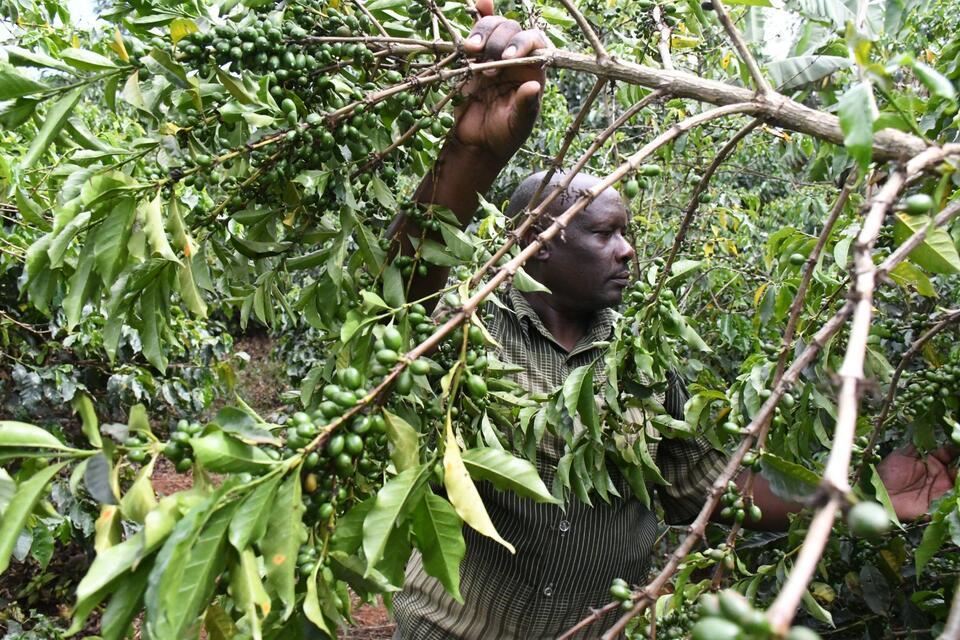
Blog Kenya’s first EUDR-ready coffee shipment: A milestone for sustainable trade
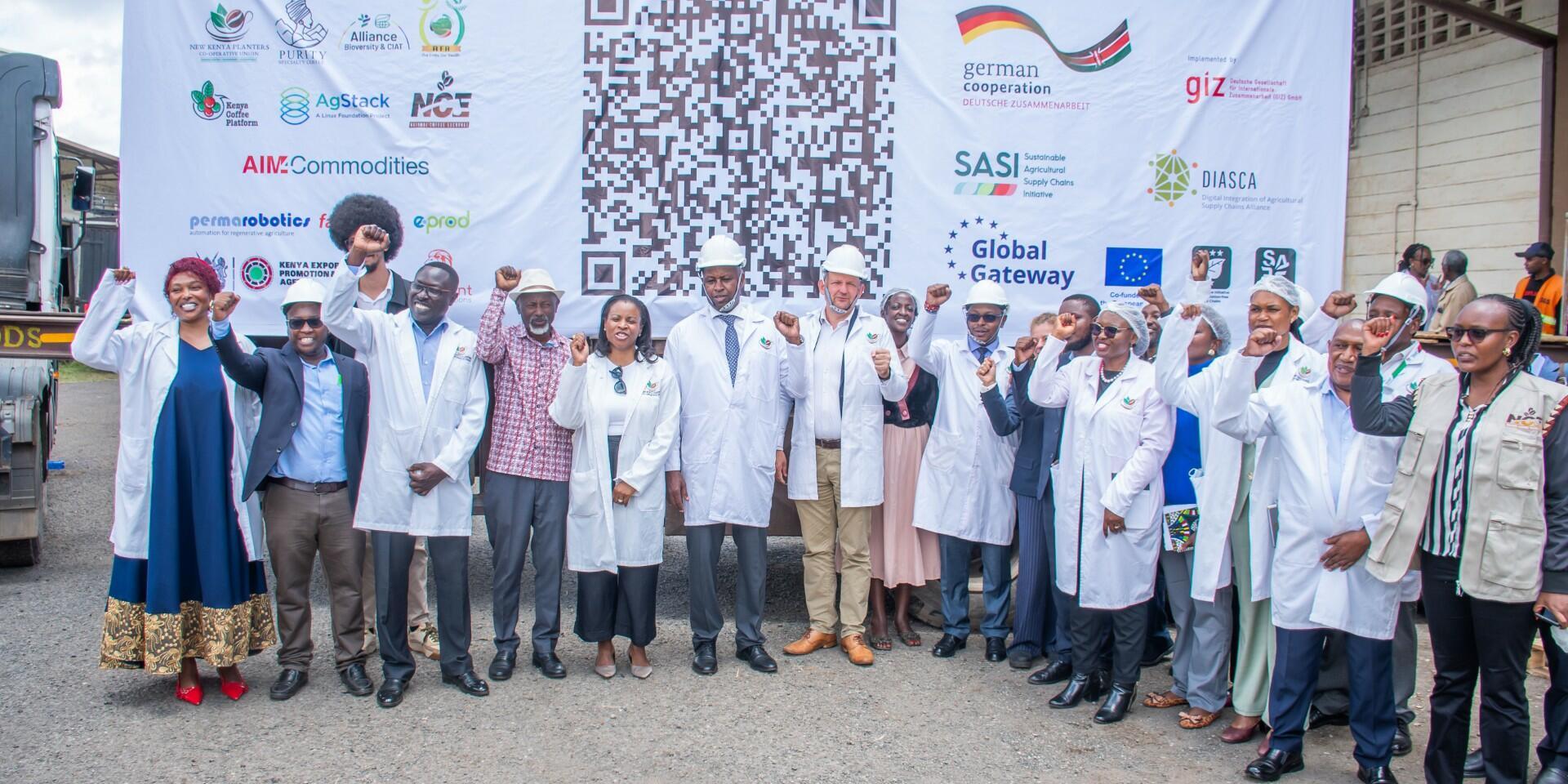

Kenya’s coffee sector has marked a historic milestone with the successful preparation and export of its first shipment of European Union Deforestation Regulation (EUDR)-ready coffee. This achievement reflects not only compliance with emerging global sustainability standards, but also the country’s growing capacity to operate within a rapidly evolving trade environment where environmental accountability is becoming a prerequisite for market access.
The consignment, comprising 320 bags of coffee weighing 60 kilograms each and sourced from 13 cooperative societies, demonstrates the country’s ability to meet the requirements for deforestation-free sourcing, traceability, and legal compliance. With approximately 55 percent of Kenya’s coffee exported to the European Union, this milestone demonstrates that Kenyan coffee can meet high-integrity sustainability standards while remaining globally competitive.
A collaborative effort across the coffee value chain
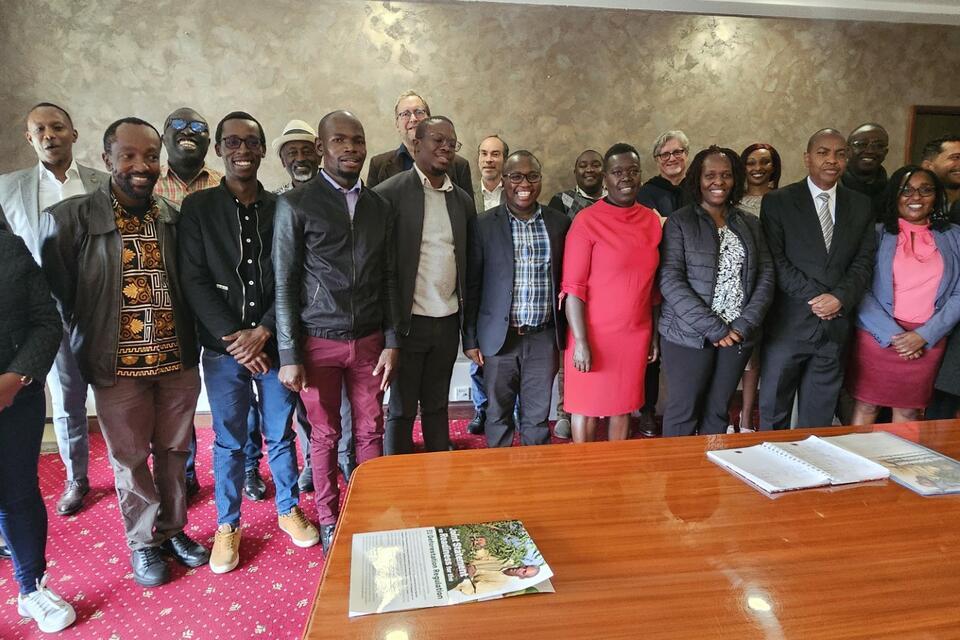
This milestone has been enabled through a multi-stakeholder approach involving the Alliance of Bioversity International and CIAT, the New Kenya Planters Cooperative Union (NKPCU), the Global Coffee Platform, and the Kenya Coffee Platform, with support from German cooperation through the DIASCA programme.
Speaking during the flagging-off ceremony in Nairobi, Kenya’s capital, Principal Secretary in the State Department of Cooperatives, Patrick Kilemi, emphasized the central role of smallholder farmers in achieving EUDR compliance. He reaffirmed the government’s commitment to ensuring that no farmer is excluded from international markets due to compliance challenges, highlighting ongoing efforts to equip farmers with the necessary knowledge, tools, and digital systems. Special attention, he noted, is being given to youth, women, and persons with disabilities to ensure inclusivity across the coffee value chain.
Timothy Mirugi, Managing Director of NKPCU, described the milestone as a reflection of the government’s commitment to revitalizing the coffee sub-sector, improving farmer incomes, and strengthening Kenya’s global competitiveness while aligning with international sustainability and climate action goals.
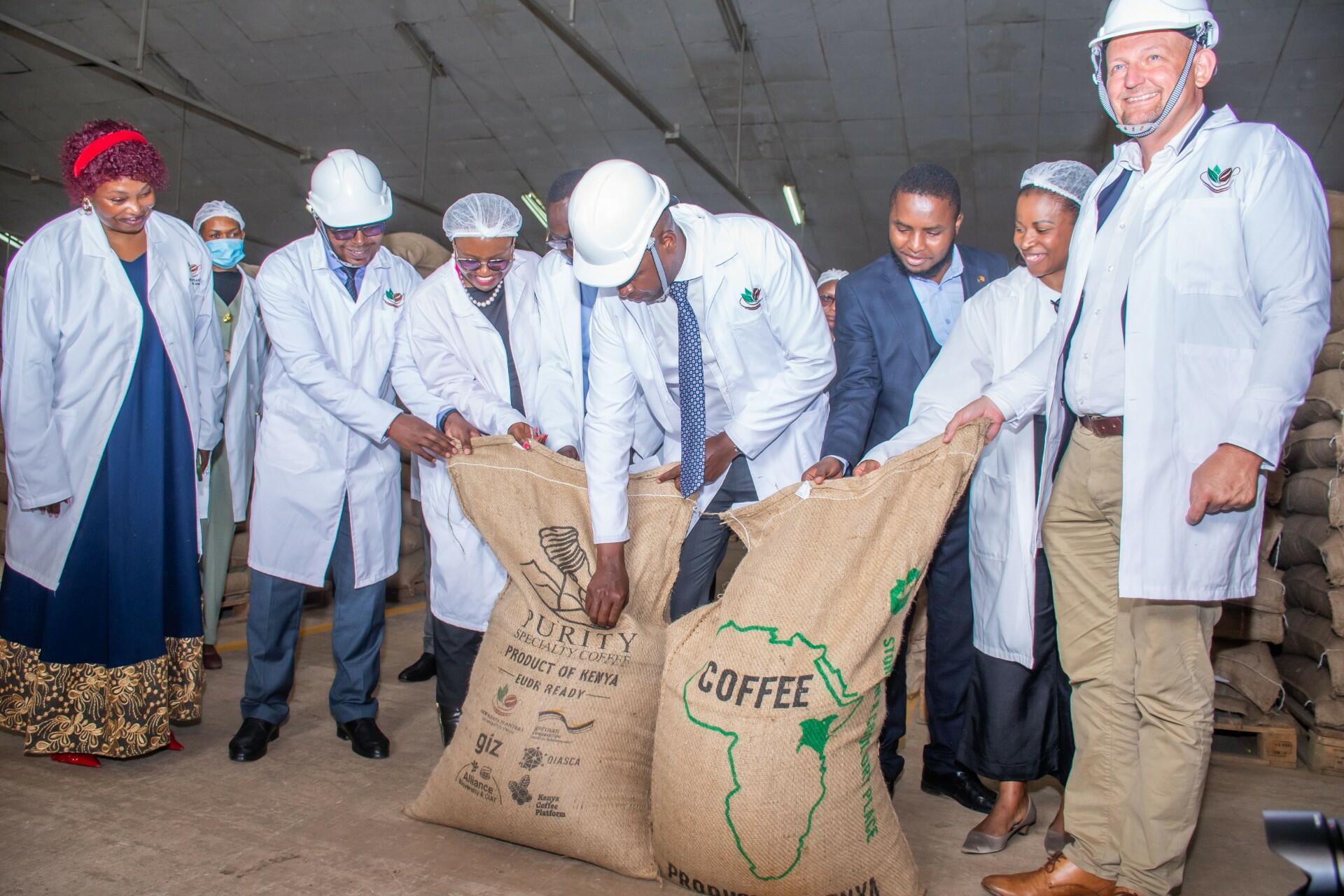
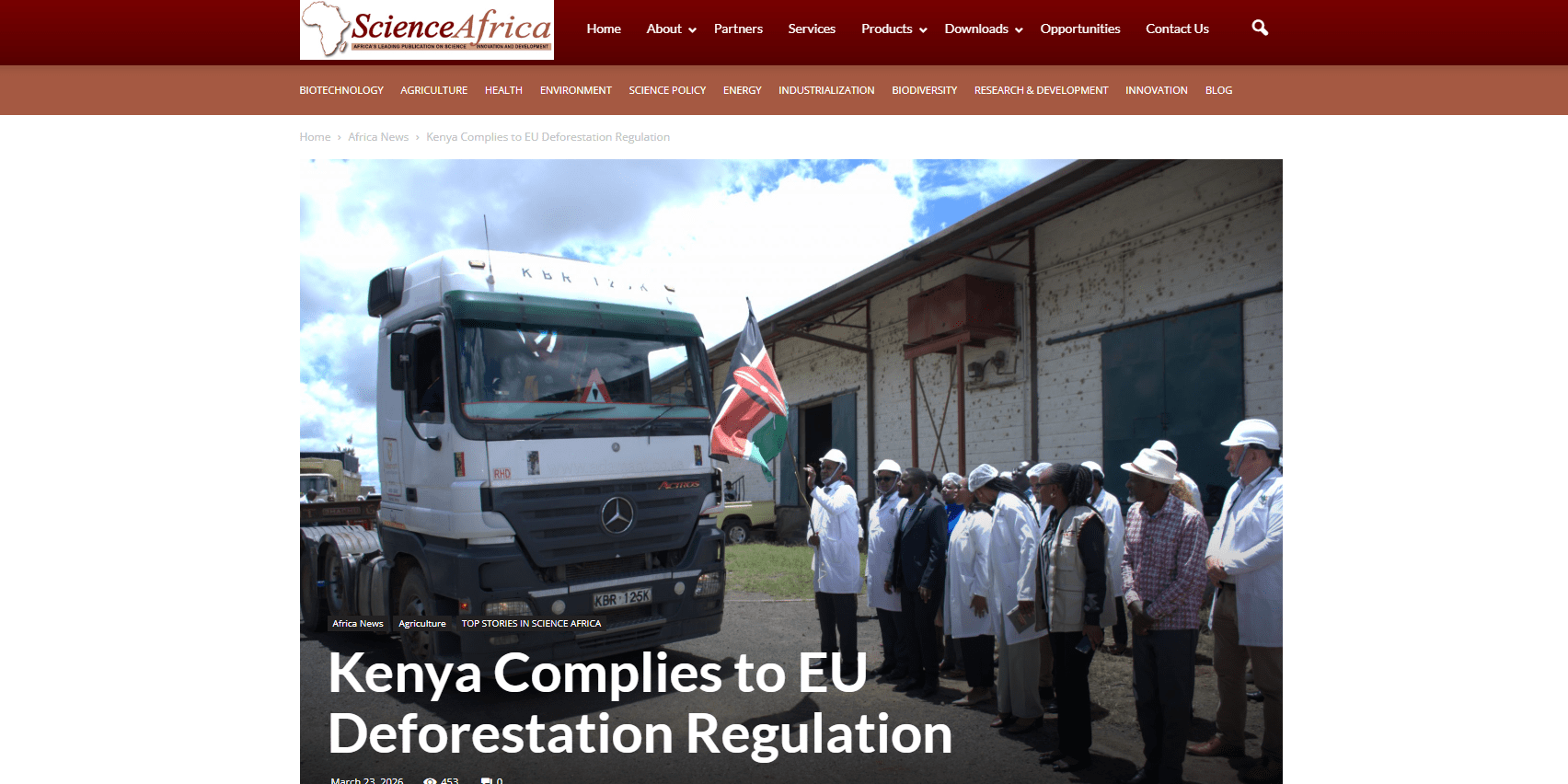
PS. Cooperatives, Patrick Kilemi leads stakeholders admiring some of the bags set for flagging off.
Turning data into trust: Science, systems, and verification
A key enabler of EUDR compliance has been the application of science-based tools and data-driven verification systems. In collaboration with NKPCU, and under appropriate data governance and confidentiality frameworks, the Alliance of Bioversity International and CIAT supported the analysis of farm-level data provided by participating cooperatives.
“The shipment has shown that it is possible to use technologies to solve the problem while keeping them open, adaptable, and accessible to others. By leveraging geolocation data, traceability systems, and digital tools, stakeholders can now verify deforestation-free production while also laying the groundwork for broader transformation,” noted Brian King, Senior Manager, Technology Integration – Alliance of Bioversity International and CIAT.
These technologies not only ensure compliance but also support regenerative practices, informed decision-making, and alignment with national goals such as Kenya’s tree-growing targets.
The result is a future where Kenyan coffee is not only globally competitive but also a possible benchmark for sustainability, transparency, and innovation.
With farmer consent and strictly for market access purposes, publicly available geospatial tools were used to assess deforestation risk confirming very low to no risk across the mapped farms. Importantly, these processes were aligned with Kenya’s regulatory environment, ensuring that the approach is not only compliant but also scalable and nationally relevant.
As Kevin Onyango, Senior Research Associate at the Alliance, noted:
“The experience shows that the tools and technologies required for compliance already exist. What matters most is how stakeholders come together to apply them,”.
The real innovation he added, lies in collaboration-bringing together science, partnerships, and trust to build systems that work across the value chain.
Building an EUDR-ready system
The preparation of EUDR-aligned coffee required integration of multiple technical components, including:
- Geospatial mapping of farms to verify land use and assess deforestation risk
- End-to-end traceability systems linking farm production to export consignments
- Open and interoperable digital infrastructure to support data sharing, validation, and compliance reporting
While these systems have proven effective, they also highlight some challenges, particularly the costs associated with farmer mapping, data management, and system interoperability. Addressing these constraints will be critical for scaling compliance across Kenya’s predominantly smallholder-driven coffee sector.

A close-up view of the scanned code.
Farmers at the heart of sustainability
At the farm level, adoption of sustainable practices is increasingly being driven by both market incentives and environmental awareness. Farmers are increasingly recognizing that compliance with EUDR aligns closely with the long-term sustainability of their production systems.
“As farmers, we are very happy about the EUDR regulations because we understand the need to conserve the environment. We cannot destroy forests to grow coffee; instead, we are learning and training others to conserve trees while still producing quality coffee,” said Joseph Waweru, a farmer and Chairman of Rwarai Factory in Nyeri.
Across coffee-growing regions, practices such as agroforestry are gaining momentum. By integrating trees into coffee farms, farmers are improving soil fertility, protecting crops from extreme weather, and enhancing overall resilience.
Kekilia Muthoni, a farmer from Embu County, explains how this works in practice:
“Coffee farming is the foundation of my life economically. I integrate tree planting with coffee—the leaves act as mulch and manure, the trees provide shade, and they protect the coffee from wind.”
Understanding EUDR: A structural shift in global trade
The European Union Deforestation Regulation (EUDR), adopted in 2023, represents a significant shift in global commodity trade governance. The regulation requires that commodities placed on the EU market, including coffee,must meet three core conditions:
- Be deforestation-free
- Be legally produced
- Be fully traceable to their origin
The regulation covers key commodities such as coffee, cocoa, cattle, palm oil, rubber, soya, and wood, along with their derived products.
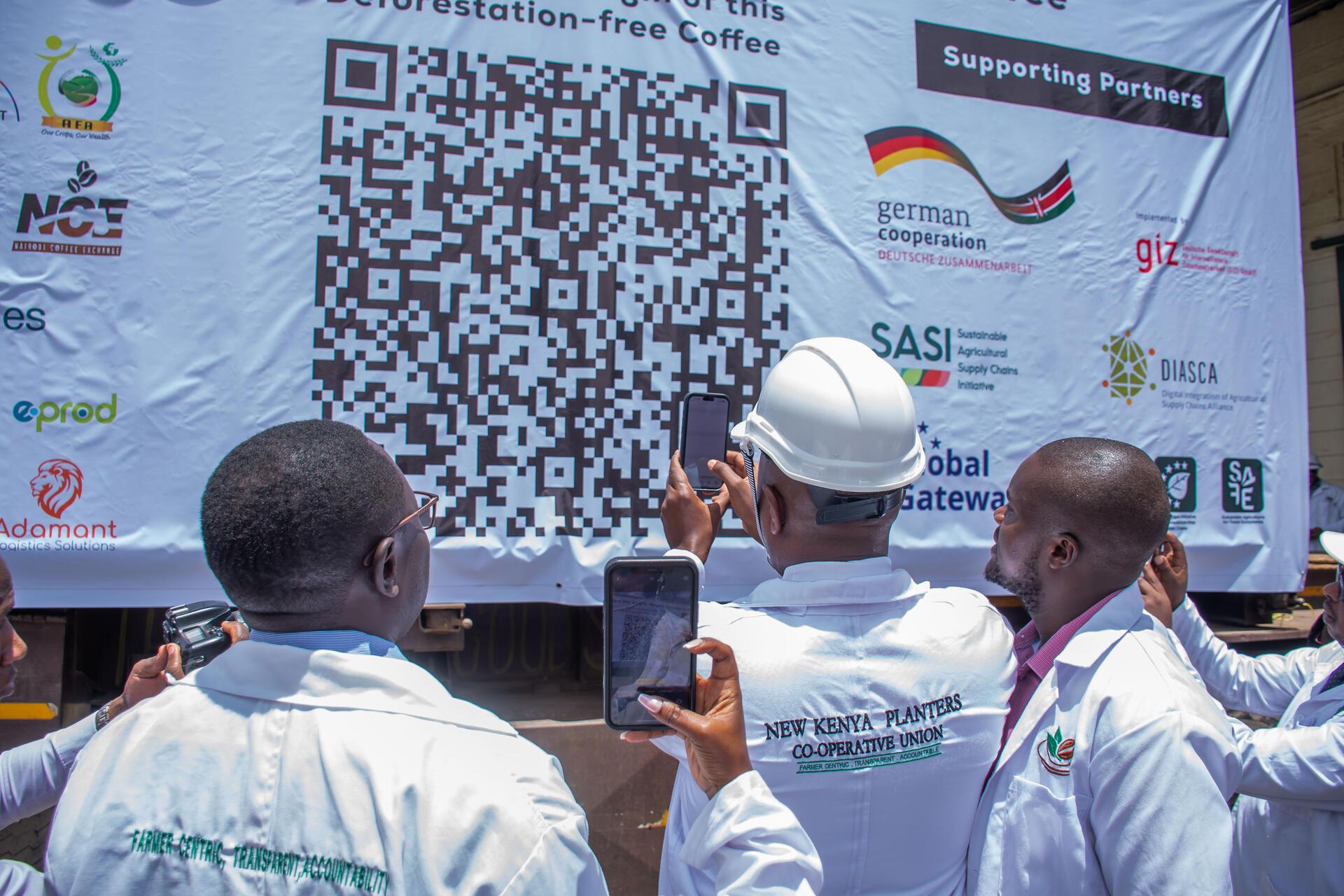
Stakeholders scan the traceability QR code.