Press and News The first Honduran coffee with a Designation of Origin and zero-deforestation compliance arrives in France

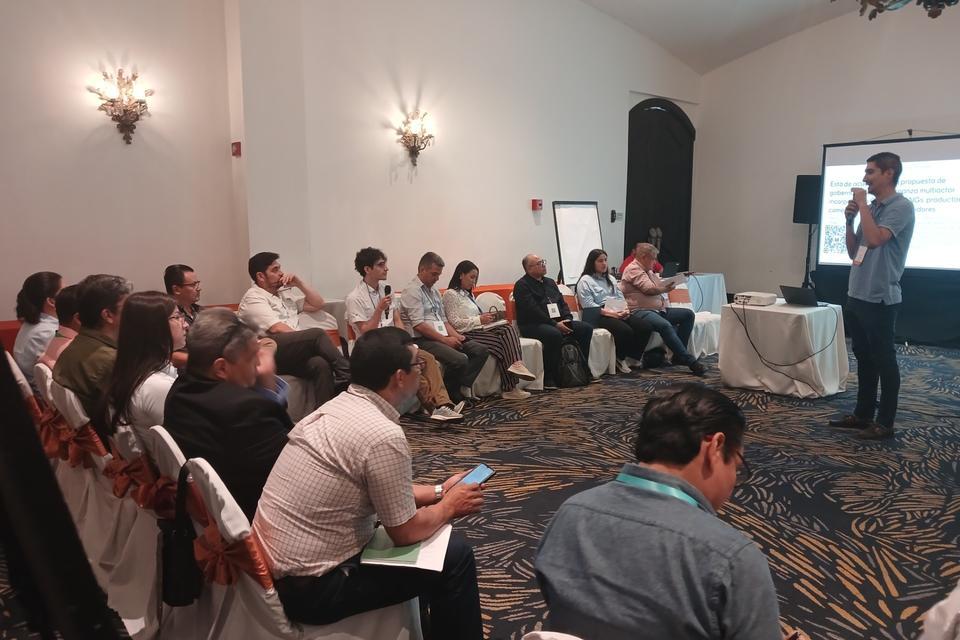
Thanks to the joint work between the Café Marcala Designation of Origin (DO Marcala), Café Orgánico Marcala S.A. (COMSA), the Alliance of Bioversity International and CIAT, and national and international partners, the container exported to Europe integrates Designation of Origin and compliance with the European Union's Deforestation Regulation (EUDR), setting a precedent for sustainable coffee production in Honduras.
Chinacla, La Paz. Honduras. The Café Marcala Designation of Origin, together with the company COMSA and the Alliance Bioversity & CIAT, sent a container of deforestation-free and fully traceable coffee to France. This shipment marks an important milestone for Honduran and regional coffee production in response to the new environmental requirements of the international market. The objective is to demonstrate that it is possible to export coffee that simultaneously guarantees origin, quality, and compliance with European zero-deforestation regulations, using open-source digital tools that facilitate the inclusion of small producers.
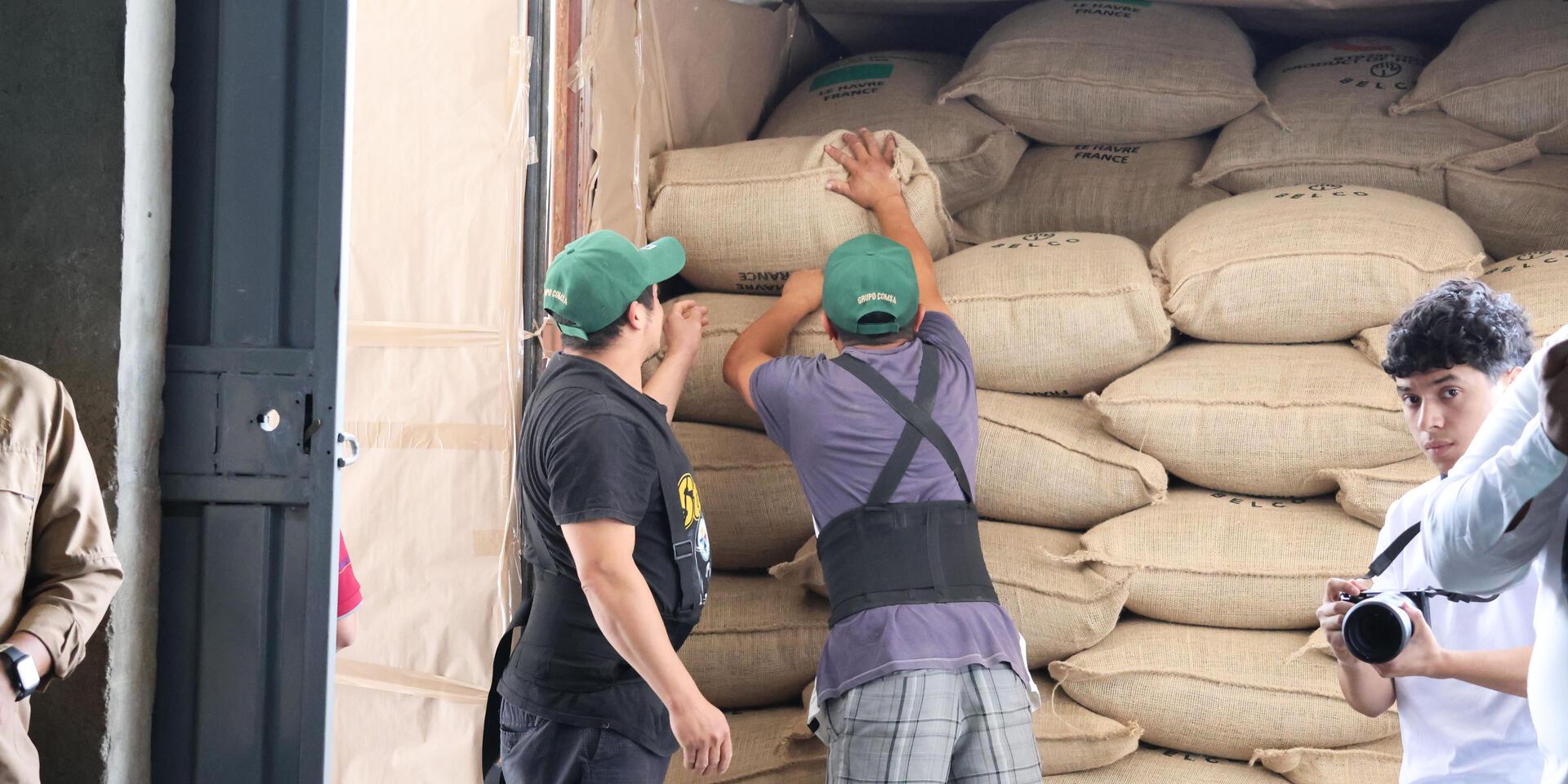
Credit: CIAT / Alisson Zelaya.
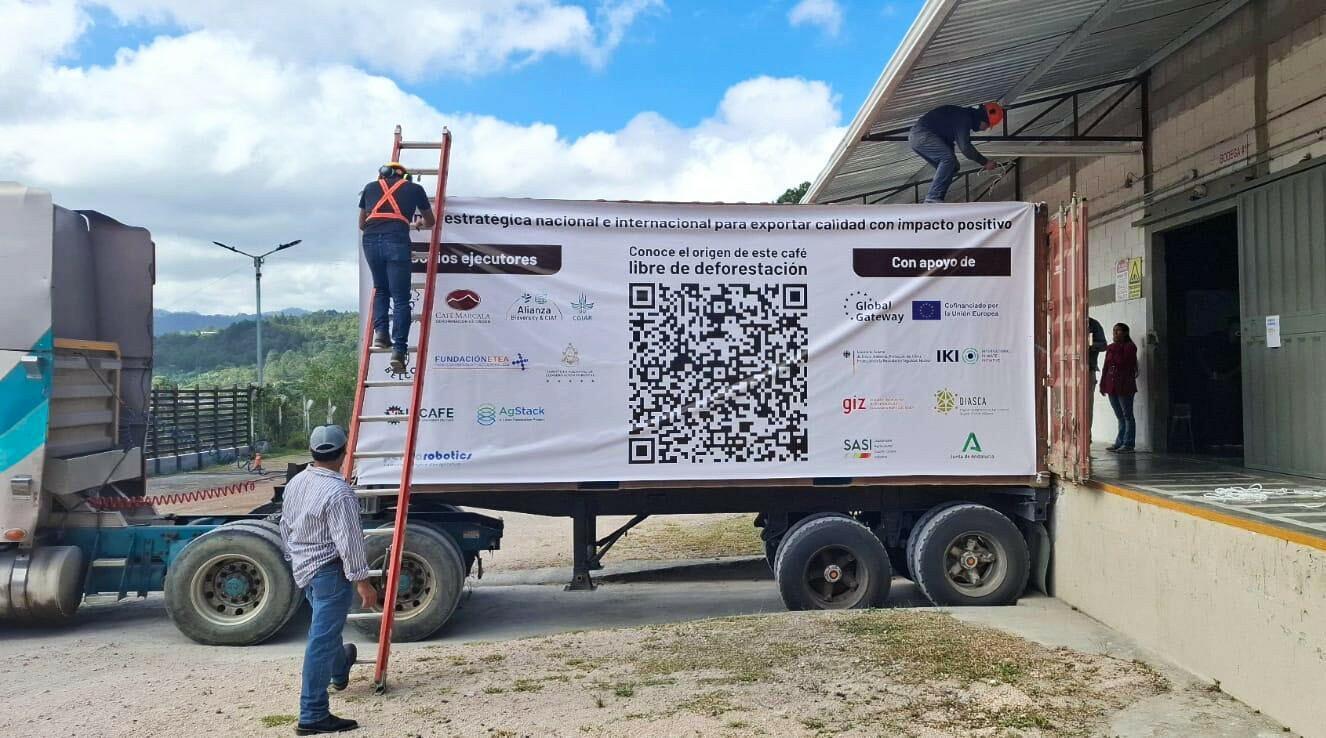
To achieve this milestone, the organizations have developed a system that meets the various requirements of the European Union's zero-deforestation regulations, such as the geolocation of coffee production plots, verification of non-deforestation, and traceability from the plot to the European importer; in addition to having the certificate of origin and quality granted by the Café Marcala Designation of Origin. This system integrates information from the Forest Conservation Institute (ICF) – the national entity responsible for compliance with the EUDR –, information from FAO's WHISP platform, farm and producer information from COMSA, and information generated through the Trace Food Chain platform of the Alliance Bioversity & CIAT and Permarobotics.
This collaboration takes place within the framework of the Great Forests of Mesoamerica Program and the Coffee and Forests Initiative, driven by the European Union's Global Gateway strategy, co-financed by the European Union and Germany (BMUKN/IKI), and implemented by the German Corporation for International Cooperation (GIZ) and the Alliance Bioversity & CIAT together with local partners.
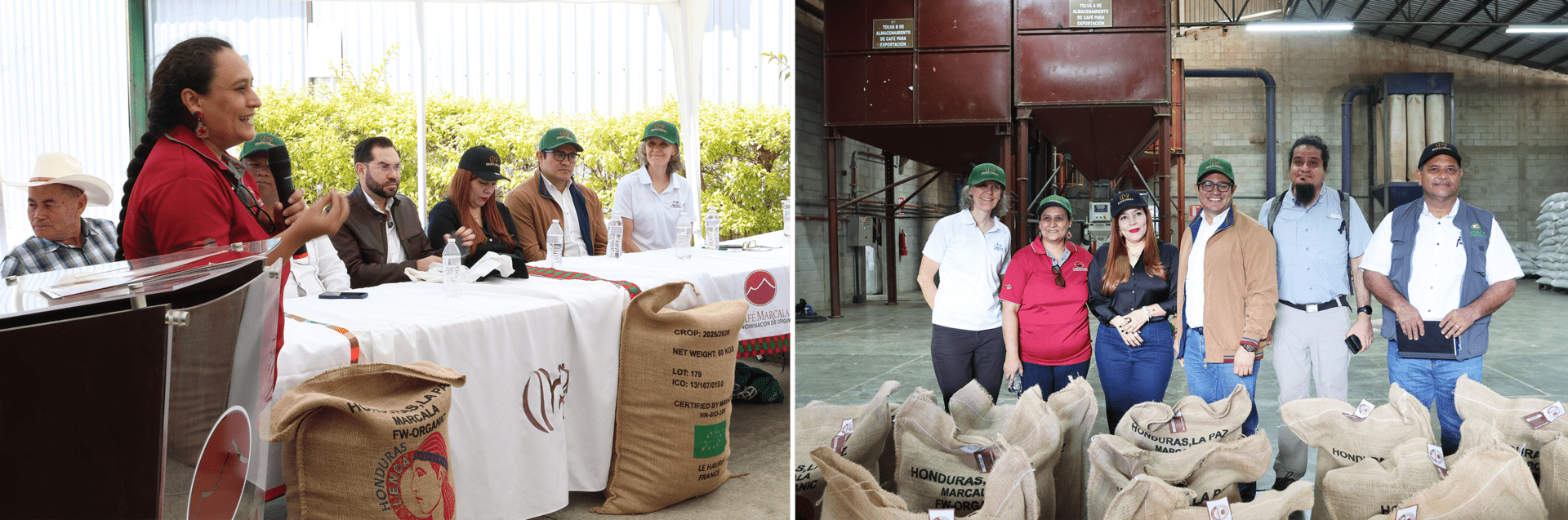
Credit: CIAT / William Igeler.
This container is imported by the European company BELCO, a strategic partner in this effort. For BELCO, EUDR compliance is a priority requirement for all its coffee imports, regardless of the fact that the regulation has been postponed until December 2026. The company has worked directly with COMSA on the documentation and traceability of each lot, ensuring full transparency from origin to the European market.
The export of this container is in addition to the one carried out in 2025 by BECAMO, Beneficio Río Frío, Beneficio Rosales, and the Alliance of Bioversity International and CIAT, demonstrating that collaboration between actors in the coffee sector in building a shared digital infrastructure is not only possible but key for small coffee producers to effectively comply with new international standards on sustainability and environmental protection.
This shipment consolidates the Café Marcala Designation of Origin and COMSA as national references in sustainability, traceability, and adaptation to international standards, reaffirming the commitment of Honduran producers to the protection of forests and responsible trade.
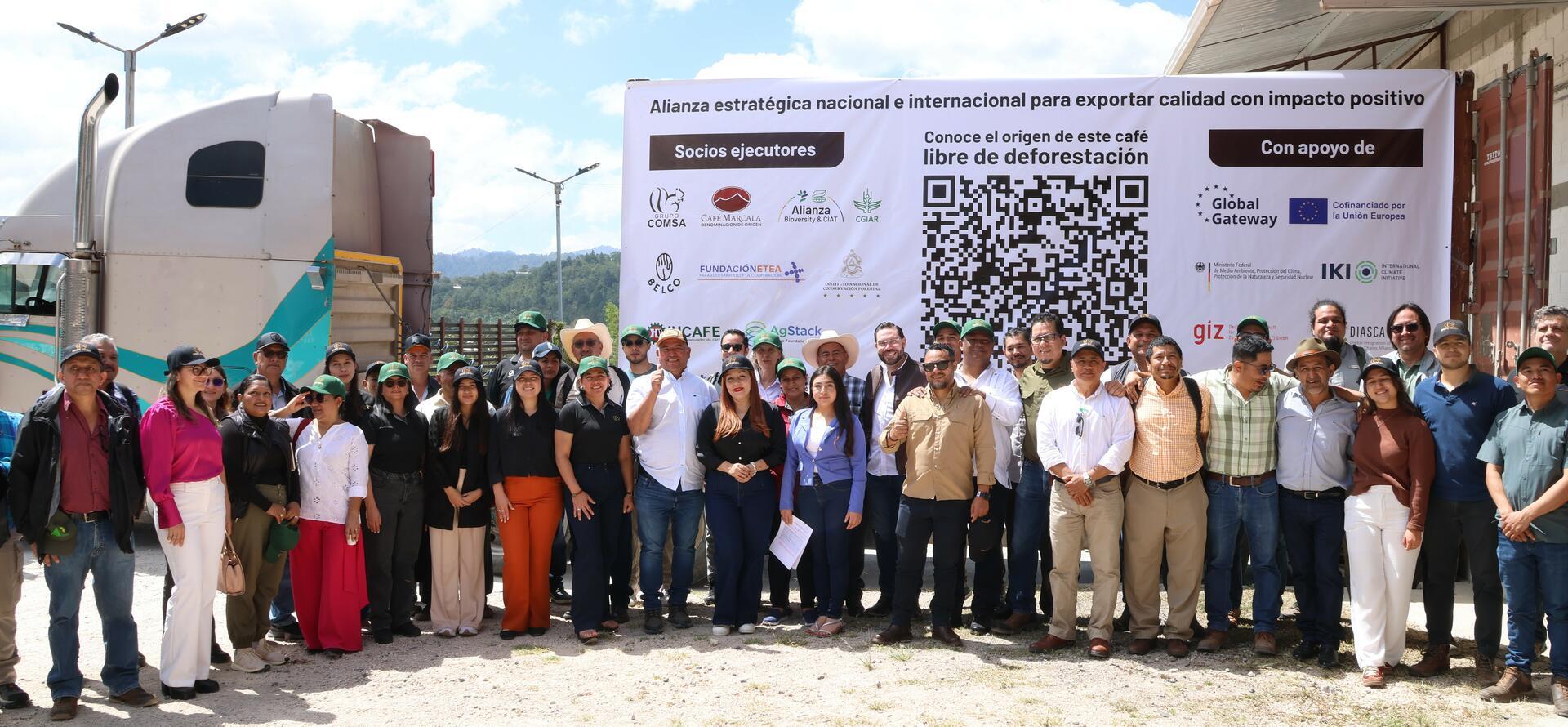
Credit: CIAT / Alisson Zelaya.

The Alliance team behind this work:
Brian King
Federico Ceballos-Sierra
William Igeler
Oscar Amado
Jenny Wiegel
Review and edit: Adriana Varón
Cover photo credit: CIAT / Alisson Zelaya