Blog Insights from the Africa Climate Summit side-event dialogue on restoration and soil health

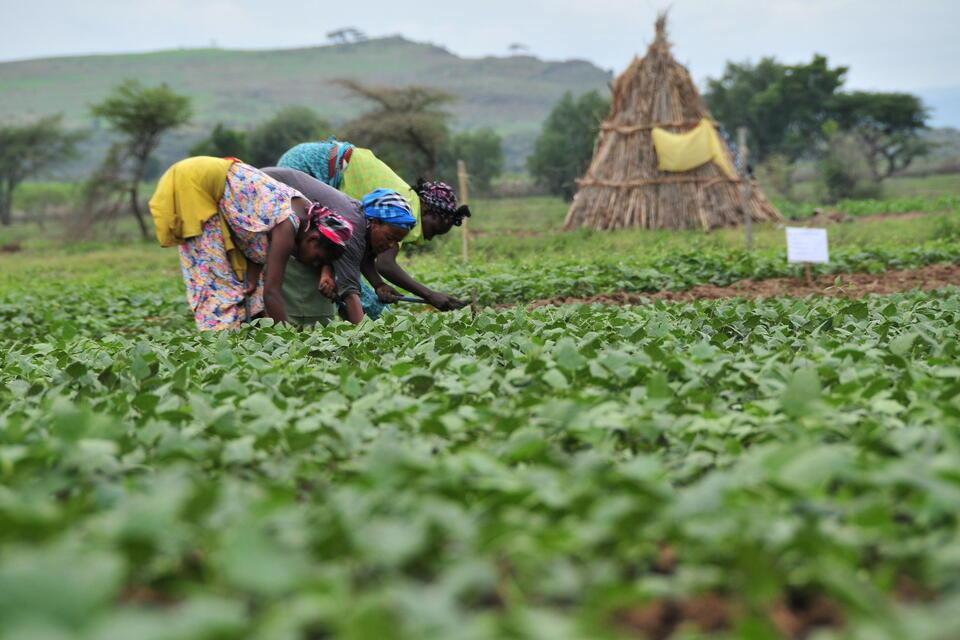
Across Africa, soils are under stress. More than 65% of farmland is degraded, threatening food security, livelihoods, and the continent’s ability to withstand shocks. Yet, within this challenge lies a remarkable opportunity: restoring healthy soils and landscapes can unlock resilience, productivity, and sustainability for future generations.
This urgency framed a side-event held during the Second Africa Climate Summit (8–10 September 2025), co-organized by the Ethiopian Landscapes Restoration Platform (ELaRP) and the Alliance of Bioversity International and CIAT. The session brought together policymakers, researchers, the private sector, NGOs, and regional platforms to explore how Africa can scale solutions for soil health and landscape restoration.
The discussions highlighted not only the scale of the challenge but also the wealth of opportunities for collaboration, innovation, and policy alignment.
Welcoming remarks: Building networks through ELaRP
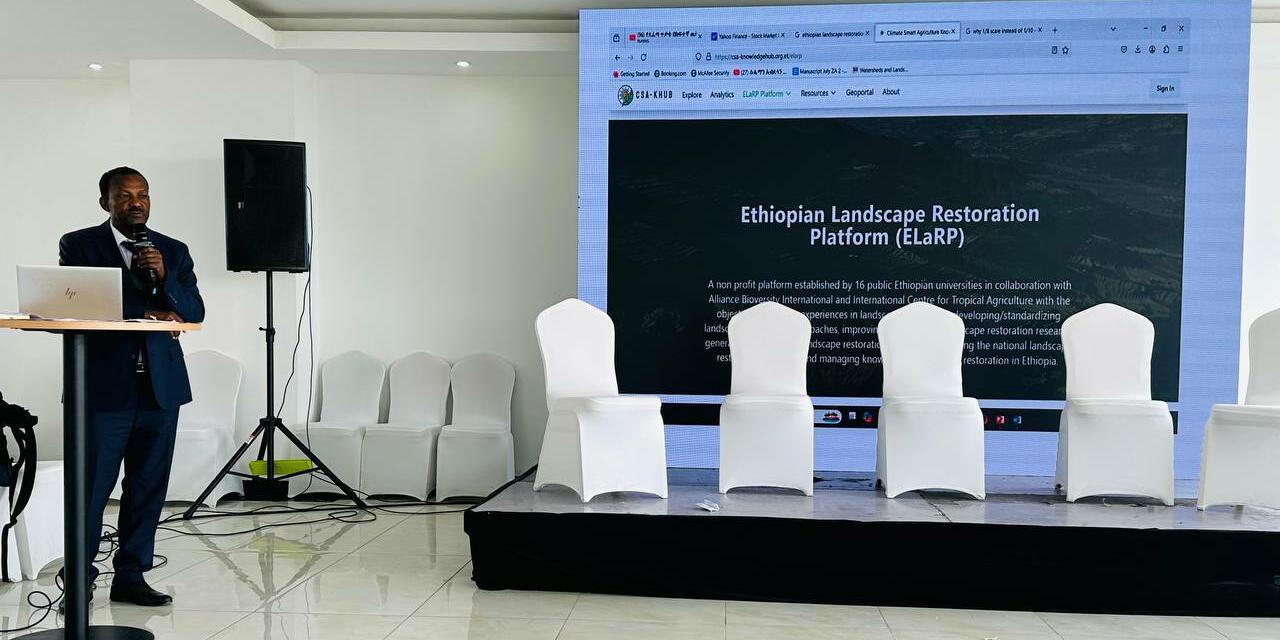
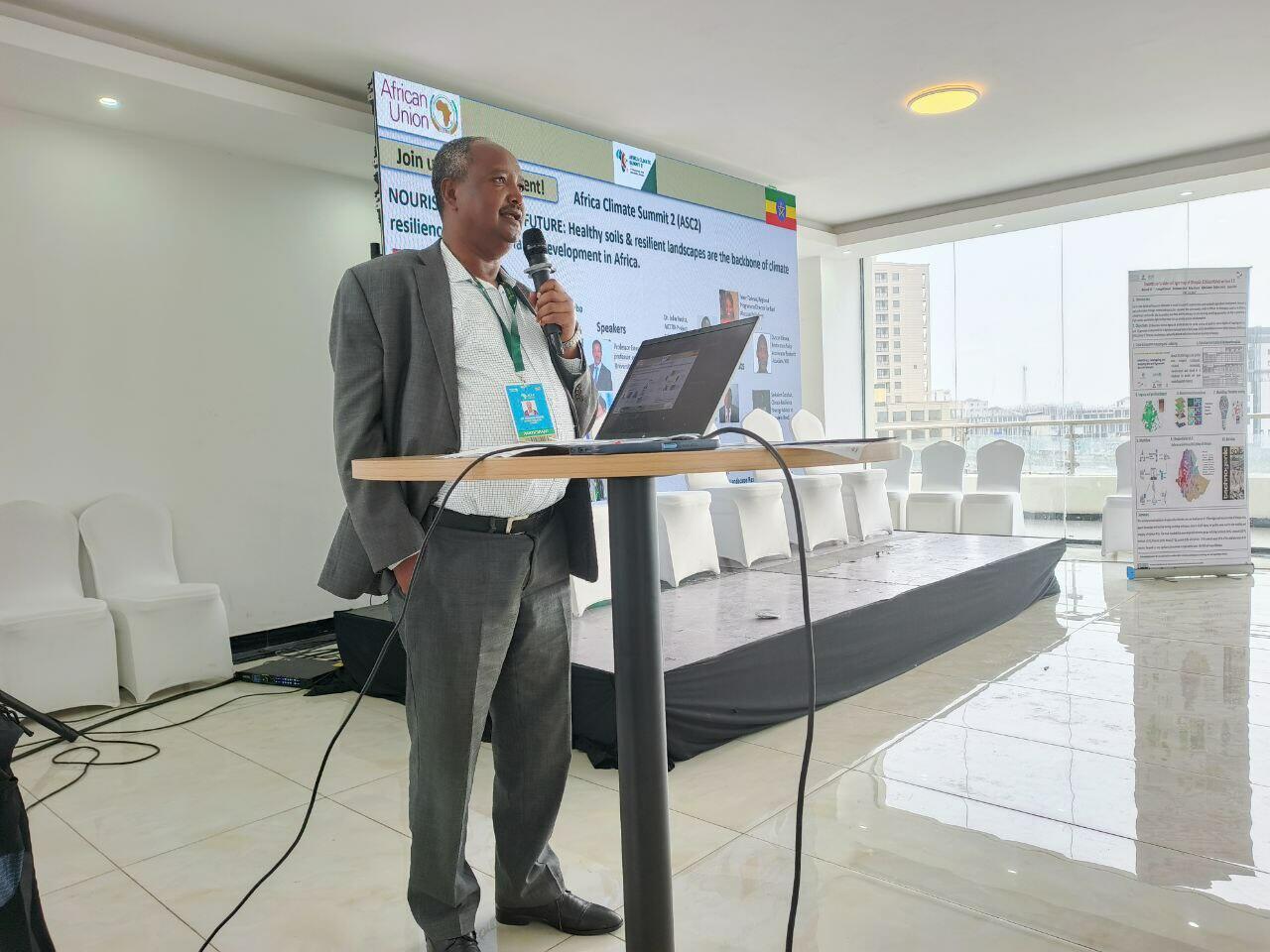
Professor Enyew Adgo, Vice President of Bahir Dar University and Chair of ELaRP, opened the session with a clear message: Africa needs strong, homegrown platforms to connect science, practice, and policy. In less than two years, ELaRP has developed bylaws, a five-year strategic plan, an annual conference, and training initiatives—including on the application of Artificial Intelligence in landscape restoration. These efforts, he noted, are laying the foundation for coordinated action in Ethiopia and beyond. ELaRP acknowledges the support of the AICCRA (Accelerating Impacts of CGIAR Climate Research in Africa) project in all these achievements and the CGIAR Multifunctional Landscape Science Program to organize the side event.
Setting the scene: Why healthy landscapes and soils matter
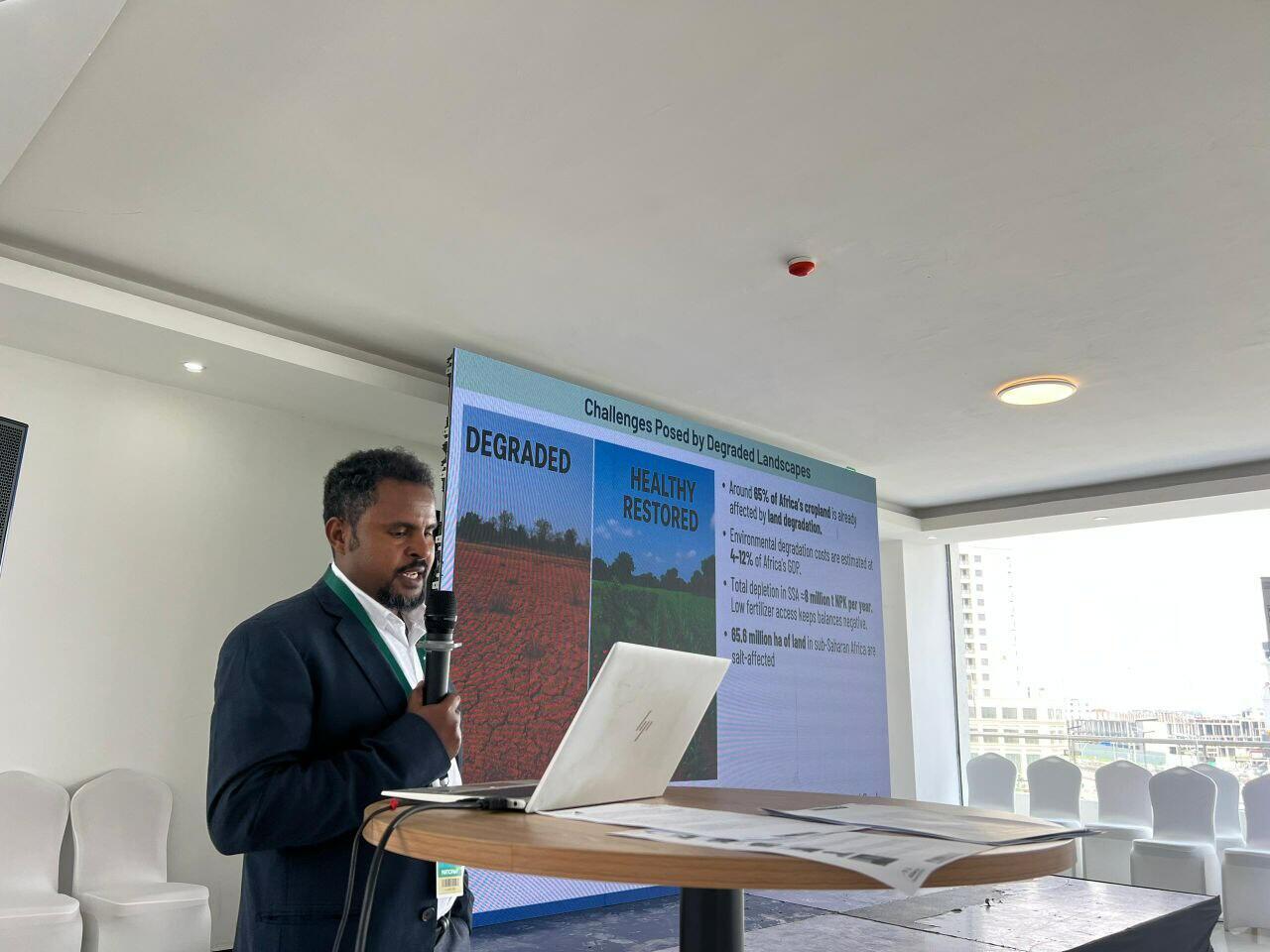
In his keynote, Dr. Wuletawu Abera - Senior Researcher at the Alliance - underscored the cost of inaction. Degraded soils and fragile ecosystems are eroding resilience, while the climate crisis is accelerating pressures. Drawing on lessons from Ethiopia’s Sustainable Land Management Program (SLMP), he highlighted how restored landscapes buffer droughts, sustain productivity, and strengthen communities.
Dr. Abera presented experiences from the CGIAR Sustainable Farming Science Program and called for site-specific, integrated soil fertility advisory systems that combine healthy soils, responsible fertilizer use, and farmer-centered innovations. These, he argued, are central to Africa’s sustainable agricultural pathway and climate strategy. This also highlights an important alignment and complementary between the Sustainable Farming and Multifunctional Landscapes Science Programs to understand and manage processes across scales. Restoration, conservation, and sustainable use of landscapes are essential to make farm-level actions effective and sustainable. He stressed that well-managed farms using diverse solutions also make landscapes more productive and resilient.
Panel discussion
Five panelists, representing diverse expertise and organizations i.e., government, NGO, private sector, policy and restoration platform), engaged in a discussion on key themes: strengthening the research–policy interface, the role of NGOs as catalysts for change, the roles and lessons of platforms such as ELaRP and Kenya Landscape Actors Platform (KenLAP), the contribution of the private sector, and the importance of policies and incentives for advancing landscape restoration.
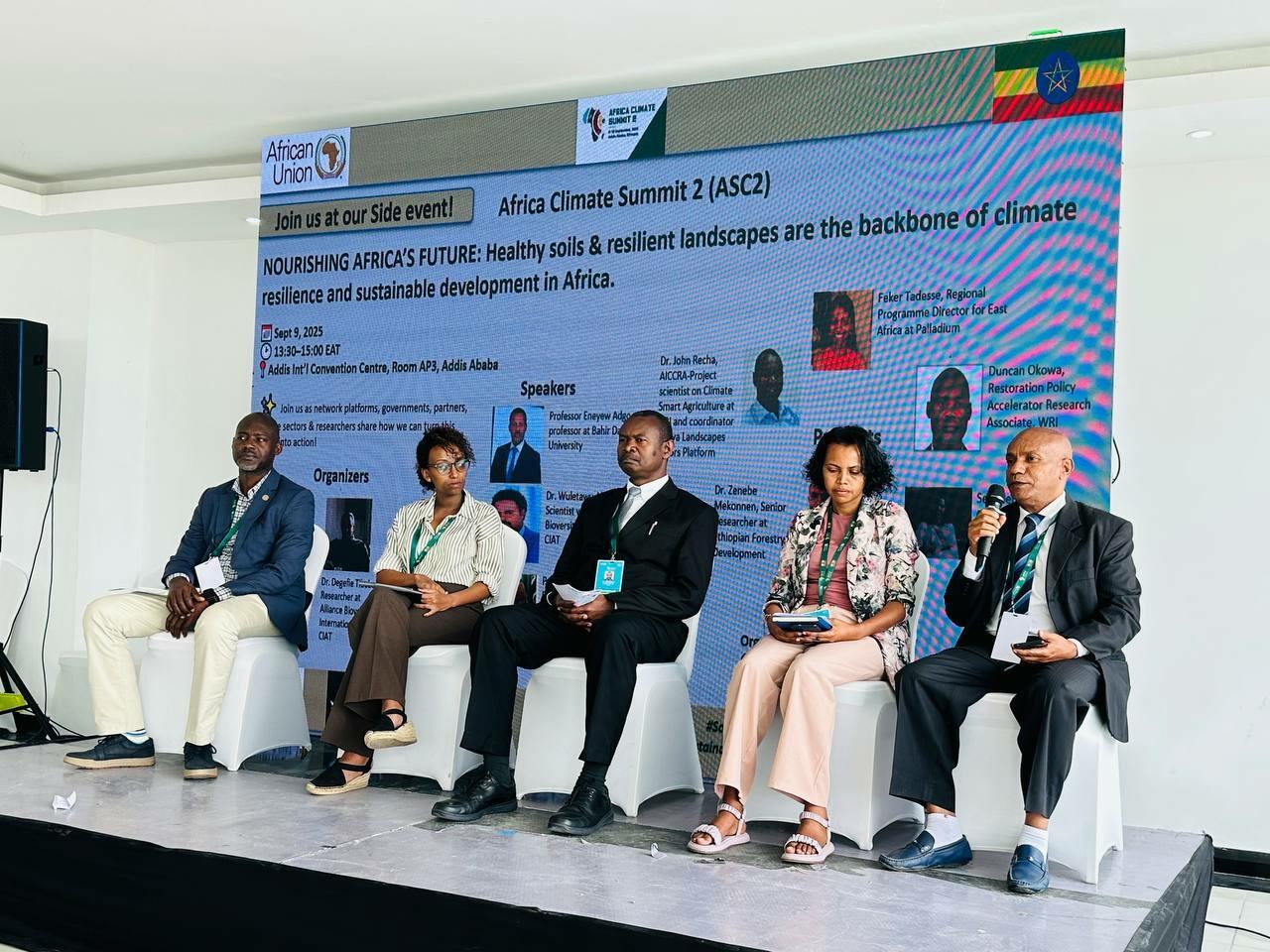
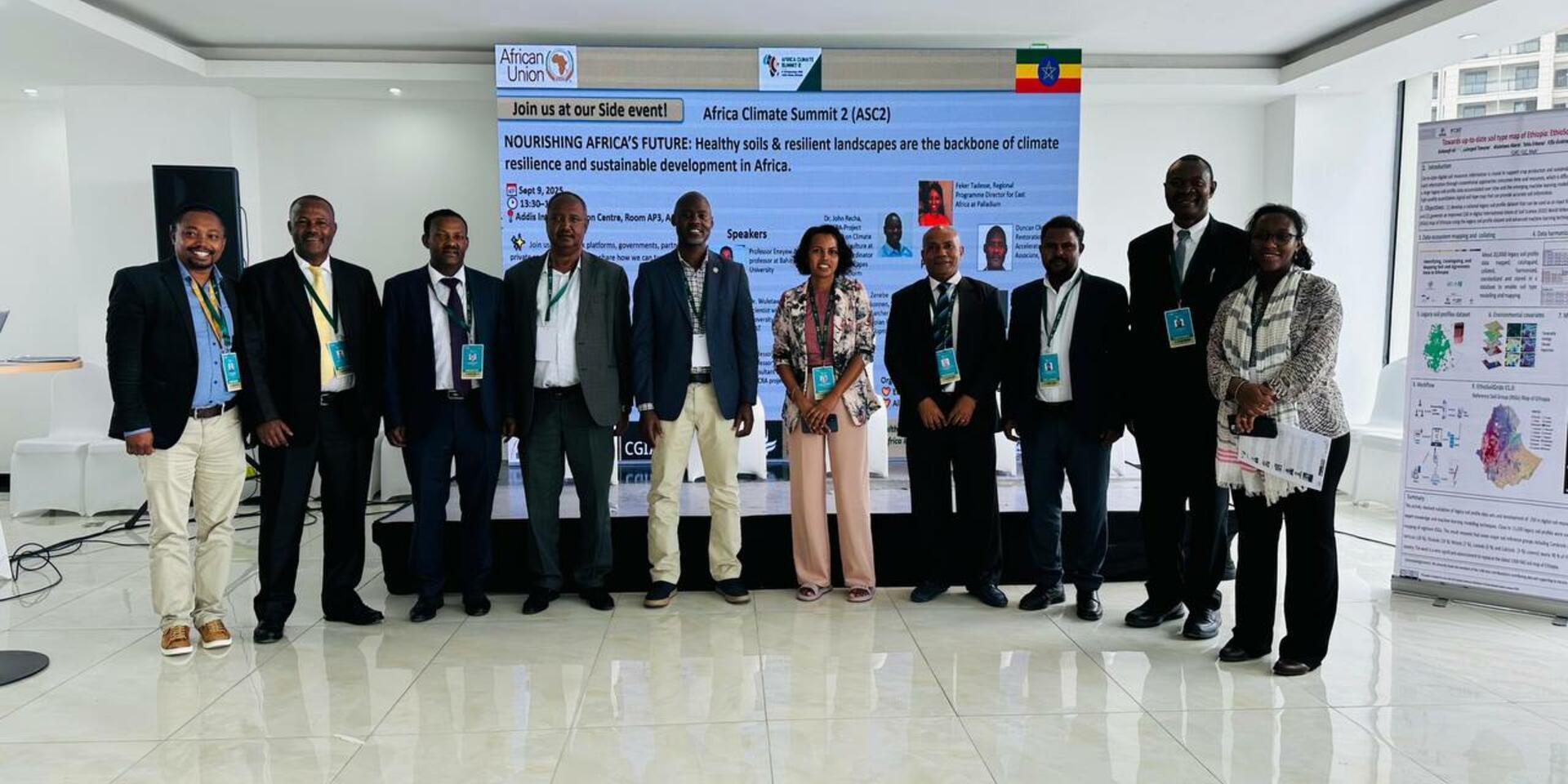
Panelists involved in the side event from left to right: Duncan Okowa, Feker Tadesse, John Recha, Serkalem Getahun and Zenebe Mekonnen
Strengthening the research–policy interface
Dr. Zenebe Mekonnen - Senior Researcher from Forest Development - emphasized that bridging the gap between science and policy is essential for turning research into tangible climate solutions. Practical approaches such as co-creating policies with researchers, embedding scientific advisory bodies within government structures, and piloting research-driven innovations at the community level were discussed. Land restoration was highlighted not only as a tool for climate adaptation and mitigation but also as a pathway for achieving national climate commitments under the NDCs while generating income, food security, and resilience for local communities.
NGOs as catalysts for change
According to Serkalem Grtahun (People in Need), non-governmental organizations (NGOs) are recognized for their unique ability to bridge local communities with broader policy and investment agendas. Their grassroots presence enables them to mobilize farmers, pilot innovative practices, and amplify local voices in national dialogues. By documenting and scaling community successes, NGOs can influence policy reforms and strengthen partnerships that align with national and global restoration commitments.
Leveraging network platforms in landscape restoration
John Walker Recha agreed that network platforms such as the Kenya Landscape Actors Platform (KenLAP) can mobilize diverse actors, facilitate knowledge exchange, and unlock investment opportunities. KenLAP’s success demonstrates the power of collective action in scaling soil health and restoration initiatives, offering lessons in transparency, inclusivity, and continuous dialogue. Participants underscored that replicating and adapting such platforms across Africa could accelerate progress.
The role of the private sector
According to Feker Tadesse from Palladium group, the private sector is a crucial driver of transformation. She emphasized that beyond traditional corporate social responsibility, businesses can embed soil health into their value chains through sustainable sourcing, investments in regenerative agriculture, and the development of markets for climate-smart products. Innovative approaches such as carbon credit schemes, public–private partnerships, and blended finance were highlighted as practical models to make restoration financially viable, while also delivering long-term ecological and social benefits.
Policy and incentives for restoration
Duncan Okowa from WRI emphasized the need for coherent policies that align local priorities with national and global goals. He called on governments to design incentive frameworks—such as tax breaks, subsidies, and secure land tenure—that encourage private investment while safeguarding environmental integrity and community benefits. Aligning NDC targets with local realities, he stressed, is essential to overcoming barriers and ensuring the large-scale success of restoration initiatives.
Closing remarks
In his closing remarks, Professor Berhanu Belay - a consultant at ICARDA/ILRI - emphasized that ELaRP is still in its infancy, being less than two years old, and therefore requires both care and support to grow. He underlined the importance of strengthening and sustaining such platforms, while also highlighting the need to mobilize resources and secure funding to ensure ELaRP’s effective functioning and long-term impact.
Takeaway messages
- Healthy soils and landscapes are central to climate resilience and sustainable agriculture – Restored ecosystems buffer droughts, enhance productivity, store carbon, and directly link land management to climate action.
- Bridging research, policy, and practice is key – co-creating policies with researchers, embedding scientific advisory mechanisms, evidence generation and piloting innovations at the community level turn scientific knowledge into tangible climate solutions.
- Collaborative platforms and NGOs accelerate impact – Networks like KenLAP, ELaRP, and grassroots NGOs can play a central role in mobilizing stakeholders, scaling successful practices, and fostering partnerships that strengthen landscape restoration and policy alignment.
- Private sector engagement and supportive policies drive large-scale restoration – Sustainable business practices, financial incentives, and coherent policy frameworks are essential to make soil health and landscape restoration economically viable while delivering ecological and social benefits.
The team
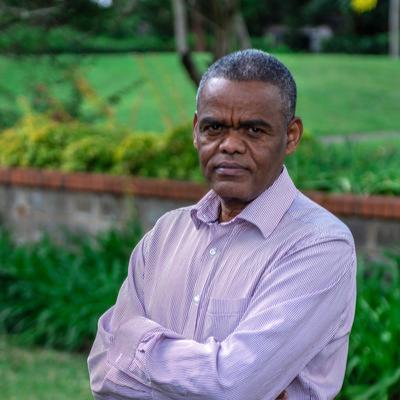
Lulseged Tamene Desta
Director, Multifunctional Landscape
Wuletawu Abera
Senior Scientist, Country Representative for Ghana
Degefie Tibebe
Research Specialist
Kalkidan Ayele Mulatu
Research Management CoordinatorKeep exploring
The Alliance at the Second Africa Climate Summit 2025