Blog Webinar: Exploring the role of artificial intelligence in landscape restoration and soil health in Ethiopia

The Alliance of Bioversity International and CIAT and the Ethiopian Landscape Restoration Platform (ELaRP) organized a webinar on artificial intelligence (AI) and its application on soil health and landscape restoration on November 14, 2024. The event titled “The Concepts and Applications of AI for Landscape Restoration and Soil Health,” which brought together more than 120 participants from universities and research centers across Ethiopia fostering insightful discussion on these transformative technologies. The webinar was advertised through ELaRP which attracted a multidisciplinary team for the training.
By: Zenebe Adimassu, Berhanu Belay, Degefie Tibebe, Wuletawu Abera, Lulseged Tamene
Artificial Intelligence (AI) refers to developing computer systems capable of performing tasks that typically require human intelligence. AI has applications in land restoration and soil health by providing data-driven insights and precision tools that improve decision-making. By helping to restore degraded lands and enhancing soil health, AI plays a crucial role in promoting integrated landscape management and combating the effects of climate change Through machine learning algorithms, AI can analyse complex data from satellite images, soil sensors, and climate patterns to monitor soil conditions, detect degradation, and predict ecological changes. This enables targeted restoration efforts, such as optimized erosion control, and nutrient management, which lead to healthier, more resilient ecosystems.
Capacity building at each stage including training researchers and lecturers on the role of AI in landscape restoration and soil health is crucial for advancing sustainable land management and ecological restoration practices.
AI tools can analyze large complex data sets, identify patterns, and generate predictive models that help researchers make informed decisions.
By understanding how to leverage AI, researchers can enhance their ability to monitor soil conditions, track vegetation changes, and assess restoration efforts' impact with greater accuracy and efficiency. Moreover, training in AI empowers researchers to create innovative solutions tailored to specific landscapes, improving the effectiveness of soil management techniques and promoting biodiversity. Equipping researchers with AI skills accelerates the development of data-driven strategies to address soil degradation, combat desertification, and restore ecosystems, contributing significantly to global environmental health and resilience efforts.
Recognizing the potential of AI, the Alliance and ELaRP organized the webinar on AI, soil health and landscape restoration, which attracted a multidisciplinary team (Fig 1).
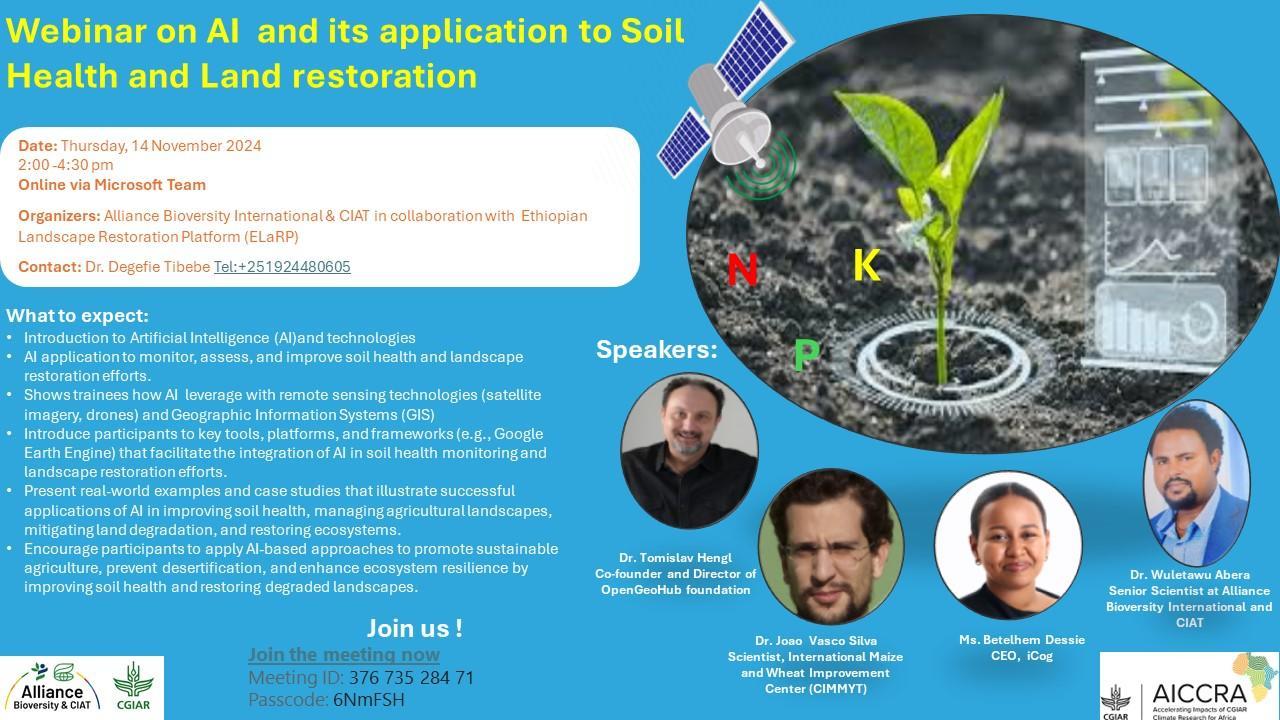
Fig 1. The advertisement made for AI training to lecturer and researcher
The webinar was conducted on 14 November 2024 using the following three distinguish speakers
- Dr. Dr. Tomislav Hengl, CEO of OpenGeoHUB
- Dr. João Vasco Silva, Scientist at the International Maize and Wheat Improvement Center (CIMMYT)
- Dr. Wuletawu Abera, Senior Scientist at the Alliance of Bioversity International and CIAT
Dr. Lulseged Tamene - Director of Multifunctional Landscapes at the Alliance - opened the webinar with a thought-provoking address. Dr. Lulseged emphasized the importance of leveraging AI to address the urgent challenges of land degradation and declining soil health. He highlighted how digital innovations could enhance decision-making processes, monitor ecosystem health, and sustainable landscape management practices.
The session was facilitated by Prof. Berhanu Belay, who ensured a seamless flow of discussions and engagement throughout the event. The webinar included three insightful presentations by distinguished experts, each shedding light on different aspects of AI in landscape restoration as highlighted below.
The first presentation by Dr. Hengl explored big geospatial data, auto-machine leaning and artificial intelligence in soil health and landscape restoration. Participants learned about AI technology, auto-machine learning, spatial machine learning, scientific machine learning, autonomous GIS, geo-autoML, opportunities for using AutoML for land restoration, soil health and land. He emphasized that ML is not a panacea, and researchers should avoid the unplanned dangers of automating machine learning.
The second presentation by Dr. Silva focused on the application of AI/ML on agronomy mainly on yield gap analysis with examples from Ethiopia. In this presentation, the speaker discussed on data assets for landscape characterization, data analytics for yield gap decomposition, yield gap analysis with stochastic frontiers, ML for yield gap analysis and data availability and communication tools.
The final presentation by Dr. Wuletaw showed the practical application of AI by taking examples on updating Ethiopia soil type map (EthioSoilGrid 1.0), fertilizer and soil fertility advisory system (NextGen Agroadvisory), real-time forest monitoring system (Terra_i), landscape restoration and text mining application for research. He also emphasized the need for AI for academia in teaching land restoration and soils health using ML.
Key Messages
The webinar highlighted several key takeaways:
- Key data sources, such as agronomy data and crop cut surveys, to enhance research accuracy and depth
- The need to establish networks of farm field data for scalable and cost-effective landscape characterization, enabling the testing of numerous management × environment (M × E) interactions
- The need to implement circular learning cycles to promote continuous improvement in agronomic research and development
- The need for combine empirical machine learning (EML) with process-based models to tackle complex soil-water-vegetation dynamics effectively
- Avoiding pitfalls in AutoML, such as ignoring artifacts, overfitting, and extrapolation problems, balancing flexibility and interpretability with the right expertise and innovation
- Using analytics to make informed decisions in areas like food security, resource-use efficiency, and sustainable agriculture
- Continuously innovating in data analytics, build technical capacity, and communicate findings effectively to guide investment and prioritize strategic goals
- The need to introduce AI capabilities in universities to foster research and AI literacy in the future workforce.
Acknowledgement
This webinar was organized by the Alliance of Bioversity International and CIAT in collaboration with Ethiopian Landscape Restoration Platform (ELaRP), and supported by Accelerating the Impact of CGIAR Climate Research for Africa (AICCRA) Ethiopia Project.
The Team

Lulseged Tamene Desta
Director, Multifunctional Landscape
Wuletawu Abera
Senior Scientist, Country Representative for Ghana
Degefie Tibebe
Research SpecialistSee Also