Blog Uniting for Change and Innovation: Highlights from the Ethiopian Landscape Restoration Platform's Annual Conference

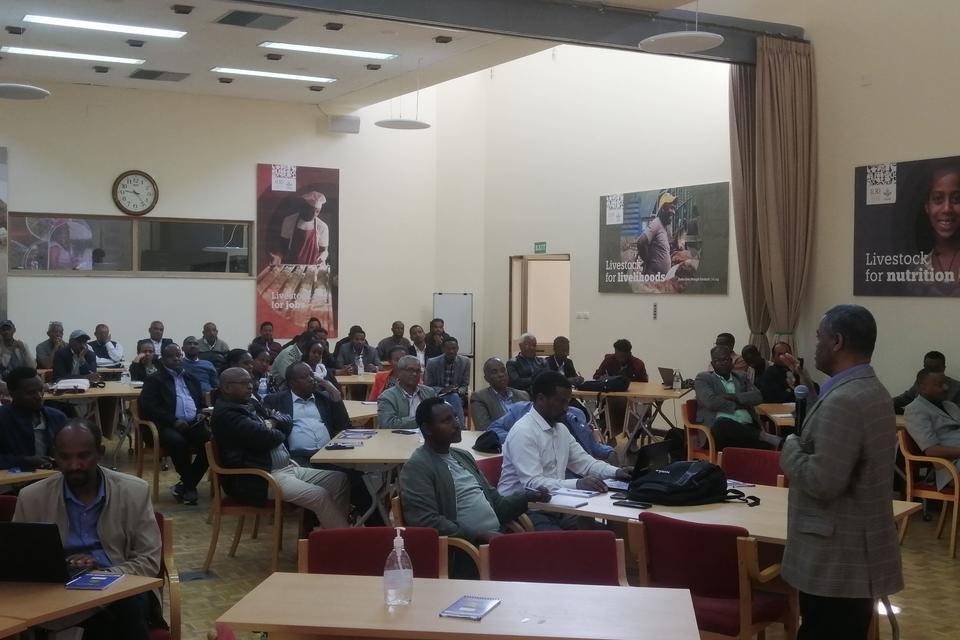
The first annual conference of the Ethiopian Landscape Restoration Platform was held from April 1-5, 2024 in Addis Ababa, Ethiopia. The conference was hosted by the Alliance, bringing together more than 50 key stakeholders including the Vice Presidents of 16 Universities and researchers involved in landscape restoration.
By: Zenebe Adimassu (Alliance of Bioversity International and CIAT), Berhanu Belay (International Research Institute), Degefie Tibebe (Alliance), Wuletawu Abera (Alliance) and Lulseged Tamene (Alliance)
The conference was the first of its kind and served as a pivotal moment in Ethiopia's journey towards landscape restoration. The main objectives of the annual conference were to share research on landscape restoration; and approve the platform’s bylaw, strategy and action plan to be implemented across member universities.
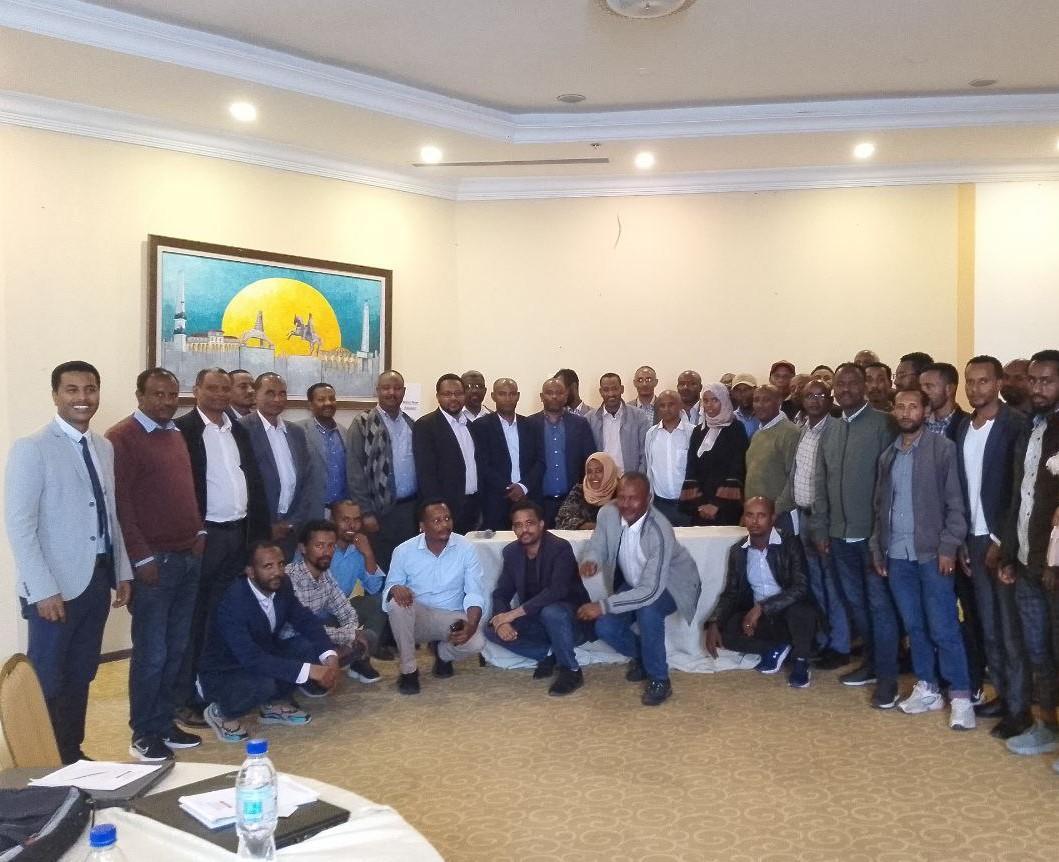
ELaRP’s annual conference participants
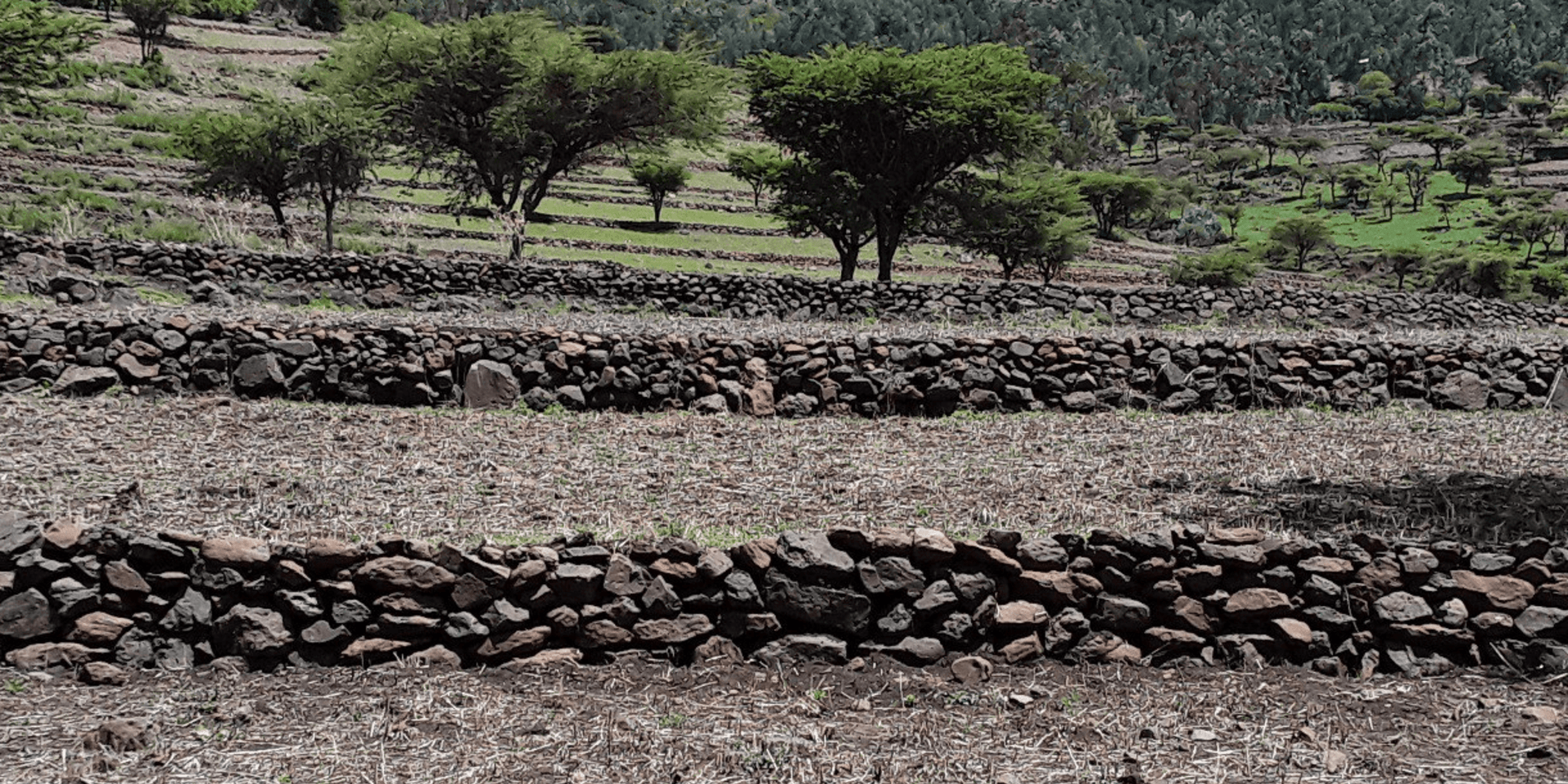
Experience-sharing in landscape restoration among higher learning institutions was done through presentations about each of their landscape restoration practices. In total, 20 draft manuscripts were presented on landscape restoration focusing on forest restoration, soil and water conservation in cultivated lands, gully rehabilitation, restoration of wetlands and impact assessment of landscape restoration. Moreover, the bylaw, strategy and action plan of the Platform were presented by the steering committee, approved by the general assembly and signed by the Vice Presidents and their representatives of each university.
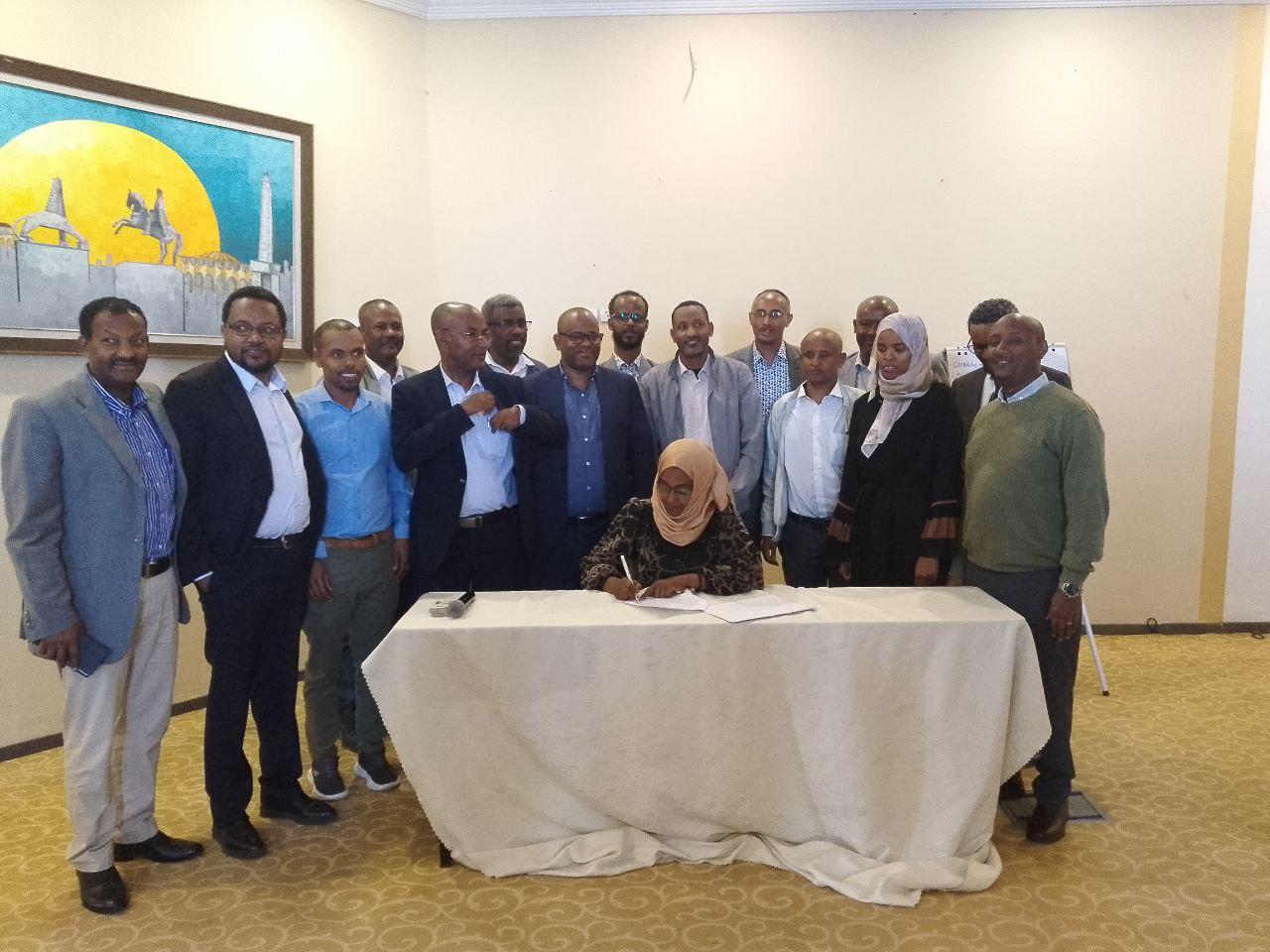
Vice presidents and their representatives from 16 universities (Gondar, Debre-Tabor, Bahir-Dar, Debre-Markos, Injjibara, Wollo, Debre-Berhan, Mekdela-Amba, Mekelle, Ambo, Wachemo, Werabe, Hawassa, Jimma, Haramaya and Wolayita Sodo) during the bylaw approval process
Key takeaways from the conference:
-
The conference emphasized the importance of collaboration among various stakeholders including government agencies, NGOs, researchers, and local communities. By working together, participants discussed innovative approaches for landscape restoration and shared best practices.
-
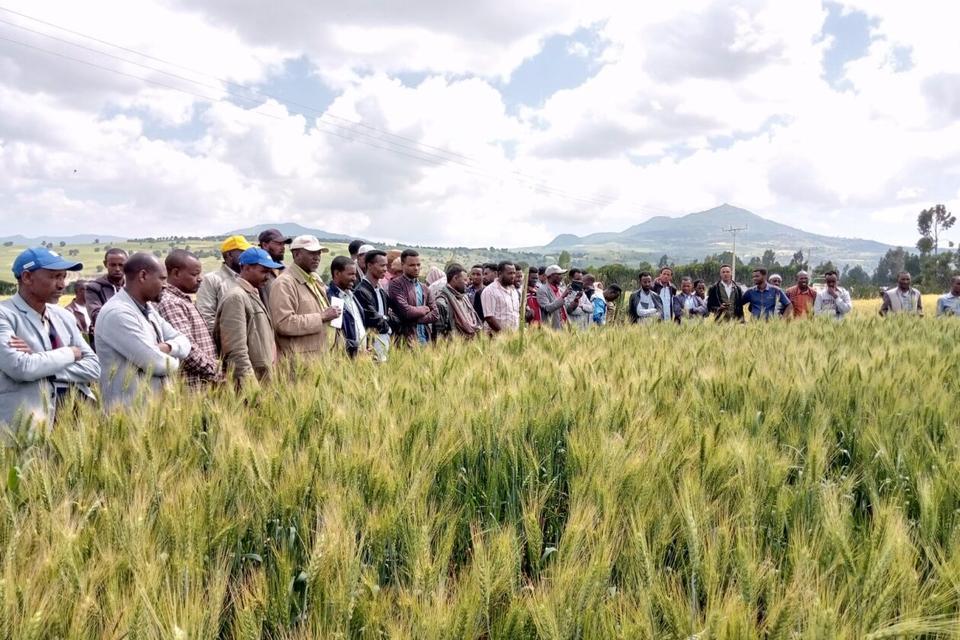
Discussions focused on the urgent need for sustainable landscape restoration practices to address deforestation, soil degradation, biodiversity loss and climate change for nature-positive outcomes. Participants explored strategies to restore degraded landscapes and promote biodiversity conservation.
-
The conference highlighted the critical role of local communities in landscape restoration activities. By empowering and involving communities in decision-making processes, the national platform aims to ensure the long-term success of restoration.
-
Senior university presidents outlined policy recommendations to support landscape restoration efforts in Ethiopia. These recommendations included incentivizing restoration, enhancing monitoring and evaluation mechanisms, and promoting carbon financing options.
-
The conference concluded with a renewed commitment from all participants to take concrete actions towards landscape restoration and sustainable land management. Stakeholders pledged to continue working together to achieve the goals set forth by Platform.
-
In summary, the inaugural conference of the Ethiopian Landscape Restoration Platform served as a space for dialogue, collaboration, and commitment towards achieving sustainable landscape restoration. By uniting diverse stakeholders and leveraging collective expertise, the Platform is positioned to drive positive change and create a more resilient and sustainable environments for future generations.
The Alliance Team

Lulseged Tamene Desta
Director, Multifunctional Landscape
Wuletawu Abera
Senior Scientist, Country Representative for Ghana
Degefie Tibebe
Research SpecialistAcknowledgement
This annual conference was hosted by the Alliance of Bioversity International and CIAT and supported by Accelerating the Impact of CGIAR Climate Research for Africa (AICCRA) Ethiopia Project. We would like to thank Private Sector Incentives and Investment for Climate Change, Resilience and Environmental Sustainability Project.