From the Field Field days build momentum for scaling tailored fertilizer advice in Ethiopia
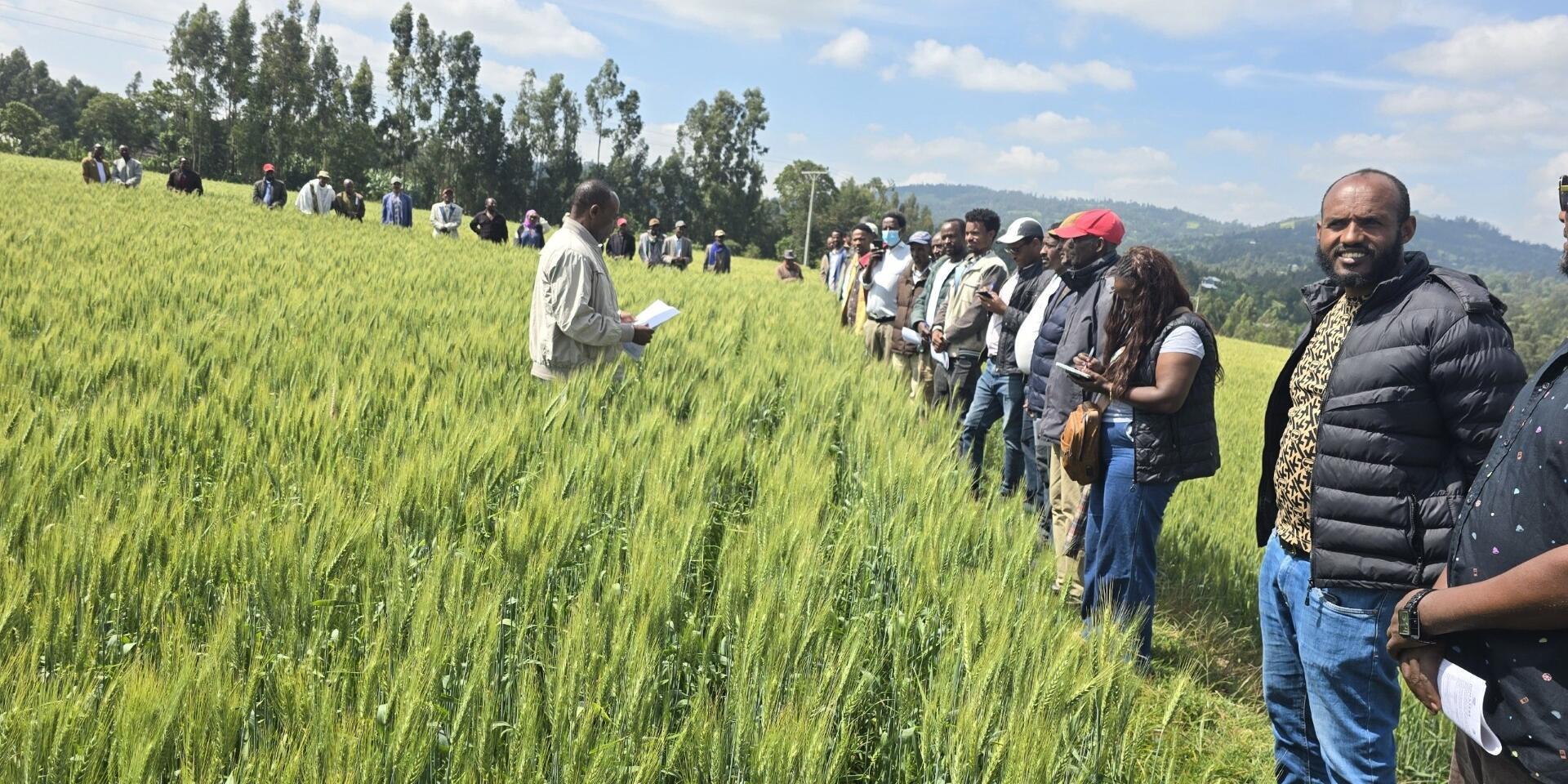

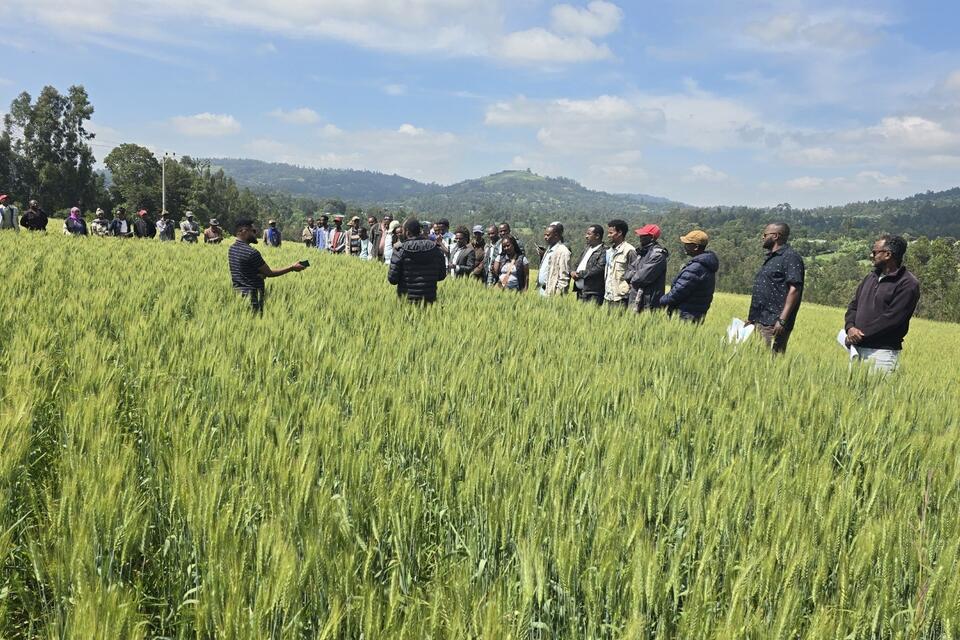
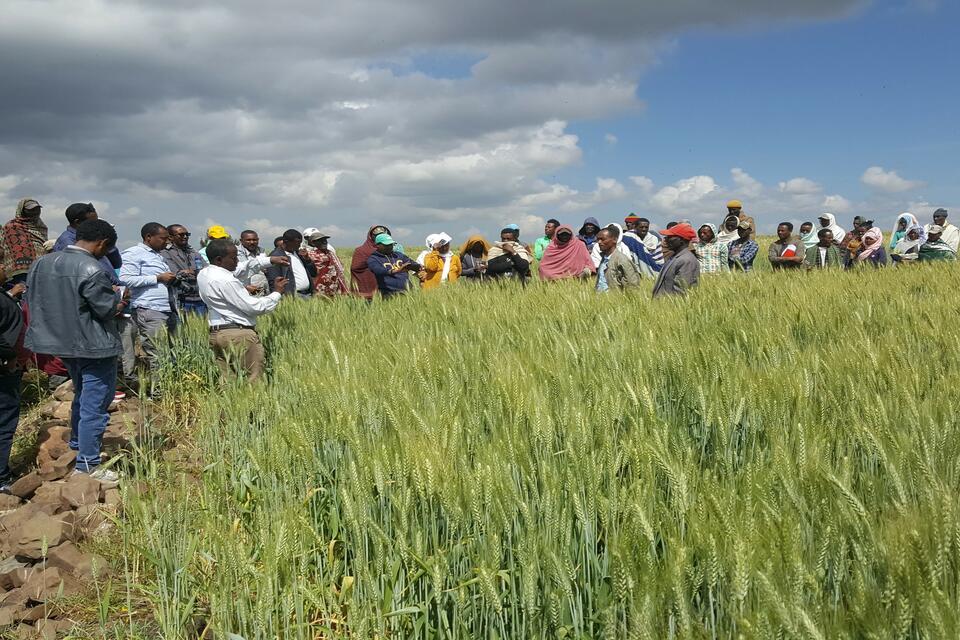
On 17 and 23 October 2026, farmers, researchers and officials attended field days in Doyogena, Lemo and Basona Werana, Ethiopia, to assess tailored fertilizer recommendations and identify priorities for wider dissemination through public extension services.
Field visits to Doyogena, Lemo, and Basona Werana districts brought together farmers, researchers, and government leaders to review the use of Harmonized Digital Fertilizer and Agronomic Solutions (HaFAS) and identify practical steps for extending tailored fertilizer advice through Ethiopia’s public agricultural extension system.
The Alliance of Bioversity International and CIAT organized the events in collaboration with national research institutions, public extension services, and farming communities. The visits combined field demonstrations, farmer experiences, and discussions about advisory delivery, input access, and local coordination.
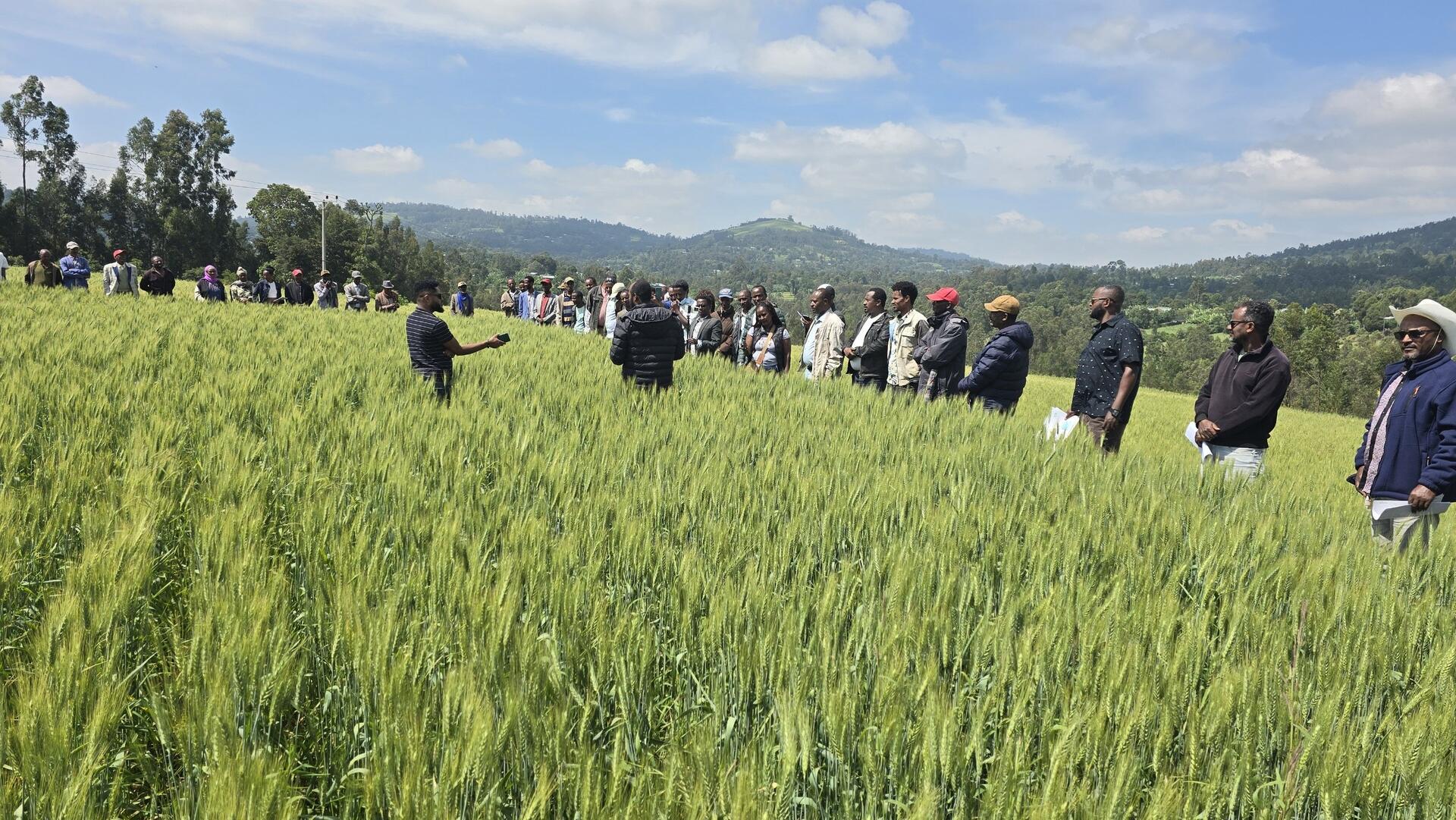
Farmers, researchers, and agricultural officials discuss site-specific fertilizer recommendations during a field day in Doyogena District, Ethiopia, on 17 October 2026.
Connecting agronomic research with farm decisions
Fertilizer requirements vary with soil fertility, soil acidity, landscape position, rainfall, crop variety, and management practices. Uniform recommendations can overlook these differences, leading to inefficient fertilizer use and missed opportunities to improve crop productivity.
HaFAS supports Ethiopia’s transition toward site-specific fertilizer and agronomic advisory services. The Alliance provides technical support for developing, validating, and harmonizing recommendations in close collaboration with the Ministry of Agriculture, the Ethiopian Institute of Agricultural Research (EIAR), and regional partners.
The AgriMob mobile application enables development agents, Ethiopia’s frontline agricultural extension workers, to retrieve crop- and location-specific fertilizer recommendations. Development agents work with farmers to interpret the recommended fertilizer types and application rates and combine this guidance with appropriate application timing and complementary agronomic practices. This approach aims to connect agronomic research with practical farm decisions and more efficient fertilizer use.
Government representatives review implementation in Doyogena and Lemo
On 17 October 2026, the Doyogena field day brought together 60 participants, including seven women, from the Ministry of Agriculture, EIAR, Wachemo University, regional and local agricultural offices, the Alliance, and farming communities. Participants visited the 62-hectare Adoye wheat seed multiplication cluster in Ammecho Wato Kebele, Kembata Zone, where farmers were applying HaFAS fertilizer recommendations alongside improved agronomic practices.
Participants observed well-managed wheat fields with promising crop growth. Local agricultural experts demonstrated how GPS coordinates identify individual farm plots for retrieving location-specific fertilizer recommendations through AgriMob. Zerihun Ermias, the district agricultural focal person, reported that 706 farmers across ten kebeles (local administrative units) had applied HaFAS recommendations during the 2026 cropping season.
The Farmer–Research–Extension platform provided a forum for coordination and knowledge exchange among farmers, development agents, researchers, local administrations, and farmer organizations. Collaboration with farmers’ cooperative unions and cluster representatives connected discussions on advisory delivery with input supply and produce marketing.
Participants also emphasized soil acidity assessment, lime application where needed, and crop rotation as complementary soil and crop management practices.
Ms. Yenenesh Egu, Lead Executive Officer for Agriculture and Horticulture Extension at Ethiopia’s Ministry of Agriculture, commended the collaboration among farmers, extension personnel, researchers, and local administrations. She recognized AgriMob’s potential for wider use while highlighting digital improvements needed to support nationwide delivery.
Mr. Alemayehu Gemechu, another Ministry representative, emphasized that wider delivery would require trained extension personnel, reliable access to agricultural inputs and water resources, stronger market linkages, and sustained institutional collaboration.
At the Doyogena visit, District Administrator Mr. Ayele Garkabo reaffirmed the local government’s commitment to expanding HaFAS implementation beyond demonstration fields. Mr. Getachew Loma, representing EIAR and the national fertilizer modeling team, highlighted growing institutional ownership supported by capacity building, technical assistance, and collaboration. He also described efforts to extend site-specific recommendations to other major cereal crops.
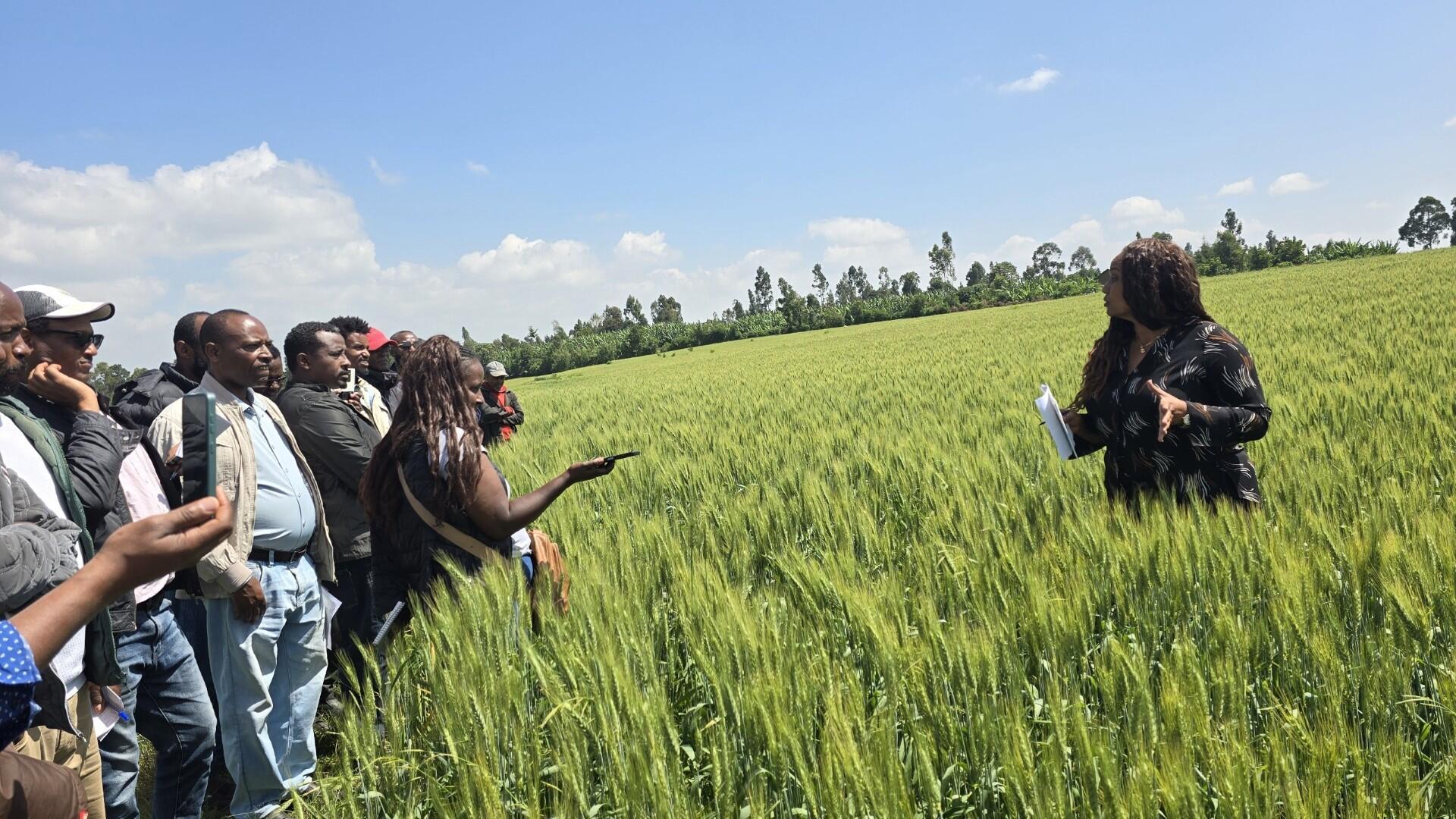
Ms. Yenenesh Egu of Ethiopia’s Ministry of Agriculture discusses HaFAS implementation with participants in Ammecho Wato Kebele, Doyogena District, on 17 October 2026.
The visit also included a separate 62-hectare teff production cluster in Ambicho Gode Kebele, Lemo District, where Ministry of Agriculture and EIAR representatives observed crop growth and reviewed field management practices. Discussions explored opportunities to expand local delivery of HaFAS recommendations for teff, combining site-specific fertilizer advice with complementary agronomic practices.
Alongside HaFAS implementation in cereal fields, home garden activities in Doyogena supported diversified production and compost-based nutrient management. Demonstrations combined grafted avocado trees, vegetables, coffee, and poultry. Wachemo University provided practical training in nutrition, food preparation, and meal planning aimed at supporting dietary diversity and household nutrition. University representatives also highlighted locally adapted crop varieties and quality seed as essential complements to improved agronomic management.
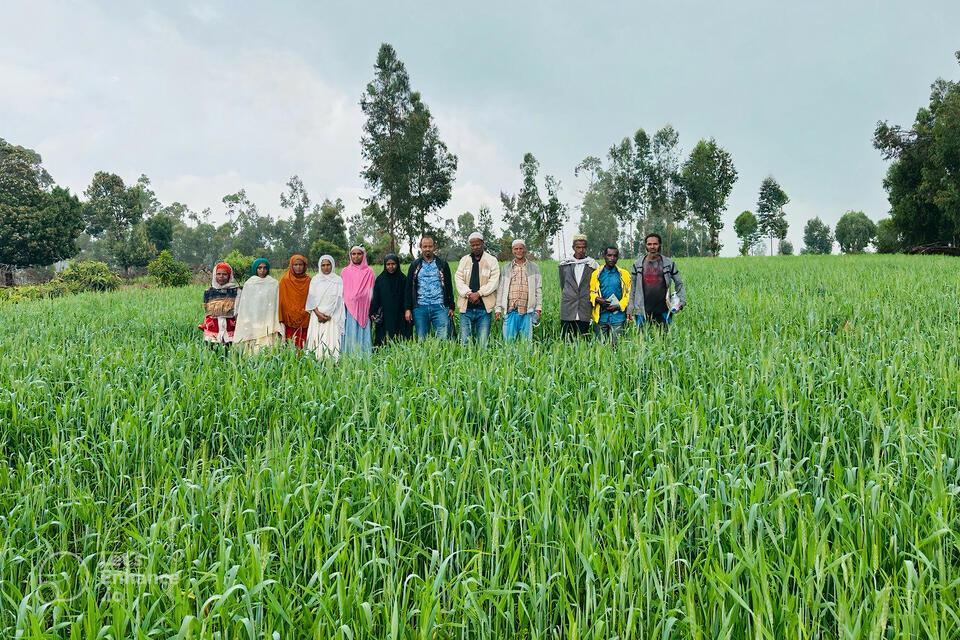
Tadesse Bekele, a farmer and coordinator of the Adoye wheat production cluster, shared his experience of combining cereal production with a diversified home garden. Starting with ten avocado seedlings, he expanded his planting to more than fifty avocado trees while also growing vegetables and coffee and raising poultry. He reported that homegrown vegetables and eggs had improved his household’s access to diverse foods.
Extension personnel identified constraints to wider HaFAS delivery, including limited smartphone access, the absence of offline functionality in the AgriMob version used during the visits, and inconsistent availability of essential agricultural inputs. Addressing these constraints would help make advisory delivery more reliable and support farmers in applying recommendations.
Farmers share their experiences in Basona Werana
On 23 October 2026, a field day in Basona Werana District, Amhara Region, brought together farmers, researchers, and agricultural officials to review HaFAS implementation and discuss opportunities to extend advisory services.
The field day brought together 74 participants, including 48 farmers and ten development agents, along with agricultural officials, representatives from Debre Birhan research institutions, and members of the media. Sixteen participants were women. At Mekonnen Tekeste’s 0.25-hectare wheat plot in Gudo Beret Kebele, participants observed relatively uniform crop growth. Mekonnen described applying HaFAS recommendations alongside certified seed, row planting, split urea application, and timely weeding. He explained how combining these practices had helped him manage his Danda’a bread wheat crop.
Alem Feleke, a local development agent, demonstrated how field-specific information is used to retrieve fertilizer recommendations for individual plots. He reported that 700 farmers across seven kebeles had applied HaFAS recommendations during the 2026 cropping season, with parcel-level information recorded in the digital advisory system.
Mr. Negese Woldemariam, Head of the Basona Werana District Agriculture Office, encouraged farmers to share their experiences with neighboring communities and called for extending HaFAS services to additional kebeles and organized wheat production clusters. Agricultural experts from neighboring Siyadebirna Wayu District also emphasized adapting fertilizer rates and timing to rainfall and soil conditions.
Priorities for wider access
Across the visits, participants identified priorities for wider delivery: practical extension training, reliable field data, timely access to fertilizers and quality seed, and coordination among research, extension, and development institutions.
Participants recommended offline functionality, practical digital literacy training, and opportunities for rural youth to participate in advisory services. They also emphasized development agents’ role in reaching farmers without smartphones, complemented by access through family-owned or shared devices.
A joint technical and operational review could assess digital readiness, clarify institutional responsibilities and resource needs, and identify any further approvals required for wider integration of AgriMob into public extension delivery. This would build on existing HaFAS implementation and align with Ethiopia’s Digital Agriculture Roadmap 2025–2032.
Harvest measurements, production costs, and appropriate comparative assessments are needed to evaluate agronomic and economic performance, since farmers combined HaFAS advice with other improved practices. Monitoring should also include verified implementation records, systematic farmer feedback, and women’s and men’s access to advisory services to identify barriers and guide improvements.
Acknowledgments
This work was funded by the Gates Foundation through the Supporting Soil Health Interventions in Ethiopia Phase III (SSHI-III) project, managed by Deutsche Gesellschaft für Internationale Zusammenarbeit (GIZ) GmbH in Ethiopia, with additional support from the CGIAR Sustainable Farming Science Program through the CGIAR Trust Fund. We thank the Ministry of Agriculture, the Ethiopian Institute of Agricultural Research (EIAR), Debre Birhan Agricultural Research Center, regional agricultural research institutes and centers, regional bureaus and district offices of agriculture, Wachemo University, farmer cooperatives and unions, and media representatives for their collaboration. We also acknowledge the researchers, development agents, and agricultural experts who supported validation, training, and implementation, as well as the farmers who tested the recommendations and shared their experiences and feedback.
Keep exploring