Impact story Wheat farmers in Ethiopia achieve up to 38% higher yields with machine-learning-based fertilizer recommendations

In Ethiopia, wheat farmers are boosting yields by up to 38% after researchers and partners validated machine-learning-based fertilizer recommendations across multiple regions, replacing blanket advice with site- and season-specific guidance that improves incomes and resilience.
For decades, Ethiopian farmers faced the same challenge: fertilizer recommendations that treated the country’s diverse landscapes as if they were all the same. These “blanket” prescriptions ignored differences in soils, climates, and cropping systems, often leading to disappointing harvests and wasted resources.
While well-intentioned, the one-size-fits-all approach widened yield gaps and left smallholders struggling to make farming both profitable and sustainable.
Yet, that story is now changing.
A new generation of digital tools is reshaping the way farmers decide what to put into their fields and when. At the center of this transformation is the NextGen Decision Support Tool (DST), co-developed by the Alliance of Bioversity International and CIAT with the Ethiopian Institute of Agricultural Research (EIAR) alongside a coalition of partners from government, development organizations, and the private sector.
The DST delivers site-specific seasonally tailored fertilizer recommendations that account for critical factors such as timing, seasonal conditions, and local agronomic context. The DST is helping farmers increase yields, boost incomes, and build resilience.
The NextGen DST is “next generation” decision-support tool because it builds on a deep foundation of data and critical national expertise, replacing older one-size-fits-all guidance with an AI/ML- and crop-model–informed platform that integrates high-resolution national soil datasets, curated agronomic trial evidence and seasonal climate information to deliver site- and season-specific recommendations.
Over 50 years of soil and agronomic data, including more than 40,000 crop response trials and 20,000 soil profiles, were compiled by the “Coalition of the Willing,” a voluntary consortium of soil and agronomy researchers and partner institutions (universities, research centers, and public-sector agencies). The coalition was formed to modernize fertilizer recommendations by pooling and harmonizing fragmented legacy datasets and translating them into a consistent, evidence-based foundation for locally relevant nutrient and agronomic advice.
With this rich dataset, researchers applied machine learning and crop modeling techniques to generate recommendations that adapt to soil type, weather forecasts, and planting conditions. Rather than issuing a generic message, the tool produces fertilizer rates tailored to specific fields and seasons.
The advice is then delivered through multiple channels: interactive voice response, SMS, videos, a Telegram chatbot, and in-person training with extension agents. Farmers who may never own a smartphone still receive guidance, while those who are digitally connected gain direct access to updated, localized advice.
Critically, the testing of site-specific fertilizer recommendations (SSFRs) has extended beyond controlled research settings. In 2023, the Ethiopian Institute of Agricultural Research (EIAR) independently validated the NextGen Agro-advisory’s SSFRs for wheat across 25 on-farm sites in seven districts. The findings confirmed that these tailored recommendations consistently led to improved yields and greater net benefits compared to both traditional farmer practices and national research guidelines.
Farmers adopting the DST’s recommendations gained 14-20% higher wheat yields and up to $665 USD more per hectare per season, underscoring that precision pays. Earlier pilot projects recorded even larger jumps, up to 38% yield gains, showing the potential for transformation at scale.
As Farmer Alemu Anore, from Dubancho Kebele in Lemo District, explained, “At this early stage I can observe a big difference on the same plot. I will continue evaluating the grain yield as well and will decide to use the LSFR for all my wheat fields.”
His words echo the visible transformation that many farmers now see across Ethiopia’s wheat fields.
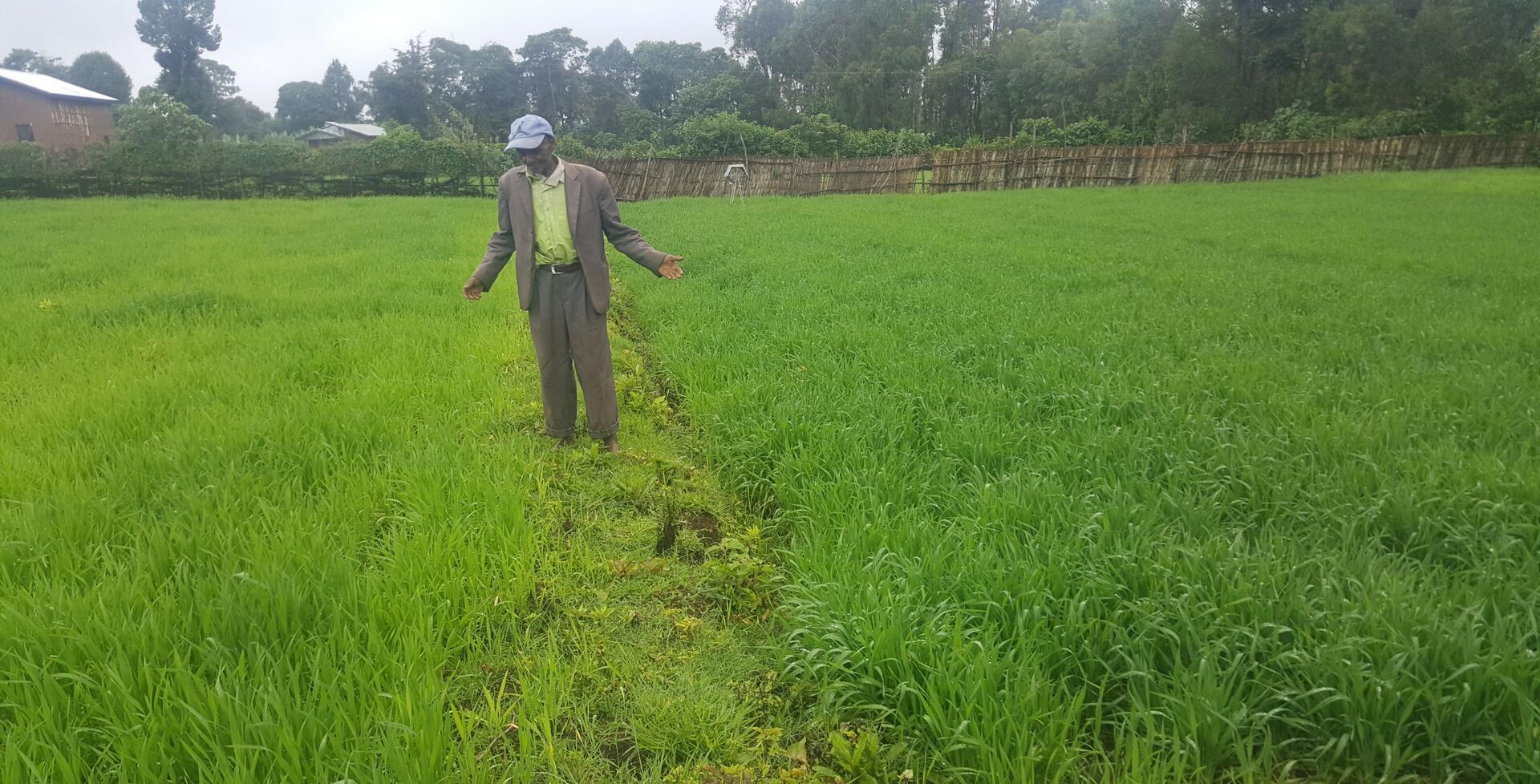
Farmer Alemu Anore at Lemo woreda, dubancho kebele witnessed the better performance of LSFR wheat plotthan his adjacent plot planted with their own fertilizer rate. On the left is Farmers practice plot and on the right is the LSFR plot (Photo by: Mohamed Ebrahim)
NextGen DST has rapidly progressed from pilot implementation in the Amhara, Oromia, and Central Ethiopia regions in 2022 to scale-up in 37 districts across five regions of Ethiopia: Amhara, Oromia, Central Ethiopia, Sidama, and South Ethiopia.
72,800 farmers received tailored fertilizer recommendations, with approximately 10,000 of these farmers already applying recommendations in their fields, seeing wheat yields increase by between 16-38%, depending on location and season.
Meanwhile nitrogen use efficiency improved by about 30%, helping farmers cut costs and reduce environmental pressure.
The harmonization of previously fragmented decision support tools has strengthened the NextGen DST by embedding it within a nationally coordinated extension system, enabling consistent and scalable delivery of site-specific, data-driven fertilizer recommendations. The Localized Agronomy and Fertilizer Advisory (LAFA) serves as the user-facing interface of the Harmonized Agronomy and Fertilizer Advisory Service (HAFaS), powered by the NextGen DST as its core data analytics engine, which applies machine learning and integrates agronomic and geospatial data to generate seasonally tailored, site-specific fertilizer recommendations delivered through standardized channels by development partners, private sector actors, extension systems, and field-level practitioners.
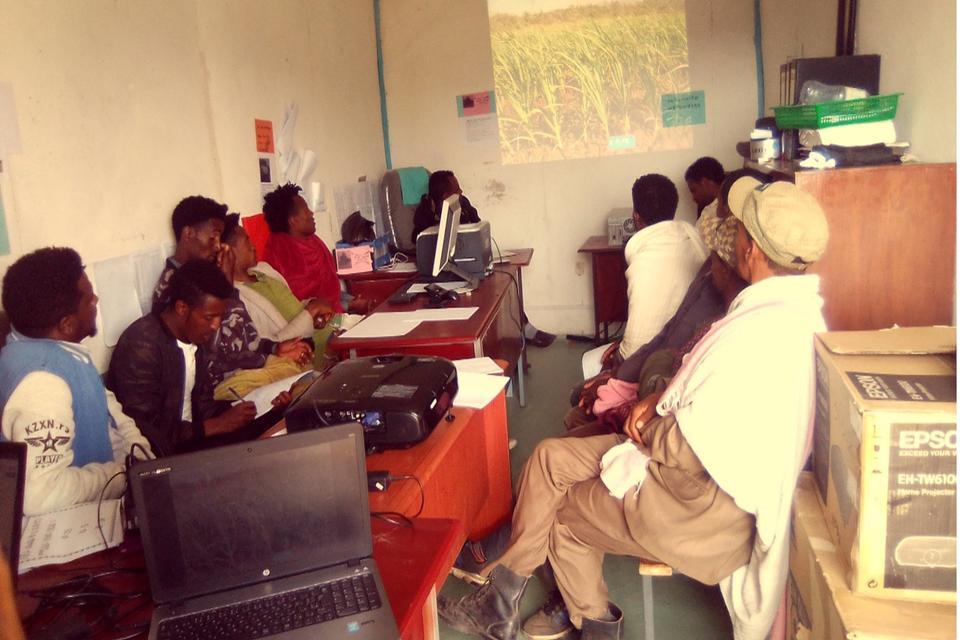
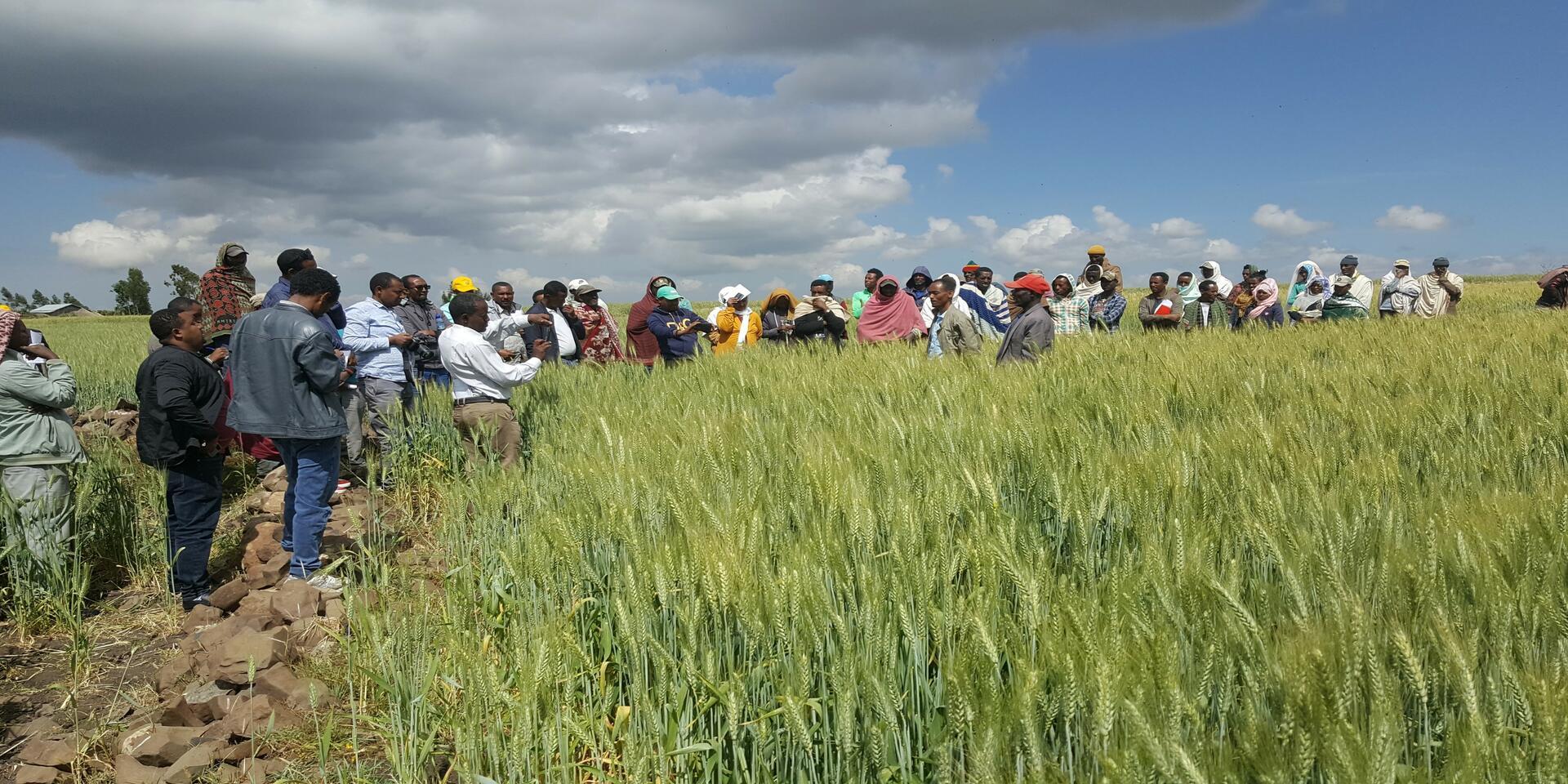
Bringing an advisory tool to scale relies on people as much as it does on algorithms and data. Over the past three years, the Alliance has invested in training extension agents, researchers, and development agents so they can use the DST effectively and help farmers interpret its recommendations. Field days and exchange visits have given farmers the opportunity to see the results firsthand, while digital platforms create feedback loops that allow recommendations to be continually refined.
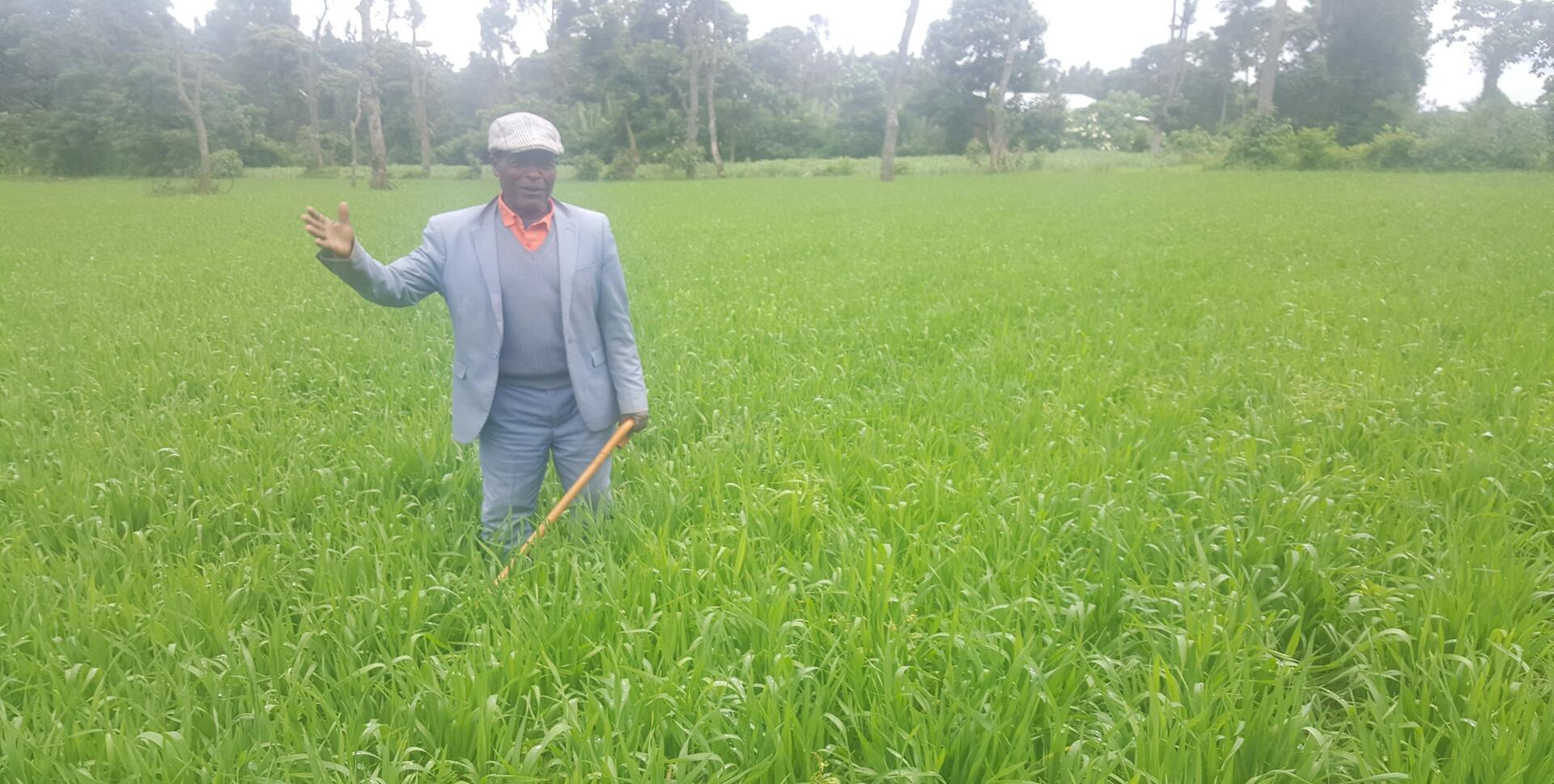
Farmer Abate Ajajew at Lemo, Shurmu dacho kebele, witnessed how the LSFR enhanced the wheat performance. (Photo by: Mohamed Ebrahim)
The DST disaggregates data by gender and household type, so can respond more effectively to diverse realities, whether in male-headed or female-headed households, and at least 20% of the adopting farmers were women, who were supported through targeted training sessions, dedicated trial groups, and access to financial services.
Youth participation was encouraged through group-based extension activities and quotas, ensuring that younger farmers had both a voice and a stake in shaping the innovation.
“At this field I have never seen such wheat performance at this stage,” said Abate Ajajew with a grin. “Even if you force me to stop using this SSFR, I will apply it at night.”
These results rest on strong partnerships. In 2023, Ethiopia’s Ministry of Agriculture (MoA), together with the National Agricultural Research System (NARS), initiated a national effort to harmonize decision-support tools by aligning fragmented initiatives and developing scalable digital solutions for farmer-facing organizations.
This government-led, partnership-driven framework reduces duplication, aligns stakeholders, and strengthens national coordination by bringing these tools into a shared digital ecosystem.
As the platform scales, it is expected to reach millions of farmers through digital channels, public extension services, and private-sector partnerships.
Digital Green, a long-standing partner in digital agriculture, supports last-mile delivery of site-specific fertilizer recommendations through advisory maps, video-based extension, and a Telegram bot used by development agents to reach farmers More recently, it has translated model outputs into farmer-friendly mobile guidance and integrated site-specific advisories into its AI-powered FarmerChat app via API, enabling farmers and practitioners to request localized, field-level advice directly. Meanwhile LERSHA, another private digital service provider, extended the model further by bundling fertilizer advice with credit and insurance, enabling resource-constrained farmers to adopt the recommendations with greater confidence.
Development partners such as GIZ Ethiopia, Accelerating Impacts of CGIAR Climate Research in Africa project and the CGIAR Excellence in Agronomy (EiA) initiative all added critical resources and scientific support, while national agricultural research institutes were actively engaged in field implementation, including conducting trials, validating the NextGen DST, and adapting recommendations to local agro-ecological contexts.
By integrating with the Ethiopian Digital Agro-Climate Advisory Platform (EDACaP), the tool produces “season-smart” recommendations that adjust to rainfall forecasts, shifting planting windows, and the expected performance of fertilizer under different climate scenarios. This flexibility allows farmers to respond proactively to seasonal variability rather than react after the fact.
The bundling of advisories with credit and insurance services further reduces risk, encouraging adoption even when the weather is uncertain. By making fertilizer use more efficient, the tool also reduces nutrient losses and lowers agriculture’s environmental footprint which is a vital contribution as Ethiopia balances the need for higher productivity with the imperative of sustainability.
For farmers like Bizuayehu Gature, the difference has been profound: “The LSFR helps for the best performance of my wheat field this year. Before last year, I planted wheat using the blanket recommendation on this 0.5-hectare plot and harvested 2.5 tons of grain. This year I used the LSFR and the performance is very good, and I expect to harvest around 4 tons from the same plot.” His story reflects the kind of tangible, on-the-ground impact that data-driven, farmer-centered innovation is delivering.
This article is drawn from OICR AFR-2418
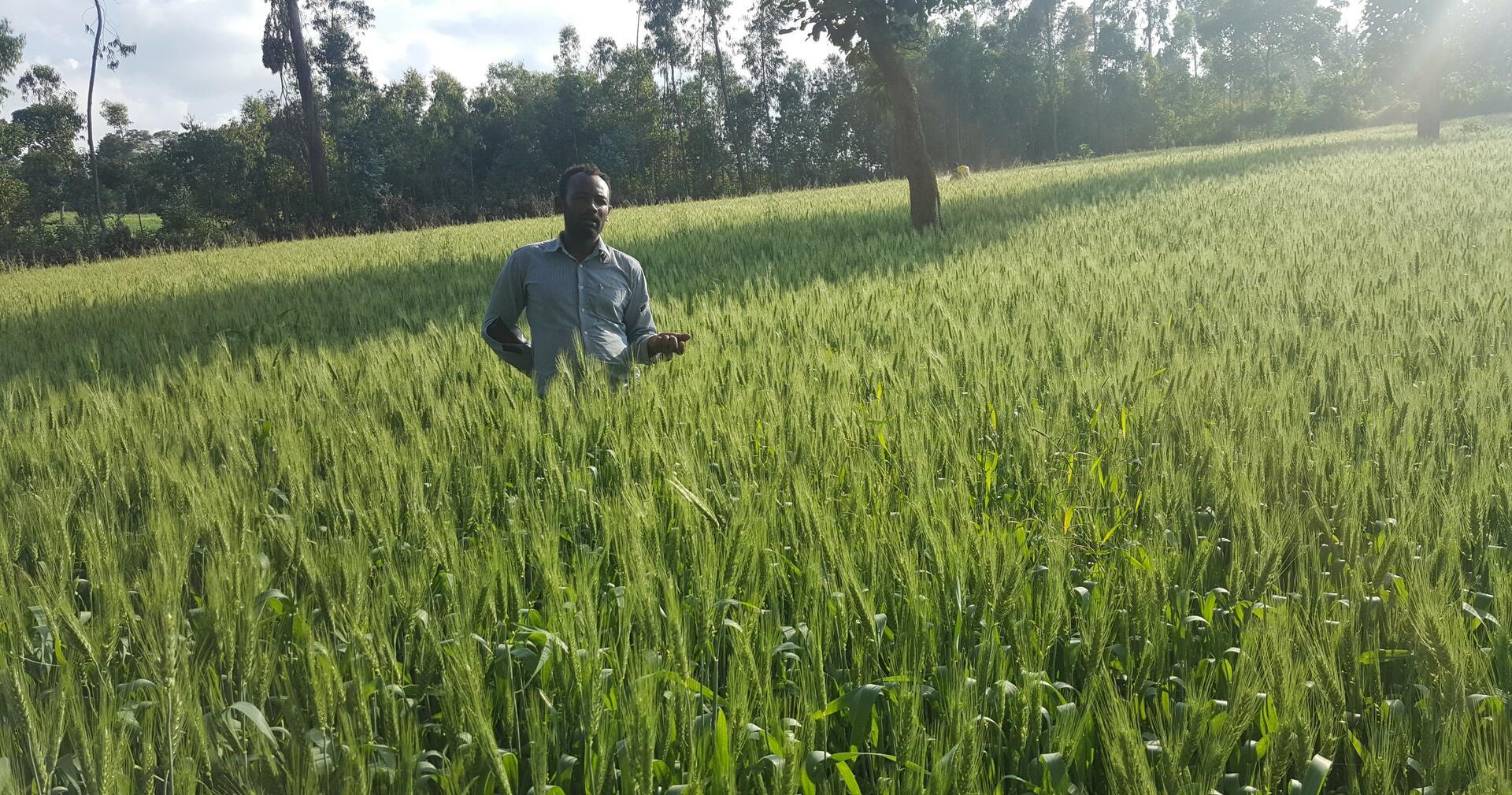
Farmer Bizuayehu Gature at Lemo woreda, Andegna Omoshera (Photo by: Mohamed Ebrahim)