Blog Inclusive agricultural transformation: Strengthening farmer–research–extension linkage platforms and digital feedback for a responsive innovation system in Ethiopia
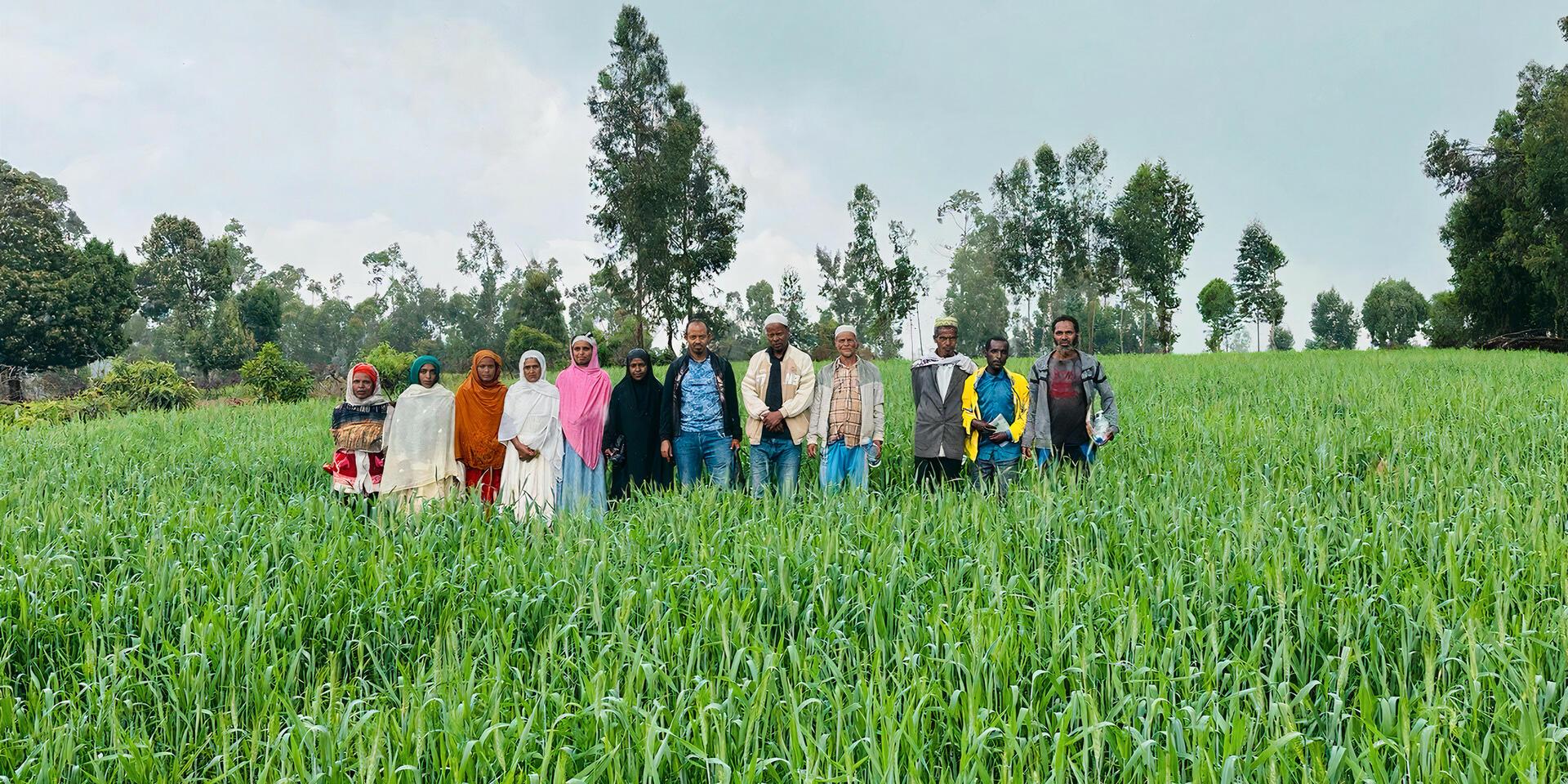

For decades, Ethiopia’s agricultural extension system has largely followed a linear, top-down model. Researchers design technologies and recommendations, extension services transmit them, and farmers are expected to adopt them.
While this model has generated important gains, it has often failed to account for the diverse realities, constraints, and knowledge of smallholder farmers. The result has frequently been low adoption rates, limited impact, and persistent gaps between research agendas and farmers’ priorities.
Today, this model is being reimagined. A new approach: the farmer–research–extension (FRE) linkage platform, combined with a digital client feedback mechanism (CFM), is helping transform Ethiopia’s extension system from one-way 'technology transfer' into a more inclusive, participatory, and data-driven innovation process.
From top-down transfer to collaborative learning
Traditional extension has often treated farmers as passive recipients of expert knowledge. In contrast, the FRE–CFM approach views farmers as co-creators of innovation. Drawing on participatory epistemology and relational thinking, it recognizes that robust solutions emerge when scientific research and farmers’ experiential knowledge are brought together.
In practice, this means shifting from “talking to” farmers to “listening with intent”. Farmers’ perspectives, priorities, and constraints are systematically captured and fed back into research and decision-making processes. This helps ensure that advisory services are not only technically sound but also socially and economically feasible for different categories of farmers.
What is the farmer–research–extension (FRE) linkage platform?
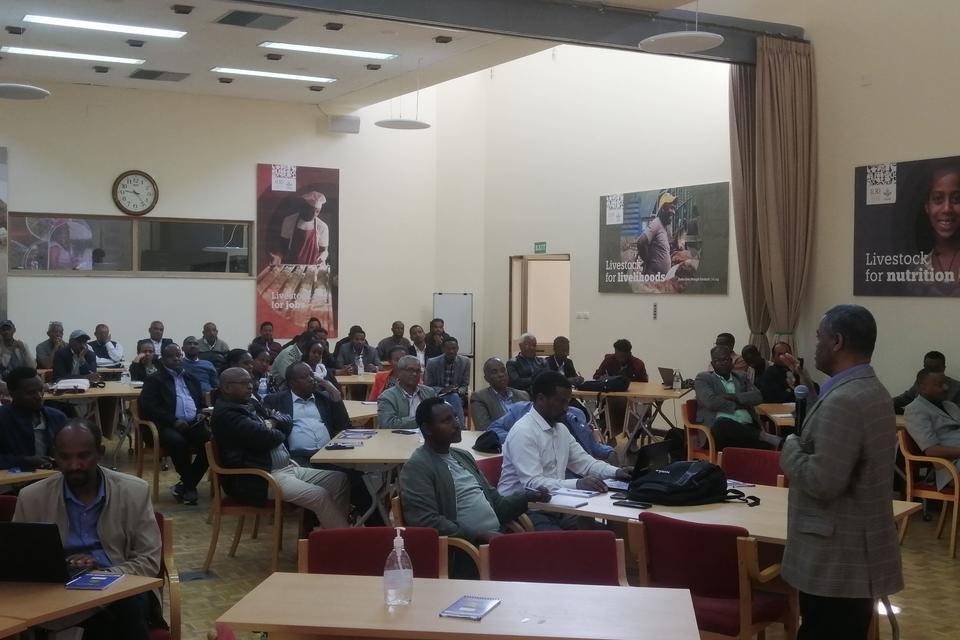
The FRE linkage platform is a multi-stakeholder forum established at woreda (district) level, where farmers, extension agents, researchers, and local institutions meet regularly to co-design and refine agricultural solutions.
Each platform brings together a diverse set of actors, including:
- Farmers, including women and youth
- Development agents and woreda experts
- Researchers and technical specialists
- Farmers’ cooperatives and union leaders
- Agro-dealers and input suppliers
- Microfinance officers
- NGOs and civil society partners
- Local administrators and decision-makers.
Monthly FRE meetings have become an emerging practice at woreda level. During these sessions, participants jointly identify priority challenges, review evidence from the field, and agree on actions. Problems that cannot be resolved locally are escalated to higher administrative levels, ensuring that local issues can influence regional and national responses.
Embedding digital feedback in the FRE platform
The FRE platform is complemented by a digital 'client feedback mechanism' that acts as the system’s 'nervous system'. Through a mobile-based application, farmers and extension agents can submit geo-referenced reports on emerging issues, such as pest and disease outbreaks, fertilizer and lime shortages, or climate-related stresses.
These reports flow into the Ministry of Agriculture’s AgDataHub dashboard, where they can be visualized in real time. Thresholds and automated alerts help trigger timely responses from woreda, regional, or national authorities. In this way, information from the field is no longer lost or delayed—it becomes a driving force for more agile, evidence-based decision-making.
To date, more than 300 stakeholders have been trained to use the CFM platform, including district experts, frontline extension agents, and farmers. Training-of-Trainers (ToT) activities are under way to expand coverage and embed digital capacities within local institutions.
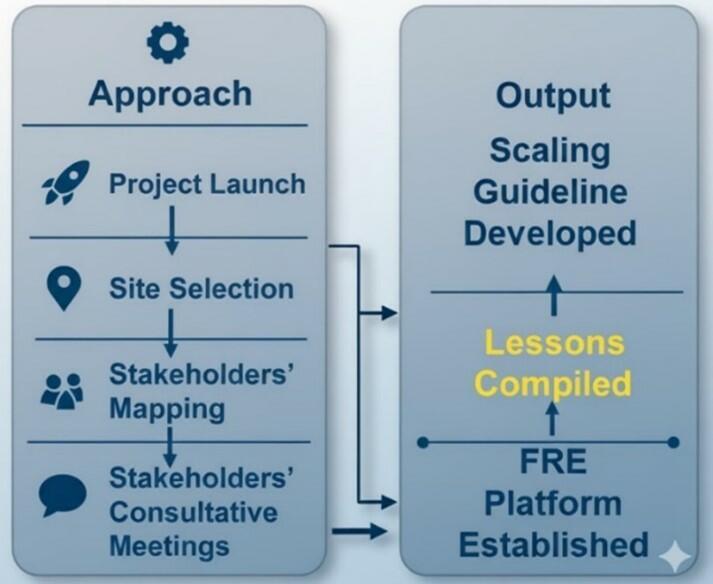
Figure 2. Workflow of the FRE linkage platform with the digital feedback tool, illustrating the steps from problem identification and reporting to response and learning.
Piloting the FRE–CFM model across Ethiopia
The FRE–CFM initiative is being implemented with the support of Supporting Soil Health Interventions in Ethiopia (a project funded by the Gates Foundation and implemented by GIZ–Ethiopia), and the Alliance of Bioversity International and CIAT leads implementation of the pilot-test intervention in collaboration with the Ministry of Agriculture (MoA) as well as other core stakeholders. The initiative began in three pilot districts in 2023 and expanded to ten districts by 2025. These districts—located in Oromia, Central Ethiopia, Sidama, and South Ethiopia Regional States—are predominantly wheat-producing areas where soil acidity is a major constraint.
Within these pilot sites, the platforms are being used to introduce and adapt innovations such as site-specific fertilizer and lime recommendations, as well as to test and refine the digital feedback workflow.
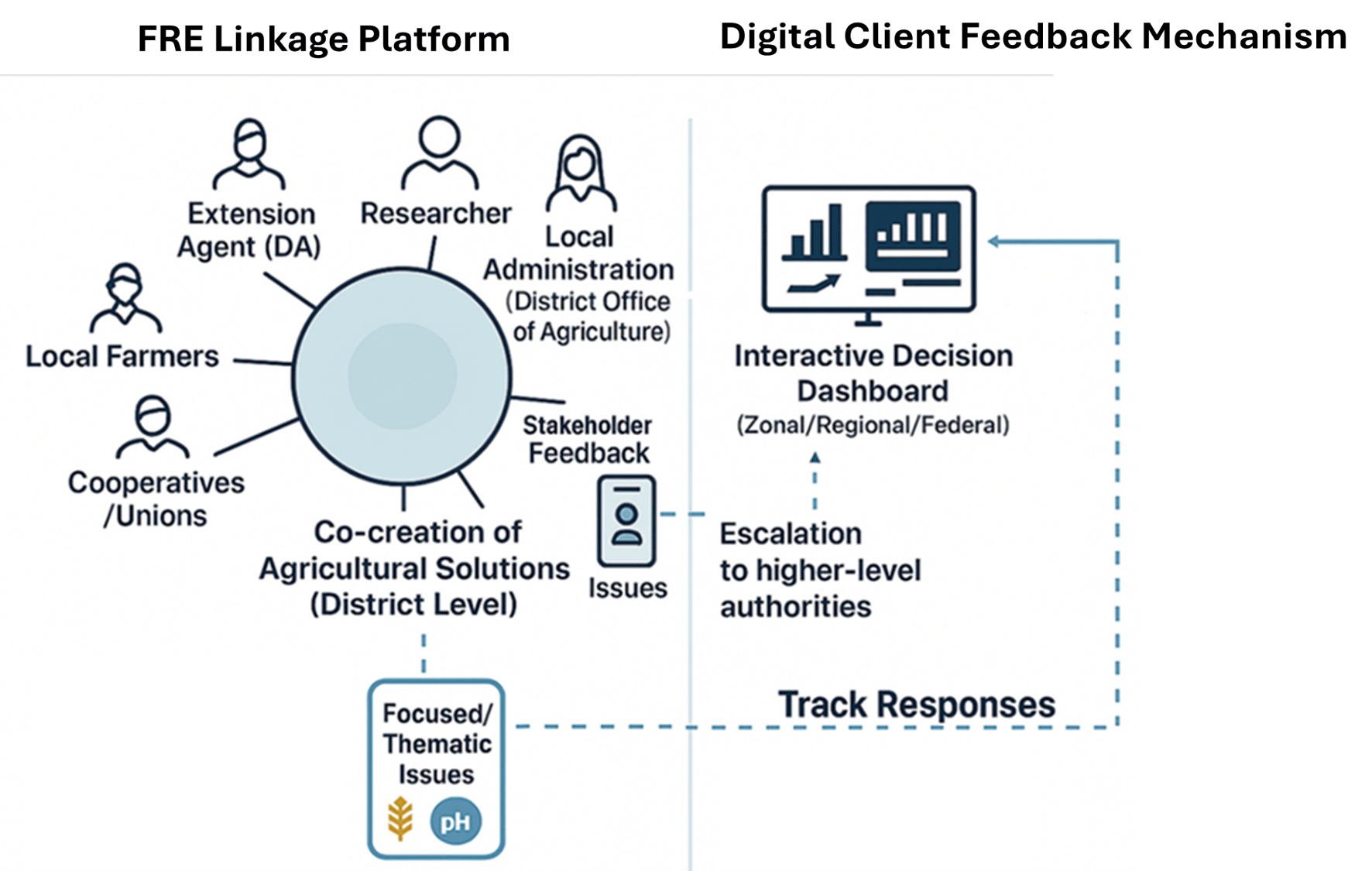
Figure 3. District-level FRE linkage platform workflow: a participatory system for co-creating solutions, channeling real-time digital feedback, and visualizing responses on an interactive dashboard.
Who uses the digital feedback tool? Awareness and equity
A total of 378 participants have been trained in the use of the mobile-based feedback application, including 158 district-level experts, 110 extension agents, and 110 farmers. During the training, the application was installed on their devices so that they could immediately start submitting reports.
However, levels of awareness and usage vary. In some districts, such as Wolmera, the tool is still used mainly by woreda experts, with limited engagement from farmers. A model female farmer in Doyogena reported that, after submitting an urgent request for herbicides through the app to control a severe weed problem, she did not receive any response from government bodies or agro-dealers. Her experience highlights a critical lesson: digital tools alone are not enough, clear and reliable response workflows are essential to maintain trust and participation.
Addressing these gaps requires targeted sensitization efforts, support for local language interfaces, and a strong focus on women and other underserved groups to avoid reinforcing existing inequalities in access to information and services.
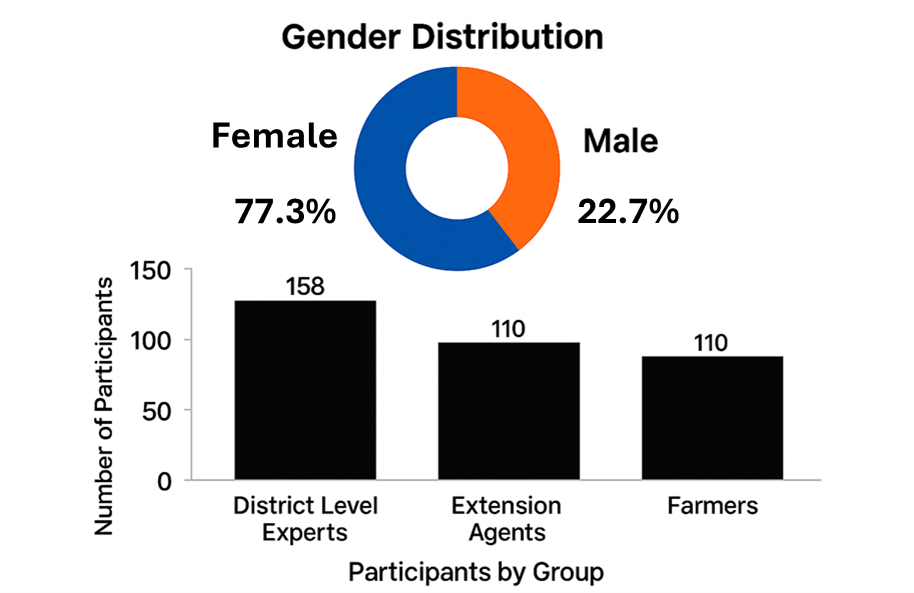
Figure 4. Gender- and category-disaggregated distribution of participants trained to use the mobile-based feedback application and those who installed it on their devices.
Delivering site-specific fertilizer and lime advisories
One of the most promising applications of the FRE-CFM system is the provision of tailored extension support and site-specific agro-advisories. Using soil, crops, and climate data, customized fertilizer and lime recommendations were generated and disseminated to 484 geo-referenced farm plots in the pilot districts. Farmers who received these advisories reported a high willingness to apply them, particularly when the recommendations matched locally available inputs and were communicated through trusted intermediaries such as lead farmers.
Adoption rates of the site-specific lime and fertilizer recommendations exceed 15% and are encouraging at this stage; however, a substantial gap remains between the number of advisories generated and the number of farmers who implement them. Many farmers perceive the recommended fertilizer rates as higher than their customary practices and beyond their purchasing capacity. This underscores the need to incorporate economic analysis into fertilizer recommendation systems, both to better inform and convince frontline extension workers and farmers, and to explicitly account for farmers’ investment capacity.
Future advisory services should differentiate between farmers with different risk profiles, for example, those willing to invest more to maximize returns versus those who prefer moderate but more secure benefits. Ensuring timely access to credit and inputs, particularly for resource-poor farmers and women, will also be key to closing the last-mile delivery gap.
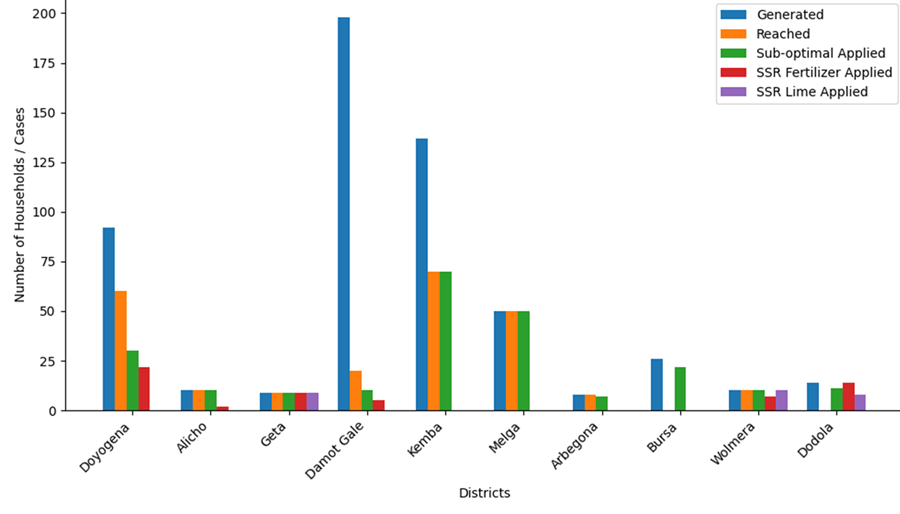
Figure 5. Status of fertilizer and lime advisory implementation in selected Ethiopian districts. Bars show, for each district, the number of cases with site-specific recommendations (SSR) generated, households reached by the district bureau of agriculture, sub-optimal fertilizer and lime rates applied, and SSR fertilizer and lime applied by local farmers.
Emerging results: Inclusion, agility and trust
Despite remaining challenges, the FRE–CFM model is already delivering measurable benefits:
- Greater participation: Farmers—including women and youth—are increasingly involved in shaping local extension and research agendas. Their feedback is directly influencing what gets tested, demonstrated, and scaled.
- Tailored recommendations: Advisory messages are better aligned with local soil conditions, crop management practices, and climatic realities, improving their relevance and potential impact.
- Faster response times: Problems that previously took weeks to resolve, such as procuring and distributing lime for acidic soils, are now addressed more quickly when raised through regular FRE consultations. These consultations help actors co-create practical solutions and coordinate follow-up through group social media and the digital feedback system.
- Shared institutional learning: Digital records of interactions support adaptive management, strengthen institutional memory, and enable greater transparency and accountability among stakeholders.
Taken together, these outcomes signal a shift from reactive service delivery towards a more proactive, data-informed, and farmer-responsive extension system.
Challenges on the path to scale
For the FRE-CFM model to be sustained and scaled, several systemic issues need attention:
- Financing and incentives: Long-term operation of FRE platforms and digital tools requires predictable funding and incentive structures that reward collaboration across institutions.
- Digital inclusion: Limited smartphone ownership, connectivity gaps, and digital literacy, especially among women and marginalized farmers, risk excluding those who might benefit most. Future iterations will explore offline functionality, SMS-based reporting, and multilingual interfaces to reduce barriers.
- Institutional coordination: Effective use of feedback data depends on alignment between federal, regional, and woreda-level bodies, as well as smooth integration with national data systems such as the AgDataHub.
- Access to credit and inputs: In some areas, the absence of microfinance institutions and constraints in input supply chains restrict farmers’ ability to act on recommendations. Ongoing partner engagement is helping address these gaps, but more work is needed.
These challenges are not reasons to step back from digital feedback and participatory platforms; rather, they highlight where investments and policy reforms should focus to unlock the full potential of the FRE-CFM model.
The road to scale: Building a pluralistic, farmer-centered model
The FRE-CFM initiative aligns with Ethiopia’s emerging pluralistic extension policy, which calls for coordinated engagement across public, private, and civil society actors.
“Transformation starts with listening,” said one project leader. “When institutions truly listen to farmers, and act on what they hear, trust deepens, adoption grows, and innovation takes root.”
Scaling the FRE-CFM model involves two complementary dimensions:
- Scaling out: Replicating and adapting the FRE linkage platform across additional districts and agroecological zones, while promoting peer-to-peer learning among farmers and extension agents. As the platform expands to new crops and farming systems, successful practices can be tailored to local contexts rather than replicated wholesale.
- Scaling up: Embedding the FRE-CFM principles and tools into national extension strategies, guidelines, and data systems. This includes formal recognition of the digital client feedback mechanism as a national tool for agricultural extension and ensuring that lessons from pilots inform broader policy and institutional reform.
If effectively institutionalized, the FRE-CFM initiative can serve as a replicable framework for other countries seeking to build more pluralistic, inclusive, and farmer-centered agricultural innovation systems.
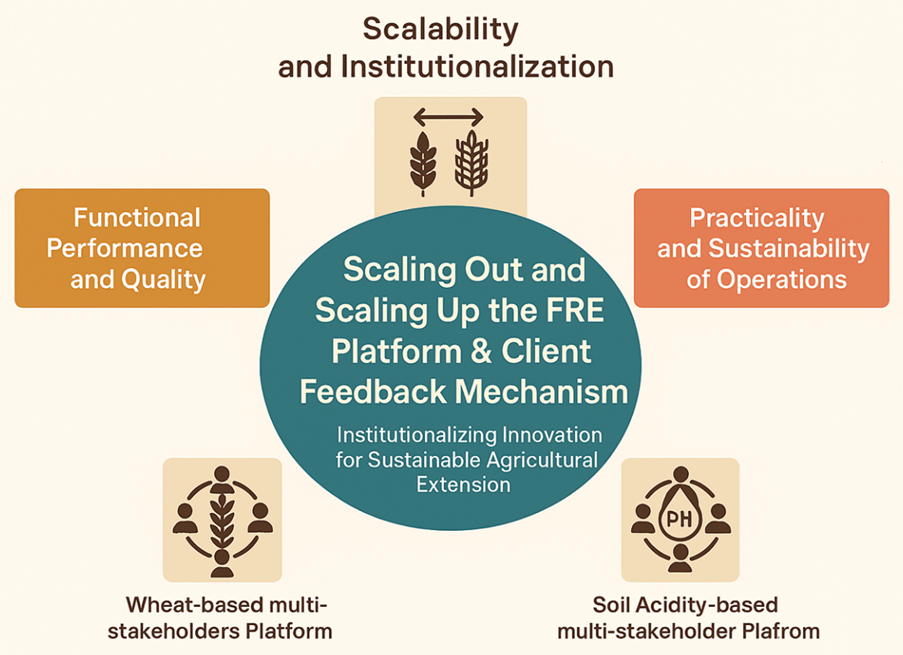
Figure 6. FRE platform and digital client feedback mechanism scaling framework—expanding across regions (“out”) and institutionalizing nationally (“up”), guided by lessons, performance, and sustainability.
The FRE–CFM experience in Ethiopia shows that agricultural transformation is not only about new technologies or digital tools. At its core, it is about relationships, ownership, and accountability.
By creating spaces where farmers, extension agents, and researchers can jointly define problems and test solutions—and by coupling these spaces with real-time digital feedback—the FRE–CFM model helps ensure that innovations are grounded in farmers’ realities. As one project leader put it, “Transformation starts with listening. When institutions truly listen to farmers, and act on what they hear, trust deepens, adoption grows, and innovation takes root.”
As Ethiopia continues to refine and scale this model, it offers valuable lessons for building agricultural systems that are not only productive and climate-resilient, but also inclusive and responsive to the voices of those who depend on them most.
Acknowledgements
This work was supported by CGIAR Sustainable Farming and the Supporting Soil Health Interventions in Ethiopia (SSHI-3) project, funded by the Bill Melinda Gates Foundation and implemented by GIZ–Ethiopia. We gratefully acknowledge the Ethiopian Ministry of Agriculture, along with regional, district, and kebele-level Bureaus of Agriculture, for their leadership and support in piloting and operationalizing the FRE–CFM platform. We also extend special thanks to the farmers, extension agents, researchers, and other platform participants across the ten pilot districts, whose engagement and insights are central to this initiative.
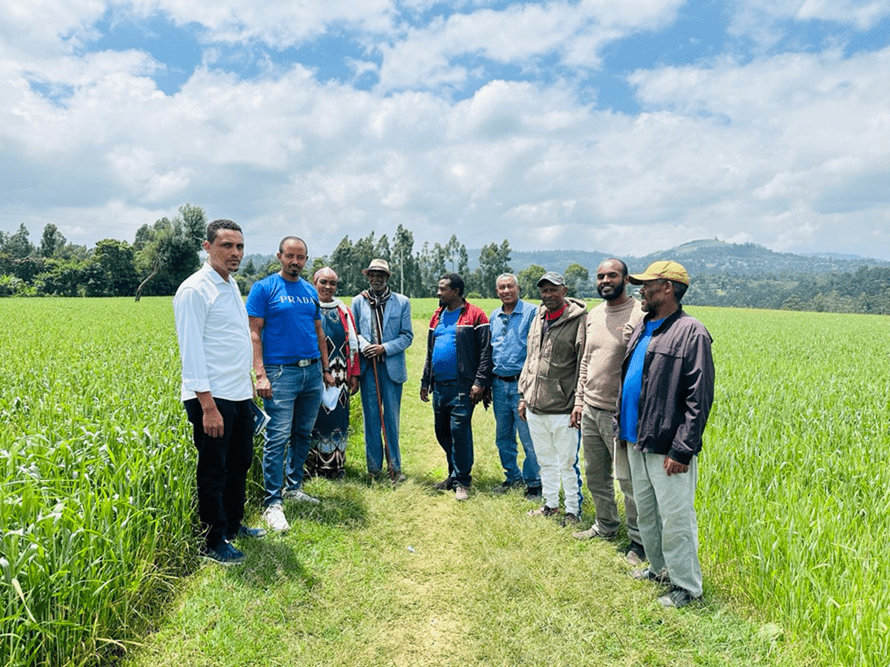
Figure 5. Status of fertilizer and lime advisory implementation in selected Ethiopian districts. Bars show, for each district, the number of cases with site-specific recommendations (SSR) generated, households reached by the district bureau of agriculture, sub-optimal fertilizer and lime rates applied, and SSR fertilizer and lime applied by local farmers.
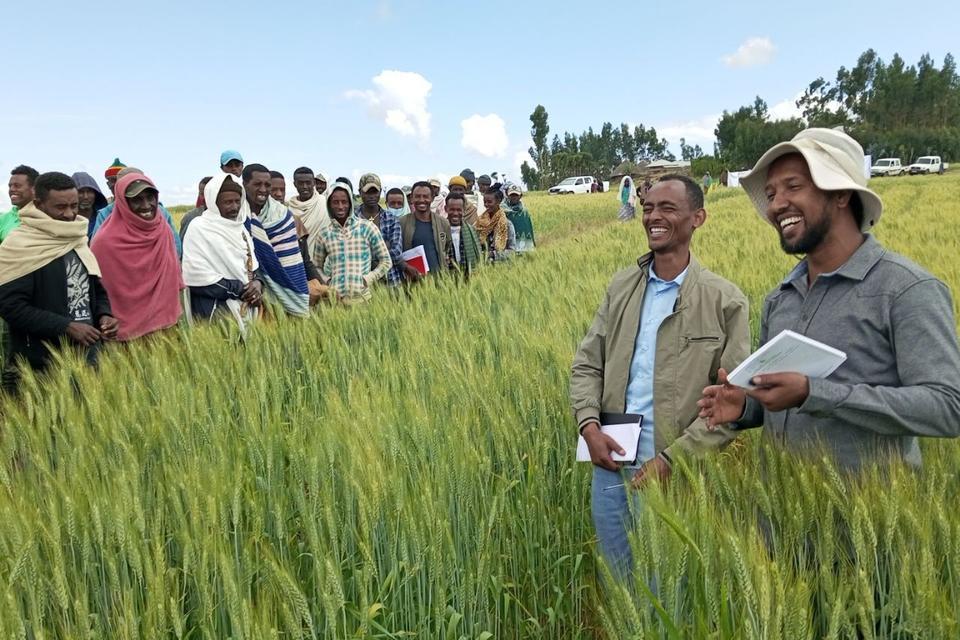
Figure 1. Field visit to a wheat farmer participating in the FRE linkage platform in Lemlem 03 village, Alicho Wuriro district. Such visits create space for two-way learning between farmers, extension agents, and researchers.
Keep exploring