From the Field Empowering development agents as digitally enabled harmonized fertilizer and agronomic solutions (HaFAS) advisers in Ethiopia
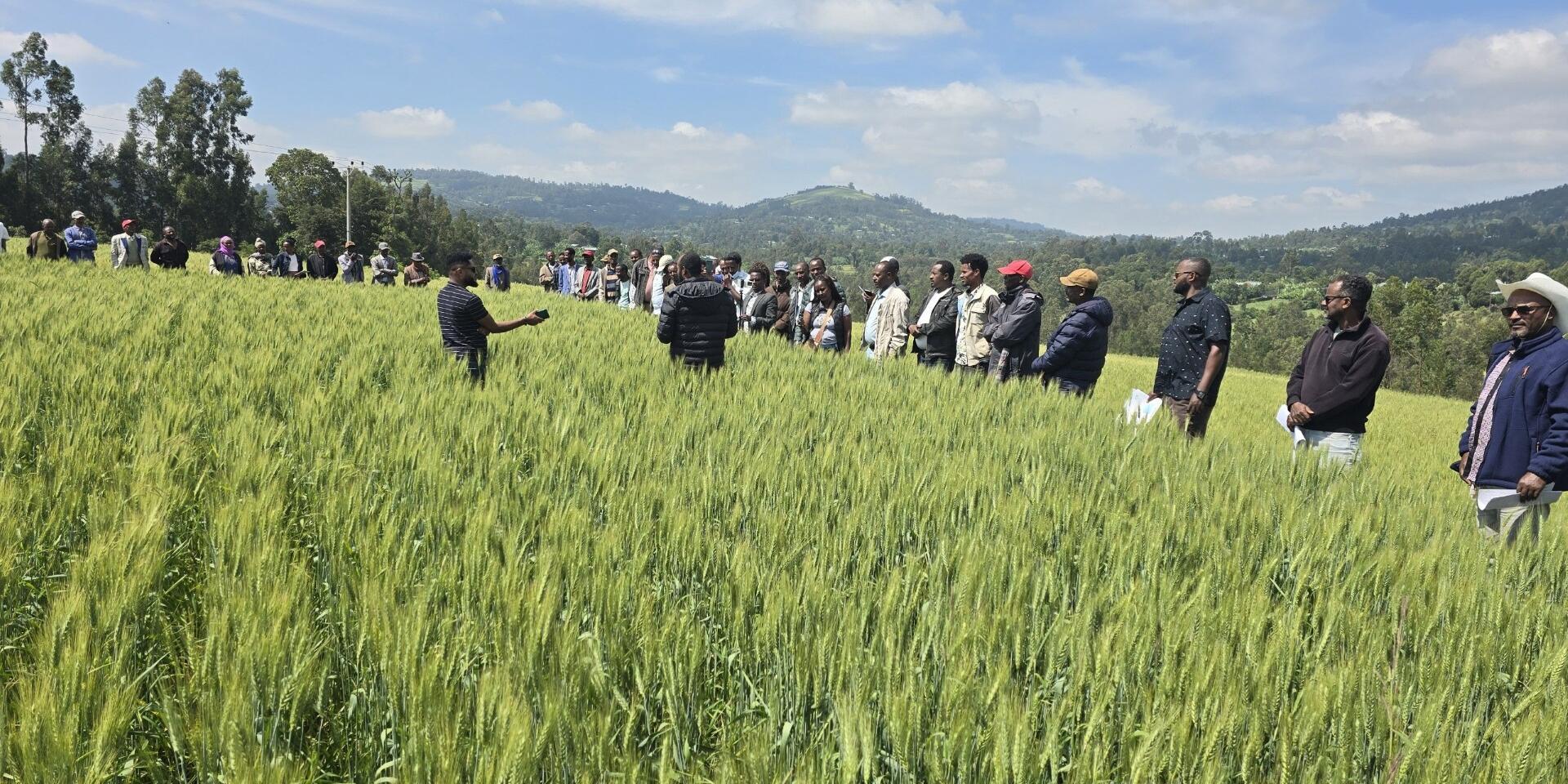

Development Agents (DAs) and agricultural experts in Ethiopia participate in preparatory technical training on the scientific foundations of site-specific fertilizer recommendations, followed by hands-on exercises in accessing, interpreting, and communicating advisories using AgriMob and the web-based HaFAS Advisory Platform.
Development Agents (DAs), Ethiopia’s frontline agricultural extension workers, play a critical role in translating agronomic recommendations into practical, farm-level decisions. A collaborative capacity-strengthening initiative is enhancing their ability to use digital tools to guide farmers on fertilizer selection, application rates, and timing, while adapting recommendations to local soil conditions, crop requirements, and seasonal variability.
In 2026, the Alliance of Bioversity International and CIAT, in collaboration with the extension wing of Ethiopia’s Ministry of Agriculture, the Ethiopian Institute of Agricultural Research (EIAR), and regional agricultural research partners, conducted hands-on training and research-centre-based cascade training on Harmonized Fertilizer and Agronomic Solutions (HaFAS) advisory delivery. Together, these activities recorded 262 training attendances. The training equipped participants with practical skills to generate, interpret, and communicate harmonized, site-specific fertilizer and agronomic recommendations using the AgriMob mobile application and the web-based HaFAS Advisory Platform.
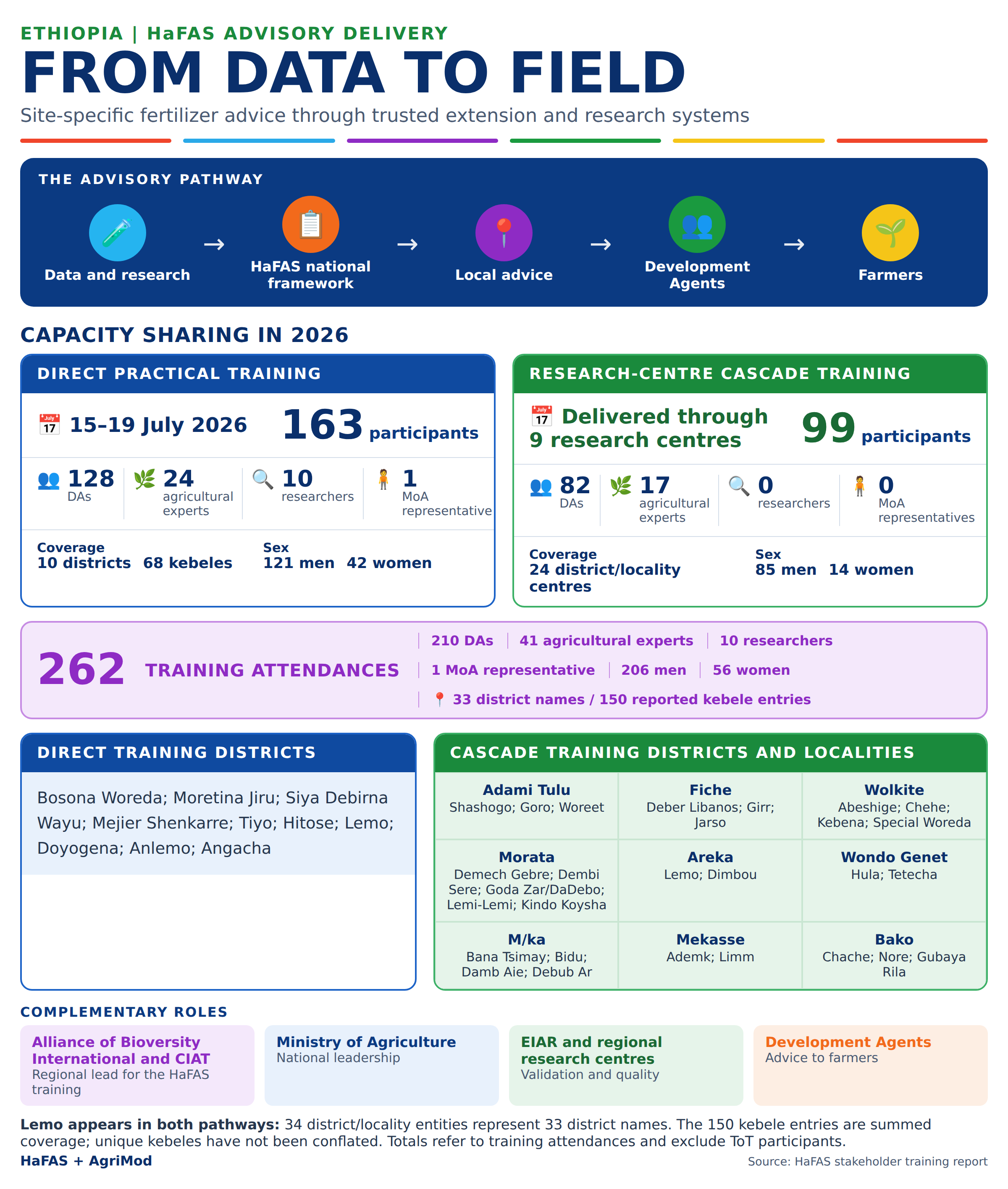
HaFAS advisory delivery and capacity-sharing activities in 2026, showing participant categories and geographic coverage. Direct practical training and research-center-based cascade training recorded 163 and 99 training attendances, respectively, for a combined total of 262. Accompanying notes clarify the reported counts of districts/localities and kebeles.
Integrating HaFAS into Ethiopia’s public extension services
Ethiopia is transitioning from blanket fertilizer recommendations towards more coordinated, site-specific agricultural advisory services. HaFAS supports this transition by integrating agricultural data, analytical tools, and research-based validation to generate fertilizer and agronomic recommendations tailored to specific crops and locations.
The effectiveness of these recommendations depends on their timely delivery to farmers and practical application under local farming conditions. To strengthen this link between advisory generation and on-farm implementation, and to explore opportunities for scaling HaFAS through the existing public extension system, the Alliance, the Ministry of Agriculture, EIAR, and regional agricultural research partners jointly organized hands-on training in Debre Birhan, Adama, and Hosaena from 15 to 19 July 2026.
The direct practical training brought together 163 participants, comprising 128 Development Agents (DAs), 24 district agricultural experts, 10 researchers, and one Ministry of Agriculture representative. Participants included 121 men and 42 women and represented 10 districts covering 68 kebeles: Basona Worena, Moretna Jiru, Siya Debirna Wayu, Minjar Shenkora, Tiyo, Hitosa, Lemo, Doyogena, Anlemo, and Angacha.
To extend the reach of the initiative, representatives from nine agricultural research centers received preparatory training, enabling their institutions to deliver subsequent cascade training. These sessions reached 99 participants, including 82 DAs and 17 agricultural experts, of whom 85 were men and 14 were women. The cascade training covered 24 district/locality entries and 82 kebele entries. By building on established research and extension networks, this approach expanded access to practical training while strengthening local technical capacity and institutional ownership.
The nine participating research centers were Adami Tulu, Fitche, Wolkite, Worabe, Areka, Wondo Genet, Jinka, Melkassa, and Bako. The districts and localities covered by each center are presented in Figure 1.
Together, the direct and cascade training activities recorded 262 training attendances, comprising 210 DAs, 41 agricultural experts, 10 researchers, and one Ministry of Agriculture representative. Of these attendances, 206 were recorded for men and 56 for women. These totals exclude participation in the separate training-of-trainers sessions.
Across both training pathways, the reported geographical coverage amounted to 34 district/locality entries and 150 kebele entries. Because Lemo was represented in both pathways, the activities covered 33 distinct district/locality names. The 150 kebele entries reflect the combined reported coverage across the two pathways.
Beyond training, the collaborating institutions play complementary roles in strengthening the development, validation, and delivery of HaFAS advisories. EIAR and regional agricultural research institutes validate HaFAS-generated fertilizer recommendations across key districts and agroecological zones, contribute to advisory development and modelling, facilitate training in additional woredas and kebeles, and provide field-level technical support. The Ministry of Agriculture provides national leadership and supports the integration of HaFAS into established public extension systems. The Alliance contributes expertise in data analytics, advisory development, digital platforms, and capacity strengthening for extension personnel and researchers.
Trained DAs serve as the critical link between digital advisory services and farmers' field-level decisions. They interpret site-specific recommendations in relation to local farming conditions, explain appropriate fertilizer products, application rates, timing, and placement methods, and guide farmers in applying the recommendations correctly. They also document implementation challenges and collect farmer feedback to inform continued improvement of advisory delivery. Where diammonium phosphate (DAP) and urea are recommended, DAs explain the distinction between band placement of DAP at planting and split application of urea at recommended crop growth stages, taking crop development and soil moisture conditions into account.
Building development agents’ skills for digital advisory delivery
Effective delivery of digital agricultural advisories requires extension personnel who can confidently use digital tools, understand the scientific evidence underpinning recommendations, and communicate them clearly to farmers.
Accordingly, the HaFAS training combined foundational technical knowledge with hands-on exercises in accessing, interpreting, and communicating site-specific fertilizer recommendations.
The technical component focused on the limitations of blanket fertilizer recommendations, particularly why their effectiveness varies across locations. Participants learned how site-specific recommendations are developed, which data inform them, how they are validated, and how to communicate uncertainties to farmers in clear, practical terms. This foundation helped participants understand the scientific rationale behind HaFAS advisories and their relevance to local farming conditions.
The practical component focused on installing and configuring the AgriMob mobile application and accessing fertilizer recommendations through both AgriMob and the web-based HaFAS Advisory Platform. Through hands-on exercises, participants developed skills in retrieving site-specific advisories, interpreting recommended fertilizer products and application rates, responding to farmers’ questions, and assessing how recommendations could be applied under local soil, crop, and seasonal conditions.
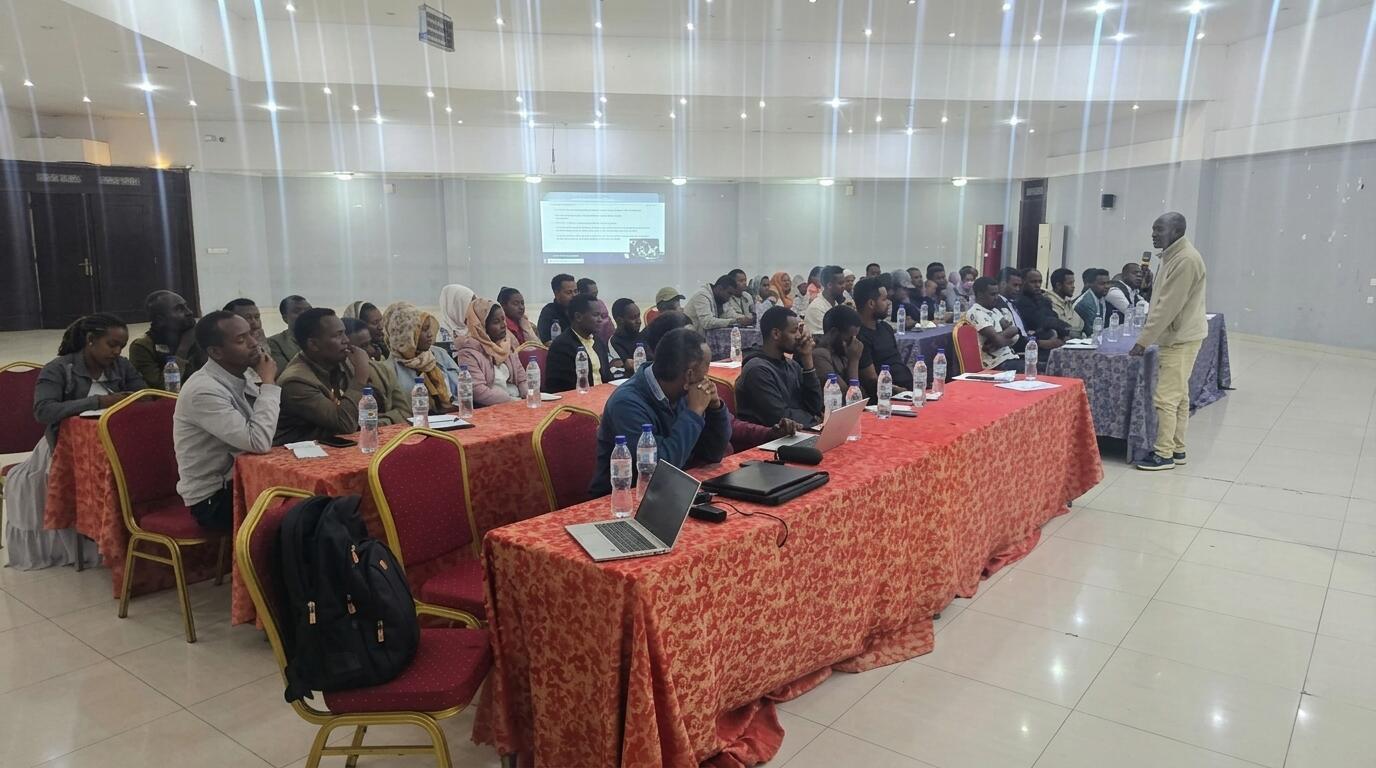
A researcher from Wondo Genet Agricultural Research Centre demonstrates how Development Agents (DAs) and agricultural experts can access, retrieve, and interpret site-specific fertilizer recommendations using the AgriMob mobile application and the web-based HaFAS Advisory Platform.
Generating field-specific recommendations through HaFAS digital platforms
Participants gained practical experience in accessing and generating site-specific fertilizer recommendations using the web-based HaFAS Advisory Platform and the AgriMob mobile application. The platforms provide user-friendly, conversational interfaces that guide users through entering crop and field-location information and retrieving tailored nitrogen and phosphorus recommendations. These features simplify access to digital advisories and support their interpretation and communication to farmers.
For larger-scale advisory delivery, the HaFAS Advisory Platform supports the generation of recommendations for multiple farmers and plots through a single workflow. Users organize crop information and plot coordinates in a structured Excel or CSV template and upload the completed file to the web-based platform. The system then generates plot-specific recommendations in batches, minimizing repetitive data entry, streamlining advisory generation, and improving the efficiency of delivering site-specific fertilizer guidance to farmers
Using AgriMob for practical advisory delivery
Developed by the Alliance of Bioversity International and CIAT, AgriMob provides mobile access to site-specific agronomic recommendations in Ethiopia. The application enables Development Agents (DAs) and researchers to retrieve fertilizer recommendations tailored to crop type and field location, supporting more informed and locally relevant advisory delivery.
Through hands-on exercises, participants practiced retrieving and interpreting fertilizer recommendations, identifying appropriate fertilizer products and application rates, and translating the recommendations into clear, practical guidance for farmers. The training also emphasized integrating fertilizer advice with good agronomic practices to support effective application under local farming conditions.
Using cadastral farm maps with the HaFAS web dashboard
Beyond the training sessions, Development Agents (DAs) are applying HaFAS to generate site-specific fertilizer recommendations for multiple farm plots. In North Shewa Zone of Ethiopia’s Amhara Region, farmers bring cadastral maps of the plots they intend to cultivate to local village centers. DAs extract plot coordinates from these georeferenced maps, organize the information in a structured Excel template, and upload the data to the web-based HaFAS Advisory Platform. Verifying the coordinate reference system and ensuring the correct data format help link each fertilizer recommendation to its intended farm plot.
Using this approach, DAs have generated and delivered site-specific fertilizer advisories for more than 1,000 farm plots. This experience demonstrates how existing cadastral mapping data can facilitate timely advisory generation, minimize repetitive data entry, and reduce the need for field-based coordinate collection. Linking farmer and plot identifiers to advisory records and subsequent field observations will also help monitor farmers’ uptake of recommendations, assess their implementation, and identify opportunities to improve advisory delivery.
The North Shewa experience provides a practical model for expanding HaFAS advisory services across Amhara and other parts of Ethiopia where reliable cadastral mapping data are available. Integrating existing spatial information with the HaFAS digital platform can improve the efficiency and geographic reach of site-specific fertilizer advisory delivery, enabling extension personnel to serve more farmers through established public extension networks.
Using field feedback to improve HaFAS advisory tools
Feedback from Development Agents (DAs), agricultural experts, and researchers provided valuable insights into how HaFAS digital tools could be improved to support more efficient and reliable advisory delivery under field conditions. Drawing on their hands-on experience with the AgriMob mobile application and the web-based HaFAS Advisory Platform, participants identified opportunities to simplify data entry, improve the accuracy and usability of fertilizer recommendations, strengthen data management, and enhance access to advisory services.
Based on their practical experience, participants recommended the following improvements:
- Improve coordinate compatibility: Support both geographic and projected coordinate formats, with clear guidance on coordinate reference systems, data formatting, and file-upload requirements.
- Provide plot-specific fertilizer quantities: Automatically calculate and display fertilizer requirements based on each farmer’s actual plot size, while retaining the corresponding per-hectare application rates for reference.
- Display GPS accuracy: Include GPS accuracy indicators to help users assess the reliability of recorded field coordinates and verify that recommendations correspond to the intended plots.
- Strengthen data management and recordkeeping: Maintain structured records of administrative locations (region, district, kebele, and village), farmer names, field areas, and fertilizer recommendations. Enable users to download complete datasets or records generated on a particular day to minimize manual recording, reduce errors, and save time.
- Simplify crop selection: Introduce a user-friendly drop-down menu that allows users to select crops quickly and consistently when generating recommendations.
- Integrate nutrient recommendations: Generate nitrogen and phosphorus recommendations in a single request, displaying both nutrient requirements and their equivalent fertilizer product quantities, including urea and diammonium phosphate (DAP).
- Improve fertilizer conversion calculations: Clearly account for differences in nutrient composition and nutrient contributions when converting recommendations into application quantities for urea, DAP, nitrogen-phosphorus-sulfur (NPS), and other fertilizer products.
- Enable offline advisory access: Introduce offline functionality where technically feasible, allowing users to download advisory data for specific districts or kebeles and retrieve recommendations when internet connectivity is limited or unavailable.
These recommendations reflect the practical challenges encountered by extension personnel when translating digital fertilizer advisories into field-level guidance. Addressing these challenges could streamline advisory generation, reduce repetitive data entry, improve the accuracy and consistency of fertilizer calculations, and strengthen the usability of HaFAS tools under diverse field conditions.
Incorporating this user feedback into the continued development of AgriMob and the HaFAS Advisory Platform could reduce DAs’ workload, improve the reliability of advisory delivery, and strengthen their confidence in communicating recommendations to farmers. Combined with continued capacity strengthening, technical support, and systematic farmer follow-up, these improvements can help bridge the gap between research-based fertilizer recommendations and their effective application in farmers’ fields.
Acknowledgement
This work was funded by the Gates Foundation through the Supporting Soil Health Interventions in Ethiopia Phase III (SSHI-III) project, managed by GIZ Ethiopia, and supported by the CGIAR Sustainable Farming Science Program through the CGIAR Trust Fund. We gratefully acknowledge the Ethiopian Institute of Agricultural Research (EIAR), regional agricultural research institutes and centers, the Ministry of Agriculture, regional bureaus of agriculture, and participating district agricultural offices for their collaboration and technical support. We also thank Digital Green and LERSHA for their contributions to piloting, digital advisory delivery, and implementation. Researchers, Development Agents, and agricultural experts at regional, zonal, district, and kebele levels provided essential support in validation, capacity sharing, and field implementation. We are especially grateful to the farmers who willingly tested and implemented HaFAS recommendations in their fields and shared practical experiences and feedback to strengthen the relevance and usefulness of the advisories.
Keep exploring