Blog From data to decision: Institutionalizing smart fertilizer recommendations through HaFAS in Ethiopia

Ethiopia is pioneering a new era of data-driven agriculture through the institutionalization of the Harmonized Digital Fertilizer and Agronomic Solutions (HaFAS) framework. By integrating advanced analytics, AI, and local agronomic intelligence, HaFAS is transforming fertilizer recommendations into actionable insights that empower millions of farmers with context-specific, climate-smart advice.
Introduction: Turning data into actionable agronomic intelligence
Ethiopia’s agricultural sector is undergoing a digital transformation. For decades, fertilizer recommendations were often fragmented, generalized, and disconnected from the diverse realities of farmers’ fields. Today, that is changing. The country is transitioning from isolated advisory tools toward a unified, data-driven, and scalable national system one that links science, technology, and local knowledge to empower farmers with context-specific agronomic advice.
At the center of this transformation is the evolution of the NextGen Fertilizer Advisory Decision Support Tool (DST) into the Harmonized Digital Fertilizer and Agronomic Solutions (HaFAS) framework. Co-developed by the Alliance of Bioversity International and CIAT under the CGIAR Excellence in Agronomy (EiA) initiative, HaFAS represents a new era in data-driven agricultural extension. It is a cornerstone of Ethiopia’s Digital Agriculture Strategy (2025) modernizing how the country delivers climate-smart, efficient, and profitable fertilizer use recommendations at scale.
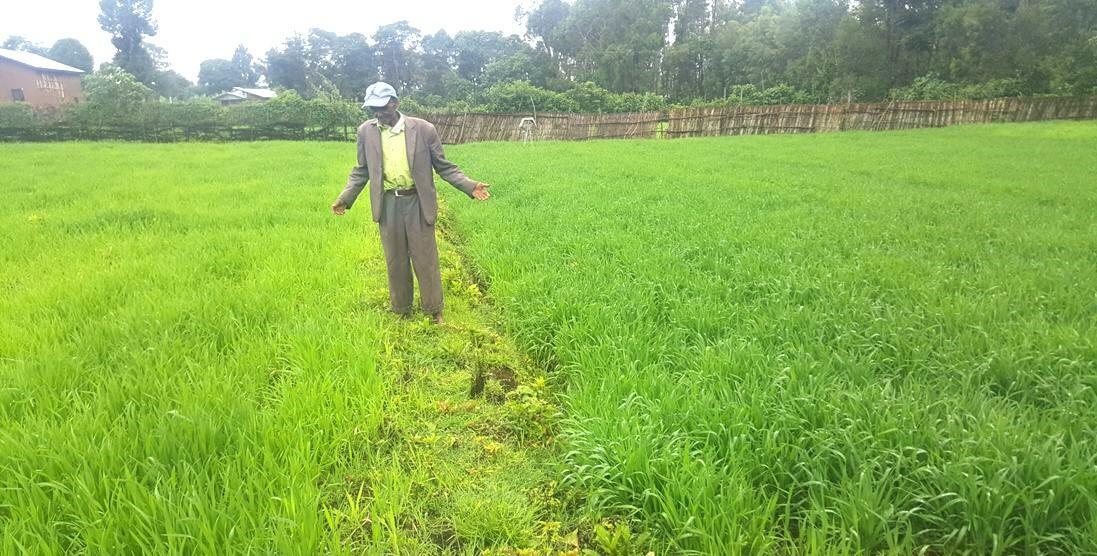
Farmer Alemu Anore at Lemo woreda, dubancho kebele, witnessed the better performance of the Location Specific Fertilizer Recommendation (LSFR) wheat plot than his adjacent plot planted with their own fertilizer rate. He said, “At this early stage I can observe a big difference on the same plot. I will continue evaluating the grain yield as well and will decide to use the LSFR for all my wheat fields.”
The data-driven engine: NextGen DST
The NextGen DST is the technical foundation of HaFAS. It generates climate-smart, site-specific fertilizer recommendations (SSFR) tailored to the conditions of individual farms, recommendation domains, and Agricultural Commercialization Clusters (ACCs).
Powered by big data analytics and machine learning, the system integrates:
- Over 100,000 crop response trials,
- More than 20,000 legacy soil profiles, and
- High-resolution agro-climatic and environmental data layers.
This powerful data backbone enables the DST to deliver dynamic, AI-informed recommendations for nutrient types, application rates, and complementary agronomic practices. The tool can also be linked with financial and risk management services such as credit, input delivery, and agricultural insurance, promoting an ecosystem approach to farm-level decision support.
By the end of 2024, the DST had reached over 72,800 farmers across multiple regions, with 10,800 active users accessing tailored fertilizer advisories. Independent evaluations demonstrated yield increases of 16–38% and profit gains of up to USD 669 per hectare, underscoring the tool’s transformative potential for smallholder productivity and income growth.
Institutionalization for national scale: The HaFAS framework
The formal integration of the NextGen DST into the HaFAS framework in 2025 marks a strategic institutional milestone for Ethiopia. It transitions a standalone technological solution into a nationally coordinated, government-led digital innovation designed for scale, sustainability, and inclusivity.
The HaFAS initiative is spearheaded by the Ministry of Agriculture (MoA) and the Ethiopian Institute of Agricultural Research (EIAR), with technical leadership from CGIAR centers primarily the Alliance Bioversity International and CIAT and ICRISAT and strong collaboration with national research and extension systems.
At the heart of this framework is the Localized Agronomy and Fertilizer Advisory (LAFA) system, which operationalizes site-specific nutrient management (SSNM) for Ethiopia’s diverse agro-ecological zones. LAFA serves as the operational engine of HaFAS, delivering precise fertilizer and agronomic recommendations that account for local soil fertility, rainfall patterns, cropping systems, and resource availability.
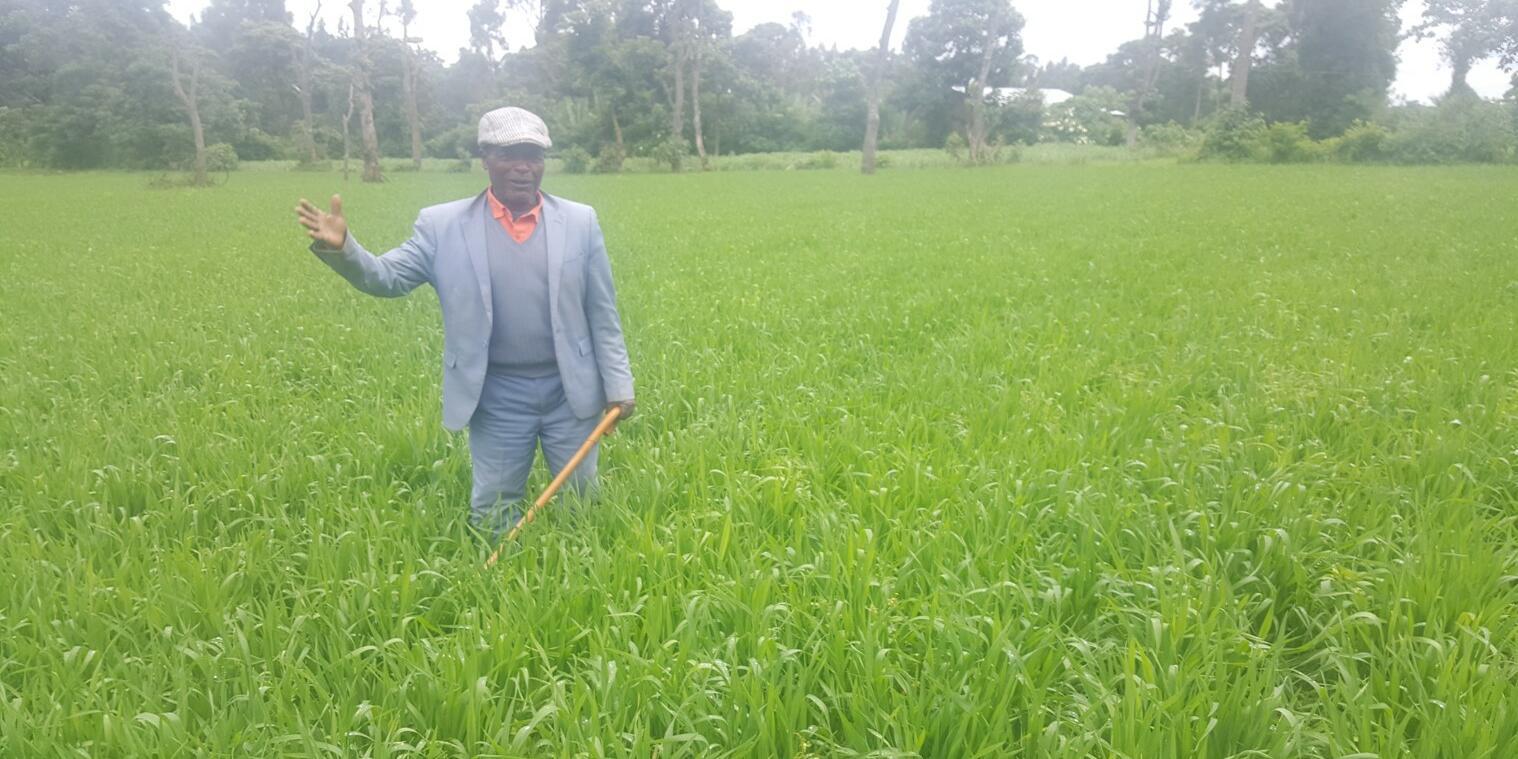
Farmer Abate Ajajew at Lemo, Shurmu dacho kebele, witnessed how the Location Specific Fertilizer Recommendation (LSFR) enhanced the wheat performance. He said, “At this field I have never seen such wheat performance at this stage.” The farmer added that “even If you force me to stop using this LSFR, I will apply it at night.”
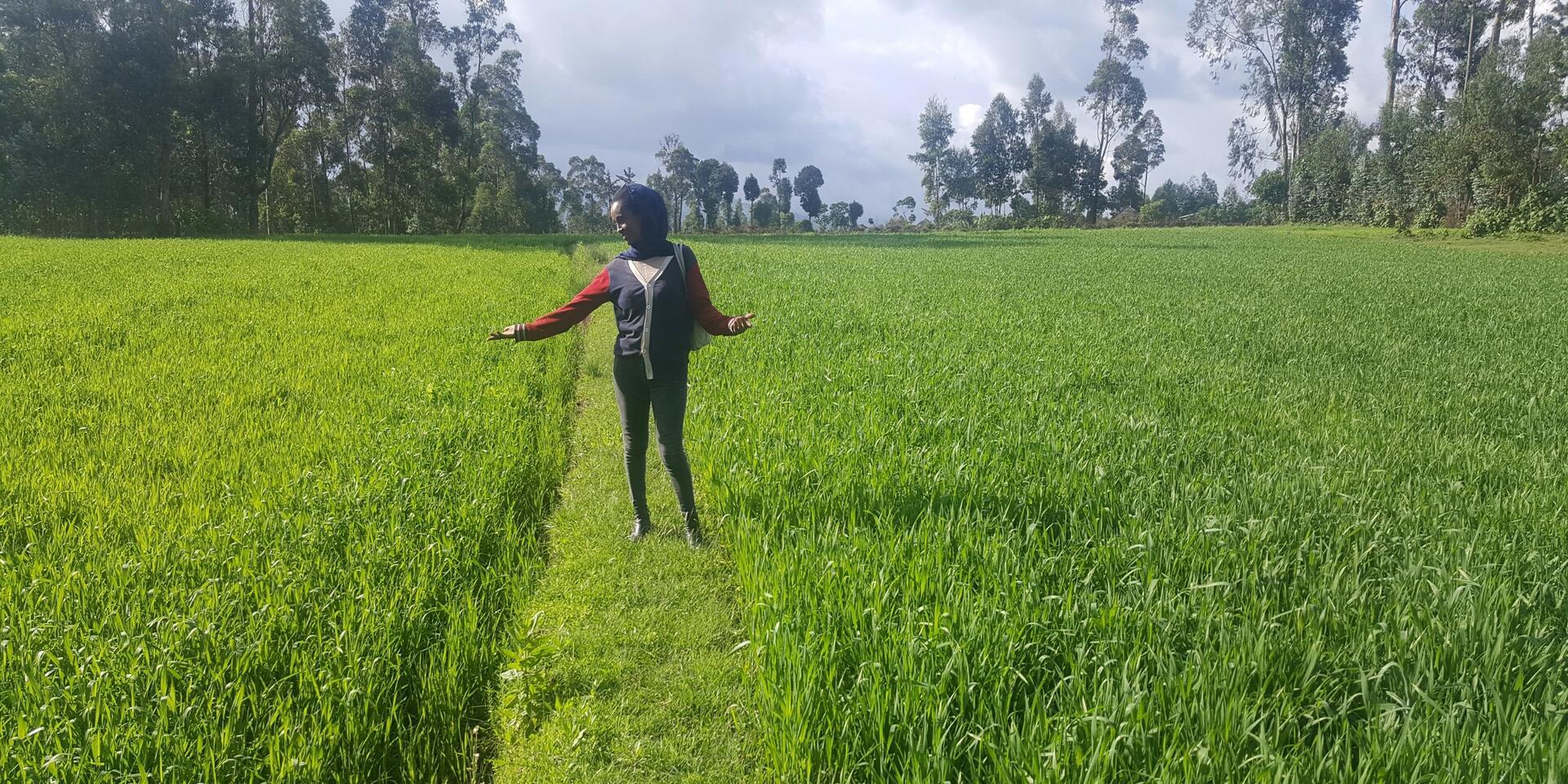
The development agent at Debub Belesa kebele, Lemo woreda, witnessed the better performance of the Location Specific Fertilizer Recommendation (LSFR) plot compared to local practices.
Validation and scaling: From pilot to nationwide impact
Before national deployment, the HaFAS-LAFA system underwent rigorous multi-location validation across 1,570 farmer fields representing major cereal-growing regions. These trials confirmed the accuracy, feasibility, and farmer acceptability of the recommendations, forming the scientific foundation for large-scale scaling.
Key Milestones in Validation and Piloting:
- Validation Scope: National and regional research institutes validated the harmonized DST across 938 farmers for Ethiopia’s key staple crops — Wheat (372), Tef (347), Maize (124), and Sorghum (95).
- Pilot Reach: Collaborative pilots with Digital Green, Precision Development (PxD), GIZ, and national research institutions collectively reached 116,997 farmers through blended digital-extension models.
Building on these successes, HaFAS is now entering a phase of massive scaling. The national scaling roadmap targets 4 million farmers by 2030 and 15 million by 2040, aligning with Ethiopia’s agricultural transformation agenda.
Through an open and interoperable digital architecture, partners such as Digital Green and Kifiya Financial Technology have been granted API access to the HaFAS advisory database, allowing them to deliver customized recommendations through mobile, call-center, and community-based platforms. Digital Green, for instance, plans to pilot the LAFA system across eight regions, reaching approximately 88,500 farmers through a blended digital and human-extension approach.
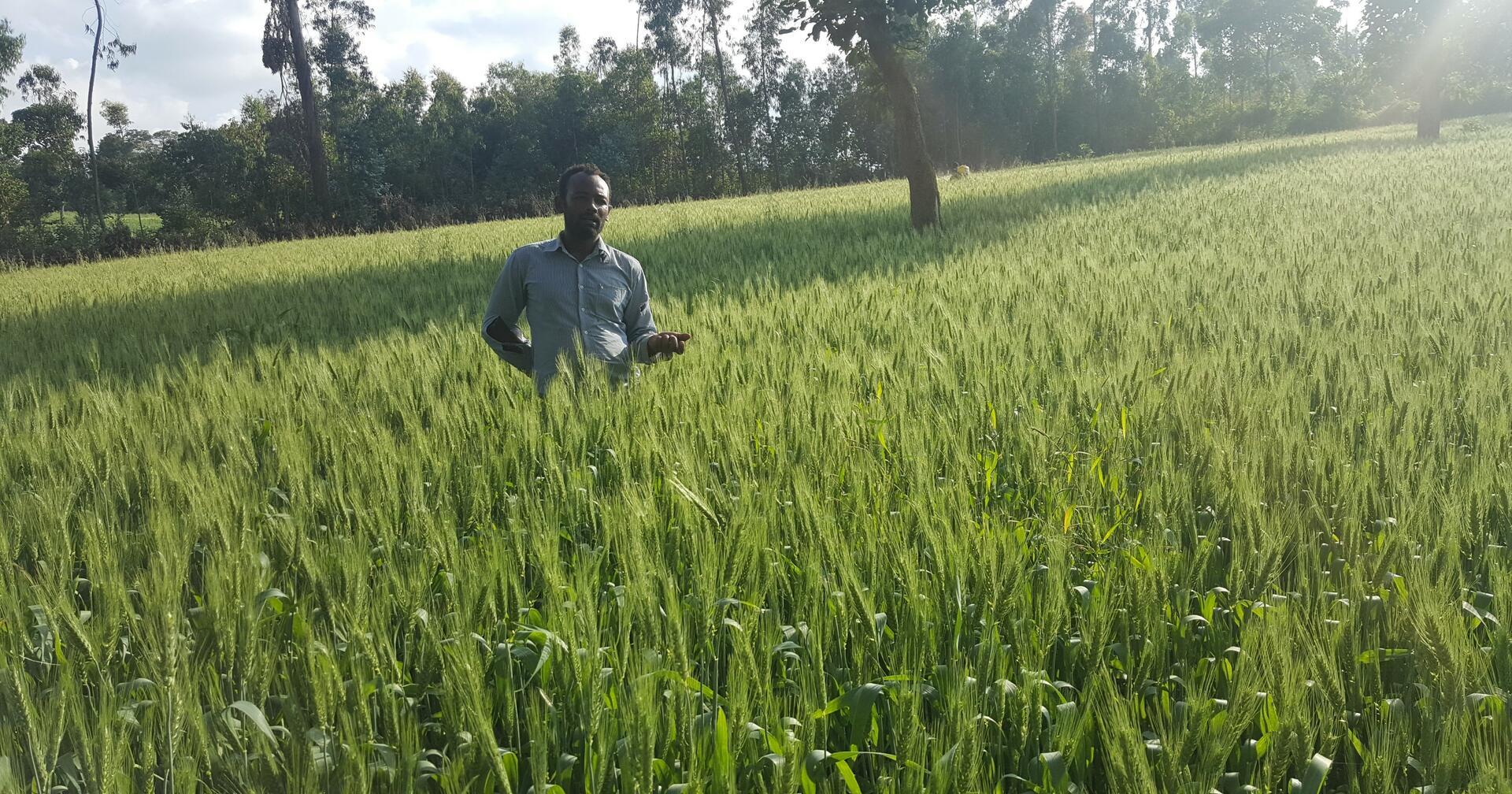
Farmer Bizuayehu Gature at Lemo woreda, Andegna Omoshera kebele, said, "The Location Specific Fertilizer Recommendation (LSFR) helps for the best performance of my wheat field this year. Before last year, I planted wheat using the blanket recommendation on this 0.5 ha plot and harvested 2.5 tonnes of grain. This year I used the LSFR, and the performance is very good, and with the will of God, I expect to harvest around 4 tonnes from the same plot."
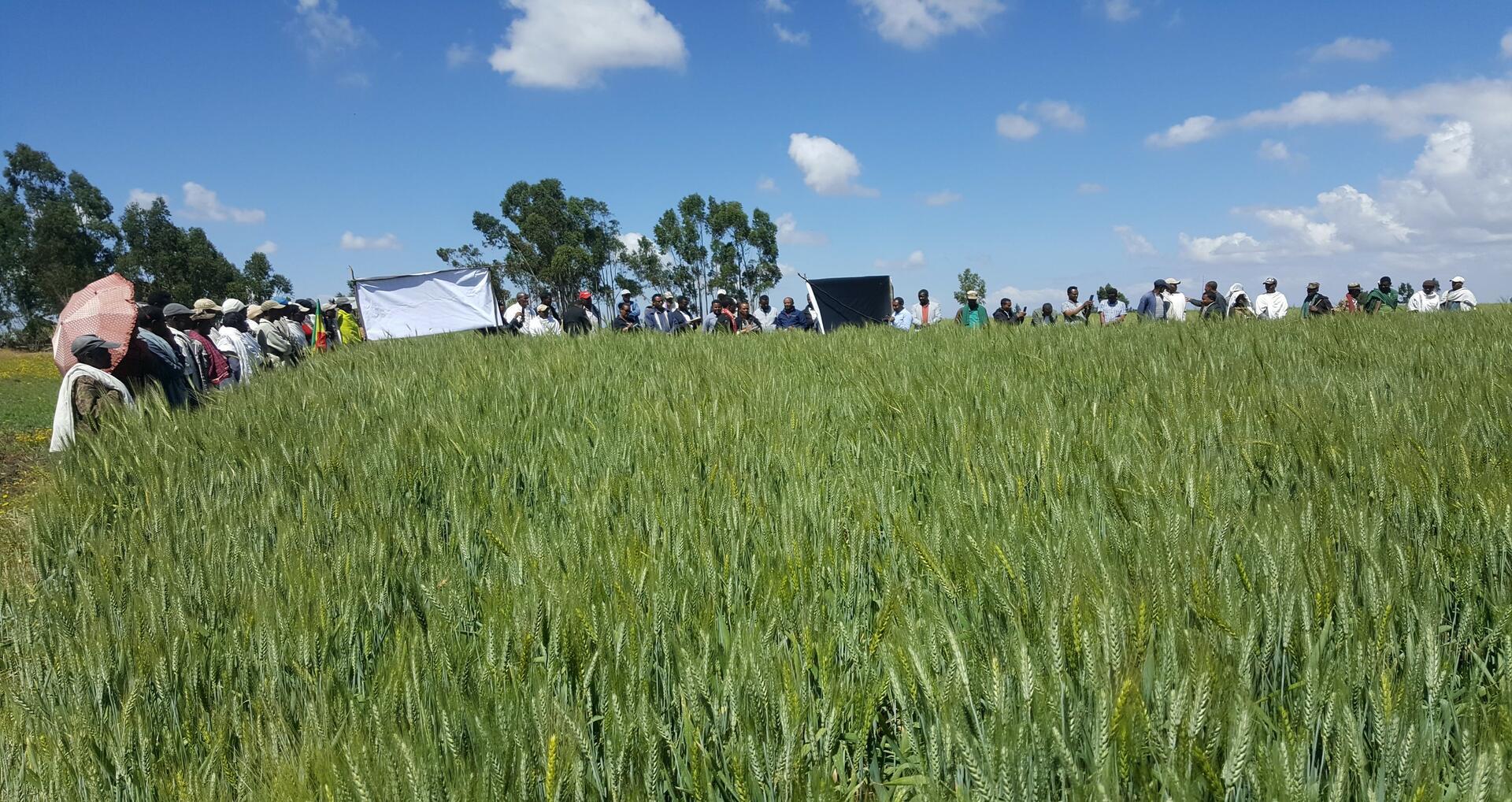
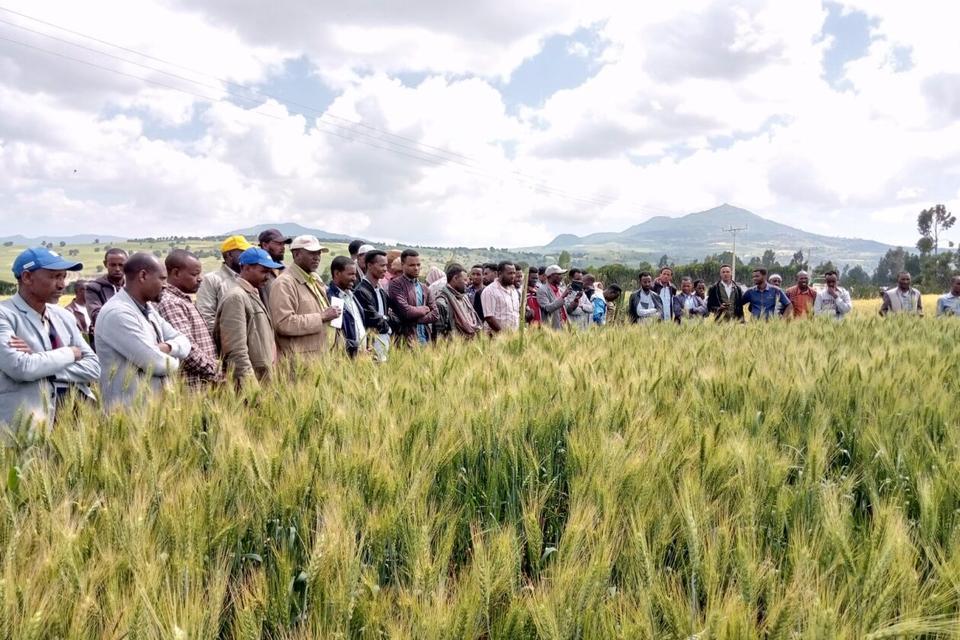
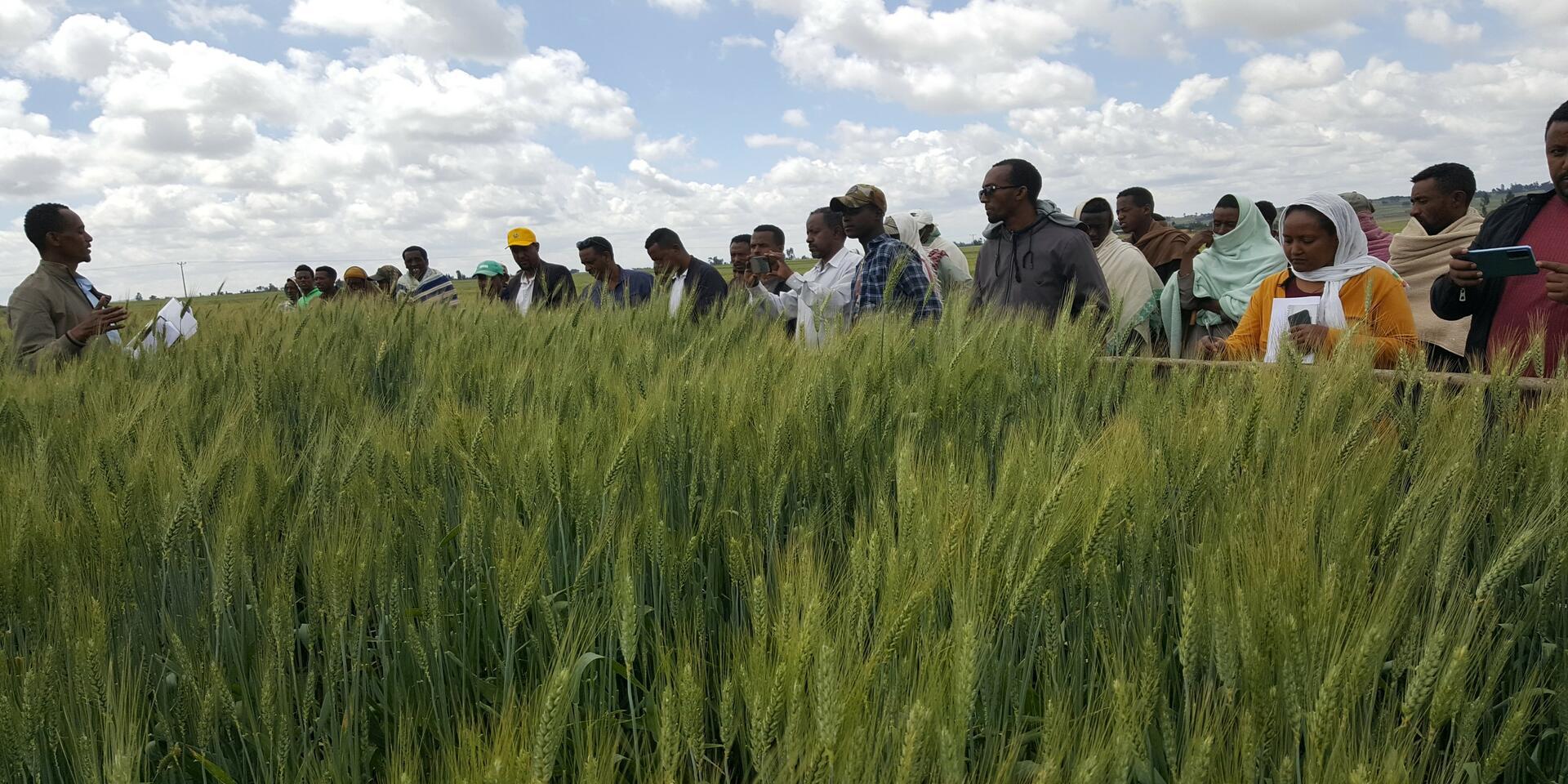
Field day at Lemo, Lereba kebele: Farmers, extension workers and local administrators visiting the Location Specific Fertilizer Recommendation (LSFR) plot.
The AI-powered future of agricultural extension
HaFAS is not only a platform it is a learning system. It continues to evolve through the integration of Artificial Intelligence (AI) and Large Language Models (LLMs) that enhance both precision and accessibility of agronomic advice.
A major innovation milestone has been the deployment of a Fertilizer Chatbot prototype, which provides conversational, real-time guidance on fertilizer recommendations for various crops and nutrient types. The chatbot can process farmer queries in local languages, deliver location-specific recommendations, and enable two-way interaction between users and experts bridging the gap between complex scientific knowledge and practical on-farm decision-making.
By embedding AI and machine learning into Ethiopia’s national extension architecture, HaFAS strengthens the technical backbone of digital agriculture, ensuring advisory services are data-informed, adaptive, and farmer centered.
Conclusion: A model for data-driven agricultural transformation
The institutionalization of HaFAS represents more than a technological achievement — it is a systemic innovation. It demonstrates how science, data, and digital technologies can be embedded within public institutions to sustainably enhance agricultural decision-making at national scale.
Through strategic partnerships between the Ministry of Agriculture, EIAR, and CGIAR centers, HaFAS is creating a unified digital ecosystem that not only improves fertilizer use efficiency but also accelerates Ethiopia’s path toward resilient, productive, and climate-smart agriculture.
As Ethiopia continues to lead the way in digital agronomy and evidence-based advisory systems, HaFAS stands as a replicable model for other countries seeking to institutionalize data-to-decision frameworks for smallholder transformation across Africa.
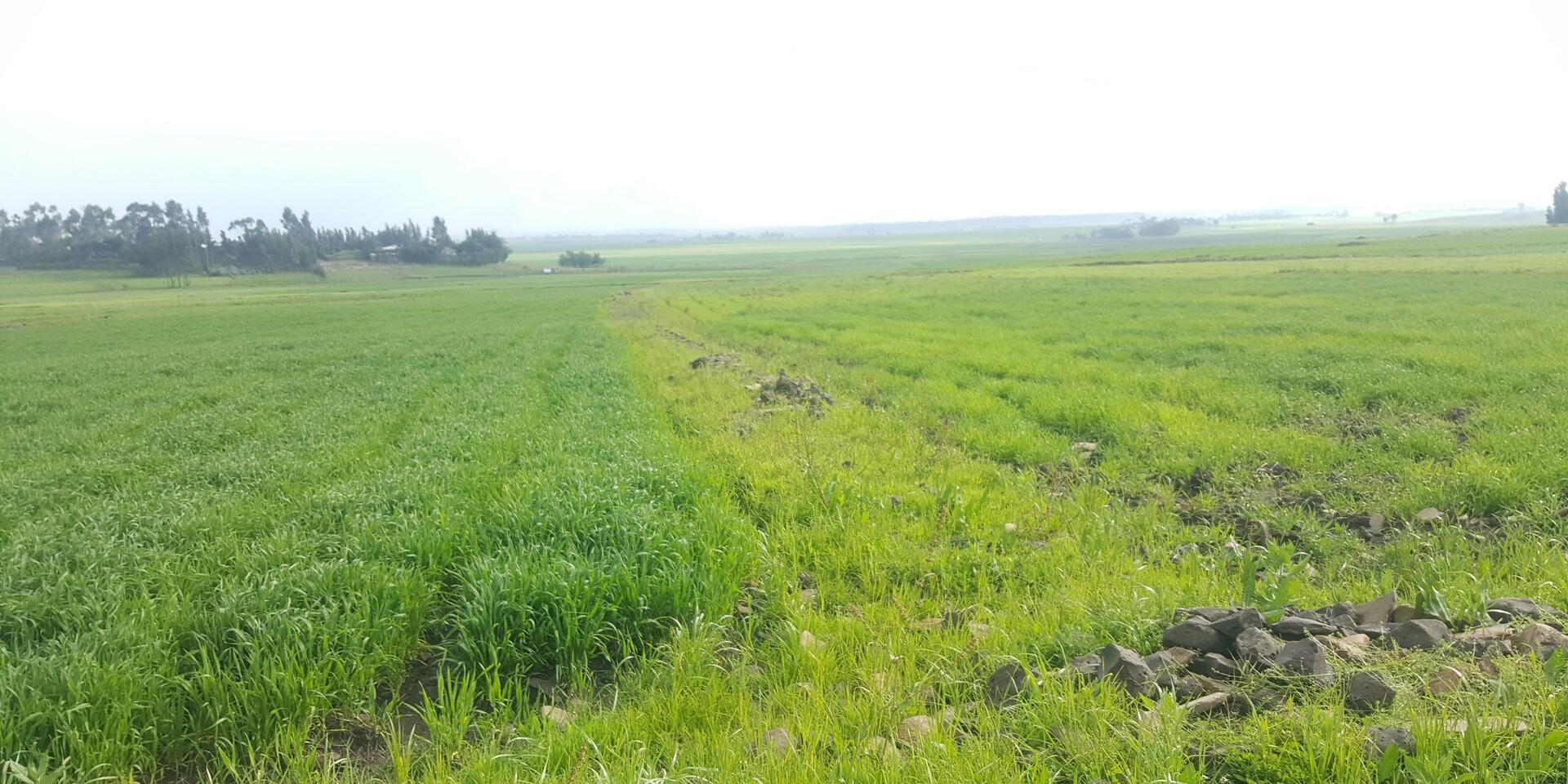
The Location Specific Fertilizer Recommendation (LSFR) plot vs the blanket recommendation wheat field at Siyadebr woreda, Wole kebele, shows a great performance difference at an early stage.

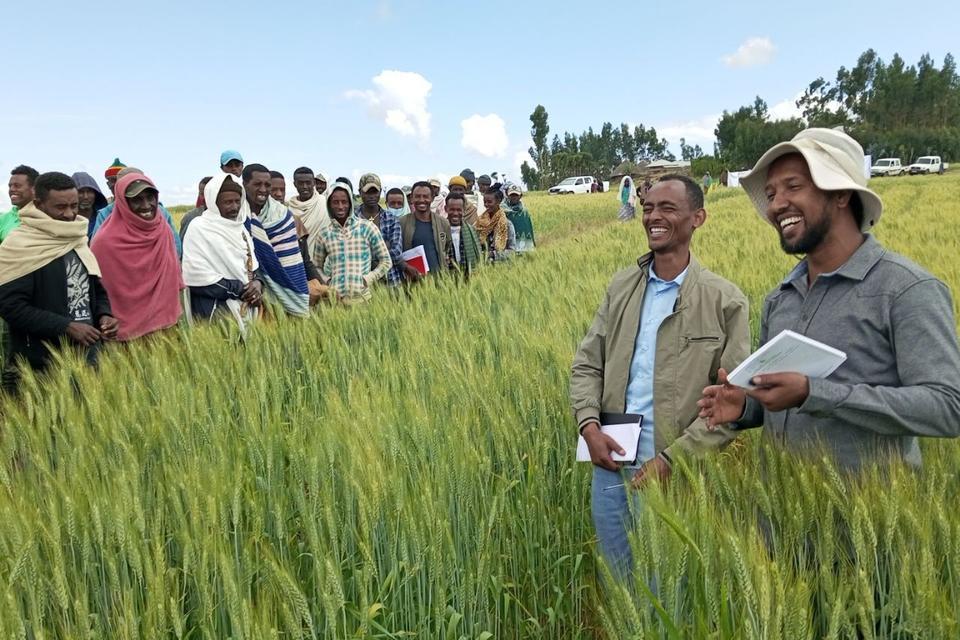
Dr Feyera Merga explaining about the Location Specific Fertilizer Recommendation (LSFR) for the Field Day participant at Siyadebr woreda, Rome kebele.
Acknowledgment
This work was supported by the CGIAR Sustainable Farming Program, the Supporting Soil Health Interventions in Ethiopia project III, funded by the Bill and Melinda Gates Foundation, and managed by Deutsche Gesellschaft für Internationale Zusammenarbeit (GIZ) and the Accelerating the Impact of CGIAR Climate Research in Africa (AICCRA) Program. We also recognize the support from Ethiopia’s Ministry of Agriculture and Zonal and District Bureau of Agriculture, the National Agricultural Research System and all partners involved in the validation and piloting of the fertilizer recommendation.
The Alliance team

Lulseged Tamene Desta
Director, Multifunctional Landscape
Wuletawu Abera
Senior Scientist, Country Representative for Ghana