Blog From a family farm in Kenya to advancing forage innovations in Asia: A conversation with Mary Atieno
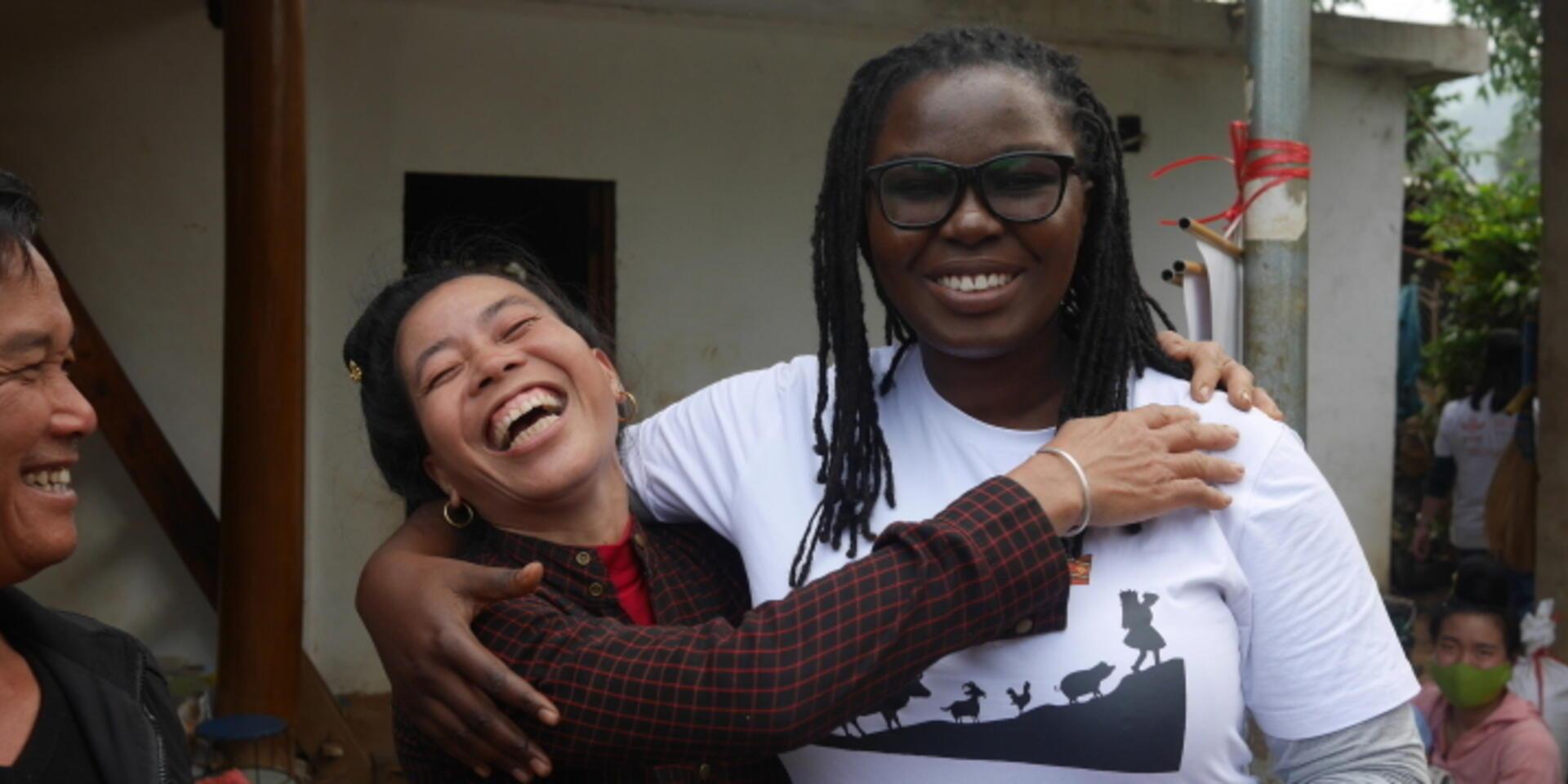

“I have always been driven by curiosity, shaped by growing up on a farm with crops, livestock and trees. That early exposure inspired me to understand how different components of agricultural systems interact.”
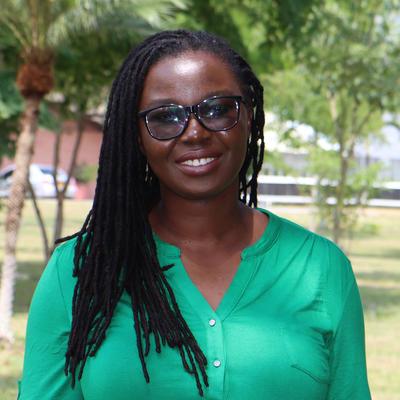
Mary Atieno grew up on her family’s farm in Kenya. Curious about the future of agriculture, she earned BSc and MSc degrees in Soil Science in Kenya, and a PhD in Agriculture in Australia, and has now spent more than eight years contributing to the Alliance’s research, currently as the Asia Lead of the Tropical Forages Program.
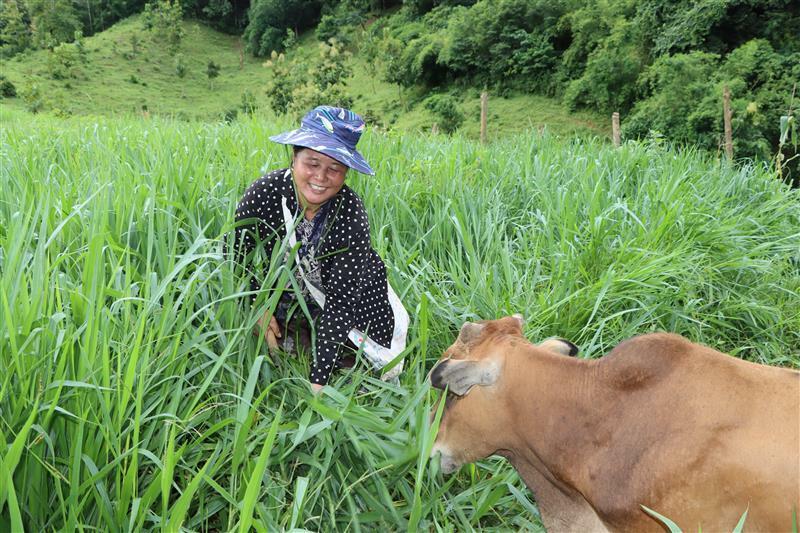
Pastoralist cares for her cattle in the highlands of Laos. Photo credit: Alie Galeon
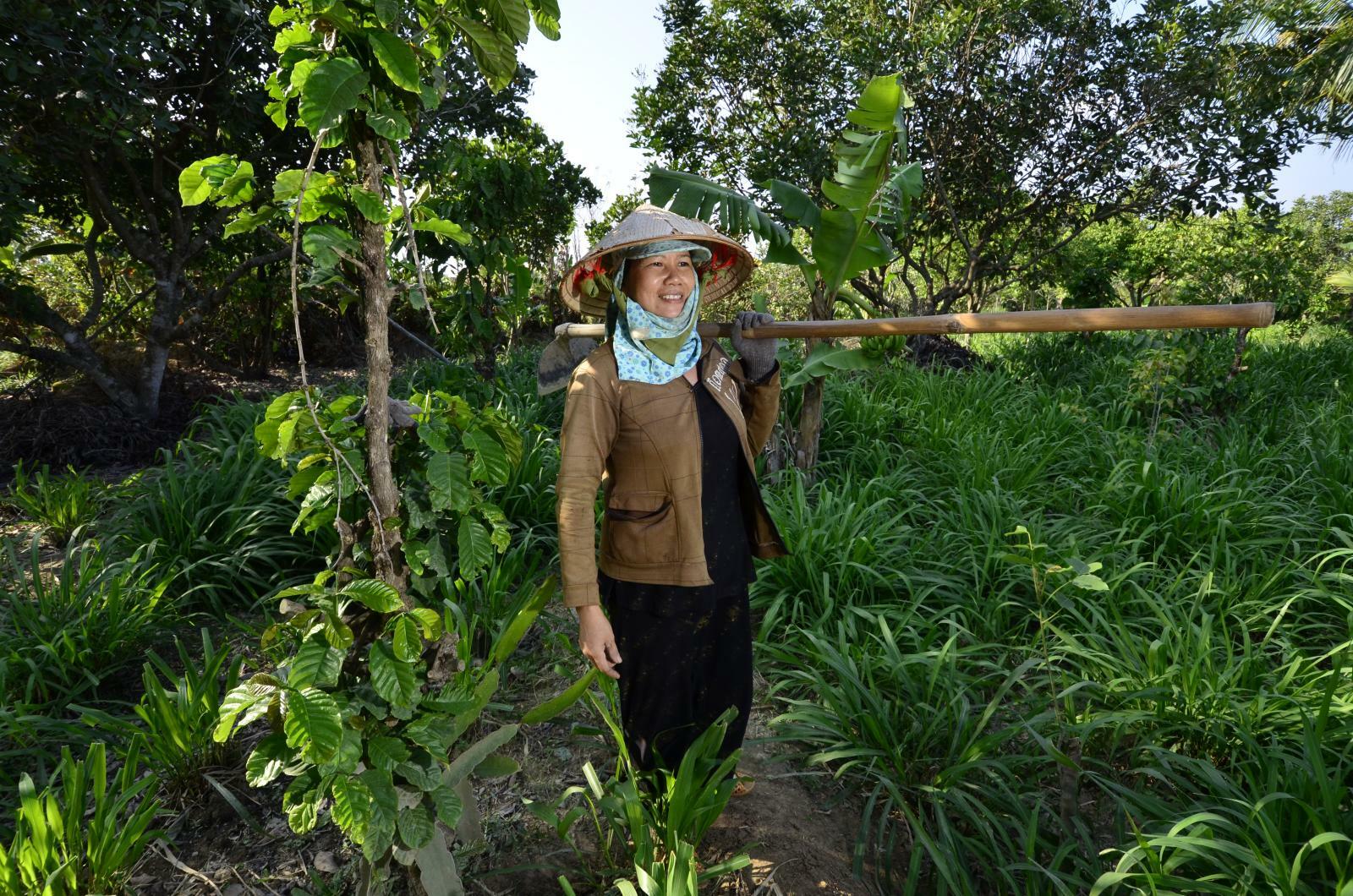
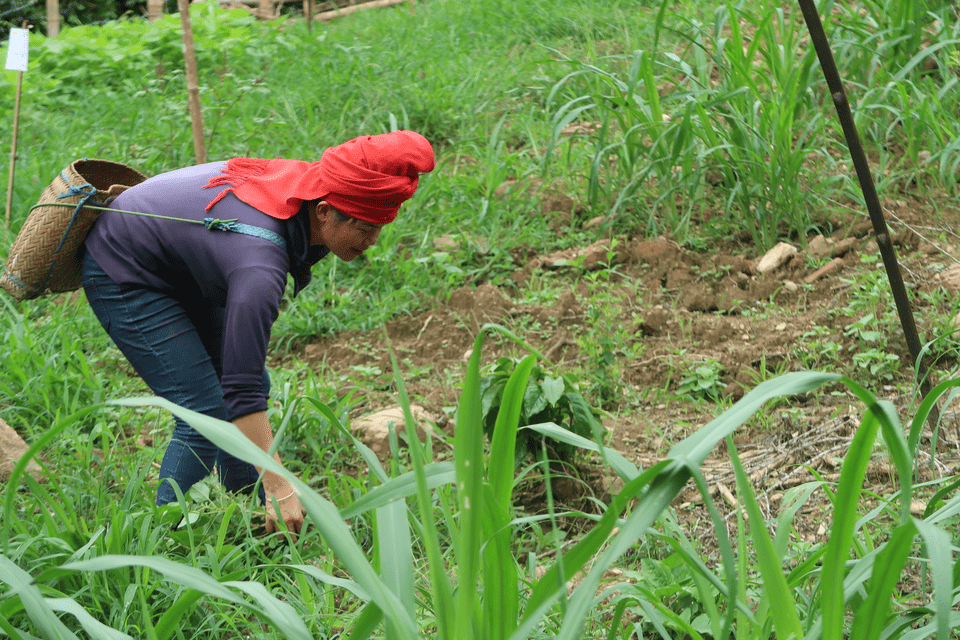
A farmer grows forages amongst other crop varieties on her farm in Vietnam. Photo credit: Neil Palmer/CIAT
Forages: Multi-opportunity crops
Talking about how she became interested in forages, Mary explained:
"Forages might seem like a small piece of a puzzle, but they have vast influence and benefits: livestock productivity, soil health, climate resilience, biodiversity conservation and landscape restoration.”
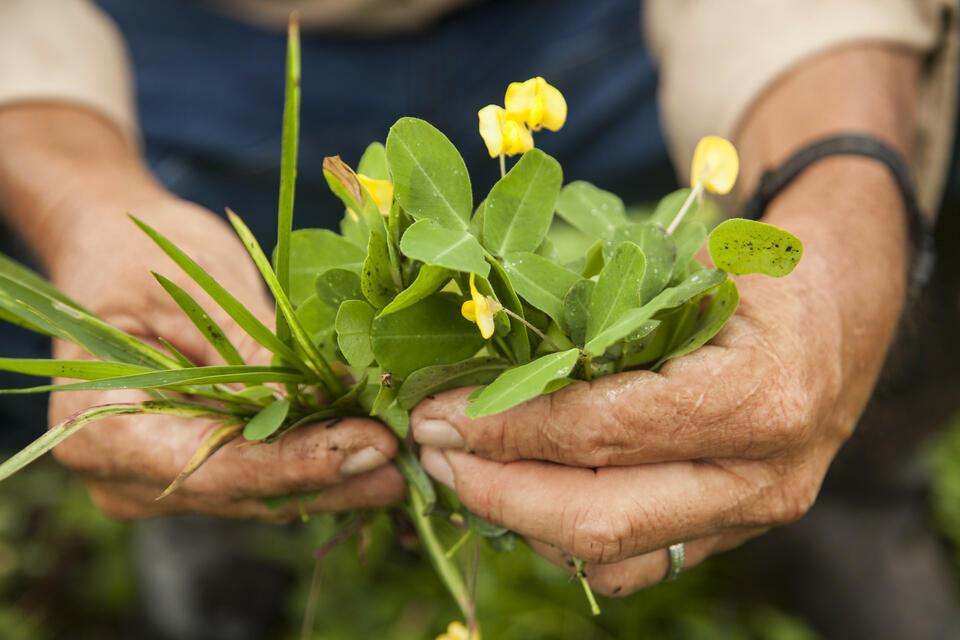
Forages refers to the wide range of grasses and legumes grown for livestock feed. The breed or variety of forage makes a difference for livestock farmers. Certain varieties can offer higher digestibility for animals (thus reducing enteric methane emissions); increased tolerance to drought, waterlogging, pests or diseases; higher biomass productivity; and even deep rooting systems that can contribute to soil health restoration.
Forages can also be consumed fresh during animal grazing, or preserved for future through drying and appropriate storage.
Mary’s work identifies different regions’ priorities, providing pastoralists and other farmers with optimal forage varieties to match their needs, thus supporting their productivity and sustainability. To do so, Mary and the Alliance’s forage team maintain close collaboration with the private sector, research institutions, national partners, and other key stakeholders to disseminate the most promising varieties to farmers. Through these partnerships, the Alliance accelerates the delivery of innovations to farmers, particularly smallholder livestock producers in the tropics, ensuring that innovations translate into tangible productivity, sustainability, and livelihood gains.
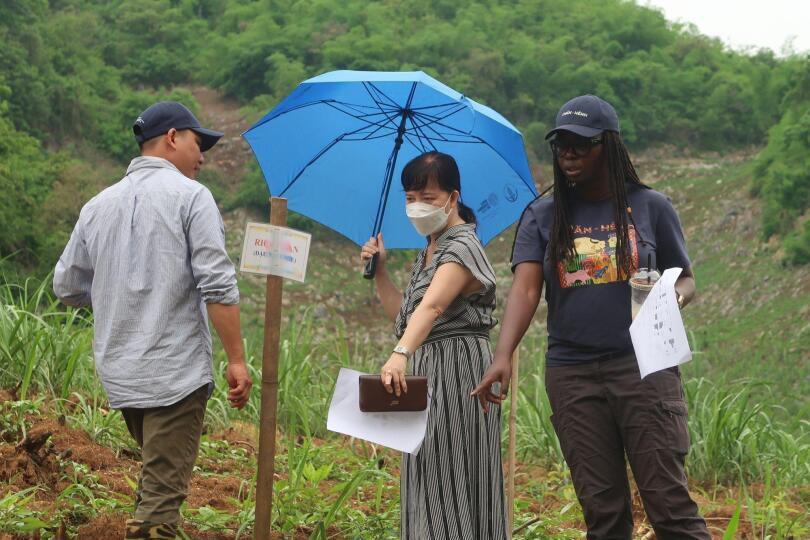
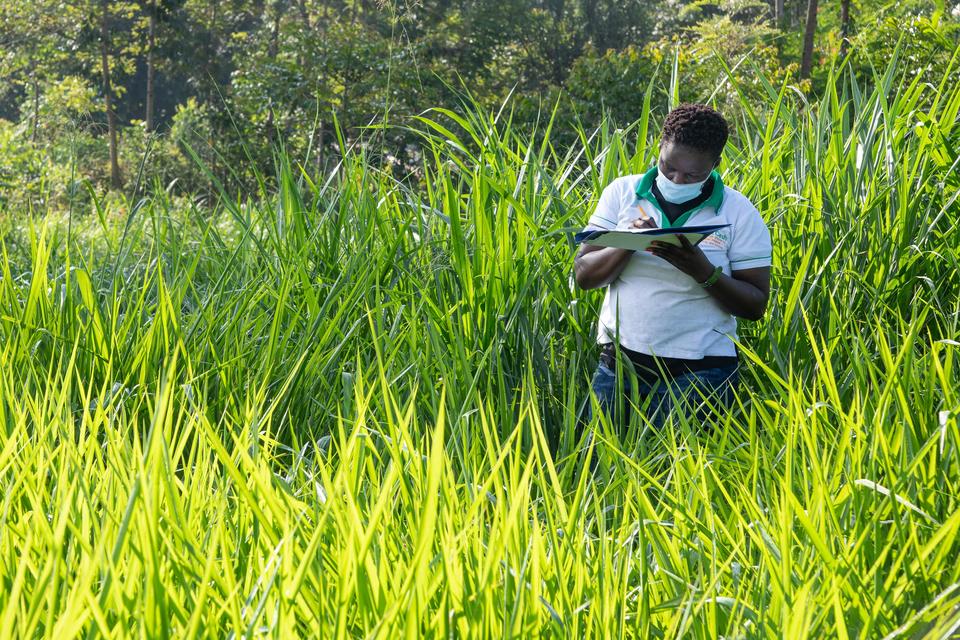
Mary analyzes a forages plot with farmers and agronomists. Photo credit: Hang Dao/CIAT
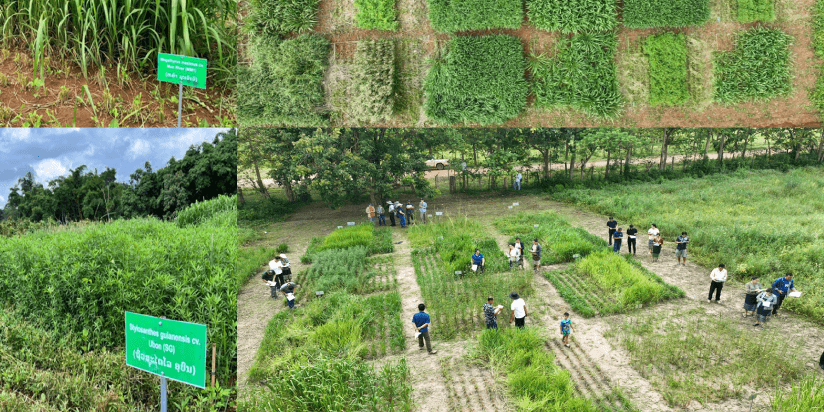
Forage demo plots in Laos. Photo credit: Jonathan Newby/CIAT
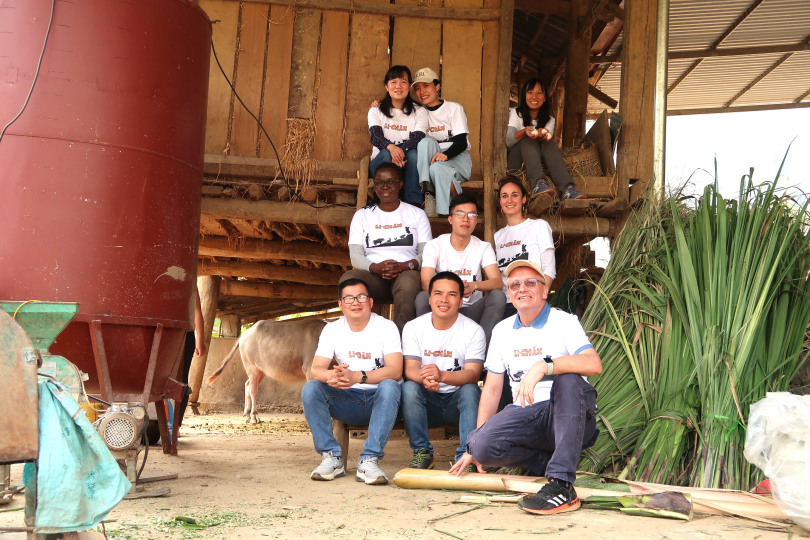
Overcoming challenges for livestock and forages in Asia
Across the tropics, livestock farmers face a common set of challenges. Mary notes the prevalence of soil degradation, insufficient livestock feed, and increasingly erratic climatic conditions. In Southeast Asia, the most acute challenge is the shortage of animal feed during the dry winter season (November-March), limiting productivity and farmers’ livelihoods.
Addressing this key challenge for farmers, in Northern Vietnam, Mary and her team have made significant progress in addressing this constraint by sharing improved forages amongst ethnic minority cattle-producing communities. When the project began, in 2019, most households fed low-quality crop residues to their animals, which was insufficient to support animal weight gain and productivity. The researchers began assessing suitable forage varieties for the region’s steep erosion-prone slopes, followed by on-farm pilots and farmer uptake. Significant successes have been reported with farmers producing high-quality forages to feed their animals, and benefitting from reduced soil erosion from forage integration into the farming systems. As adoption spread, early pilot farmers shared seeds and planting materials with their neighbors, steadily increasing livestock productivity across the region, and supporting rising demand for animal-source foods.
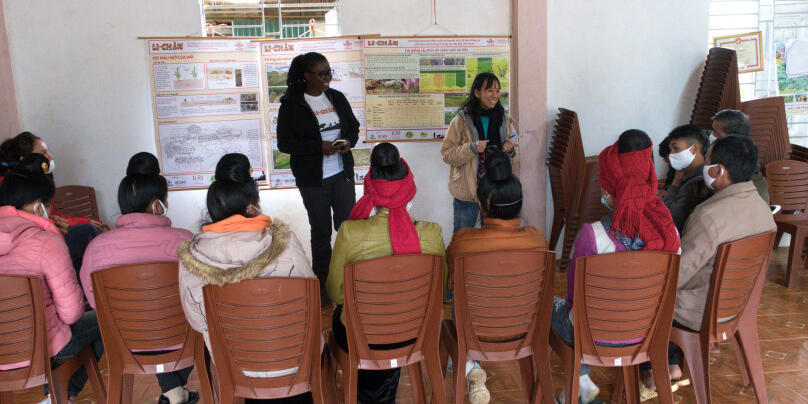
Mary leading a forages training session. Photo credit: Chi Nguyen/ILRI
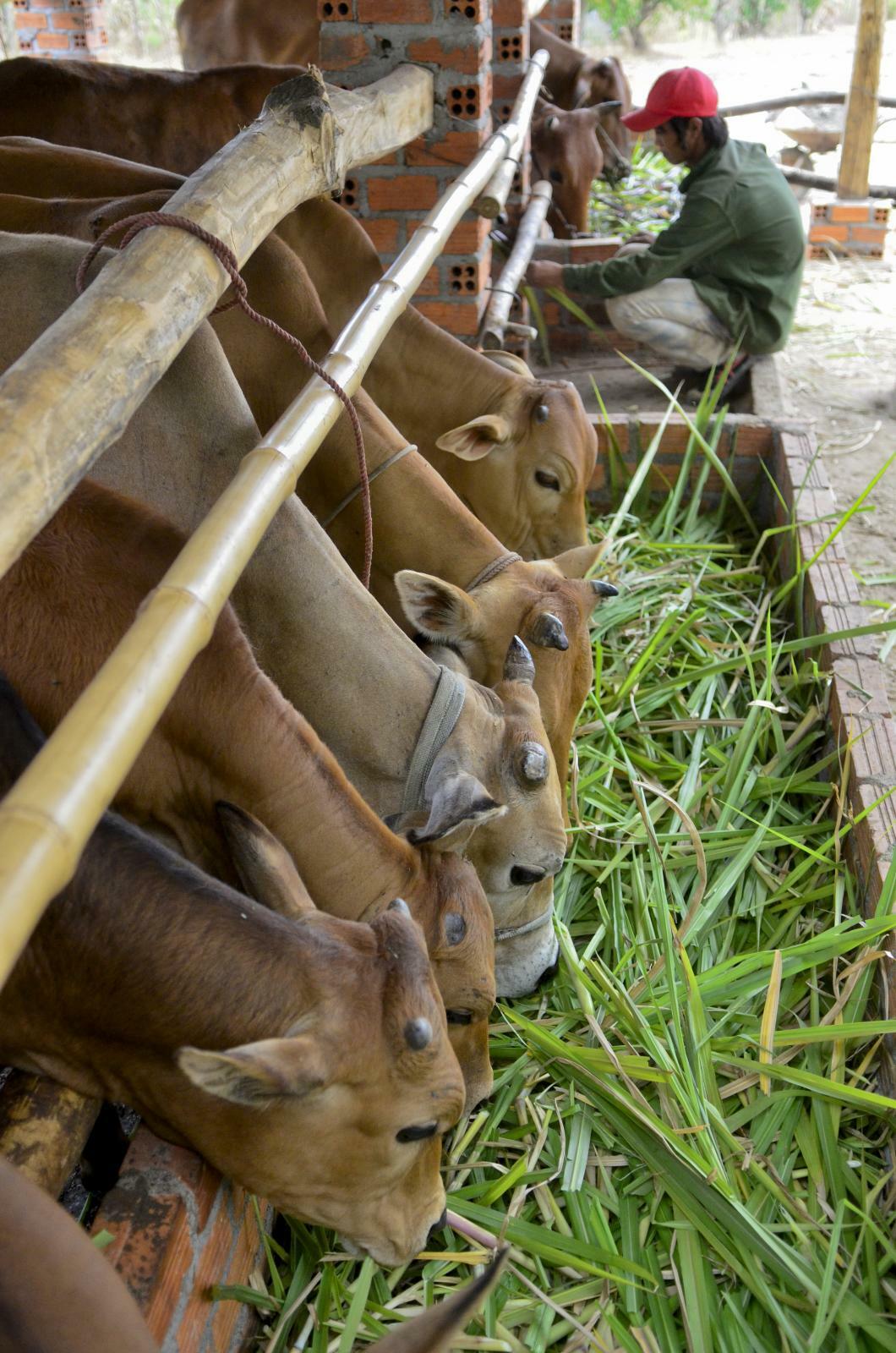
Cattle feed on fresh forages in northern Vietnam. Photo credit: Neil Palmer/CIAT
Building on this success, Mary and her team have worked closely with the CGIAR International Livestock Research Center (ILRI) and the Vietnamese National Institute for Animal Science, conducting capacity-building on forage cultivation and utilization (e.g. silage making for long-term feed storage), with efforts to ensure women’s participation to enhance their roles in livestock production and decision-making. Mary reflects on these efforts fondly, noting that many community members not only engage in the trainings to acquire new knowledge, but also for the sense of community and trust fostered between participating farmers and communities, local authorities and the Alliance research team. Efforts to strengthen livestock value chains in the Northwest Highlands of Vietnam are currently ongoing under the CGIAR Program on Sustainable Animal and Aquatic Foods.
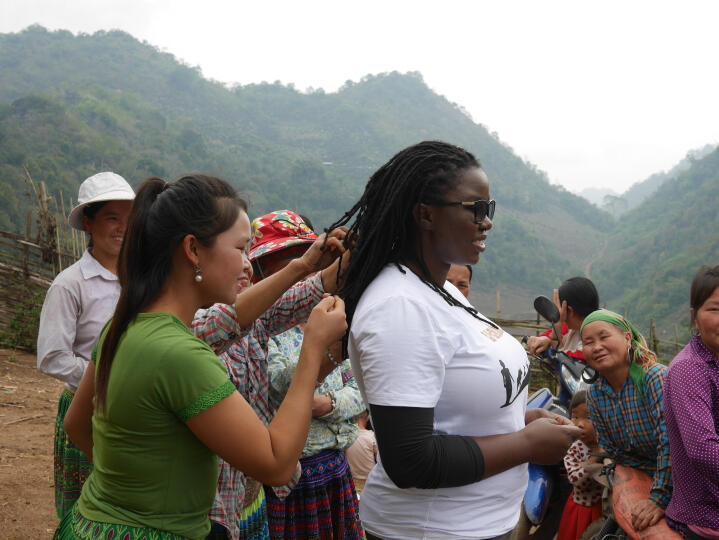
Mary engages with local communities in between training sessions, strengthening trust between local people and researchers. Credit: Mary Atieno
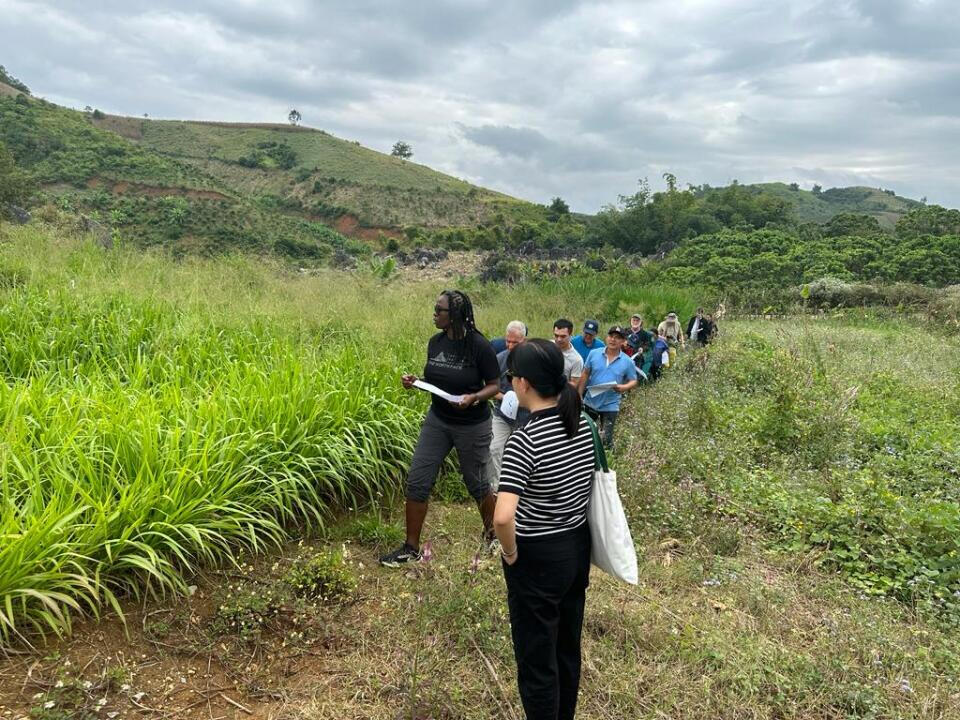
Mary leads a field trip with local stakeholders. Photo credit: Hang Dao/CIAT
A unique perspective: Mary’s evolution and role in the team
When asked about her journey from family farming in Kenya to leading cutting-edge research in Southeast Asia, Mary laughs,
“The inspiration was born in Africa, and then I got lost in the Pacific; I’m now becoming truly Asian!”.
Mary shares that in her experience, when a new project starts, many expert agronomists identify challenges and propose a series of solutions based on agronomic theory before reaching the communities; on the other hand, Mary finds it essential to start planning a project only after understanding the needs of the farmers: building a personal connection with them and listening to the concerns that affect them most. In her view, letting the research be guided by farmers’ priorities leads to a more productive, lasting outcome.
Sharing the highlights of her work, Mary shared that:
“It’s in the field where the impact of our work becomes real. When farmers share how improved forages have increased livestock productivity, reduced feeding costs, or helped restore degraded soils, that’s when the tangible value of our efforts becomes clear.” Reflecting on her experience as an Alliance research leader, she shared that “working in a diverse, multidisciplinary environment at the Alliance has been transformative, with expertise that spans breeding, agronomy, systems science, environmental science and socioeconomics. Every day and every interaction present an opportunity to learn.”
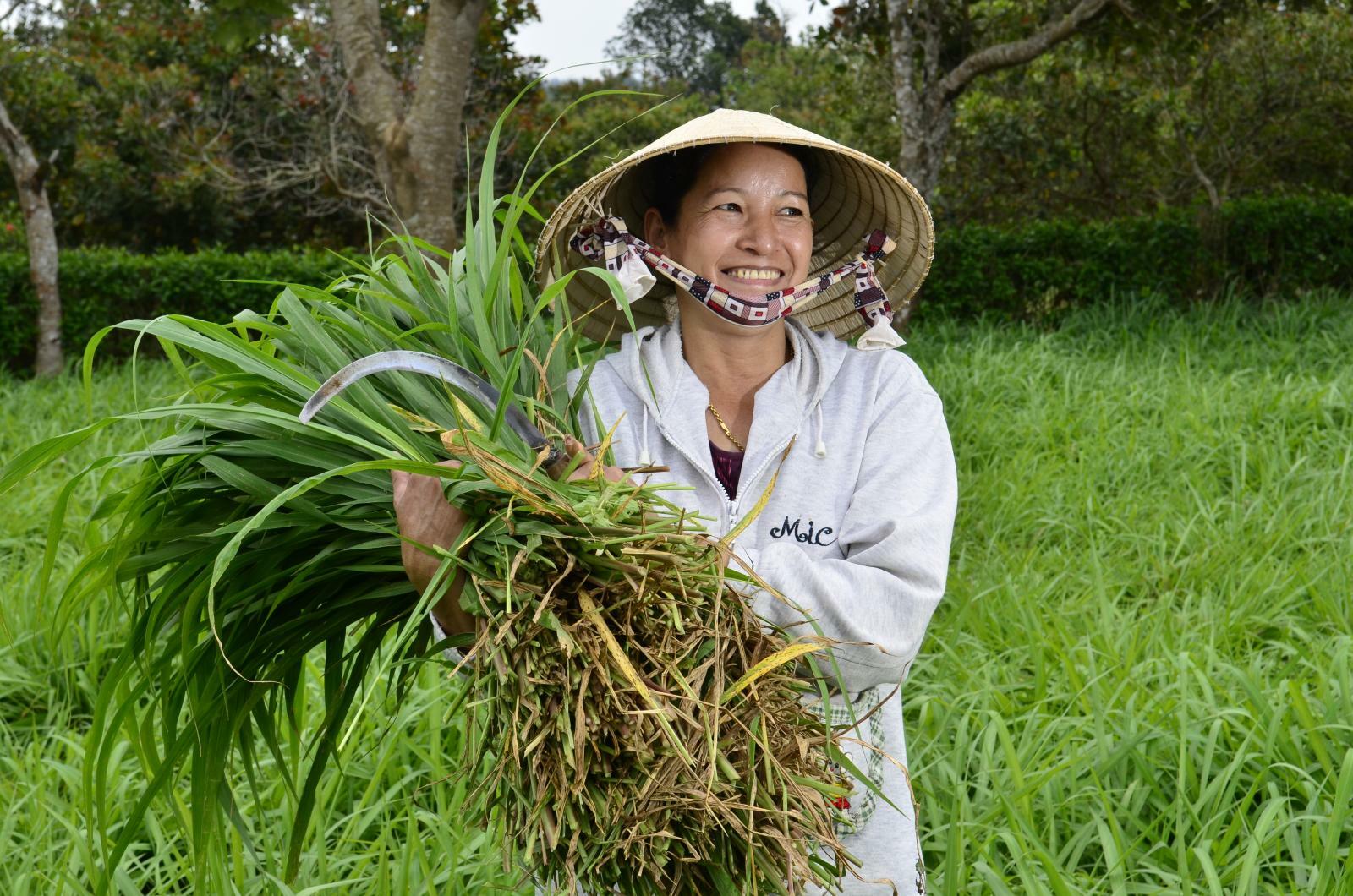
Farmer harvests forages in Vietnam. Photo credit: Neil Palmer/CIAT
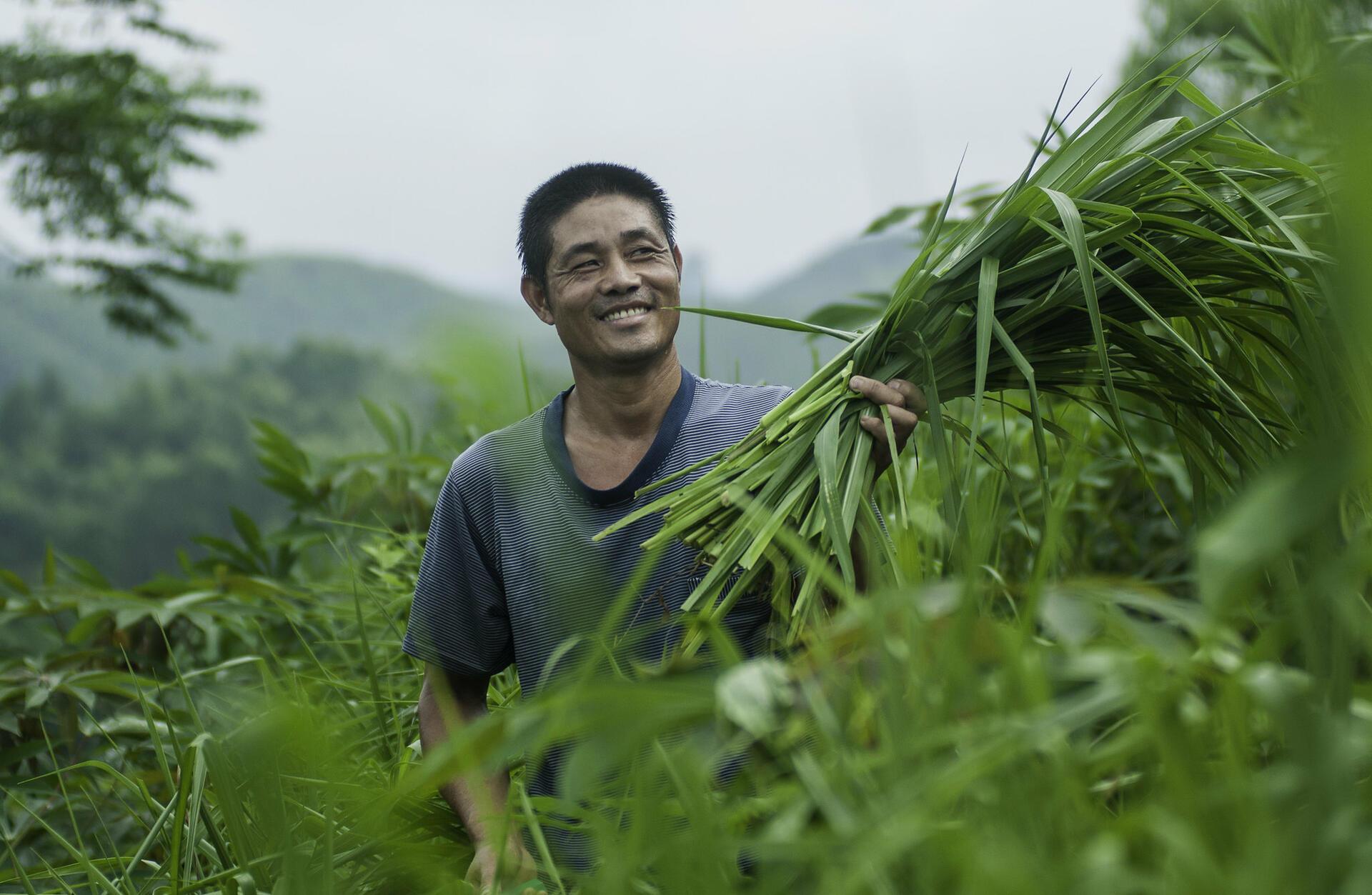
A farmer harvests forages grown on a slope to prevent soil erosion whilst feeding his livestock. Photo credit: Georgina Smith/CIAT
The path forward: Forages beyond livestock feed
It’s becoming clear that to develop more sustainable livestock production, mainstreaming the use of optimal forage varieties is essential. Mary concludes that:
“over the past decade, we’ve seen a significant shift in how improved forages are understood and adopted. Beyond livestock feed, they are now also recognized as tools for soil restoration, climate-smart agriculture and sustainable intensification. It has been rewarding to see forages integrated into national and provincial livestock strategies, and to witness growing private-sector investment in seed systems.”
Beyond this process, Mary reflects that there are further opportunities to put livestock at the center of more sustainable and profitable food systems:
“There is tremendous potential to scale adoption, strengthen seed systems, and bring innovations to farmers across the region – from climate-resilient varieties to digital advisory tools... Livestock farming can evolve from being perceived as a challenge to becoming one of the most dynamic vehicles for climate-smart growth in emerging economies.”
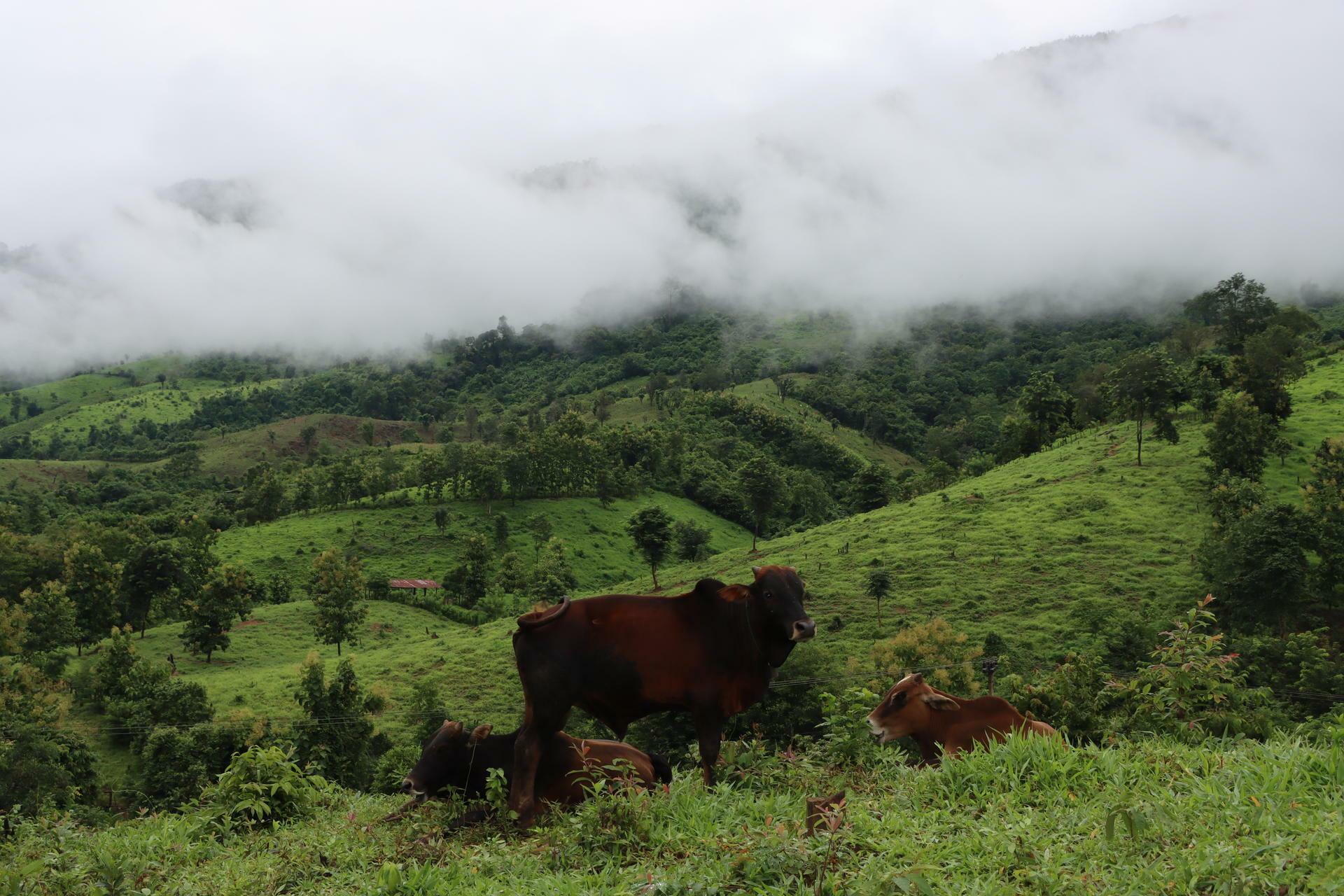
Cattle graze in the highlands of Laos. Photo credit: Alie Galeon